REVIEW · BOLOGNA
Bologna: Small-Group Tour with the Historic Archiginnasio
Book on GetYourGuide →Operated by Ways Tours | B Corp certified · Bookable on GetYourGuide
Bologna rewards anyone who slows down in the right places. In just 2 hours, this small-group walk ties together three things you’ll remember: the Teatro Anatomico inside the historic Archiginnasio, and the medieval Bologna you can spot instantly from the streets. You also get a guided route through Piazza Maggiore, the market lanes of Quadrilatero, and the iconic skyline around the Due Torri.
Two specific wins I like here are the chance to stand where medical students once studied the human body, and the way your guide links sights to real day-to-day Bologna, especially around the Quadrilatero Market area. One thing to consider: the experience depends a lot on guide clarity and on how well the group can hear, and there have been cases where audio wasn’t easy without individual headsets.
In This Review
- Key highlights you’ll notice right away
- Where the tour starts: Piazza Maggiore and the Bologna “front door”
- Archiginnasio first: the setting where medical learning took shape
- Teatro Anatomico: why this stop feels different
- Walking the historic lanes to Quadrilatero Market
- Due Torri: the skyline moment that proves Bologna’s medieval muscle
- Santo Stefano and the seven churches: layered Bologna in a short walk
- Porticos: the practical magic of Bologna’s covered streets
- How long it really takes: squeezing Bologna into 2 hours
- Value check: is $45 reasonable for what you get?
- Group size and guide clarity: the part you should plan for
- Who this tour suits best
- Should you book this Bologna tour?
- FAQ
- FAQ
- What is the duration of the Bologna small-group tour?
- Where do I meet the guide?
- What’s included in the price?
- What language is the tour in?
- Is the tour wheelchair accessible?
- Does the tour run in bad weather?
Key highlights you’ll notice right away
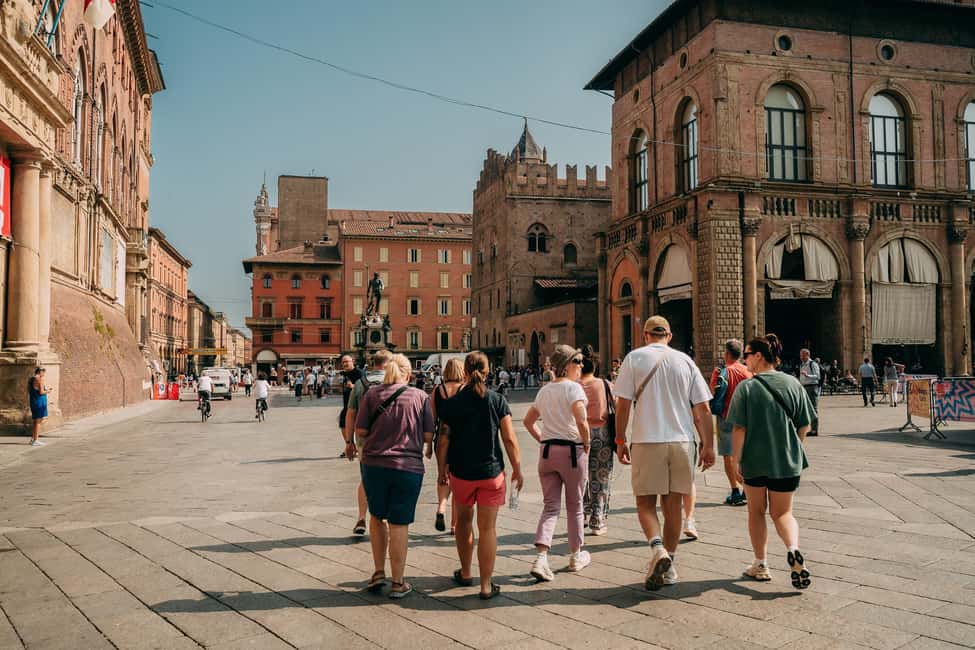
- Teatro Anatomico inside the Archiginnasio: medical education made visible, not just explained.
- Piazza Maggiore + Neptune Fountain: a quick orientation to Bologna’s main stage.
- Quadrilatero Market food streets: built for tasting and browsing during free time.
- Due Torri skyline moment: medieval power made physical.
- Santo Stefano and the seven-church complex: a compact dose of layered faith and architecture.
- Porticos that keep you comfortable: you’ll walk under cover for much of the route.
Where the tour starts: Piazza Maggiore and the Bologna “front door”
Your tour kicks off at the center of it all: Piazza Maggiore. The meeting point is simple and easy to find—look for a red kiosk with a guide holding a yellow sign that says TOUR. From the first minutes, you’re oriented to how Bologna works: it’s big on public squares, narrow streets, and the long, shaded walks under the porticos.
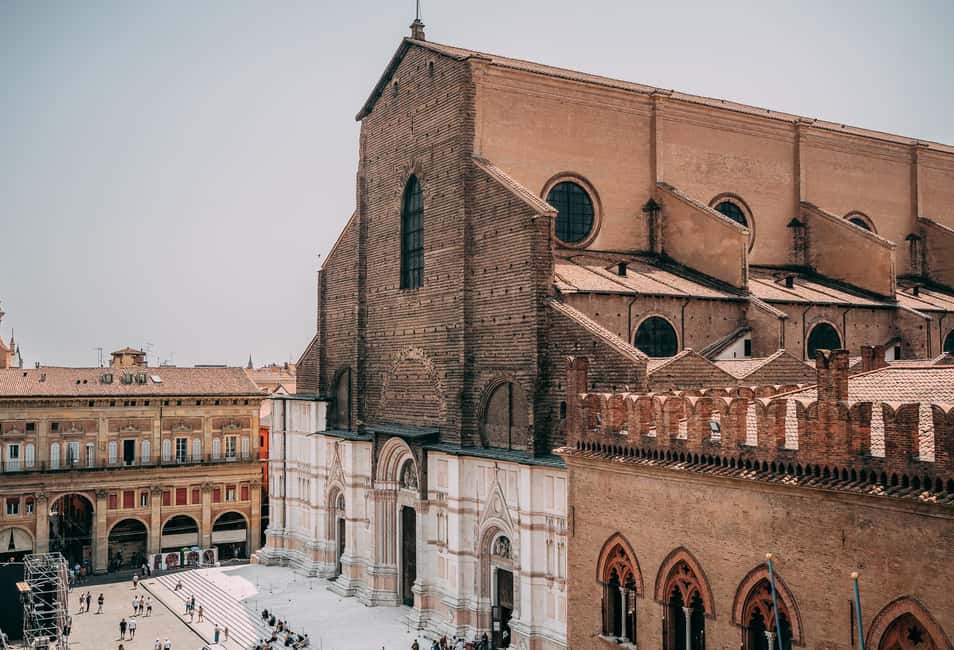
Right away, you’ll see two anchors that help the rest of the route click into place. One is the Basilica di San Petronio, which dominates the square with its size and stubborn-looking presence. The other is the Fountain of Neptune, a playful myth-and-symbols moment that feels very Bologna—smart, theatrical, and not afraid of a little drama in stone.
This early part matters because it sets expectations. If you’re only in Bologna for a short time, you need a mental map fast. This tour gives you that map without wasting time on long descriptions.
Archiginnasio first: the setting where medical learning took shape
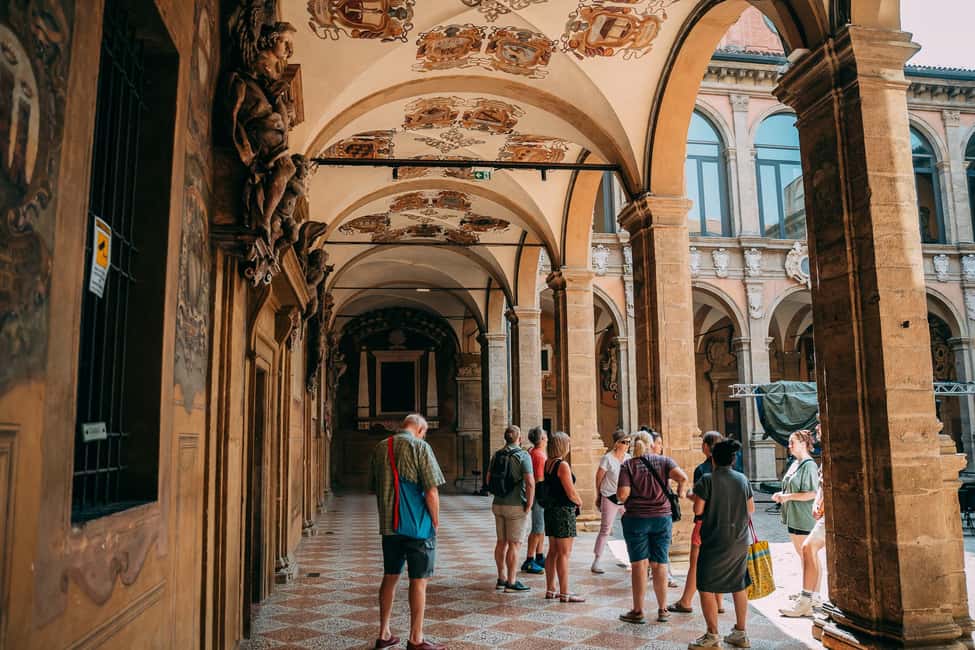
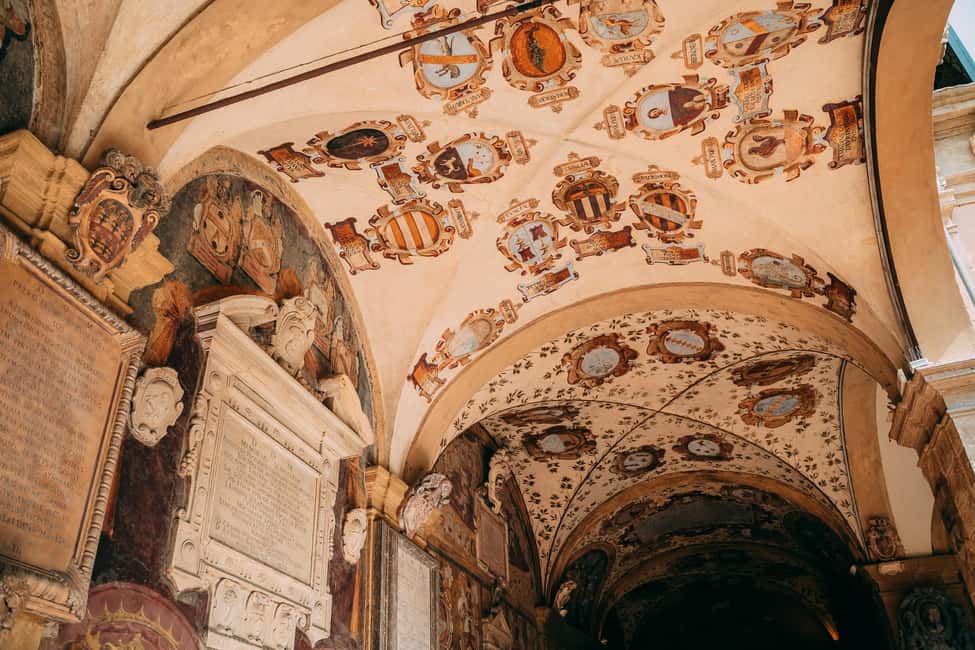
After Piazza Maggiore, you’ll walk to the Archiginnasio, one of those buildings that makes you understand why Bologna earned its reputation as a learning city. The main payoff here is that you don’t just see architecture. You get context for why people came here, and why the building mattered.
The Archiginnasio is famous for its role as a center of study, and that leads directly to the standout interior stop: the Teatro Anatomico. Even if you’re not into medical history, it’s hard not to be impressed because it’s built for learning in a very specific way. You’re stepping into a room designed around teaching the human body, at a time when knowledge moved slowly and every lesson carried weight.
Teatro Anatomico: why this stop feels different
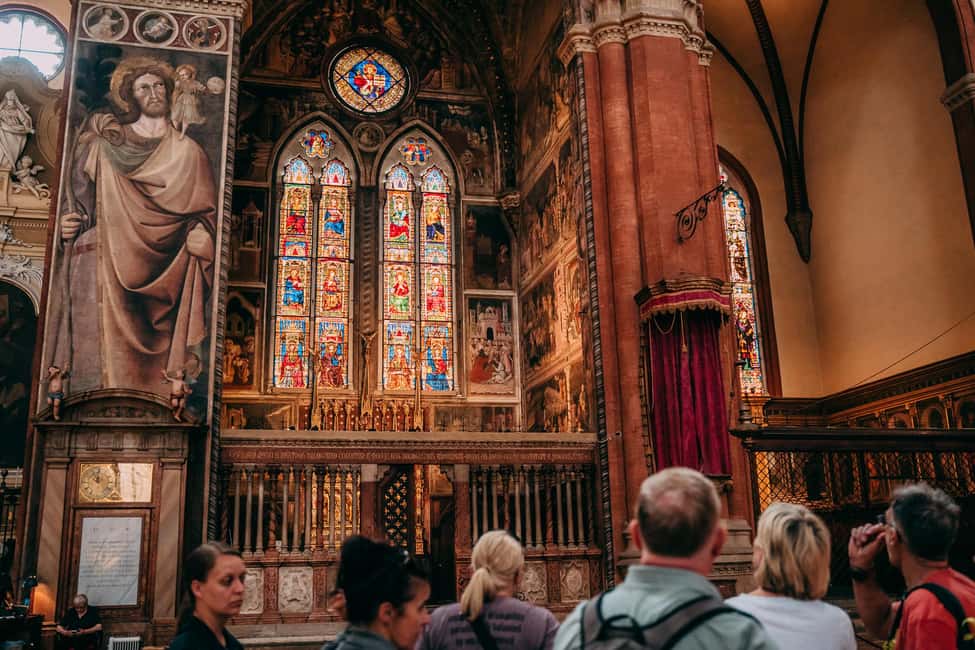
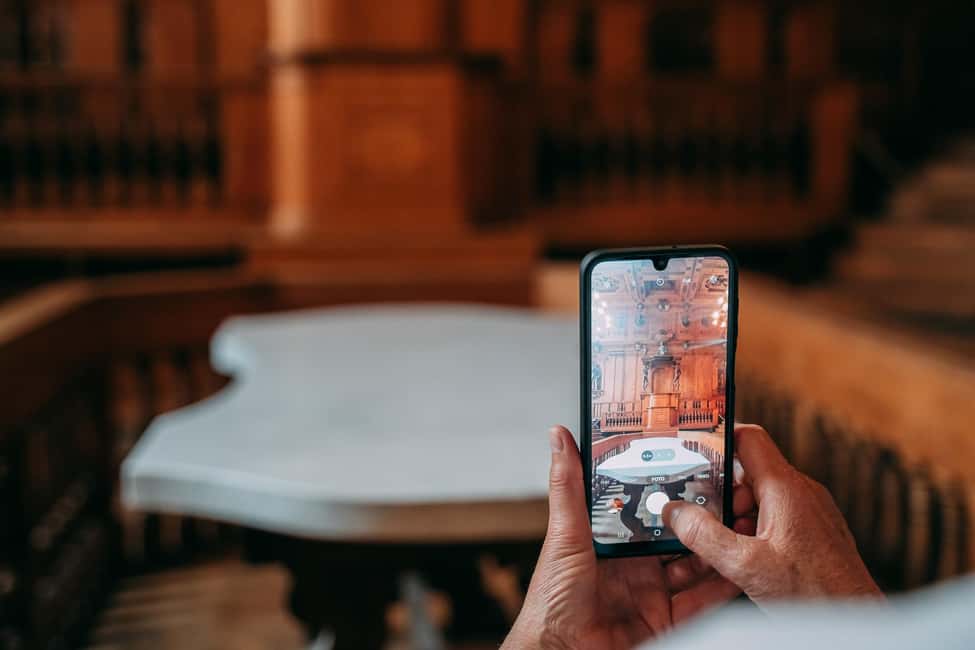
Inside the Teatro Anatomico, you’re seeing a physical reminder of Bologna’s long relationship with education. This isn’t a museum that floats above you with labels. It’s a space that explains learning through space, seating, and design—how students would gather and how knowledge was delivered.
What I like about this stop for your visit is the quick shift it creates. Bologna is often marketed as food, towers, and porticos. This adds a fourth side: Bologna as a serious intellectual city. And because the tour keeps moving, you won’t feel trapped in one room for too long.
One practical note: the lighting and indoor conditions can affect what you can clearly see. If you want the best view, don’t stand too far back. You’ll get more from this stop if you position yourself where your eyes can catch details as your guide explains them.
Walking the historic lanes to Quadrilatero Market
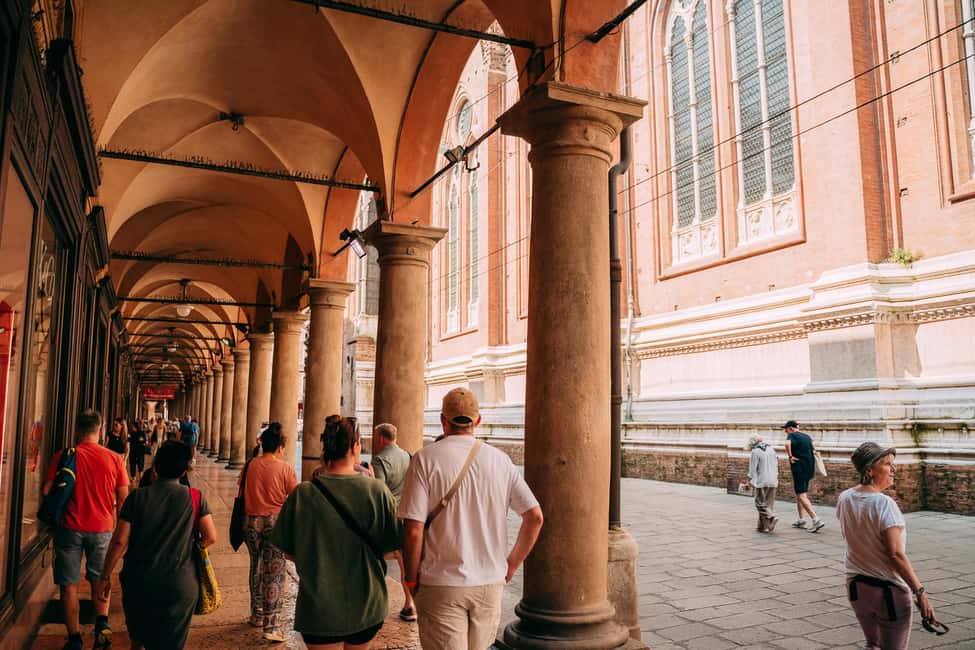
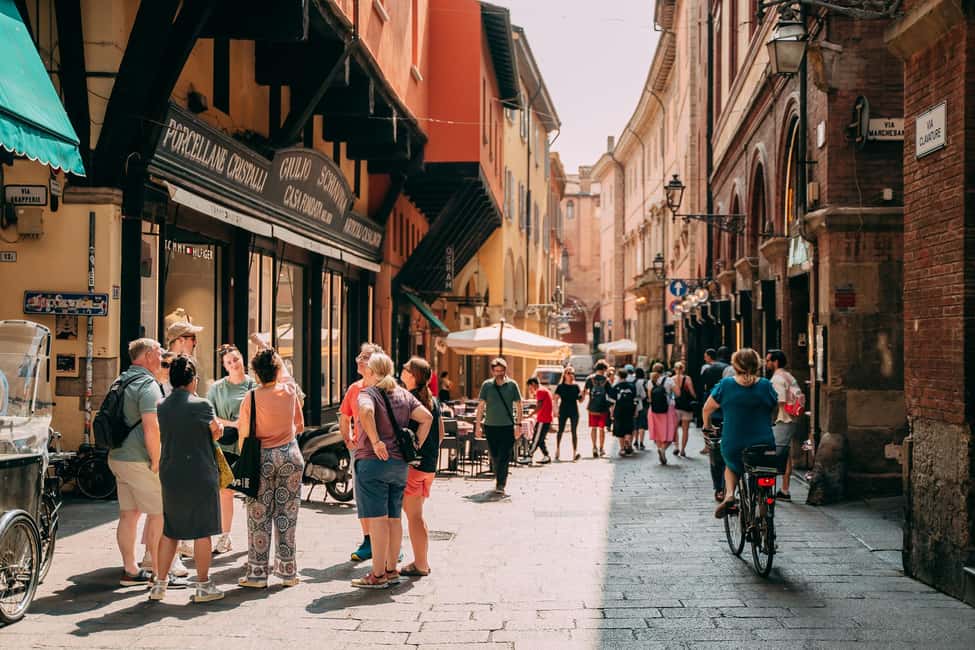
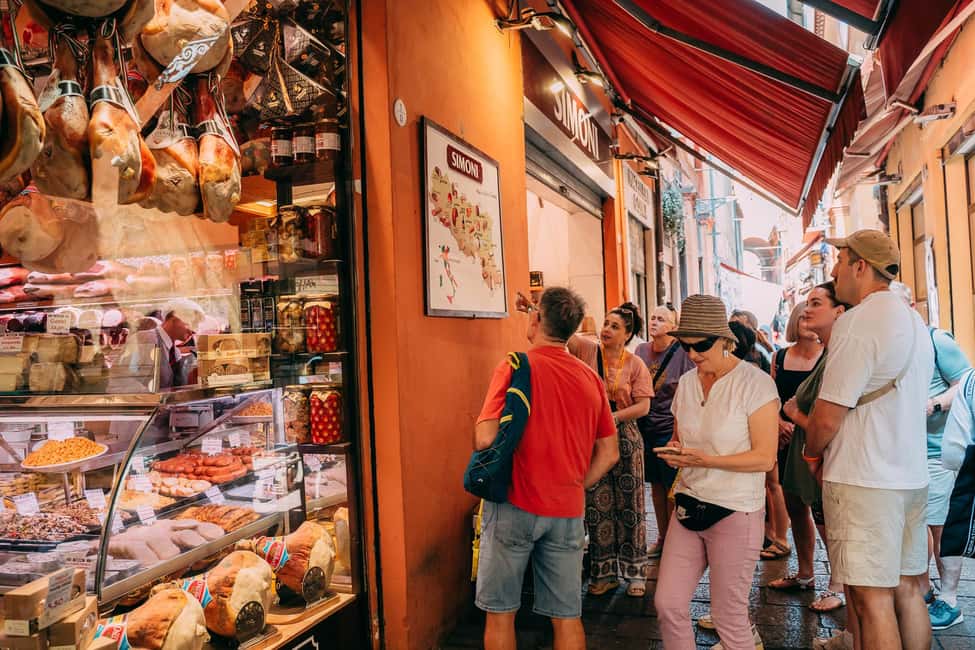
Next comes the Quadrilatero Market area, which is where Bologna turns sensory. You’ll be guided through the lively maze of narrow streets where stalls and shops cluster close together. This is the moment that makes the tour feel like more than a history lesson.
What makes this stop valuable is that your guide doesn’t just point at food. They connect the market lanes to local habits—cheese, cured meats, and the simple pleasure of eating while you walk. The tour also builds in time for you to buy something during your free time in Bologna, so you can turn the theory into a small edible souvenir.
If you’re trying to decide what to snack on, aim for things that are easy to carry and easy to share. The market setting is ideal for small tastings: a bite here, a bite there, and then you can get a clearer sense of what you actually like before you commit to a bigger meal later.
Due Torri: the skyline moment that proves Bologna’s medieval muscle
No Bologna overview feels complete without the Due Torri—the pair of leaning towers that show off the city’s medieval attitude to status and power. On this tour, you’ll get that moment without hunting around on your own.
This part is quick but effective. You’ll understand the towers not just as postcard background, but as a visual clue to how the city developed. Bologna wasn’t flat, polite, and modern from day one. It built upward, often for reasons tied to wealth and influence.
A consideration here: if there’s a pause for photos, don’t expect a long, uninterrupted viewing experience. This is a compact tour, so the timing is designed to keep everything flowing. If you’re traveling with people who move slowly, it can help if everyone sets a photo plan early.
Santo Stefano and the seven churches: layered Bologna in a short walk
From the towers area, the tour continues toward Santo Stefano, known for its complex of seven churches. This is a great stop if you like places where multiple eras coexist. You don’t have to read a textbook to grasp what’s happening here because the architecture and layout do the storytelling.
Along the way, you’ll pass through famous covered passages such as Galleria del Leone and Galleria Cavour. These corridors feel small compared to the big-name churches, but they’re part of what makes Bologna so walkable and atmospheric. You’re not just moving from point A to B—you’re absorbing the city’s “in-between” spaces, which is where Bologna often wins.
What I appreciate about this portion is pacing. You’ll get the highlights without losing your energy. After Archiginnasio and the market, this stop resets your brain and gives you a different kind of wow: quiet, structural, and layered.
Porticos: the practical magic of Bologna’s covered streets
One of the most underrated parts of this tour is the emphasis on walking under Bologna’s porticos. The guide’s route keeps you moving through covered sidewalks that can be cool in the summer and helpful when weather turns.
This matters for two reasons. First, it makes a 2-hour walking tour more comfortable than you might expect. Second, it reinforces an authentic Bologna detail: locals don’t just tolerate the porticos, they rely on them.
And because this tour runs rain or shine, those porticos aren’t just a scenic bonus. They’re a functional part of your experience.
How long it really takes: squeezing Bologna into 2 hours
This is a 2-hour tour. That’s short enough to fit into almost any itinerary, but long enough to make the city feel connected instead of random.
Here’s the practical reality: because it’s compact, the guide has to keep things tight. You’ll get key stops—Piazza Maggiore, Archiginnasio/Teatro Anatomico, Quadrilatero, Due Torri, and Santo Stefano. You won’t get time for deep solo wandering.
So if you’re the type who likes to linger, I’d treat this tour as your orientation. Afterward, you can return to the market lanes for a longer food crawl, or re-visit the towers area when you have more time to soak up views and details.
Value check: is $45 reasonable for what you get?
At $45 per person for a 2-hour guided experience, the value comes down to what’s included.
You’re getting:
- A local licensed tour guide
- Entry to the Archiginnasio and the Anatomical Theatre (Teatro Anatomico)
In other words, you’re not paying just for walking. The tour includes at least one ticketed cultural interior, which helps justify the price compared with purely exterior city walks.
Also, because the tour includes a guided path through multiple major Bologna highlights, you’ll spend less time figuring things out on your own. That saves mental energy, and in a city like Bologna—where streets can loop and porticos can confuse—it’s not nothing.
Group size and guide clarity: the part you should plan for
This is where I’ll be straight with you. The reviews attached to this kind of tour often hinge on one thing: how clearly you can hear and how focused the guide feels.
There have been reports of:
- English that was hard to understand for some participants
- A lack of individual headphones, meaning audio clarity depended on the guide’s volume and your position in the group
- A feeling that the group was larger than expected in at least one case
- Some participants feeling the pacing or extra walking wasn’t aligned with what they expected
You can’t control how every guide performs. But you can reduce the risk. Arrive on time (don’t let the front of the group fill up before you start). If you care about hearing details, position yourself where you can see and listen clearly—avoid getting stuck far behind when the guide is speaking. And if you know you have trouble hearing in crowds, it’s worth having a personal solution ready, like your own hearing support.
Who this tour suits best
This one works especially well if:
- You want a high-impact orientation to Bologna in a short window
- You’re curious about Bologna beyond food and towers, including the city’s education and medical past
- You like a mix of indoor and outdoor stops—inside museums/architectural spaces, then back to streets and market energy
It may feel less perfect if:
- You need lots of personal time to linger at one stop
- You’re very sensitive to audio quality in busy groups
For most visitors, though, the balance is solid: enough structure to see the essentials, enough flexibility for you to snack and browse.
Should you book this Bologna tour?
I’d say yes, if you’re visiting Bologna for a short time and you want a clean route connecting the city’s big storylines: learning (Archiginnasio/Teatro Anatomico), street life (Quadrilatero), and medieval power (Due Torri and Santo Stefano). The ticketed interior stop alone makes it worth considering, and the porticos help keep the walk comfortable.
Book it with one mindset: treat it as an efficient, guided highlight reel. Then plan your free time afterward to return to whichever stop grabbed you most—market snacks, tower views, or the quieter church complex.
FAQ
FAQ
What is the duration of the Bologna small-group tour?
The tour lasts 2 hours.
Where do I meet the guide?
Meet the guide in front of the red kiosk, holding a yellow sign with TOUR written on it.
What’s included in the price?
The tour includes a local licensed tour guide and the Archiginnasio and Anatomical Theatre entrance ticket.
What language is the tour in?
The tour is in English.
Is the tour wheelchair accessible?
The tour is wheelchair accessible, but some parts may not be accessible for reduced mobility. If you’re unsure, you can contact the operator.
Does the tour run in bad weather?
Yes, it runs rain or shine.
If you want, tell me your travel dates and whether your priority is food, towers, or interiors—I can suggest how to schedule this 2-hour tour alongside the rest of your Bologna day.