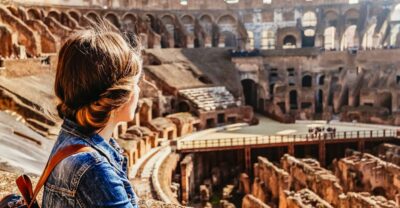
REVIEW · LE DOMUS ROMANE DI PALAZZO VALENTINI
Rome: Palazzo Valentini Roman Domus Multimedia Experience
Book on GetYourGuide →Operated by TOURISTATION · Bookable on GetYourGuide
VR makes ancient Rome feel close. This Palazzo Valentini experience uses a VR headset and multimedia storytelling to bring an Imperial Roman domus back to life around mosaics, walls, and colored floors. You also get a virtual look at how the area near Trajan’s Column may have appeared in ancient times, including the campaign bas-reliefs.
What I like most is how the pacing works: you start with a 25-minute Rome-wide multimedia video in the Touristation office, then your Domus exploration kicks off an hour later with the audio guide headset plus the virtual reconstruction. The second big win is what you see once the headset is on—the virtual rooms, peristyles, kitchens, baths, furnishings, and decorations make the ruins easier to understand, even if you’re not a Roman-history specialist.
One thing to consider: this is not a slow, human-guided walk through every wall. It’s a tech-forward experience, and it’s not suitable for claustrophobia or wheelchair users, so it may feel stressful if you prefer open spaces and minimal headsets.
In This Review
- Key things to know before you go
- Palazzo Valentini Roman Domus: what you’re really paying for
- Meeting at Touristation Aracoeli: get your bearings first
- The 25-minute multimedia intro: Rome in fast context
- Entering the Domus with the VR headset
- What you’ll see: mosaics, decorated walls, and polychrome floors
- Trajan’s Column: the virtual bas-reliefs story you can actually follow
- How the experience connects ancient, medieval, and modern Rome
- Audio guide and language options: choose what fits you
- FOROF experience option: contemporary art meets archaeology (if selected)
- Pacing and duration: 2 hours that can feel either perfect or rushed
- Who this tour suits best
- Price vs. value: is $35 worth it
- Should you book Palazzo Valentini’s Roman Domus VR experience?
- FAQ
- What is the meeting point for the Palazzo Valentini experience?
- How long is the experience?
- What happens before the Domus visit starts?
- What is included in the ticket price?
- What languages are available?
- Is there a guided tour at Palazzo Valentini?
- Is the FOROF experience included automatically?
- What should I bring?
- Are pets or large bags allowed?
- Is this experience suitable for wheelchair users or claustrophobia?
Key things to know before you go
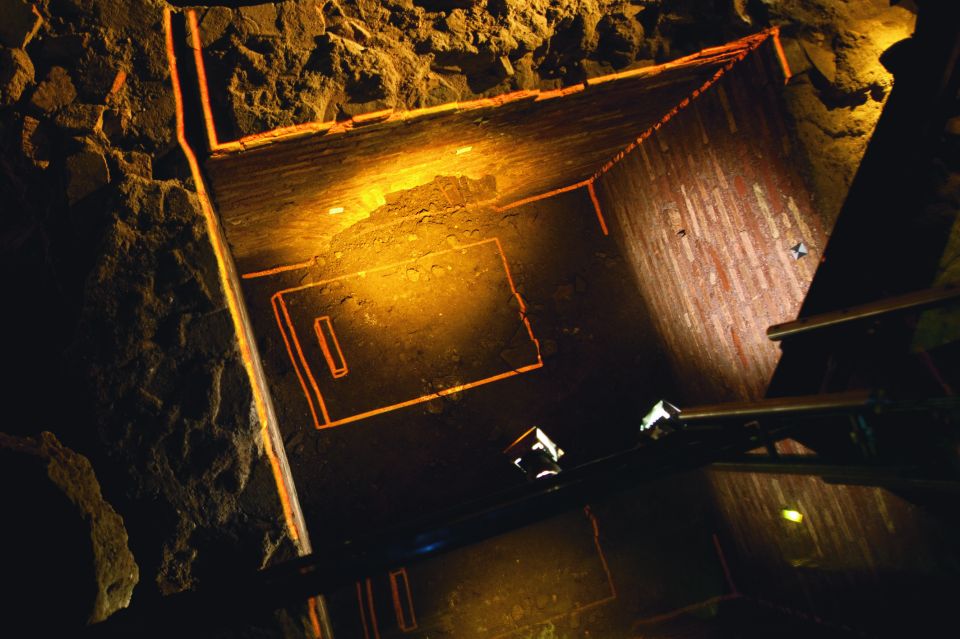
- Touristation Aracoeli as your launch point: you start inside the office area with the multimedia video before the Domus part begins.
- VR reconstruction of real layout elements: expect virtual rooms, mosaics, peristyles, baths, and more, built to help you picture how the domus functioned.
- Trajan’s Column virtual close-up: you can observe a reconstruction that focuses on the bas-reliefs and the story tied to the Dacia campaign.
- Audio is built in: you get an audioguide headset plus a city app option, with multiple language choices.
- Optional FOROF add-on: you can tack on a contemporary art + archaeology experience connected to the Imperial Fora area.
Palazzo Valentini Roman Domus: what you’re really paying for
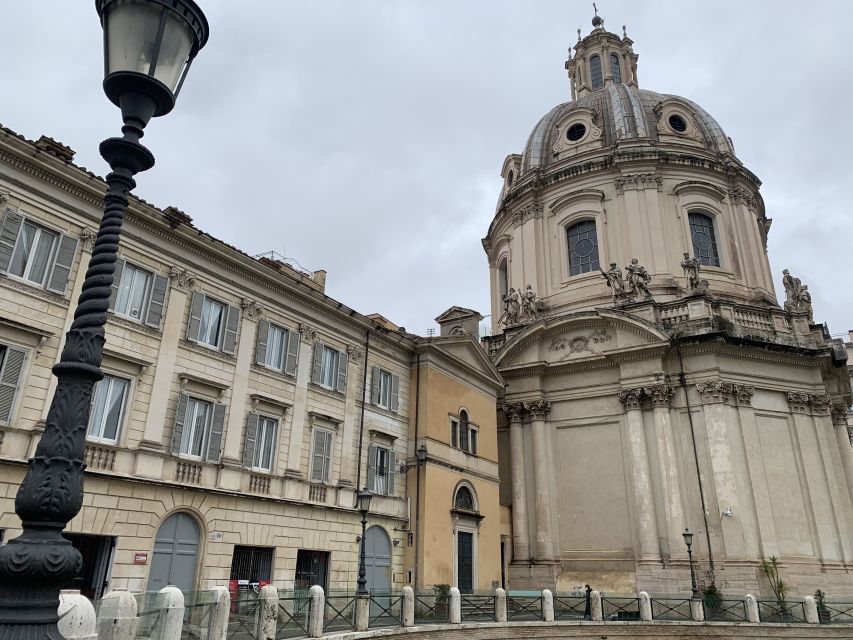
At $35 per person for a 2-hour visit, you’re mostly paying for an experience design that’s aimed at understanding. The ticket includes admission to the Ancient Roman Domus museum, a 25-minute Ancient Rome multimedia video, and an audioguide headset (with additional phone app support). So instead of paying for a traditional guided tour, you’re paying for interpretation delivered through video and VR.
That trade-off makes sense if you want to get oriented quickly. Rome’s layers can be confusing—ancient remains exist under later streets and buildings—and this setup tries to help you connect the ancient, medieval, and modern parts of the city in one sitting.
Meeting at Touristation Aracoeli: get your bearings first
Your starting point is TOURISTATION ARACOELI at Piazza D’Ara Coeli, 16. Look for a fountain and orange flags right in front of the office entrance; that’s your visual cue.
This matters more than it sounds. The multimedia intro happens inside the Touristation office first, then the Domus visit starts one hour later. If you arrive late, you risk missing the best part of the setup: the Rome context video that frames what you’ll see next.
The 25-minute multimedia intro: Rome in fast context
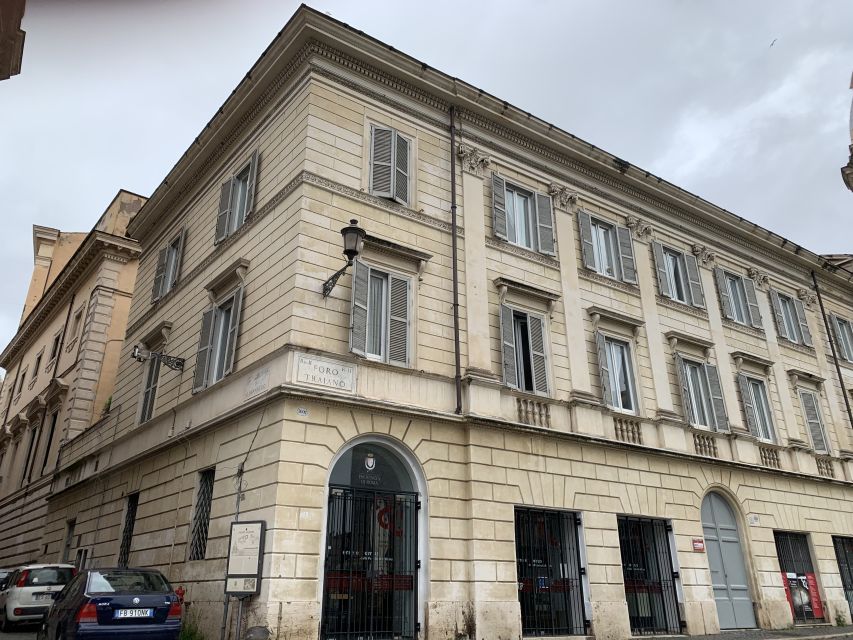
Before the Domus portion begins, you watch a multimedia video inside the Touristation office. It shows the past and present of key monuments in Rome, including the Colosseum, Roman Forum, St. Peter’s Basilica, Castel St. Angel, Circus Maximus, and Ara Pacis.
For you, this is valuable because it builds mental links. Even if you’ve seen some of these sights already, the video helps “snap” together how Rome’s sites relate to each other—then the Domus experience gives you a more intimate scale shift, from big public monuments to the home-life world of an Imperial domus.
Entering the Domus with the VR headset
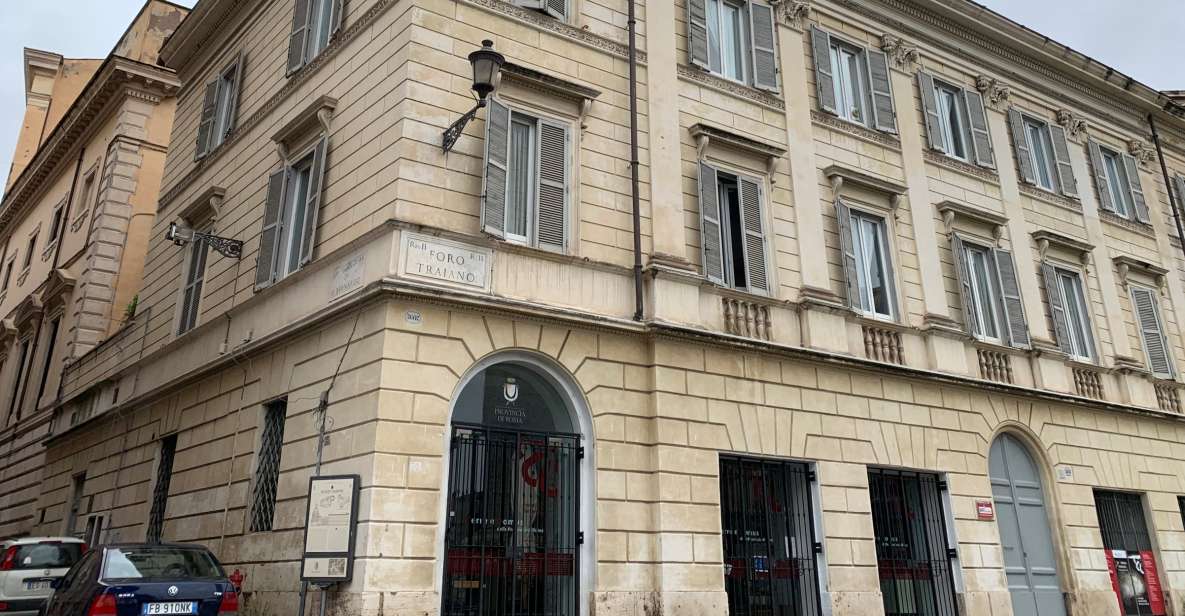
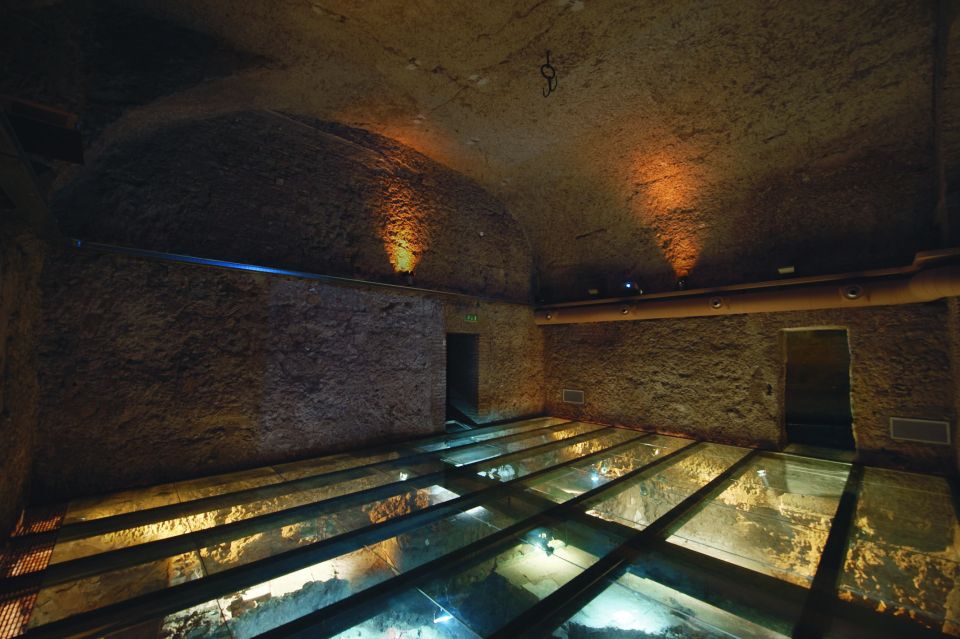
After the intro, your Domus visit starts an hour later. Then the main event begins: you put on a headset and look at a virtual reconstruction of spaces and decorations that are hard to fully picture when you’re just staring at ruins.
This is where the experience earns its ticket price. The VR portion doesn’t only show one restored room—it presents a fuller set of elements: walls, mosaics, polychrome floors, peristyles, kitchens, baths, and furnishings. The idea is simple: help you understand how daily life might have moved through the architecture.
And it’s not just visual. The experience is designed to make the area feel like a place that mattered, connecting ancient use to what later periods did with the site. If you’ve ever felt that Roman ruins look “too fragmentary” until you understand the whole function, this is built for that problem.
What you’ll see: mosaics, decorated walls, and polychrome floors
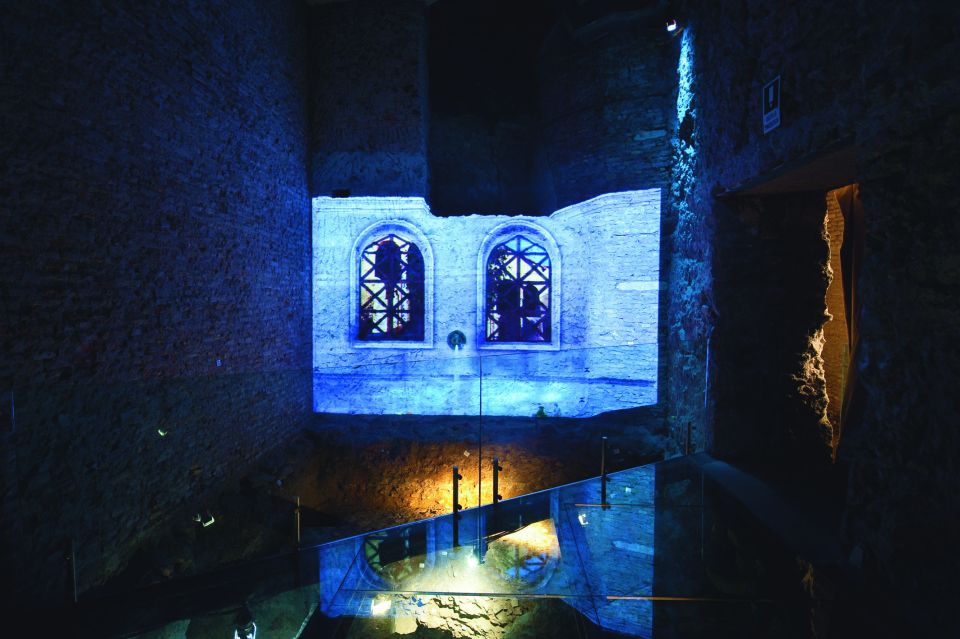
One of the most rewarding parts for me is how you’re guided to notice surface details. Roman mosaics and floor decoration aren’t just art; they’re part of how the space communicated status and comfort. With the virtual reconstruction, the mosaics and floors become easier to interpret as part of the domus’s visual system, not only as isolated fragments.
The decorated walls and polychrome floors also help you understand the scale of color and design in Roman interiors. Even if you don’t know names of specific designs, you’ll likely feel the shift from “a few stone bits” to “a finished environment.”
Trajan’s Column: the virtual bas-reliefs story you can actually follow
You also get a chance to observe how the area of Trajan’s Column looked in older times. The experience includes a virtual reconstruction of the column that gives you a close-up look at the bas-reliefs and the story they tell.
This section is specifically tied to Trajan’s military campaign—the conquest of Dacia, in what’s present-day Romania. It’s one of those Rome details that’s famous in name, but often hard to connect to the bigger setting unless you’re shown the visual narrative. Here, the virtual format helps you focus on what the reliefs depict and how they fit into the story.
How the experience connects ancient, medieval, and modern Rome
A big promise of this tour is that it helps you piece together ancient, medieval, and modern Rome. Even without quoting any guidebook, you can sense why: the domus ruins sit in a real city that has kept evolving.
So instead of only asking you to appreciate the past as a museum object, the experience nudges you to see the layers. You’re not just looking at a single time period—you’re learning how one important area contributed to later development and interpretation over time.
Audio guide and language options: choose what fits you
The audioguide headset is included, and the experience is available in English, Italian, Spanish, French, and German. There’s also a city app option for the audio guide downloadable to your smartphone.
Practical tip: if you’re comfortable with app-based audio, bring your phone’s battery. If you want a simpler setup, stick with the included headset and treat the phone app as a backup.
FOROF experience option: contemporary art meets archaeology (if selected)
If you choose the FOROF add-on, you’re stepping into a different kind of storytelling: a combination of archaeology and contemporary art tied to the feeling of cultural cafes from the 20th-century avant-garde.
FOROF is described as the first permanent and continuous reality in Rome that links contemporary art and archaeology through regeneration. It’s located in the heart of Rome at Palazzo Roccagiovine, opposite Trajan’s column at the Imperial Fora area.
What makes this connection practical is the site-specific element. In its hypogeum environments, FOROF preserves colored marble from the pavement of the Basilica Ulpia and remains of the eastern apse from the 2nd century A.C. So you’re not just looking at art in a separate room—you’re moving through a space where ancient materials are part of the atmosphere.
The add-on also references a specific project: Nimbus Limbus Omnibus by Bartolomeo Pietromarchi. It’s a collective exhibition project, site-specific and in dialogue with the archaeological setting of Basilica Ulpia.
And yes, there’s an olfactory layer. FOROF uses an olfactory experience developed by Laura Bosetti Tonatto, described as a professional nose known worldwide. FOROF ESSENZA is designed to return the spirit of a place and is framed around the universal value of freedom.
If you like museum experiences that use multiple senses, this part can be a standout. If you prefer your history strictly visual and you’re short on energy, you might find this add-on more artsy than archaeological in tone.
Pacing and duration: 2 hours that can feel either perfect or rushed
This experience lasts 2 hours total. The format is built around a sequence: video intro first, then VR-based exploration. That means there’s less free time for wandering compared to a standard museum.
For you, that can be a plus. It keeps you moving toward understanding rather than leaving you to interpret the ruins alone. For someone who likes long, quiet reading at each stop, the structured nature may feel a bit fast.
Who this tour suits best
This is a strong match if you:
- want a clear way to understand a Roman domus without needing deep prior knowledge
- like VR or multimedia that helps you visualize what’s missing
- enjoy mosaics, decorative design, and the everyday side of Roman life
- want a structured, time-limited experience in Rome
It may be less suitable if you:
- are uncomfortable with a VR headset or claustrophobic spaces
- need wheelchair accessibility (it’s specifically noted as not suitable)
- prefer a traditional guided walk with minimal tech
Price vs. value: is $35 worth it
For $35, the value comes from what’s included: admission to the Domus museum, a 25-minute multimedia intro, a headset audioguide, and audio support through a smartphone app. The VR reconstruction is the real differentiator. You’re paying for interpretation that would otherwise require a lot more time, reading, or a live guide.
If you’re the type who learns best by seeing how rooms, floors, and peristyles fit together, the price is easier to justify. If you’re not interested in the multimedia/video setup, you may feel you’re paying for tech you could skip. One feedback point I’d take seriously: some people feel the add-ons like the video and app aren’t necessary if the core Domus VR experience is what you really want.
Should you book Palazzo Valentini’s Roman Domus VR experience?
Book it if you want a fast, structured way to understand the Imperial Roman home behind the ruins. The VR reconstruction of rooms, mosaics, peristyles, baths, kitchens, and furnishings is the heart of the experience, and it’s designed to make the site make sense in one visit.
Skip it (or at least think twice) if you dislike headsets, you need full wheelchair access, or you’re claustrophobic. Also consider your patience for a tech-forward flow: this isn’t a long, free-form wander through ancient stone.
If you’re planning Rome with a mix of big sights and smaller “how people lived” stops, this one fits nicely because it brings you into a Roman interior world—then connects it back to the broader landmarks you’ll remember.
FAQ
What is the meeting point for the Palazzo Valentini experience?
You meet at TOURISTATION ARACOELI, Piazza D’Ara Coeli, 16. There is a fountain and orange flags in front of the office entrance.
How long is the experience?
The total duration is 2 hours. Starting times vary, so you’ll want to check availability.
What happens before the Domus visit starts?
You start by watching a 25-minute multimedia video inside the Touristation office. The Domus visit begins one hour later.
What is included in the ticket price?
Included are admission to the Ancient Roman Domus museum, the 25-minute multimedia video, an audioguide headset, and a city app audio guide download. The FOROF experience is included only if you select that option.
What languages are available?
For the Palazzo Valentini experience, languages include English, Italian, Spanish, French, and German. The audio guide headset is also listed with additional languages, and the FOROF guided tours (if selected) are in English and Italian.
Is there a guided tour at Palazzo Valentini?
A guided tour at Palazzo Valentini is not listed as included. Instead, you get an audioguide headset and use the multimedia/VR format.
Is the FOROF experience included automatically?
No. FOROF is included only if you select the FOROF option.
What should I bring?
Wear comfortable shoes. For children, bring a passport or ID card.
Are pets or large bags allowed?
Pets are not allowed. Luggage or large bags are also not allowed.
Is this experience suitable for wheelchair users or claustrophobia?
No. It’s specifically noted as not suitable for claustrophobia and not suitable for wheelchair users.