REVIEW · OSTIA ANTICA
Archeological Area of Ostia Antica Entry Ticket
Book on GetYourGuide →Operated by TOURISTATION · Bookable on GetYourGuide
Ostia Antica feels like Rome’s time machine. What I like most is that this ticket is built for self-paced wandering, so you can stop when something catches your eye, not when a group leader says so. I also like the practical “get in fast” setup, plus optional upgrades like an audio guide and a golf cart ride. One drawback to consider: if you’re hoping for deep historical storytelling, the audio can feel brief, depending on the option you choose.
You’re paying to access one of the best-preserved Roman cities, and the ruins are laid out in a way that rewards slow walking. Expect big streets, house ruins with floor mosaics, and major highlights like the Baths of Neptune and the long-running axis known as the Decumanus Maximus. The site is also not friendly to visitors with mobility limitations, so plan accordingly with your route and footwear.
In This Review
- Key things to know before you go
- Entering Ostia Antica Fast: Skip-the-Line Starts Your Day Right
- What Your Ticket Includes (And What It Doesn’t)
- Mapping the Ruins: How Decumanus Maximus Shapes Your Walk
- Mosaic Marvels and Roman Homes: What You’ll See Up Close
- Baths of Neptune: The Ruins That Tell You How People Spent Time
- Using the Audio Guide Wisely: When to Trust It and When to Question It
- Golf Cart Ride: Worth It for Distance, Not for “Seeing Everything”
- How Long Should You Plan: 2.5 to 5 Hours in Real Terms
- What to Bring (So the Sun Doesn’t Hijack Your Day)
- Price and Value: Is $40 Fair for What You Get?
- Who This Works Best For (And Who Might Be Frustrated)
- Booking Decision: Should You Get This Ostia Antica Ticket?
- FAQ
- How long does the Ostia Antica visit last?
- What’s included with the standard ticket?
- Is an audio guide included?
- Is there a golf cart ride?
- Can I choose aperitivo with the visit?
- What languages are available for the audio guide?
Key things to know before you go
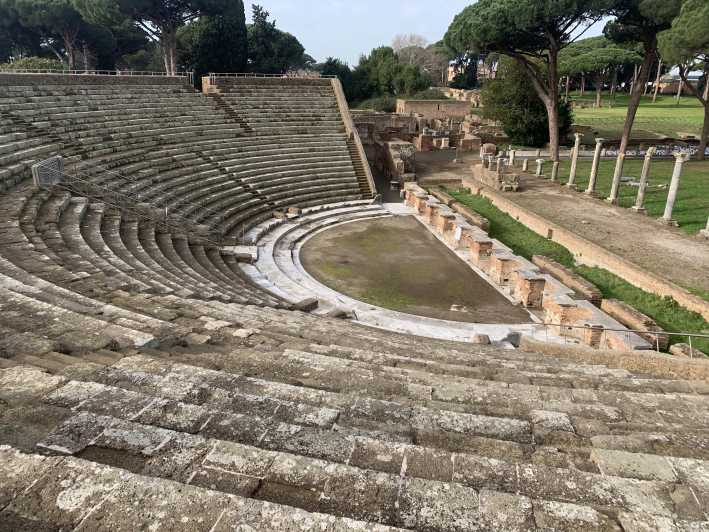
- Fast-track entry cuts down time spent at security, so you start walking sooner.
- Audio support options include an optional audioguide and an app-style guide with many points of interest.
- Optional golf cart ride can save your legs when the site feels spread out.
- Bathrooms, streets, and homes all show up in one visit, so you get more than one “type” of ruin.
- 2.5 to 5 hours is the real sweet spot for seeing the essentials without rushing.
Entering Ostia Antica Fast: Skip-the-Line Starts Your Day Right
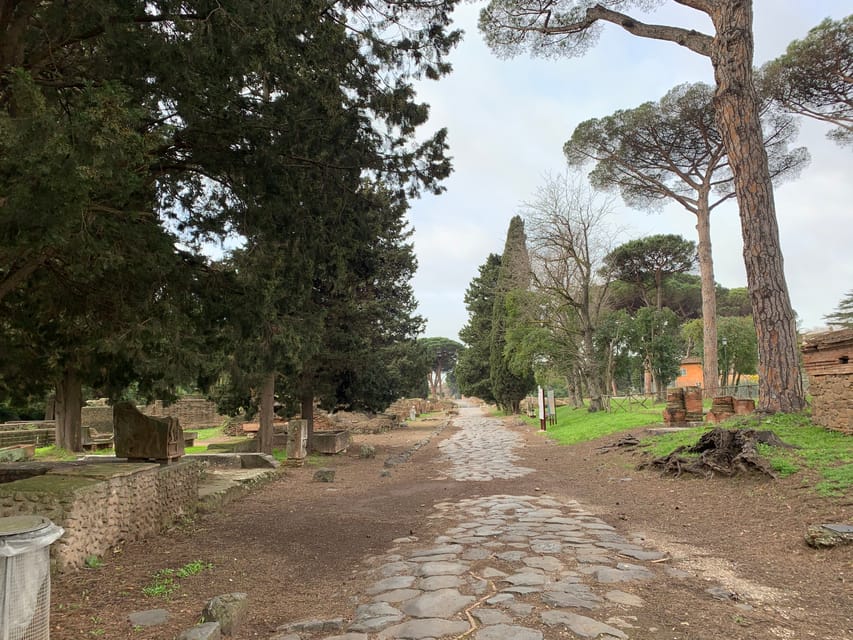
Ostia Antica is the kind of place where your enjoyment depends on time. If you arrive and lose an hour to lines, you’ll still see ruins, but the magic fades. This ticket is designed to avoid that problem with skip-the-line entry and an express security check.
What you’ll feel in practice is simple: you get inside, you orient yourself, and you can start moving while the site is still quiet and you’re still fresh. That matters here because the ruins are spread out, and the best memories are usually the quiet moments when you’re standing in front of something old and thinking, okay, this really existed.
Also note the paperwork reality. Your voucher is not your entry ticket. You’ll be contacted by an operator with the instructions you need to coordinate entry, so don’t plan to show up hoping your voucher will scan like magic.
You can also read our reviews of more tours and experiences in Ostia Antica.

What Your Ticket Includes (And What It Doesn’t)
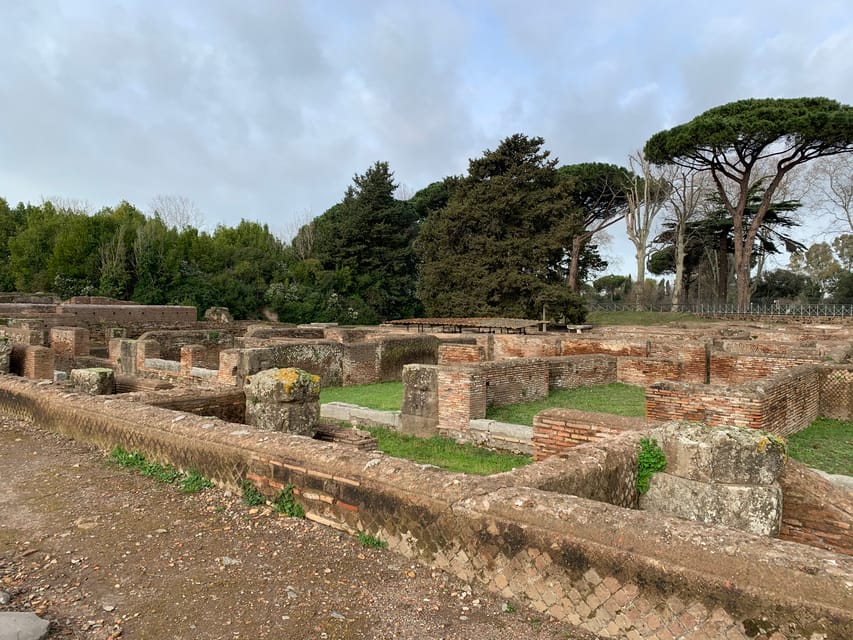
This experience is a self-guided visit at its core. That’s not a bad thing, it’s just good to know what you’re buying.
Included with the base offer:
- Fast-track entry through express security
Included only if you selected those options:
- Audio guide (availability of languages includes English, Italian, French, Spanish, German)
- Golf cart ride through the ruins (a comfortable way to cover more ground)
- Italian aperitivo paired with the cart experience
One more useful item: you also get a Rome City audio guide app you can download to your smartphone, with more than 170 points of interest. This can be a helpful “background layer” as you walk, especially when you want quick explanations without stopping to read every sign.
What’s not included:
- A live guide (so you won’t get a person narrating in real time)
- Hotel pickup/drop-off (you’ll handle your own way to the site)
If you like wandering with structure, the optional audio makes sense. If you want a person giving context and answering questions, you’ll need a different kind of tour.
Mapping the Ruins: How Decumanus Maximus Shapes Your Walk
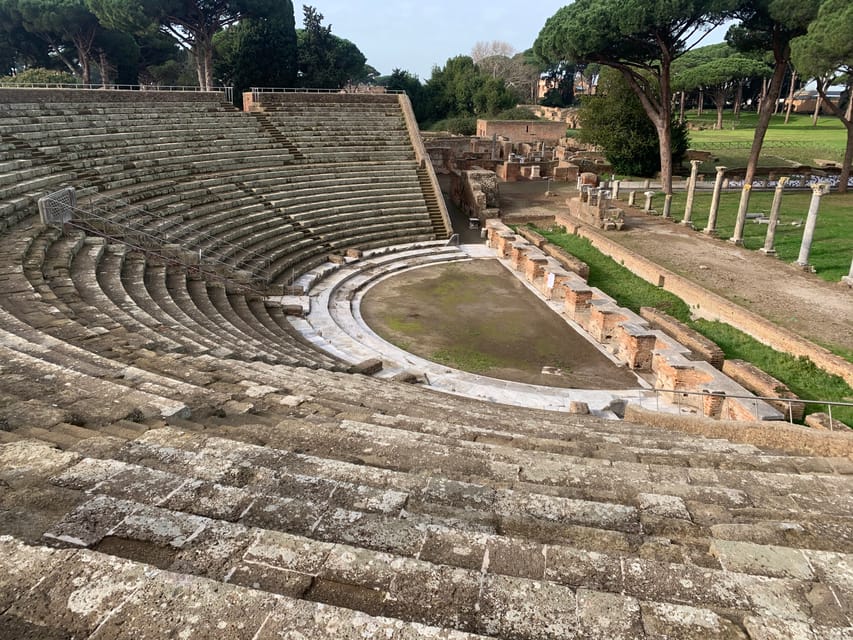
One of the smartest ways to enjoy Ostia Antica is to let its main street help you. A highlight here is the Decumanus Maximus, a major street that gives the whole area a readable direction. Even if you don’t memorize ancient street names, you’ll feel how the city is organized along axes.
Here’s how to use that in a practical way:
- Start walking along the main route so your highlights come in a natural order.
- Plan to loop back only after you’ve “caught” the big layout, not halfway through.
- Use the audio app or audioguide to attach meaning to what you’re seeing, especially when you hit the larger civic buildings.
You can think of it like hiking a museum where the exhibits are the street plan. When you follow the city’s skeleton, the ruins feel less random and more like a lived-in place.
Mosaic Marvels and Roman Homes: What You’ll See Up Close
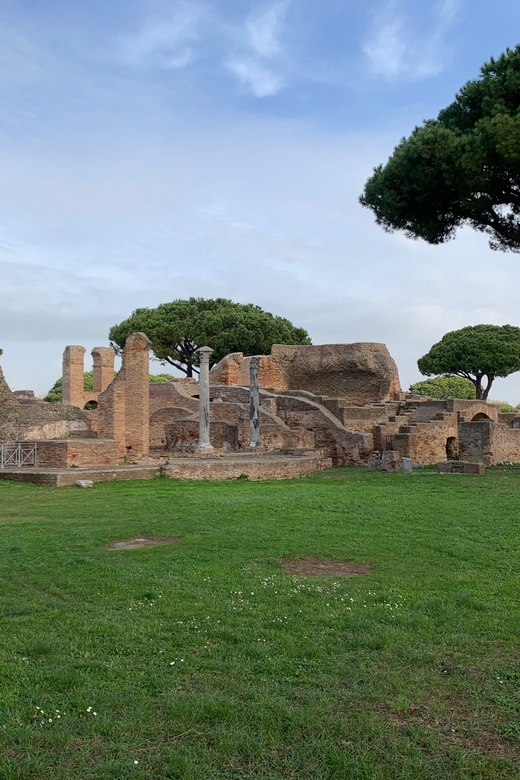
Ostia Antica earns its reputation because some of the ruins didn’t get erased by time. You’ll run into intricate houses where floor mosaics remain a standout. This is where the “Roman everyday life” feeling starts to kick in.
What makes mosaics so satisfying here is that they aren’t just decorative blobs. They can change the way you view a room or a corridor. Even without a long lecture, you can spot patterns in how spaces were designed for movement, work, and gathering.
If you like details, take your time at the mosaic spots:
- Look at the mosaic surfaces as you stand back, then step closer.
- Notice how the floor connects to surrounding wall remnants.
- Don’t rush the transition between homes and streets. The city’s everyday rhythm is part of the story.
If you’re the type who likes photos, do them fast and then put the camera away. Ostia rewards the kind of attention where you notice what’s worn down and what survived.
Baths of Neptune: The Ruins That Tell You How People Spent Time
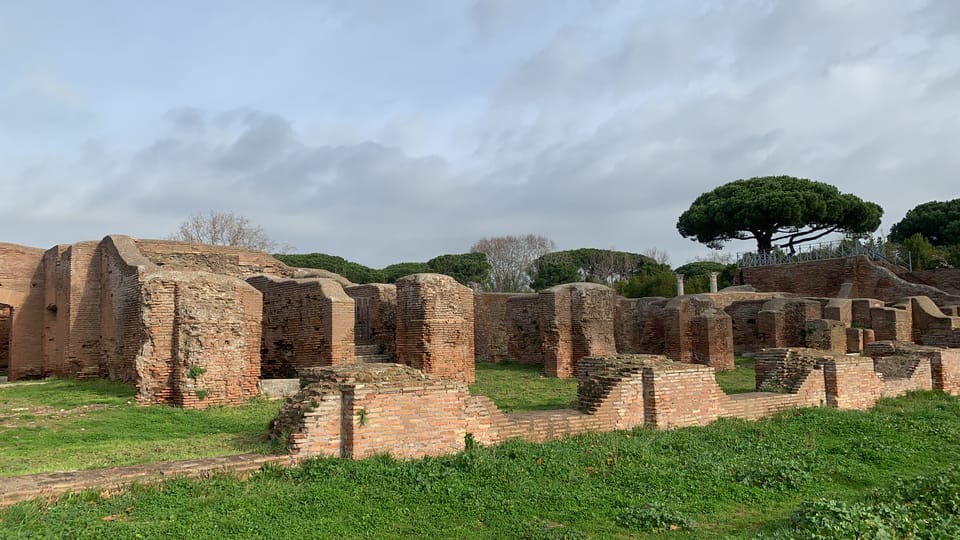
The Baths of Neptune are one of the big ticket sights, and they’re also a good test of whether this visit will match your style. Baths weren’t just for washing; they were social hubs, a place to talk, relax, and pass time.
Even if you don’t get every piece of technical detail, the architecture does a lot of the explaining. You can read how space was meant to flow, where people would have gathered, and why this complex would have felt like a daily stop—not an optional add-on.
Practical tip: if you want the best experience here, don’t treat it as a quick photo stop. Give it time to sink in. Look for how the room layout suggests movement between spaces (even if only partially preserved).
Using the Audio Guide Wisely: When to Trust It and When to Question It
Audio options are one of the main differences between ticket types here. The basic package is skip-the-line entry only, while upgraded options include an audioguide. You also have that Rome City app with over 170 points of interest.
This is where I’ll be straight with you: an audio guide can be fantastic, but it also depends on what you expect from it. One downside you should factor in is that the app-style guidance may feel succinct and not always give the broader context you’d want for every stop.
So here’s a smarter way to use it:
- Use audio for orientation and quick explanations (what you’re looking at, why it mattered).
- If a site section feels confusing, switch your attention back to visible clues: layout, entrances, room shapes, and where pathways lead.
- Treat the audio as a companion, not as the only source of meaning.
If you’re someone who reads every sign and wants deep interpretation at every turn, you might find that you still want more. If you’re happy with “enough to get it” and you enjoy figuring out the rest by looking, audio will likely work well.
Golf Cart Ride: Worth It for Distance, Not for “Seeing Everything”
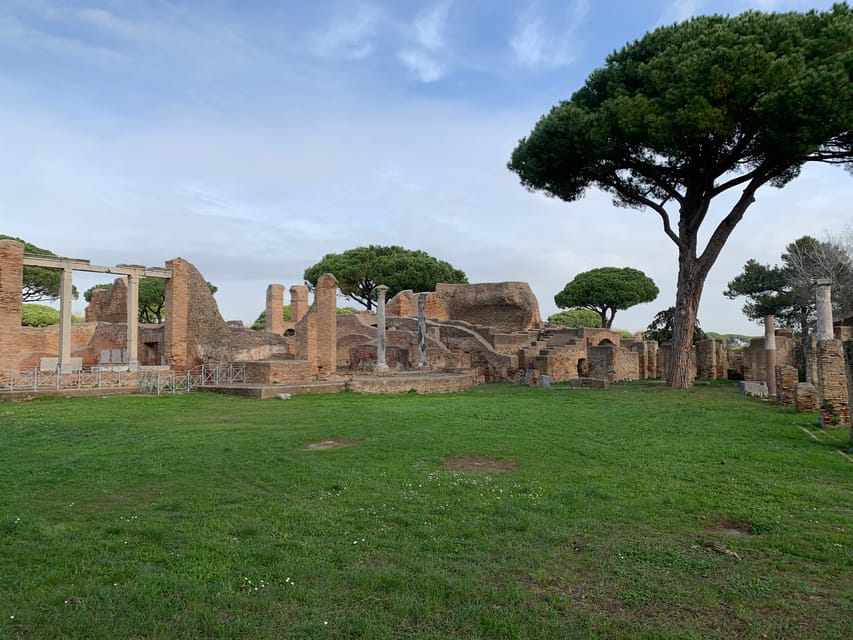
Ostia Antica is a spread-out archaeological site. The option for a golf cart ride is there for a reason: you can cover more ground without wearing yourself out.
Think of the cart as a pacing tool:
- Use it if you want to see a wider range of highlights within a 2.5–5 hour visit.
- Skip it if you enjoy walking slowly and you like getting close to details at every turn.
- Don’t expect the cart to replace the experience of stopping to really look.
If you add the aperitivo option, you’ll also get a more relaxed pause during the visit. That can be nice after time on your feet, as long as you’re comfortable mixing “food break” with ruins touring.
One consideration: the experiences with carts and aperitifs are more structured than pure self-walking. If you love total freedom, you may prefer the standard entry plus audio.
How Long Should You Plan: 2.5 to 5 Hours in Real Terms
The stated duration is 2.5 to 5 hours, and that range is real. Here’s how to choose:
Choose closer to 2.5 hours if:
- You want the core highlights without lingering.
- You’re combining Ostia Antica with other Rome-area plans.
- You plan to use the cart option.
Choose closer to 5 hours if:
- You like mosaics and house ruins enough to slow down.
- You want time to replay the city layout in your head as you walk.
- You’ll use audio more often and stop for photos and quiet moments.
I’d also plan for breaks. Bring water and take them, especially in bright weather. Comfortable shoes aren’t a suggestion here; they’re survival.
What to Bring (So the Sun Doesn’t Hijack Your Day)
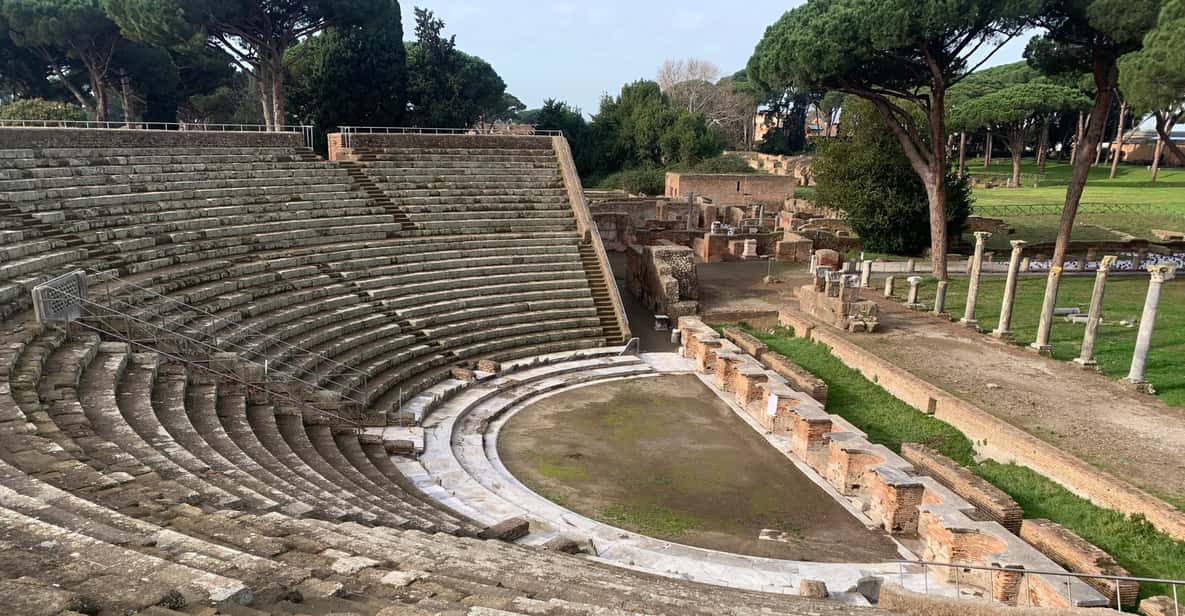
Ostia Antica is outdoors. For this kind of walking, your comfort controls your enjoyment.
Bring:
- Comfortable shoes
- Water
- Sunglasses, sun hat, sunscreen
- Passport or ID card (a copy is accepted)
Leave at home:
- Baby strollers and large bags or luggage
- Pets
- Weapons or sharp objects
- Drones
- Alcohol and drugs
These rules matter because they affect what you can carry and what you’ll need to manage at the entrance. Lightweight, water-ready packing is the easiest way to stay relaxed from the first minute.
Price and Value: Is $40 Fair for What You Get?
The price listed is $40 per person, with the offer’s details explaining what changes depending on the selected option.
Here’s how to judge value beyond the number:
- If you choose only the base admission, you’re mainly paying for the fast-track entry. That’s worth it if you hate lines and just want to start exploring.
- If you add the audioguide, you’re paying for more interpretation while still staying independent. That’s a good upgrade if you want context but don’t want a live guide.
- If you add the golf cart (and especially the aperitivo), you’re paying for comfort and downtime. That’s often worth it for people who want to see more without turning the day into a leg workout.
One more pricing detail: the offer includes total retail value tied to admission to the archaeological area, and the difference reflects the services included in the deal. In plain terms, the entry portion is the foundation; the add-ons are where your money goes.
If your budget is tight, start with base entry plus your own pace. If your feet get tired quickly or you want a more relaxed schedule, upgrading can make the day feel smoother.
Who This Works Best For (And Who Might Be Frustrated)
This is a strong match for:
- People who want independent exploration with the option to add audio
- Visitors who like architecture, street layout, and mosaics
- Travelers who appreciate skipping the hassle of lines
It’s not a fit for:
- People with mobility impairments or wheelchair users, since it’s listed as not suitable
- Anyone expecting a live guide narrative (there isn’t one)
If you’re traveling with a group, this ticket can still work well because you can set your own pace. Just be realistic: you’ll likely regroup after major highlights rather than expecting everything to happen at the same time.
Booking Decision: Should You Get This Ostia Antica Ticket?
I’d book it if you fall into the “I want the ruins, I want time to look, and I don’t want to waste energy on entry lines” camp. The fast-track setup plus the option for audio makes it a solid value for most people.
I’d think twice if:
- You’re expecting heavy, detailed storytelling at every stop. In that case, the audio option might feel too short, and you may want a different format.
- You’re counting on a live guide. This is self-guided.
If you want an efficient, low-stress way to experience Ostia Antica’s best-preserved corners, this ticket style fits the job.
FAQ
How long does the Ostia Antica visit last?
The duration is listed as 2.5 to 5 hours, depending on the starting time and how you pace your visit.
What’s included with the standard ticket?
The basic package includes fast-track entry through an express security check.
Is an audio guide included?
An audio guide is included only if you select the admission ticket option with audioguide. There’s also a downloadable Rome City audio guide app with more than 170 points of interest.
Is there a golf cart ride?
A golf cart ride is included only if you choose the ticket option that includes it.
Can I choose aperitivo with the visit?
Yes. An Italian aperitivo is included only if you select the ticket option that includes golf cart ride and aperitif.
What languages are available for the audio guide?
The audio guide languages listed are English, Italian, French, Spanish, and German.