REVIEW · OSTIA ANTICA
From Rome: Ostia Antica 4-Hour Guided Tour
Book on GetYourGuide →Operated by Roma Experience Tours · Bookable on GetYourGuide
Ostia Antica feels like Rome’s backstage pass. A guided trip here is a simple 20-minute train ride from the city center, yet it lands you in ancient Roman life that still looks shockingly intact. Two things I really like: you get the well-preserved theater (still used for occasional performances), and your guide connects the dots between everyday port commerce and the gritty side of Roman culture, including the brothel.
One thing to keep in mind: this is a walking-heavy ruin site, so plan on comfortable shoes and a hat if it’s sunny. It also isn’t suitable for people with mobility impairments or wheelchair users, so it’s best if you can move around uneven ground without stress. If you’re not picked up and your meeting point is Piramide metro, bring patience—one review called that wait area a bit dodgy.
In This Review
- Key highlights worth knowing before you go
- Getting to Ostia Antica from Rome without the stress
- Entering an ancient port city at the Tiber’s mouth
- The Roman theater: the star of the show
- Shops, mosaics, and everyday life you can actually picture
- Capitolium, Baths of Neptune, and the House of Diana
- Rome’s brothel stop: what you’ll learn and how it lands
- Necropolis tombs and the temples that still look solid
- Timing and pacing: how 4.5 hours actually works
- Private-group value: what you’re really paying for at $648.74 per person
- Who should book this Ostia Antica guided tour?
- Should you book this tour or DIY Ostia Antica?
- FAQ
- How long is the Ostia Antica guided tour from Rome?
- Where does the tour take place?
- What’s included in the price?
- Are food and drinks included?
- Is there a ticket line to wait in?
- Is pickup included?
- What languages is the guide available in?
- Is this tour wheelchair accessible?
- What should I bring?
- Can I cancel and get a refund?
Key highlights worth knowing before you go

- A fast train ride from Rome: you’re at Ostia Antica quickly, which keeps the tour from feeling like a whole-day haul
- The Roman theater you can still imagine in action: see it up close, not just from a postcard angle
- Rome’s port in full context: grains, marble, slaves, and wine moving through the harbor—your guide makes the system make sense
- The brothel stop is handled with clarity: you’ll learn about Rome’s “sin” side without it turning into cheap shock value
- Necropolis tombs for an eerie change of mood: the atmosphere shifts from public life to the graveyard edge of town
- Small-group, guide-led feel: the experience is relaxed, with guides like Valeria standing out for clear explanations
Getting to Ostia Antica from Rome without the stress
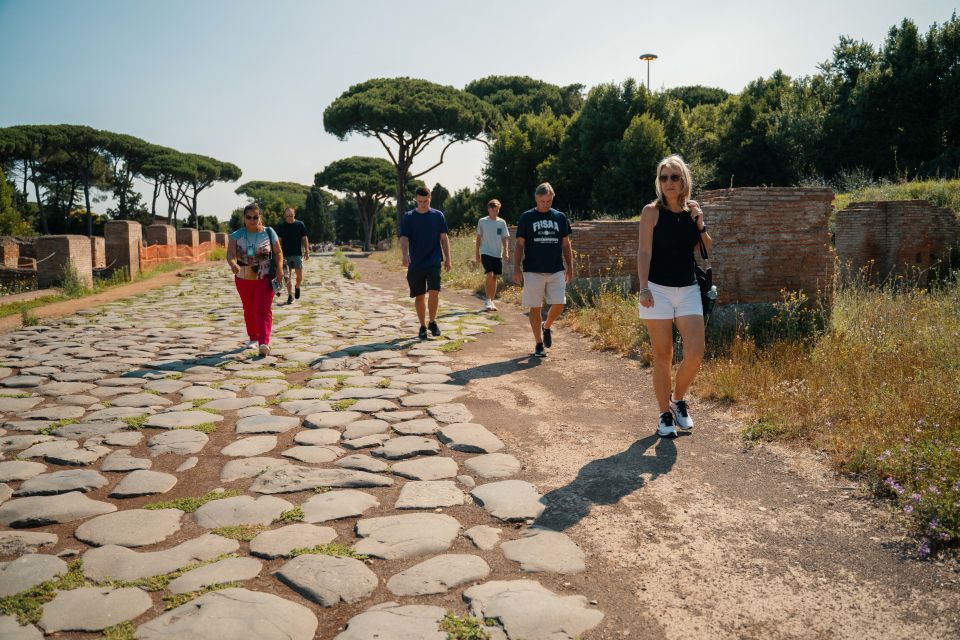
The big win here is how easy it is to get out of Rome and into the ruins. The tour includes a train ticket, and the ride is just under 20 minutes, so you don’t lose half the day to transit. You’re basically doing a quick “time jump,” then settling in.
Pickup is included if you’re within the pickup area. If your hotel or address is outside that range, you’ll get a pickup location after booking. One useful note: if your group meets at Piramide metro, arrive a few minutes early and keep your phone handy for landmarks, since a past meeting spot was described as a bit uncomfortable to wait in.
You can also read our reviews of more tours and experiences in Ostia Antica.

Entering an ancient port city at the Tiber’s mouth
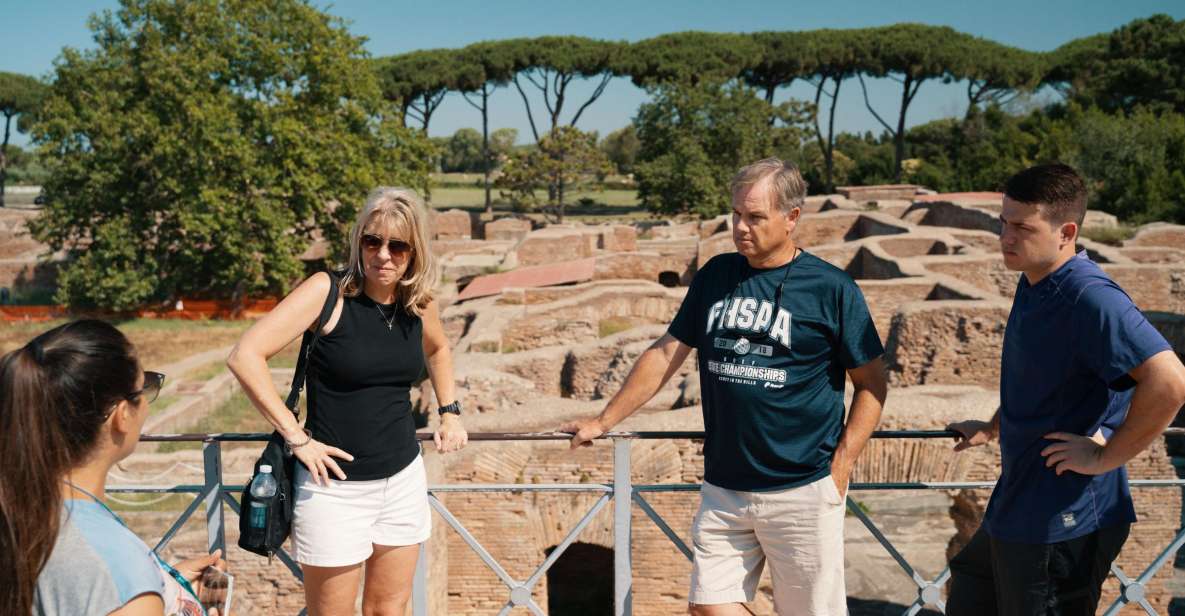
Ostia Antica sits at the “mouth” of the River Tiber, and that location matters. This was the doorway into Rome, a gateway where goods, people, and money flowed in—and where the city’s economy could be felt in stone. Your guide walks you through how this place functioned for the Roman Republic and beyond, so the ruins don’t feel like random walls.
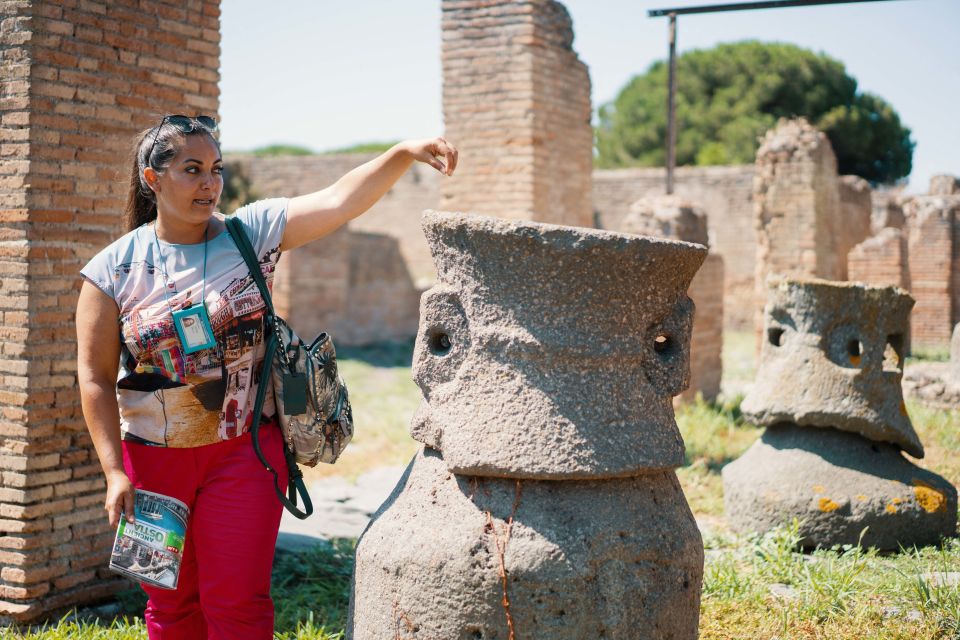
I especially like the way the tour frames trade as real life. You’ll hear about grains from Sicily, marble from Africa, slaves from Asia, and wine from Spain all processing through the port city on their way to Rome. Even if you’re not a history nut, that kind of detail helps you “see” what Ostia was built to do.
The Roman theater: the star of the show
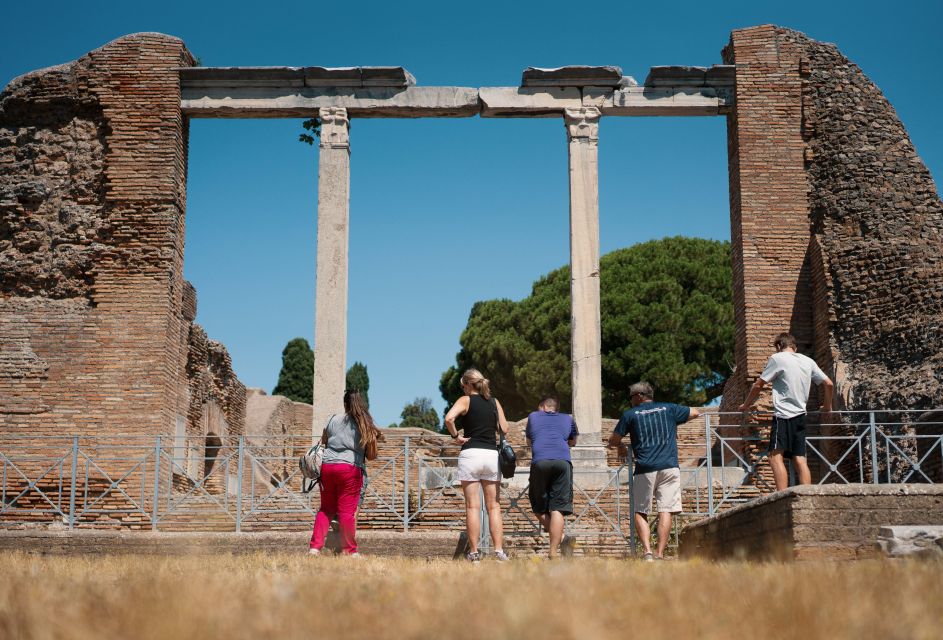
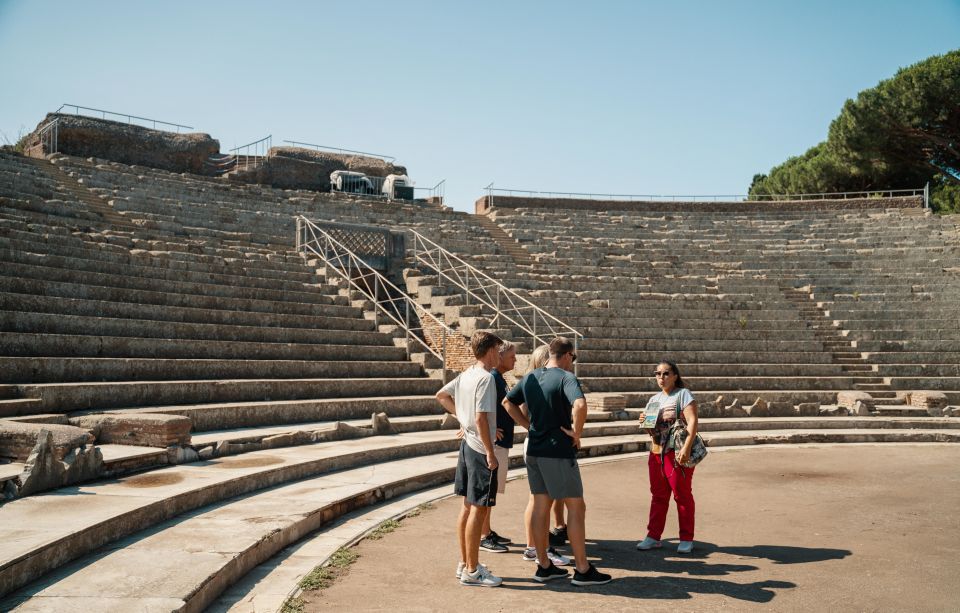
If you only remember one stop, make it the theater. Ostia Antica is famous for having a well-preserved Roman theater, and it’s still used for occasional performances. That means you’re not just staring at ruins—you’re looking at a space that still has a job.
When you visit, pay attention to how the theater anchors the surrounding buildings. The guide’s job is to help you understand why this kind of venue mattered in Roman public life: it’s where people gathered, shared stories, and watched events that connected entertainment with civic identity. It’s the kind of site where a good guide turns a “nice to see” stop into an “I get it now” moment.
Shops, mosaics, and everyday life you can actually picture

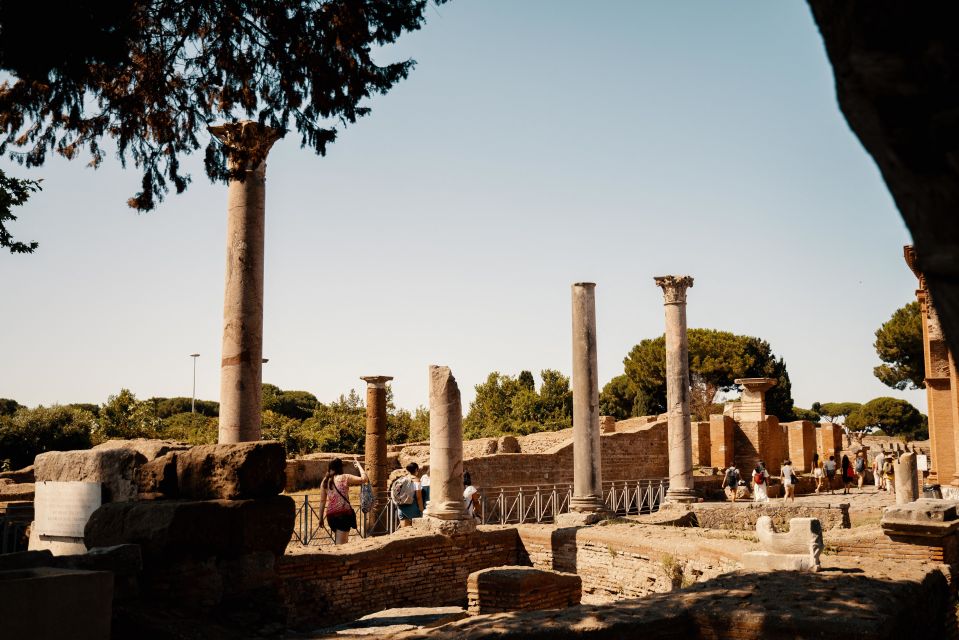
One of the best parts of Ostia is how much feels built for normal routines. You’ll see ancient shops that remain intact, which is rarer than you’d think when you compare it to many other archaeology sites. The tour highlights a fish shop with stunning mosaics, and that’s the type of detail that makes everything feel more human.
This stop is valuable because it keeps the tour from becoming only temples and trophies. The port city wasn’t just grand ceremonies; it was commerce, food, and daily traffic. When your guide points out the shops and decorative floors, you start to understand Ostia as a working town—not a museum.
Capitolium, Baths of Neptune, and the House of Diana

Public life is the theme around the Capitolium, which sits at the heart of what Romans would have recognized as official city space. Your tour includes the monuments of the Capitolium, and it’s a great moment to learn how power and religion blended in Roman design and layout.
Then comes the Baths of Neptune. Even without going technical, baths tell you a lot about Roman routine: social time, cleanliness, and leisure wrapped into one structure. Your guide connects these spaces to how Romans experienced the city day to day.
Finally, you’ll move into the House of Diana—one of the former citizens’ private homes. You’ll also see frescoes, which helps make the residential portion feel less flat and more personal. This is where the tour’s “less crowded than Pompeii” advantage really pays off: you can slow down and look at domestic decoration and design without the site being shoulder-to-shoulder.
Rome’s brothel stop: what you’ll learn and how it lands
The highlight list calls out the local brothel, and that can sound like a detour—until you experience how your guide frames it. The tour includes the “sinful side” of Rome, and the point isn’t to sensationalize. It’s to show you that Roman society had structured spaces for activities that modern visitors might assume were hidden.
A good guide makes this stop educational by explaining the social context and how these areas fit into a larger urban system. If you like tours that don’t skip the uncomfortable parts, this is one of the more memorable segments. It adds texture, too—Ostia isn’t only about temples and theaters.
Necropolis tombs and the temples that still look solid
Just when the tour feels like it’s in the middle of everyday life, you shift to the Necropolis. The tombs here have an eerie feel, and that change of atmosphere is a big reason I’d recommend this tour even to people who don’t usually chase “dark” sites. It’s the emotional rhythm of the place: civic spaces, private spaces, and then the graveyard edge.
You’ll also see remarkably well-preserved Roman temples. Temples can be impressive anywhere, but in Ostia, the preservation helps you read the architecture instead of guessing. Your guide points out what to look for, and the contrast between temples, tombs, and houses is what makes Ostia feel like a whole city—not a pile of leftovers.
Timing and pacing: how 4.5 hours actually works
This is a half-day tour (about 4.5 hours), and that length is a sweet spot. Long enough to cover the major highlights—port life, the theater, public spaces, and the Necropolis—but short enough that you don’t start dragging your feet in mid-afternoon.
You’ll want to plan for walking through an outdoor archaeological park. The good news: there’s a restaurant and cafe located inside the park if you need a break. Food and drinks aren’t included, so decide in advance whether you want to buy lunch there or snack during gaps. If you hate decision-making while hungry, it’s smart to grab whatever you need before you’re deep into the ruins.
Private-group value: what you’re really paying for at $648.74 per person
At $648.74 per person, this isn’t a budget day trip. But the value comes from what’s bundled: admission ticket, train ticket, and a live guide, plus the ability to skip the ticket line. You’re also paying for a private-group format, which tends to mean you get more attention and less waiting around.
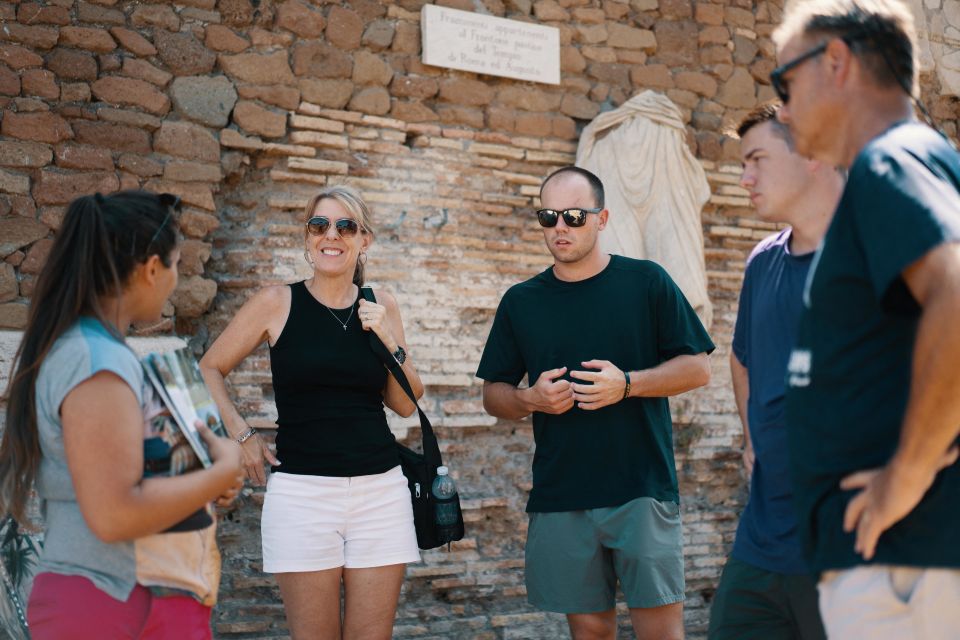
Here’s the practical way I’d judge the cost: you’re not paying just for access to ruins. You’re paying for interpretation—how the guide turns ports, baths, theaters, and domestic houses into one story. Guides like Valeria were called out as exceptional for being well-informed and making the tour feel relaxed.
If your goal is to move fast and “tick boxes,” you might not feel the cost is justified. But if you want the site to make sense—especially when Ostia’s details are scattered across different types of buildings—this guide-led structure is what you’re buying.
Who should book this Ostia Antica guided tour?
This tour fits best if you want Roman history without the biggest crowds. Ostia Antica has that calm feel where you can actually look at details, and the half-day format works well if you’re trying to balance sightseeing with downtime.
You’ll probably enjoy it most if you like:
- architectural sites that are still readable, not just “what’s left”
- stories that connect daily life (shops, homes, baths) with major public spaces (Capitolium, theater)
- a guided approach to darker or uncomfortable topics like the brothel
It’s not the right call if you can’t manage uneven outdoor walking, since it’s not suitable for wheelchair users or mobility impairments.
Should you book this tour or DIY Ostia Antica?
Book it if you want the site to feel like a living city. A good guide matters here because Ostia Antica is large and varied, and the tour’s stops are linked into a clear narrative—from port commerce to theaters, homes, temples, and tombs. The relaxed private-group feel is also a real advantage.
Consider skipping the guided option if you’re happy to wander on your own and you don’t care much about interpretation. DIY can be fine for small highlights, but you’d miss the payoff: the way the tour stitches together the port’s trade story, the emotional shift from public life to Necropolis tombs, and the context around the brothel stop.
My bottom line: if you’re spending time in Rome and want a half-day that feels both substantial and calmer than the big name ruins, this is a smart way to do Ostia Antica.
FAQ
How long is the Ostia Antica guided tour from Rome?
The tour lasts about 4.5 hours.
Where does the tour take place?
It’s in Ostia Antica, Lazio, Italy, with the start from Rome and a train ride to the archaeological site.
What’s included in the price?
Admission ticket, train ticket, and a live guided tour are included.
Are food and drinks included?
No. Food and drinks are not included, though there is a restaurant and cafe inside the park.
Is there a ticket line to wait in?
The tour includes skip-the-ticket-line.
Is pickup included?
Yes, pickup is included. You need to inform the local partner in advance of your hotel or pickup address. If you are outside the pickup area, you’ll receive a pickup location after booking.
What languages is the guide available in?
The live tour guide is available in English, Arabic, French, and Spanish.
Is this tour wheelchair accessible?
No. It is not suitable for wheelchair users or people with mobility impairments.
What should I bring?
Bring your passport or ID card, wear comfortable shoes, and plan for weather-appropriate clothing. A hat is strongly recommended.
Can I cancel and get a refund?
Free cancellation is available up to 24 hours in advance for a full refund.