REVIEW · ROME
Rome: Caracalla Baths & Circus Maximus — Private or Shared
Book on GetYourGuide →Operated by Touriks · Bookable on GetYourGuide
Caracalla feels like a time machine. This 1.5-hour Rome tour threads you through Caracalla Baths and then onward to Circus Maximus, two spots Romans used for daily leisure and big public spectacle. I especially liked the comfort of sterilized headsets and the fact you’re led by a live archeologist guide, not a quick-drive-by lecture.
The one drawback to plan for: Circus Maximus has a lot more “read between the lines” than massive standing ruins. You’ll still get the stories and the sense of scale, but if you want a full view of a packed stadium, you may find it a bit limited.
In This Review
- Key points to know before you go
- Caracalla Baths and Circus Maximus: a rare one-two Roman day
- Getting to the meeting point near Circo Massimo
- Caracalla Baths: underfloor heat, mosaics, and a day in the 3rd century
- What you’ll notice in the ruins
- The pacing question: is 1 hour enough?
- Circus Maximus: standing where the Ludi happened
- A realistic expectation for what you can see
- How the tour stays easy: headsets, small groups, and your guide
- Price and value: is $77 worth the 1.5 hours?
- Who this tour fits best (and who may want to adjust plans)
- Should you book this Rome Caracalla and Circus Maximus tour?
- FAQ
- How long is the tour?
- Where do I meet the guide?
- Is the ticket line skipped?
- What’s included in the price?
- What language options are available?
- Is food or drinks included?
- Is the tour wheelchair accessible?
- What should I bring?
- What items are not allowed?
- What happens if weather is bad?
Key points to know before you go
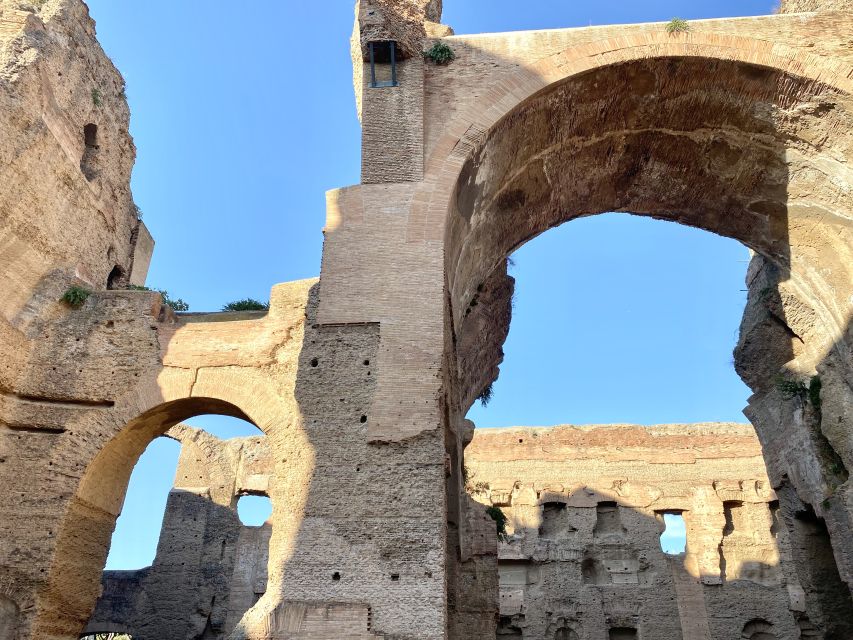
- Caracalla first, because it does the heavy lifting: most of your time is at the best-preserved baths in Rome.
- A 3rd-century day-at-the-thermae walkthrough: you won’t just see walls—you’ll follow the typical flow of a bathing day.
- Underfloor heating and mosaic details: the guide explains how the system kept rooms at the right temperature and points out geometric motifs.
- Circus Maximus is about scale and imagination: you’ll stand on the grounds tied to the Ludi and learn what happened there.
- Small groups (max 10) or private options: easier pacing, more questions, and less time waiting in a crowd.
Caracalla Baths and Circus Maximus: a rare one-two Roman day
This tour is built like a smart Rome afternoon. You start at the Baths of Caracalla, where the ruins are still dramatic and legible, then you shift to Circus Maximus, where you’re learning about public games at a site that’s mostly foundations now.
I like that the experience is designed as leisure, not just sightseeing. The baths section is about how Romans spent time—bathing, socializing, and doing more than you might expect—while the circus segment focuses on the public energy of the Ludi, the multi-venue celebrations that could last for days.
If you’re trying to fit Rome into limited days, this is a strong pairing. It gives you two “Roman worlds” without forcing you to spend half your trip transferring between far-flung neighborhoods.
You can also read our reviews of more private tours in Rome


Getting to the meeting point near Circo Massimo
You meet your guide at the exit of the Metro Station Circo Massimo, in the direction of Laurentina, in front of the FAO building. Look for a yellow label with the local partner’s name.
This part matters more than people think. Caracalla is in a quieter archaeological area close to the Colosseum, but Circus Maximus starts with a walk from public transport, and you want to be settled before the guide starts the story.
Plan to arrive 5 minutes early so you can complete sign-up. If you’ve ever shown up late to an easy meeting point and then felt rushed once the group forms, you already know why this timing detail is worth respecting.
Caracalla Baths: underfloor heat, mosaics, and a day in the 3rd century
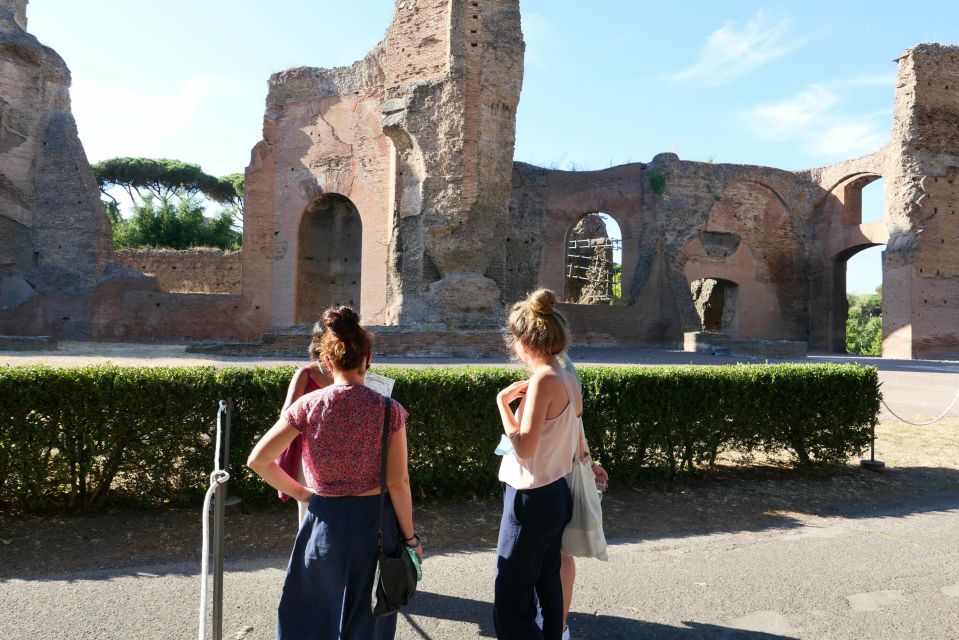
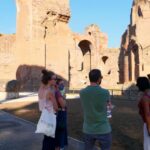
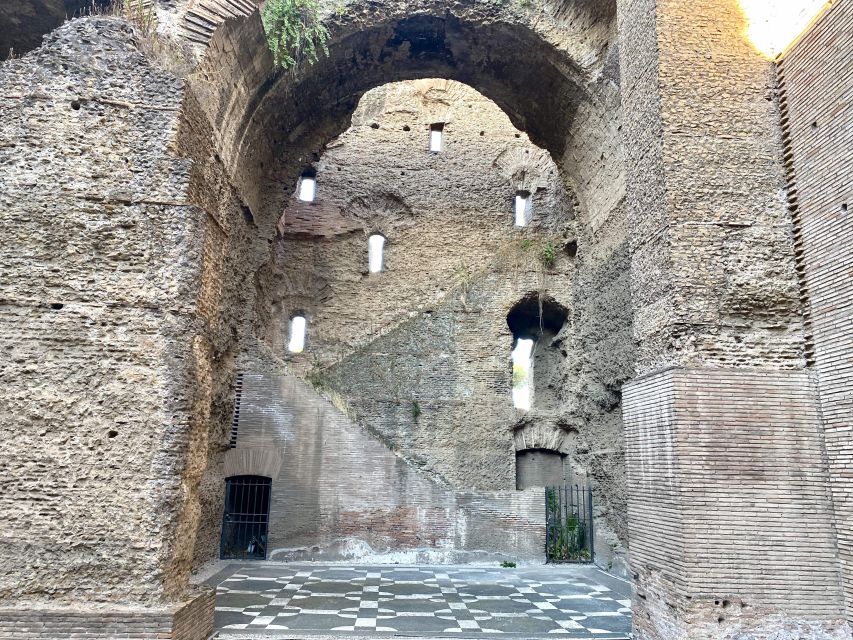
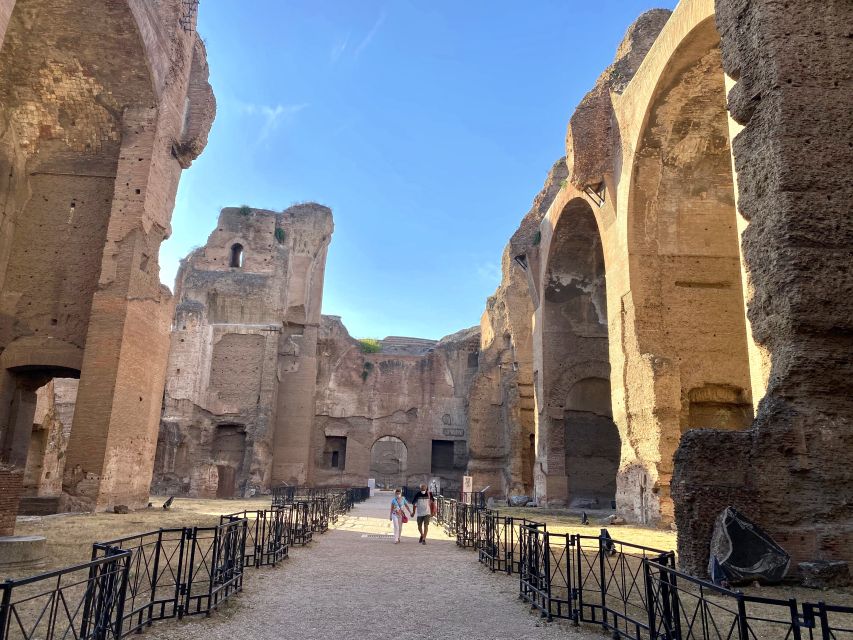
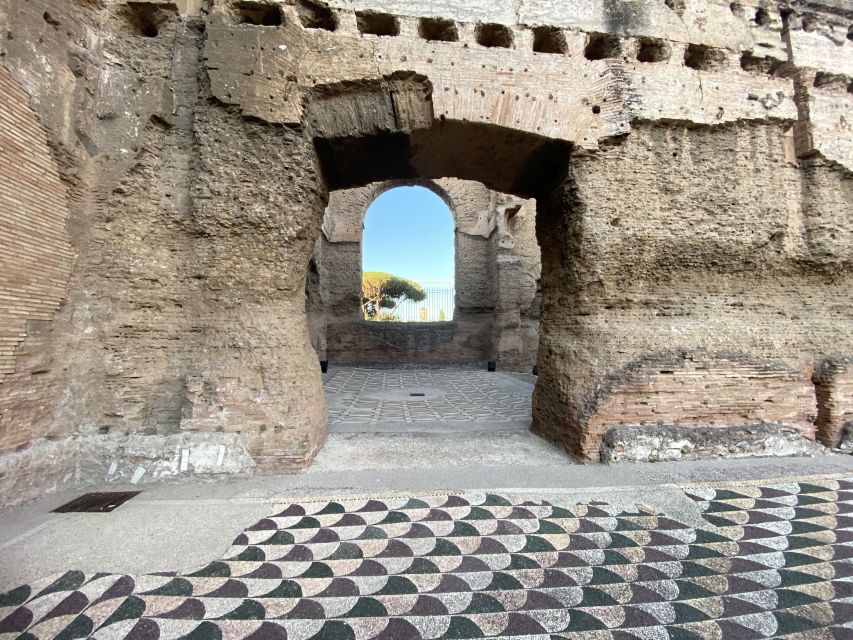
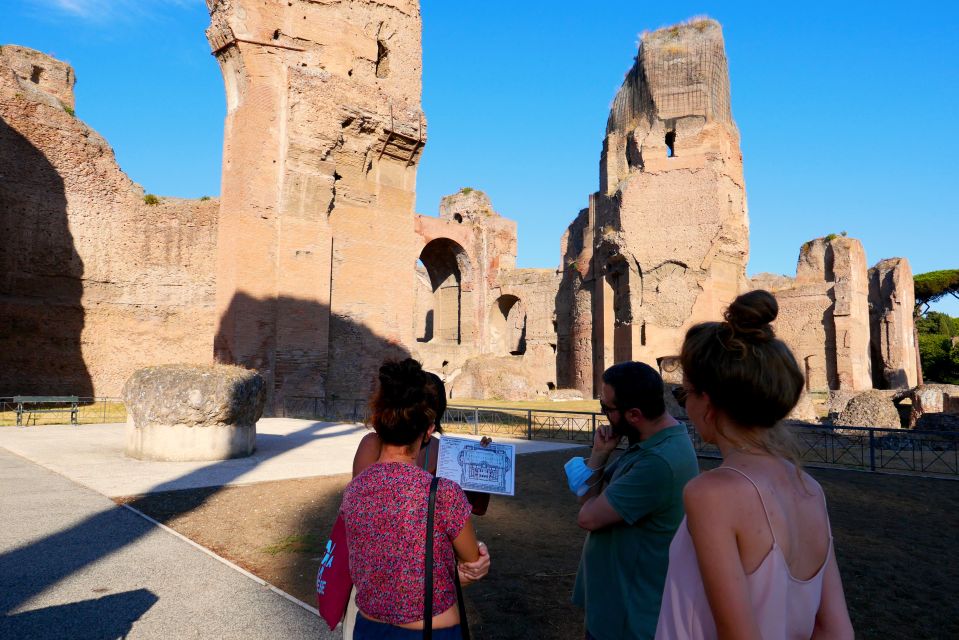
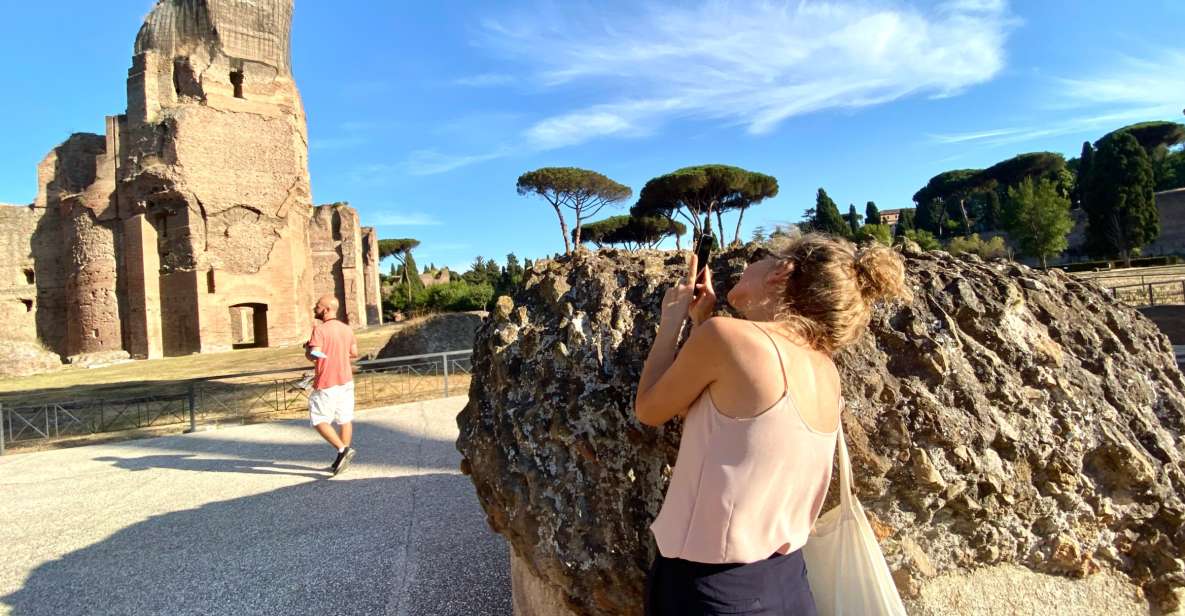
Most of your time goes to the Baths of Caracalla, and that’s the right call. This complex is known for being among the best-preserved bath structures in Rome, so the guide can point out scale and layout without you needing advanced archaeology training.
The tour is paced like a walk-through of daily life. You’re taken through the exact steps of a typical day at the baths in the 3rd century AD, which changes how you look at everything. Instead of seeing disconnected rooms, you start to understand a rhythm: movement, stops, services, and the way spaces were designed for comfort and routine.
One of my favorite parts to pay attention to is the heating system. The guide explains the labor-intensive underfloor heating and how the temperature was maintained in different rooms. You don’t need engineering background to get the point; it’s the physical effort behind Roman comfort that lands.
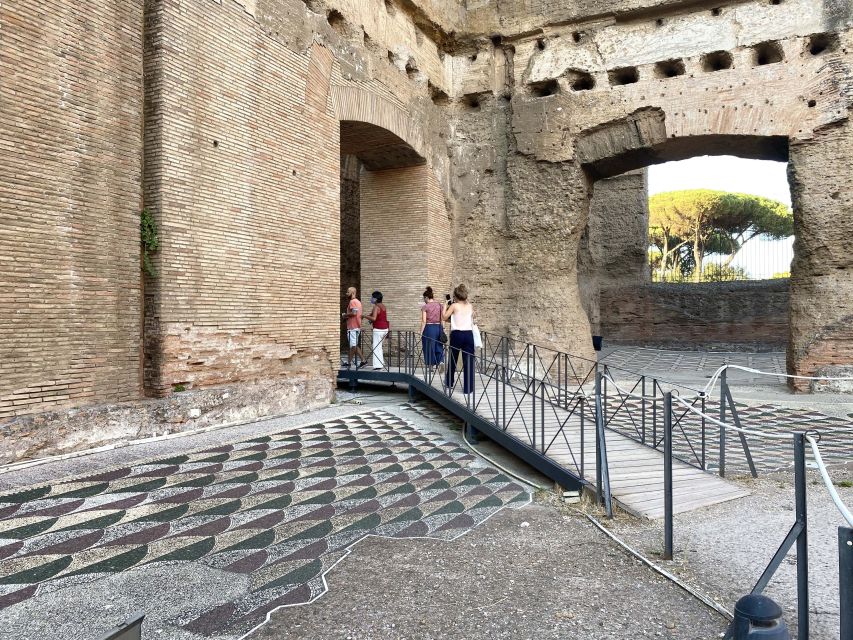
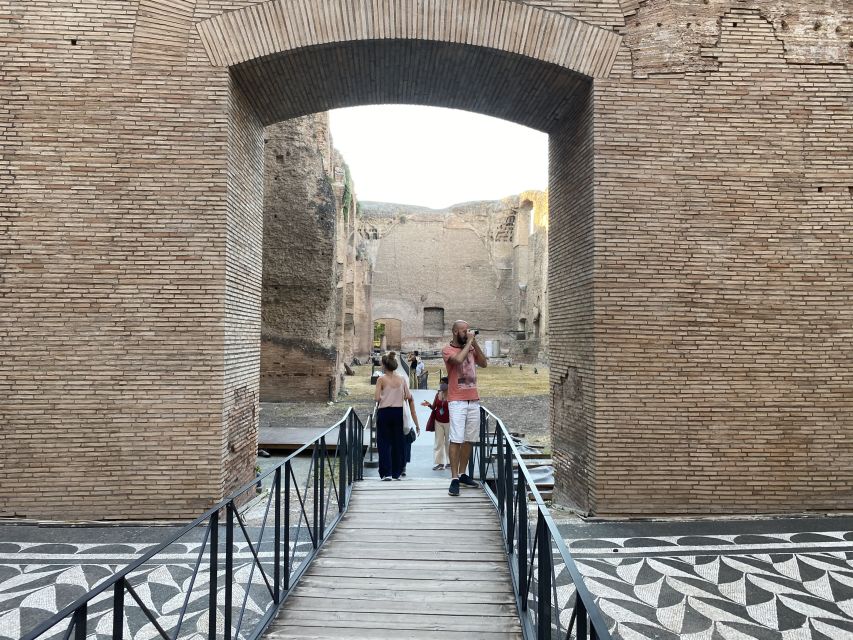
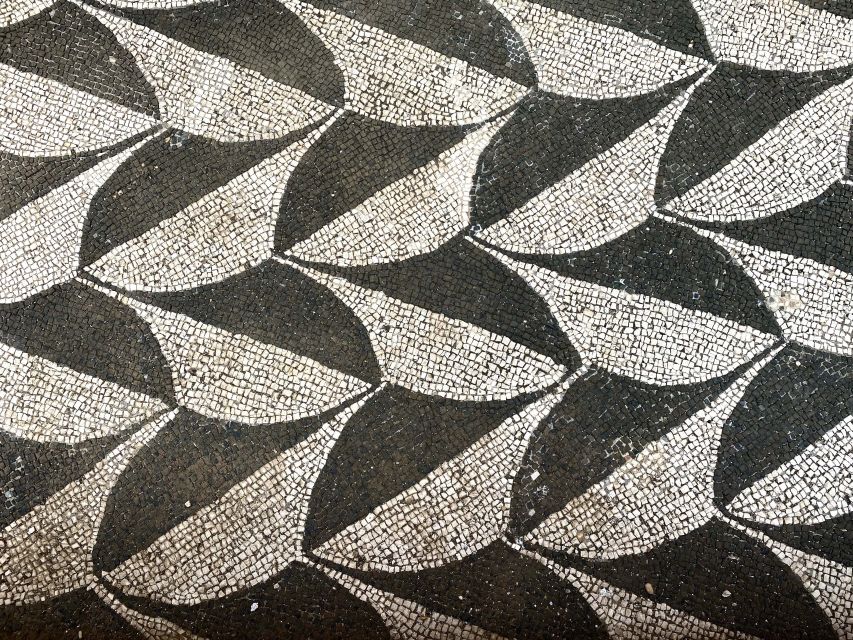
Then come the details that make the ruins feel real: mosaics with geometric motifs and the craftsmanship that still shows through. If you enjoy patterns, floors, and the way art was built into daily spaces, this is where you’ll slow down without anyone telling you to.
What you’ll notice in the ruins
- Gigantic walls and monumental rooms: Caracalla isn’t tiny fragments. It’s big enough that your brain can still visualize how busy it once was.
- A mix of body-and-mind services: the baths weren’t only about washing; the guide covers a bizarre range of services that stretched beyond the physical.
- Mosaics and remaining floor sections: you get enough intact material to see what the Romans cared about aesthetically, not just structurally.
The pacing question: is 1 hour enough?
For Caracalla, 1 hour can feel like a brisk sprint if you’re a “stare at every stone” type. But the tour isn’t trying to be a museum lecture marathon. It’s built to help you read the site quickly, with insider-level context, and then move on with a clearer picture than you’d get from wandering alone.
If you want extra time on mosaics or you’re especially drawn to Roman engineering, I’d treat this as your primer. You’ll finish with enough understanding to choose whether you want a longer follow-up walk afterward.



Circus Maximus: standing where the Ludi happened
After Caracalla, you head to what used to be the Circus Maximus—an enormous public games venue and, historically, one of the largest structures for public spectacle ever built.
Here’s the key: there isn’t a single “wow view” the way there is at some other Roman monuments. Instead, you get something more useful: a guided reconstruction. The guide explains the glorious Roman Ludi and the multi-venue celebrations that could stretch over several days.
You stand on the soil tied to the events—chariot races, gladiator fights, and the clamor of the public. The words matter because the physical remains don’t do all the work for you. The tour helps your imagination fill the gaps in a guided, grounded way.
The session also moves to early Roman-era myth. You’ll learn about quasi-legendary foundations before Rome itself and how gods and early stories connect to the circus’s origins. It’s a different flavor from the baths, more about collective memory and how Romans explained their world.
A realistic expectation for what you can see
You might find that the Circus Maximus part feels shorter and more conceptual. That’s normal here. Many people come looking for giant stadium remnants; what you get is learning the logic of the space and the kinds of events it hosted.
If you’re okay with that trade—less structure, more story—you’ll likely enjoy this segment a lot. If you want lots of standing architecture, you’ll probably feel like Caracalla carried the experience.
How the tour stays easy: headsets, small groups, and your guide
This is one of the smoother ways to do two sites in one stretch. Entrance fees are included for the Caracalla Baths, and you get sterilized headsets so you can hear your guide clearly. That matters at ruins, where voices can vanish into outdoor space fast.
Your guide is described as a live archeologist guide, and that shows in how the sites get explained. The tour also includes full on-site assistance, so you’re not left solving logistics while trying to understand the ruins.
Small group size is a big deal for value and comfort. The tour runs with a maximum of 10 participants, and it can be private or semi-private depending on what you book. In practice, that tends to mean fewer bottlenecks and more chances to ask questions.
From names shared in past experiences, you may meet guides such as Ciara, Chiara, Francesca, Lars, Cynthia, Anestis, Mario, Alicia, Sam, and Samuele. What ties many of these guides together is a storytelling style that helps you visualize the 3rd century without drowning you in dates.
If you care about language variety, you’re covered. The tour offers live guidance in French, Portuguese, Spanish, English, German, and Italian.
Price and value: is $77 worth the 1.5 hours?
At $77 per person for about 1.5 hours, this isn’t a budget stroll—but it can be good value if you use it for what it’s best at: interpretation.
You’re paying for:
- Skip-the-ticket-line entry at Caracalla
- A guided explanation tied to architecture and daily routine at the baths
- Headsets that keep the tour comfortable to follow
- A second site (Circus Maximus) so you don’t waste time arranging another guided visit
For many people, Caracalla alone can feel confusing if you walk in cold. Roman baths can look like a pile of rooms until someone helps you see how they worked. This tour’s focus on underfloor heating, mosaics, and the steps of a day at the baths is exactly the kind of guide-led context that turns a ruin visit into a memory.
That said, there is one value warning label—informally. The Circus Maximus portion is shorter and more imagination-driven. If your priority is maximum visual remains, you may feel the price is mostly justifiable through Caracalla.
Who this tour fits best (and who may want to adjust plans)
I’d book this if you like:
- Seeing Rome through how people lived there, not just what’s still standing
- Roman engineering details like underfloor heating
- Mosaics and floor patterns that explain how spaces looked and worked
- A small-group pace with time for questions
I’d consider a different option if you’re looking for a heavy-duty “monument tour” where you spend most of the time staring at big standing structures. Circus Maximus here is about scale and storytelling, not wall-to-wall architecture.
Also think about your walking tolerance. The experience includes comfortable walking and a couple of segments in an archaeological area, so wear shoes you won’t regret by minute 45.
Should you book this Rome Caracalla and Circus Maximus tour?
Yes, I’d book it if you want a focused Roman leisure experience that blends engineering, everyday routine, and public drama in just 1.5 hours. The baths are the centerpiece, and the guide-led approach makes those ruins much easier to understand and enjoy.
If you’re the kind of traveler who needs a lot of visible structure at every stop, treat the Circus Maximus segment as the story side of the visit. In that case, you may still like the tour—you’ll just enjoy it more when you accept that the best payoff is in the reconstruction.
Bottom line: for a half-day Rome schedule, this is a smart use of paid guide time, especially when you want Caracalla’s details interpreted for you.
FAQ
How long is the tour?
The tour lasts 1.5 hours total.
Where do I meet the guide?
Meet at the exit of the Metro Station Circo Massimo, direction Laurentina, in front of the FAO building. Look for a yellow label with the local partner’s name.
Is the ticket line skipped?
Yes, skip-the-ticket-line entry is included.
What’s included in the price?
Entrance fees to the Caracalla Baths, sterilized headsets, a live archeologist guide, and full on-site assistance.
What language options are available?
French, Portuguese, Spanish, English, German, and Italian.
Is food or drinks included?
No. Food and drinks are not included.
Is the tour wheelchair accessible?
Yes, wheelchair access is listed as available.
What should I bring?
Comfortable shoes.
What items are not allowed?
Pets, weapons or sharp objects, baby strollers, luggage or large bags, and drones are not allowed.
What happens if weather is bad?
The activity might be canceled due to unfavorable weather. If that happens, you get the choice of an alternative date or a full refund.