REVIEW · TREVI FOUNTAIN
Rome at Twilight Tour Among the Piazzas and Fountains
Book on GetYourGuide →Operated by Through Eternity Tours · Bookable on GetYourGuide
Twilight turns Rome theatrical. On this 2.5-hour evening walk, I love how the guide connects the Pantheon to Imperial engineering and how the Trevi Fountain becomes a real-life stage of water and stone; the downside is it’s a step-heavy stroll on uneven ground.
I also like the small-group feel, limited to 10 people, with headsets kicking in for groups of 6 or more. And you meet in Piazza Navona, right in front of the toy shop Al Sogno, so you start oriented instead of guessing.
One note to plan around: on Sundays the tour does not enter the Pantheon (it’s closed), and due to the Jubilee some monuments can be under restoration, so you should watch for any last-minute messages about changes.
In This Review
- Key highlights you’ll actually feel
- Setting the tone: meeting in Piazza Navona and walking with a small group
- Piazza Navona at twilight: Rome’s 2,000-year drawing room
- Pantheon area and Imperial Rome: what you’ll notice from the outside
- Temple of Hadrian: a short stop that adds real depth
- Trevi Fountain as baroque stagecraft: water, arches, and classical drama
- Piazza di Spagna and the Spanish Steps: social history in stone steps
- Price and 2.5-hour value: what $100.82 buys you
- Who this tour suits best (and who should skip it)
- Quick practical checklist before you go
- Should you book Rome at Twilight Tour Among the Piazzas and Fountains?
- FAQ
- How long is the tour?
- What are the main stops on the route?
- Is the Pantheon included in the visit?
- Is this tour suitable for wheelchair users?
- What language is the tour guide?
- Are headsets provided?
- What should I bring?
- Is food or transportation included?
Key highlights you’ll actually feel

- Piazza Navona’s 2,000-year layout: a long, distinctive shape that still runs the show at night.
- Pantheon-area context without rushing: you’ll get the story of the building and key tombs from the outside on Sundays.
- Temple of Hadrian stop: a compact way to add another layer of Imperial Rome.
- Trevi Fountain as theatrical architecture: the fountain is explained like a triumphant classical composition, not just a photo stop.
- Spanish Steps + Trinità dei Monti: history of the church and the social meaning of the stairway that linked two separated areas.
- A tight evening route: you cover the big names in about 2.5 hours—without pretending you can see Rome in a day.
Setting the tone: meeting in Piazza Navona and walking with a small group
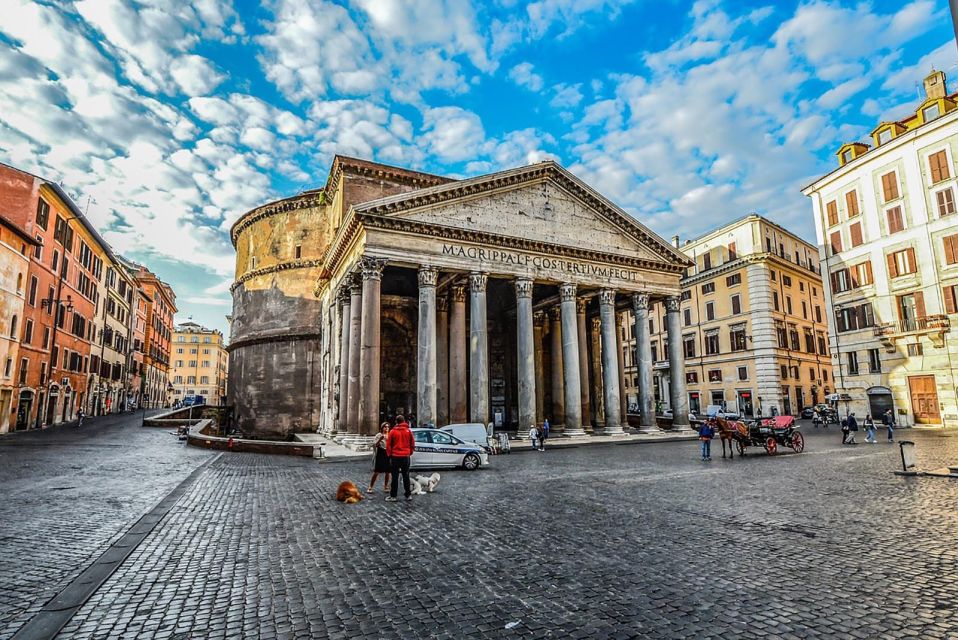
This tour works because it starts where Rome is already in full conversation—Piazza Navona. You’ll meet your guide in front of the toy store Al Sogno with a Through Eternity Tours sign or flag, which makes it easy to find the right group even if you’re arriving from another corner of the city.
You’ll be walking the whole time, and you’ll want comfortable shoes. The route includes steps and uneven walkways, so I’d treat this as an evening stroll with city-grit, not a flat, museum-style route. If you’re sensitive to cobblestones or stairs, that’s the big consideration before you book.
The group size is capped at 10, and that matters more than you’d think. In a city like Rome, crowds can crush the experience fast. A smaller group helps you keep a steady pace and actually hear the guide’s explanations instead of only half-catching them over background noise. If your group is large enough (6+), you’ll get headsets, which is a practical plus when you’re weaving through busy piazzas.
Piazza Navona at twilight: Rome’s 2,000-year drawing room
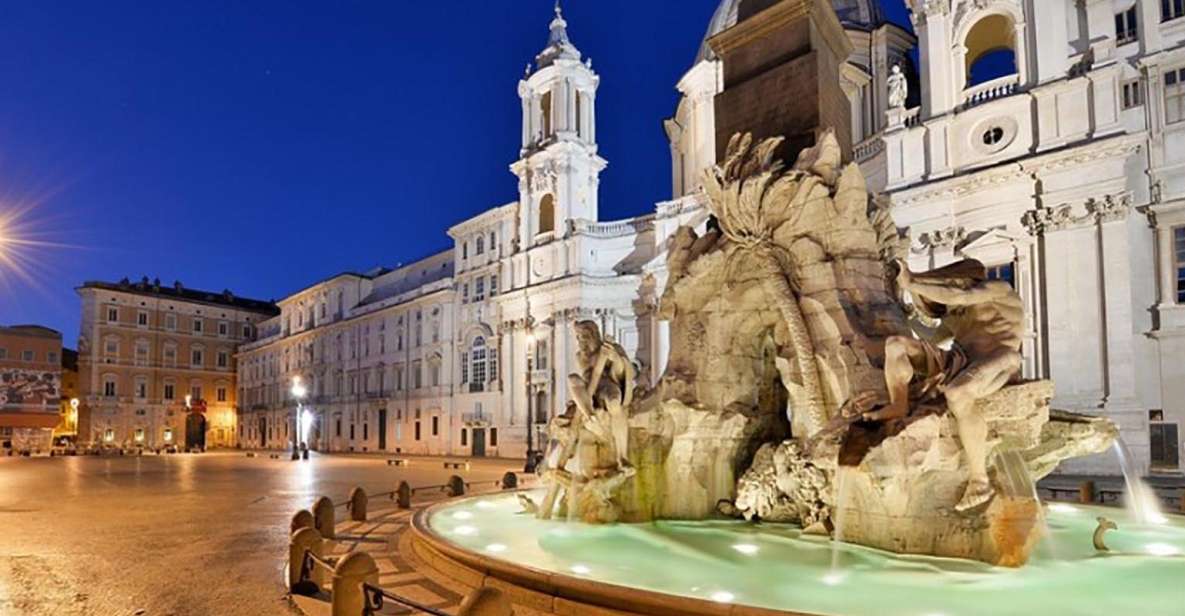
Piazza Navona is the kind of place where you feel the city thinking in shapes. The guide begins you here and gives you a real sense of the space: its long, distinctive form has been part of Rome’s urban fabric for nearly 2,000 years.
I like how this first stop sets expectations. Instead of sprinting straight to the famous fountains, you get oriented to why the piazza feels so theatrical in the evening—this open space is built for performances, ceremonies, and lingering. The tour format helps, too: you spend time here with a guided introduction, then you move on foot.
Practical tip: expect photos, yes, but also expect to stand and listen. If you try to do this like a grab-and-go checklist, you’ll miss the point of the tour.
Pantheon area and Imperial Rome: what you’ll notice from the outside

Next comes the Pantheon zone, where the tour shifts into “how it works” mode. Even when you’re not going inside, the guide’s focus turns the exterior into a lesson in engineering and design.
You’ll get the idea that the Pantheon’s power comes from blending technologies and cultures into one unified statement. The tour also points out that Michelangelo admired the design—an important clue that you’re looking at more than an old building. It’s also where you hear about tombs associated with Raphael (who died in 1520) and with Vittorio Emanuele (the first King of Italy, who died in 1878).
The Sunday caveat is straightforward: the tour will not enter the Pantheon on Sunday evenings because the site is closed. If that happens on your day, you’ll still pass Piazza della Rotonda and get explanations from the exterior, so you’re not left standing around without context.
What makes this valuable for you: many tours treat the Pantheon like a photo backdrop. This one treats it like a structure you can start to read. Once you understand what to look for, you’ll see more—even after the tour ends.
Temple of Hadrian: a short stop that adds real depth
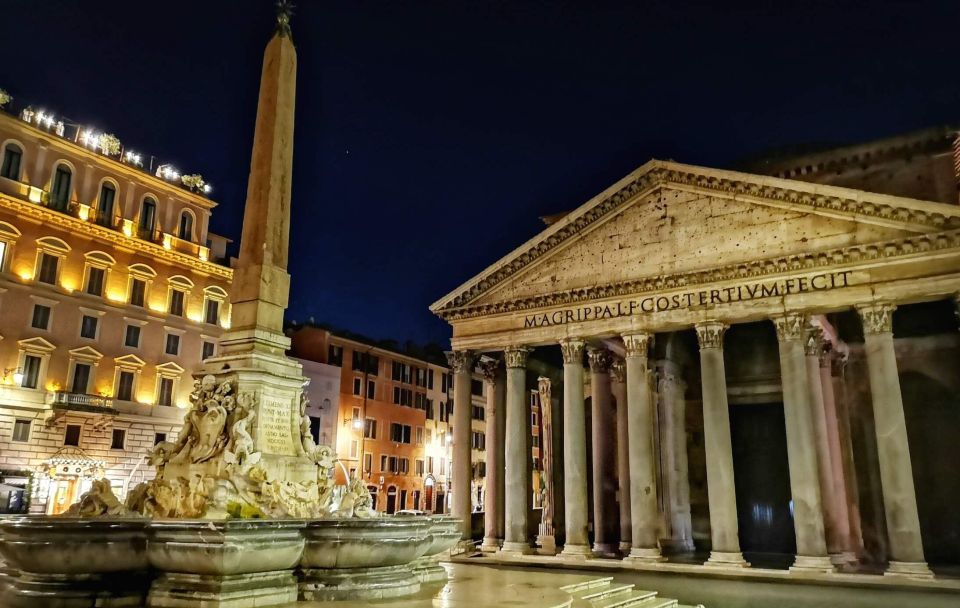
After the Pantheon segment, you make another walk (just a few minutes) to the Temple of Hadrian for a guided stop. This is the kind of moment that makes the tour feel smarter than a simple greatest-hits route.
You don’t spend a long time here, but the guide’s timing is deliberate. After taking in the Pantheon’s grandeur and story, the Temple of Hadrian adds another Imperial layer without overwhelming you with more and more detours. It’s a clean way to broaden the “antiquity” theme beyond one single landmark.
If you like your Rome with context, this stop is where you feel that the guide isn’t just checking boxes. They’re building a mental map for you.
Trevi Fountain as baroque stagecraft: water, arches, and classical drama

Then you get to the headliner water show: Trevi Fountain. The tour’s pitch here is that you’re not just looking at a fountain—you’re watching a piece of theatrical architecture.
The guide frames Trevi in classical terms, including how the main structure takes inspiration from triumphal arches, such as the Arch of Constantine. I love this approach because it changes the way you look. When you hear that the fountain’s design echoes Roman political monuments, it makes the whole composition feel intentional—less like decorative chaos and more like drama designed to command attention.
You’ll get a guided visit here for about 25 minutes, which is long enough to see the fountain from different angles and settle into the experience rather than rushing through it. The evening light helps, and you also get the “magic of antiquity” idea that the tour description promises: this is Renaissance and Baroque Rome sitting on top of classical foundations.
Small practical reality: fountains bring people. Even with a small group, you should expect you’ll be sharing space with other visitors. That’s why this isn’t a “run up, snap, run off” stop.
Piazza di Spagna and the Spanish Steps: social history in stone steps
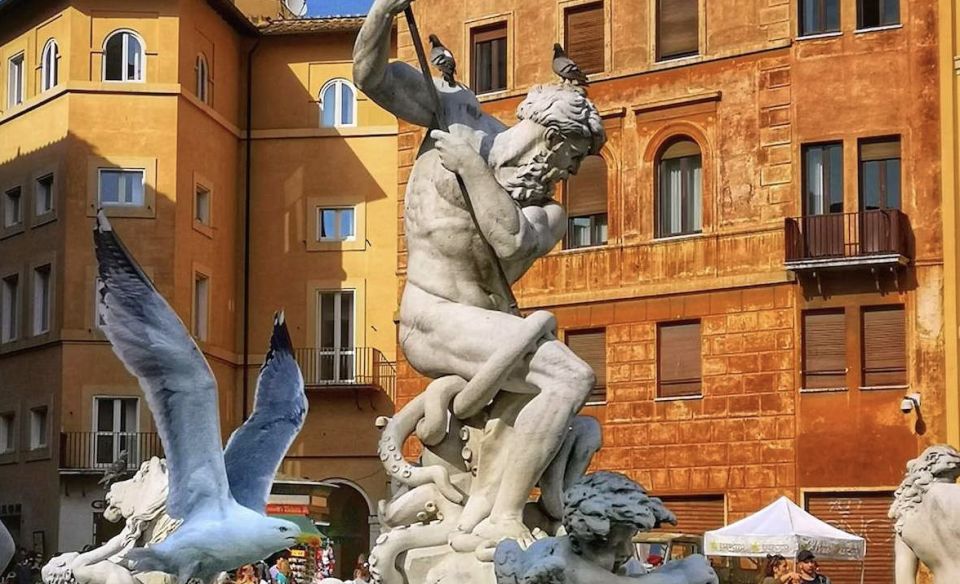
The tour finishes in Piazza di Spagna, the home of the Spanish Steps. This is a great ending because it lets you close the loop on the evening’s big theme: how Rome’s grand public spaces connect people and power.
The guide explains the Trinita’ dei Monti church that towers above and ties it into the broader story of the area. You’ll also hear why Gianlorenzo Bernini (and his father, also a sculptor) used an unusual subject—a boat—for the fountain of the Barcaccia.
Then comes the part I think is most useful for your understanding of Rome: the social significance of the stairway itself. The Spanish Steps unified two areas that, for centuries, were separated by a cliff face. When you know that, you start seeing the steps as more than a stylish photo platform. They’re a physical solution to a real urban problem.
The tour ends at Piazza di Spagna (near Piazza di Spagna address 23). Since you finish there, it’s easy to keep walking on your own—grab a gelato, wander the streets, or head toward another landmark that fits your night.
Price and 2.5-hour value: what $100.82 buys you

At $100.82 per person for about 2.5 hours, this tour isn’t a “cheapest option” kind of experience. So here’s how I’d judge the value.
You’re paying for:
- A live English guide
- A tight evening route that hits several major landmarks (not just one)
- Time built in for explanations (not only standing for photos)
- Headsets for groups of 6 or more, which improves listening quality
- Small-group limits (10 participants), which helps your experience feel more human
If you’ve ever tried to stitch these sights together on your own, you’ll know the problem: you end up spending time figuring out where to go and still missing the “why” behind each place. This tour’s strength is that you get the “why” quickly, in an order that makes sense: start with orientation in Piazza Navona, move through the Pantheon area and Imperial reference points, then shift to Trevi’s baroque classical theater, and end with the Spanish Steps’ urban and social story.
So for the price, I’d say you’re buying interpretation plus efficiency. If you’re the type who enjoys learning as you go—and you want an organized evening plan—that’s where you’ll feel the value most clearly.
Who this tour suits best (and who should skip it)

This is a strong pick if:
- You want a guided walk that connects Renaissance and Baroque Rome to older roots
- You enjoy hearing stories about architecture and public spaces (not just admiring them)
- You prefer small groups over big-bus crowds
- You’re doing your first evening in Rome and want a route that gets your bearings
It may not be the best fit if:
- You have mobility concerns, because it’s not suitable for wheelchair users and includes steps and uneven walkways
- You want a slow, fully seated experience (this is a walking tour)
- You hate standing still to listen for guided explanations (the stops include guided time)
Quick practical checklist before you go

- Wear comfortable shoes. Seriously.
- Bring water—Rome evenings can still be warm.
- If you’re traveling in a Jubilee period, keep an eye on messages about potential restoration-related changes.
- If you’re going on a Sunday, remember the Pantheon isn’t entered, so your experience will focus on the exterior and explanations.
Should you book Rome at Twilight Tour Among the Piazzas and Fountains?
I’d book it if you want an efficient, high-quality evening route that explains Rome’s big landmarks as a connected story. Piazza Navona sets the scene, the Pantheon area gives you Imperial context, Trevi turns into architectural drama, and the Spanish Steps end the night with real urban meaning.
Skip it if stairs and uneven ground would be a problem for you, or if you’re looking for a purely flexible wander without guided stops. But for most people who can handle a compact walking route, this tour is a very solid way to enjoy Rome after daytime crowds ease and the city shifts into something softer—and more theatrical.
FAQ
How long is the tour?
It lasts about 2.5 hours.
What are the main stops on the route?
You’ll visit Piazza Navona, the Pantheon area, the Temple of Hadrian, Trevi Fountain, and finish in Piazza di Spagna near the Spanish Steps.
Is the Pantheon included in the visit?
On Sunday evening tours, the group does not enter the Pantheon because it is closed. You’ll still pass Piazza della Rotonda and get an explanation from the exterior.
Is this tour suitable for wheelchair users?
No. It is not suitable for wheelchair users, and the route includes steps and uneven walkways.
What language is the tour guide?
The live tour guide speaks English.
Are headsets provided?
Headsets are included for groups of 6 or more.
What should I bring?
Bring comfortable shoes and water.
Is food or transportation included?
No. Food and drinks, as well as transportation, are not included.