REVIEW · ROME
Domus Tiberiana, Palatine Hill and Roman Forum Guided Tour
Book on GetYourGuide →Operated by italy in love tours & ontario srls · Bookable on GetYourGuide
Roman ruins feel clearer with the right guide.
This Domus Tiberiana, Palatine Hill, and Roman Forum experience is a smart mix of guided talking and time to walk, with the big draw being Domus Tiberiana, reopened to the public after nearly 50 years. You start on Palatine Hill, explore the Imperial-era remains, then move into the Roman Forum, where the guide helps you connect what you see to how people actually lived.
Two things I like a lot: you get a professional licensed guide speaking live in English (and Italian), and the itinerary includes entrance tickets plus the most important site access details (including skip-the-ticket-line). It’s also built around reducing stress with eco-friendly golf-cart transport, then letting you slow down and explore when it makes sense.
One consideration: this tour is not suitable for wheelchair users, and there are restrictions on what you can bring (no large bags, mobility scooters, or certain items). So it’s best to travel light and plan for lots of walking over uneven ancient stone.
In This Review
- Key highlights worth planning around
- A guided mix of Palatine Hill, the Forum, and Domus Tiberiana
- Start at the ticket counter: voucher exchange and first orientation
- Palatine Hill ruins: the legendary birthplace of Rome
- Domus Tiberiana: Emperor Tiberius’s Imperial palace reopened after nearly 50 years
- Roman Forum at your own pace, with stories that make ruins readable
- Golf-cart help in a big site: saving your legs without missing the sights
- What $111.02 gets you: value built from tickets, guide time, and less waiting
- Who this tour suits best (and who should plan differently)
- Booking checklist: what to bring and what to expect on arrival
- Should you book this Domus Tiberiana and Roman Forum tour?
- FAQ
- What sites are included in this tour?
- How long does the tour take?
- Do I need to exchange a voucher before the tour starts?
- Is the ticket line skipped?
- What language is the live guide available in?
- What ID do I need to bring?
- Is the tour wheelchair accessible?
- What items are not allowed during the tour?
Key highlights worth planning around
- Domus Tiberiana reopened after nearly 50 years so you see the Imperial story in a fresh, high-demand space
- Licensed live guide in English or Italian, with plenty of on-site explanations
- Palatine Hill ruins tied to the legendary origin story of Rome
- Roman Forum time at your own pace after the guided orientation
- Eco-friendly golf-cart transport to move around efficiently without burning your whole morning
- Entrance tickets included and line-skipping built in, which saves time on a crowded day
A guided mix of Palatine Hill, the Forum, and Domus Tiberiana
If Rome feels like one giant pile of stone at first glance, this is the kind of tour that helps it click. You’re not just walking through major names—Palatine Hill, the Roman Forum, and the newly reopened Domus Tiberiana—so the ruins become part of a timeline instead of random fragments.
I like that the tour is built for understanding. The guide keeps you moving through the sites, but the focus stays practical: where you are in the story, why this place mattered, and what your eyes should look for. For people who don’t want to spend hours reading apps and plaques, that’s a big quality-of-life upgrade.
The other advantage is pacing. You do get guided time, but you also get the chance to explore at your own pace on the Palatine Hill and Roman Forum areas. That’s important here because these sites reward pausing—stopping, looking back, and letting the scale land.
You can also read our reviews of more guided tours in Rome



Start at the ticket counter: voucher exchange and first orientation
Your tour begins with a simple task that’s easy to miss if you arrive late: you must exchange your voucher at the ticket counter before the tour starts. The meeting point is in the provider’s office.
This sounds minor, but it matters. Skip the exchange step and you risk losing time at the start, which is exactly when the guide’s orientation is most useful. So I’d treat the first 10 minutes as important, not administrative.
The tour also ends back at the meeting point. That’s a relief in Rome, where many activities scatter you across neighborhoods. Here, you can plan the rest of your day knowing you’ll return to the same starting area.
Palatine Hill ruins: the legendary birthplace of Rome
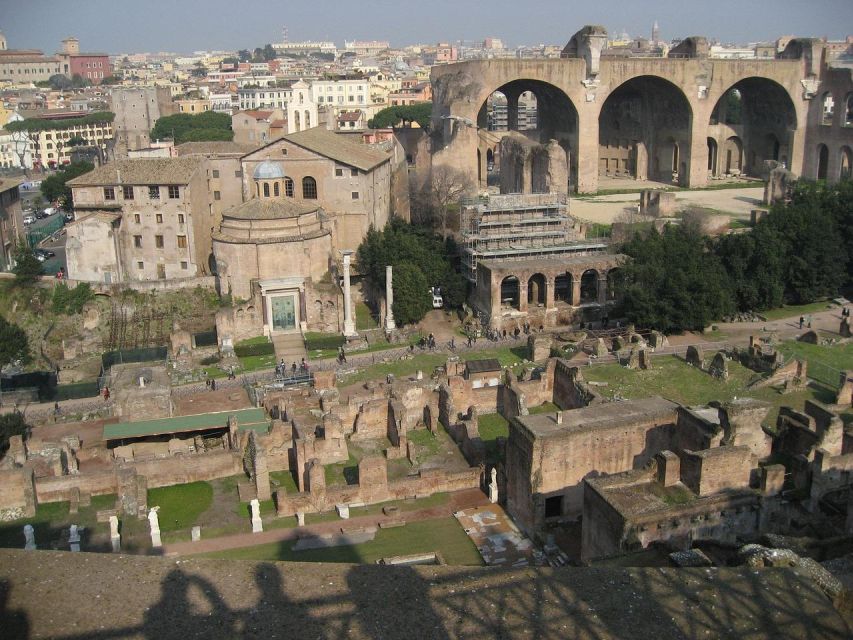
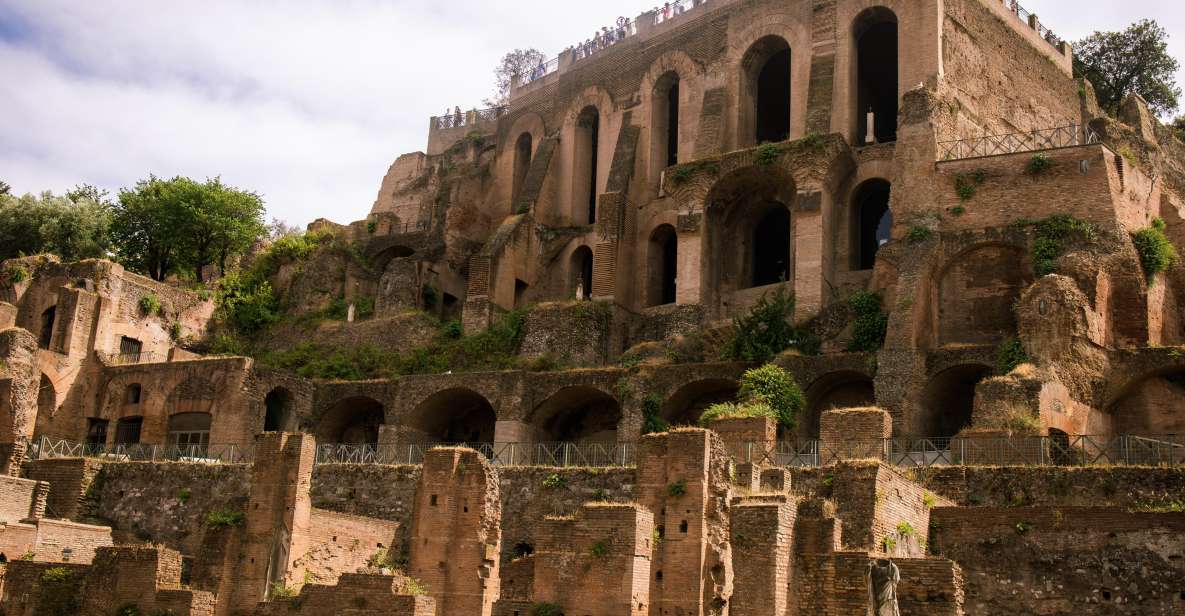
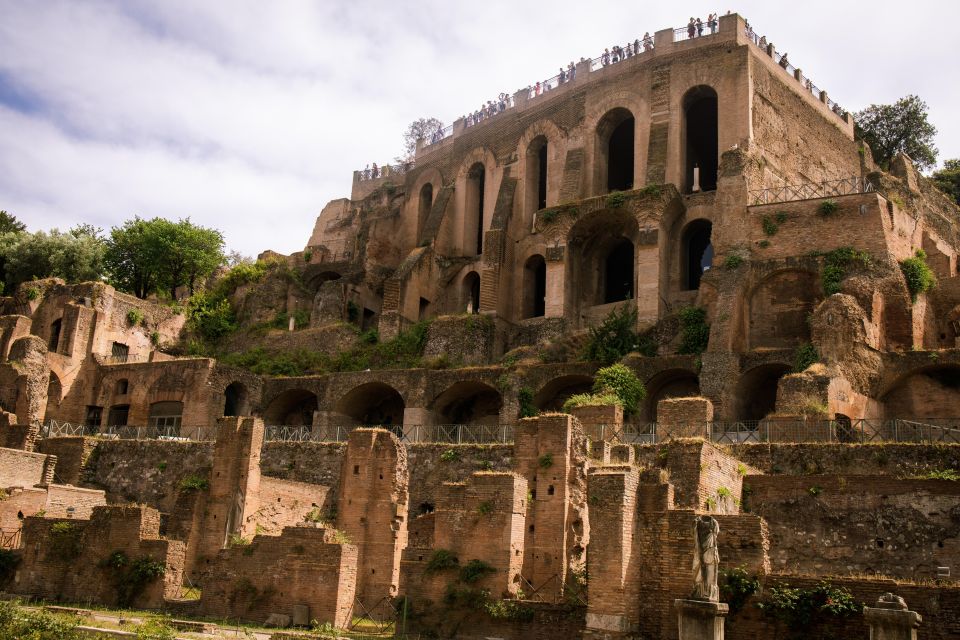
Palatine Hill isn’t just another stop—it’s the starting point for Rome’s origin story, and you begin there on purpose. You’ll explore the extensive ruins with a licensed professional guide, with the Palatine Hill name connected to the legendary birthplace of Rome.
What I like about starting on Palatine is that it sets the mood. Palatine gives you the sense that Rome wasn’t “built” in one moment. It grew, layer by layer, and your guide makes those layers easier to see as you move through what remains.
You’ll also get the benefit of someone who can narrate while you’re standing in front of the stones. The guide’s job isn’t only to recite facts; it’s to make the layout and purpose of different remains easier to understand on the spot.
One practical consideration: you’re outdoors in an ancient archaeological zone, and this experience isn’t designed for people who need mobility supports like mobility scooters. If you have limited mobility, this is one of those tours to reconsider ahead of time.
Domus Tiberiana: Emperor Tiberius’s Imperial palace reopened after nearly 50 years
The star attraction is Domus Tiberiana, reopened to the public after nearly 50 years. Built by Emperor Tiberius, it served as the first imperial residence for the Julio-Claudian dynasty. That’s the kind of label that’s easy to hear and hard to feel—unless a good guide puts it into context while you’re there.
What makes this stop especially valuable is timing. A long-closed site doesn’t reopen every day, and it changes the entire “what’s worth seeing” equation on the Palatine and Forum side of Rome. If you only have a short window, getting into Domus Tiberiana while it’s newly accessible is a strong way to make your time count.
On-site, your guide helps connect the building to the people who lived around it. In the feedback, guides like Dino are praised for turning the Imperial spaces into something you can picture, not just something you walk through. And that matters here, because Domus Tiberiana is the kind of place where the details can get lost if you’re going without explanation.
There’s also mention of a church stop in some guided routes—Santa Maria Antiqua comes up alongside the Domus Tiberiana experience. If your guide includes it during your walking route, it adds another layer to the overall feel of the area, where different eras overlap in the same patch of ground.
Roman Forum at your own pace, with stories that make ruins readable
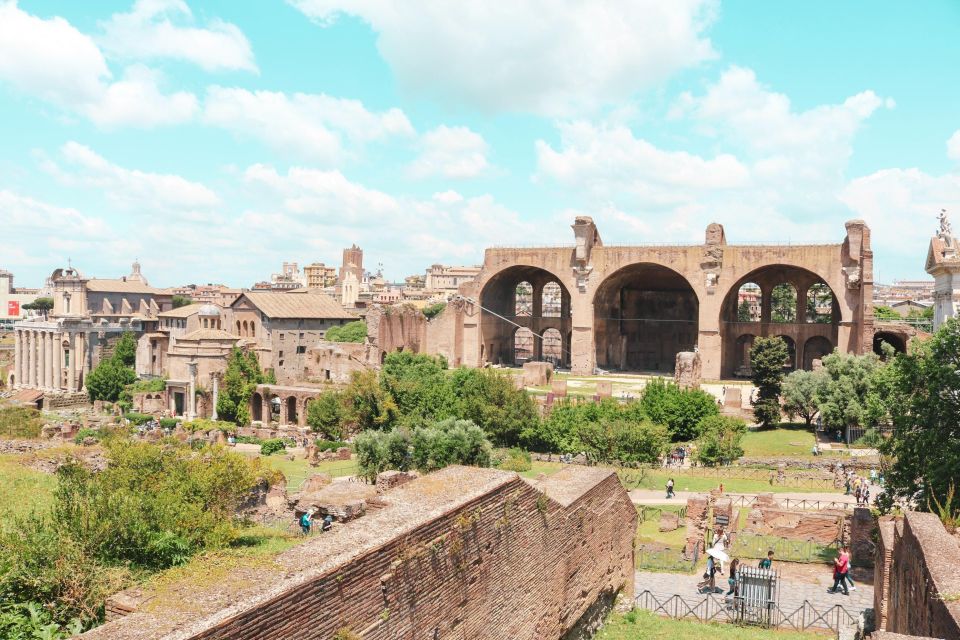
After the big Imperial stop, you head into the Roman Forum, the heart of ancient Roman life. This is where the tour earns its keep. The Roman Forum is full of iconic remnants, but icons can turn into just photos unless you understand what the space was for.
Your guide tells stories and shares anecdotes as you admire the remnants of this iconic site. The goal is simple: help you feel like you’re walking through the kinds of daily spaces where Roman citizens actually moved—politics, public life, and power expressed in stone.
Then you get your own pace time. I love that part because the Forum is one of those places where a 5-minute pause can change your whole experience. You can return to a view you liked, slow down near a detail you noticed, or simply step back and let the scale sink in.
One note: this is also the busiest area in Rome for people trying to see everything quickly. A guided start helps you avoid getting lost in the wrong direction, and the later self-guided wandering lets you enjoy the Forum without feeling trapped in a rushed group flow.




Golf-cart help in a big site: saving your legs without missing the sights
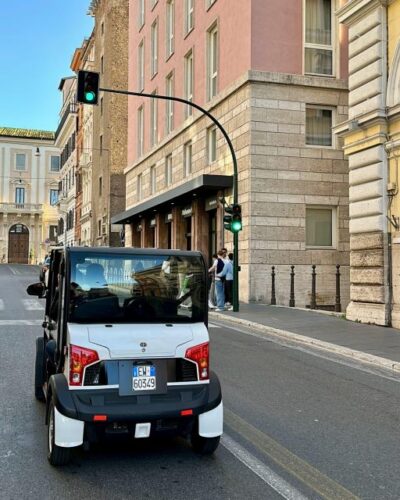
Rome’s archaeology areas can chew up time if you’re moving only on foot. This tour adds eco-friendly golf-cart transport around the city as part of the experience, which helps you cover ground efficiently while keeping the focus on the sites that matter most to your route.
I like this approach because it balances energy and attention. You still get walking time where it counts—on the Palatine ruins and in the Forum—but you’re not forced to treat the whole morning like a long hike. For many visitors, that means you end the tour with energy left for lunch or a second stop nearby.
Just plan around it: since the tour uses cart transport, you’ll want to pay attention to the guide’s regrouping points and timing. Being ready to move when the cart is scheduled keeps the rhythm smooth.
What $111.02 gets you: value built from tickets, guide time, and less waiting
At $111.02 per person for about 2 to 2.5 hours, this is priced like a “do it right” tour. Here’s the value logic as I see it:
- You’re not just paying for a walk. You’re paying for a professional licensed guide plus entrance tickets and all fees and taxes.
- You’re also getting skip-the-ticket-line, which is huge in Rome, where waiting can steal the best part of your day.
- The time investment is reasonable. Two hours plus some flexibility (the range is 2 to 2.5 hours) means you can fit it into a packed sightseeing schedule without turning it into a full-day project.
Not included: hotel pickup/drop-off and food and drinks. So you’ll want to plan your day accordingly. Bring water if you’re allowed to (the tour rules prohibit plastic bottles), or plan to purchase appropriately outside the restricted items list. And if you’re doing this early, have a simple breakfast before you start.
If you’re the type of traveler who prefers to understand what you’re seeing over taking photos and moving on, this price usually feels fair. If you already know the sites deeply and you love self-guided wandering, you might not need the guide. But for most people, the guide component is exactly what turns the ruins into a story you can follow.
Who this tour suits best (and who should plan differently)
This tour tends to be a good match if you want:
- A guided walkthrough of Palatine Hill and the Roman Forum
- Access to Domus Tiberiana reopened after nearly 50 years
- Guided context, plus time to explore at your own pace
- Skip-the-line tickets and live narration in English or Italian
It may not fit if you need wheelchair access, since it’s marked as not suitable for wheelchair users. Also, if you rely on mobility scooters, that’s listed as not allowed.
If you’re traveling with kids, note the rule about unaccompanied minors. That doesn’t automatically mean it’s a bad choice for families, but it does mean you need to plan supervision carefully.
And travel light. No luggage or large bags. Pets aren’t allowed. Plus there are restrictions on items like plastic bottles and glass objects. If you show up with bulky stuff, you’ll spend your early minutes dealing with it instead of enjoying the sites.
Booking checklist: what to bring and what to expect on arrival
Before you go, gather these basics:
- Bring passport or ID card
- Have the names required at booking ready
- Plan for English or Italian live guide time
- Expect no food/drinks to be included
- Arrive early enough to exchange your voucher at the ticket counter
One more small timing tip: since the tour begins after voucher exchange, arriving right at the start time is the fastest way to feel stressed. Rome is unpredictable. Give yourself a cushion.
Should you book this Domus Tiberiana and Roman Forum tour?
I’d book this tour if you want the most meaningful version of Palatine Hill and the Forum in a short window. Domus Tiberiana reopened after nearly 50 years is a rare chance, and having a guide explain what you’re seeing in real time makes the whole day more satisfying.
I would hesitate only if you strongly prefer totally self-guided sightseeing, or if mobility limitations make a walking-focused archaeological experience a bad fit. The eco-friendly golf-cart helps, but it doesn’t turn the sites into an easy stroller stroll.
If your priority is value—tickets included, guide included, and skip-the-line built in—this one makes a lot of sense. And if you want to hear Rome explained by guides with a flair for making the ruins readable (people like Dino and Elaine are called out for that kind of storytelling), you’ll likely feel your time there was used well.
FAQ
What sites are included in this tour?
The tour includes Palatine Hill, the Roman Forum, and a visit to Domus Tiberiana.
How long does the tour take?
It lasts about 2 to 2.5 hours. Starting times depend on availability.
Do I need to exchange a voucher before the tour starts?
Yes. You must exchange your voucher at the ticket counter before the tour begins, and the meeting point is in the office.
Is the ticket line skipped?
Yes. Skip-the-ticket-line is included.
What language is the live guide available in?
The guide is available in English and Italian.
What ID do I need to bring?
You need a passport or an ID card.
Is the tour wheelchair accessible?
No, the tour is not suitable for wheelchair users.
What items are not allowed during the tour?
Pets aren’t allowed, and you can’t bring luggage or large bags, mobility scooters, alcohol and drugs, plastic bottles, or glass objects. Unaccompanied minors are also not allowed.