REVIEW · ROME
Rome: Colosseum, Forum & Palatine Hill Tour & Optional Arena
Book on GetYourGuide →Operated by Enjoy Rome · Bookable on GetYourGuide
Five minutes from the start, Rome grabs you. This tour is built for speed and storytelling, with priority entry that gets you past long lines and right into the Colosseum. I especially like the moment you step onto the arena floor through the gladiators’ gate, and I love how the guide turns the Forum and Palatine Hill into something you can picture. One possible drawback: the arena-floor access can be affected by weather, so plan for the alternative if it’s closed.
You’ll walk from one of Rome’s power centers to another in about 2.5 hours, moving between the Colosseum, Roman Forum, and Palatine Hill with a professional guide and headsets. The tour runs in multiple languages (English, French, Italian, German, Spanish). It’s also not a good fit if you need wheelchair access or have major mobility limits, because it’s a walking tour over uneven ancient surfaces.
In This Review
- Key Things I’d Watch For
- The Gladiators’ Gate Idea: Why This Tour Feels Worth It
- Entering The Colosseum: Priority Access and the 60-Minute Flow
- Roman Forum on Foot: Temples, the Vestal Virgins, and Political Drama
- Palatine Hill: Romulus’ Founding Myth Meets Elite Residence Reality
- Headsets, Guide Styles, and Pacing That Mostly Works
- Price and Value: What You’re Paying For (and When the Arena Option Matters)
- Practical Details That Save Stress on the Day
- Should You Book This Colosseum, Forum & Palatine Tour?
- FAQ
- How long is the tour?
- What’s the meeting point for this experience?
- Does this tour include Colosseum entry without waiting in long lines?
- Is arena-floor access included?
- What stops are included in the itinerary?
- Are headsets provided for the guide?
- Which languages does the live guide speak?
- What should I bring?
- What items are not allowed?
- Is this tour suitable for wheelchair users or people with mobility impairments?
Key Things I’d Watch For
- Gladiator Entrance focus: you’re routed for the arena-floor viewpoint, not just a quick walk-by.
- Headsets make the walk easier: you don’t have to crowd the guide every minute.
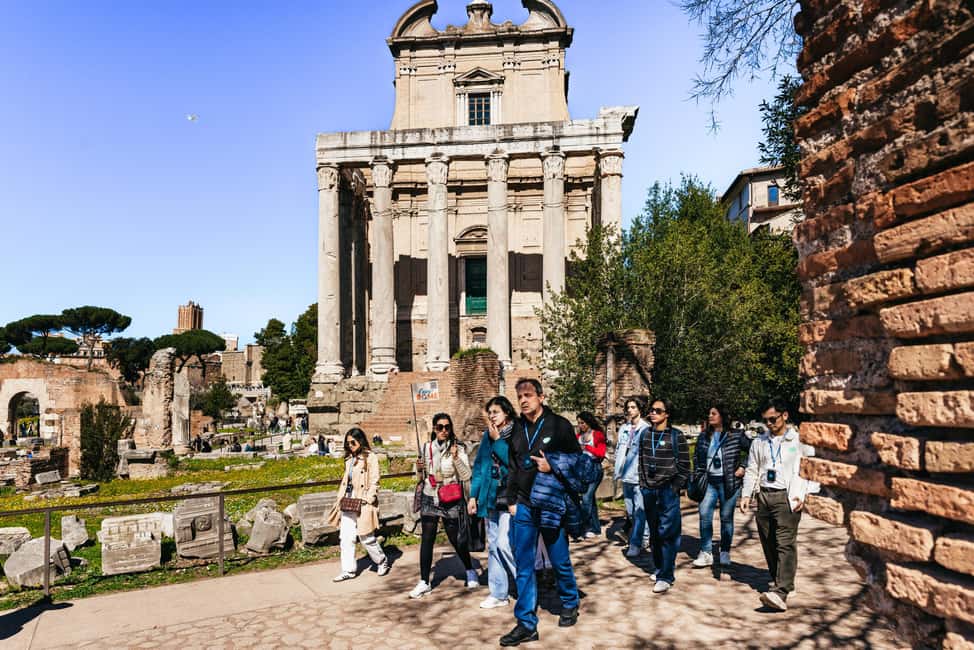
- Forum stop hits multiple layers: temples, public buildings, and the Vestal Virgins’ sacred dwelling area.
- Palatine Hill connects Rome’s origin to its power: from Romulus’ founding myth to elite residences.
- Priority access saves real time: fewer delays at the biggest bottleneck.
- Weather can change the arena-floor plan: you may still enter, but the arena floor can close.
The Gladiators’ Gate Idea: Why This Tour Feels Worth It
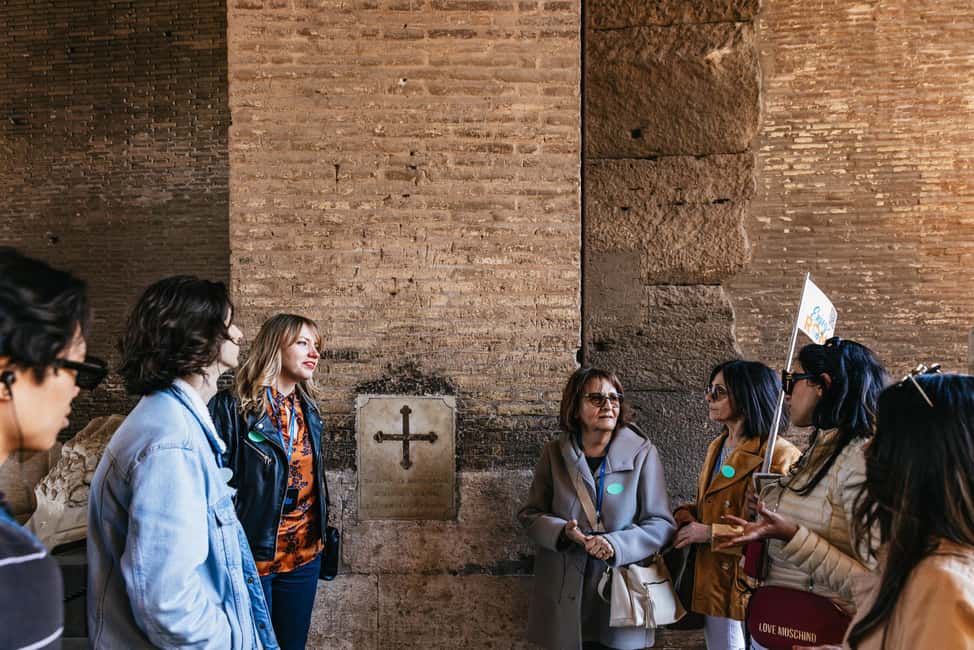
The Colosseum is famous enough that it’s easy to treat it like a photo stop. This tour doesn’t. It gives you a route that’s designed around one of the most dramatic places in the whole structure: the arena floor approach.
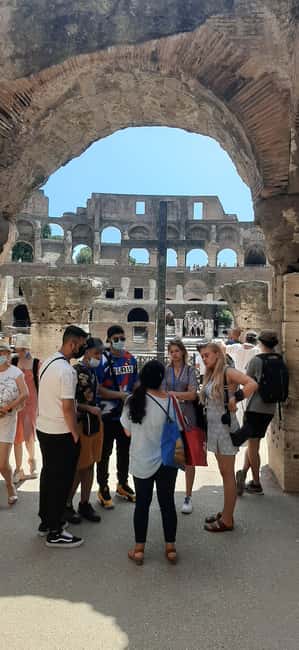
When you access the Colosseum via the gladiators’ gate (only if you select the arena-floor option), you get that instant perspective shift. Instead of looking at the building from the outside, you’re looking out from the spot where games, performance, and threat all met in one place. And from the arena area, you can look down toward the dungeons where gladiators prepared and where wild animals were kept.
That’s the core value here: it turns architecture into lived experience. You still won’t solve every mystery of ancient Rome in 2.5 hours, but you can leave with a clearer sense of what life and spectacle looked like inside the empire’s biggest stage.
You can also read our reviews of more tours and experiences in Rome.

Entering The Colosseum: Priority Access and the 60-Minute Flow
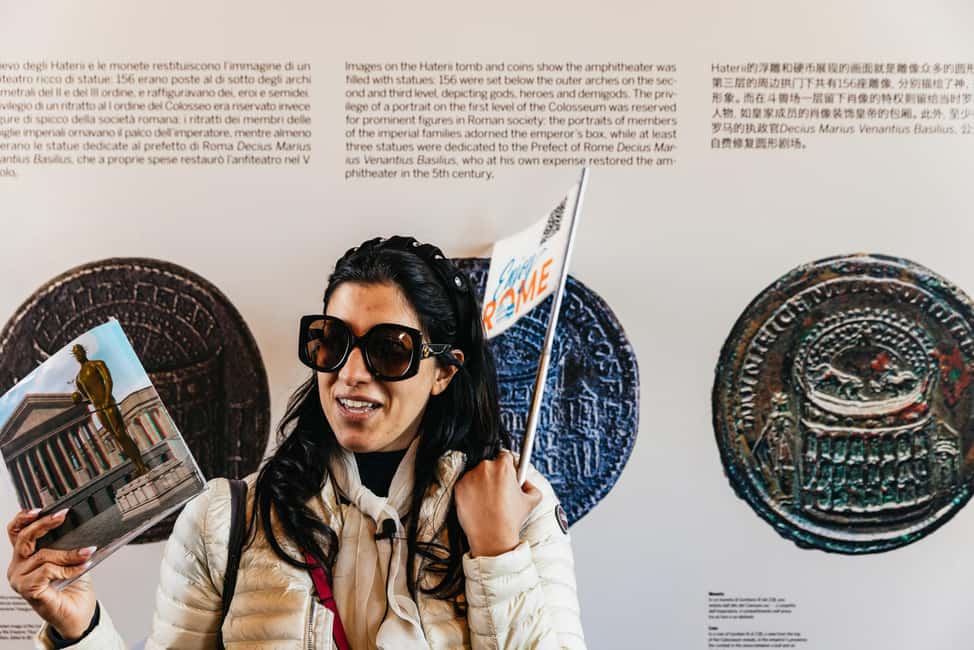
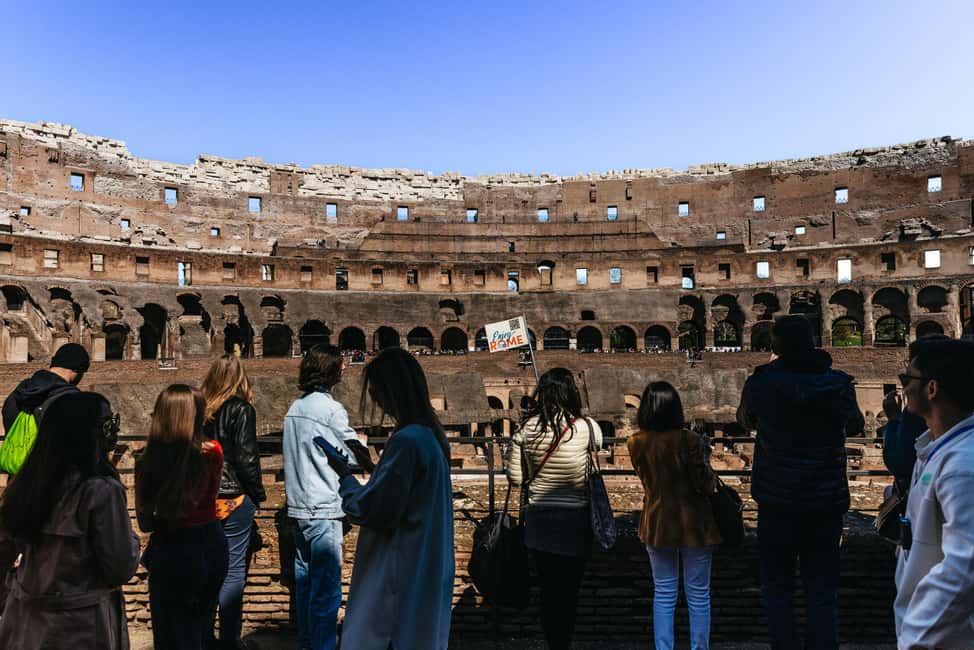
The Colosseum stop runs about an hour with a guided visit. You start with priority entry, using a separate entrance to skip the long lines that can otherwise eat up your morning.
Once inside, the guide’s job is to keep the Colosseum from turning into random seating tiers and arches. You’ll learn how the arena functioned, why parts of the building mattered, and what you should notice as you move through the site. If you add the arena floor, this becomes even more powerful because the guide can reference what you’re seeing at ground level and what gladiators would have faced when stepping out under the attention of the crowd.
A practical note: the tour operates in all weather conditions, but the arena floor may be closed off without notice in bad weather. The good news is that entry through the gladiators’ gate won’t be affected, but arena-floor access can be prohibited. If you’re booking mainly for that exact moment, keep an eye on conditions the day of.
Also, the tour is a walking experience and not a sit-down museum. Bring comfortable shoes and expect to move at a steady pace.
Roman Forum on Foot: Temples, the Vestal Virgins, and Political Drama
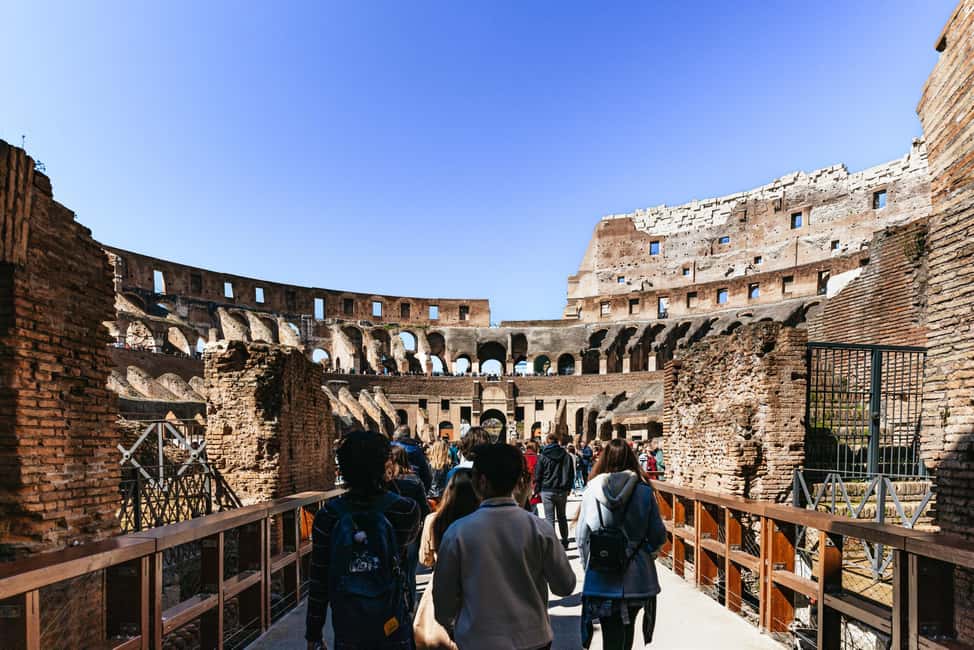
After the Colosseum, you’ll head to the Roman Forum for another guided hour. This part is where a lot of people suddenly realize the Forum isn’t just ruins scattered in a field. It’s the city’s political, social, and religious center—the “center of gravity” of ancient Rome.
The guided walk typically covers remains of public buildings and temples. You’ll also hear about the sacred dwelling connected with the Vestal Virgins, which helps explain why certain spaces weren’t just architectural ornaments—they carried meaning and authority.
What makes this Forum stop valuable is the way the guide connects stones to decisions. Even though you’re walking through fragments, the stories are about people, power, public life, and the daily reality behind the empire’s big moves. In other words, you’re not just memorizing names—you’re getting a sense of what the Forum did for Rome.
If you like history that feels human (arguments, status, ceremonies, ambition), this is the section that tends to land hardest. If you only like ruins as scenery, it may feel like more talking than you expected, but the Forum is the place where the guide’s pacing and explanations matter most.
Palatine Hill: Romulus’ Founding Myth Meets Elite Residence Reality
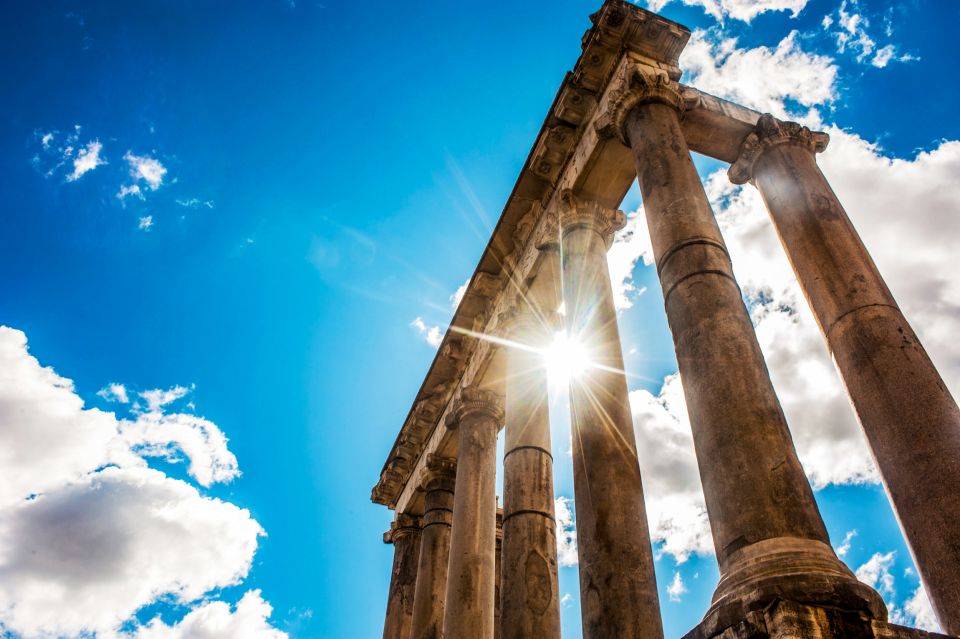
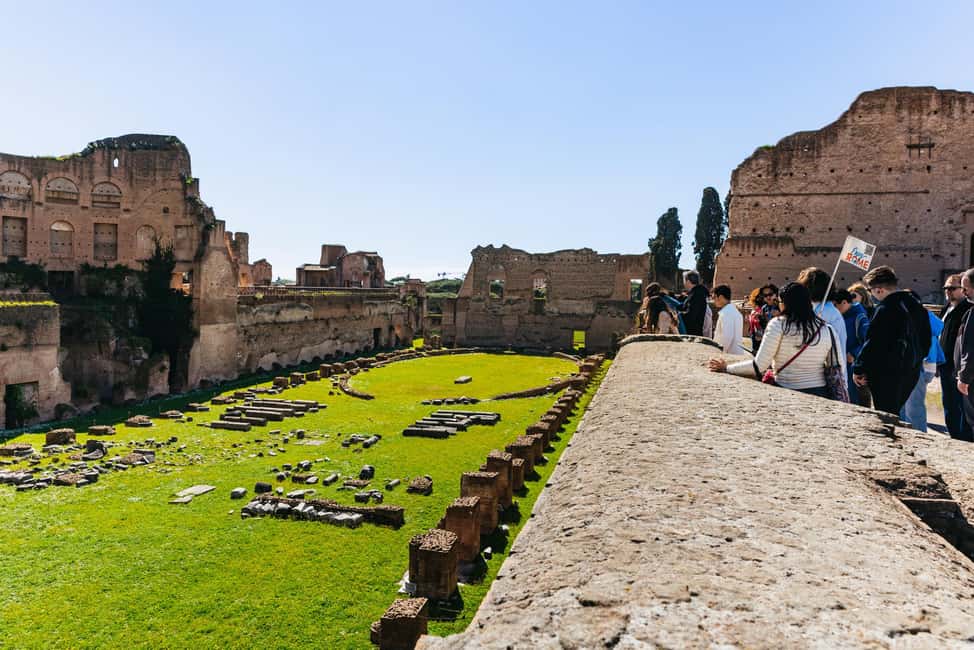
The Palatine Hill stop also runs about an hour, and it’s a great counterpoint to the Forum. The Forum is where Rome showed its public face. Palatine is where Rome’s power and wealth connected to the idea of Rome itself.
You’ll walk on the hill where Romulus is linked with choosing the site to found a new city. Then the story broadens into how the Palatine became home to the rich and powerful during the Republic.
In plain terms, you get a “before and after” feeling: the mythic origin of the city first, then the way real people turned that location into a status symbol and power base. The hill’s views also help. Even if you’re focused on the ruins, the skyline of modern Rome reminds you that this area never fully stops being important.
This stop can be a welcome breather from the Colosseum crowd energy. It’s still busy, but it doesn’t feel like a single-ticket bottleneck in the same way.
Headsets, Guide Styles, and Pacing That Mostly Works
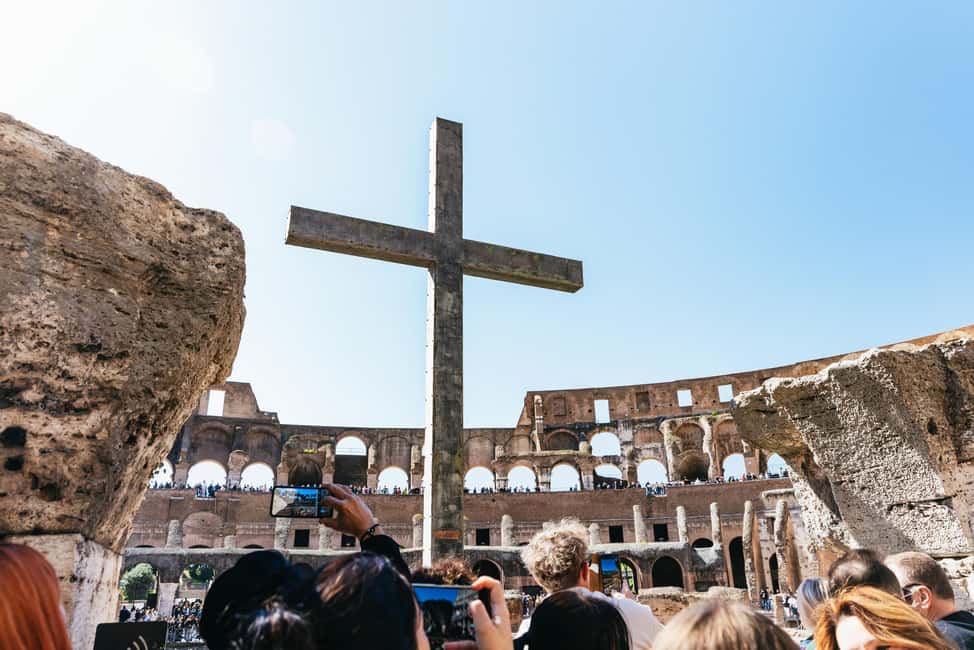
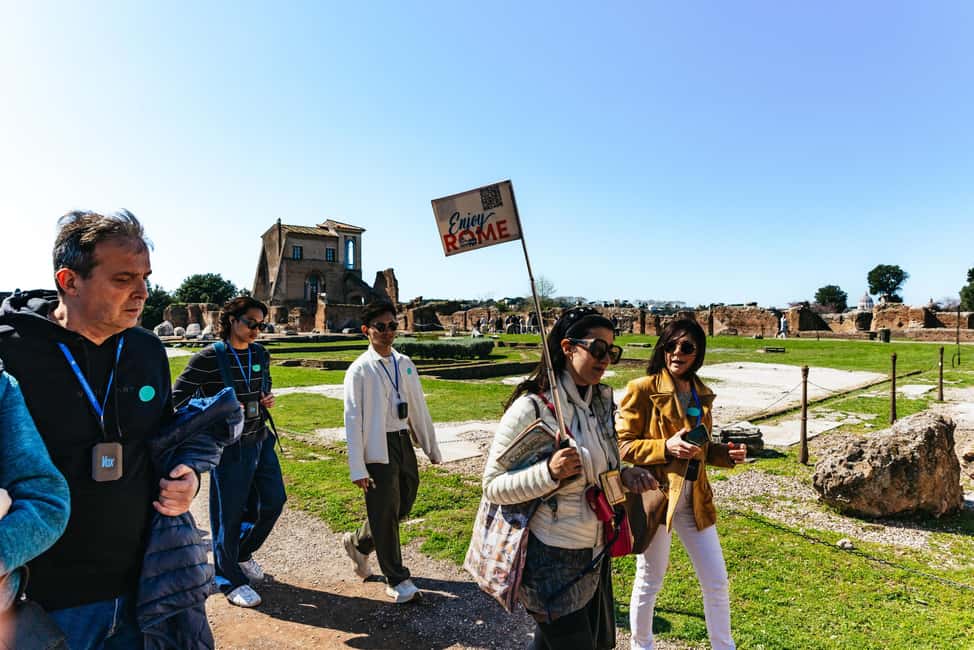
This tour includes headsets, which is a big deal at the Colosseum and Forum. Instead of forcing everyone to bunch up around the guide, you can walk, listen, and look at the same time.
That matters because the tour is structured as a sequence of major sites—Colosseum, Roman Forum, Palatine Hill—so you don’t want to lose time regrouping every time the guide wants to explain something new. People who care about efficiency often call out that the ear buds are the difference between feeling rushed and feeling informed.
You’ll also notice that guide style plays a huge role. Multiple names have shown up as standout guides on this kind of route, including Olga, Maria, Stefano, Amir, AMR, Alessandro, Alexandria, Sabrina, and Laura. The common thread in the best experiences is clear storytelling and a pace that leaves room for photos without turning the whole thing into a sprint.
One possible drawback to keep in mind: if the group is slow-moving in any section, the final stretch can start to feel hurried. Planning-wise, you’ll enjoy this most if you’re the type who moves with the group and doesn’t linger at every corner for too long.


Price and Value: What You’re Paying For (and When the Arena Option Matters)
The listed price is $58.07 per person, and the duration is about 2.5 hours (starting times vary by availability). For that price, you get a live guide, priority entry to the Colosseum, plus priority entry to the Roman Forum and Palatine Hill (listed as 18 euros in the included details). You also get headsets and access to the Enjoy Rome app for extra content.
The one big “watch this” item is the arena floor access. Arena-floor entry through the gladiators’ gate is an option listed at 24 euros, and it’s only included if you select that choice.
So is it worth paying extra? For many people, yes—because the arena floor changes what you’re experiencing. If you’ve seen plenty of photos of the Colosseum but you want the moment where the story goes from outside view to inside role, the arena option is the part you’ll remember most.
If you’re on a tighter budget or you’re traveling with someone who isn’t excited about stepping into restricted historical areas, you can still get plenty from the guided Colosseum + Forum + Palatine route. Just know that the arena-floor-specific storytelling will depend on whether you selected the option and on whether the arena floor is open that day.
Practical Details That Save Stress on the Day
Meeting point: Via delle Terme di Tito 93. If you’re arriving by metro, you’ll use Colosseo metro station and walk on Via Nicola Salvi about 100 meters before turning left. The activity ends back at the meeting point.
What to bring:
- Passport or ID card
- Comfortable shoes
- Water
- Weather-appropriate clothing
What’s not allowed: pets, weapons or sharp objects, luggage or large bags, alcohol and drugs, glass objects.
Walking limits: this tour is not suitable for people with mobility impairments and is not for wheelchair users. The route involves walking on ancient and uneven surfaces, so don’t assume you’ll be able to pause comfortably like you might at a standard city museum.
Weather matters: the tour runs in all weather conditions, but the arena floor can close without notice if conditions are rough. Entry through the gladiators’ gate won’t change, yet arena-floor access can be prohibited, and refunds aren’t offered for arena-floor closures in these cases.
Should You Book This Colosseum, Forum & Palatine Tour?

Book it if you want the best mix of priority entry and guided context. The Colosseum is too big to “figure out” quickly, and the Forum plus Palatine Hill are exactly where a good guide helps you avoid reading ruins like random scenery.
Consider passing or choosing a different option if arena-floor access is the only reason you’re traveling. Weather can shut that part down, even though the rest of the tour still runs. Also skip it if mobility constraints make steady walking unrealistic for you.
If your Rome style is simple: see the headline sites, get accurate explanations, and spend less time stuck in queues—this tour fits. It’s the kind of experience that helps you leave with a mental map, not just a handful of great photos.
FAQ
How long is the tour?
The tour lasts about 2.5 hours. Starting times vary, so you’ll need to check availability for the specific slot you want.
What’s the meeting point for this experience?
Meet at Via delle Terme di Tito 93. After the tour, it ends back at the meeting point.
Does this tour include Colosseum entry without waiting in long lines?
Yes. It includes priority entry to the Colosseum, with skip-the-line access through a separate entrance.
Is arena-floor access included?
Arena-floor access through the gladiators’ entrance is included only if you select the optional upgrade. The arena floor is listed at 24 euros, and it may be closed in inclement weather.
What stops are included in the itinerary?
The tour covers the Colosseum (guided visit), the Roman Forum (guided visit), and Palatine Hill (guided visit), with about one hour at each main stop.
Are headsets provided for the guide?
Yes. Headsets are included so you can hear the guide clearly while you walk.
Which languages does the live guide speak?
The live tour guide is available in French, Italian, German, English, and Spanish.
What should I bring?
Bring your passport or ID card, comfortable shoes, water, and weather-appropriate clothing.
What items are not allowed?
Pets, weapons or sharp objects, luggage or large bags, alcohol and drugs, and glass objects are not allowed.
Is this tour suitable for wheelchair users or people with mobility impairments?
No. It’s not suitable for people with mobility impairments and not suitable for wheelchair users.