REVIEW · ROME
Rome: Colosseum, Palatine Hill and Roman Forum Guided Tour
Book on GetYourGuide →Operated by Rutas Romanas · Bookable on GetYourGuide
The Colosseum hits fast. In just 2.5 hours, you’ll connect the dots between the Colosseum, Palatine Hill, and the Roman Forum, with a guide who makes the ruins feel like a real place.
I love the way this tour handles the big-ticket sites in a tight route, so you don’t waste time playing museum guessing games. And I especially like the headsets, which make it easy to hear your guide even when the crowd noise spikes.
One thing to consider: everyone has to pass a security check, and on busy days that queue can push your start time later.
Key highlights at a glance
- Skip-the-ticket-line entry, plus headsets so you don’t miss key points
- Colosseum arena and basement views from a panoramic terrace if you choose the right option
- Palatine Hill imperial stops like Domus Augustana and Domus Flavia
- Via Sacra walking route connecting monuments you can’t really “get” from plaques alone
- Roman Forum central focus, including Curia and major arches
- Guides praised for high-energy, clear storytelling (names that come up often include Henry, Aphrodite, Leo, and Alessandra)
In This Review
- How the Colosseum-Palatine-Roman Forum Route Makes Sense
- Outside Colosseum to Arena Viewpoints (Including Optional Underground)
- Arch of Constantine and the Via Sacra Walk to Palatine Hill
- Palatine Hill: Imperial Residences on Rome’s Oldest Settlement
- Roman Forum Center: Curia, Vestals, and the Sacred Street Grid
- What Your Guide and Headsets Actually Change
- Timing, Security, Weather, and Comfort Tips
- Price Value and Who This Tour Fits Best
- Should You Book This Tour? My Quick Verdict
- FAQ
- How long is the Rome Colosseum, Palatine Hill and Roman Forum guided tour?
- What’s included in the tour tickets?
- Do I need to buy separate tickets for the Colosseum and Forum?
- Does the tour include arena or underground access?
- What should I bring, and is ID required?
- Is this tour suitable for wheelchair users or mobility impairments?
How the Colosseum-Palatine-Roman Forum Route Makes Sense
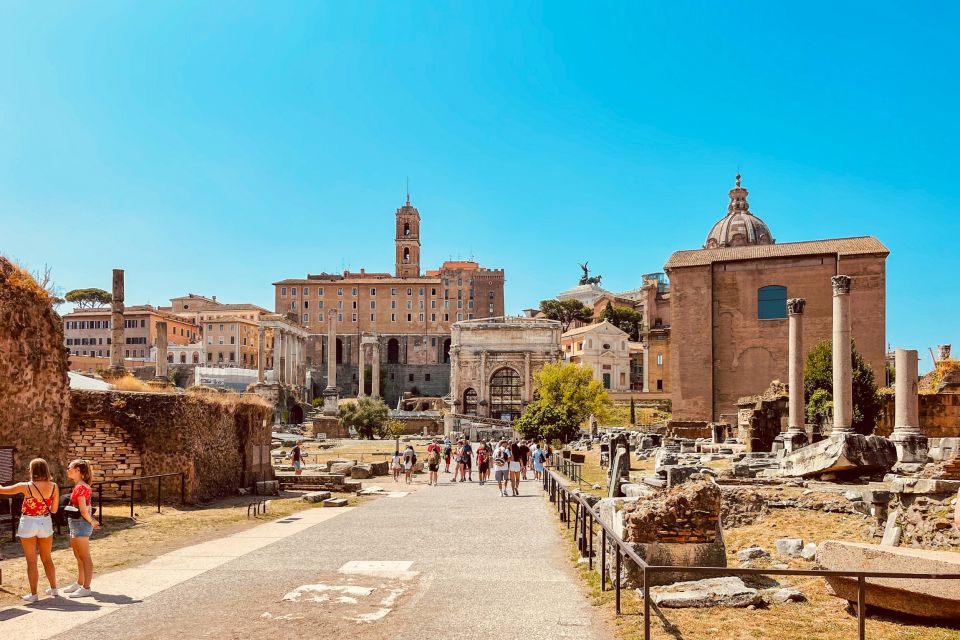
This is one of those Rome tours where the order matters. You start by facing the Colosseum as the showpiece, then work your way toward the political and religious center of the city on the Roman Forum, with Palatine Hill in between as the oldest power hub.
The 2.5 hours also forces good pacing. You’re not wandering aimlessly. You’re moving from sight to sight with a guide framing what you’re seeing—so you leave with a mental map, not just photos.
If you care about history but hate reading dense placards, this structure is a practical win.
Outside Colosseum to Arena Viewpoints (Including Optional Underground)
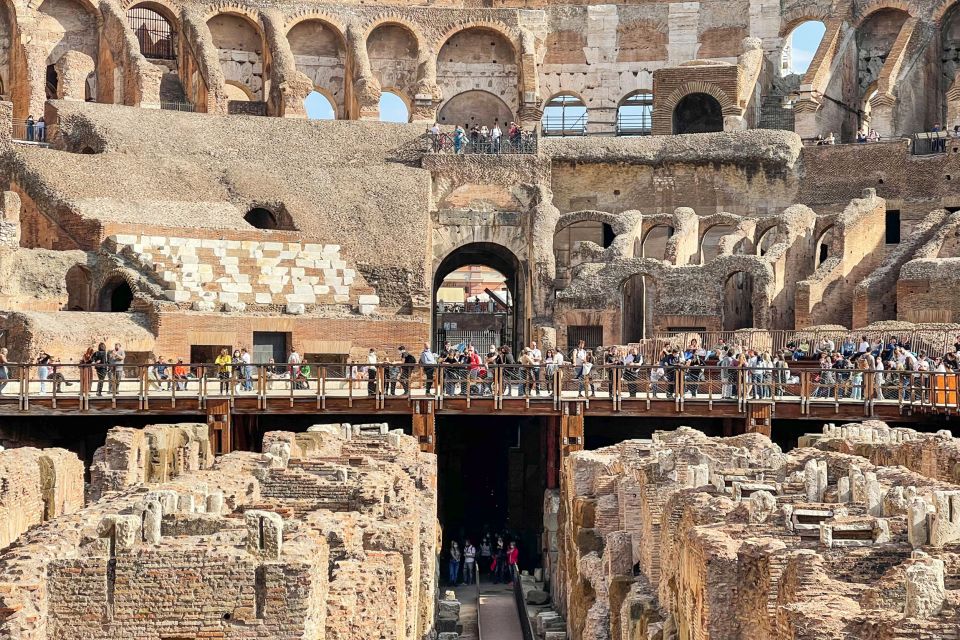
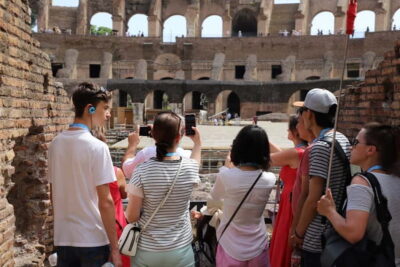
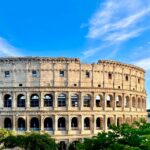
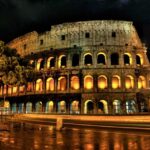
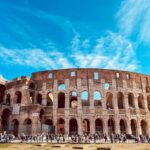
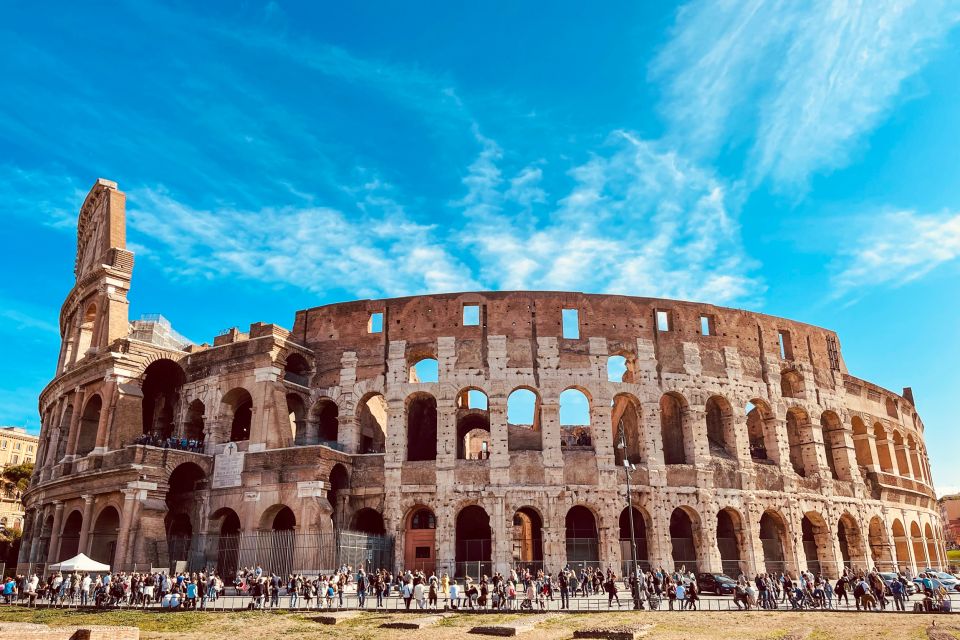
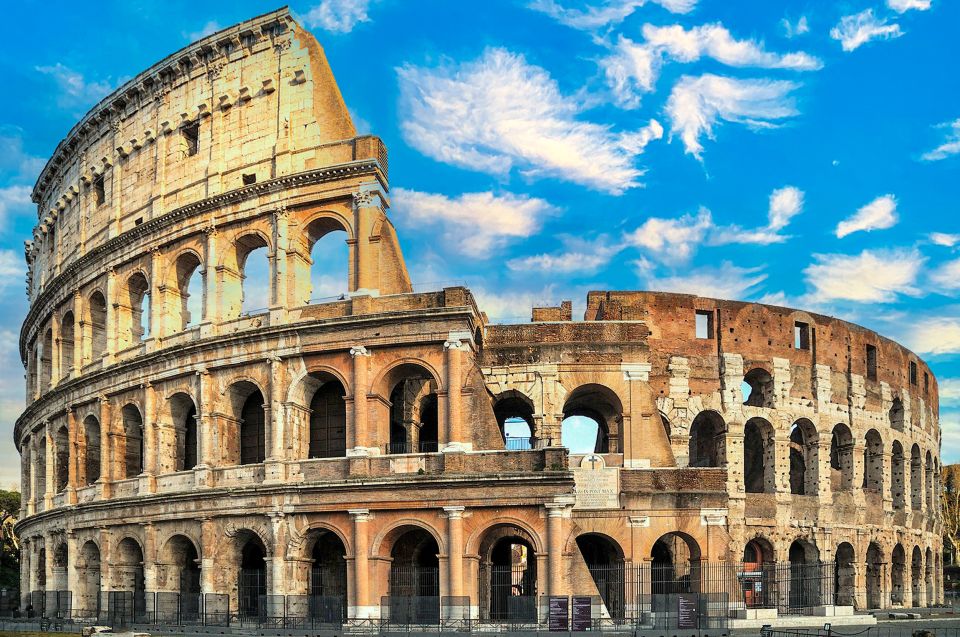
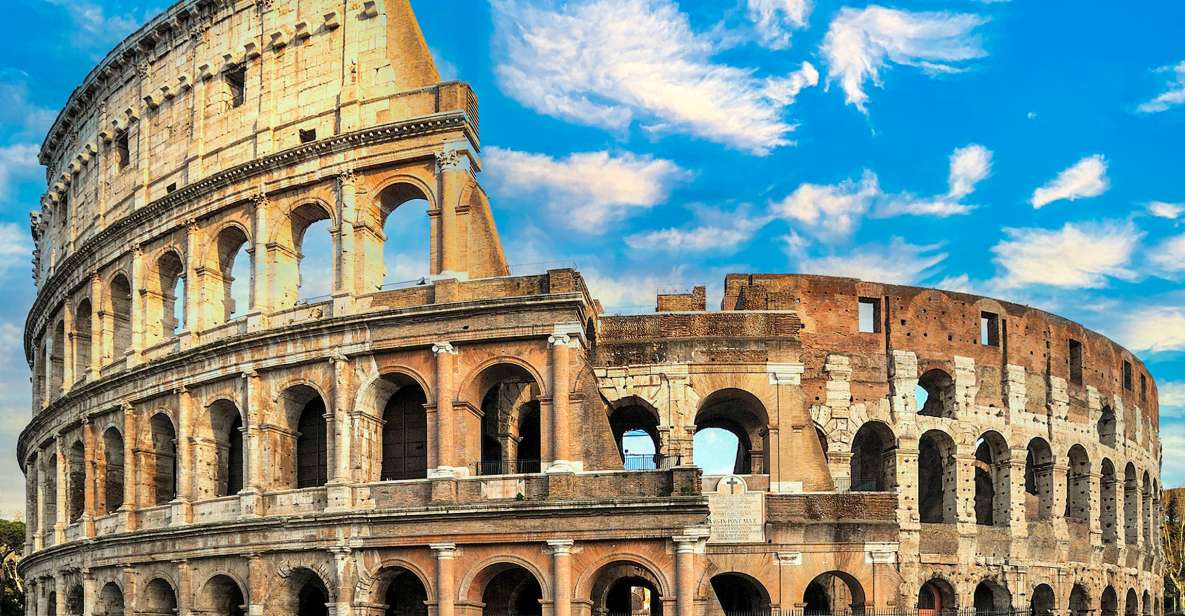
You begin outside the Colosseum, where your guide explains what you’re actually looking at: size, design choices, and why this amphitheater became the world’s template for spectacle. Then you go through security and step inside.
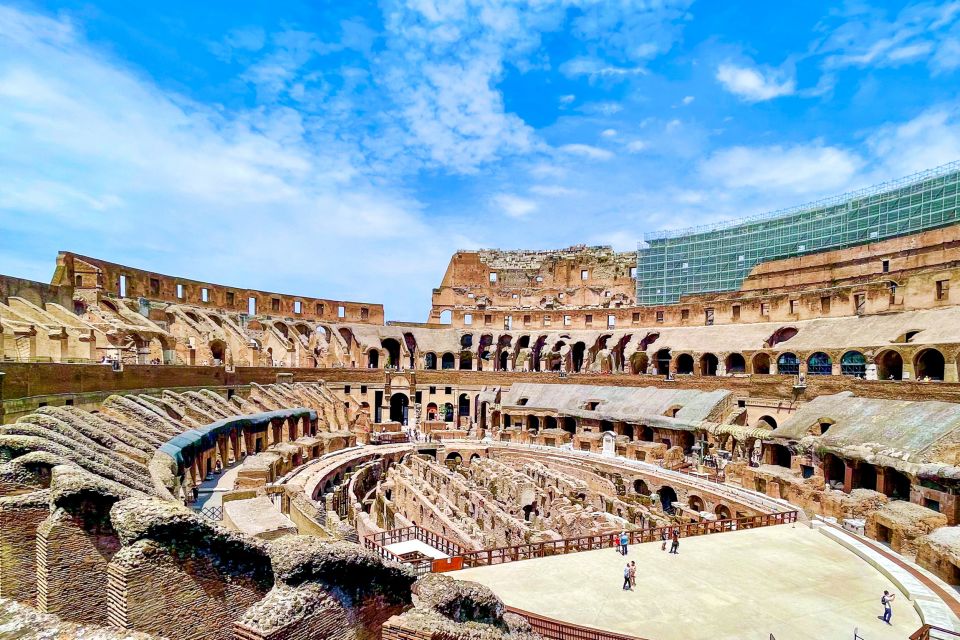
Inside, the big moments are about perspective. You’ll see the Colosseum arena area and also viewpoints connected to the basement floor if you’ve selected that add-on. Even when you’re not going down into every restricted area, your guide can point out where the action would have been and how spectators would have experienced it.
A smart part of the tour is how you’re taken beyond the “big oval.” You’re also guided to interpret features like levels, flow of movement, and how the building shaped crowd behavior.
If you choose the tour option that includes arena access, expect more of a “stand where it happened” feeling. If you choose one without it, you’ll still get deep context, just with fewer steps into the most dramatic inner zones.
You can also read our reviews of more guided tours in Rome
Arch of Constantine and the Via Sacra Walk to Palatine Hill
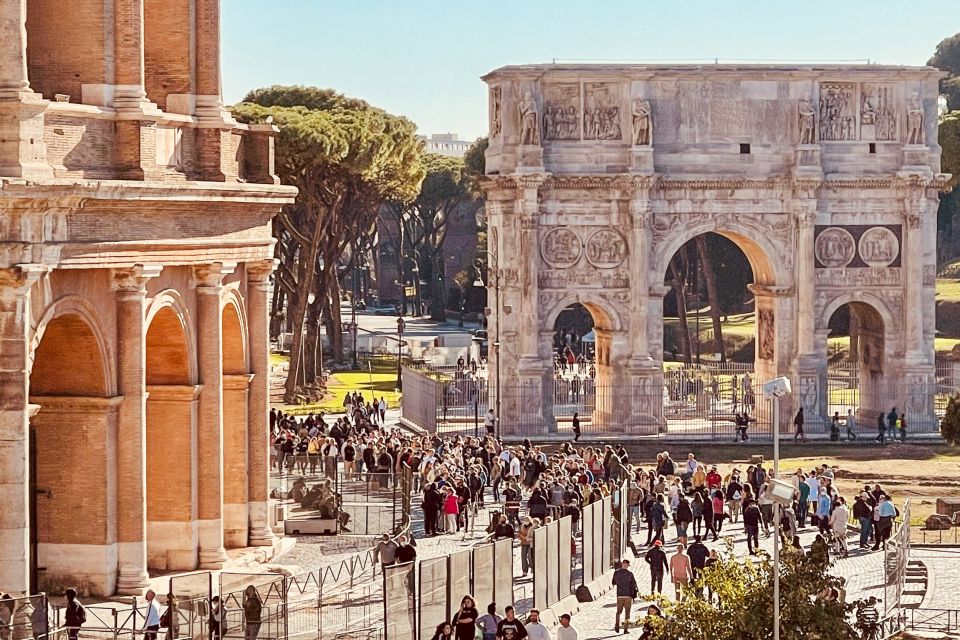
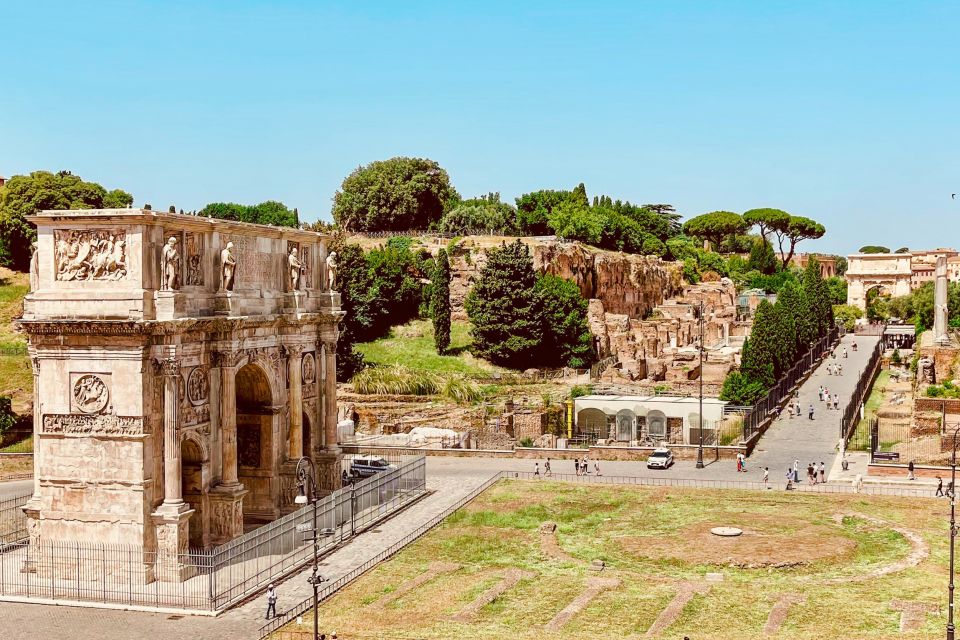
After the Colosseum interior time, you pause in front of the Arch of Constantine. This isn’t just a photo stop. Your guide typically connects the arch to what Roman emperors wanted people to remember, and why public monuments were basically political messaging.
Then it’s time for a key transition: the walk along the Via Sacra, the ancient ceremonial road. This is where the tour starts feeling like a real journey through the old city, not a sequence of disconnected stops.
Along the way and at the Palatine/Forum approach, you get another close-up arch moment with the Arch of Titus. Seeing these arches at close range helps you understand their scale and craftsmanship—details you miss when you only catch them from far away.
If you’re prone to “I only remember one thing” at ruins, this walking segment helps you lock in the story between sites.
Palatine Hill: Imperial Residences on Rome’s Oldest Settlement
Palatine Hill is the hill you point to when you explain power in ancient Rome. The tour treats it that way: you start with the sense that this area is old—older settlement roots—then move into the imperial layer.
You’ll visit standout remnants tied to elite living, including the Palatine Stadium, the Domus Augustana, and the Domus Flavia. Even if you only catch fragments of walls and floor lines, the guide helps you picture the original layout and purpose.
The value here is interpretation. Palatine Hill can look like “random ruins” if you wander without context. With a guide, you’re more likely to notice patterns: the idea of residence as status display, and the way emperors used architecture to broadcast authority.
Also, Palatine Hill sits on uneven ground. Wear grippy shoes, and don’t plan to rush. The pace is meant to keep you engaged, but you still need to be comfortable walking on ancient surfaces.
Roman Forum Center: Curia, Vestals, and the Sacred Street Grid
Once you drop into the Forum valley, the atmosphere shifts. This isn’t just about buildings. It’s about functions—political, legal, religious, and commercial roles all tangled in one space.
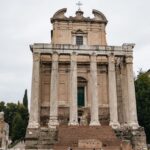
Along the Via Sacra, the itinerary zooms in on major highlights, including the Basilica of Maxentius, the bronze door of the Temple of Romulus, and the suspended door of the Temple of Antoninus and Faustina. You’ll also see the temple area and the House of the Vestals.
These stops are more interesting than they sound on paper. Doors, temples, and basilikas are the kind of details you can overlook when you’re focused on the biggest arches. A guide helps you understand why these pieces mattered to daily and ceremonial life.
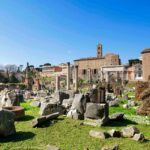
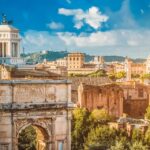
Then you reach the central area with the big-name landmarks: the Curia, the Arch of Septimius Severus, the Tabularium, and the Temple of Saturn, among others. Standing here is when the Forum stops being a “textbook place” and starts feeling like the beating heart of the city—because you can literally see how central it all was.
What Your Guide and Headsets Actually Change
This is a guided tour, and the guide quality is a huge part of the payoff. The names that come up again and again for enthusiastic delivery include Henry, Aphrodite, Leo, Alessandra, Alexandra, Alice, Vincenzo, Ledion, Paulo, and Bárbara.
What people seem to love isn’t just facts. It’s delivery. Guides are praised for keeping groups engaged, using clear explanations (sometimes with visual aids), and maintaining a friendly, energetic tone. Some mentions also highlight how guides worked with families—like keeping kids involved—and how they helped with practical needs such as carrying a stroller at times.
Headsets matter here. The Colosseum and Forum can be loud, and your guide is talking constantly. With headsets, you don’t have to play the guess-what-the-guide-said game.
If you have questions, this is a good setup for it. A lively guide tends to build in time for answers while still keeping the group moving.


Timing, Security, Weather, and Comfort Tips
Plan for lines at security. This tour includes skip-the-ticket-line benefits, but the security check queue is unavoidable, and your actual start time can drift on busy days.
The tour runs rain or shine. On bad-weather days, you might find some areas of the Roman Forum or Palatine Hill aren’t accessible. That doesn’t mean the tour disappears; it means you should keep expectations flexible if conditions are rough.
What to bring is straightforward: passport or ID card (the ticket name must match), and comfortable clothes. Keep your bag situation simple too. Large bags and luggage aren’t allowed, and drones are off the list.
Finally, know who should skip. This tour isn’t suitable for wheelchair users or people with mobility impairments, and it’s also not for altitude sickness.
Price Value and Who This Tour Fits Best
At $52 per person for about 2.5 hours, the value is in the bundle. You’re paying for guided interpretation plus entry tickets for the Colosseum, Roman Forum, and Palatine Hill, along with headsets.
That matters because the real cost of a “self-guided” day is not money—it’s time and context. Without a guide, you can absolutely visit these sites. But you’ll spend more time trying to figure out what you’re looking at, and you’ll likely miss why certain parts matter.
This tour fits especially well if you:
- want the “big three” in one efficient visit
- like structured routes with a clear story thread
- care about understanding arches, temples, and how public life worked
- travel with kids who do better when a guide keeps energy up
It’s also a reasonable choice if you want reduced hassle around ticket entry, since you get line-skipping where allowed.
Should You Book This Tour? My Quick Verdict
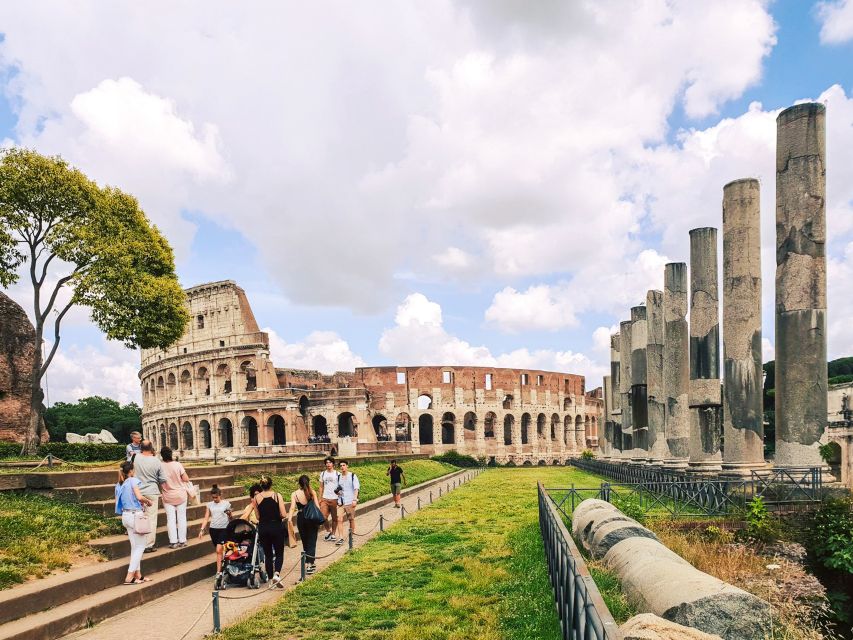
If you want a smooth, story-driven day across Rome’s most iconic ancient sites, this is a strong pick. The mix of Colosseum inside access (with options) plus Palatine Hill imperial stops plus Forum center landmarks is exactly the combo that makes Rome feel coherent.
Book it if you want to leave knowing what matters and why. Consider a different format if you need full accessibility accommodations, or if security lines and lots of walking would stress you out.
FAQ
How long is the Rome Colosseum, Palatine Hill and Roman Forum guided tour?
It lasts about 2.5 hours.
What’s included in the tour tickets?
Entry tickets are included for the Colosseum, Roman Forum, and Palatine Hill.
Do I need to buy separate tickets for the Colosseum and Forum?
No. The tour includes the entry tickets for all three sites.
Does the tour include arena or underground access?
Arena access and underground access are included only if that option is selected (it’s stated in the tour title).
What should I bring, and is ID required?
Bring a passport or ID card. The name on the ticket must match the ID.
Is this tour suitable for wheelchair users or mobility impairments?
No. It’s not suitable for people with mobility impairments or wheelchair users.