REVIEW · ROME
Rome: Capitoline Museums Private Guided Tour
Book on GetYourGuide →Operated by Tour in the City - Travel Agency Rome - · Bookable on GetYourGuide
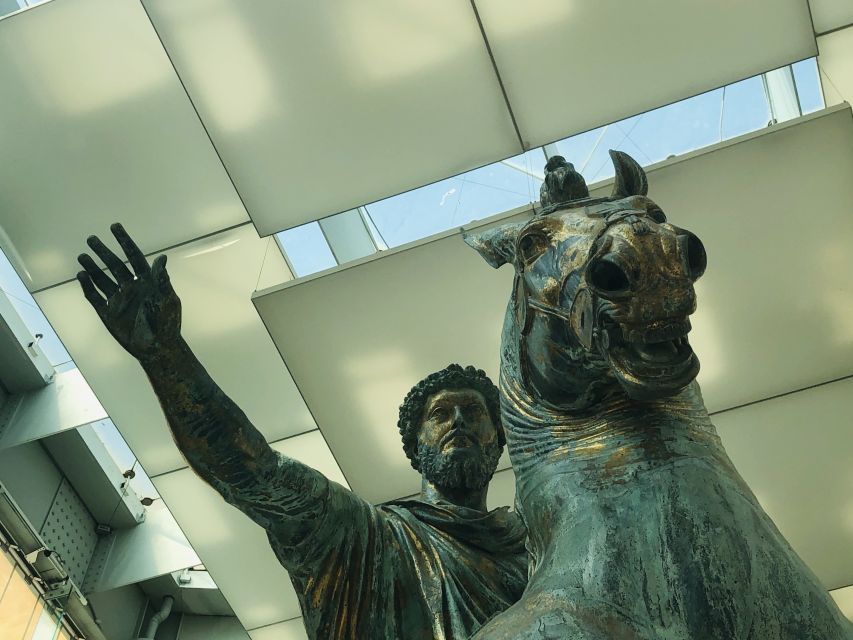
Rome’s oldest museum starts with a bronze masterpiece. Step into the Capitoline Museums with a private guided tour and you’ll move through centuries fast, with real context for what you’re seeing. I especially like how the visit pairs big-name icons (like Marcus Aurelius) with smaller details (inscriptions, statues, and that Roman-bronze energy that feels almost alive). You should also expect one possible drawback: this is a lot of art in 2.5 hours, so if you want time to wander on your own, you’ll need to pace yourself.
The tour runs smart and efficient, with a guide who keeps you oriented as you bounce between the museum’s historic seats. You get skip-the-line access plus entry included, which helps you actually enjoy the artworks instead of feeding the ticket queue. Still, you’ll be standing and walking for much of the experience, so comfortable shoes matter more than you think.
Key points you’ll care about
- Private art historian guide: English or Italian, designed for a real back-and-forth experience
- Skip-the-line entry included so you start seeing things sooner
- Marcus Aurelius in its original setting plus Roman Forum views en route
- Pinacoteca Capitolina highlights with major names from Caravaggio to Titian
- Two historic museum seats connected by an underground route through the Tabularium
- Group size capped at 20 (still private, just not tiny)
In This Review
- Why the Capitoline Museums feel like Rome in miniature
- Meeting at the entrance and how to make it smooth
- Courtyard power: Constantine, Brutus, Spinario, and the Capitoline Wolf
- Pinacoteca Capitolina: paintings from the old masters
- Marcus Aurelius, temple ruins, and the Forum views through Tabularium
- The New Palace seat: Marforio, Dying Gaul, mosaics, and more
- How 2.5 hours holds up in real life
- Price and value: what you’re paying for at $201.65 per person
- Who should book this Capitoline Museums tour (and who might not)
- Should you book the Rome Capitoline Museums private guided tour?
- FAQ
- FAQ
- How long is the Rome Capitoline Museums private guided tour?
- Where do we meet the guide?
- Is skip-the-line access included?
- What languages is the tour offered in?
- Is this a private group tour?
- What should I bring or wear?
- Is hotel pickup included?
- Is there a cancellation option?
Why the Capitoline Museums feel like Rome in miniature
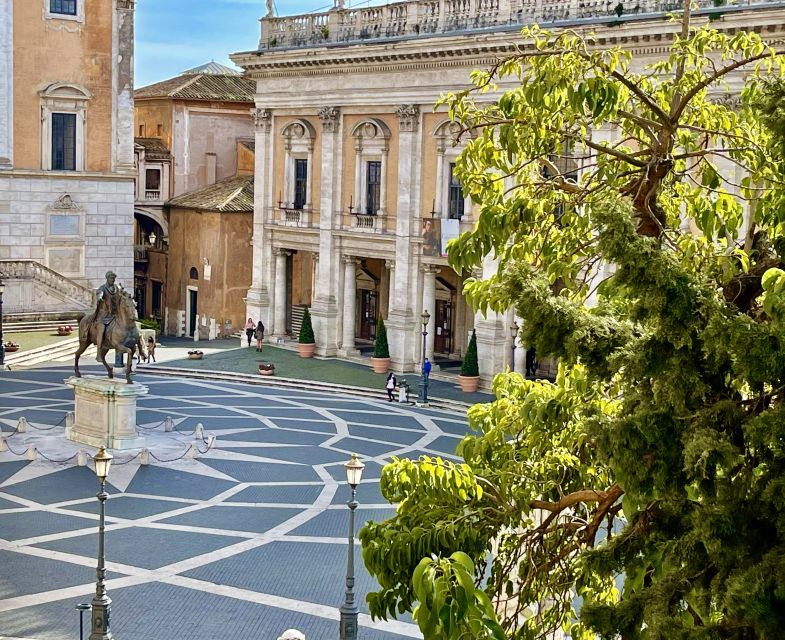
The Capitoline Museums are Rome’s art-and-history starter pack, but in the best way. You’re in the city’s political heart (the Capitoline Hill), and the museum collection feels like it was built to explain how ancient Rome thought, prayed, fought, ruled, and displayed power.
What makes this experience stand out is the way it connects objects to place. You’re not just watching statues behind glass. You’re seeing why a bronze wolf became the city’s symbol, why a painting program matters, and how a famous equestrian figure fits into the larger Roman story. The tour is also built for momentum: in 2.5 hours, you get a guided path through the key rooms without feeling like you’re power-sprinting through the entire museum.
Meeting at the entrance and how to make it smooth
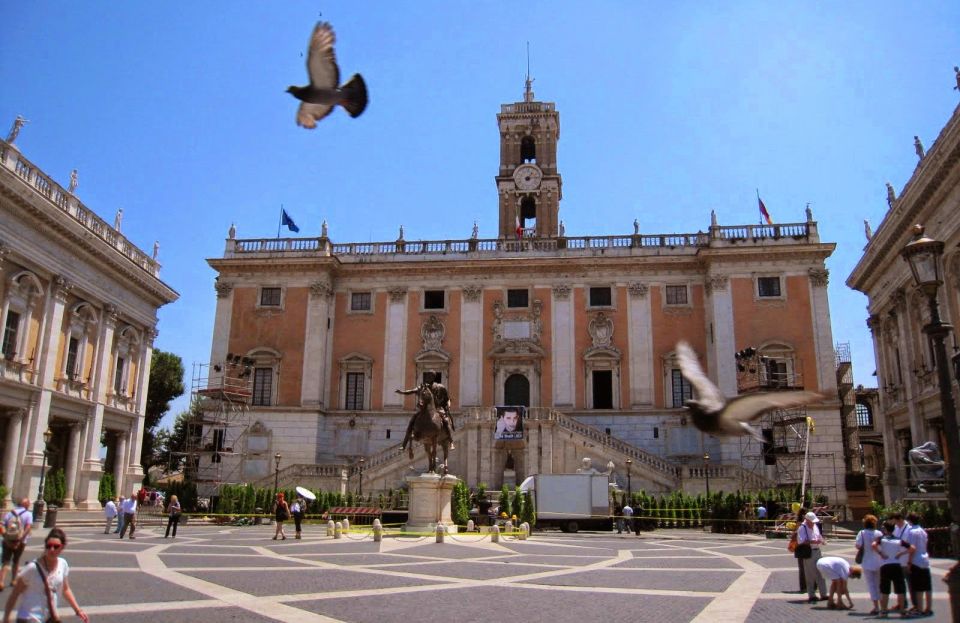
You’ll meet your guide at the Capitoline Museums entrance, and they’ll be holding a sign with your name. That simple detail is worth taking seriously, because Rome entrances can be busy and a sign makes it much easier to match you to the right group.
Come in with smart casual clothing and comfortable shoes. You’ll want your legs ready because the route moves across floors and between areas, including a bit of walking to reach the next historic seat. Bring your passport or ID card as well, since it’s listed as what you should have on hand.
Also, keep luggage under control. Oversize luggage isn’t allowed, and walking frames aren’t permitted. If you’re traveling light, you’ll enjoy this more because you won’t be negotiating bags and space while your guide is trying to keep the tour moving.
You can also read our reviews of more guided tours in Rome

Courtyard power: Constantine, Brutus, Spinario, and the Capitoline Wolf
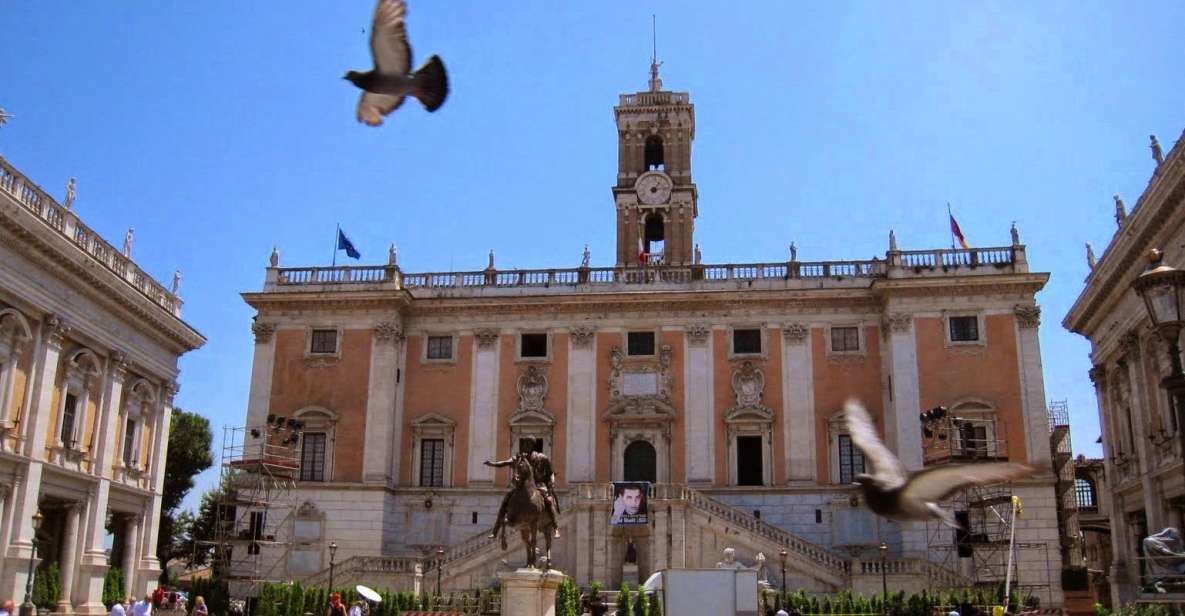
The tour starts around the palace courtyard area, where you get a quick hit of scale and symbolism. One early highlight is a colossal acrolith thought to represent Constantine. Even if you’re not a scholar, you’ll feel what this object is doing: it’s a reminder that rulers used art as a kind of visual command.
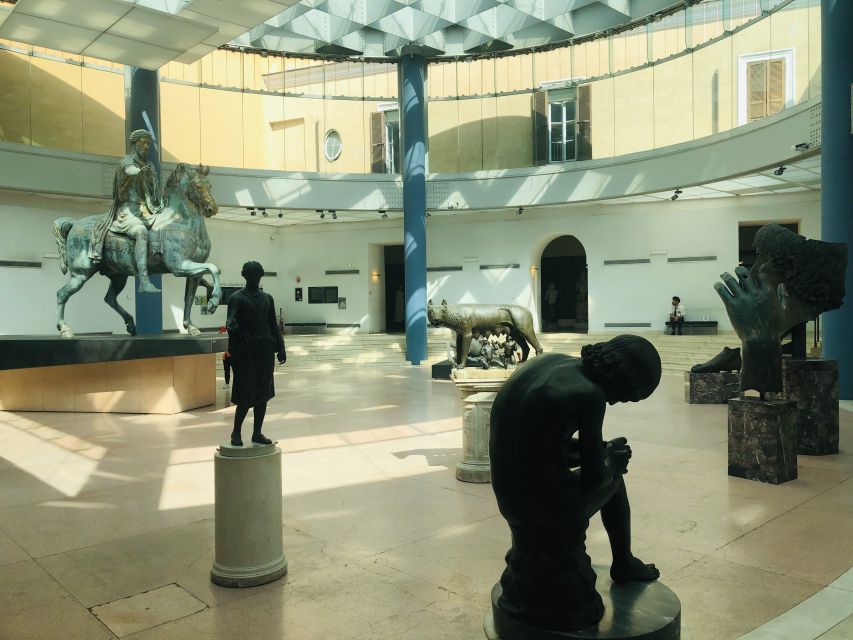
From there, you’ll see the Capitoline Brutus bust and two of the most talked-about bronze sculptures in the museum:
- the Spinario, the Greco-Roman Hellenistic bronze of a boy pulling a thorn from his foot
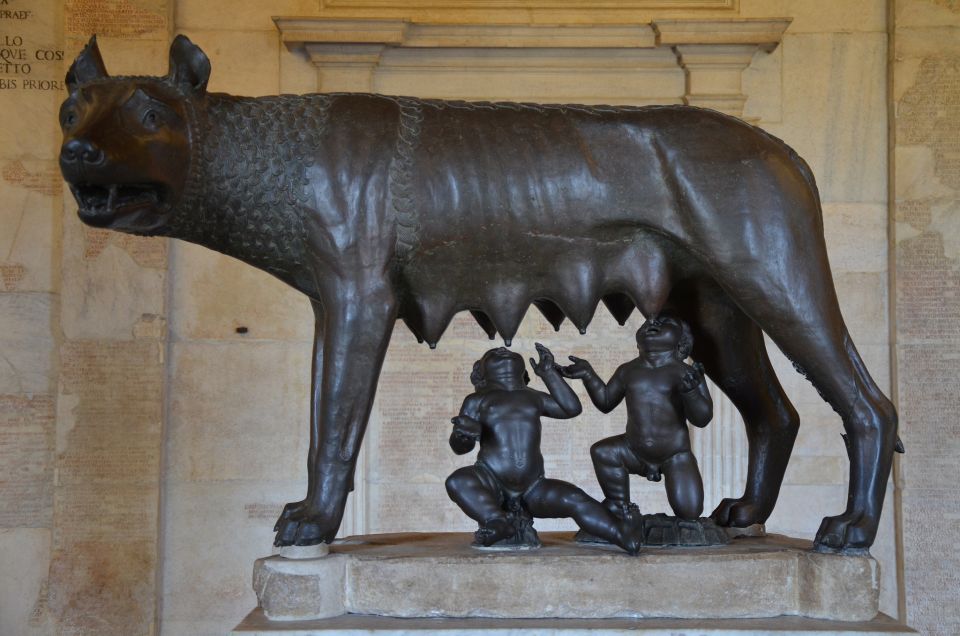
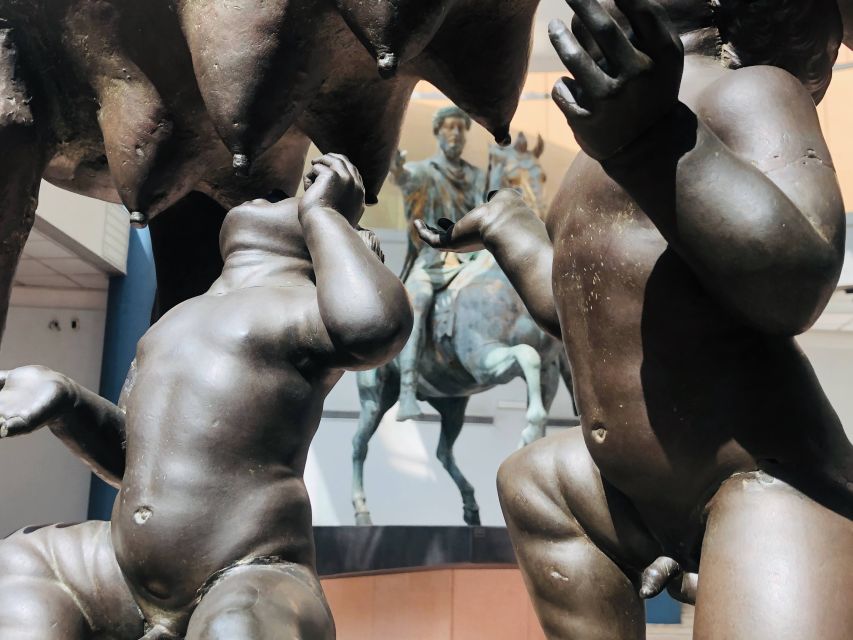
- the Capitoline Wolf, the bronze she-wolf nursing Romulus and Remus, which became an emblem of the Eternal City
This is a great moment to slow down just slightly. Those works reward close looking. The boy’s posture and the wolf’s presence both make you think about how Rome mixed myth, education, and public identity.
Then there’s the Castellani collection, with roughly 700 Greek and Etruscan vases. You won’t see all 700 in 2.5 hours, but you’ll get the idea: this museum isn’t only about Roman marble. It’s also showing the wider artistic roots that fed Roman taste.
Pinacoteca Capitolina: paintings from the old masters
After the ancient sculptures, the tour shifts gears to the Pinacoteca Capitolina, described as the oldest public collection of paintings. This is where the museum stops being only about antiquity and starts acting like a timeline of Italian art taste.
You’ll encounter key painters including Caravaggio, Guido Reni, the Carracci, Guercino, Domenichino, Veronese, Titian, Tintoretto, Rubens, and Pietro da Cortona. The practical value here is that a guided route helps you understand what you’re seeing without turning it into a lecture marathon.
A useful way to think about this section: paintings in the Pinacoteca aren’t just decorative. They reflect how Rome kept reinterpreting power and belief long after the empire fell. The guide’s job is to connect the themes across floors, and that’s what makes the visit feel coherent instead of like a random walk through rooms.
If you’re the kind of person who often walks past paintings quickly, this stop is still worth it. Even short glances become better when you know what to look for: subject, style, and why that work mattered when it entered the collection.
Marcus Aurelius, temple ruins, and the Forum views through Tabularium

The ground floor is where the tour gives you one of Rome’s most satisfying “I can’t believe this is here” moments: the exedra with the equestrian statue of Marcus Aurelius. Seeing this piece in its original setting context (and in the museum’s own structure) changes how you read it.
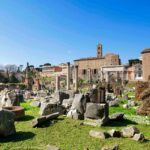
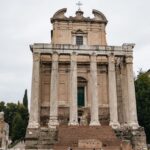
You’ll also appreciate the ruins of ancient temples still visible in the building structure. This is the theme of the day: Rome doesn’t separate history by clean museum walls. It keeps stacking eras on top of each other, and the building itself becomes part of the exhibit.
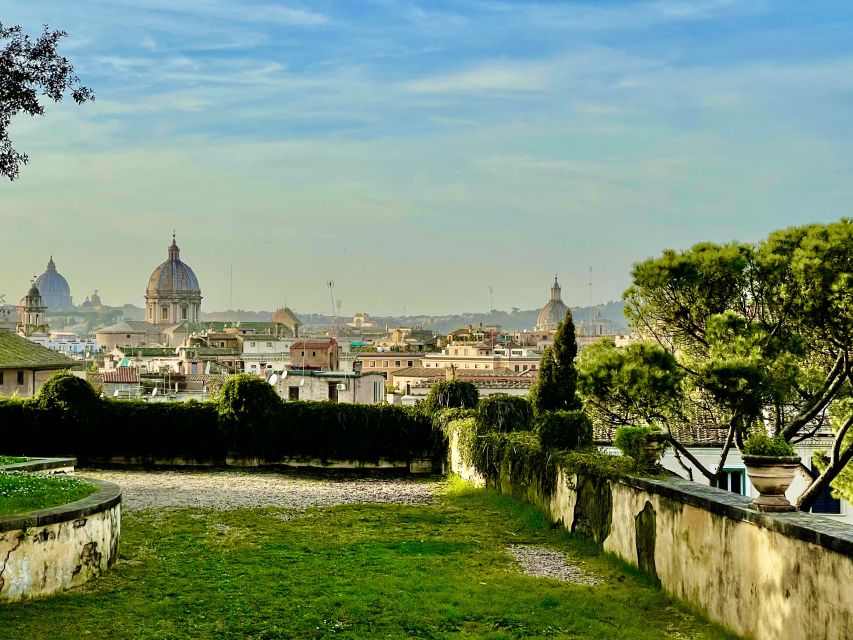
Then comes the routing trick that makes this tour feel extra efficient. Your guide leads you through an underground tunnel that crosses the Tabularium, and along the way you get magnificent views of the Roman Forum. If the Forum is on your Rome checklist, this is a high-leverage moment because you’re seeing it in a new way, from inside the museum experience rather than as a standalone detour.
The New Palace seat: Marforio, Dying Gaul, mosaics, and more
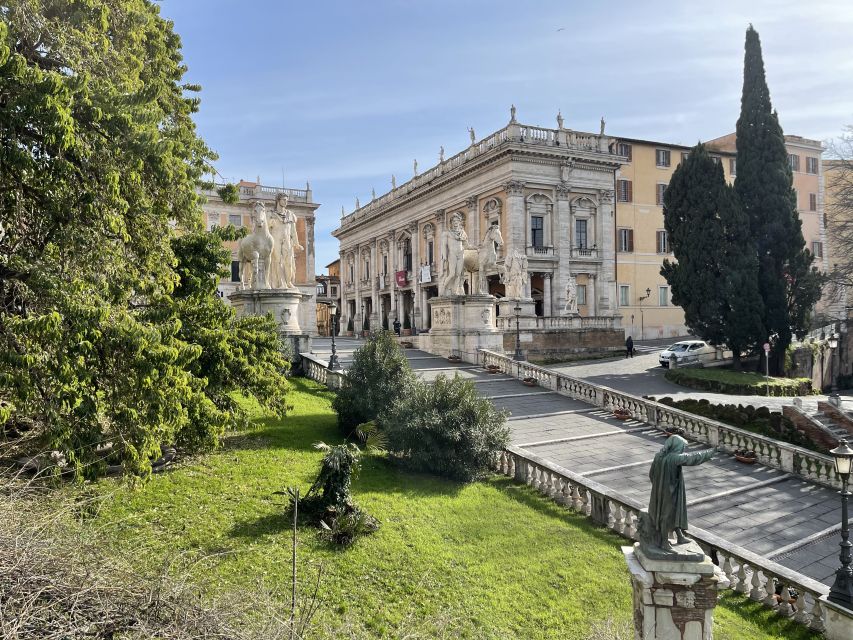
Rome’s museum layout is split into two historic seats, and the route to the second one is part of the appeal. The New Palace houses statues, inscriptions, sarcophagi, busts, mosaics, and other Roman artifacts.
This is where the tour leans into recognizable masterpieces:
- the Marforio statue
- the Dying Gaul
- the statue of Cupid and Psyche
Even without going full art-nerd, you’ll get why these are famous. The Dying Gaul in particular is the kind of work that makes you understand what Roman-era artistry was good at: emotion, movement, and persuasive realism. Cupid and Psyche adds a different flavor, more mythic and intimate.
Inscriptions and sarcophagi are also a big deal here because they give you evidence, not just imagery. This stop is where you start seeing the Romans not only as artists but as people who recorded identity and status in stone.
You can also read our reviews of more private tours in Rome




How 2.5 hours holds up in real life
Two and a half hours sounds short, and it is. But it also forces the tour to be purposeful, and that’s usually good news. You’ll get a guided arc: ancient bronze favorites, then the painting floor, then the equestrian highlight, then Forum views, then the second seat’s standout antiquities.
The pace can still feel full if you like long museum breathing time. My advice: choose what you want most before the tour begins. If you care most about sculpture, focus attention during the courtyard and New Palace sections. If you’re hungry for paintings, give the Pinacoteca rooms your full attention rather than treating them like a rest stop.
One more practical note: wear shoes you can stand in. This is a walking-and-standing tour, and you’ll move across floors and connected spaces. Bring a small water bottle if you tolerate it well (the tour data doesn’t promise breaks), and if you start feeling light-headed, take it seriously. A past guide named Martin is noted for handling guest needs with care, including getting water and adjusting time so people could continue comfortably.
Price and value: what you’re paying for at $201.65 per person
At $201.65 per person for about 2.5 hours, this isn’t a bargain-basement museum ticket. You’re buying time-saving entry (skip-the-line plus admission included) and a professional art historian guide in a private group format.
So here’s how I judge value:
- If you’d otherwise show up on your own and spend 30–60 minutes figuring out what’s worth seeing, the guide money starts making sense quickly.
- If you care about interpreting the major works (and not just taking photos), you’re getting the kind of explanation that turns a statue into a story.
- If you’re traveling with a friend or partner and want a calm, direct experience rather than a big group shuffle, private format matters.
Also, the maximum group size is up to 20. That can affect “how private” it feels. Still, the structure is private guided, so you’ll generally get a more controlled flow than with large shared tours.
What’s not included is hotel pickup and drop-off. So build your day around getting yourself to the entrance easily.
Who should book this Capitoline Museums tour (and who might not)
Book it if you want the museum’s best anchors without spending your whole day wandering. This fits well for first-time Rome visitors who want big-name artworks plus real context, and for repeat visitors who want a guided way to revisit the Capitoline highlights without losing time.
It’s also a strong choice if you care about both art types: Roman sculpture and the Pinacoteca’s major painting names. A single guide route connecting those worlds is the point here.
You might consider a different approach if you:
- want long, slow room-to-room time with no pressure
- plan to do multiple major sights back-to-back and your legs aren’t ready
- hate being led and prefer pure self-guided exploration
Should you book the Rome Capitoline Museums private guided tour?
If your goal is to see the key masterpieces and understand what you’re looking at, I think this is a smart buy. The combination of skip-the-line access, entry included, and a pro guide makes the 2.5-hour experience feel efficient without feeling rushed in content.
You’re also getting a bonus that’s hard to replicate on your own: Forum views via the route through the Tabularium inside the museum experience. That kind of perspective makes the tour feel like more than a museum ticket.
My call: if you’re the type who likes to know what matters before you start taking photos, book it. If you’d rather wander freely for hours, you may prefer a self-guided museum day.
FAQ
FAQ
How long is the Rome Capitoline Museums private guided tour?
The tour lasts about 2.5 hours.
Where do we meet the guide?
You meet at the Capitoline Museums entrance. The guide waits for you with a sign showing your name.
Is skip-the-line access included?
Yes. Skip-the-line access and the Capitoline Museums entry ticket are included.
What languages is the tour offered in?
The live tour guide is available in English and Italian.
Is this a private group tour?
Yes. It’s a private group tour, with a maximum of 20 persons per booking.
What should I bring or wear?
Bring a passport or ID card and wear comfortable shoes. The dress code is smart casual.
Is hotel pickup included?
No, hotel pickup and drop-off are not included.
Is there a cancellation option?
You can cancel up to 24 hours in advance for a full refund. Free cancellation is listed as available.