REVIEW · ROME
Via Roma: A Journey Through Time
Book on GetYourGuide →Operated by REAL BARCELONA TOURS, S.L · Bookable on GetYourGuide
Rome at night feels like a different city. This 2-hour illuminated walk turns Rome’s icons into something you actually feel, not just photograph. I especially love how the route threads big-name stops like the Pantheon with calmer moments like hidden-at-night passages, and I liked that our guide, Sara, kept the pace moving with clear explanations you could follow on the go. One thing to plan for: this is a lot of walking on uneven streets, so it’s not a good match if mobility is an issue.
You’ll start in a quiet, Renaissance-feeling square and finish with the Colosseum lit up, which makes the whole loop feel satisfying. Expect twilight glow, fountain drama, and that classic Rome “movie set” feeling when the streets go dim and the monuments do the talking. The only real snag is that entrance fees aren’t included, so you’ll want to check what you can see from the outside versus what might require tickets.
If you like cities best at human speed, this one works. It’s also a solid value at $32 per person, since you’re paying for a professional guide and a tight, high-density route through the historic core.
In This Review
- Key highlights worth waking up for (and packing for)
- Why Rome at Night Makes This Tour Worth It
- Starting at Piazza di S. Agostino: A Calm Start Before the Cameras
- Piazza Navona’s Baroque Fountains After Dark
- The Pantheon: Dome, Silence, and That Central Oculus
- St. Ignazio di Loyola, Known for Optical Illusion
- Galleria Sciarra and Vicus Caprarius: Where Rome Shows Its Layers
- Trevi Fountain: The Coin-Toss Moment Without the Chaos
- Piazza Venezia, Vittoriano, and the Viewline Over Night Rome
- Via dei Fori Imperiali to the Colosseum: The Grand Finale
- Timing, Pace, and What You Should Pack
- Price and Value: Is $32 a Smart Buy?
- Who This Tour Fits Best (and Who Might Want Another Option)
- Should You Book Via Roma: A Journey Through Time?
- FAQ
- How long is the Via Roma night tour?
- Where does the tour start?
- Where does the tour end?
- What is included in the price?
- What is not included?
- Are there entrance fees included for attractions?
- What languages is the tour offered in?
- Is flash photography allowed?
- Is the tour suitable for wheelchair users or people with mobility impairments?
- Can I cancel for a refund?
Key highlights worth waking up for (and packing for)
- Night lighting that changes familiar landmarks so you don’t feel like you’re repeating daytime crowds
- Pantheon’s dome and central oculus viewed in softer evening light
- St. Ignazio di Loyola’s trompe-l’œil ceiling with low, gentle lighting effects
- Trevi Fountain coin-toss moment as part of the flow, not a random detour
- Route pacing that mixes icons with lesser-seen spots like Galleria Sciarra and Vicus Caprarius
- A guide who keeps the stories clear while you walk (Sara was a standout in at least one experience)
Why Rome at Night Makes This Tour Worth It
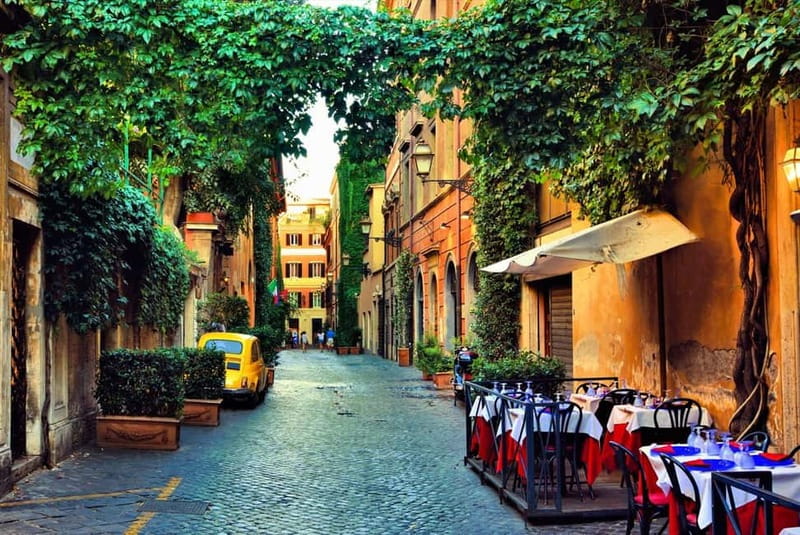
Rome in daylight is impressive. Rome at night is personal. The reason this tour works is simple: the major monuments look different once the sun drops. Colors soften. Shadows lengthen. You’re not just seeing famous places, you’re seeing them as Rome itself would frame them after dark.
The best part is that you get a high-impact route in about 2 hours, without needing to coordinate public transport or stitch together multiple attractions. The tour also includes a mix of scale: sweeping squares for photos, then tight interiors and smaller visual tricks that you might miss on your own.
One practical note: this walk is not for lounging. You’ll want comfortable shoes and a water bottle. Flash photography is also not allowed in certain areas, so plan to rely on available light and your camera’s normal settings.
You can also read our reviews of more tours and experiences in Rome.

Starting at Piazza di S. Agostino: A Calm Start Before the Cameras
Most evening tours start with the noise. This one starts with the opposite vibe. Your meeting point is in Piazza di S. Agostino, and it sets a relaxed tone. You’re in the historic heart, but you’re not immediately thrown into a crush of people.
From here, you get a guided sense of orientation that’s useful for the rest of the evening. Even if you’ve visited Rome before, the square-to-monument rhythm helps you connect the dots: how the city’s different eras line up along the walk, and why the route naturally flows toward the biggest names.
Also, because the meeting point can vary depending on the option booked, be sure you have the exact location confirmation before you head out. Then just show up a few minutes early so you can find your group without stress.
Piazza Navona’s Baroque Fountains After Dark
Piazza Navona is famous for a reason, and night makes it feel more dramatic. The Baroque fountains look sharper in the evening light, and the whole square has a stage-like quality. It’s the kind of stop where you can spend a few extra minutes simply watching how the light hits the water and stone.
What I like about including Navona in an evening route is that it acts like a visual reset. After the quieter start, it gives you a big, photogenic moment. You also get a chance to slow down at least briefly—use it to get your bearings before moving on to places that demand a bit more standing time.
If you’re the type who likes photos, this is where you’ll probably use the most shots. Just remember: flash is restricted in some areas, so keep your camera ready without blasting people nearby.
The Pantheon: Dome, Silence, and That Central Oculus
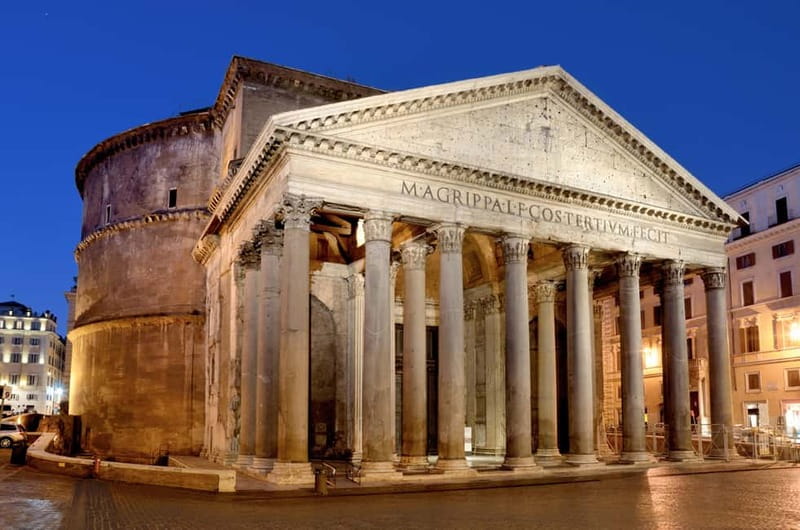
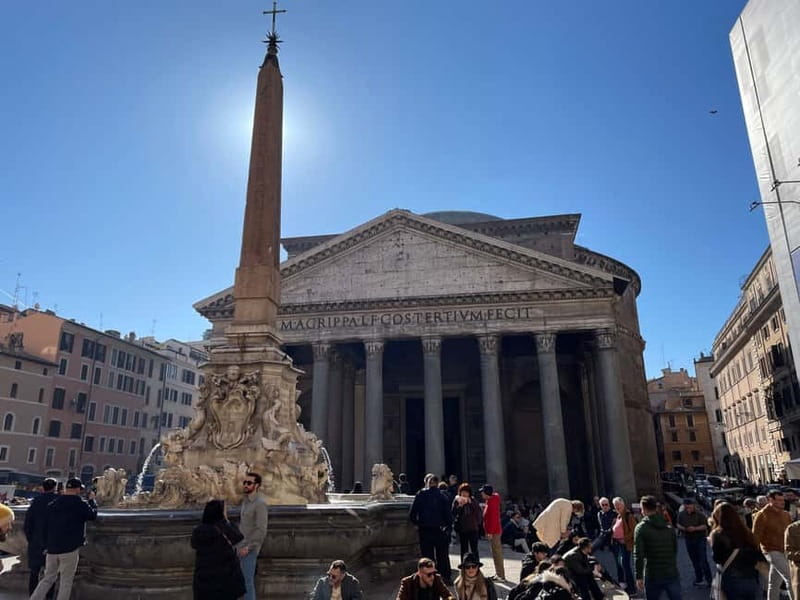
The Pantheon is one of those places where words don’t help much. Even with a guide giving context, your eyes do the work. Standing under the massive dome and looking toward the central oculus is a moment that lands whether you’re a big architecture fan or not.
At night, the atmosphere can feel lighter and more ethereal simply because the light conditions are different. You’re not fighting bright daytime glare. Instead, the building’s geometry reads cleanly, and the space feels more still.
Practical tip: this is a popular monument, so plan to be comfortable standing and keeping your phone/camera use respectful. The tour includes key landmarks and typically guides you through the best viewing angles you can reach within the time window.
St. Ignazio di Loyola, Known for Optical Illusion
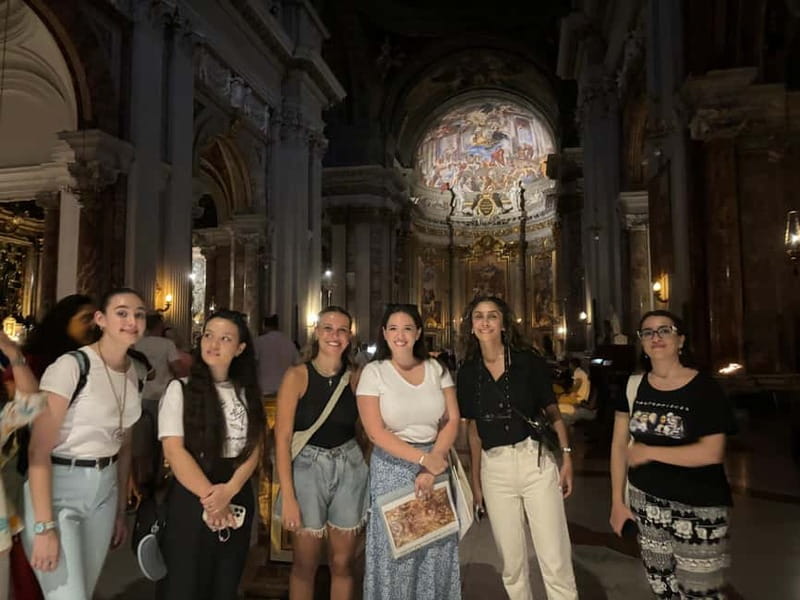
This is the stop that tends to win people over fast. St. Ignazio di Loyola is often nicknamed the Instagram Roman Church, but the nickname isn’t the point. The point is the trompe-l’œil ceiling—an optical illusion-style artwork that feels deeper and more dimensional than a flat ceiling should.
In the right light, it’s genuinely surprising. You look up and your brain tries to make sense of space, scale, and perspective. A guide helps here, because they’ll point out what to notice while you’re standing there, not after you’ve already moved on.
If you only have time for one interior stop, this one is a strong candidate. It adds variety to the itinerary: you’re not only looking at exteriors and fountains. You’re also getting a visual trick that feels very Roman, very Baroque-era in spirit.


Galleria Sciarra and Vicus Caprarius: Where Rome Shows Its Layers
Not all of this tour is about the biggest ticket names. You also get a couple of stops that add texture.
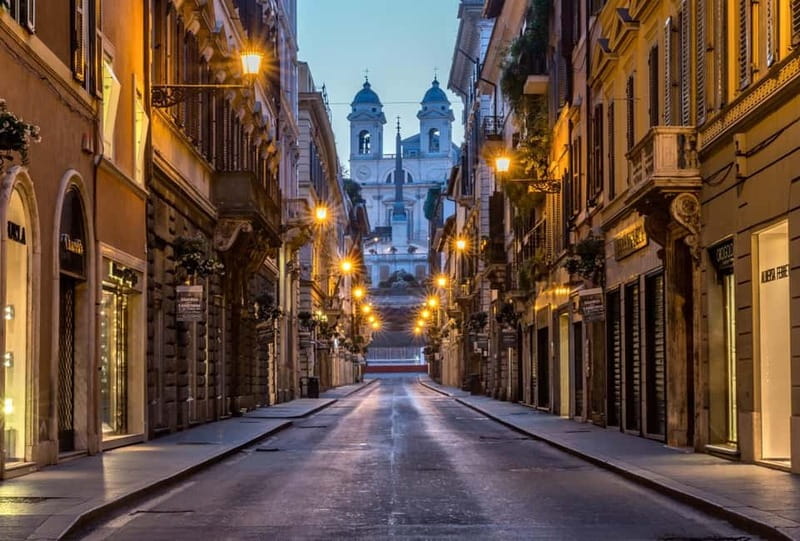
Galleria Sciarra is an Art Nouveau corridor experience, where frescoes can look especially vivid in evening light. It’s a change of pace from open squares. If you like walking through spaces that feel designed—rather than just existing—you’ll probably enjoy this.
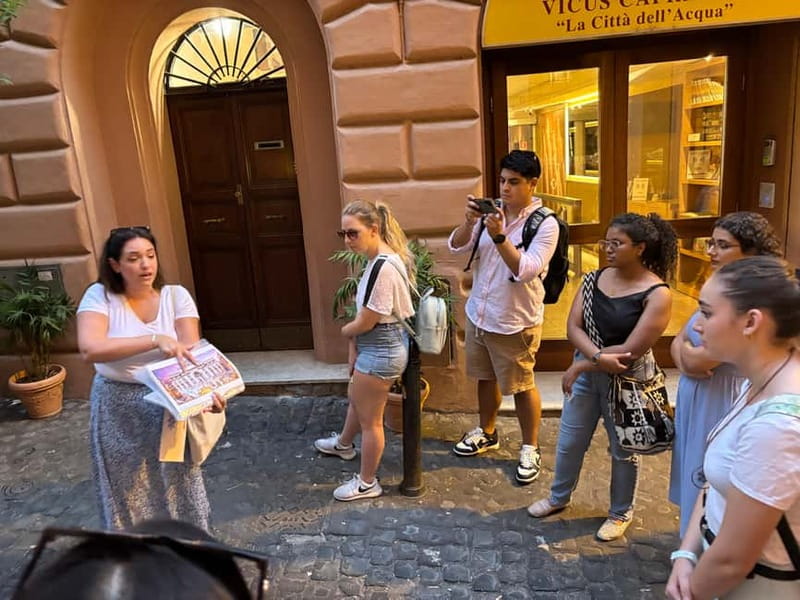
Then you reach the ancient ruins of Vicus Caprarius, often associated with the City of Water. Ruins can feel flat if you only treat them as a photo backdrop. On a guided walk, though, you get help connecting why the site mattered, what kind of urban life it represents, and how it fits into the larger “Rome everywhere” feeling.
The trade-off: these are typically shorter stops than the Pantheon or Trevi. So if you’re the type who likes to linger for 30 minutes per place, you may feel the time compression. But for most people, it’s the right balance for a 2-hour route.
Trevi Fountain: The Coin-Toss Moment Without the Chaos
The Trevi Fountain is one of the most universally recognized scenes in Rome. On a night tour, it also tends to feel more cinematic. The water, the stone, and the surrounding buildings create a full setting, not just a single monument.
Your guide brings you into the right rhythm so the coin toss doesn’t feel like a rushed checkbox. You’ll have time to look up close, take a few photos, and do the classic toss for your return to Rome—then move on before the area turns into a bottleneck.
Do note one practical thing: because it’s Trevi, expect people nearby. Keep your movements controlled, watch your footing, and be mindful of others when taking pictures.
Piazza Venezia, Vittoriano, and the Viewline Over Night Rome
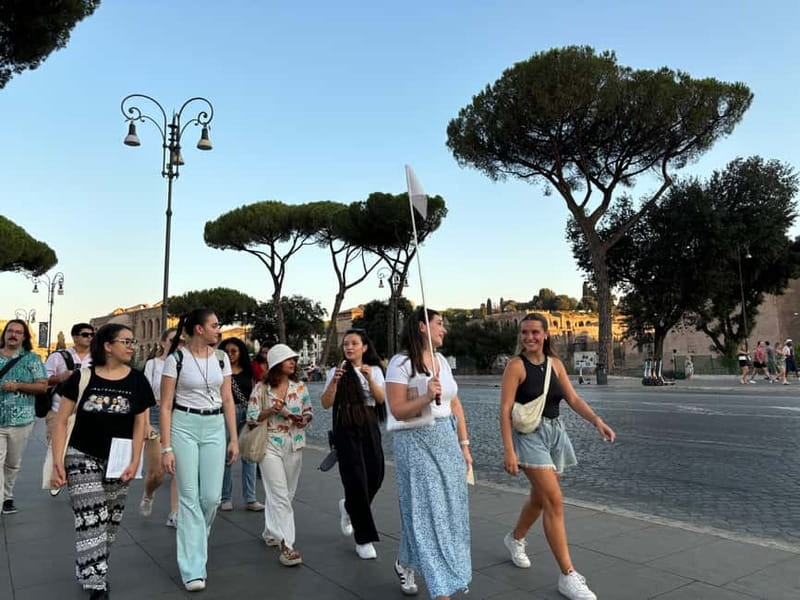
After the Trevi and the historical footwork, the tour brings you to Piazza Venezia and the Vittoriano Monument area. This part is about grandeur and scale. It also gives you a chance to see the city’s illuminated skyline in a way you can’t get from street-level wandering.
The tour includes major civic/political landmarks along the way, including Palazzo Venezia and Palazzo delle Assicurazioni Generali. That matters because it helps you understand that Rome isn’t only ancient. It’s also a living city that layers eras over each other.
If you like panoramic views, this segment is the kind where you’ll get that “oh, right, this is huge” reaction. Even if you’ve been to Rome before, night light makes the skyline feel more cohesive.
Via dei Fori Imperiali to the Colosseum: The Grand Finale
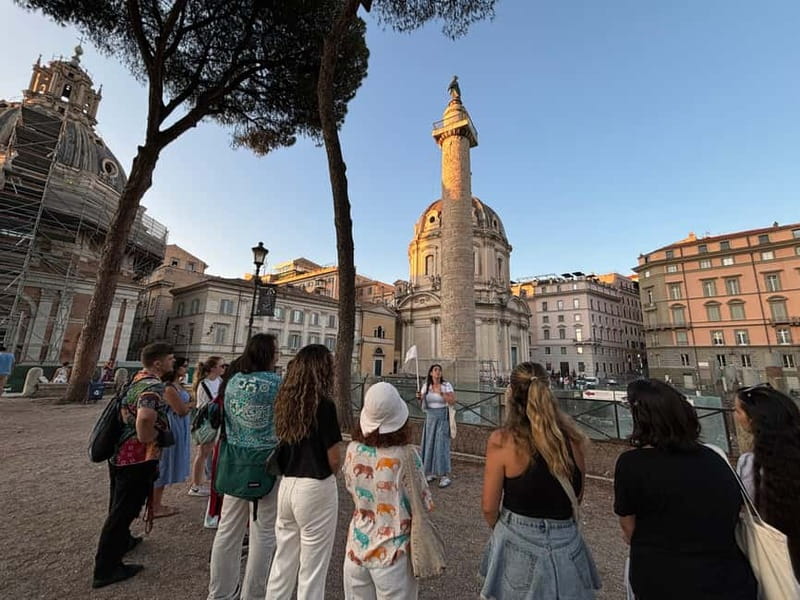
This is the part many people remember afterward, and it’s easy to see why. You walk along Via dei Fori Imperiali, where the remnants of ancient Rome feel present under the moonlit atmosphere. It’s a corridor of history, and it helps you shift your mental mode from “sightseeing” to “time travel.”
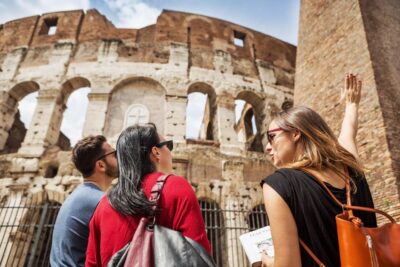
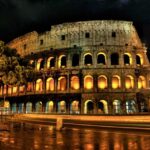
Then comes the payoff: the Colosseum at night. With the monument lit, it feels bigger than in daytime photos. It’s less about peak detail and more about presence—Roman stone doing Roman stone things.
Ending here works because you’re closing the loop with the most dramatic symbol in the itinerary. And since the tour returns you back to the meeting point, you’re not stuck figuring out how to get home at the end when you’re tired and your feet want a break.
Timing, Pace, and What You Should Pack
The tour is listed at 2 hours, though in at least one experience it ran closer to 2.30 hours. Either way, you should treat it like a short-but-intense walking evening. The itinerary is packed with major points, so the pace stays active.
Here’s what to pack based on what the tour recommends:
- Comfortable shoes (non-negotiable)
- Camera (night shots, fountain light, and interior ceilings are the money moments)
- Water (especially in warm months)
A big plus from the practical side: you don’t need to plan food because food and drinks aren’t included. That means you should eat before the tour or plan a post-tour snack. Also, since there’s no hotel pickup or drop-off, you’ll be doing the normal city-walk logistics yourself.
One more rule to remember: flash photography isn’t allowed in certain areas. That affects both your photo strategy and your etiquette. Keep your settings ready for low light and use flash only if the tour staff clearly says it’s permitted (the safe assumption is that it’s not).
Price and Value: Is $32 a Smart Buy?
At $32 per person, you’re paying for three things: a professional guide, a walking route through Rome’s historic core, and access to a curated selection of major landmarks and specific stops like St. Ignazio di Loyola and Galleria Sciarra.
The value check is whether the tour saves you time and decision-making. If you try to do this on your own, you’d need to map out the route, understand what you’re seeing, and figure out how to hit multiple key landmarks efficiently at night. That’s not impossible, but it costs attention and time—two things you usually don’t have in Rome.
This tour’s strength is density without feeling like a sprint. You get the icons (Pantheon, Trevi, Navona, Colosseum) plus the stops that add variety and explanation. For solo travelers who like walking, that mix can be ideal because you’re not spending your evening stuck in a guidebook loop.
Who This Tour Fits Best (and Who Might Want Another Option)
This is best for you if:
- you want a Rome-by-night overview that links monuments logically
- you like getting stories while you walk (not after you’re already tired)
- you’re comfortable standing for interior and exterior viewing
It’s not a fit for:
- people with mobility impairments
- wheelchair users
- anyone who needs long breaks with minimal walking
Also, since entrance fees aren’t included, you should expect that what’s inside versus outside may depend on the attraction rules and timing. Your guide can help with the flow, but it’s smart to plan for possible ticket costs separately.
Should You Book Via Roma: A Journey Through Time?
I think you should book this if you want a guided, efficient evening that hits the core icons and adds a few visual surprises. The strongest case is the combination of night lighting, major monuments like the Pantheon and Trevi, and the ceiling trick at St. Ignazio di Loyola. Add in scenic stops like Vittoriano and the ancient walk of Via dei Fori Imperiali, and you get a well-rounded “Rome after dark” arc.
Skip it if you hate walking, need lots of rest, or want a slower, ticket-heavy itinerary where you can spend long stretches inside museums and paid attractions. And if you’re hoping for lots of seated time, this tour isn’t that kind of evening.
If you’re flexible and want a memorable night route with a guide who keeps the story clear, this is one of the easiest ways to turn a short visit into a whole evening of Rome.
FAQ
How long is the Via Roma night tour?
The tour duration is 2 hours. Starting times vary, so check availability for the exact time.
Where does the tour start?
It starts at Piazza di S. Agostino. The exact meeting point may vary depending on the option booked.
Where does the tour end?
The tour ends back at the meeting point.
What is included in the price?
The price includes a professional guide and a walking tour of Rome’s historic heart, with visits to major landmarks listed in the tour details.
What is not included?
Hotel pickup and drop-off, food and drinks, and entrance fees to attractions are not included.
Are there entrance fees included for attractions?
No. Entrance fees to any attractions are not included.
What languages is the tour offered in?
The live tour guide is available in Spanish and English.
Is flash photography allowed?
Flash photography is not allowed in certain areas.
Is the tour suitable for wheelchair users or people with mobility impairments?
No. The tour is not suitable for wheelchair users or people with mobility impairments.
Can I cancel for a refund?
Yes. You can cancel up to 24 hours in advance for a full refund.