REVIEW · ROME
Colosseum, Roman Forum, Palatine Hill Tour with Arena option
Book on GetYourGuide →Operated by Inside Out Italy · Bookable on GetYourGuide
The Colosseum is loud in your mind before you even arrive. This 3-hour small-group tour strings together the Colosseum exterior, the Roman Forum, and Palatine Hill views with expert guidance and clear audio. You’ll also get a real sense of how Romans used these spaces for power, politics, and public spectacle.
What I especially like here is the way the guide work comes with headsets, so you’re not stuck playing guessing games near crowds and echoes. I also like the practical pacing: you move from landmark to landmark without wasting time, then finish with panoramic viewpoints from one of Rome’s seven hills—great for getting oriented fast.
One thing to consider: timing and entry rules are strict. You’re required to show up 30 minutes early with ID, and the Arena floor portion can be closed on some days due to weather, with no refunds in that case.
In This Review
- Key things to know before you go
- Entering the Arch of Constantine: your starting point matters
- Colosseum exterior tour: more than a photo stop
- Roman Forum on foot: where politics felt daily
- Palatine Hill: views plus the Romulus and Remus story
- Arena floor option: great, but confirm your ticket
- Small-group pace and headset narration: why it feels smoother
- Price and value: what you’re paying for
- Meeting time, last entry windows, and seasonal timing
- What to expect from the guide: clear narration and a human touch
- Who this tour is best for (and who should rethink it)
- Should you book this Colosseum, Forum, and Palatine tour with Arena?
- FAQ
- Where is the meeting point?
- What’s included in the standard tour?
- What does the Arena option add?
- How long is the tour?
- What languages are available?
- How much does it cost, and what’s included in that price?
- Do I need ID?
- What time should I arrive?
- Can the Arena floor be closed?
- Is this tour wheelchair accessible?
Key things to know before you go
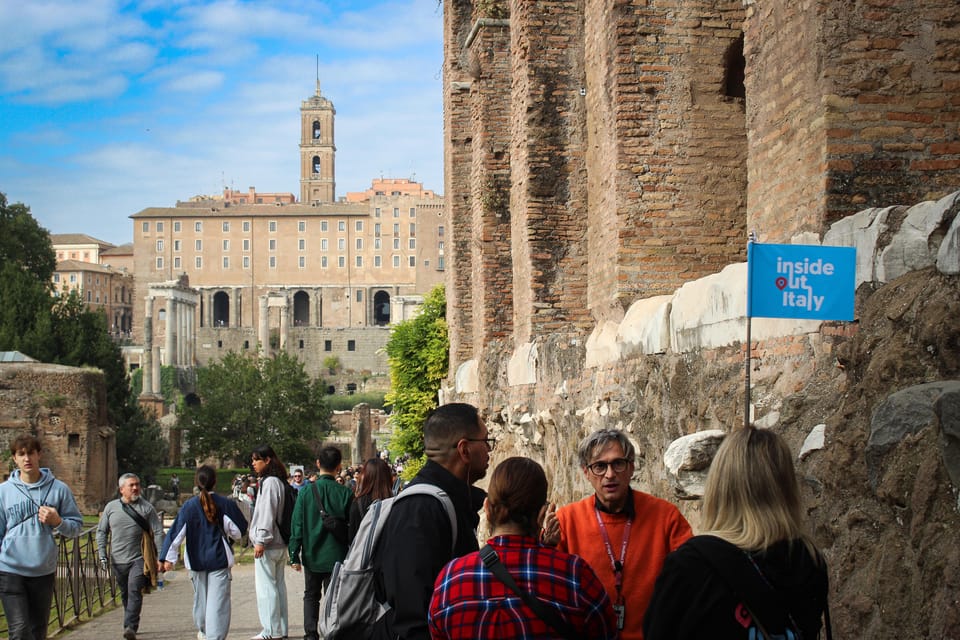
- Headsets included: clearer narration in noisy areas, especially around the Forum ruins.
- Small group feel: limited participants, and in at least one booking the group size was 11 people.
- Arena floor is optional: you only get it if you selected that option at booking.
- Palatine Hill finishes strong: views over the Forum and a story-heavy walk up Rome’s legendary hill.
- Meeting point is specific: in front of the Arch of Constantine, by the side facing the Colosseum, with a blue Inside Out Italy flag.
- ID is mandatory: without the right ID, entrance may be refused and you can lose tour value.
Entering the Arch of Constantine: your starting point matters
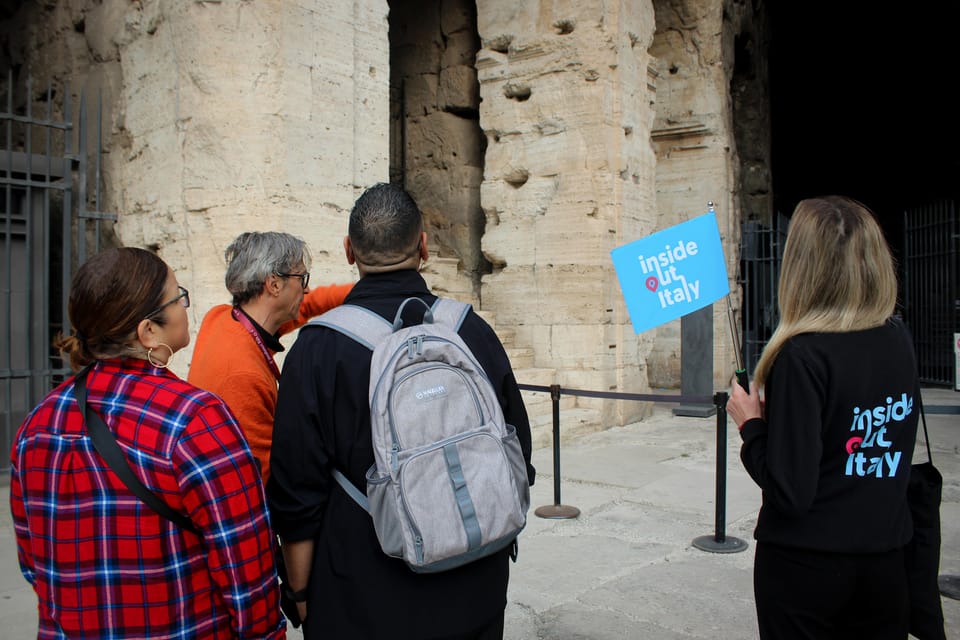
The tour starts in a very recognizable spot: in front of the Arch of Constantine, on the side that faces the Colosseum. Your guide holds a blue flag that reads Inside Out Italy. That matters because the Colosseum area is a maze of streets, construction, and tourist flows, and you don’t want to spend your best energy scanning for a group.
This is also where you get the “tour engine” working. There’s organized meeting-point process and on-site host service designed to keep the queue chaos from hijacking your schedule. In practical terms, it means fewer delays caused by searching, and more time for the stops that you booked in the first place.
Bring your ID. The rules are blunt: ID is mandatory, and if you show up without it, entrance can’t be guaranteed. It’s one of those annoying travel details that becomes expensive stress if you ignore it.
You can also read our reviews of more tours and experiences in Rome.

Colosseum exterior tour: more than a photo stop
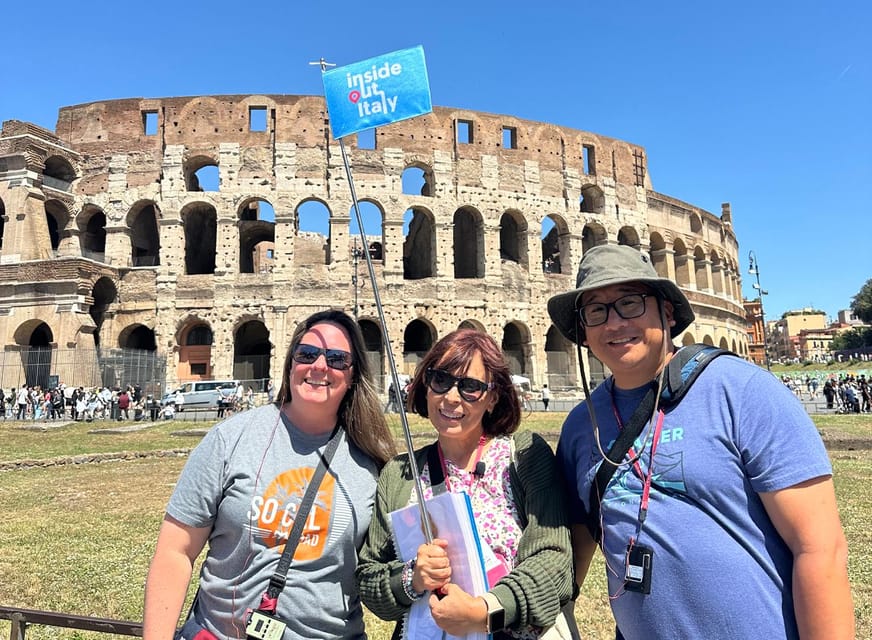
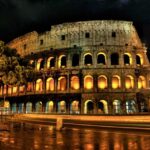
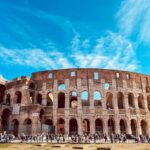
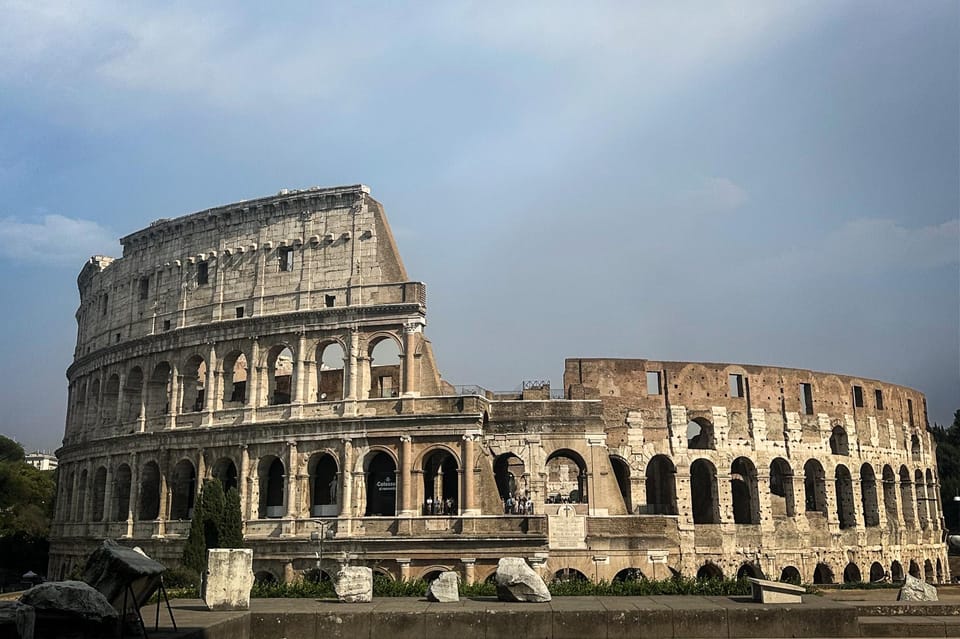
You’ll begin with a guided exploration of the Colosseum’s exterior for about an hour. From the outside, the narration has room to breathe. You can see the building’s scale without being immediately swallowed by the crowd inside.
This is where the guide helps you connect the physical structure to the Roman idea behind it. You’ll hear how the Colosseum was constructed and how it functioned in Roman society—less like a random ruin and more like a machine built for public entertainment and power display.
Even if you’ve seen the Colosseum in a hundred photos, this part helps you read it. You start noticing details such as the complex geometry of the façade and how the whole arena system was designed to move and manage people. It’s a strong setup for the Forum and Palatine Hill, because the story becomes bigger than one building.
Also, if you’re sensitive to long walks, the outdoor portion is a good warm-up. You can pace yourself while you learn what you’re about to see.
Roman Forum on foot: where politics felt daily
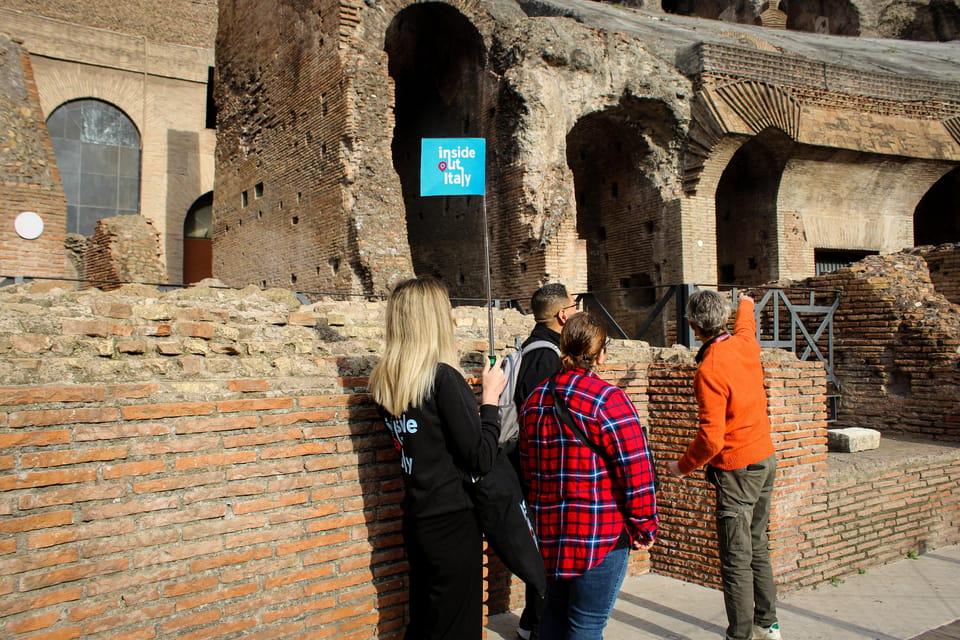
Next comes the Roman Forum, about an hour with the guide. If the Colosseum is the show, the Forum is the stage where the political drama actually lived.
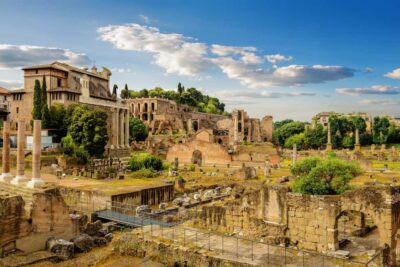
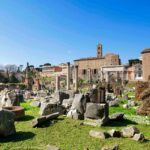
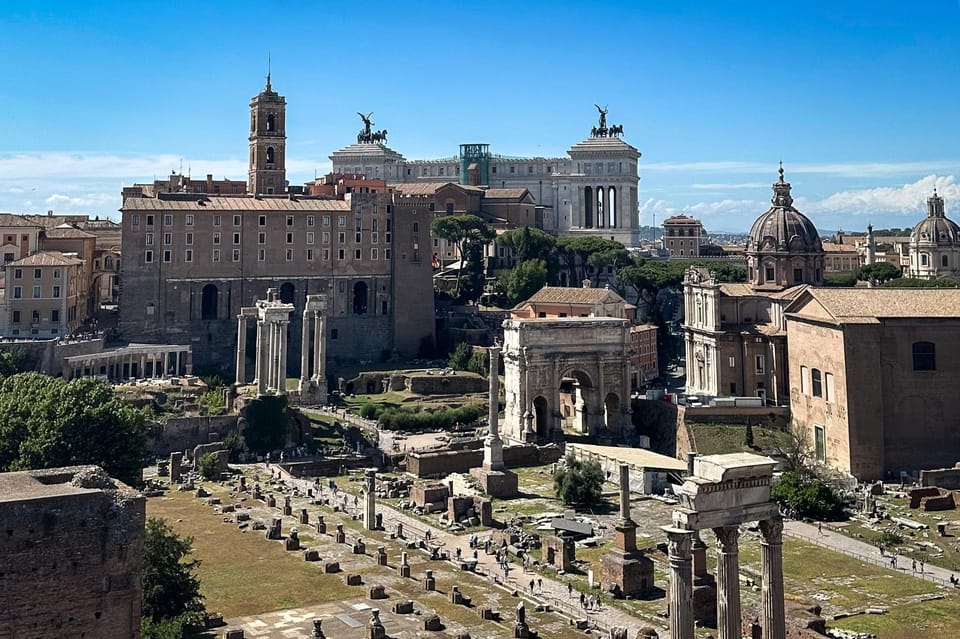
The Forum ruins are spread out, so a guided path helps you avoid the “we wandered and saw stones” feeling. You’ll walk through key ruins tied to ancient public life: temples, basilicas, monuments, and the kinds of spaces where emperors, senators, and citizens shaped decisions.
Here’s why this stop is so valuable: the Forum turns Roman history into something you can mentally walk through. Instead of memorizing names from a textbook, you get a sense of what these spaces were used for day-to-day. That makes the rest of your Rome sightseeing click—especially later when you see other monuments around the city.
Keep your eyes up as well as down. The Forum can trick you into focusing only on what’s left at ground level. The guide’s job is to point your attention to layout and meaning—why this space sat here, and how it would have worked when it was alive.
Palatine Hill: views plus the Romulus and Remus story
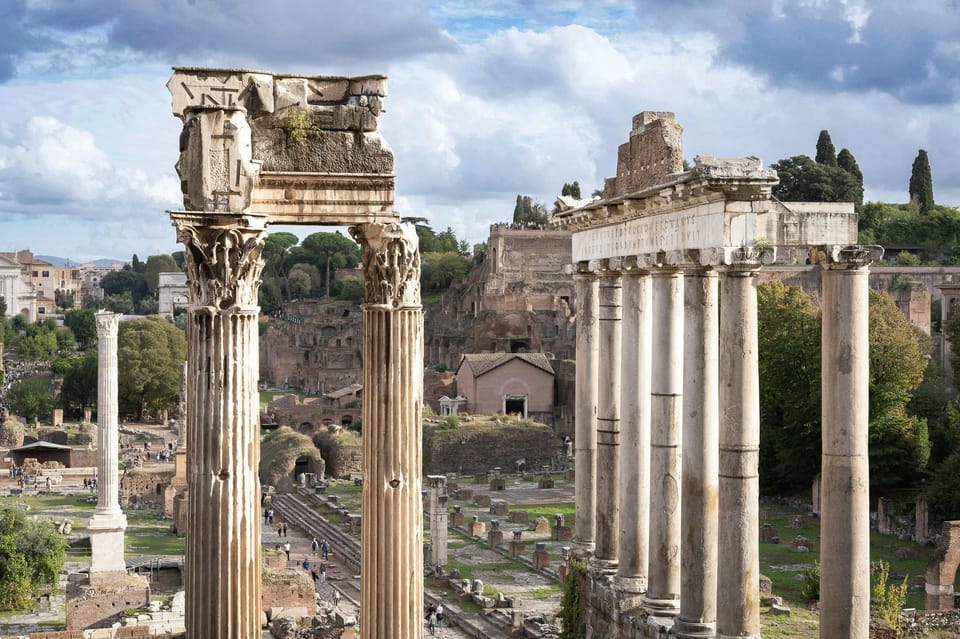
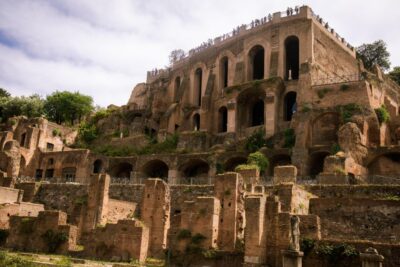
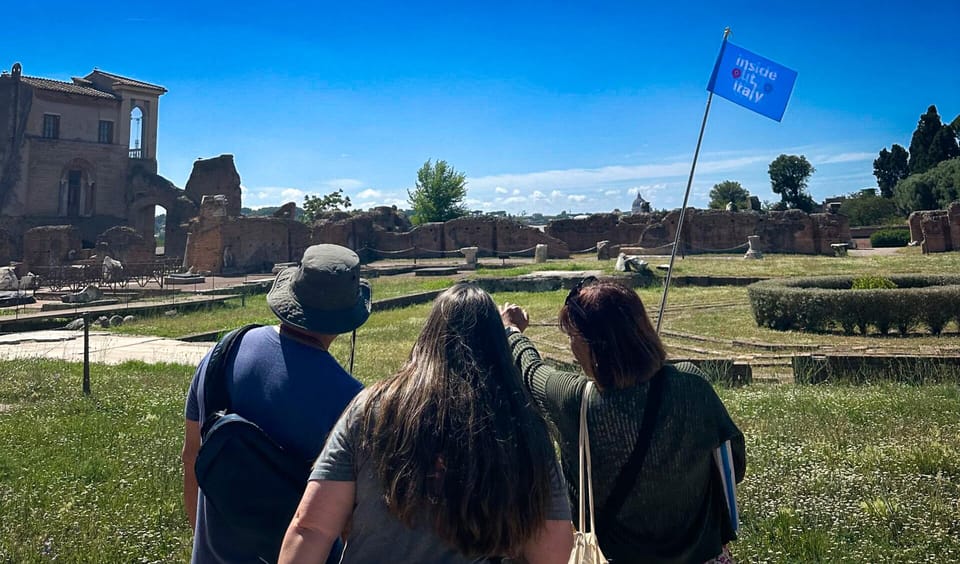
Palatine Hill is the final major stop, around an hour. This is the hill linked with the legend of Romulus and Remus, and you’ll hear how the story connects to Rome’s origin. From there, the tour focuses on the imperial palaces in the ruins, plus that all-important panoramic viewpoint over the Forum and modern Rome.
This is the part I think most people underestimate. A hill ruin sounds like “more walking.” In reality, the Palatine piece is where you get scale. You can look out and mentally place the Forum below, and suddenly the geography of ancient Rome feels real instead of abstract.
The views also help you understand why elites wanted height. It wasn’t only about power—it was about control, sight lines, and presence. Even if you’re not a hardcore history person, you’ll still get value from that “map moment.”
If you’re the type who likes photos, this is one of the best points to slow down. Headsets help you keep following the guide while you stop to look out.
Arena floor option: great, but confirm your ticket
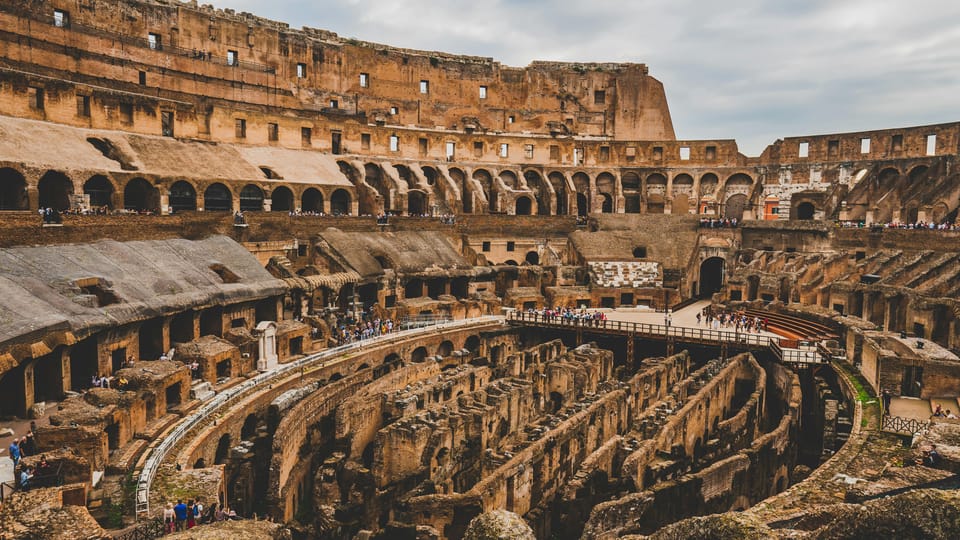
There’s an Arena floor access option you can choose. When selected, the tour includes a guided visit to the Colosseum’s arena floor (the details list it as a separate guided segment). This is a big deal because it changes your perspective. You’re no longer looking at the Colosseum from a respectful distance—you’re on the level that once hosted gladiators and public spectacle.
That said, the rules here are practical and a little unforgiving:
- If inclement weather closes the arena floor without notice, the arena portion may not happen.
- In those cases, refunds aren’t provided.
So if the Arena floor is your priority, plan for the idea that weather can affect it. Bring sensible footwear, and don’t pack your day around the hope of one specific photo angle.
Also, double-check that the Arena option is clearly indicated in what you booked. The title can look straightforward, but you want confirmation that your entry includes the arena segment. If it’s not on your voucher, you risk confusion when you reach the security and ticket checks.


Small-group pace and headset narration: why it feels smoother
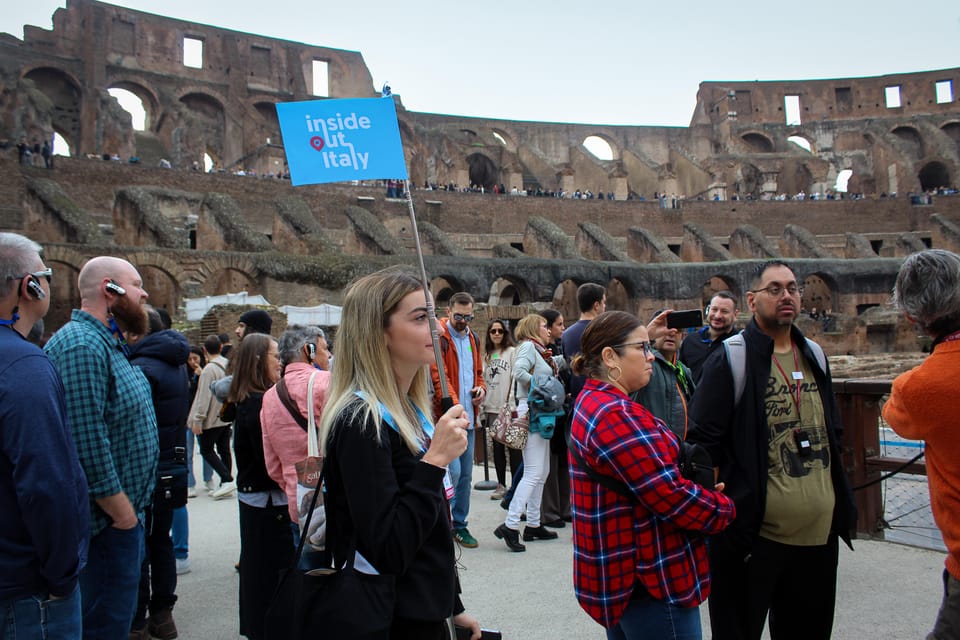
This tour is set up as a small group with limited participants. In one booking, the group size was cited as 11, which is exactly the kind of number that makes a guide easier to hear and a route easier to follow.
You’ll also get personal headsets so you can clearly hear the guide’s commentary. That’s not a “nice extra” in this area—it’s the difference between enjoying the explanation and missing it while you’re trying to keep up on uneven paths.
The guide storytelling is built around scenes you can visualize: gladiator battles and wild animal fights, plus the political and entertainment logic behind them. That kind of talk works well because it gives the ruins a purpose in your imagination.
Finally, the tour includes on-site host service and full customer care. In practice, that means there’s usually someone steering the group through the entry process and helping keep you on schedule.
Price and value: what you’re paying for
The price is listed at $58 per person for a 3-hour tour. That can sound steep until you break down what’s included.
Your tour package covers:
- Colosseum entry ticket
- Palatine and Roman Forum entry tickets
- Tour guide
- Headsets
- Access to the arena floor if you selected the Arena option
And the details add more clarity: adults’ archaeological site entry is €18 for the standard option, or €22 if you choose the Arena option, plus a €2 booking fee. The remaining portion of what you pay goes toward the guide, meeting-point assistance, headset system, and the services that keep the experience from turning into a self-guided scramble.
So the value equation looks like this: if you go on your own, you’d still need tickets, time planning, and the confidence to know what you’re looking at. Here, you’re buying the interpretation and the logistics that keep the day moving.
For me, the “sweet spot” for value is when you care about context and you don’t want to waste your limited time standing in lines without a plan. If you’re already a serious Roman-history person and happy with a self-guided day, you could go cheaper. But if you want the landmarks connected into one story, this price is easier to justify.
Meeting time, last entry windows, and seasonal timing
The tour meeting time is 30 minutes prior to the start time. Late arrival can lead to entry refusal and you lose the tour cost. That’s common at major sites, but it’s worth treating seriously here.
The Colosseum and Roman Forum also have seasonal opening and last-entry times. The details break it down like this:
- March 30 to September 30: sites close at 7:15 PM, last entry at 6:15 PM
- October 1 to October 25: sites close at 6:30 PM, last entry at 5:30 PM
- October 26 to February 28: sites close at 4:30 PM, last entry at 3:30 PM
Why you should care: a short 3-hour tour lives or dies by site entry timing. If you’re trying to stitch this into a packed itinerary, leave breathing room. If you’re coming from elsewhere in central Rome, build in buffer time for street traffic and slow walking.
Also note what you bring: you need passport or ID card, and oversized luggage or large bags aren’t allowed. Travel light.
What to expect from the guide: clear narration and a human touch
A good guide can make the Colosseum/Forum/Palatine loop feel like one coherent story instead of three separate ticket lines. The tour is designed for that with expert tour guides and clear audio through headsets.
The guide style seems to matter in the feedback. Names that show up in bookings include Paula and Claudia, both praised for being engaging and for explaining things in a way that stays understandable while you’re moving. That’s exactly what you want in Rome: someone who can talk clearly while your feet are doing the hard work.
There’s also the practical reality that the schedule is tight enough to follow a route efficiently. That can be great if you like structure. It can feel limiting if you want extra detours to nearby streets or viewpoints beyond the main stops.
One more day-to-day note: one booking indicated the tour operation was transferred to another local team. That doesn’t automatically mean trouble, but it’s smart to confirm the exact operator name on your confirmation and any emails the day before.
Who this tour is best for (and who should rethink it)
This works best if you:
- Want a guided route through three top sites in about 3 hours
- Like the idea of a small group with headsets
- Care about stories behind what you’re seeing—gladiators, public spectacle, imperial power, and daily political life
- Want Palatine Hill views without figuring out the route yourself
It’s not suitable for people with mobility impairments, and wheelchair users aren’t catered to on this tour route. Also, if you’re the kind of visitor who needs lots of pauses for stairs or slow scanning, you may find the pacing less comfortable.
If you’re traveling with children, the tour notes that children’s tickets are free of charge but reservation is mandatory. That can be a good deal, but you still want to show up prepared with the right ID and in the right time window.
Should you book this Colosseum, Forum, and Palatine tour with Arena?
Book it if you want the fastest way to turn three famous stops into one connected experience. The headsets, guided walk through the Forum ruins, and Palatine Hill viewpoints make this more than a checklist tour. At $58, the value is strongest when you factor in that major tickets are bundled and you’re paying for expert narration plus smoother logistics.
Skip the Arena option only if it’s not your priority, or if weather risk would stress you out. If Arena access is the whole reason you’re coming, treat it like a bonus when conditions are right, not a guarantee.
If you’re already comfortable with Roman ruins and want maximum flexibility, you could go self-guided. But if you want to see these three sites in one tightly managed block with a guide who can explain what matters, this is a solid pick.
FAQ
Where is the meeting point?
Meet in front of the Arch of Constantine, on the side facing the Colosseum. Your tour guide will be holding a blue flag that reads Inside Out Italy.
What’s included in the standard tour?
The tour includes a guided visit of the Colosseum (with entry ticket), the Roman Forum and Palatine Hill (with entry tickets), a tour guide, and headsets.
What does the Arena option add?
If you select the Arena option, you get access to the Colosseum Arena floor as part of the guided tour.
How long is the tour?
The duration is 3 hours.
What languages are available?
The live tour guide is available in English, Spanish, and French.
How much does it cost, and what’s included in that price?
The price is listed at $58 per person. Adult site entry is €18 for the standard option or €22 for the Arena option, plus a €2 booking fee. The rest of your payment covers services like the guide, headsets, and meeting-point assistance.
Do I need ID?
Yes. A passport or ID card is mandatory. If you arrive without ID, entrance can’t be guaranteed.
What time should I arrive?
You must be at the meeting point 30 minutes before the start time. Late arrival can result in entry refusal and you may lose the tour cost.
Can the Arena floor be closed?
Yes. In the case of inclement weather, the Arena floor may be closed off without notice. Refunds aren’t provided in those instances.
Is this tour wheelchair accessible?
No. It’s not suitable for people with mobility impairments, and wheelchair users are not accommodated.
If you want, tell me your travel month and whether you’re aiming for Arena floor access. I can suggest a timing strategy based on the seasonal last-entry windows.