REVIEW · ROME
From Naples, Florence and Rome: Pantheon and smart audio
Book on GetYourGuide →Operated by inStazione · Bookable on GetYourGuide
The Pantheon is the kind of building that stops you cold. With this smart audio guide experience, you get your ticket and a self-paced route that explains what you’re seeing—then keeps going through key Rome sights. I especially like that it’s designed for your pace, and that the audio doesn’t just talk about the dome; it connects the Pantheon to the city around it. The main thing to consider is that headphones are not included, so you’ll want your own.
From Naples or Florence, you also get included roundtrip train travel, which makes this feel like a real day-trip value play. I like the practical approach: downloadable audio, indoor map help, and an easy flow from the Pantheon to famous churches and piazzas. The only drawback to plan around is phone reliability—there’s no free Wi‑Fi at the Pantheon, and mobile signal can be patchy.
In This Review
- Key highlights worth planning for
- Pantheon smart audio: why this beats a basic ticket
- What you get before you go: ticket, WhatsApp, and a charged smartphone
- Choosing your starting city: Naples, Florence, or Rome
- Naples or Florence start (with transport)
- Rome start (no transport)
- The Pantheon visit: how the audio makes the building click
- A practical drawback
- The post-Pantheon Rome audio route (your next stops)
- How to use this route without getting stressed
- Value check: is $6 per person actually a good deal?
- Who this is best for (and who should pass)
- The smart-audio setup: tips that make it work in real life
- Should you book this Pantheon smart audio experience?
- FAQ
- Where is this experience located?
- How much does it cost?
- What’s included with the experience?
- Are headphones included?
- What languages are available for the audio guide?
- How do I get the audio guide and my tickets?
- Do I need mobile data or Wi‑Fi at the Pantheon?
- Which transportation is included from my city?
- Is this experience wheelchair accessible?
Key highlights worth planning for
- Self-guided Pantheon visit at your own pace with a focused audio chapter
- Ticket + audio delivered the day before via your contact on WhatsApp
- Rome route included in your audio, linking the Pantheon to major monuments
- Structure-focused explanations that help you understand how the building works
- Naples and Florence options include roundtrip trains, while the Rome option covers only the ticket + audio
- Multiple languages for the downloadable audio: Italian, English, Spanish, French, German
Pantheon smart audio: why this beats a basic ticket

If you’re the type who hates rushing through big-ticket sights, you’re going to like this format. The Pantheon isn’t hard to enjoy on its own—just step inside and let the scale hit you—but it’s hard to appreciate its “how did they do this?” details without help. That’s where the smart audio guide earns its keep.
You’ll get an audio tour made to stand on its own. It includes more than 10 audio descriptions plus an indoor map for the Pantheon area, and then it expands into Rome with historical context, stories, and anecdotes. Instead of a scripted walk that forces you to match someone else’s pace, you choose when to pause for a view upward, when to read the room, and when to move on.
Also, the Pantheon is one of those sites where context changes the whole experience. Your audio doesn’t treat it like a random ancient relic. It frames the Pantheon as a place showing continuity between Paganism and Christianity—specifically referencing the sanctuary yielding in 608 to Pope Boniface IV by the Byzantine Emperor Foca. It also pulls in legends tied to darker themes (including the Satan-related legend). You don’t have to believe every story to enjoy hearing how people used to explain the building.
One note: this is audio-based. You’re not getting a live guide here, so you’ll want to be the kind of person who listens while walking.
You can also read our reviews of more tours and experiences in Rome



What you get before you go: ticket, WhatsApp, and a charged smartphone

This experience is built around one simple idea: start fast once you arrive. Before your visit, the provider contacts you so you can download the smart audio guide. Tickets are handled the day before your visit (you’ll check them on WhatsApp). That cuts down on the usual on-the-day chaos.
Plan around phone power. The Pantheon doesn’t have free Wi‑Fi, and mobile coverage isn’t always reliable. Bring a passport or ID card, and make sure your smartphone is charged before you set off. If your battery dies, you’ll lose the audio—so think of charging as part of the tour, not an afterthought.
Headphones are another practical piece. The tour lists the audio as downloadable to your phone, but it explicitly says headphones are not included. If you don’t want to share your soundtrack in public, bring earbuds or a small speaker solution.
Choosing your starting city: Naples, Florence, or Rome

You can start this day trip in three ways: Naples, Florence, or Rome. This choice matters because it changes what’s included.
Naples or Florence start (with transport)
If you pick Naples or Florence, roundtrip train transportation is included. That makes the experience feel like a true day-trip package: you don’t have to think about rail tickets, just show up and go. It’s also a big value lever, since train travel can eat up budget quickly if you have to price it separately.
Rome start (no transport)
If you choose Rome, the experience provides the entrance ticket + audio. That’s it—no train leg and no transport plan included. For people already staying in Rome, that’s actually a good deal, because you can schedule your day around the best time for your own pacing.
In both cases, the visit itself is self-guided once you’re at the Pantheon. Your “tour” part is powered by the audio.
You can also read our reviews of more tours and experiences in Rome






The Pantheon visit: how the audio makes the building click
Your Pantheon time is self-guided, guided by a smart audio chapter of about 20 minutes. You’ll also have access to indoor map support, which helps when you’re inside trying to orient yourself.
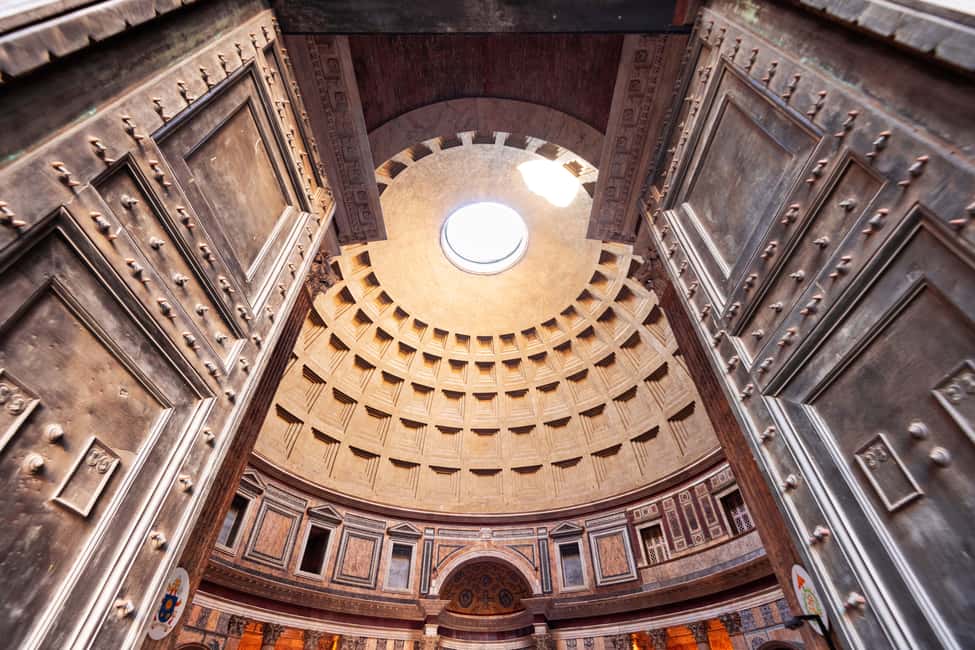
Here’s what the audio approach does well: it teaches you to look. The Pantheon is famous, but fame can sometimes make us skim. With the audio running, you’ll be prompted to notice the dome geometry, the way light works inside, and how the architecture creates the sense of scale. You’re not just admiring; you’re decoding.
Expect the story to include the building’s place in Rome’s religious transition—from pagan roots to Christian continuity—through the 608 handover to Pope Boniface IV, attributed to the Byzantine Emperor Foca. That context helps explain why the Pantheon remains meaningful across eras, not only as an ancient monument but as a working part of Rome’s story.
And yes, your audio also includes legends, including a Satan-linked legend. Some people love this kind of mythmaking; others just enjoy that it shows how imagination used to attach itself to big architectural questions. Either way, it makes the Pantheon feel like a living part of culture, not a frozen museum object.
A practical drawback
Because this is audio-only, you need a little patience for listening in a busy space. If you hate noise or you struggle to focus in crowds, consider going earlier or later in the day when the flow is lighter. The Pantheon is always busy; your best bet is choosing timing that works for your attention span.
The post-Pantheon Rome audio route (your next stops)

After your Pantheon audio chapter, the guide doesn’t stop. It pushes you into a longer Rome route using more than 20 additional audio descriptions. This is where the experience becomes more than a single-sight ticket—it becomes a “choose-your-own Rome day” built around art and church interiors.
The route names specific places, which is helpful because it reduces decision fatigue. Your audio points you toward major artworks and landmarks you can aim for next:
- Caravaggio paintings at San Luigi dei Francesi and S.Maria del Popolo
- Michelangelo Redentore at Santa Maria sopra Minerva
- Bernini statues in Piazza Navona
You’ll also get historical information and stories connected to the city beyond those art stops, with mentions of big-name areas like Piazza del Popolo and Piazza Navona, plus Fontana di Trevi. Even if you don’t linger everywhere equally, the audio helps you connect spots that otherwise feel like separate postcard frames.
How to use this route without getting stressed
Because the experience is self-paced and audio-led, you can adapt it. Think of the named art locations as anchors. If you’re tired, you can hit fewer stops and still feel like you did a meaningful Rome route. If you love art, you can turn this into a longer gallery day by spending extra time where the audio cues you to look for details.
One thing you should keep in mind: the audio route is “guided by your phone,” not by a group. That’s freeing, but it also means you’re responsible for getting yourself to each place. If you’re comfortable navigating on your own with maps, you’ll enjoy the control.
Value check: is $6 per person actually a good deal?
At $6 per person, this is priced like a serious budget winner—especially for people starting from Naples or Florence where roundtrip trains are included. Even if you don’t factor in the train cost fully (since you may pay for transit anyway when traveling), it’s hard to ignore the overall value equation: entrance ticket plus multi-language downloadable audio, plus a longer Rome route experience, in one package.
That said, value comes with trade-offs. The price reflects what you’re not getting: no live guide and no included headphones. If you were expecting someone to physically explain everything at the Pantheon doorstep and then shepherd you through Rome, you’ll feel the absence. But if you’re happy with audio and you like learning at your own pace, this is a strong cost-to-coverage ratio.
Who this is best for (and who should pass)

This experience fits best if you:
- Love self-guided travel and don’t want to be tied to a group schedule
- Want the Pantheon explained in a way that helps you understand the building, not just admire it
- Plan to move beyond the Pantheon and connect it to other Rome sights through a structured audio route
- Are traveling from Naples or Florence and want transport value
You might want a different style of tour if you:
- Want a live guide for Q&A and instant clarification
- Hate using your phone as your primary guide (remember: no free Wi‑Fi at the Pantheon)
- Forgot headphones and don’t want to buy or use shared audio solutions
The smart-audio setup: tips that make it work in real life

A few small things make a big difference with this kind of tour:
- Download everything before you start. The info is clear that you should have the contents of the audio guide downloaded ahead of time because Wi‑Fi isn’t available.
- Charge fully, then charge again if you can. If your battery is low, the audio becomes a gamble.
- Use the audio like a checklist. Let it prompt what to look for, then spend extra time on your favorite parts.
- Treat the audio route as flexible. You’re given named art and landmark targets, so pick the ones you genuinely care about.
And a small bit of humor: the Pantheon doesn’t care if your phone battery is at 3%. Gravity and dome light still do their thing. But your audio won’t be there.
Should you book this Pantheon smart audio experience?
If you want a high-value day built around one of Rome’s most important buildings, I’d say yes—especially if you’re starting in Naples or Florence. The included train makes it feel like a real plan, not just a ticket. The smart audio adds structure, and the fact that it continues into major Rome sites helps you turn a single attraction day into a more complete experience.
Book this if you like learning while moving, you can manage your phone for navigation and listening, and you’re okay with audio replacing a live guide.
Skip it if you’re expecting a guided group experience with on-the-spot explanations. Also skip (or plan carefully) if you know your phone battery is unreliable or you hate crowds enough that listening becomes difficult.
FAQ
Where is this experience located?
It takes place in Lazio, Italy, with the visit centered on the Pantheon in Rome.
How much does it cost?
The price is $6 per person.
What’s included with the experience?
You get an entrance ticket to the Pantheon and a downloadable smart audio guide for your mobile phone.
Are headphones included?
No. Headphones are not included.
What languages are available for the audio guide?
The audio guide is available in Italian, English, Spanish, French, and German.
How do I get the audio guide and my tickets?
You’ll be contacted by the team to download the smart audio guide. You’ll also receive your tickets the day before your visit and can check them on WhatsApp.
Do I need mobile data or Wi‑Fi at the Pantheon?
No Wi‑Fi is provided, so you should download the audio in advance. Mobile network coverage is not always good, so relying on streaming isn’t a safe plan.
Which transportation is included from my city?
From Naples or Florence, roundtrip train transportation is included. From Rome, only the entrance ticket and audio are provided (no transport included).
Is this experience wheelchair accessible?
Yes, it is listed as wheelchair accessible.