REVIEW · ROME
Ostia Antica: Small group tour from Rome
Book on GetYourGuide →Operated by Estaalia · Bookable on GetYourGuide
Ancient Rome’s port city is shockingly intact. You’ll get a clear sense of how Romans lived once the city was thriving on the river and trade routes. I love the skip-the-line tickets and the small-group pace that keeps things from turning into a rush. I also love how your guide ties together the theater, baths, and home life so it feels like a real place, not just stones. One catch: expect a moderate amount of walking, and it’s not suitable for wheelchair users.
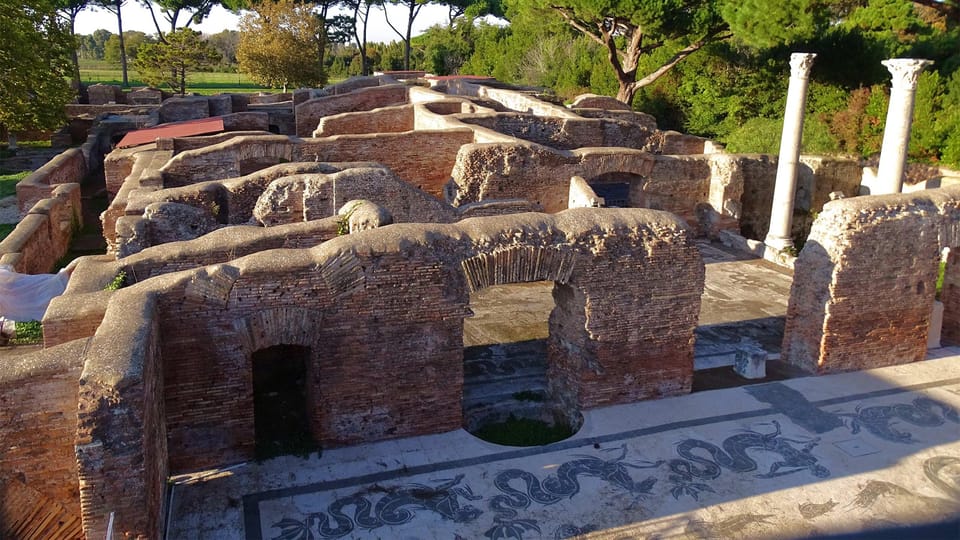
Ostia Antica has a special kind of realism. The river changed course, then silt and mud covered the city after the fall of the Roman Empire—helping preserve what you see today until excavation. So instead of guessing, you can actually read the city: streets, public spaces, and the kind of daily routines that made port life work.
You start in Rome and head out fast. You meet in front of the Roma Ostia Lido Train Station at Piazzale Ostiense, take the local train to the archaeological park, and return the same way—simple logistics for a very satisfying 4-hour outing. Based on the kind of guide experience you get here, you’ll also leave with practical tips for what to do next, including local transport ideas.
In This Review
- Key things I’d watch for
- Ostia Antica’s big advantage: it feels like a city, not a museum
- Getting there: Piazzale Ostiense to the park by local train
- The 4-hour flow: what you’ll see and why the timing works
- The outdoor theater: crowd drama where it actually happened
- The Square of the Guilds: where shipping met ambition
- Public baths and olive-oil hygiene: the daily routine stop
- House of Diana: domestic life in a town built for work
- Your guide is the difference: small group + clear explanations
- Price and value: does $113.17 feel fair?
- What to bring (and what to skip) for an easier walk
- Who this tour fits best
- Should you book Ostia Antica from Rome?
- FAQ
- How long is the Ostia Antica small group tour?
- Where do I meet for the tour?
- How do you travel from Rome to Ostia Antica?
- What’s included in the price?
- Is food or beverages included?
- What languages does the guide speak?
- What should I bring, and can I bring luggage?
- Is the tour wheelchair accessible?
- What if I need to cancel?
Key things I’d watch for
- Skip-the-line entry so you lose less time standing around.
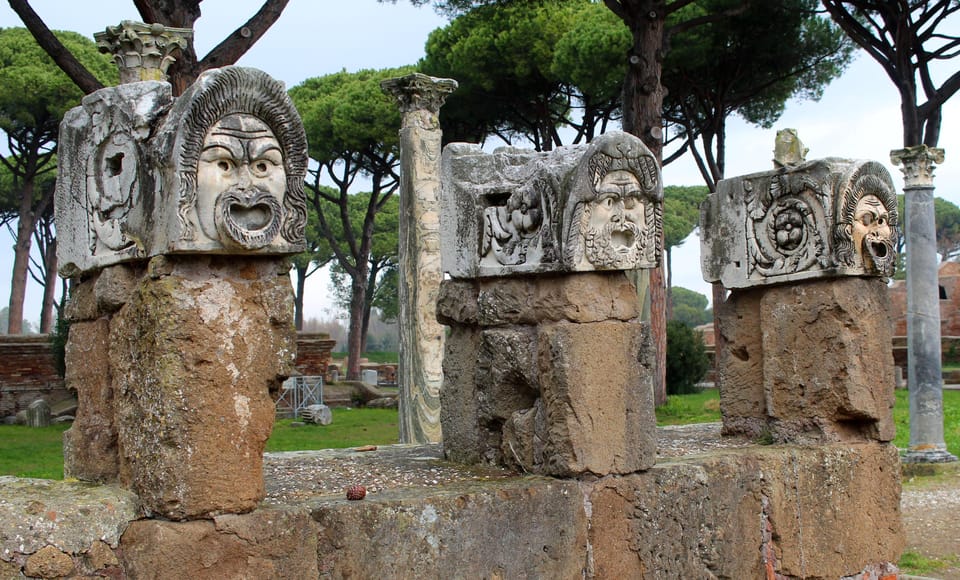
- The outdoor theater that hosted plays and even gladiator fights.
- The Square of the Guilds tied to ship owners and merchants chasing profits.
- Public baths where people worked out, soaked, and cleaned with olive oil.
- House of Diana for an up-close look at where people slept and lived.
- Small-group, licensed guiding in English (plus Spanish and French options).
Ostia Antica’s big advantage: it feels like a city, not a museum

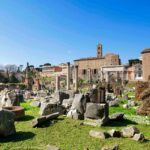
Ostia Antica is the rare ancient site where you don’t have to do all the mental work yourself. The layout still makes sense. You walk past the kinds of buildings that served a working port town—places where commerce happened, where crowds gathered, and where people cleaned up and rested.
What helps is the way the city was preserved. After the Roman Empire declined, Ostia was abandoned. Then, as the river shifted, silt and mud covered the ruins. That natural cover is why you can stroll among structures that feel surprisingly legible. Instead of isolated columns, you get street-level context.
You’ll also like the focus. This isn’t a slow “read every inscription” tour. It’s a guided walk that hits key public and domestic spaces—so you come away understanding how a commercial Roman town actually ran.
You can also read our reviews of more tours and experiences in Rome.


Getting there: Piazzale Ostiense to the park by local train
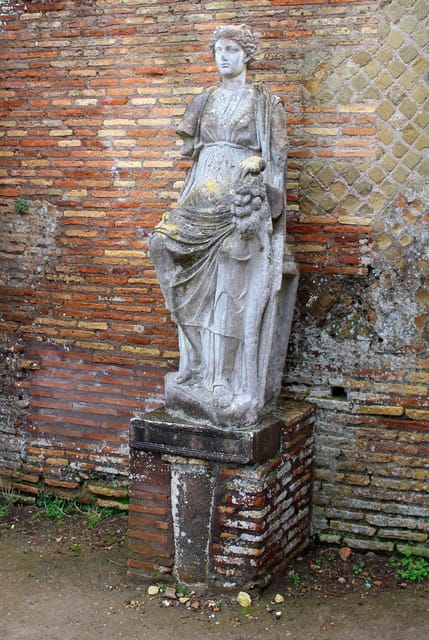
The best part of the plan is how straightforward it is. You meet at Roma Ostia Lido Train Station, in front of the station building at Piazzale Ostiense, 9. Arrive about 15 minutes early so check-in doesn’t eat into your walking time.
Then you take a local train to the archaeological park. The tour includes the roundtrip train ticket, which matters more than it sounds. It means you can show up, follow the group, and not spend your morning figuring out which line goes where. For many people, that alone turns “planning fatigue” into a smooth half-day.
The trade-off: no hotel pickup. You’ll need to get yourself to the station. If you’re staying somewhere central, that’s usually fine. If you’re far from public transit, build a little extra travel buffer.
The 4-hour flow: what you’ll see and why the timing works
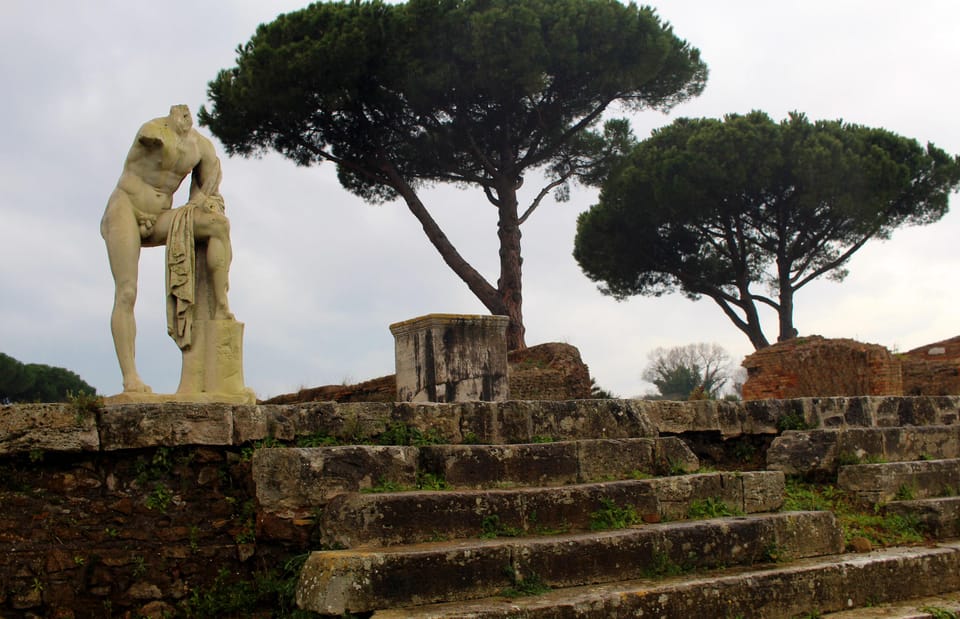
This is a 4-hour tour. That time window is a sweet spot for Ostia Antica. Long enough to cover the highlights, short enough that you’re not stuck out there until late afternoon.
Also, the starting time can vary, so you’ll want to check availability for the exact departure. Regardless of the time, the structure is the same: transit out, guided walk through the major zones, then return back to your meeting point.
A smart way to think about the timing is this: Ostia Antica rewards walking, but it also rewards energy. When the tour is four hours, you’re more likely to stay sharp and notice details—like how public space and daily routines connect—rather than power-walking through everything.
The outdoor theater: crowd drama where it actually happened
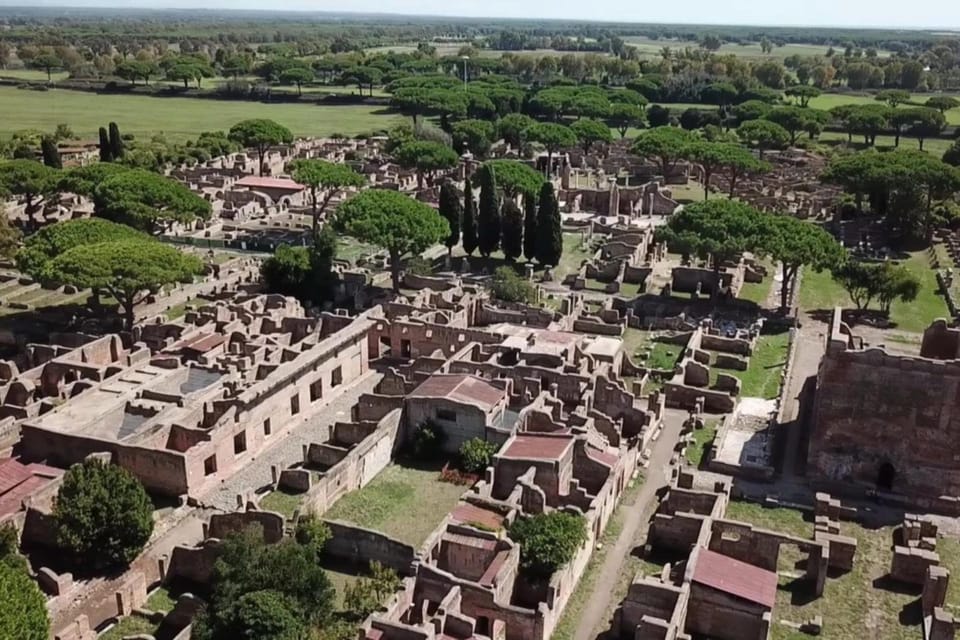
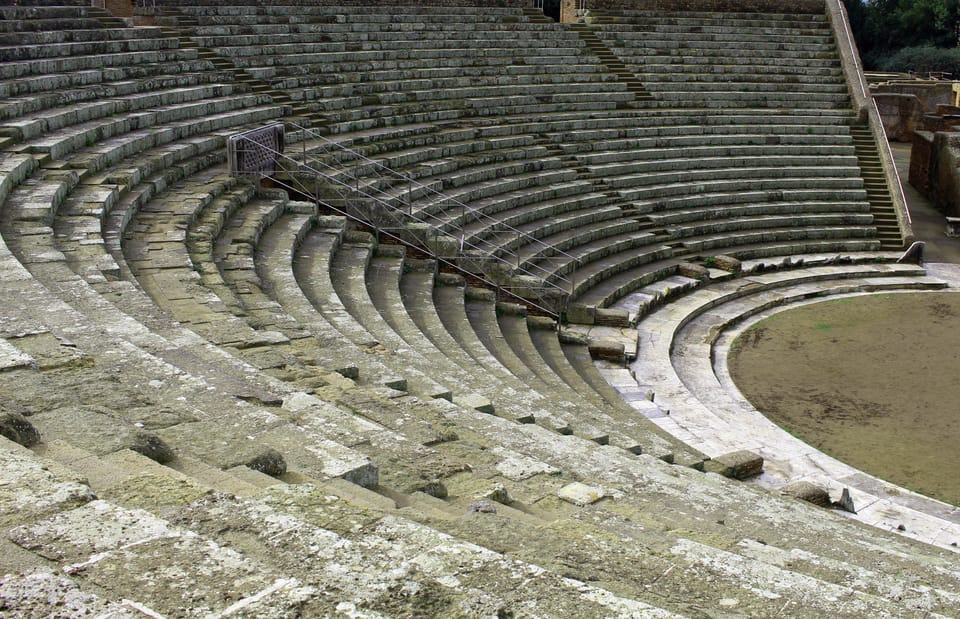
One of the biggest anchors of the tour is the grand outdoor theater. This isn’t just a pretty ruin. It was a stage for public life—hosting plays, and yes, even gladiator fights.
Why I think this stop is so valuable for first-timers: it shows you how entertainment and civic space overlapped in Roman culture. You can picture crowds moving, gathering, and watching the same public drama unfold. And since it’s outdoors, it helps you understand how Romans used open-air architecture for mass events.
Practical note: theaters can be uneven and exposed, and you’ll likely spend some time standing and looking across the ruin. Comfortable shoes aren’t optional here—your feet will be the limiting factor, not the sights.
The Square of the Guilds: where shipping met ambition
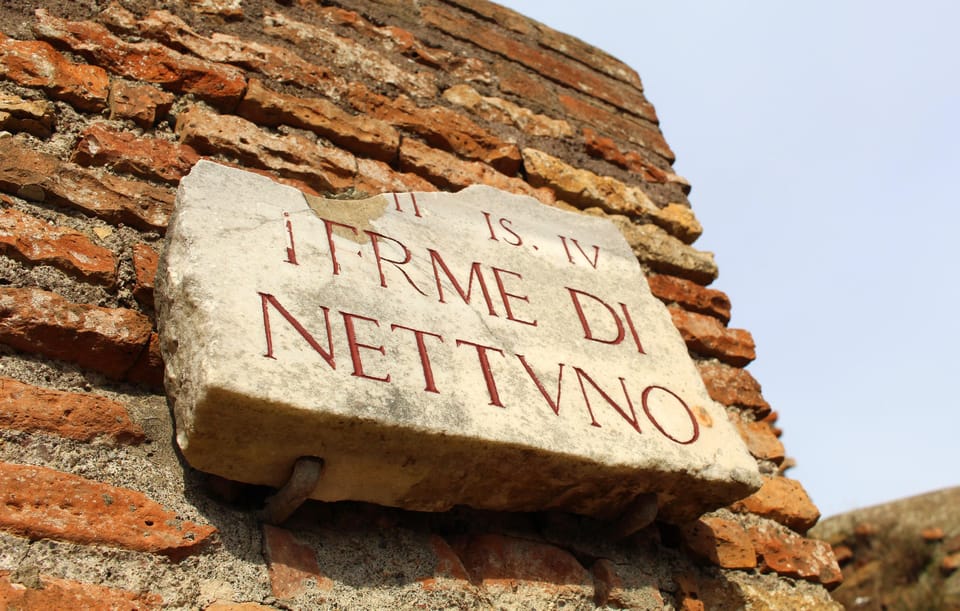
Next comes the Square of the Guilds. This area ties directly to Ostia’s role as a port city and commercial center. It’s where ship owners and merchants tried to make their fortunes—basically the business engine behind the town.
This stop works best when you think of it as a marketplace of opportunities. It’s not only about money; it’s about organization. Guilds, trade connections, and the constant movement of goods shaped daily life here. Even if you’re not a history nerd, you’ll feel the logic: port cities need coordination, and coordination needs space.
You’ll also appreciate that your guide connects the story. The ruins are impressive, but the meaning comes from learning why those spaces existed where they did.




Public baths and olive-oil hygiene: the daily routine stop
After the commercial and civic zones, you’ll move to a very different mood: the public bath houses. This is one of the most “human” stops on the tour because baths weren’t just about washing. People lounged in pools, worked out, and cleaned with olive oil.
Think of it as Roman “wellness plus social time.” You can picture people arriving, relaxing, training, and then freshening up as part of regular life. For me, this kind of stop is what makes Ostia Antica feel real. You’re not only seeing grand buildings—you’re seeing how everyday routines were built into the city.
Downside to plan for: baths zones can be a bit slippery or uneven depending on conditions. Wear shoes with good grip and don’t rush. You’ll get better photos too when you’re not doing tiny balancing acts.
House of Diana: domestic life in a town built for work
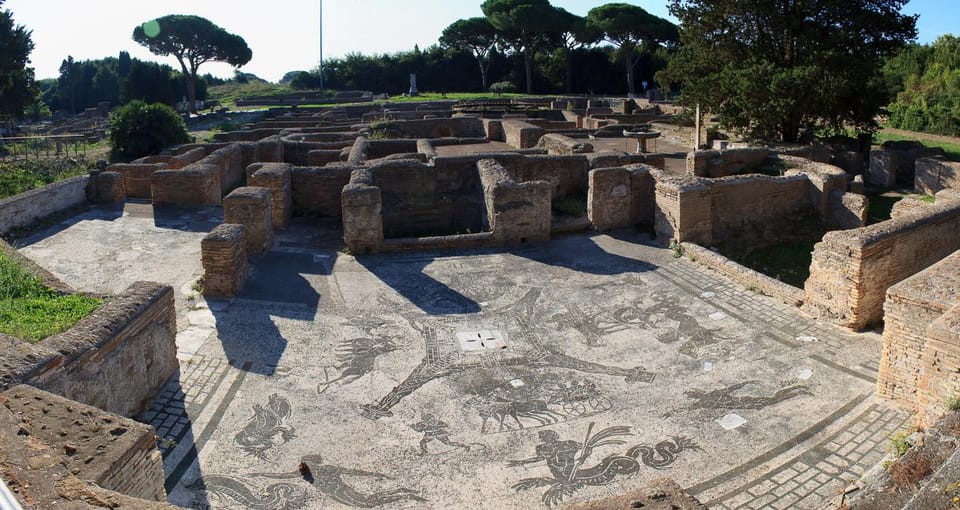
Finally, you’ll reach the House of Diana. It’s the domestic contrast you want at the end of a port-city tour: a place for living and sleeping—where the ancients laid their heads at night.
Even with ruins, houses tell a different kind of story. Public spaces show community and spectacle. Homes show routine, comfort, and personal identity. The House of Diana stop helps you understand how a working town also had private corners—places where people could rest after long days tied to commerce and travel.
This part of the walk can feel a little more intimate, but don’t expect it to be quiet in the way a chapel is. Ostia Antica is still an outdoor archaeological park. You’ll be navigating the same sun, wind, and ground as the rest of the tour—so keep that water and hat handy.
Your guide is the difference: small group + clear explanations
This tour stands or falls on the guide, and that’s exactly where it earns its high rating. People consistently highlight guides who have loads of information and who know how to tell the story without turning it into a lecture.
One practical win: the guide doesn’t just point out ruins. They’ll also help you think about what you’re doing next. In at least one case, the guide shared additional suggestions for another stop and provided local bus information so the rest of your day ran smoother.
Since this is a licensed English tour guide (and Spanish/French are also available), you’re not stuck with awkward translation or vague highlights. You should expect clear context for what you’re seeing—especially at the theater, guild square, bath houses, and House of Diana, where the meaning depends on knowing the “why.”
Price and value: does $113.17 feel fair?
At $113.17 per person for about 4 hours, you’re paying for a guided experience plus included transport and entry.
Here’s what you’re getting for that price:
- Roundtrip train ticket from Rome
- Skip-the-line tickets to Ostia archaeological park
- A licensed English tour guide (small group)
- Guided access to the main sites you’d probably want to prioritize anyway
If you were to DIY this, you’d spend time coordinating the train, managing entry, and figuring out which parts matter most. Paying for the guide isn’t just convenience—it’s also direction. When you walk through a large archaeological park without context, you often leave with photos and a vague feeling of impact. With a guide, you leave with a working mental map of how the town functioned.
Is it pricey? It’s not the cheapest half-day from Rome. But it’s also not a long, drawn-out tour. For many people, the value is in avoiding wasted time and getting explanations that make the ruins click.
What to bring (and what to skip) for an easier walk
You’ll enjoy this tour more if you prep like it’s a guided hike across uneven ground.
Bring:
- Comfortable shoes (seriously)
- Hat and sunscreen
- Water (bring a bottle)
- Passport or ID card (a copy is accepted)
Don’t bring:
- Luggage or large bags (not allowed)
If you want a smooth day, pack light: a small daypack with your essentials. You’ll appreciate being able to move quickly when the group changes areas.
Who this tour fits best
This tour is a good match if you:
- Want a focused introduction to Ostia Antica in about half a day
- Prefer a guide to connect the dots between public buildings and daily life
- Like hands-on walking tours more than “sit and listen” experiences
- Are comfortable using public transit
It’s not the best fit if:
- You have mobility limitations. It’s explicitly not suitable for people with mobility impairments and not suitable for wheelchair users
- You need to bring luggage or very large bags
- You dislike moderate walking (there is some walking, and you’ll be outdoors most of the time)
Should you book Ostia Antica from Rome?
I’d book it if you want an efficient, guided way to see why Ostia Antica mattered as Rome’s port city. The combination of skip-the-line access, roundtrip train transport, and a guide who actually explains what you’re looking at makes the four hours feel well spent.
Skip it if you’re seeking a fully relaxing outing or you need full accessibility accommodations. Also, if you hate guided structure and prefer to wander freely, you might feel slightly herded through the highlights.
If you’re in the middle—curious, comfortable walking, and ready to learn—this is one of the more sensible ways to do Ostia Antica without turning the day into logistics.
FAQ
How long is the Ostia Antica small group tour?
The tour lasts 4 hours. Starting times vary, so you’ll want to check availability for the options.
Where do I meet for the tour?
Meet in front of the Roma Ostia Lido Train Station at Piazzale Ostiense, 9. The tour ends back at the meeting point.
How do you travel from Rome to Ostia Antica?
You take a local train from Ostiense Train Station to the archaeological park. The roundtrip train ticket is included.
What’s included in the price?
Included are the roundtrip train ticket, skip-the-line tickets to the Ostia archaeological park, a licensed English tour guide, and a small group tour.
Is food or beverages included?
No. Food and beverages are not included.
What languages does the guide speak?
The guide is available in Spanish, English, and French.
What should I bring, and can I bring luggage?
Bring comfortable walking shoes, a hat, sunscreen, and water. You also need a passport or ID card (a copy is accepted). Luggage or large bags are not allowed.
Is the tour wheelchair accessible?
No. The tour is not suitable for wheelchair users or people with mobility impairments.
What if I need to cancel?
You can cancel up to 24 hours in advance for a full refund.