REVIEW · ROME
Rome: Castel Sant’Angelo Reserved Entry
Book on GetYourGuide →Operated by Flavio's Journeys · Bookable on GetYourGuide
Castel Sant’Angelo is a time machine with stairs. I like the priority entry setup, because it helps you start exploring without the usual gate-time drama. I also love that it’s truly self-guided, so you can spend your energy where it counts: the Hadrian mausoleum origins, the papal fortress era, and the big Rome views from the terrace.
One drawback to plan for: this is built for walking. The experience isn’t suitable for wheelchair users or people with mobility impairments, and you also can’t bring luggage or large bags through.
In This Review
- Key things to know before you go
- Reserved Entry + Skip-the-Line: What You’re Paying For
- The Monument’s Big Twist: From Emperor’s Tomb to Papal Fortress
- Your Five-Floor Walk: Where to Focus First
- Hadrian-era beginnings and the mausoleum story
- Weapons and fortress character
- Renaissance frescoes and the papal artistic layer
- Papal Rome Inside: Sanctuary, Defense, and Human Stories
- Leo X and Clement VII: Baths You Shouldn’t Rush
- Terrace Views: How to Time the Rome Photographs
- Meeting Point Reality Check: The RVG Flag
- The $38 Question: Is Priority Entry Worth It?
- Who This Self-Guided Ticket Fits Best
- Should You Book Castel Sant’Angelo Reserved Entry?
- FAQ
- Where is the meeting point?
- What time should I arrive?
- Is this a guided tour?
- What’s included with the ticket?
- How do I skip the line?
- How long does the experience last?
- What languages can the host speak?
- What items are not allowed?
- Is it suitable for wheelchair users or people with mobility impairments?
- What’s the cancellation and payment flexibility?
Key things to know before you go
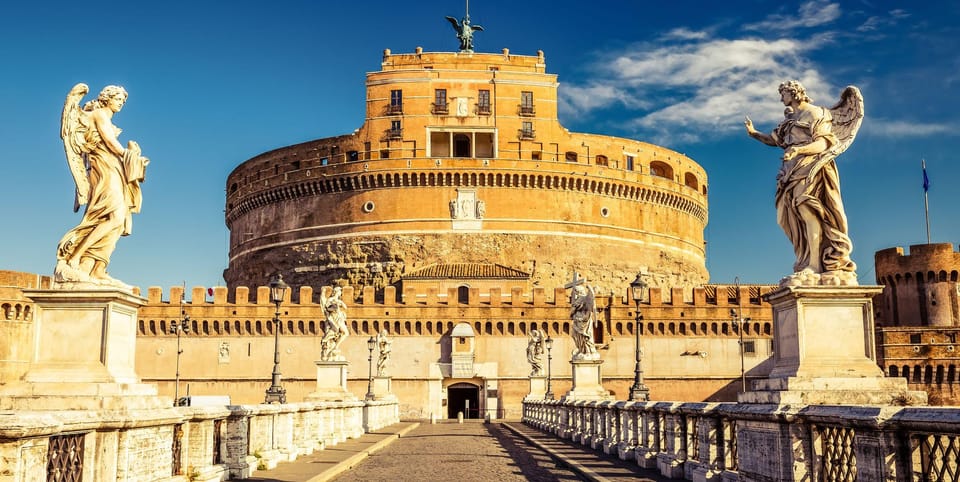
- Fast-track entry via a separate entrance so you skip the main line
- Self-guided, meaning you control the pace across five floors
- Hadrian to the Popes: mausoleum origins (135–139 AD) to papal defensive stronghold
- Papal baths of Leo X and Clement VII are a highlight you’ll want time for
- Terrace panoramic views of Rome once you reach the upper areas
- Meeting point is specific: Lungotevere Castello main entrance, RVG flag
Reserved Entry + Skip-the-Line: What You’re Paying For
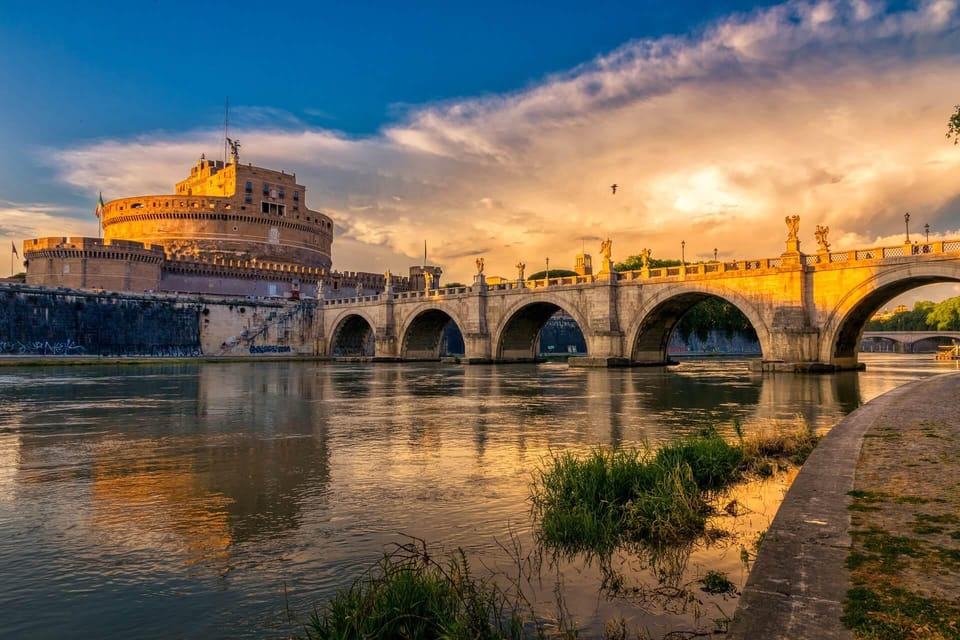
Castel Sant’Angelo (also called the Mausoleum of Hadrian) can be busy. The value here is not a fancy tour script—it’s the fast-track entry. You get reservation and administrative charges included, plus access through a separate entrance meant to cut your waiting time.
For you, that usually means one thing: you can show up, check in, and start moving. When you’re self-guided, time matters. The quicker you’re inside, the more likely you’ll have the kind of visit where you actually pause for details instead of rushing because your day is slipping away.
And yes, the experience is self-guided. There’s no guided narration included—no pickup, no foods, no drinks. So if you want a storyteller walking you room to room, you’d need to look for a guided option elsewhere.
You can also read our reviews of more tours and experiences in Rome.


The Monument’s Big Twist: From Emperor’s Tomb to Papal Fortress
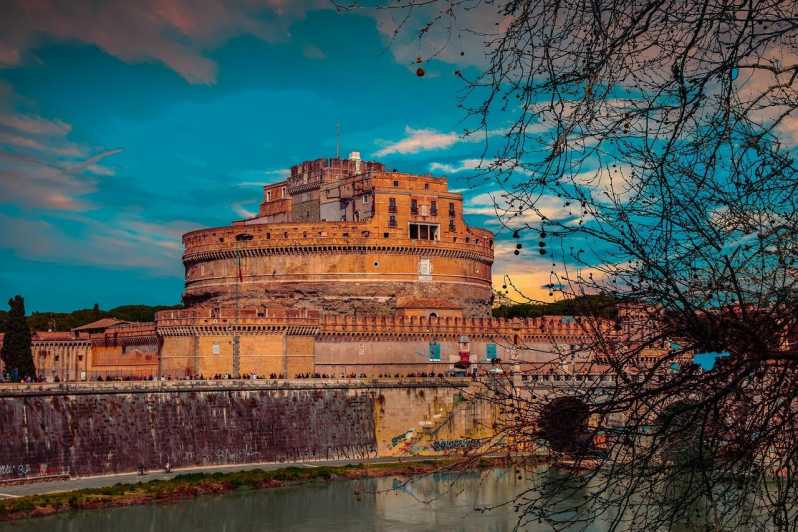
Castel Sant’Angelo is one of those places that changes meaning as you walk through it. The first layer is the Emperor Hadrian connection: the structure was commissioned by Hadrian and built between 135 and 139 AD. That origin matters because you’re not just visiting a pretty building—you’re inside a monument that started as a mausoleum concept and later took on a totally different job.
Then comes the papal transformation. Over time, it became a defensive structure for the Papal state, and from the 14th century onward, it functioned as a sanctuary for popes. On a self-guided visit, this story is something you can feel even without a guide: the building’s purpose shifts, and the way you move through floors helps you understand how it could guard, house, and protect.
One of the most sobering parts is the prison side of its history. You’ll come across references to prisoners and their tragic fates within its walls. It’s not the kind of stop where you’ll leave feeling light, but it’s a real part of the complex that explains why fortresses were built—and why they were feared.
Your Five-Floor Walk: Where to Focus First
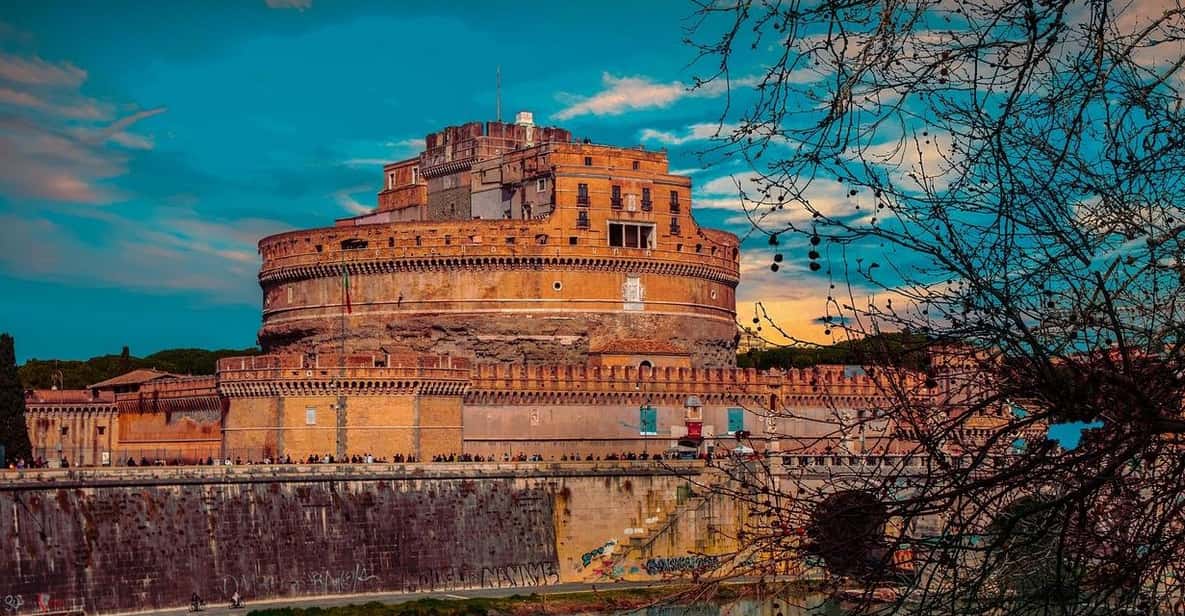
The castle spans five floors, and it mixes military-minded features with art and ceremonial spaces. Even with no set route, you’ll have an easier time if you think in zones: origins and structure first, then papal era spaces, then views at the end.
Here’s a practical way to plan your self-guided visit using what the site is known for:
Hadrian-era beginnings and the mausoleum story
Start by orienting yourself inside the building. Since it begins as Hadrian’s commissioned mausoleum, you’ll want to look for areas that explain how the monument was conceived and built. Expect the atmosphere to feel more structural and foundational than decorative. Even if the exact details vary room to room, the theme stays consistent: this is a Roman imperial starting point.
Weapons and fortress character
Castel Sant’Angelo includes displays of weapons. That matters because it frames the later papal defense function. If you’re the type who likes context—how a place was used—you’ll likely appreciate this portion. It’s the difference between seeing the castle as architecture versus seeing it as a tool used in conflict.




Renaissance frescoes and the papal artistic layer
On top of the fortress elements, the site also offers Renaissance frescoes. This is where the experience becomes more than military history. When you’re looking at frescoes, give yourself a moment to slow down, because wall art is one of those things that rewards quiet attention more than speed.
If you only have a limited amount of time, don’t try to finish everything. Choose a few areas to go deeper into: the fortress displays, the art spaces, and the papal baths.
Papal Rome Inside: Sanctuary, Defense, and Human Stories
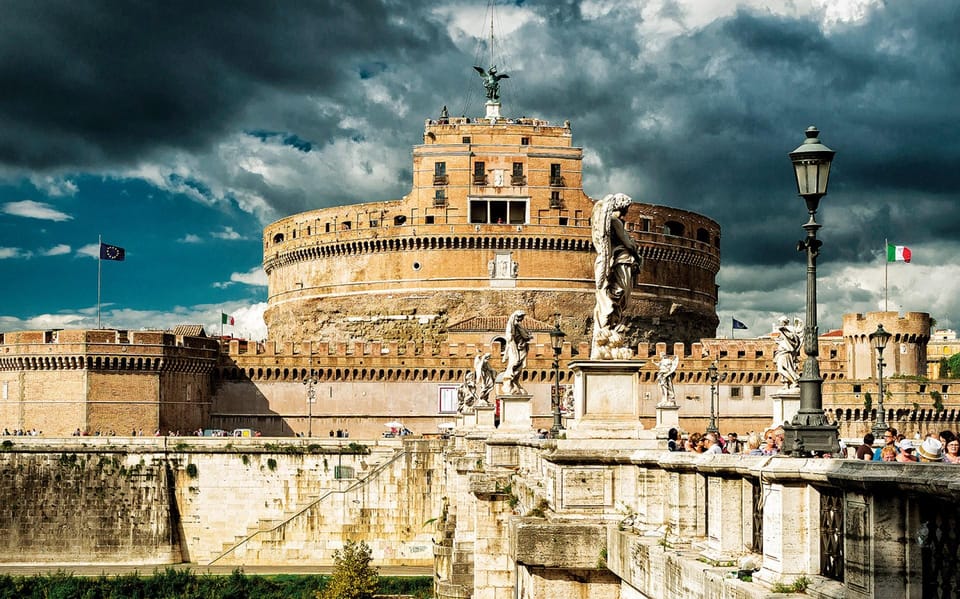
From the 14th century onward, Castel Sant’Angelo served as a sanctuary for popes. That detail changes how you read the rooms. Instead of picturing a building that only fought, you start imagining it as a refuge—an important difference in tone.
You’ll also learn about the building’s prison history. The castle is known for stories of prisoners who were confined there, with many facing tragic outcomes. I like including this layer in my planning because it prevents the classic mistake: treating the castle like a museum-only stop with no weight to it.
A self-guided visit is actually a good fit for this. You can pause when you want, skip when you’re not ready, and come back later if the emotional tone hits you fast. That control is one of the reasons the self-guided format works well here.
Leo X and Clement VII: Baths You Shouldn’t Rush
One of the most specific highlights you’ll want to plan around is the painted papal baths of Leo X and Clement VII. This is the kind of attraction that can be easy to miss if you keep moving from room to room without a priority.
So here’s my advice: when you see you’re heading into the bath areas, treat that time as a mini-sitting. Look at the painted surfaces and give yourself a minute to process what you’re seeing. These baths show another side of the building: not just defense and captivity, but comfort and status inside the fortress.
If your instinct is to chase the highest viewpoints as soon as you enter, consider doing the baths earlier rather than later. Upper areas are tempting near the end, but giving the baths adequate attention improves your overall sense of the castle’s contrast.
Terrace Views: How to Time the Rome Photographs
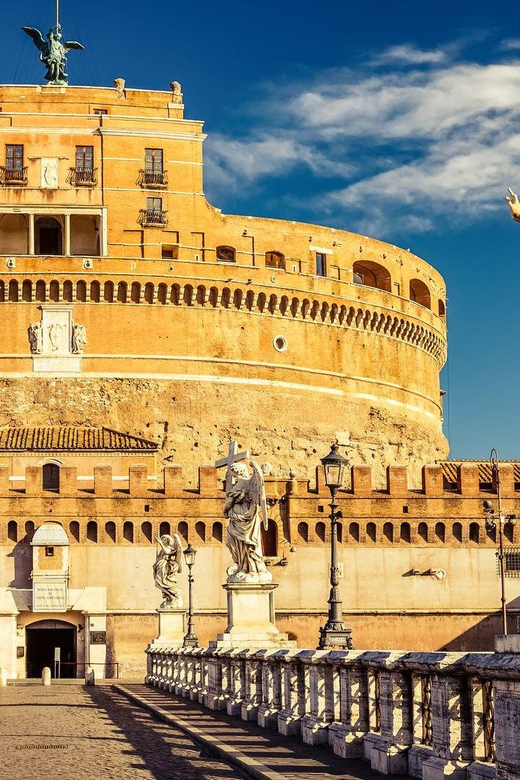
Castel Sant’Angelo is famous for its terrace panoramic views of Rome. If you’re a photo person, you’ll want this to be at the end of your visit or close to it. That way, you earn the view instead of racing toward it and leaving important interior rooms behind.
The terrace is also a good “reset point” if you’ve been absorbing heavy history. Standing outside with a wide view helps you step back and see the city layout that the fortress once watched.
Quick practical tip: keep your camera ready before you reach the terrace so you’re not fumbling at the last second. It sounds basic, but it saves time when the terrace is crowded.
Meeting Point Reality Check: The RVG Flag
This experience depends on a smooth check-in. The meeting point is clearly defined: meet the host in front of the main entrance of the Lungotevere Castello, with the staff member holding an RVG flag.
Arrive 15 minutes early. Late arrivals or no-shows won’t be accommodated. That’s not just fine print. It affects whether you start on time or lose the day’s momentum.
Now, there’s a caution worth taking seriously. Some past visitors reported problems with staff meeting them as expected and having to resolve things by contacting the organizer. I can’t promise every check-in will go perfectly, but I can tell you the best way to protect yourself is simple: have the confirmation details handy, and be ready to contact the number provided with your ticket materials if you don’t see the RVG staff right away.
A good sign this experience works when it goes right: several people praised fast handoff of tickets and quick entry once they found the staff.
The $38 Question: Is Priority Entry Worth It?
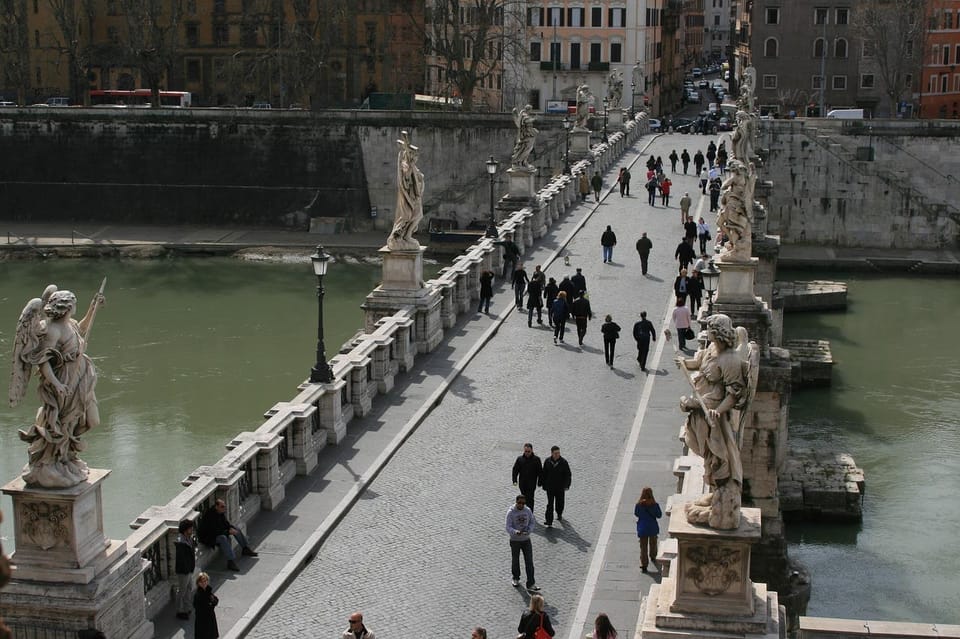
At $38 per person, the headline value is priority access and skip-the-line handling. You’re not paying for a guided tour. You’re paying to reduce waiting and simplify entry so you can focus on the monument.
Here’s how I’d decide if it’s worth it for you:
- If you hate lines and you’re trying to stack Roman highlights efficiently, reserved fast-track entry usually feels like a fair trade for your time.
- If you’re arriving at a very quiet hour and you’re comfortable buying tickets on the spot, you might feel less urgency about spending extra for entry.
- If you want deep storytelling room by room, you may find this less satisfying because the experience is explicitly self-guided and doesn’t include a guide.
So the pricing makes the most sense when your main goal is to get inside quickly and explore at your own pace—especially across multiple floors where time can add up.
Who This Self-Guided Ticket Fits Best
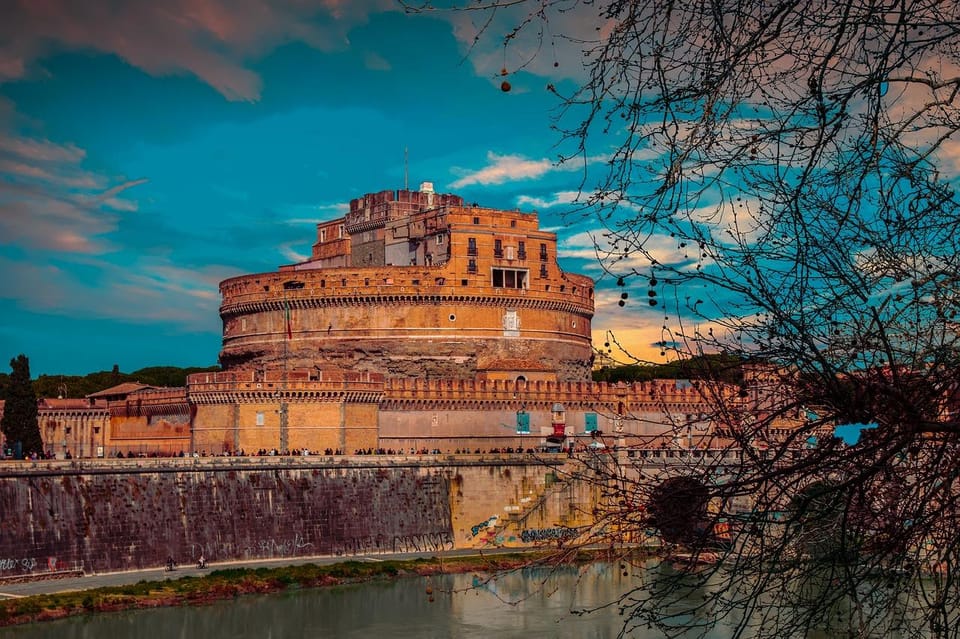
This experience is best for travelers who:
- Enjoy exploring independently at their own speed
- Want to see both papal and Roman layers in one stop
- Are comfortable doing a multi-floor walk inside a historic building
- Care most about smooth entry rather than guided interpretation
It may not be your best choice if you rely on mobility support. The experience is noted as not suitable for wheelchair users and people with mobility impairments, and it also prohibits mobility scooters and electric wheelchairs.
Also plan around what you can bring. Pets are not allowed, and you can’t carry luggage or large bags.
Should You Book Castel Sant’Angelo Reserved Entry?
I’d book it if your plan includes Castel Sant’Angelo as a priority—and you want to reduce waiting through fast-track entry. The combination of five floors, weapons displays, Renaissance frescoes, papal bath highlights (Leo X and Clement VII), and the terrace views makes it a strong self-guided payoff.
I’d hesitate only if you know you’ll have trouble meeting the staff on time at the Lungotevere Castello entrance. The check-in depends on finding the RVG flag, arriving 15 minutes early, and staying ready to contact the organizer if something goes sideways.
If your day is tight and you want to walk in and start exploring quickly, this ticket is a practical way to do it.
FAQ
Where is the meeting point?
Meet your host in front of the main entrance of the Lungotevere Castello, with the staff member holding an RVG flag.
What time should I arrive?
Please arrive 15 minutes before the activity starts.
Is this a guided tour?
No. This is self-guided, and a guided tour is not included.
What’s included with the ticket?
You get fast-track entry to Castel Sant’Angelo, plus the reservation and administrative charges.
How do I skip the line?
You enter through a separate entrance for skip-the-line access.
How long does the experience last?
The duration is listed as 1 day. Starting times depend on availability.
What languages can the host speak?
The host or greeter speaks English, Italian, Spanish, and Portuguese.
What items are not allowed?
Pets are not allowed. You also can’t bring luggage or large bags. Mobility scooters and electric wheelchairs are not allowed.
Is it suitable for wheelchair users or people with mobility impairments?
No. It’s not suitable for wheelchair users or people with mobility impairments.
What’s the cancellation and payment flexibility?
You can cancel up to 24 hours in advance for a full refund. You can also reserve now and pay later.