REVIEW · ROME
Jewish Rome District, Old Ghetto and Trastevere Private Tour
Book on GetYourGuide →Operated by Crazy4rome srls · Bookable on GetYourGuide
A walk through Jewish Rome changes how you see the city. I love the way this tour connects Capitoline Hill and the old Ghetto to what came next, and I also like that it ends with the lived-in lanes of Trastevere. One thing to consider: it’s 3 hours on foot, so comfortable shoes matter, and you’ll want to travel light since luggage or large bags aren’t allowed.
You get a private official expert guide and a route that’s built for understanding, not just sightseeing. Expect stops that include Piazza Mattei, Portico d’Ottavia, Via della Reginella, the Great Synagogue, Tiber Island, and Santa Maria in Trastevere. If you want a quiet, slow stroll with lots of breaks, this may feel a bit packed, since the tour moves through many key sights.
In This Review
- Key highlights you’ll remember fast
- Jewish Rome, from the 2nd century B.C. to modern Rome
- Where the tour starts near Teatro di Marcello
- Jewish Ghetto walking route: Portico d’Ottavia and Via della Reginella
- Piazza Mattei to the Great Synagogue: fast entry and what to look for
- Fabricio Bridge, Tiber Island, and the shift toward Trastevere
- Trastevere streets and Piazza Trilussa: the old-world maze effect
- How long is it, really, and how the timing helps
- Price and value: $456.21 per group for a private 3-hour route
- Practical tips so the walk feels easy
- Who should book this Jewish Rome and Trastevere private tour
- Should you book this tour
- FAQ
- How long is the Jewish Rome District, Old Ghetto and Trastevere private tour?
- Where does the tour start?
- Where does the tour end?
- Do I need to buy tickets?
- Is there skip-the-line entry?
- What sights are included?
- What should I bring?
- Is the tour wheelchair accessible?
- Are luggage or large bags allowed?
- What languages is the live guide available in?
- What’s the cancellation policy?
Key highlights you’ll remember fast
- Old Ghetto route with real landmarks like Portico d’Ottavia and Via della Reginella
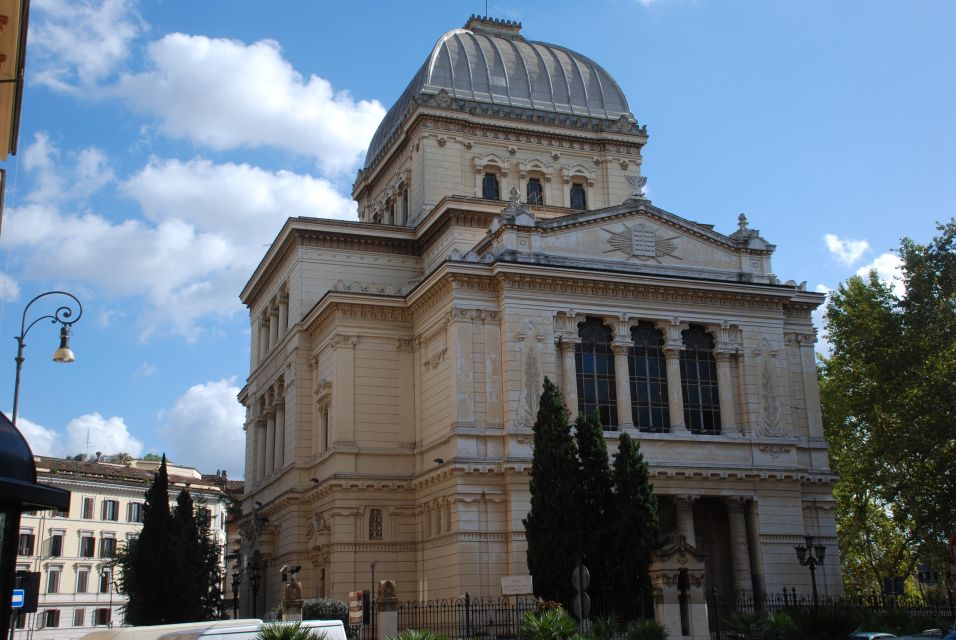
- Great Synagogue of Rome visit with fast entry via a separate entrance
- Fabricio Bridge (62 B.C.) crossing and the approach toward Tiber Island
- Piazza Mattei stop that helps you place the neighborhood in context
- Trastevere by design: narrow cobblestone streets and the old-town feel
- Private guide pacing for your questions and interests
Jewish Rome, from the 2nd century B.C. to modern Rome
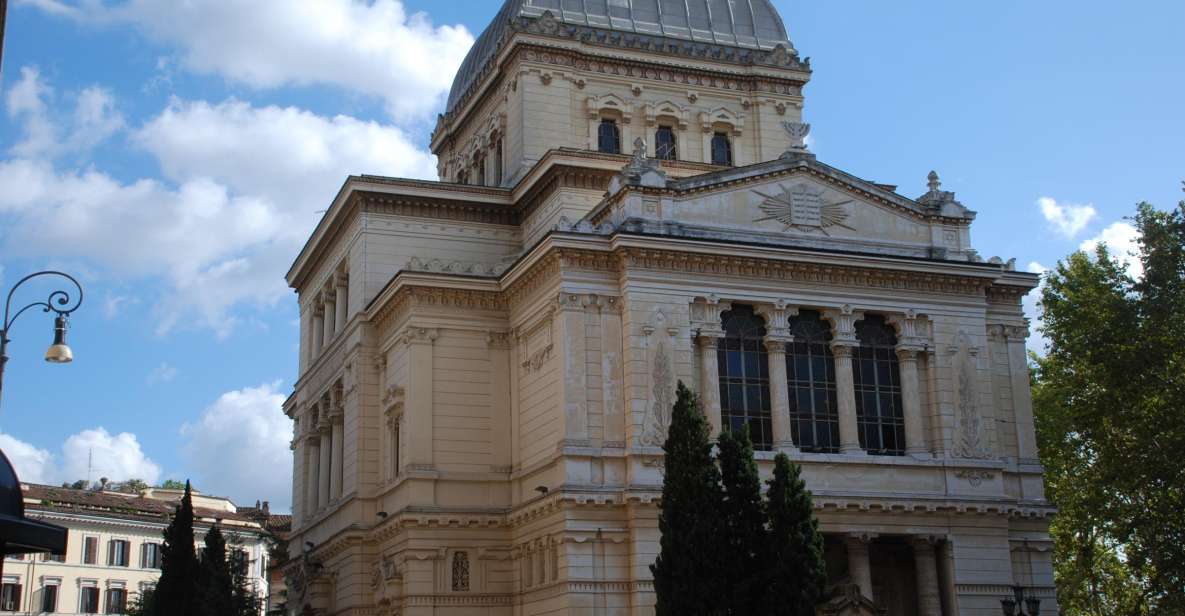
Jewish Rome is not a single chapter. It’s a long arc, starting with the Jewish community dating back to the 2nd century B.C., then shifting into the era when the Ghetto was created between 1555 and 1870. After Rome became the capital of Italy, the old Ghetto was dismantled and Jewish people were granted citizenship, which sets up everything you’ll see later.
The tour also points you to the moment when identity and citizenship became visible in architecture. Between 1901 and 1904, the Great Synagogue was built to mark that change, and it remains the main Jewish temple in Rome. That’s the kind of context that turns random buildings into meaningful places.
If you care about how neighborhoods evolve under history, you’ll get more value from this tour than a checklist approach. You’ll walk the geography that helped shape daily life, then cross into Trastevere to see Rome’s older street character close up.
You can also read our reviews of more private tours in Rome


Where the tour starts near Teatro di Marcello
The meeting point is at the exit of Antico Caffè del Teatro di Marcello on Via del Teatro di Marcello 42. This location is handy because it puts you close to the older core of the city, so you don’t waste time traveling before you start learning.
This is a private group tour, so you’re not sharing the guide with a crowd. That matters on a route like this, where a good guide can answer the small questions that pop up when you see places tied to real communities.
You should also plan to show up with no large bags or luggage. The tour runs on a walk-first route, and keeping things light makes the whole experience smoother.
Jewish Ghetto walking route: Portico d’Ottavia and Via della Reginella
Your route begins with a guided introduction to the Jewish Ghetto, about 30 minutes. This is where you get the big-picture setup: the Ghetto formed at the foot of Capitoline Hill and was created between 1555 and 1870 when Jewish people were forced to live there. Understanding that timeline helps the street details make sense instead of feeling random.
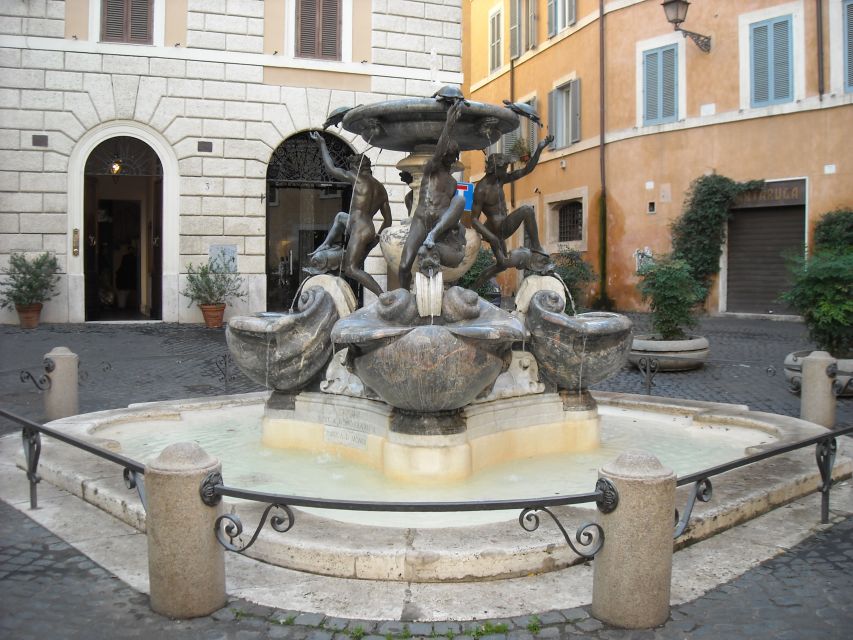
Next comes Piazza Mattei for around 20 minutes. It’s a classic Roman square stop—open space after tight streets—and it gives your brain a place to orient. Think of it as a mental reset point before you move deeper into the neighborhood’s texture.
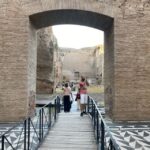
Then you head to Portico d’Ottavia (about 20 minutes). The portico area is a strong visual reminder that Rome’s city layers overlap. Even when you’re focused on Jewish landmarks, you’re also seeing how old Rome’s structures frame daily movement through the area.
After that, you walk to Via della Reginella (about 20 minutes). This is one of those streets where the vibe matters. The old Ghetto district developed along the right bank as a zone for merchants, sailors, fishermen, and foreigners, and the neighborhood’s mix shaped what you’d see and who you’d bump into on a typical day.
A useful detail: the district still has shops and kosher restaurants, which means you’re seeing a neighborhood that continues to function, not just a museum set. That continuity is one of the quiet reasons the tour feels satisfying.
Piazza Mattei to the Great Synagogue: fast entry and what to look for
The Great Synagogue of Rome stop is about 20 minutes. This visit is important because it’s the monumental temple built between 1901 and 1904, created to celebrate the shift after the old Ghetto era. If you’ve ever wondered how citizenship and identity become visible in a city, this is where the answer shows up.
You also get skip-the-line access through a separate entrance. Since no tickets are required for the tour, this is mainly about saving your time and avoiding the slow friction of long entry lines. For a 3-hour experience, that kind of time saved matters.
During the synagogue visit, you’ll want to listen for what your guide emphasizes. The point isn’t just to see a building; it’s to connect the place to the timeline you got earlier—especially the end of the Ghetto period and the building boom of the early 1900s.
Practical note: plan for a bit of respect and slower movement around sacred space. Even if the stop is timed, give yourself mental space to take it in.
Fabricio Bridge, Tiber Island, and the shift toward Trastevere
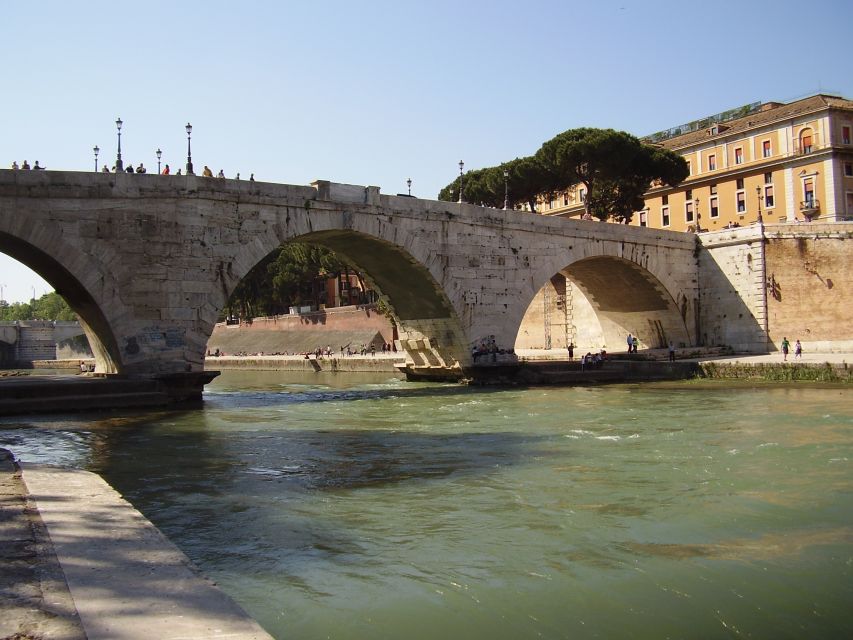
After the synagogue, the tour crosses into the river geography that ties the whole route together. You’ll head to Tiber Island (about 20 minutes) and along the way you cross Fabricio Bridge (62 B.C.), which is the oldest bridge still left in Rome.
That bridge detail is more than trivia. Crossing it is a literal way to experience how the city’s history keeps flowing under your feet. It also sets you up for the feel-change as you move from the Jewish district toward Trastevere.
Tiber Island is a natural pause in the walk rhythm. It’s the sort of stop where your photos will be easier, your legs will get a breather, and you can take in how the river divides and connects Rome’s neighborhoods.
If you like routes that make geography meaningful, this segment is a good reason to choose this specific tour. You’re not just moving between points—you’re being guided through the logic of the city.





Trastevere streets and Piazza Trilussa: the old-world maze effect
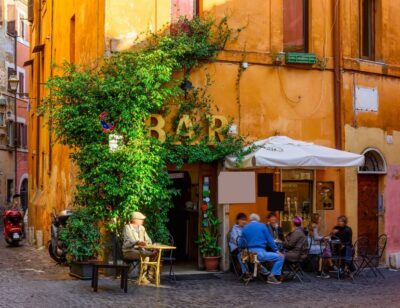
The final major area is Trastevere, guided for about 20 minutes, with the tour ending at Piazza Trilussa. Trastevere is known for its maze of narrow, winding streets and for keeping its old character with cobblestone streets lined with ancient houses. On a short, timed tour, that’s exactly what you want at the end: an area where you can feel the city rather than just hear facts.
You also pass by Santa Maria in Trastevere during the route. That’s a major reference point in the neighborhood, and it helps anchor the story as you shift from a Jewish-focused route into Trastevere’s broader Roman identity.
The best way to experience Trastevere on a guided walk is simple: slow down mentally even if your feet keep moving. Watch how streets tighten and open again, and notice how Romans’ day-to-day life sits beside layers of older architecture.
Because this tour finishes around Piazza Trilussa, you’ll end in a lively, practical spot for wrapping up. It’s a good place to grab a drink or continue exploring on your own afterward.
How long is it, really, and how the timing helps
This is a 3-hour private tour with multiple timed guided stops, mostly around 20 minutes each, plus the longer initial Ghetto segment. That structure is useful because it prevents the common problem of walking a lot without context.
You spend time at the places that answer key questions:
- where the community formed,
- how the Ghetto period worked in the neighborhood,
- and how later changes showed up in monumental architecture like the Great Synagogue,
then you shift to the street experience of Trastevere.
If you prefer learning with your feet moving but also like a reasonable pace, this tour fits well. You’ll still want a small amount of stamina for cobblestones and steady walking.
Price and value: $456.21 per group for a private 3-hour route
The price is $456.21 per group (up to 1, based on the listing pricing model). For a private tour, this can be cost-effective when you split it among people traveling together, because you’re buying access to an expert guide for the full route—not per head.
What makes it feel like value is the mix of stops and the way they connect. You’re not paying just for one landmark. You’re covering a full arc: Ghetto landmarks like Portico d’Ottavia, a major synagogue visit with separate-entrance entry, river sights like Fabricio Bridge and Tiber Island, and then a neighborhood finish in Trastevere.
Also, no tickets are required for the tour, and your guide service is included. When a tour includes fast entry and multiple high-importance stops, you’re less likely to lose time to waiting or to pay separate access costs.
If you’re traveling solo, it’s still a fair option if your priority is a guided route where the explanation matters. If your priority is low cost over context, you could build a cheaper self-guided route—but you’d be trading away the storytelling.
Practical tips so the walk feels easy
Bring comfortable shoes. Cobblestones and narrow streets add up, especially if you’re not used to walking on uneven Roman surfaces.
Travel light. The tour doesn’t allow luggage or large bags, so pack smart if you’re coming from another part of the city.
Use the languages that fit you best: your guide can run the tour in Spanish, English, French, German, Italian, Portuguese, or Russian. That’s worth checking before you lock in plans if language comfort is important for deeper discussion.
Finally, this is a private group experience. That’s your chance to ask follow-up questions when the guide mentions dates like 1555–1870 or the bridge date of 62 B.C. Those specifics are exactly what turn the walk into something you’ll remember.
Who should book this Jewish Rome and Trastevere private tour
I think this tour is a strong match for you if:
- you want Jewish Rome’s story with clear context, not just photos,
- you like walking between neighborhoods that feel different,
- and you prefer a private guide who can pace to your interests.
It’s also a great choice for first-time visitors who want a “big understanding” tour. In a short time, you get a structured overview of key places: the old Ghetto area, the Great Synagogue, and the transition to Trastevere.
If you hate walking, struggle with mobility on cobblestones, or want lots of long breaks, you might find the 3-hour format tight. That said, the tour is wheelchair accessible, so it can work for many mobility needs when planned with the operator.
Should you book this tour
Yes, if you want a guided walk that connects dates, buildings, and neighborhoods. The route is built to help you see the transformation from the early Jewish community and the Ghetto era to later changes marked by the Great Synagogue, then end in Trastevere where Rome’s street character really shows.
Book it especially if you care about:
- understanding the old Ghetto area through the landmarks you’ll actually visit,
- avoiding delays thanks to separate entrance access,
- and finishing with a classic Trastevere feel at Piazza Trilussa.
If you only want one or two landmarks and you’re trying to travel ultra-budget, you may decide to go independent. But for most people who like context with their walking, this private format is a smart buy.
FAQ
How long is the Jewish Rome District, Old Ghetto and Trastevere private tour?
It’s a 3-hour private tour.
Where does the tour start?
It starts at the exit of Antico Caffè del Teatro di Marcello, at Via del Teatro di Marcello 42.
Where does the tour end?
The tour ends at Piazza Trilussa (and the activity is described as ending back at the meeting point area).
Do I need to buy tickets?
No tickets are required for this experience.
Is there skip-the-line entry?
Yes. You’ll skip the line through a separate entrance for the relevant site.
What sights are included?
You’ll see the Jewish Ghetto area, Piazza Mattei, Portico d’Ottavia, Via della Reginella, the Great Synagogue of Rome, Tiber Island, and Trastevere (including Santa Maria in Trastevere).
What should I bring?
Wear comfortable shoes.
Is the tour wheelchair accessible?
Yes, it’s wheelchair accessible.
Are luggage or large bags allowed?
No. Luggage or large bags are not allowed.
What languages is the live guide available in?
The live guide is available in Spanish, English, French, German, Italian, Portuguese, Russian.
What’s the cancellation policy?
Free cancellation is available up to 24 hours in advance for a full refund.