REVIEW · ROME
Popes and Artists: sex, lies and betrayals in the 1600s
Book on GetYourGuide →Operated by Roman Art and History · Bookable on GetYourGuide
Baroque Rome gets spicy fast in this 2.5-hour walk. I love the focus on secret streets tied to real artists, and I especially like how the guide brings the stories to life with church entrances and painting context as you go. One thing to consider: it’s still a walking tour with church rules, so you’ll want comfortable shoes and to cover up appropriately.
You start near Via della Stamperia and move through major sights like the Trevi Fountain, Pantheon area, and Piazza Navona, but the point isn’t just checking boxes. The tour is built around the messy, human side of art in the 1600s: rivalries, duels, politics, and the kind of court gossip that somehow ends up influencing commissions and careers.
In This Review
- Key moments that make this tour work
- Rome’s Baroque chaos, paced like a real walk
- Where you meet: Via della Stamperia and Accademia S. Luca
- Trevi Fountain: the opener, not the whole show
- Piazza di Pietra: stepping into side-street storytelling
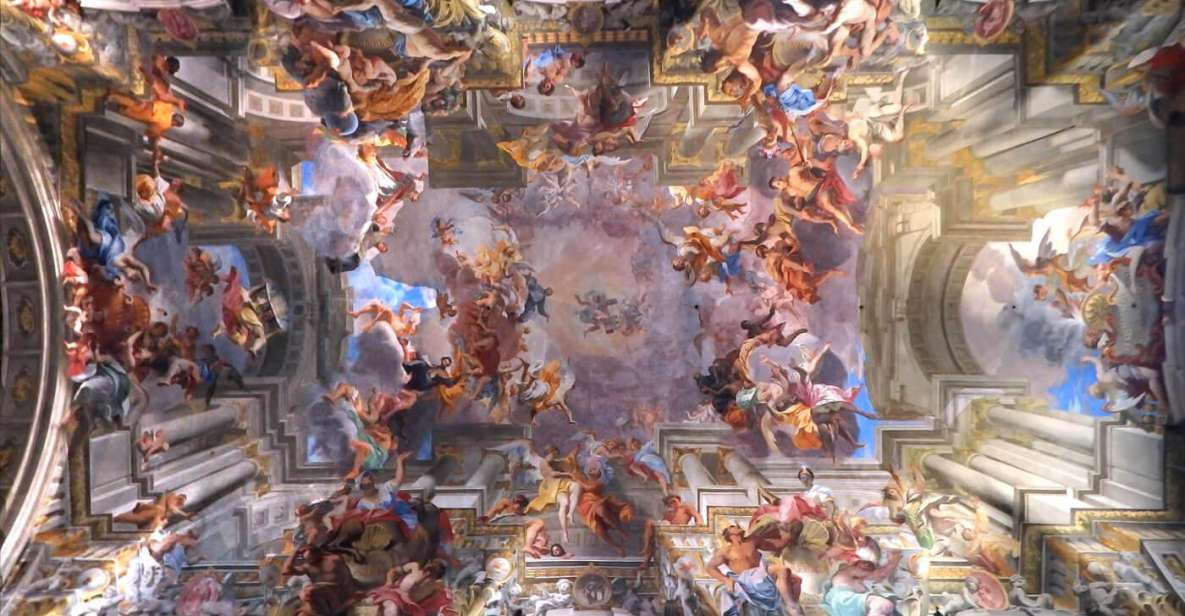
- Church of Sant’Ignazio di Loyola: faith, art, and politics in one block
- The Pantheon and Raphael’s tomb: power, permanence, and a reset
- St. Louis of the French: Caravaggio’s trilogy and the story behind it
- Piazza Navona: sculptors competing in public space
- Piazza Fiammetta finale: duels, love stories, and a famous woman
- What the guide style adds (and why it matters)
- Value at $59: what you’re really paying for
- Practical tips so you don’t lose the experience
- Who should book this Rome Baroque scandal walk?
- Should you book this tour or pass?
- FAQ
- How long is the tour?
- Where do we meet?
- What’s included in the ticket price?
- What languages is the tour offered in?
- Are there dress requirements?
- Is the tour suitable for people with mobility impairments?
Key moments that make this tour work
- A small group (up to 10) keeps the pace human and the questions flowing.
- Trevi Fountain to Piazza Navona is a smart route for Baroque drama in a short window.
- Church stops include entrances and explanation, so you’re not stuck outside guessing what you’re looking at.
- Caravaggio’s work at St. Louis of the French comes with a story, not just a label.
- Pantheon + Raphael’s tomb gives you a powerful reset after the scandal talk.
- Piazza Fiammetta finale ties romance and legend to the wider artistic world of Rome.
Rome’s Baroque chaos, paced like a real walk
This isn’t a museum tour. It’s a guided stroll through the historical center where the streets and buildings are the “set,” and the Baroque artists are the characters. You’ll spend 2.5 hours walking between key landmarks, with short guided stops that keep you moving without feeling rushed.
The best part for me is the tour’s tone: art here is not clean or distant. It’s tied to ambition, patronage, and politics—so when you see a masterpiece, you can also understand why someone wanted it, who paid for it, and what it could cost.
And yes, the theme is dramatic: fights, betrayals, and passionate competition. If you like Rome as a city of stories (not just stones), this format makes a lot of sense.
You can also read our reviews of more tours and experiences in Rome.
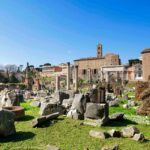

Where you meet: Via della Stamperia and Accademia S. Luca
You’ll meet at Via della Stamperia, 72, in front of the Accademia S. Luca Academy of Painting. This matters because the tour starts in a more “local” pocket than the usual big-hub meetup spots. It also sets the mood early: you’re already in a painter-focused neighborhood before you hit the famous landmarks.
Plan to arrive a few minutes early so you can spot the group. The tour runs with a live guide in English and Italian, and with groups limited to 10, there’s less waiting around once you start.
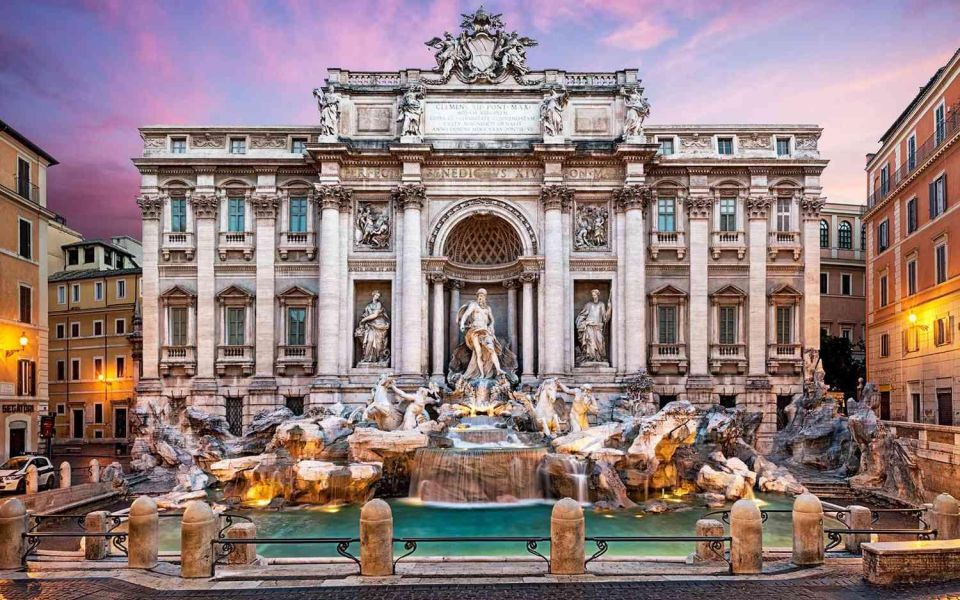
Trevi Fountain: the opener, not the whole show
You begin at the Trevi Fountain and take about 15 minutes there. It’s an obvious choice, but in this tour it works like an opening scene: a way to ground you in Rome’s instantly recognizable heart while the guide sets up how the 1600s art world actually functioned.
Here’s what you’ll get beyond the photo moment. You’re not just seeing a famous fountain; you’re being primed for the idea that art in Baroque Rome often traveled with gossip and power plays. That makes the later church visits much more rewarding because you’ll recognize the stakes behind what you’re looking at.
Piazza di Pietra: stepping into side-street storytelling
Next you head to Piazza di Pietra for another guided 15-minute stop. This area is useful because it sits close enough to major sights to keep the tour efficient, but it doesn’t feel like you’re trapped in the biggest crowds.
This is where the “secret streets” idea starts to feel real. You’ll connect the art and artists to the urban layout—how walking routes, locations, and neighborhoods influenced who met whom and where ideas were exchanged. In Rome, that kind of context changes what you notice.
If you’re the type who likes a guide to point out details you’d never guess from street level, you’ll probably enjoy this segment.
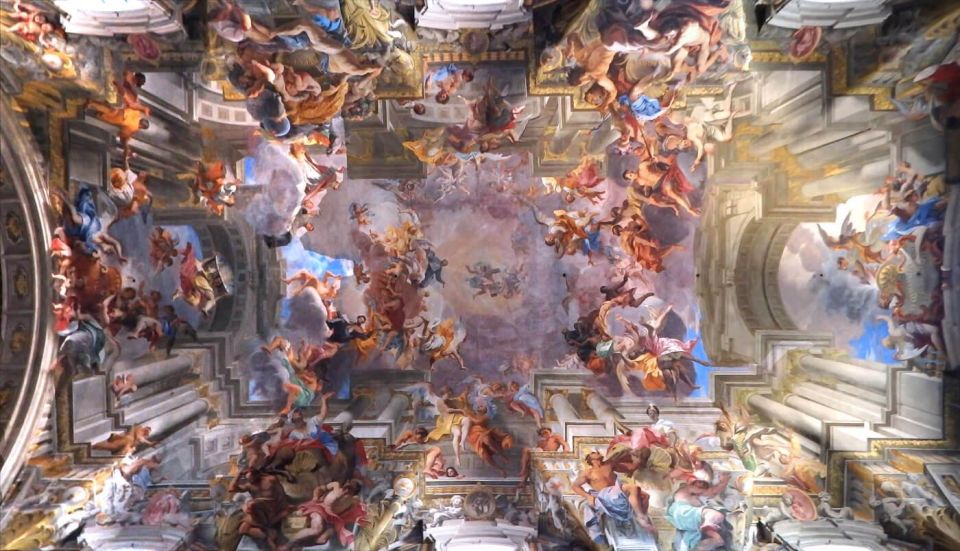
Church of Sant’Ignazio di Loyola: faith, art, and politics in one block
At the Church of Sant’Ignazio di Loyola, you get about 20 minutes with guided visits and explanation. Churches are crucial to a Baroque tour because they were major commissioning engines. You’re not looking at art in isolation; you’re seeing it inside a world where patronage, religion, and status were tightly connected.
You should expect the guide to connect what you see to the wider Baroque century mindset—especially the part where rivalries and reputations mattered. Even if you aren’t an art-history superfan, churches like this make the story land quickly: architecture and decoration aren’t background; they’re communication.
Practical note: you’ll likely be in and around working worship spaces, so keep your pace steady and your tone respectful. Also, this tour has a dress requirement: sleeveless shirts aren’t allowed. Bring a light layer if your plan is too bare for church.


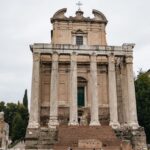
The Pantheon and Raphael’s tomb: power, permanence, and a reset
From there you move toward the Pantheon area, with about 10 minutes guided. It’s a short stop, but it hits where you need it to: the Pantheon is one of Rome’s most enduring monuments, and placing Raphael’s tomb in your route gives you a different feeling than the “scandal and duels” theme.
Think of this stop as the emotional correction. After stories about ambition and conflict, you get something calmer: the idea of art outlasting the people who fought for it. That contrast makes the rest of the tour easier to follow, because you’ll feel the arc—human drama now, legacy after.
If you like your walking tours to mix mood changes rather than repeating the same tone every stop, this is a good mid-tour anchor.
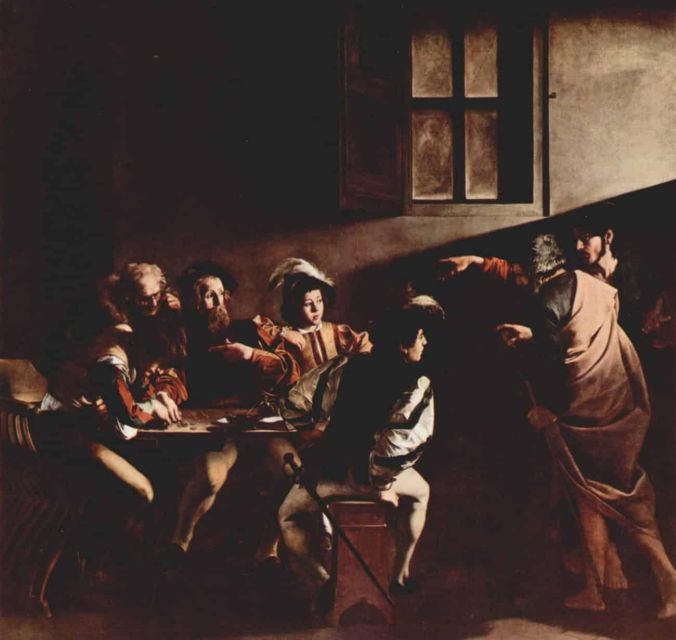
St. Louis of the French: Caravaggio’s trilogy and the story behind it
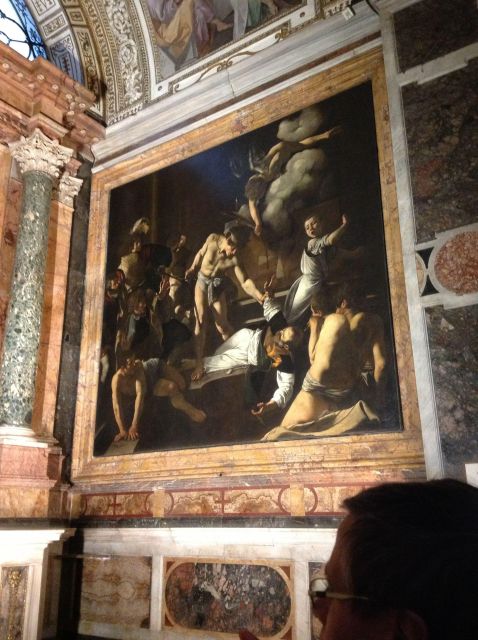
Next comes the Church of St. Louis of the French, with about 15 minutes and guided explanation. This is one of the tour’s headline moments because you’ll admire Caravaggio’s trilogy of paintings there—and you’ll hear an unbelievable story tied to them.
The value here isn’t only in recognizing a major name. It’s in how the guide frames why these paintings matter. Caravaggio’s reputation is famous, but the way the tour links his work to the drama of the era makes the art feel less like a label and more like an event.
A tour like this is great for people who want art history that connects to real stakes: who commissioned what, how reputations were made, and how a work could spark attention or controversy.
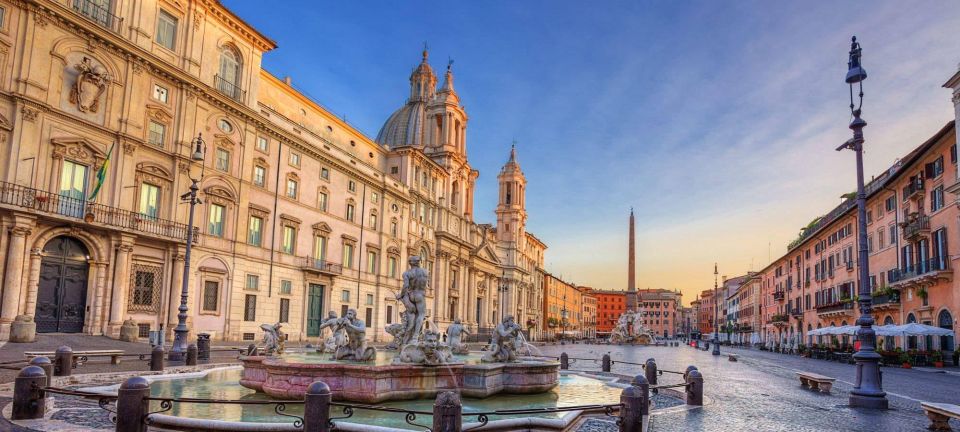
Piazza Navona: sculptors competing in public space
You’ll then reach Piazza Navona for about 20 minutes. This square is open-air theater, which is exactly why it works for a Baroque story. The guide will talk about the competition between two famous sculptors, turning the space into a stage for rivalry and prestige.
Here’s what I think you’ll appreciate: the tour doesn’t leave competition in the past. It helps you “see” that competition in how the artists’ legacies became visible in Rome. You’re not just standing somewhere pretty; you’re learning why this kind of setting is ideal for a public reputation game.
If you’re traveling with someone who usually says, I already know the main sights, Piazza Navona can be the moment that changes their mind.
Piazza Fiammetta finale: duels, love stories, and a famous woman
The tour ends at Piazza Fiammetta. Expect about 5–10 minutes of concluding focus here (the total tour is 2.5 hours). The story centers on the beautiful woman of the 1500s associated with the area, plus the duels for her love.
This ending is smart. It brings the theme full circle by reminding you that the Baroque art world wasn’t only clerical or formal. Passion, gossip, and personal stakes could shape reputations and relationships—and those relationships often shaped opportunities.
It also gives you a strong last mental image. Even if you forget every tiny detail of an artist’s biography, you’ll probably remember the emotional logic: art in Rome was tangled up with human desire and high-stakes conflict.
What the guide style adds (and why it matters)
Multiple reviews highlight the same thing: Luisa’s storytelling approach. You’ll benefit from a guide who connects art and documents to the drama people rarely see on posters or quick summaries. The tone is open and animated, and the stories are presented as juicy but historically correct.
For your experience, that means you’re less likely to feel like you’re being lectured. You’ll get the kind of walking tour where you pause, look closely, and suddenly understand what you’re seeing and why it was worth fighting over.
With a group capped at 10, you’re also more likely to get personal questions answered. That matters because Baroque Rome can feel overwhelming if you’re trying to decode it alone.
Value at $59: what you’re really paying for
At $59 per person for a 2.5-hour tour, the value comes from three practical pieces:
First, you’re paying for a live guide in English or Italian who ties locations to artist stories and painting explanation. That’s not the same as reading a placard.
Second, the tour includes entrance to churches and explanation on the art you’re viewing. If you’ve ever tried to plan church stops while also trying to make time for walking between them, you’ll know how much smoother this kind of structured route feels.
Third, the route stacks big landmarks with smaller, less obvious connections. You cover Trevi Fountain, Piazza Navona, and the Pantheon area, but you also go where the guide’s Baroque narrative needs you to go.
If you like your Rome with context, this price can feel fair. If you only want the most famous views with minimal time indoors, you might find it slightly story-heavy.
Practical tips so you don’t lose the experience
A walking tour means shoes matter. Bring comfortable footwear because you’ll be moving throughout the historical center.
Dress code matters too: sleeveless shirts aren’t allowed. For church visits, a light layer or a shirt with sleeves keeps you from scrambling on the spot.
Also, expect short guided stops rather than long museum-style time. That’s not a flaw—it’s the format. The guide is using time efficiently so you can enjoy the full story arc without burning half your day.
If you’re looking at booking, you also have flexibility options like reserve now & pay later, and you can cancel up to 24 hours in advance for a full refund.
Who should book this Rome Baroque scandal walk?
You’ll likely love this tour if you want:
- Baroque art explained through the people who lived around it
- A walking route that connects famous sights to lesser-seen streets and buildings
- A guide who tells stories with passion and keeps them grounded in what you’re looking at
You might want to skip it if mobility is a concern. It’s not suitable for people with mobility impairments, and the pace depends on you being able to walk through the route.
Also, if church stops aren’t your thing, the tone may feel darker and more intense than you planned, since the theme leans into scandals, competition, and rivalry.
Should you book this tour or pass?
I’d book it if you want Rome art history with plot. The combination of a small group, church entrances, and painting explanations makes the tour feel like more than a sightseeing loop. And the focus on the “adventurous life” of major artists gives you a lens that makes even familiar sights (like Trevi and Piazza Navona) feel newly legible.
I’d pass if you want a calm, purely scenic walk or if you need low-walking, mobility-friendly routing. For everyone else who enjoys stories, this kind of Baroque drama on foot is a very efficient way to spend a half day in Rome.
FAQ
How long is the tour?
The tour lasts about 2.5 hours.
Where do we meet?
You meet at Via della Stamperia, 72, in front of the Accademia S. Luca Academy of Painting.
What’s included in the ticket price?
The tour includes entrance to churches and painting explanation.
What languages is the tour offered in?
The live guide speaks English and Italian.
Are there dress requirements?
Yes. Sleeveless shirts are not allowed.
Is the tour suitable for people with mobility impairments?
No. It is not suitable for people with mobility impairments.