REVIEW · ROME
Rome: Appian Way and Roman Countryside Electric Bike Tour
Book on GetYourGuide →Operated by Rome for You - RM - 1436156 · Bookable on GetYourGuide
Old Rome has a bike lane.
On this Rome Appian Way electric-bike tour, you leave the center and ride out on the oldest major road still mapped in Roman memory, rolling over much of the original paving while a live guide points out ruins, tombs, and burial monuments. You also get a countryside change of pace, with e-bikes that help you handle cobbles and gentle hills without turning the day into a workout.
I love how the tour makes the road feel real, not just impressive—think the Appian Way’s paving plus visible connections between military, political, and religious power. I also like the guide style (for example, names like Emiliano and Libero come up), with warm explanations, steady pace, and plenty of opportunities for questions and photos. One possible consideration: if you’re specifically hoping to go inside every labeled stop (like catacombs), confirm what’s included for your departure, and know e-bike battery trouble can happen even if it’s not the norm.
In This Review
- Key things to know before you go
- Entering the Appian Way: Rome’s oldest highway on e-bikes
- Meeting at Via di S. Calisto 9 and what the 4-hour format really means
- Appian Way stops: ruins, imperial power, and tomb-lined politics
- What to pay attention to as you ride
- Saint Callixtus and Saint Sebastian: Christian catacombs on a single route story
- A practical consideration for catacombs
- Aqueducts Park and the two Roman aqueducts still standing tall
- Caffarella Park return: archaeology plus a working farm feel
- E-bikes, pace, and what to wear for 4 hours outside the center
- Clothing that works
- Guides make the difference: Emiliano and Libero’s storytelling style
- Price and value: is $88 worth it?
- One note on reliability
- Who this tour suits best (and who should skip it)
- Should you book the Rome Appian Way electric-bike tour?
- FAQ
- Where is the meeting point for the tour?
- How long is the Rome Appian Way electric-bike tour?
- What is included in the price?
- What is not included?
- What languages is the live guide available in?
- Do I need identification?
- Is the tour suitable for anyone who can’t ride a bike?
Key things to know before you go
- The Appian Way (Regina Viarum): built in the 4th century BC, used for moving troops and shaping elite tomb landscapes
- Catacombs + tomb traditions: you’ll learn how Christian sites and pagan mausoleums both fit into the road’s burial story
- Aqueducts Park: a park preserving two Roman aqueducts in excellent condition
- Caffarella Park return ride: archaeological sites plus a working farm feel distinctly Roman-country
- E-bikes smooth out the day: cobblestones and hills feel manageable, but you still need basic biking comfort
Entering the Appian Way: Rome’s oldest highway on e-bikes
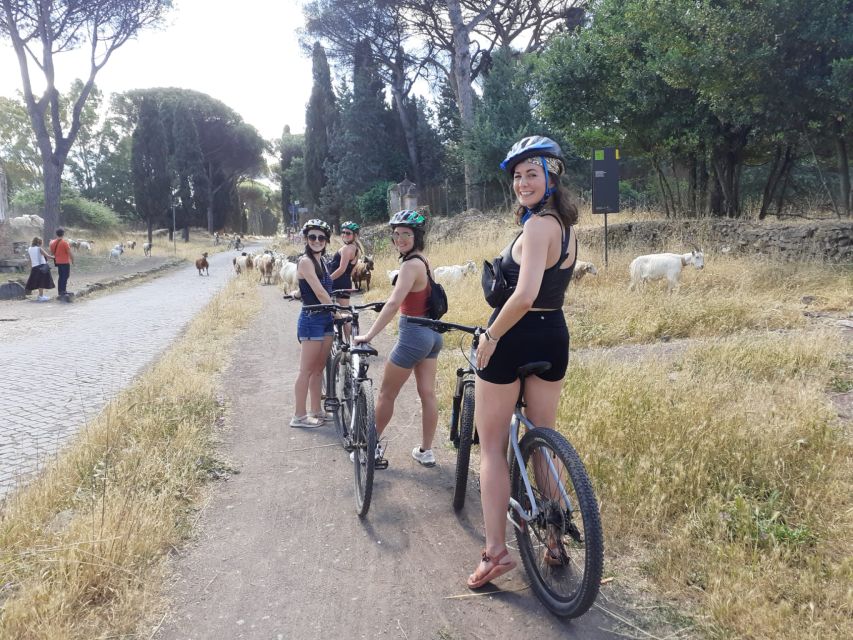
The Appian Way is one of those places where the setting does half the work. You’re not just looking at a monument behind glass—you’re moving along a route that was designed to connect power across distance. Even in modern Rome, the Appian Way reads like a corridor of authority: it’s straight, it’s structured, and it’s lined with meaning.
This tour’s setup helps you experience that without exhausting yourself. You ride on comfortable e-bikes with helmets provided, so your focus stays on the scenery and the guide’s explanations rather than on grinding through every incline. It’s also a smart way to beat the “too much city, too little breathing room” problem. In about 4 hours, you get out to the countryside and back with a guided narrative that makes the route click.
You can also read our reviews of more cycling tours in Rome


Meeting at Via di S. Calisto 9 and what the 4-hour format really means

Your meeting point is Via di S. Calisto 9, and you should arrive about 15 minutes early. There’s no hotel pickup or drop-off, so plan to get there on your own (easy if you’re already exploring that side of Rome).
The day is timed for a full loop: you start at Via di S. Calisto 9, ride out along the Appian Way, then come back to the same spot. Expect a ride that covers real ground outdoors. One review notes the distance feels like roughly 20 miles—not a casual sidewalk stroll, but quite doable on an e-bike if you’re comfortable riding for a few hours.
That’s why the “not suitable if you can’t ride a bike” note matters. This isn’t a sit-and-glide fantasy ride. You’ll be steering, balancing on uneven surfaces, and keeping a steady rhythm with your group.
Appian Way stops: ruins, imperial power, and tomb-lined politics
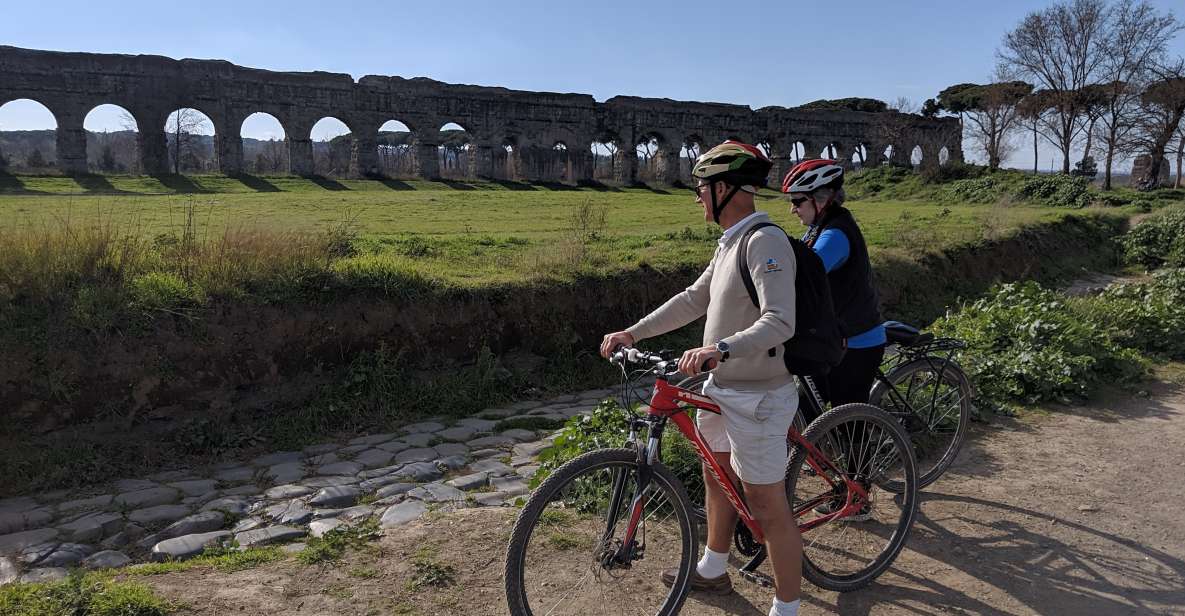
The core of the experience is the Appian Way itself—the road known as Regina Viarum, the Queen of Roads. Built in the 4th century BC, it became a main transport route for military supplies. But it also became a stage for elite families to build tombs and mausoleums right alongside the road, so the landscape becomes a public ledger of status.
As you ride, the guide helps you connect what you’re seeing with why it was placed there. You’ll look at ancient Roman ruins, statues, and an imperial palace area. This matters because the Appian Way isn’t just “old stones”—it’s a piece of urban planning on a huge scale. The road’s purpose blended the practical (moving forces and resources) with the performative (displaying power through burial sites).
What to pay attention to as you ride
- The shift from built-up Rome into open countryside cues you that you’re moving from “city” time into “route” time.
- Tombs and monuments make more sense when your guide ties them back to how the road worked as a connector.
- If the pace feels quick, don’t worry: part of the value is covering enough terrain to feel the line of history, not just one photo stop.
Saint Callixtus and Saint Sebastian: Christian catacombs on a single route story

The tour description includes catacombs at Saint Callixtus and Saint Sebastian, along with pagan mausoleums. In other words, it’s not trying to teach only one chapter of burial culture. It’s building a timeline you can see as you move.
This is one of the most interesting angles of the tour: the road becomes a physical “union” space where political and military power overlaps with religious meaning—first through pagan burial traditions, later through Christian burial practices. Standing on a road that functioned for centuries makes that evolution feel less like a textbook and more like a living shift in what Romans believed about death, memory, and community.
You can also read our reviews of more tours and experiences in Rome




A practical consideration for catacombs
In some situations, the experience may include time spent inside one area more than another—or it may be a “pass by and learn” moment rather than an all-in visit. If catacombs are your main goal, make sure you understand what your guide will actually do during your departure (inside access vs. exterior viewing). Your best move is to ask clearly at the start so there are no surprises.
Aqueducts Park and the two Roman aqueducts still standing tall
After you’ve absorbed the burial landscape and imperial remnants, the tour shifts tone. You head toward Aqueducts Park, described as the only park in the world that preserves two Roman aqueducts in excellent condition.
This section is valuable because it adds a different side of Roman engineering to the day. The Appian Way is about movement and power; the aqueducts are about water, infrastructure, and everyday life at scale. Seeing functioning-feeling stonework in a park setting helps you understand Rome wasn’t only grand in monuments—it was also grand in systems.
Even if you think you’ve “seen Roman stuff before,” this part often changes the mood. It’s a wider, calmer view that lets you look at the road’s story from a distance: a city powered and supplied from afar, with roads and water channels working as a matched set.
Caffarella Park return: archaeology plus a working farm feel
The second half of the ride goes back through Caffarella Park, which has archaeological sites and a working farm, plus ecological value. This section is where the tour becomes less about ancient “set pieces” and more about Roman countryside as a living landscape.
That matters for two reasons. First, you get contrast: the Appian Way’s tombs and formal monuments give way to a space that feels used even today. Second, Caffarella Park adds variety in what your guide can point out, since it’s not only monuments—it’s also land shaped by both time and activity.
If you like tours where the ride itself feels like a highlight, this return segment helps. It’s not just “going back the way you came.” The scenery changes, and your guide can keep building the bigger story as you move.
E-bikes, pace, and what to wear for 4 hours outside the center
Comfort is the point of an e-bike tour. And here, the added help really shows on surfaces that can be annoying on regular bikes: cobblestones and uneven patches. One review specifically calls out how e-bike support made it enjoyable even through hills and historic road textures.
That said, you still need to show up prepared to ride. The tour isn’t wheelchair-level easy, and it isn’t a casual beach-cruise vibe. If you get nervous on bikes, this one may test you.
Clothing that works
A helpful tip from a review: wear comfortable riding shorts and shoes with decent grip. You can typically wear shorts and tank tops, since the route doesn’t involve places with strict requirements about covering shoulders or wearing long pants.
Bring practical basics too. Food and drinks are not included, so plan your timing. If you know you get hungry, bring something small so you don’t feel rushed at the worst moment.
Guides make the difference: Emiliano and Libero’s storytelling style
The best tours make history understandable without making it dry. The guides described here—names like Emiliano and Libero—come across as warm, attentive, and tuned to the group’s comfort.
What stands out in the feedback is not just facts. It’s the way the guide connects what you’re seeing to why it mattered. That turns ruins into a story you can walk through with your eyes and your movement. It also sounds like guides keep a sensible pace, offer photo breaks, and stay responsive to questions.
Just remember: if you’re someone who likes lots of detail at every stop, you might want to be vocal early on about how deep you want the explanation to go.
Price and value: is $88 worth it?
At $88 per person for a 4-hour guided e-bike tour, the value depends on what you want out of Rome.
If you want:
- a guided Roman countryside experience,
- meaningful context for the Appian Way (not just sightseeing),
- and a ride that would be tougher without e-bike support,
then the price starts to make sense. You’re paying for guided interpretation and for equipment—e-bikes and helmets are included—plus the fact that you’re covering a route that takes you away from the center and into countryside time.
If you only want the quickest look at a single site, $88 might feel steep. But the tour isn’t one stop. It’s a connected route featuring the Appian Way, tomb traditions, catacombs (listed), an aqueduct park, and Caffarella Park.
One note on reliability
One review mentions an e-bike battery issue mid-tour and no follow-up when returning because the office was closed. That doesn’t mean every day will go that way, but it does mean you should treat e-bike mechanics as part of the real-world risk of any tech-assisted tour. If battery reliability is a deal-breaker for you, ask the meeting staff how they handle issues on the route.
Who this tour suits best (and who should skip it)

This is a strong fit if you:
- can ride a bike comfortably for a few hours,
- want history you can experience through movement,
- and like guides who explain both the meaning and the details.
It may not be ideal if you:
- can’t ride a bike (it’s explicitly not suitable),
- have mobility limits that make handling a bike difficult,
- or need guaranteed inside access at every catacomb stop without any possibility of skipping interior time.
It’s also a nice choice if you’re in Rome for a few days and want a break from the biggest ticket crowds. You still see major ancient themes, but you do it from the road itself.
Should you book the Rome Appian Way electric-bike tour?
Yes, if you want a guided ride that makes Roman history feel physical—road paving under your tires, tombs beside the route, and countryside scenery that gives you real perspective. The combination of the Appian Way, the burial traditions (including Saint Callixtus and Saint Sebastian in the tour plan), and the engineering shift to Aqueducts Park is a good mix for a first-timer who wants substance without spending an entire day in museums.
Book with a small checklist:
- confirm whether catacombs include inside visiting for your date,
- go comfortable with biking time and cobbled sections,
- and bring something for a snack since food and drinks aren’t included.
If that matches your style, this is a smart use of half a day in Rome.
FAQ
Where is the meeting point for the tour?
The tour meets at Via di S. Calisto, 9. Arrive about 15 minutes before the activity starts.
How long is the Rome Appian Way electric-bike tour?
It runs for 4 hours.
What is included in the price?
E-bikes and helmets are included.
What is not included?
Hotel pickup and drop-off aren’t included, and food and drinks are not included.
What languages is the live guide available in?
The live guide is available in English, French, Italian, and Spanish.
Do I need identification?
Yes. Bring a passport or ID card. A copy is accepted.
Is the tour suitable for anyone who can’t ride a bike?
No. It isn’t suitable for people who can’t ride a bike.