REVIEW · ROME
Mosaic-Making Workshop in Rome’s Trastevere
Book on GetYourGuide →Operated by Romeing · Bookable on GetYourGuide
Rome has a hands-on side. In a Trastevere studio near the Botanical Garden, you’ll do hands-on tile cutting and leave with a personal mosaic boxed for the trip home.
What I like most is how practical it feels. You’re not just watching a demo; Nadia (the mosaic artisan) guides you step-by-step as you choose a design, cut tiles to fit, and build your piece right at your workstation. The main catch: the instructor may not be fluent in English, so you’ll rely on demonstrations and simple communication rather than detailed lecture time.
In This Review
- Key Mosaic-Making Takeaways (Trastevere, Rome)
- Trastevere Mosaic Workshop: The Real Reason It Feels Special
- Your Host: Nadia (and the Atelier Rhythm)
- What You Make: Choosing a Design and Starting Your Layout
- Cutting Tiles to Fit: The Part That Surprises People
- Assembling Your Mosaic: From Pieces to a Finished Picture
- Cementing, Cleaning, and the Wait: Setting Takes Longer Than the Class
- Taking It Home: Why This Makes a Better Souvenir
- Price and Value: Is $147.27 Worth It?
- Who Should Book This Mosaic Class in Trastevere
- Logistics That Affect Your Day (Simple, Not Stressful)
- Should You Book the Mosaic-Making Workshop?
- FAQ
- How long is the mosaic-making workshop?
- Will I be able to take my mosaic home?
- What’s included in the workshop price?
- What languages will the instructor use?
- Is the workshop wheelchair accessible?
- Is there free cancellation and a pay-later option?
Key Mosaic-Making Takeaways (Trastevere, Rome)
- Small group setup (up to 8) keeps the pace friendly and questions easy
- Hands-on work includes tracing, cutting, fitting small shapes, and assembling
- Your finished mosaic is boxed for travel, after an extended setting time
- A real atelier feel in Trastevere gives you a calmer break from sightseeing
- Language flexibility with English/Italian support, even if English isn’t perfect
Trastevere Mosaic Workshop: The Real Reason It Feels Special
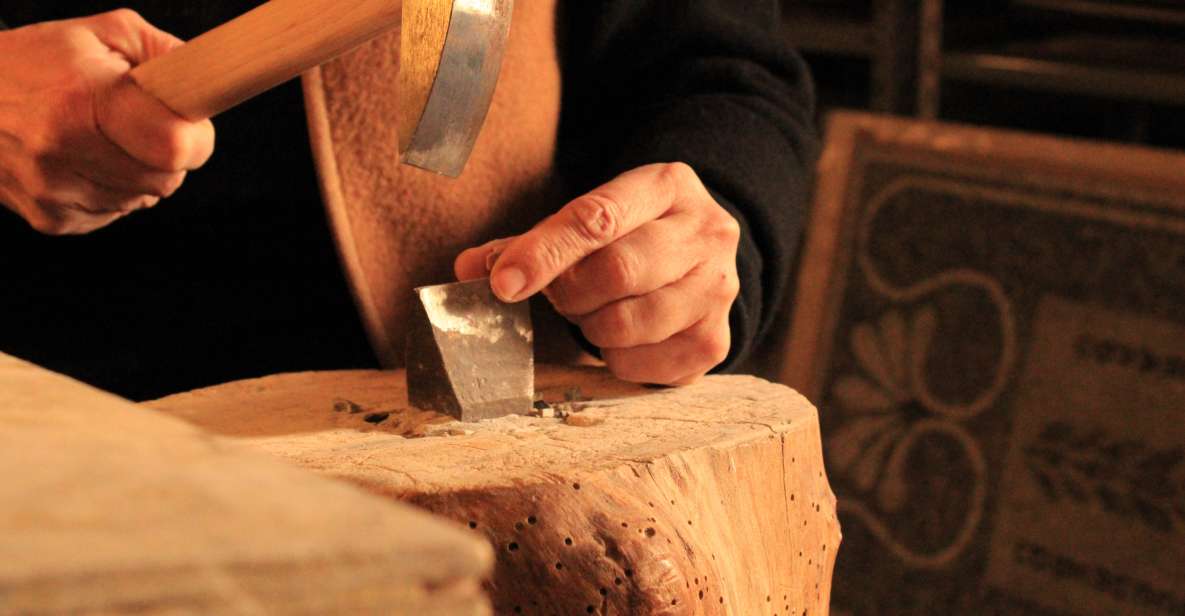
Rome is great at spectacle. But this workshop turns the volume down and puts your hands to work, which is exactly why it’s memorable. You’ll be in a mosaic studio in Trastevere, close to the Botanical Garden, so it also lines up nicely with a half day you can build around wandering this neighborhood.
The experience is designed around making something tangible—your own mosaic. That matters because mosaics aren’t like souvenirs that are bought and wrapped. You’re making the choices: the design you pick, the tile shapes you cut, and the way you place pieces together. Even if you’ve never done art before, you get a clear path from start to finish.
And there’s a bonus most people don’t expect: you end up seeing Rome’s mosaics with new respect. Once you’ve dealt with tiny cuts and careful placement, the mosaic work you spot later—inside churches, on floors, on walls—starts to make sense in a different, more personal way.
You can also read our reviews of more tours and experiences in Rome



Your Host: Nadia (and the Atelier Rhythm)
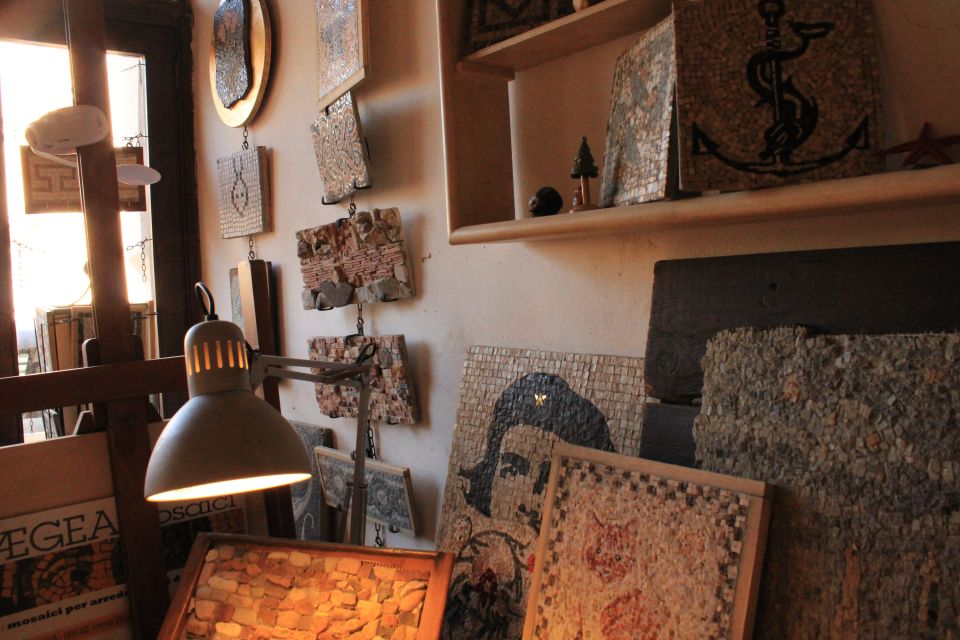
The class is led by a skilled mosaic artisan—Nadia is specifically named as the mentor—and you’re guided throughout. The workshop is structured, which is great when your schedule is tight and you want a smooth experience. You sit at your designated workstation, and the instruction keeps moving from one phase to the next.
One practical thing to know up front: the teaching artist isn’t fluent in English. That doesn’t mean you’re stuck or confused. You’ll be able to communicate with everyone, and the process is heavily demonstrated. The best mindset is to treat it like a craft lesson where you copy what you see, ask when you can, and follow the step-by-step rhythm.
From the studio vibe to the pacing, the goal is simple: you should leave with a mosaic you’re proud of, and you should understand what makes it difficult in the first place—especially fitting pieces into small angles.
What You Make: Choosing a Design and Starting Your Layout
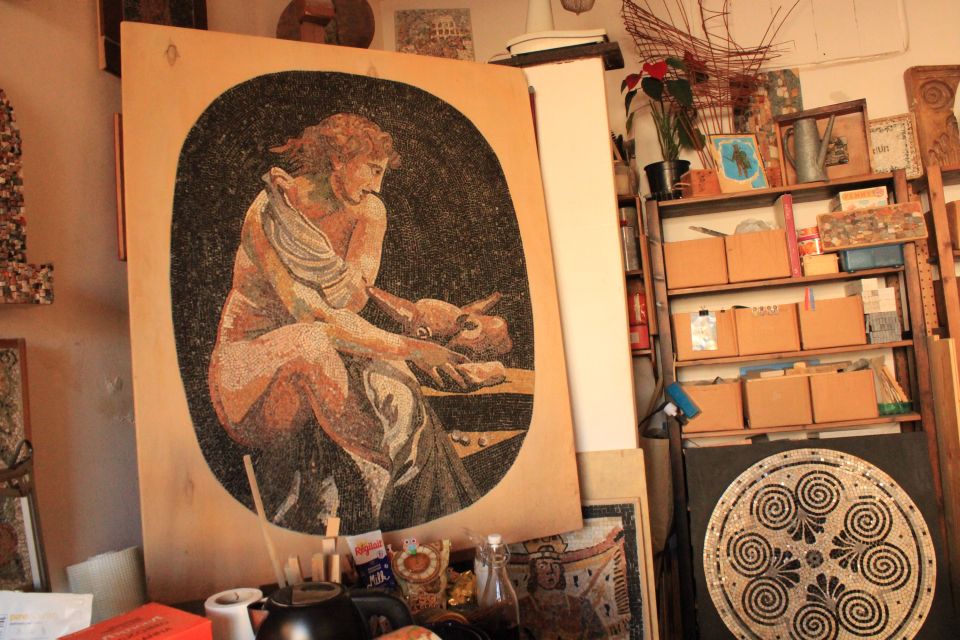
Before you start cutting, you’ll be introduced to the mosaic-making process and guided as you create your design. You’ll have the freedom to choose your preferred design. That choice is more important than it sounds, because you’ll be living with the pattern for the whole build: where the lines go, where tiles have to be trimmed, and how fine details will look once everything is placed.
In a typical workshop flow, you’ll trace or map out your design first. Then comes the real work: turning the design into tile pieces. The studio provides the tools and materials, so you’re not shopping for supplies ahead of time. Your job is basically to focus and follow directions—Nadia’s role is to keep you moving and correct where needed.
Cutting Tiles to Fit: The Part That Surprises People
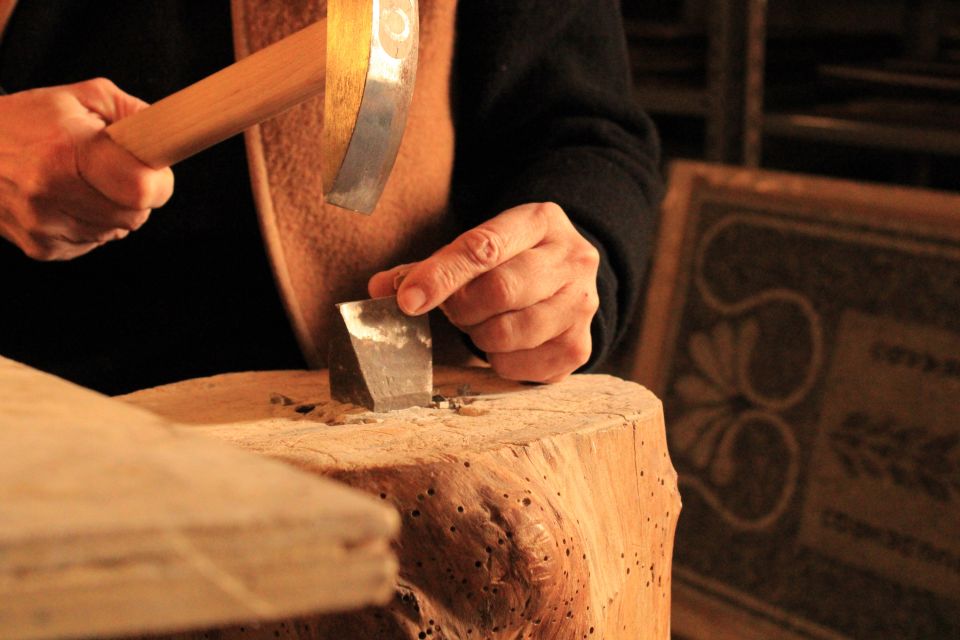
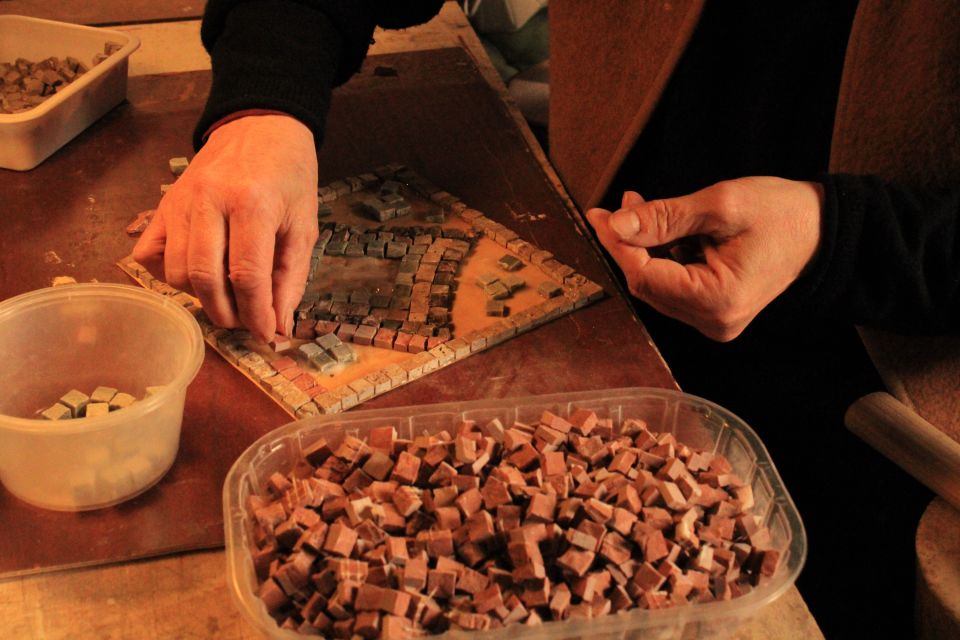
Here’s what most people find surprising: mosaic-making is harder than it looks. Cutting tiles to fit tight spaces takes patience. It’s not just cutting straight lines; you’ll often need to shape pieces for small angles and curved-looking sections depending on the design.
In the workshop, you’ll roll up your sleeves and use the tools to cut tiles, then assemble them according to your layout. Throughout, Nadia helps with technique and placement. This is where the small group size really helps. With a group limited to 8, you’re not waiting for attention while other people struggle with the same step.
Expect a hands-on process that feels satisfying, especially once your first few sections start matching the design. And if you make a mistake? You’re in a craft studio, not a high-stakes classroom. The process is meant to teach you what to do next.
Assembling Your Mosaic: From Pieces to a Finished Picture
After you’ve got your cut pieces, you start placing them into your mosaic layout. This is a step where guidance matters, because tile placement is what gives your mosaic its final look. The workshop teaches how to glue or set tiles into position, keeping lines straight and surfaces aligned.
You’re seated at your workstation the whole time, working at a pace that’s paced for beginners but still mindful of accuracy. Because your instructor is present every step of the way, you’re not left guessing. If you’re trying to match the design closely, you’ll get feedback on how to correct spacing and fit.
One thing I appreciate about this approach: it’s structured enough that you don’t waste your three hours. You’ll do meaningful progress rather than just watching and then leaving with a partially started craft.





Cementing, Cleaning, and the Wait: Setting Takes Longer Than the Class
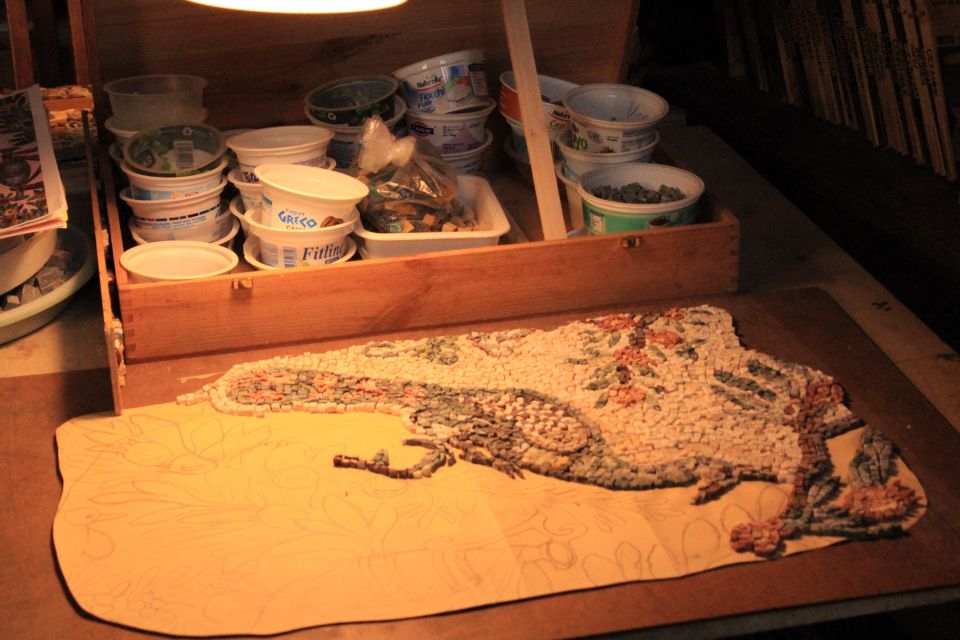
The class itself runs about 3 hours. But your mosaic doesn’t magically become travel-ready in that time. Once your design is completed, it’s carefully placed in a box so it can properly set. That setting process can take up to 6 hours.
Practically, this means you should plan your day knowing there’s a finishing phase happening even after the active workshop time. The good news is that the studio handles the boxed storage and the process needed to get it ready for you to take home. You’re not responsible for cementing and waiting on your own.
Taking It Home: Why This Makes a Better Souvenir
Plenty of Rome souvenirs are fine. A mosaic souvenir is different because it carries effort. When you cut tiles, fit pieces, and see your design become real, you create a story you can explain later.
It also helps that you leave with a boxed item designed for transport. The workshop is built around a take-home result, not a keep-in-the-studio project. That makes it a smart purchase alternative if you want something personal without spending hours hunting for handmade art shops.
And because the class is in Trastevere, you’re pairing the souvenir with a neighborhood you’ll remember. It’s a calm, creative stop that breaks up the usual Rome routine of churches, monuments, and long lines.
Price and Value: Is $147.27 Worth It?
At $147.27 per person, this isn’t a budget activity. But it’s priced like a real artisan workshop: you’re paying for the studio setup, the materials, and hands-on instruction with an experienced mosaic artist, plus the final boxed preparation after the class.
The value equation gets better because the group size is small (up to 8). With smaller groups, your instruction time matters more. You’re not standing at the back hoping someone notices you. Instead, you get guidance as you cut tiles and build the layout.
If you’re the type who likes doing one meaningful activity rather than stacking multiple short stops, this fits nicely. You’ll also come away with something you can’t really replicate elsewhere without time, tools, and practice.
Who Should Book This Mosaic Class in Trastevere
This workshop is a great match if you want a break from standard sightseeing and you enjoy making things with your own hands. It’s also a solid choice if you’re traveling with someone who wants a shared activity that isn’t another museum visit.
It’s especially good for:
- Couples looking for a calmer, creative date
- People who like practical learning and do-it-yourself activities
- Families who have kids old enough to focus with adult support
A couple important notes:
- Wheelchair accessible
- Children must always be accompanied by at least one adult
If you’re hoping for a highly verbal lecture in English, plan for more demonstration-based instruction instead. The lesson is still doable and organized, just not dependent on fluent English.
Logistics That Affect Your Day (Simple, Not Stressful)
The workshop takes about 3 hours, with available starting times you can check when you book. No hotel pickup or drop-off is included, so you’ll handle getting to the studio on your own.
Because the studio is in Trastevere near the Botanical Garden, I’d plan it as either:
- a mid-day reset when you want something hands-on and quiet, or
- a half-day activity that fits between neighborhood wandering and dinner.
Also, your mosaic setting can take up to 6 hours, so build in a buffer that avoids rushing immediately after class.
Should You Book the Mosaic-Making Workshop?
Yes—if you want a genuinely personal Rome souvenir and you’re happy with a hands-on craft lesson. The workshop’s strongest points are the small group size, step-by-step instruction, and the satisfaction of building your own mosaic from scratch.
Book it when:
- you want a creative break from monuments and lines
- you like craft work where process is part of the fun
- you’re comfortable with instruction that may rely on demonstrations more than fluent English
Skip it if:
- you only want very passive activities (this is active work)
- you need a long, detailed English explanation throughout every step
If you fit the first list, this is the kind of Rome experience that leaves you with something you can display—and remember—for years.
FAQ
How long is the mosaic-making workshop?
The workshop runs about 3 hours. Your finished mosaic then needs time to properly set, which can take up to 6 hours.
Will I be able to take my mosaic home?
Yes. After you complete your mosaic, it’s boxed so it can set and be taken home with you.
What’s included in the workshop price?
You get the mosaic-making workshop in a studio in Trastevere, hands-on creation of your mosaic (which you take home), fully equipped studio materials and tools, instruction from the mosaic artist, and a small-group experience limited to 8 people.
What languages will the instructor use?
The instructor can communicate in English and Italian. The mosaic artist teaching the class isn’t fluent in English, but communication is still possible for everyone.
Is the workshop wheelchair accessible?
Yes, the workshop is wheelchair accessible.
Is there free cancellation and a pay-later option?
You can cancel up to 24 hours in advance for a full refund. You can also reserve now and pay later.