REVIEW · ROME
Rome: Basilica of St Mary Major Catholic Pilgrim Tour
Book on GetYourGuide →Operated by Crucis Tours · Bookable on GetYourGuide
One basilica can feel like a whole pilgrimage. St Mary Major (Santa Maria Maggiore) is packed with sights that make Catholic Rome easier to understand, from the Holy Door moment to the mosaics that tell the Bible in pictures. I especially liked the way the tour ties the art to meaning, not just sightseeing, and how it points out relics you’d likely miss on your own. A practical drawback: dress matters here, and you will need to keep it modest.
You meet at the fountain by the main entrance and the group stays small, limited to 10, so you can hear your guide and ask questions. Expect a focused tour for about 60 to 90 minutes, with the option to continue on if you’re joining a longer pilgrimage route. If you are short on time in Rome, this still feels like a complete, satisfying experience, not a rushed pass-through.
In This Review
- Key things to know before you go
- St Mary Major and the Jubilee Holy Door
- Getting to the right entrance: fountain meeting point and plaza sides
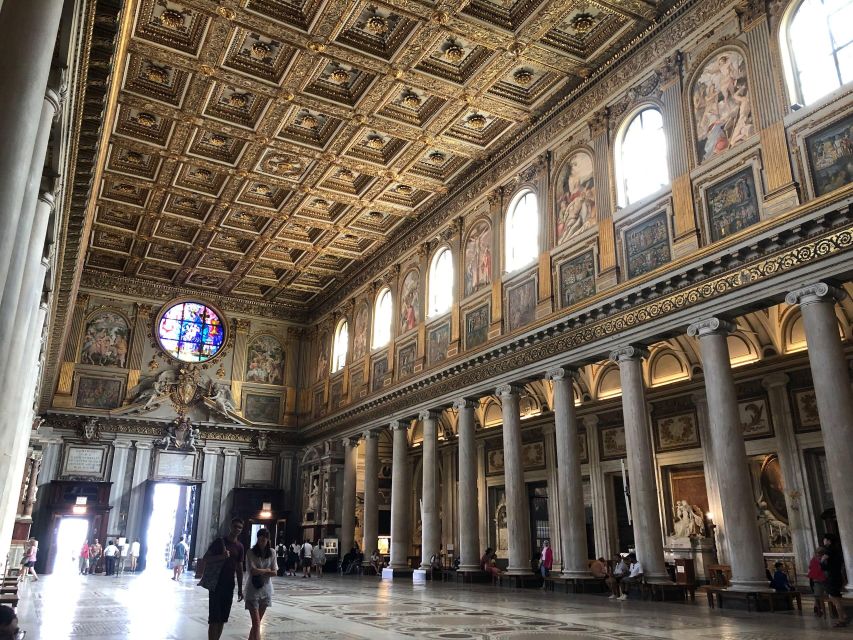
- Walking in: five names of the basilica and the feel of an active sanctuary
- Mosaics behind the altar: how you learn to read the Bible in pictures
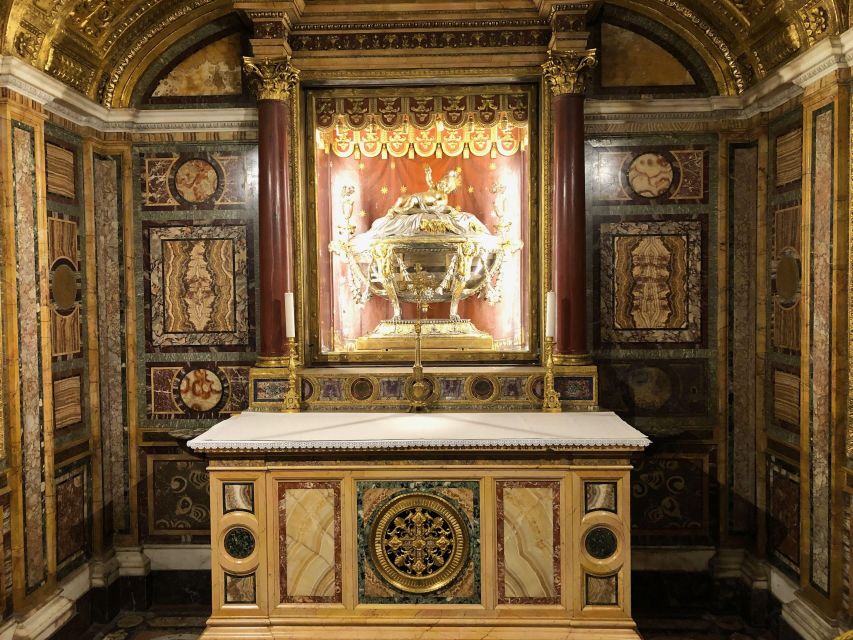
- The relic moments: crib wood, Salus Populi Romani, and Pope St Pius V
- The guide experience: Wen and Tom’s professional, question-friendly style
- What the 60–90 minutes really feels like
- Price and value: $65 for a focused, meaningful visit
- Practical tips before you go (and what to ask your guide)
- Should you book this St Mary Major tour?
- FAQ
- How long is the St Mary Major Catholic Pilgrim Tour?
- Where do we meet for the tour?
- What will I see inside the basilica?
- Is the Holy Door part of the tour?
- Is the tour good for people who want a more spiritual focus?
- What language is the tour offered in?
- Are there any dress code rules?
Key things to know before you go
- Holy Door at St Mary Major: one of the four Jubilee sites, with special focus at the entrance area
- Relics close up: crib-wood, the icon Salus Populi Romani, and a glass sarcophagus linked to Pope St Pius V
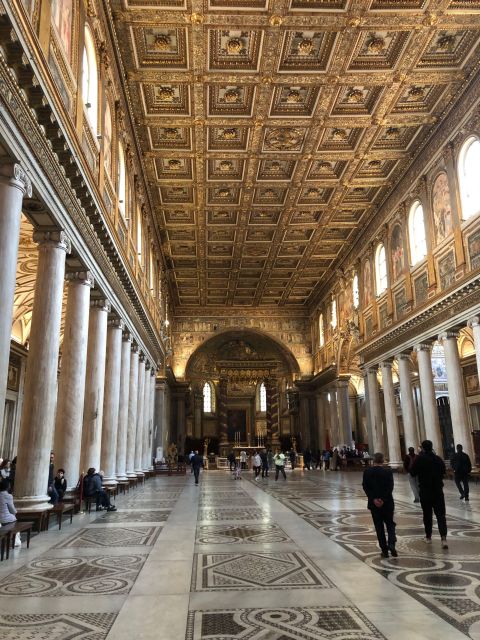
- Mosaics as catechesis: you’ll learn how the artwork connects Old and New Testament themes
- Small group rhythm: up to 10 people means less crowd pressure and more interaction
- Skip express security: you get through quicker with an express check process
- Radio headsets when needed: groups of 7 or more use headsets to keep the narration clear
St Mary Major and the Jubilee Holy Door
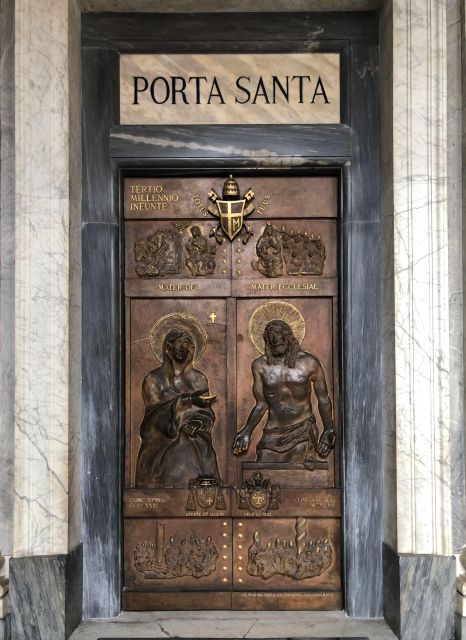
This is one of Rome’s four Major Papal Basilicas, and that matters because it signals why pilgrims have long prioritized this church. St Mary Major sits among the top-tier spiritual stops in the city, not as a casual church visit, but as a place with ceremony baked into the design and traditions.
The tour spotlights the Holy Door, one of four that open during a Jubilee Year for pilgrims seeking a plenary indulgence. Even if you’re not traveling during a Jubilee, you’ll still get context for what makes the door part of Rome’s pilgrim rhythm, and why Catholics link it to a moment of grace and renewal. It turns the building into a living story rather than a static monument.
One thing to keep in mind: if you come at a time when the Holy Door isn’t open, you still should expect a guided explanation of its role and symbolism. The experience stays meaningful because the guide connects the door to the basilica’s deeper identity.
You can also read our reviews of more tours and experiences in Rome.

Getting to the right entrance: fountain meeting point and plaza sides
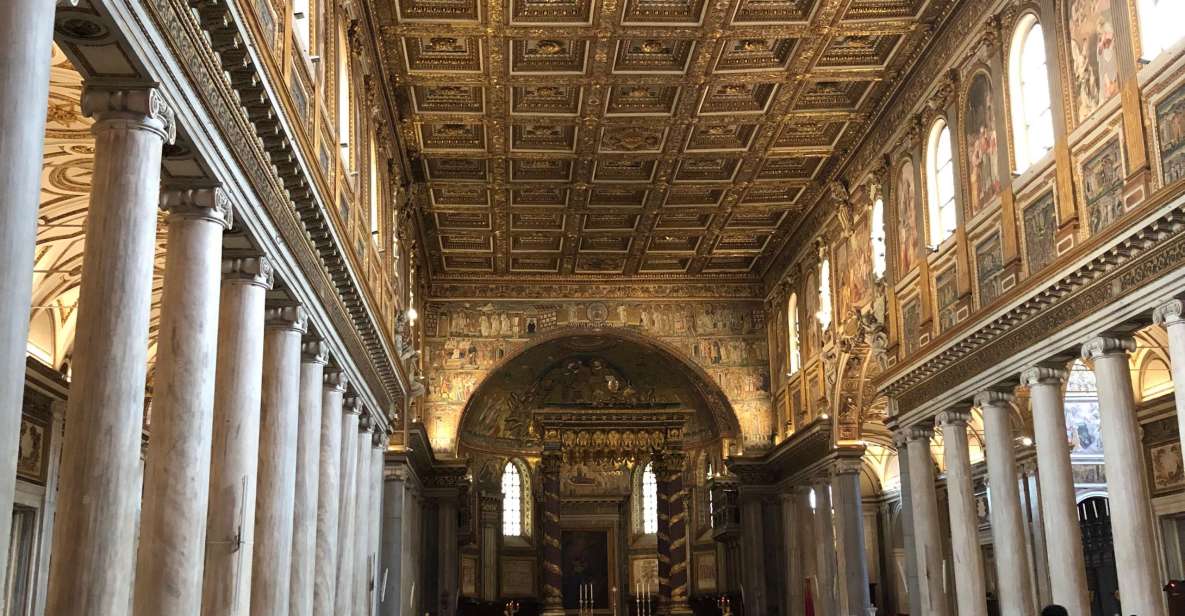
Your meeting point is at the fountain in front of the basilica, right outside the main entrance. The front of St Mary Major faces Piazza Santa Maria Maggiore, not Via Cavour, so it helps to orient yourself before you arrive.
The tour provider encourages you to use WhatsApp so you can stay in real time contact if anything goes sideways. That’s not fancy, but it’s practical, especially in Rome where streets can look similar and a few minutes can turn into a frustrating loop.
Bring a little patience for the first few minutes. You’ll regroup, get instructions, and then the group heads toward the entrance area together, where the guide sets the stage for what you’ll be seeing.
Walking in: five names of the basilica and the feel of an active sanctuary
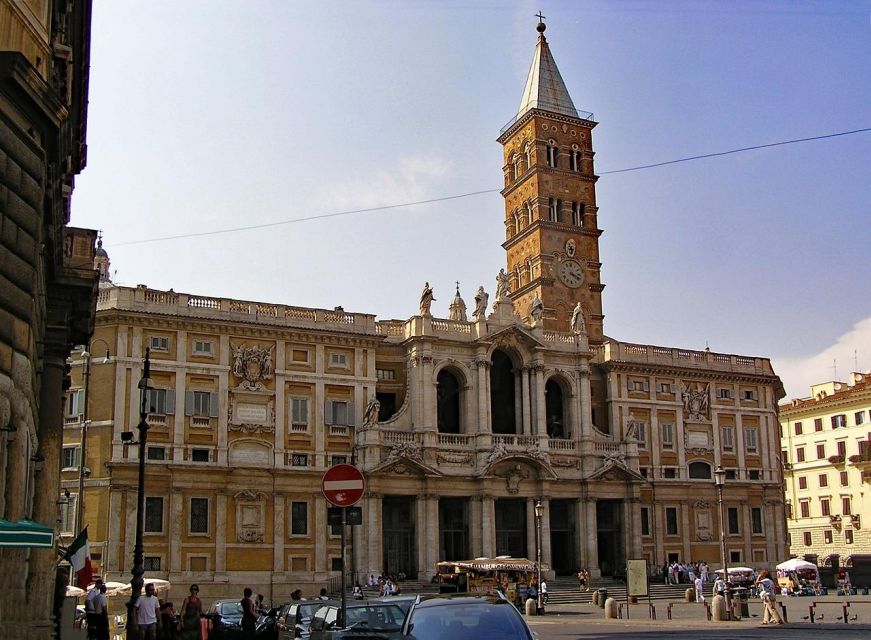
Once you enter, the tour doesn’t immediately jump to the art. First, you learn about the basilica’s five different names, each tied to its layered history and the events that shaped it.
That “naming” moment sounds small, but it changes how you look at the church. You stop treating it like a single attraction and start seeing it as an institution with chapters, dedications, and evolving significance.
A guided group also means you’re not just staring upward. Your guide directs your attention with purpose, pointing out what to notice and why it matters for Catholics. If you like architecture, you’ll still enjoy the visuals, but you’ll understand what the visuals are doing.
Mosaics behind the altar: how you learn to read the Bible in pictures
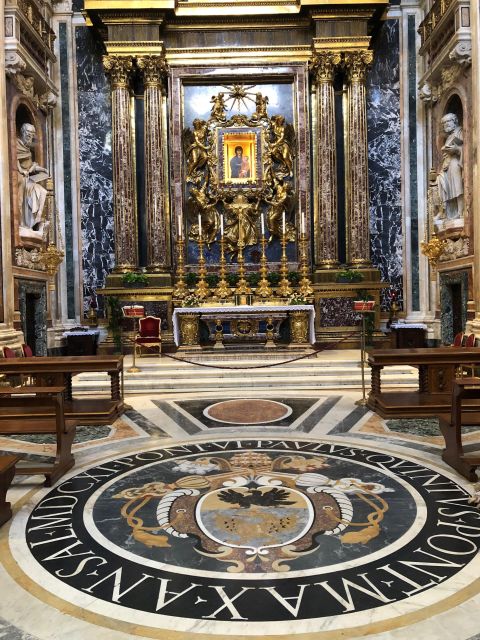
The big wow factor for many visitors here is the mosaic work, and this tour focuses on it with real intention. The mosaics behind the altar brim with symbolism, and the guide explains the connection between biblical scenes and the broader teaching message.
What I like is that you’re not left with a generic description like beautiful, old, impressive. Instead, you get guidance for how the mosaic themes relate to both the Old and New Testament. In other words, you’re learning a kind of visual vocabulary.
If you’ve ever stood in front of church art and wondered what you’re supposed to see, this helps. You’ll know what to look for, and that makes the mosaics feel less like decoration and more like instruction meant to be understood by the faithful across generations.
Even if you are not Catholic, you’ll probably appreciate the clarity. The guide’s explanations help you interpret the design choices, and it gives the artwork a human purpose, not just a museum label.
The relic moments: crib wood, Salus Populi Romani, and Pope St Pius V
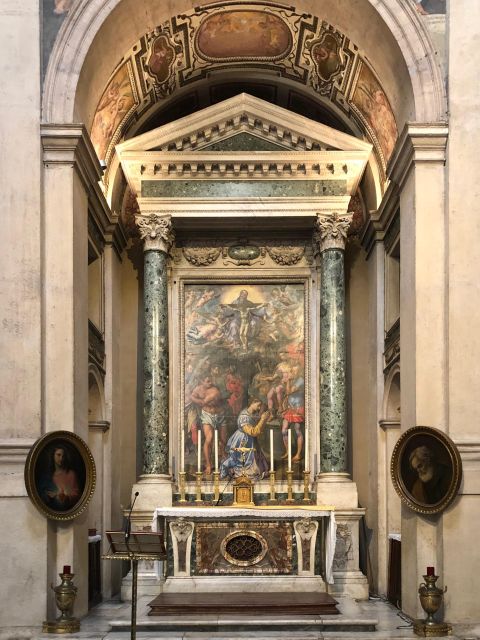
This is where the tour gets especially distinctive. Inside the basilica, you’ll see materials and objects that Catholic tradition links to Christ and the saints.
First up is the wood from the crib of the baby Jesus. Relics like this were brought to Rome from holy places in the east for pilgrims to venerate, and the guide helps you place that tradition in context. Seeing it is one thing; understanding why it drew pilgrims across centuries is another.
Next is the icon Salus Populi Romani, which Catholic tradition holds was painted by St Luke the Evangelist. The tour also points out that this miraculous icon is displayed for veneration, and it frames why this image carries meaning for Rome and its people.
You also see the glass sarcophagus of Pope St Pius V. That detail matters because it connects the basilica’s long story to later figures in Catholic history, not only to the earliest eras.
One thoughtful angle here: relics can feel overwhelming if you’re new to the subject. The guide’s role is to keep it grounded, turning the display into a guided understanding rather than a pile of claims. You leave feeling like you actually know what you saw and why it sits inside this particular church.

The guide experience: Wen and Tom’s professional, question-friendly style
A tour lives or dies on the guide, and this one seems to hit high marks. I’ve seen multiple accounts praising guides for being professional, clear, and easy to follow, including guides named Wen and Tom.
What stood out in the best moments is how the narration feels like a conversation, not a monologue. One guide approach you’ll likely notice is a Q-and-A style that invites you to ask follow-up questions, which is a big deal when you’re dealing with symbols, relic traditions, and theology.
Your group is also small enough that the guide can respond to the room instead of sticking to a fixed script for speed. And if you’re in a group of 7 or more, you’ll use radio headsets, which keeps the explanations audible even in busy interior spaces.
This is not the kind of tour where you speed-walk from point to point and just hope you caught everything. It’s more like guided attention, with enough structure that you can absorb meaning instead of chasing trivia.
What the 60–90 minutes really feels like
The core basilica tour runs around one hour, with a typical window between 60 and 90 minutes depending on how the group moves and how many questions come up. You’ll start at the basilica itself, and the visit is built around a clear sequence: meeting, entrance area, Holy Door focus, then inside sights like the mosaics and relics.
If you’re only doing St Mary Major, the tour ends on the steps in front of the main entrance. That’s a nice finish because you’re positioned to re-enter the rhythm of central Rome right away, rather than being stuck in a confusing interior exit path.
If you’re continuing as part of a longer pilgrim route, the guide can also take you on to other stops. In particular, there’s mention of continuing on for a Via Crucis style pilgrimage and visiting items and sites connected to Christ’s Passion, including the Major Basilica of St John Lateran among other things. The St Mary Major portion still works as a complete experience even if you choose not to continue.
Price and value: $65 for a focused, meaningful visit
At $65 per person, this isn’t a budget “quick look” tour. But it is priced like something you should actually benefit from: guided interpretation, a structured route, and help with the practical friction that slows people down in big churches.
You also get a few value boosters baked in. The tour includes all taxes and fees, and it includes radio headsets for groups of 7 or more, which is a small detail that makes a big difference when you’re trying to understand explanations inside. There’s also express security support, which can save you time and stress.
The duration is short enough that you’re not paying for a long bus transfer day, and it’s focused enough that you’re paying for expertise and attention, not just entry. If your goal is to understand what you’re seeing inside St Mary Major, this pricing starts to make sense.
One note for your budget thinking: this tour is about the basilica itself. If you’re hoping it will also act like a full-day Rome plan or include transport from your hotel, you’ll need separate arrangements.
Practical tips before you go (and what to ask your guide)
A few rules are posted, and they matter. Shorts and short skirts are not allowed, so dress modestly. Rome churches often ask for respect in clothing, and this one is more direct about what is and is not okay.
Bring questions, even simple ones. If you want help interpreting symbolism in the mosaics or understanding why these relic traditions are so important to Catholic pilgrims, this is the right setting to ask. The best tours are interactive by design, and this one is built for that, especially with a smaller group.
There’s also a homily option on request. If you want the tour to include more spiritual reflection alongside the historical and artistic explanation, that’s worth asking about before you start.
Finally, pay attention to the meeting instructions about the fountain and WhatsApp contact. It’s the easiest way to avoid a late start and keep the experience calm.
Should you book this St Mary Major tour?
I’d book it if you want more than photos and labels. This tour is a strong fit when you care about meaning: Holy Door context, how mosaics teach, and why specific relics matter to Catholic tradition. With a small group and a guide who can handle questions without rushing, you’ll likely feel like you truly understood the basilica by the time you step back outside.
I’d skip it only if you already know exactly what you want to see and you prefer to explore at your own pace with no guidance. Also consider skipping if the dress rules conflict with what you’re planning to wear and you don’t want to adjust.
If your days in Rome are tight and you want one church visit that feels like it has a point, this one is a smart choice. It turns St Mary Major into a guided pilgrimage you can actually follow.
FAQ
How long is the St Mary Major Catholic Pilgrim Tour?
The tour lasts about 1 hour, with the visit described as typically between 60 and 90 minutes.
Where do we meet for the tour?
You meet at the fountain in front of the main entrance to Basilica Papale di Santa Maria Maggiore (Santa Maria Maggiore). The front faces Piazza Santa Maria Maggiore.
What will I see inside the basilica?
You’ll see the ancient mosaics with symbolism, the relic wood from the crib of the baby Jesus, the icon Salus Populi Romani by St Luke, and the glass sarcophagus of Pope St Pius V.
Is the Holy Door part of the tour?
Yes. The tour includes a focus on the Holy Door, one of the four that open during Jubilee Years.
Is the tour good for people who want a more spiritual focus?
There is a homily available on request, in addition to the guided explanations of religious and symbolic elements.
What language is the tour offered in?
The tour is offered in English and Chinese.
Are there any dress code rules?
Yes. Shorts and short skirts are not allowed.