REVIEW · ROME
Afternoon Vespa Sidecar Tour with Gourmet Gelato Stop
Book on GetYourGuide →Operated by Vespa Sidecar Tour · Bookable on GetYourGuide
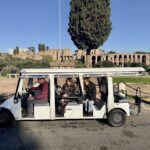
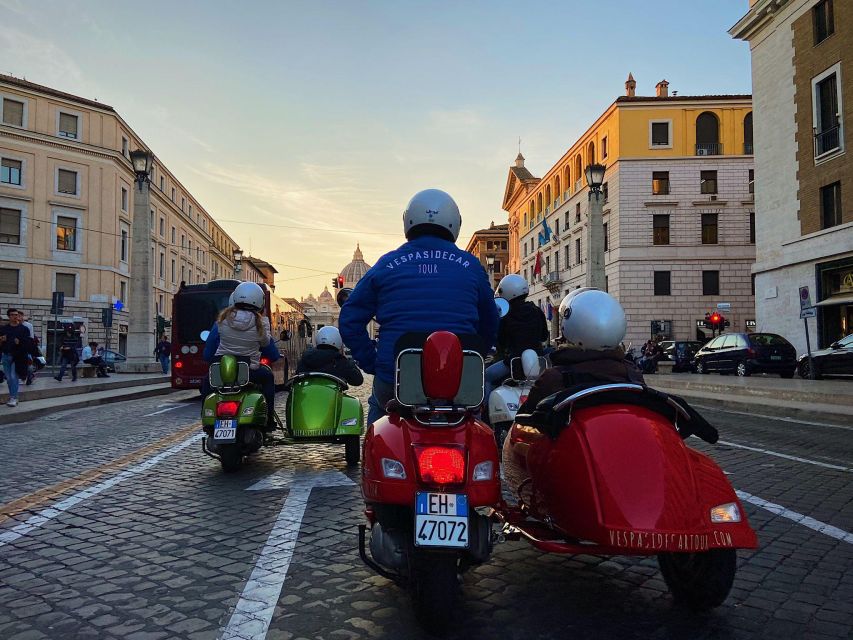
Rome’s best views come with handlebars. This afternoon Vespa sidecar tour turns the Eternal City into a three-hour highlights reel, with live English narration beamed through onboard headphones as you move from landmark to landmark. You get panoramic stops, brief photo moments in tight streets, and a sweet gourmet gelato taste that lands right when you need a break.
I love the simple setup: you ride, you look, you listen. Between the guide’s running commentary and the fact that your driver handles the road and parking, you can actually take in the details without constantly checking traffic and signage.
One thing to consider: it’s a motorbike experience. If you have back or heart issues, are pregnant, or just don’t like being in traffic on two wheels, this may not feel comfortable even with helmets, seat belts, and rain ponchos.
In This Review
- Key points worth clocking before you go
- A Vespa sidecar in Rome: fast, fun, and surprisingly practical
- The full route: 12 major stops over three hours
- Quirinale: a power-geometry starting point
- Fontana di Trevi: more than a photo stop
- Pantheon: the included ticket makes it worth it
- Piazza Navona: curved streets and street-life energy
- St. Peter’s area: big views, quick understanding
- Gianicolo Hill: the panoramic reset
- Trastevere & the Jewish Ghetto: old streets, real character
- Piazza Venezia: monuments and the center of the map
- Colosseum area: a must-see finish
- Gelato stop: the sweet payoff built into the ride
- Safety and comfort details that actually matter
- Who this tour suits best (and who should skip it)
- Price and value: what you’re really paying for
- Tips to get the most from your afternoon ride
- Should you book this Vespa sidecar tour?
- FAQ
- How long is the afternoon Vespa sidecar tour?
- What time does the tour start?
- Where do we meet?
- What does the tour include besides gelato?
- Do I get to go inside the Pantheon?
- Will I hear the guide’s commentary while riding?
- What safety gear will I use?
- Can passengers drive the Vespa sidecar?
- What’s the minimum age for children?
- Is the tour okay if it rains?
Key points worth clocking before you go
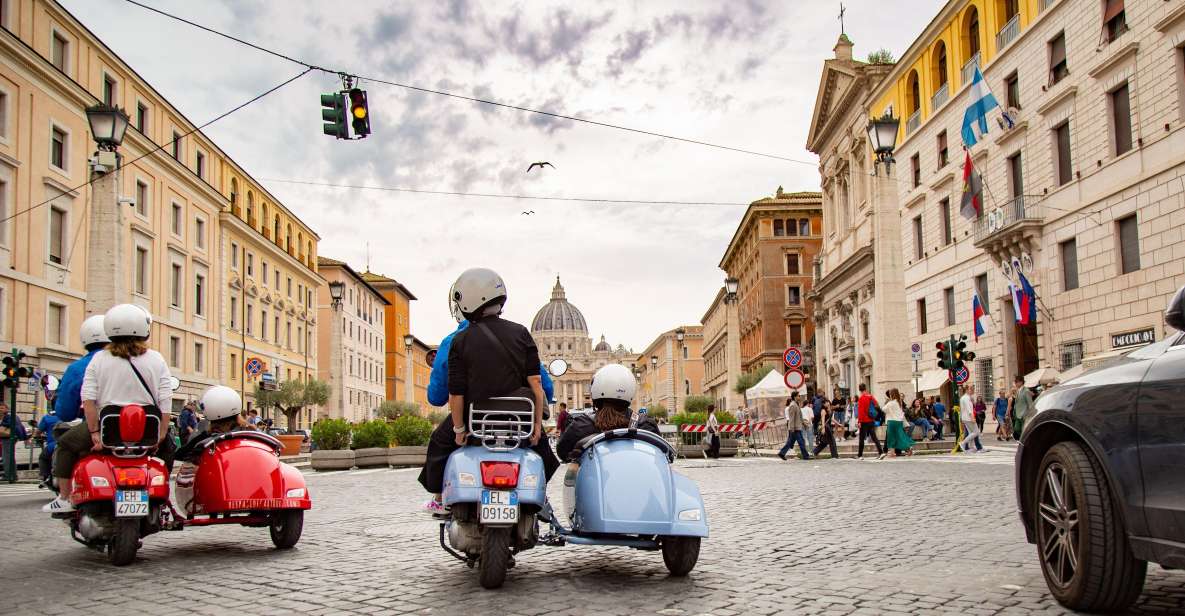
- Headphones for live narration so you understand what you’re seeing while you’re moving.
- Professional drivers and licensed guides handling the road, timing, and explanations.
- A Pantheon entry ticket included, which you won’t get on every “pass by the sights” tour.
- CE helmets with sterilized disposable head covers plus seat belts for passenger comfort and hygiene.
- Route built around big exteriors and viewpoints, including Gianicolo Hill and photo stops across central Rome.
- Gelato is part of the experience, not an afterthought.
A Vespa sidecar in Rome: fast, fun, and surprisingly practical
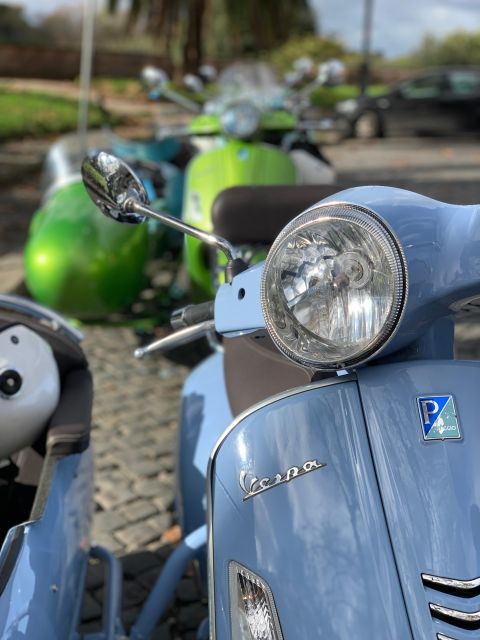
Rome is a city that punishes standing still. Streets are narrow, walking distances add up, and traffic can turn a sightseeing plan into a slog. This tour solves that with a ride-first approach: you move through central Rome by Vespa sidecar, letting your driver manage the flow while the guide explains what matters.
The real trick is the pairing: you’re not just seeing famous facades, you’re also getting context in real time. Headphones mean you can follow the story without stopping for constant instruction, and that makes the whole afternoon feel like a guided walk—only quicker, with more scenery per minute.
And yes, it’s also just plain fun. Many people mention the energy of the guide team—names like Manuel and Alessio show up again and again—plus the little moments like picture stops and keeping everyone comfortable and hydrated.
You can also read our reviews of more tours and experiences in Rome


The full route: 12 major stops over three hours
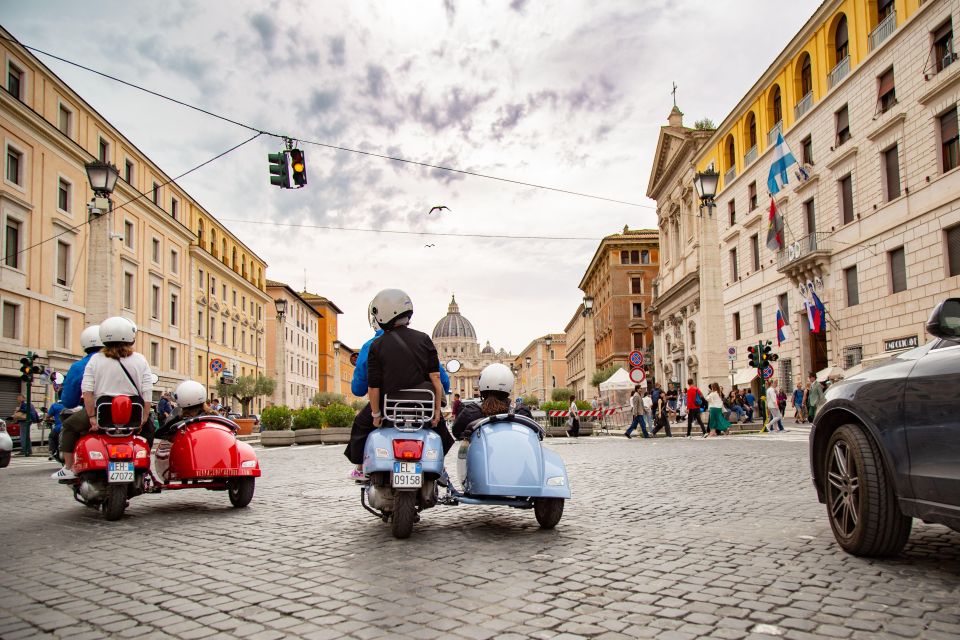
This is a 3-hour tour with a set route. Expect a mix of stops for photos and short moments to take in the atmosphere, plus one major interior visit (the Pantheon). The itinerary list is built around central Rome highlights, from monumental squares to old neighborhoods.
Here’s how the flow typically reads, in the order you’ll move through it:
Quirinale: a power-geometry starting point
You kick off with Quirinale, an area tied to Rome’s grand civic presence. Even if you don’t go inside, it’s a good “orientation” stop: broad views and important architecture help you understand how Rome’s centers are arranged.
Practical tip: keep your phone ready early. This is one of those “you’ll spot it fast, then it’s gone” moments before you zip toward the next attraction.
Fontana di Trevi: more than a photo stop
Trevi is famous for a reason, but the advantage here is that you’ll experience it at Vespa pace—enough time to look closely, then move on before the day gets even more crowded around it.
Look for the sculpted drama and the way the fountain sits like a stage at the end of a dramatic street. With the guide’s live narration in your ears, it’s easier to connect what you see to the stories attached to the site.
Pantheon: the included ticket makes it worth it
The Pantheon is where this tour earns its keep. You don’t just pass it—you get entry tickets included, so you can step inside during your three hours.
Once you’re in, focus on three things: the oculus opening to the sky, the scale of the interior, and the way light makes the space feel both ancient and engineered. The headphones help here too, because the guide’s explanation can match what you’re looking at, not what you’ll see later.
You can also read our reviews of more tours and experiences in Rome

Piazza Navona: curved streets and street-life energy
Next comes Piazza Navona, one of Rome’s classic squares. This is less about one single monument and more about the atmosphere: you’ll see how Rome uses public space—surrounding buildings, open square design, and lively street scenes.
Even if you only have short time, it’s the kind of stop where a guided explanation changes the experience from random sightseeing into a sense of place.
St. Peter’s area: big views, quick understanding
You’ll reach the St. Peter’s side as part of the highlights run. You won’t have the long, slow “tour museum” pace, but you will get the payoff of seeing the area from the outside with live narration helping connect the dots.
Consider using this stop for a few key photos rather than trying to cram in too much in one go. Rome rewards focus.
Gianicolo Hill: the panoramic reset
Gianicolo Hill is a highlight because it gives you distance. From higher ground, Rome stops being a maze and starts making sense: neighborhoods stack, rooftops spread, and the city’s size becomes visible.
This stop is where the “sidecar rhythm” really shines. You get moving views, then you pause for perspective—exactly the kind of reset you want on day one or day two.
Trastevere & the Jewish Ghetto: old streets, real character
The route then transitions into Trastevere and the Jewish Ghetto area—neighborhoods that feel distinct from the grand, showpiece zones around them. This is where narrow streets and local texture matter, and a Vespa sidecar can get you access in a way that’s hard for buses or big walking groups.
Practical note: street-level Rome can be compact. If you want shopping browsing or deep wandering, save that for another time. The value here is seeing what makes the area feel different without eating hours.
Piazza Venezia: monuments and the center of the map
Piazza Venezia functions like a visual compass. You’ll see how it anchors major parts of central Rome, and the guide’s narration helps you understand why it feels like a hub.
This stop is a good moment to orient yourself for the rest of your trip—where the next big set-piece sits and how Rome’s sections connect.
Colosseum area: a must-see finish
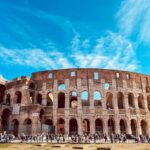
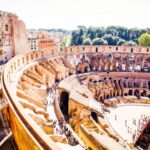
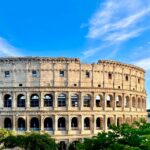
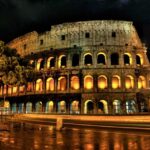
You end at the Colosseum area. This tour doesn’t position it as a slow deep-dive; instead it gives you the immediate impact plus the story connections through headphones.
If you’re planning to come back for a longer visit, this stop is still valuable. It helps you decide what you want to see next—whether it’s the scale of the arena, the surrounding arches, or the way the structure dominates the street grid.
Gelato stop: the sweet payoff built into the ride
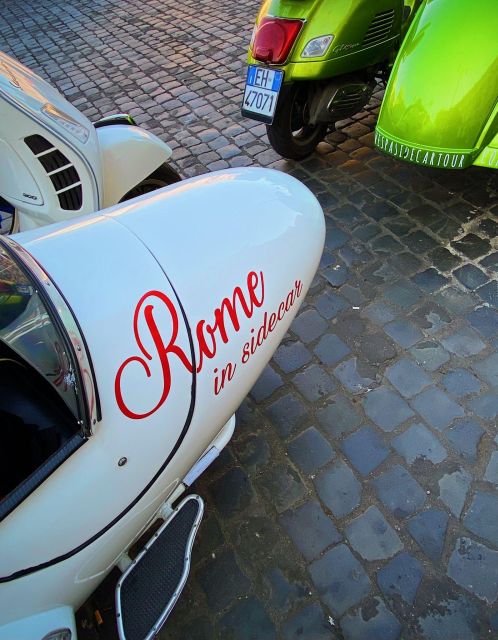
You’ll stop for gourmet gelato during the tour. The best part is timing: it’s not stuck at the end when you’re tired and rushing. It arrives while you still have energy to enjoy it, especially after a run of major sights.
From what people repeatedly highlight, the flavors and selection can feel like the real moment. Plan to savor it slowly instead of treating it like a quick snack, because you’ll be moving again soon and you’ll want your break to count.
Safety and comfort details that actually matter
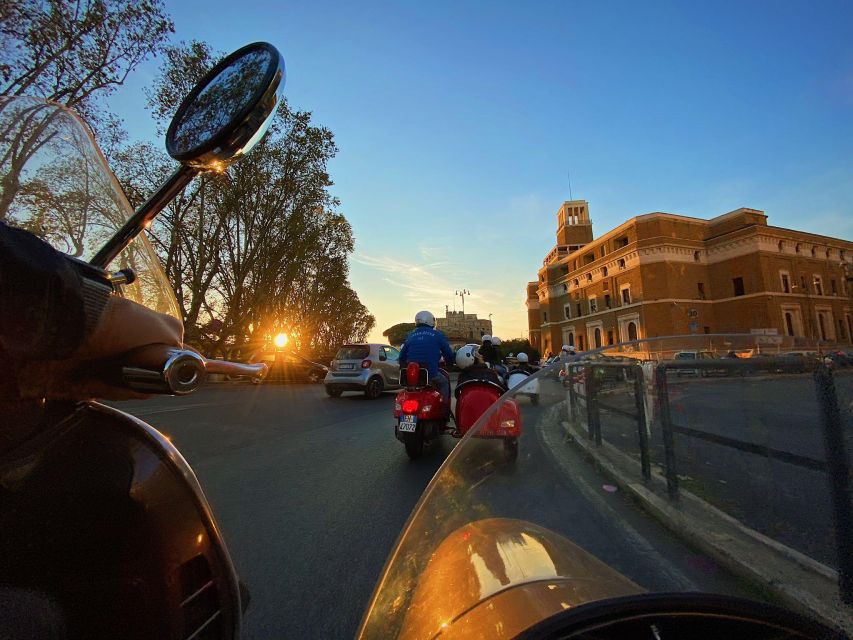
This is a guided, driven experience, and safety gear is part of the deal—not an optional add-on. You ride with CE helmets and sterilized disposable head covers for comfort and hygiene. There are seat belts for the passenger riding in the sidecar, and the setup is designed so you don’t need to think about driving or parking.
Also, you get waterproof ponchos if rain rolls in. In winter, blankets and electric water bottles are available, which is the kind of practical touch that turns an uncomfortable day into a manageable one.
For first-time riders, the most reassuring element is the plain workflow: you stay seated, the guide leads, the drivers handle the streets, and your job is to look and listen.
Who this tour suits best (and who should skip it)
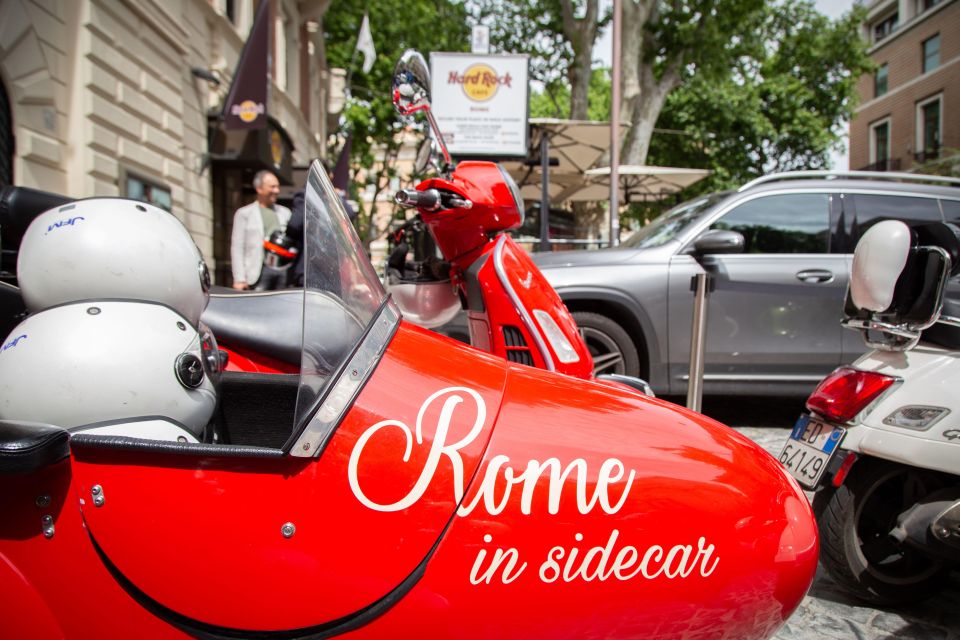
This works especially well if you want a strong first impression of Rome without spending the whole afternoon walking. It’s a good fit for:
- Couples and small groups who want a lively highlights loop
- People who like guided explanations but don’t want to stand still for hours
- Travelers who want a memorable activity that mixes famous sites with a neighborhood feel
It may not be ideal if:
- You have back problems (it’s specifically not recommended)
- You have heart problems or other serious medical conditions
- You’re pregnant (not permitted)
- You’re traveling with someone who can’t comfortably handle a motorbike setting
If you’re bringing kids, there are clear rules. Children must be accompanied by an adult and must be minimum 5 years old. Height matters for where a child sits: if they’re taller than 150 cm they can sit behind the driver; otherwise they ride in the sidecar with the seat belt on.
Price and value: what you’re really paying for
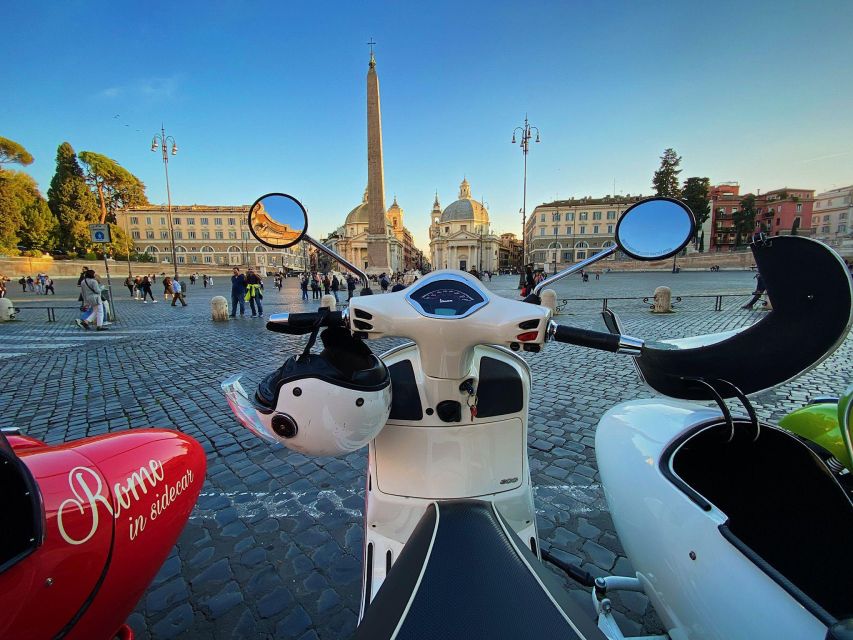
At $152.93 per person for about 3 hours, this isn’t a budget activity. But the value comes from what’s included.
You’re getting:
- A professional licensed guide with live narration through headphones
- Professional drivers (so you’re not stressed about traffic and parking)
- Full insurance included
- Safety gear: helmets, seat belts, and hygiene covers
- Weather gear like ponchos (and winter comfort items)
- Pantheon entry ticket included
- A gourmet gelato taste
That mix is why it can feel worth the money. You’re paying for time savings, guided context, and friction-free logistics. If you’re the type who hates hunting for entry lines, mapping routes, and guessing what you’re looking at, this tour turns Rome into a guided experience with less hassle.
Tips to get the most from your afternoon ride
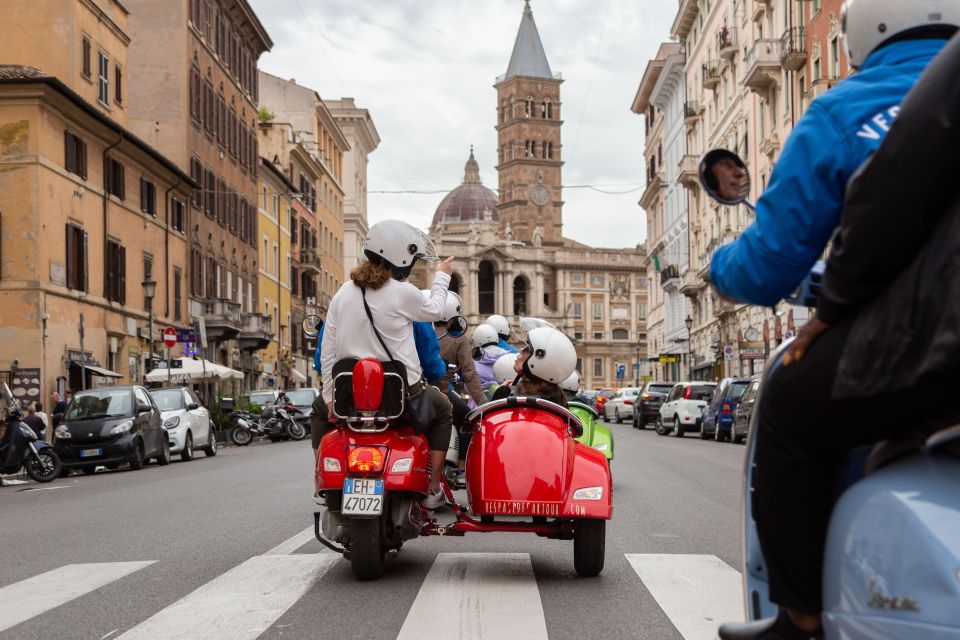
Here’s how to make the most of a 3-hour, ride-heavy format:
- Dress for wind and street spray. Even if the sky looks clear, ponchos exist for a reason.
- Keep your jacket closed and pockets secure. Sidecar rides mean small shifts in motion.
- Use the headphones to follow the story, not just the landmarks. It helps you remember what you saw later.
- Take fewer, better photos. You’ll have multiple pull-outs, so focus on angles that show the whole scene rather than one tight shot.
- Ask your guide about what to notice before you ride onward. That short heads-up improves how the next stop lands.
And if your guide team is a comic-safety-loving duo (names like Manuel and Alessio show up often), lean into it. The vibe can make the city feel like a movie set—especially when you’re bouncing between squares, hills, and old neighborhoods.
Should you book this Vespa sidecar tour?
I think it’s a yes if you want a high-impact Rome overview with guidance you can actually hear, plus the real upgrade of Pantheon entry and a gelato stop built in. It’s especially strong for your first day when your brain is still building a map of the city.
I’d say skip it if safety gear can’t make you comfortable with a motorbike setting, or if you fall into the categories where it’s not recommended or not permitted, like back/heart issues or pregnancy.
If you like your sightseeing active, structured, and lightly chaotic in the fun way, this afternoon Vespa sidecar tour is one of the easiest ways to get your bearings fast—and leave with more than photos.
FAQ
How long is the afternoon Vespa sidecar tour?
It lasts about 3 hours.
What time does the tour start?
The listed start time is 14:30, and you can check availability for starting times.
Where do we meet?
You meet at P.za della Repubblica, 41, Roma RM, Italy, nearby the green newspaper kiosk. The tour ends back at the meeting point.
What does the tour include besides gelato?
You get a professional licensed guide with live narration through onboard headphones, professional drivers, full insurance, helmets with sterilized disposable head covers, seat belts for the passenger in the sidecar, and entry tickets to the Pantheon.
Do I get to go inside the Pantheon?
Yes. Entry tickets to the Pantheon are included.
Will I hear the guide’s commentary while riding?
Yes. You’ll wear headsets to hear the guide’s live commentary throughout the tour in English.
What safety gear will I use?
You’ll ride with CE helmets that include sterilized disposable head covers, and the passenger in the sidecar rides with a seat belt.
Can passengers drive the Vespa sidecar?
No. For legal and safety reasons, passengers are not allowed to drive the vehicles.
What’s the minimum age for children?
Children must be at least 5 years old and must be accompanied by an adult.
Is the tour okay if it rains?
The tour provides waterproof ponchos in case of rain.