REVIEW · ROME
Appia Antica: Full Day Bike Rental with Customizable Routes
Book on GetYourGuide →Operated by EcoBike Roma - Parco Appia Antica · Bookable on GetYourGuide
Roman roads by bike beat museum days. This full-day Appia Antica ride is built for freedom: rent an e-bike or mountain bike and pedal the Appia Antica Regional Park, where ancient stone ruts, tombs, and ruins sit outside the usual Rome crowds.
I especially like the pairing of guided catacombs—set times that keep the day focused—while the rest stays flexible at your pace. One main consideration: the route can be rough (cobblestones, roots, ruts, and wet patches), and amenities are limited once you’re out there, so you’ll need to plan for water and comfort.
In This Review
- Key points to know before you go
- Why Pedaling the Appia Antica Feels Different From Central Rome
- Bike Rental Choices: E-Bike vs Mountain Bike vs City Bike
- Getting Started at Via Appia Antica 60 (and When the Office Is Open)
- Domine Quo Vadis: A Quick Warm-Up Before the Real Appian Way
- Catacombs of St. Callixtus and St. Sebastian: The Guided Stops That Anchor the Day
- Circus of Maxentius to Capo di Bove: Big Monuments You Can Feel at Bike Speed
- Villa dei Quintili, Caffarella Park, and Parco degli Acquedotti: Rome’s Outskirts as a Sight
- Pacing and Distance: How Much You’ll Really Ride in One Day
- Road Conditions, Water, and Snacks: The Practical Stuff That Matters
- Where Traffic Shows Up and How to Reduce It
- Who This Ride Fits Best (and Who Should Skip It)
- Should You Book This Appia Antica Bike Rental?
- FAQ
- How long is the Appia Antica bike rental experience?
- How much does it cost?
- Where do I pick up the bike?
- What kinds of bikes are available?
- What’s included with the rental?
- Are food and drinks included?
- Which stops have guided tours?
- Can I cancel and get a full refund?
- When is the office open for pickup?
Key points to know before you go
- Pick the right bike for the old road: e-bike and mountain bikes handle the rougher parts far better than a city bike
- Two guided catacombs are the anchor: St. Callixtus (40 minutes) and St. Sebastian (45 minutes)
- You control the day: stop where you want, pass by what you don’t, and turn your ride into your own route
- Rough stone is part of the charm: expect bumps, occasional puddles, and sections that may force you onto the side
- Bring water and a snack plan: food/drinks aren’t included, and you won’t find much along the way
- Start earlier for a fuller ride: a late start can cut down how far you reach before returning
Why Pedaling the Appia Antica Feels Different From Central Rome
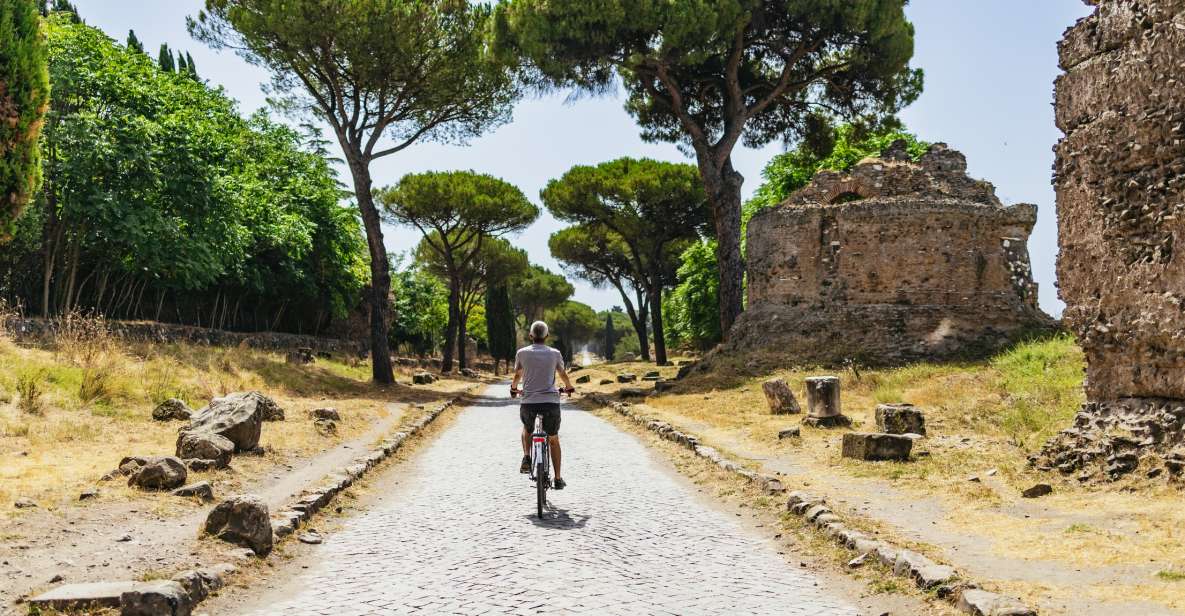
Rome is loud on the main streets. On the Appian Way Regional Park, the vibe changes fast. The road has that long, Roman-straight feel, and once you’re rolling you get a sense of distance that you simply don’t get on foot in the center.
This is a day of contrast. You get big, famous names—catacombs, maxentian monuments, imperial villas—but you experience them at bike speed, with shade from trees and space around you. It’s also a smart way to “see outside the map.” You’re still in Rome’s orbit, but you’re not stuck in the same sight-and-photo routine.
The best part, for me, is how your choices shape the day. You can lean into the underground stops or skip less-relevant parts and keep moving. That’s exactly how you want a full day that has rough surfaces and heat risk: you don’t want your itinerary telling you when to stop.
You can also read our reviews of more cycling tours in Rome


Bike Rental Choices: E-Bike vs Mountain Bike vs City Bike
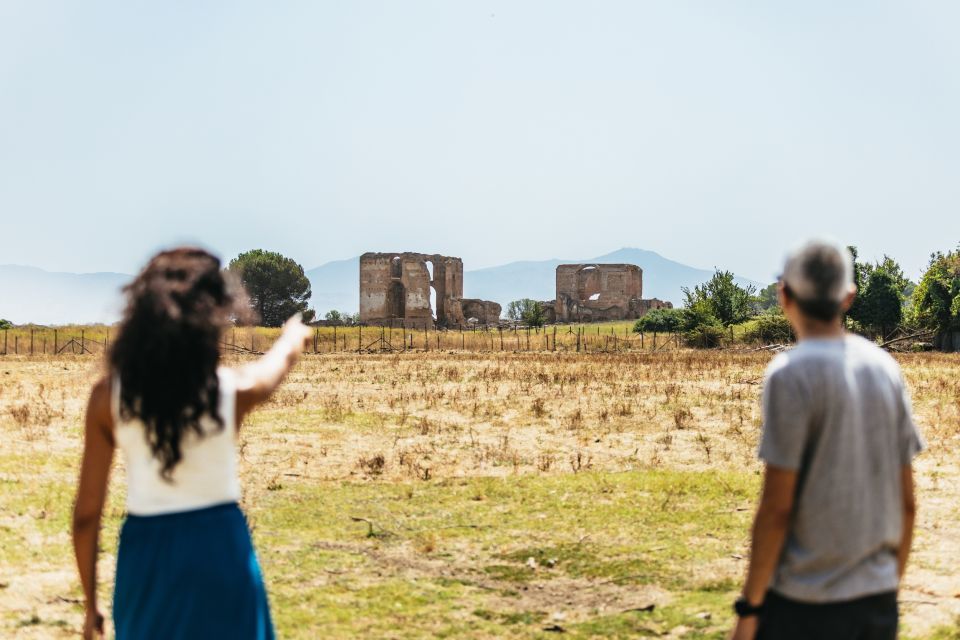
You can rent a mountain bike, an e-bike, or a city bike. The operator doesn’t recommend the city bike, and that makes sense once you remember where you’re riding. The Appian Way has sections that are bumpy and uneven, with cobblestones and rutted stone that can be hard on thin tires.
If you want the most comfortable, low-stress option for a full-day route, choose the e-bike. Several riders specifically call out that e-mountain bikes make the rougher stretches more manageable, so you’re not constantly fighting the surface. E-bikes also help if you want to add side detours without turning your day into a workout punishment.
Mountain bikes are a strong middle ground if you’re comfortable with uneven ground. One rider had to ride on the sides of the track at times, and that kind of improvising is easier when your bike is built for rough terrain.
If you only plan to roll slowly and you’re sure your route will avoid the toughest sections, a city bike might still work for you. Just be honest about your comfort level: on the older road surface, the city bike’s limits show fast.
Getting Started at Via Appia Antica 60 (and When the Office Is Open)
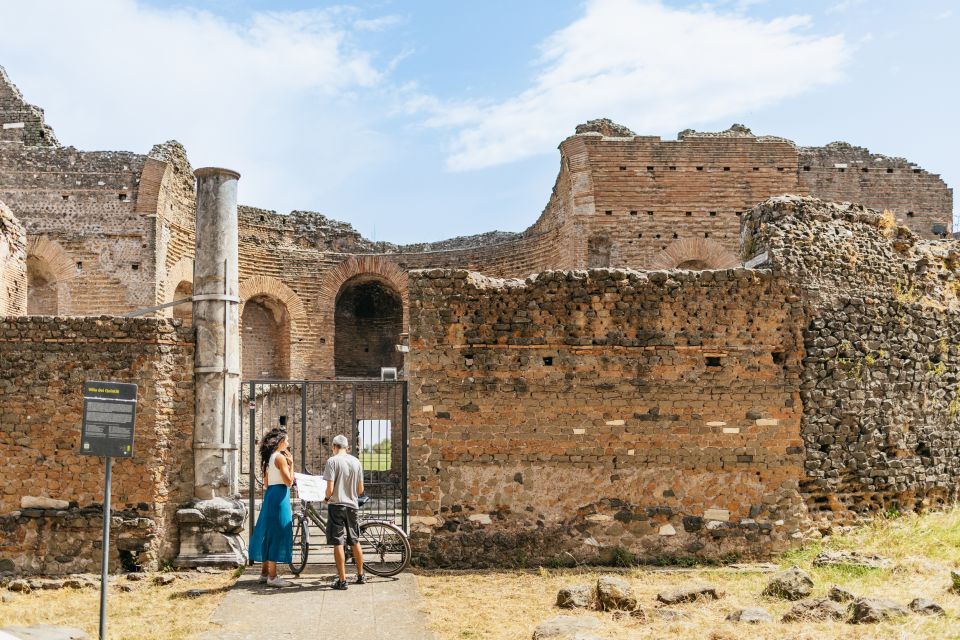
Your pickup is inside the Tourist Information Office of the Appia Antica Park at Via Appia Antica, 60. From there, you head out and build your route around the stops you want.
Timing matters more here than you might expect. The park office opening hours change by season:
- Winter (end of October to end of March): Monday–Friday 9:30 AM–1:00 PM and 2:00 PM–5:00 PM; weekends/holidays 9:30 AM–5:00 PM
- Summer (end of March to end of October): Monday–Friday 9:30 AM–6:00 PM; weekends/holidays 9:30 AM–7:00 PM
That affects how much you can actually fit into a “1 day” rental. If you start late, you’ll likely end up doing a shorter stretch and fewer stops.
Also keep your identity documents handy. You’ll need a passport or ID card, and it’s smart to carry water from the moment you leave the office.
Domine Quo Vadis: A Quick Warm-Up Before the Real Appian Way
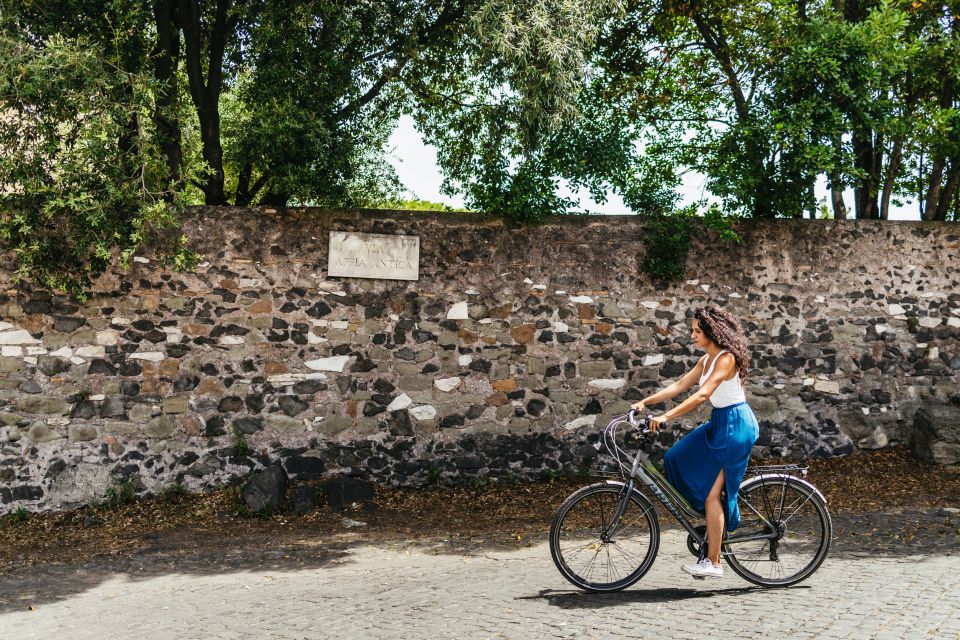
Your first historical stop is the Church of Domine Quo Vadis. Think of this as your tone-setter: you’re still near the Rome side of things, but you’re already stepping into the Appia zone where stories, legends, and early Christian sites all braid together.
This stop is usually short compared to what comes next. The real payoff starts once you’re moving along the Appian corridor—catacombs, ancient monuments, and the sense of being out on a road that has served travelers for centuries.
If you’re the type who likes to get bearings fast, use this as your moment to check your bike settings, refill your water, and confirm you’re comfortable with the surface before you commit to the underground tours.
Catacombs of St. Callixtus and St. Sebastian: The Guided Stops That Anchor the Day
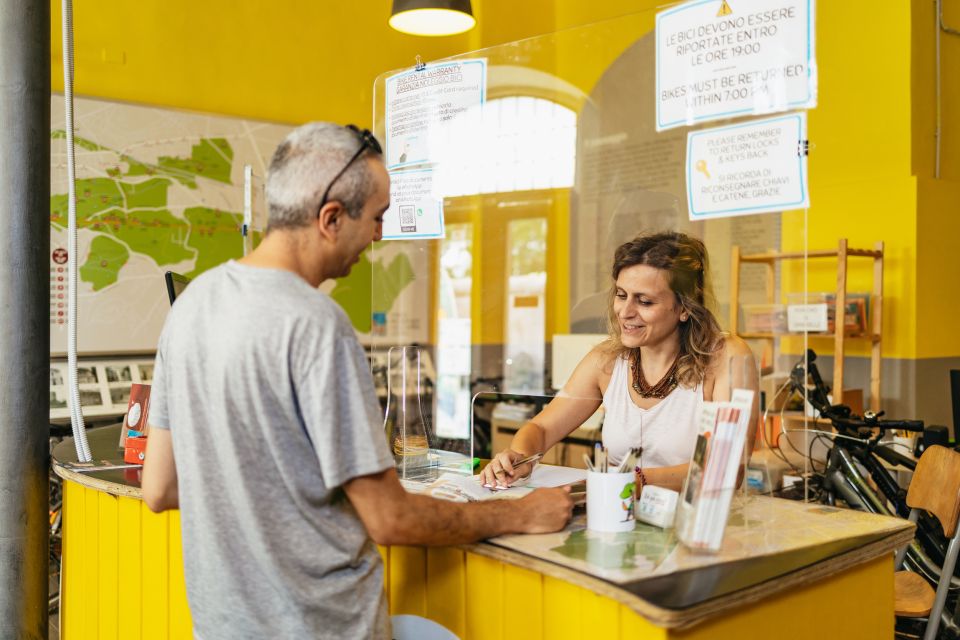
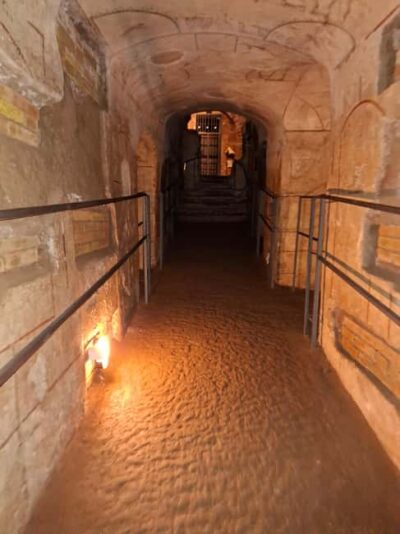
The catacombs are the strongest reason this isn’t just a bike rental. You get a guided tour at each site:
- Catacombs of St. Callixtus (40 minutes)
- Catacombs of St. Sebastian (45 minutes)
These fixed time windows help you plan. They also help you understand what you’re seeing, especially in spaces where it’s easy to feel lost or miss the point just by walking through.
A practical note: catacombs can cost extra beyond the bike rental itself. One rider reported paying about €10 each for catacomb tours (ages 17+), so don’t assume everything is included just because you have guided time blocks.
If you’re deciding what matters most, here’s the trade-off I’d use:
- If you love early Christian sites and burial art, prioritize both catacombs and keep bike stops outdoors shorter.
- If you prefer daylight ruins and views, you can still do the catacombs, but you might move faster between monuments to protect your overall ride time.
You can also read our reviews of more tours and experiences in Rome



Circus of Maxentius to Capo di Bove: Big Monuments You Can Feel at Bike Speed
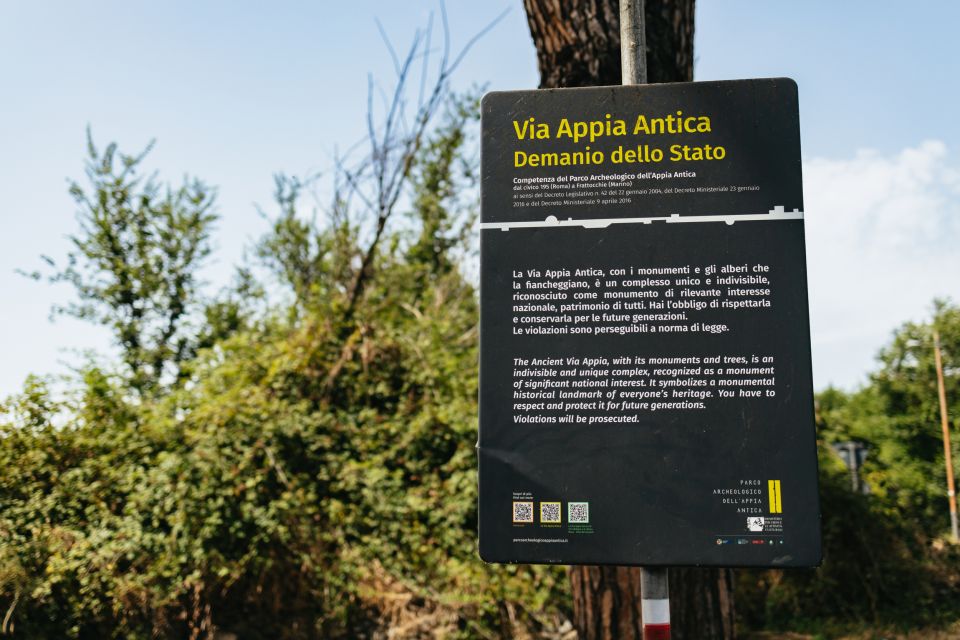
After the underground hours, you’re back into open air, and the Appian Way flexes its scale. Your route includes:
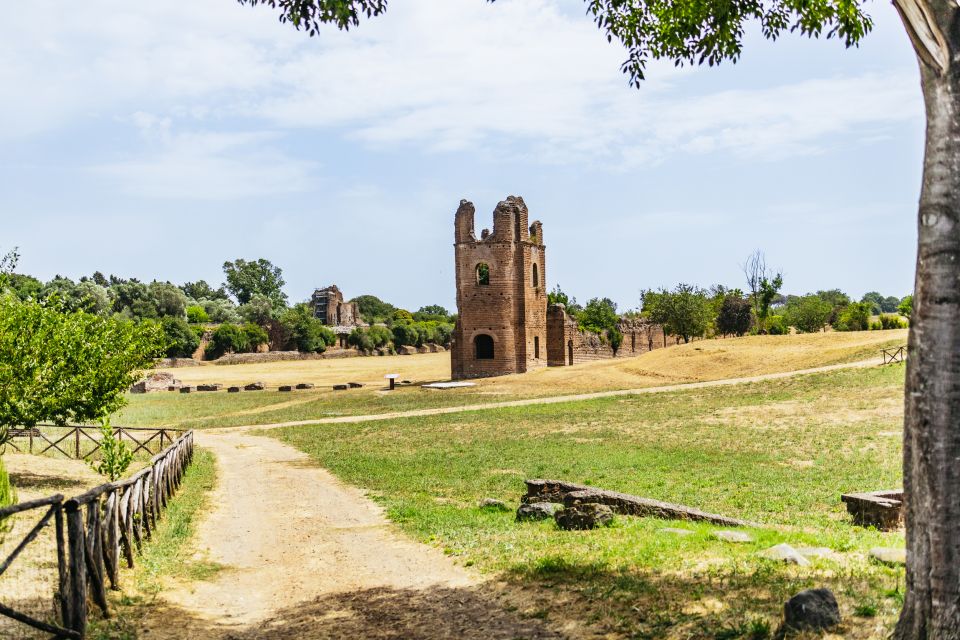
- Circus of Maxentius (visit)
- Tomb of Cecilia Metella (visit)
- Capo di Bove (visit)
These are the kind of stops where a bike ride beats a slow walk. You get a better sense of how far the road stretches and how the monuments line up along the corridor.
The Circus of Maxentius gives you a sweep of Roman spectacle. The Tomb of Cecilia Metella is the classic visual pause—bold, iconic, and easy to spot as you ride. Capo di Bove is more of a stop for atmosphere and perspective: you’re looking at the edge of what Rome’s power looked like on the outside.
Drawback to consider: moving between stops means you’re also moving between surfaces. If you’ve been on bumpy stones already, plan breaks so you don’t arrive at the next site tired or distracted.
Villa dei Quintili, Caffarella Park, and Parco degli Acquedotti: Rome’s Outskirts as a Sight
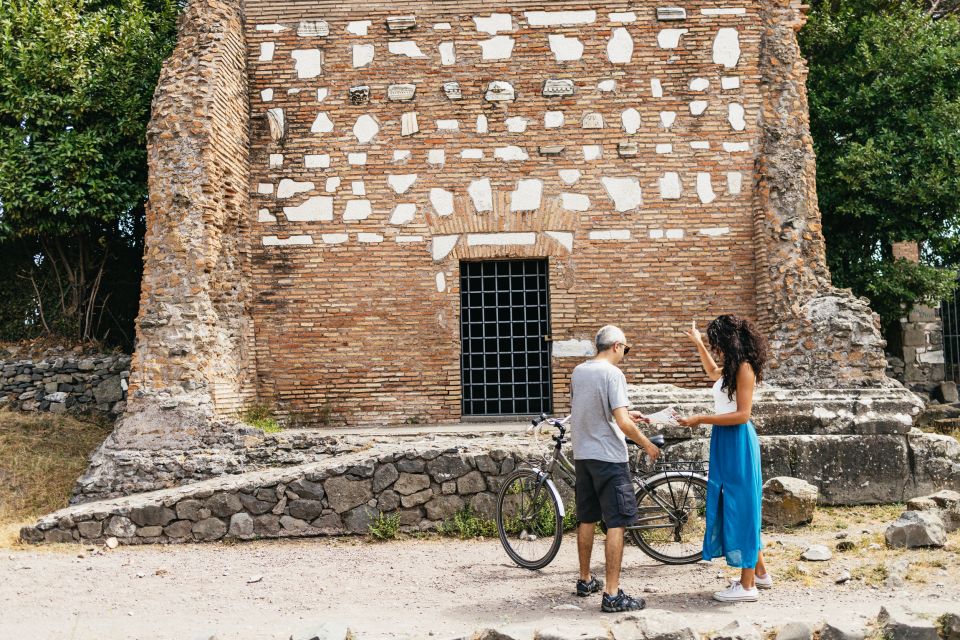
This is where the day starts to feel like you escaped the city without leaving it. You’ll visit:
- Villa dei Quintili (visit)
- Caffarella Park (pass by)
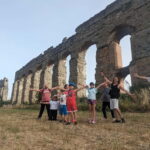
- Parco degli Acquedotti (scenic views)
Villa dei Quintili is a reminder that this wasn’t just a road for marching armies or trade carts. It was also a stage for elite living—large-scale villas and complex remains that make you imagine daily life, not just grand public moments.
Caffarella Park is described here as a pass-by, so treat it as a chance to slow for a breath and soak up the green calm rather than a guaranteed long stop. Parco degli Acquedotti is the reward for that slow-down: the views along the way are why people like to add time near the aqueduct area.
If you enjoy side paths and detours, you can likely build more into this part of the ride—but be aware that some detours can be tricky to find. One rider needed help to reach a viaduct-style side area, so if something looks confusing, pause and ask before you burn the last of your daylight.
Pacing and Distance: How Much You’ll Really Ride in One Day
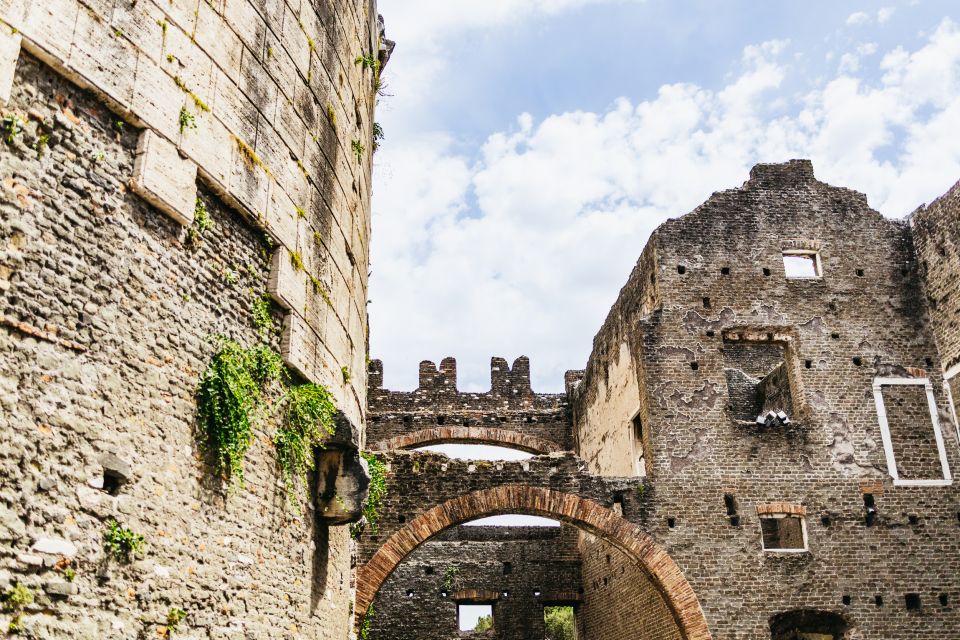
Even with a set itinerary of major stops, your actual distance depends on how far you push and how long you linger. People report different round-trip distances, often in the 15–20 km range.
Here’s how to think about your pacing:
- If you start around mid-morning and you’re not sprinting between sites, you can likely do a fuller loop with time to stop for shade and snacks.
- If you start late (like late afternoon), you’ll probably get less distance and fewer stops, because you still have to make it back before the office closes.
A rider who started around 4 PM found it wasn’t enough time to finish the full stretch at a relaxed pace. So if you want maximum satisfaction, plan for earlier.
Also keep in mind that catacombs add time even if you’re moving quickly outdoors. The guided tours aren’t optional time blocks. They’re the reason the day feels structured.
Road Conditions, Water, and Snacks: The Practical Stuff That Matters
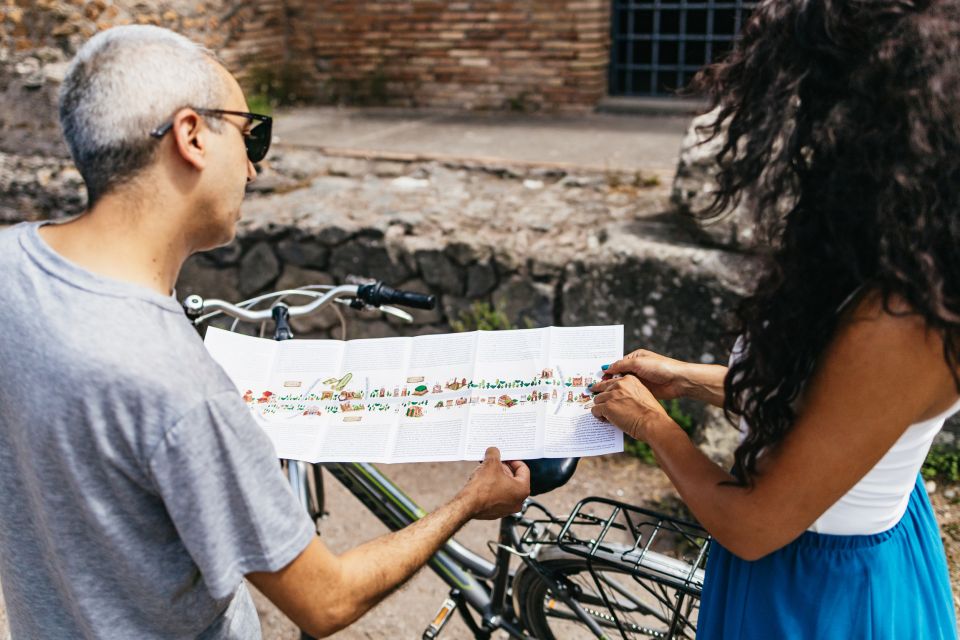
This ride is not about smooth pavement. Expect rough, uneven sections and occasional wet patches. One rider described having to ride near the side on rough terrain at times. Another noted the road can get rutted and that you may run into shallow puddles.
The good news: many stretches feel calm once you’re out of the initial Rome traffic zones. The overall feeling is of rural quiet, with only occasional joggers or dog walkers crossing your path.
The less-fun news: amenities are limited. Food and drinks aren’t included, and you should bring a real plan for hydration. Riders also mention there are few fountains and no toilets along the route (other than at the beginning). That means you’ll want to time your water refills and keep stops purposeful.
What I’d pack:
- Plenty of water (you can’t count on frequent refill points)
- Something to eat that won’t feel annoying in a bag
- A layer for shade and cooler catacomb air
- If you can, a small picnic mindset. People often stop on grass or rocks and eat the way Romans do: simple, relaxed, unhurried.
Where Traffic Shows Up and How to Reduce It
The Appian Way can be peaceful, but it’s not a car-free dream from the moment you start. Expect an early segment that can be more active, then a calmer rhythm once you’re farther into the park area.
If you’re trying to minimize car noise, I’d aim for days and timing that feel quieter. One rider specifically recommends doing it on a Sunday, when a large part of the road sees cars not permitted. That can make your experience feel closer to what you imagine when you picture a Roman road day.
Even then, stay alert. Some parts can have cars and motorbikes passing, so ride defensively and keep your attention on the surface. Rough ground already demands focus; you don’t need distractions.
Who This Ride Fits Best (and Who Should Skip It)
This is a great match if you want:
- A break from central Rome crowds
- A self-paced day with structured history stops
- A hands-on way to see ancient sites without lining up and shuffling
It’s also a strong family option in the right setup. One report describes an excursion for a parent and an 11-year-old, and they had a good blend of fresh air and archaeology.
But it’s not for everyone. The activity is not suitable for:
- Pregnant women
- People with back problems
- People who can’t ride a bike
- People over 264 lbs / 120 kg
- Babies under 1 year
If you’re even slightly unsure about long periods on uneven stone, take that seriously. This isn’t a gentle cruise on flat trails.
If something goes wrong, the operator’s support seems solid. In one case involving a fall and a twisted ankle, staff named Giovanni and Valentina were quick to help and support the rider. That matters, because out on the Appia route, you want to trust that help exists if you need it.
Should You Book This Appia Antica Bike Rental?
Book this if you want a full-day “Rome beyond Rome” experience where you control the stops. The value is strong for what’s included: helmets and bike locks plus a route that gets you onto one of the most historically charged roads around, with guided catacombs that add real depth to the day.
I’d also book it if your top priority is pacing. You can turn the day into the version you like—catacombs heavy, ruins heavy, or a mix—without feeling trapped by a strict tour schedule.
Skip it if you’re worried about uneven surfaces, limited bathroom options, or long stretches without convenient food and drink. This ride rewards comfort prep.
If you want the smoothest experience, choose the e-bike or mountain bike, start earlier in the day, and treat water and snacks as part of your plan, not an afterthought. Do that, and the Appian Way can feel like a living road story you can ride.
FAQ
How long is the Appia Antica bike rental experience?
It runs for 1 day.
How much does it cost?
The price is listed as $22 per person.
Where do I pick up the bike?
You pick it up inside the Tourist Information Office of the Appia Antica Park at Via Appia Antica, 60.
What kinds of bikes are available?
You can rent a mountain bike, an electric bike (e-bike), or a city bike. The city bike is not suggested.
What’s included with the rental?
Helmets and bike locks are included.
Are food and drinks included?
No. Food and drinks are not included.
Which stops have guided tours?
The catacombs have guided tours: St. Callixtus (40 minutes) and St. Sebastian (45 minutes).
Can I cancel and get a full refund?
Yes. You can cancel up to 24 hours in advance for a full refund.
When is the office open for pickup?
Winter (end of October to end of March): Mon–Fri 9:30 AM–1:00 PM and 2:00 PM–5:00 PM, weekends/holidays 9:30 AM–5:00 PM.
Summer (end of March to end of October): Mon–Fri 9:30 AM–6:00 PM, weekends/holidays 9:30 AM–7:00 PM.