REVIEW · ROME
Baths of Caracalla Exclusive Private Guided Tour and Tickets
Book on GetYourGuide →Operated by Tour in the City - Travel Agency Rome - · Bookable on GetYourGuide
Roman bath ruins can feel like a maze. A private, English art historian guided tour turns the Baths of Caracalla into a story you can actually follow, and the ticket is handled for you with skip-the-line access. I love how this is not just sightseeing, it’s interpretation—how one building scheme created comfort, status, and community in Roman times.
I also like the focus on physical details. You’ll spend real time on things you’d probably overlook alone, like fragments of the original mosaic floors and the surviving pieces of the heating system. If you get a guide with a gift for clear connections—people like Emilio, Evy, and Justine are mentioned for exactly this style—you’ll leave with a sharper sense of how the complex functioned.
One consideration: the walking is moderate, and you’ll be moving around uneven, outdoor ruins. Good grip shoes matter more here than on a flat museum floor.
In This Review
- Key highlights to look for before you go
- Baths of Caracalla: the Roman mega-bath you can still read
- Viale delle Terme di Caracalla meeting point: start where the complex begins
- Inside the baths: how a guide makes the layout click
- The heating system and mosaics: what you’ll actually be looking at
- More than bathing: library, gym, and gardens in one public complex
- What the tour feels like for families and first-timers
- Timing, pace, and the moderate-walk reality
- Price and value: is $191.45 per person worth it?
- What to bring (and what to leave behind)
- Should you book this private Baths of Caracalla tour?
Key highlights to look for before you go
- Private art historian guide focused on architecture and everyday use, not a generic walkthrough
- Skip-the-ticket-line entry so you lose less time to queues and more time learning
- Heating system remnants that show how Roman engineering supported bathing culture
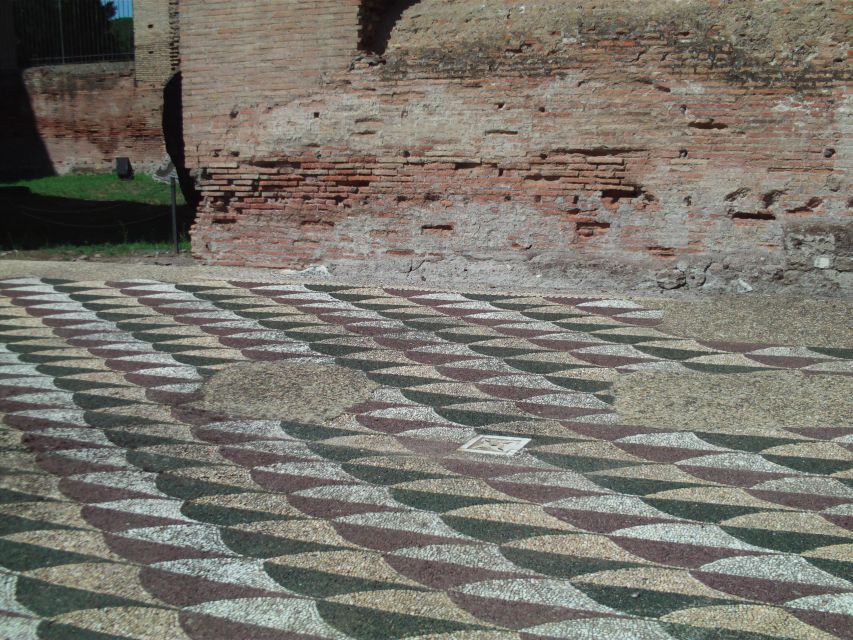
- Mosaic floor fragments that help you picture the original surfaces and decoration
- Volted rooms and porticoes with a scale that still feels huge today
- A short, efficient format (about 1.5 hours total; on-site tour time is listed as around 2 hours depending on the slot)
Baths of Caracalla: the Roman mega-bath you can still read
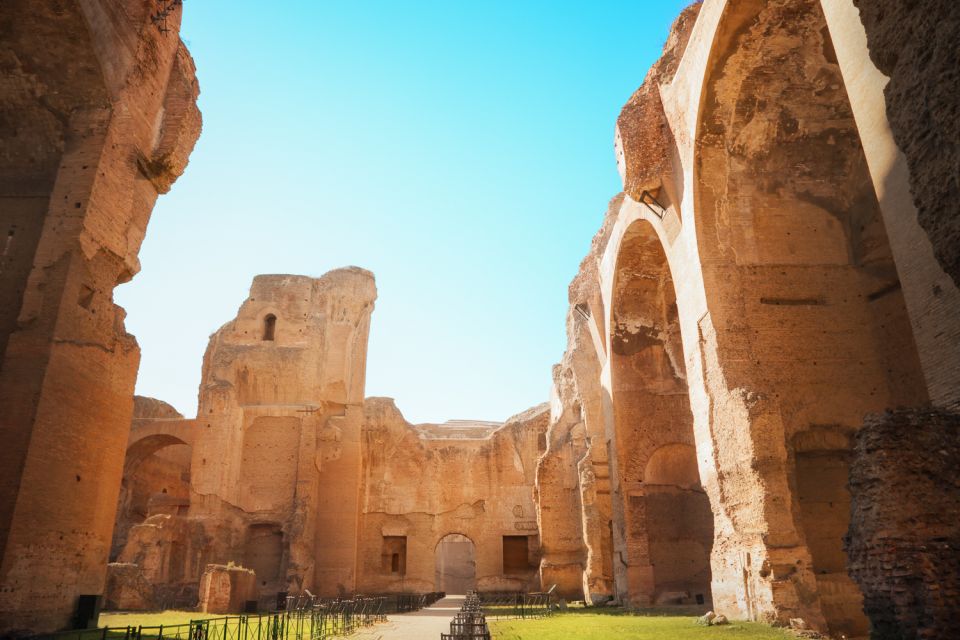
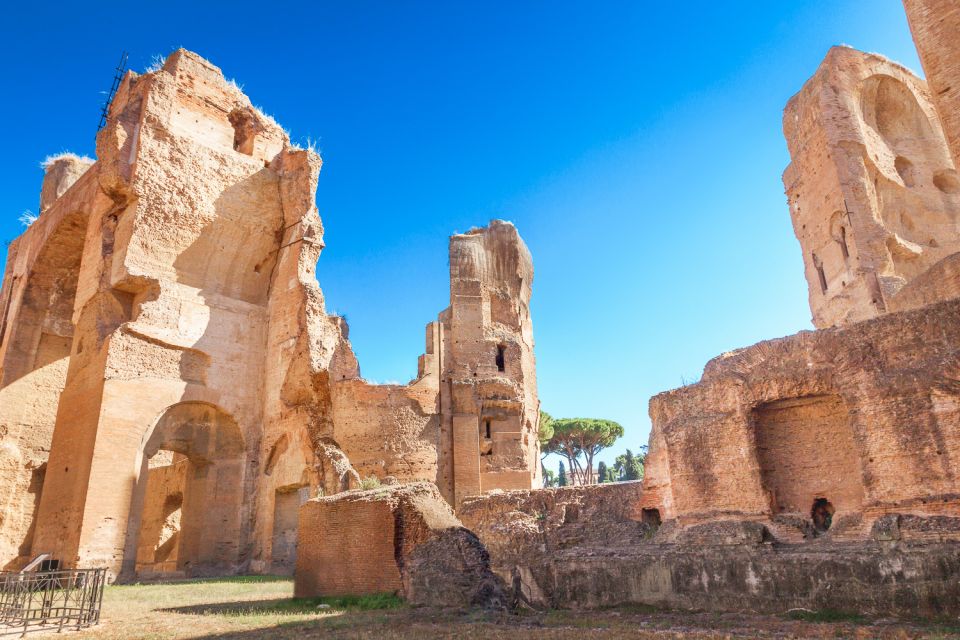
The Baths of Caracalla sit in Rome like a giant, partly dismantled machine. From the outside, they can look like scattered stone and arches. With a guide, though, you start noticing patterns: where people would gather, where warmth traveled, and how the design guided crowds through routines.
This complex is the second largest public bath area of Ancient Rome. It was built in the early 200s AD, during the reigns of Septimius Severus and Caracalla (between 212 and 217 AD). The scale wasn’t for show alone. At its peak, it could accommodate up to 1,500 people at a time—so you’re not just touring an attraction. You’re touring a daily-life setting that mixed bathing with social time and entertainment.
And unlike some ruin sites where you mostly read from signs, here the stones still suggest the original movement. That’s why I think this tour is a smarter use of time than a quick stop on your own. You’ll learn what each surviving corner likely meant, even when the full room layout is gone.
You can also read our reviews of more tours and experiences in Rome



Viale delle Terme di Caracalla meeting point: start where the complex begins
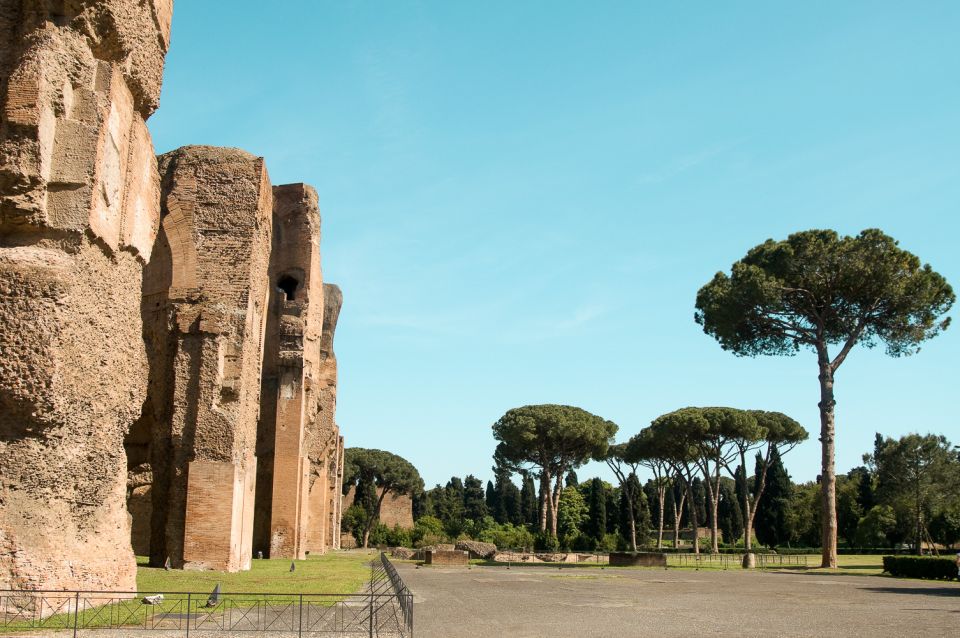
The tour starts at the entrance to the Baths of Caracalla on Viale delle Terme di Caracalla. That matters more than it sounds. You’re not piecing together access points or guessing where the best views are from. You arrive at the start, you get oriented, and then the guide moves you through the site with purpose.
Most of the experience is on-site. The guided visit is described as lasting about 2 hours, while the overall tour duration is listed as 1.5 hours. That mismatch is worth noting—not because it’s a problem, but because ancient-site tours sometimes vary by entry time slot and pacing. Check your confirmed time window so you know how much is allocated for the walk-through and how much is time at each stop.
Dress for the moment you’ll step off the path. Smart casual is the suggested dress code, but comfort is the real rule. You’ll want shoes that handle outdoor roughness, not just city pavement.
Inside the baths: how a guide makes the layout click
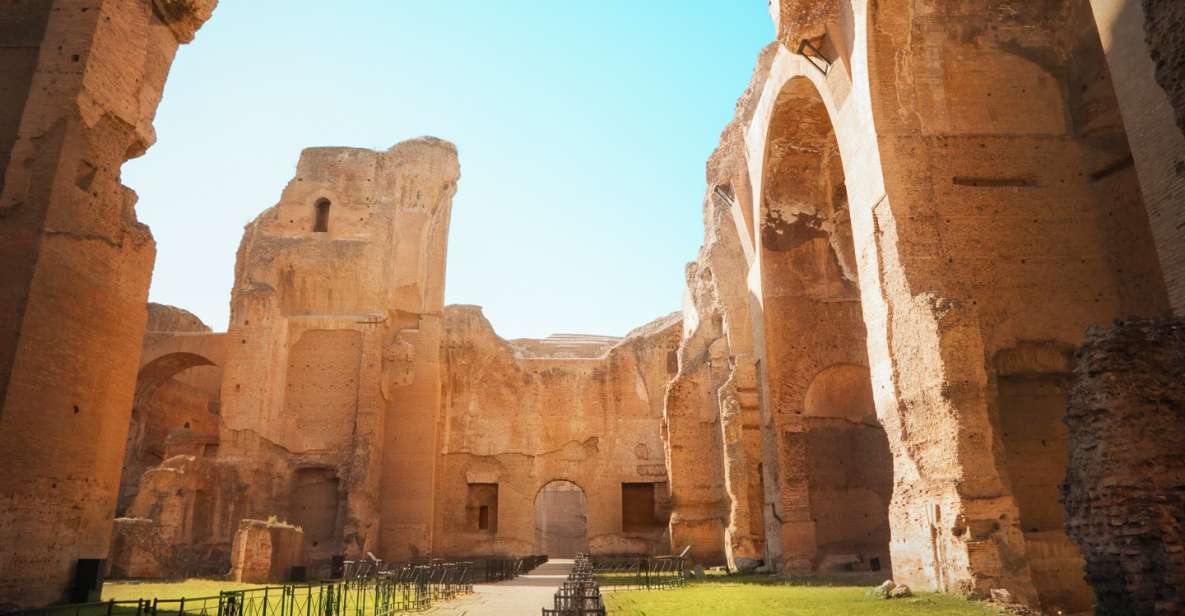
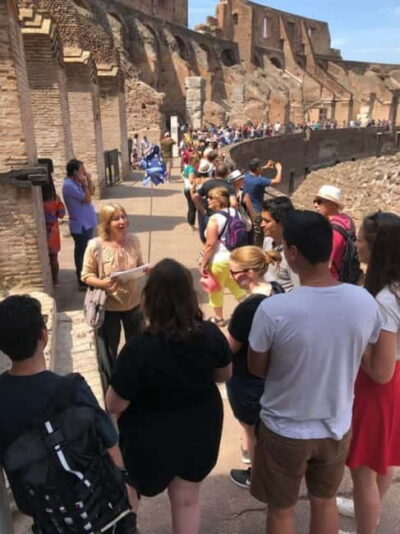
The private format is the biggest advantage. With a single small group, the guide can slow down for questions and reframe what you’re seeing. That’s especially useful at a site like Caracalla, where it’s easy to feel lost because you’re looking at fragments from multiple parts of a huge complex.
During the tour, you’ll walk through key remains of the baths and hear how the design worked. You’ll likely cover:
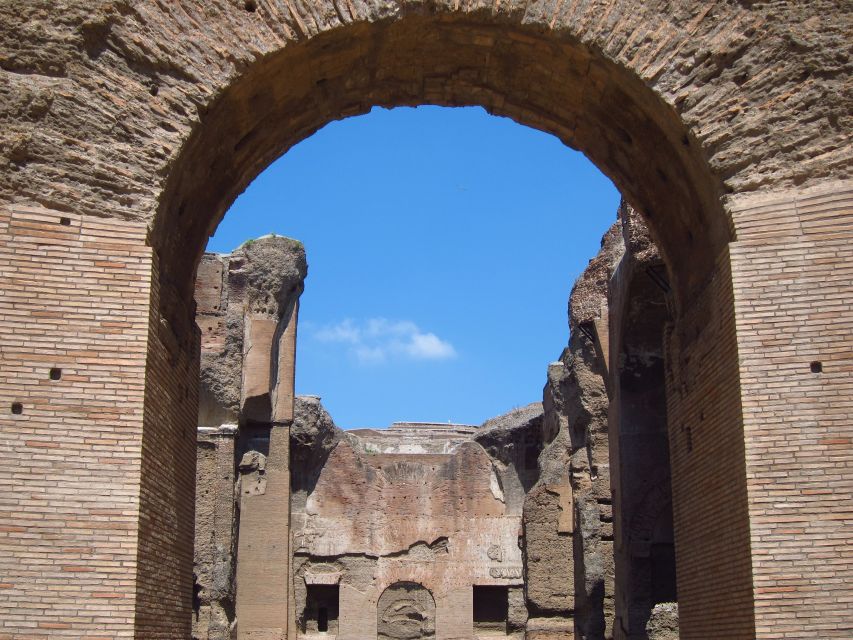
- Grand vaulted spaces and porticoes that show how the Romans handled rooflines and shade
- Areas where you can spot structural clues about the original flow of visitors
- Surviving wall and floor remnants that help explain how different zones felt different
I like this style because it doesn’t just list dates. It helps you build a mental map. Once your brain has a simple model—warm zones, social spaces, circulation areas—the ruins start behaving like a real place instead of a pile of stone.
If you care about comparing sites, you’ll also appreciate how the guide’s explanations connect Baths of Caracalla to the broader Roman world. One common theme in the feedback is that this visit pairs well with time at other classic Roman stops, like the Forum area, because both are about public life and status—just in different settings.
The heating system and mosaics: what you’ll actually be looking at
This is where the tour gets practical. Without a guide, you can walk past pieces of the site and only think: interesting ruins. With a guide, those same pieces become evidence.
The heating system remnants are one of the headline elements. You’ll learn how Roman bathing could include warmth as a designed experience rather than guesswork. Even when you can’t see every part of the original infrastructure, the surviving sections help you understand the principle: warmth was managed through engineered pathways tied to the bath routines.
Then there are the mosaic floor fragments. Mosaics are easy to admire at a distance, but the value here is learning why small fragments matter. Mosaic floors weren’t random decoration. They were part of the visual and comfort experience. When you notice color, pattern fragments, and the fact that the complex was built with high visual standards, you get a stronger sense of how public baths communicated culture and prosperity.
I also like the way these details connect to what the guide calls out as best-preserved features. Caracalla is often described as a particularly well-preserved Roman bath site, and that shows in the kinds of architectural leftovers you can still interpret during a short tour.
More than bathing: library, gym, and gardens in one public complex
A common mistake at Roman bath sites is treating them as a single-purpose building. The Baths of Caracalla were not just for washing. The complex included a library, a gym, and public gardens. That mix tells you a lot about Roman priorities.
On this tour, you’ll hear how the baths functioned like a full social center. Think of it less as a quick trip and more like a set routine that combined movement, conversation, reading, and relaxation. When the guide talks about the complex’s features beyond the bathing rooms, it helps you understand why the site was huge enough to hold 1,500 people. You needed capacity for changing groups, lingering social time, and shifting activities across the day.
And this is where the private guide approach really earns its keep. The ruins alone can’t tell you the schedule. The guide can. With the story framework in place, you’ll start imagining how a visitor might move through spaces—how people gathered, where they paused, and what the atmosphere likely felt like.
You can also read our reviews of more guided tours in Rome






What the tour feels like for families and first-timers
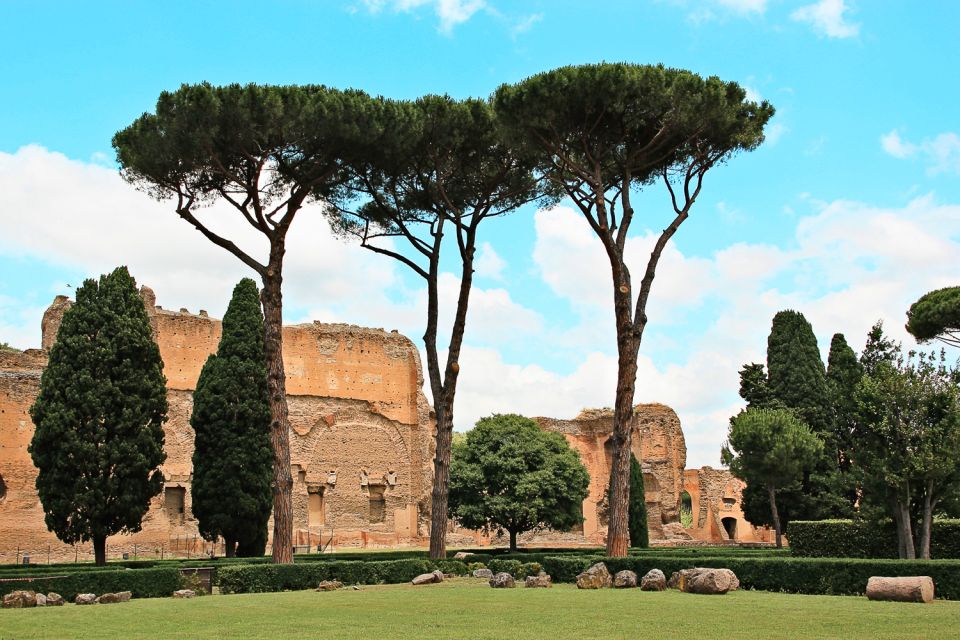
This is one of those rare major sites where the structure can work for kids too, as long as the pacing matches their attention span. One family mentioned real success with an 8-year-old, thanks to a guide who knew how to keep explanations clear and engaging.
If it’s your first time at Roman ruins, this tour can be a confidence builder. The guide’s job is to translate stone into meaning. That means you get an educational experience without having to be an architect, archaeologist, or Rome scholar to understand the big points.
That said, the site is still outdoors with moderate walking. So bring patience and plan for breaks. Short, frequent pauses help kids and adults alike.
Timing, pace, and the moderate-walk reality
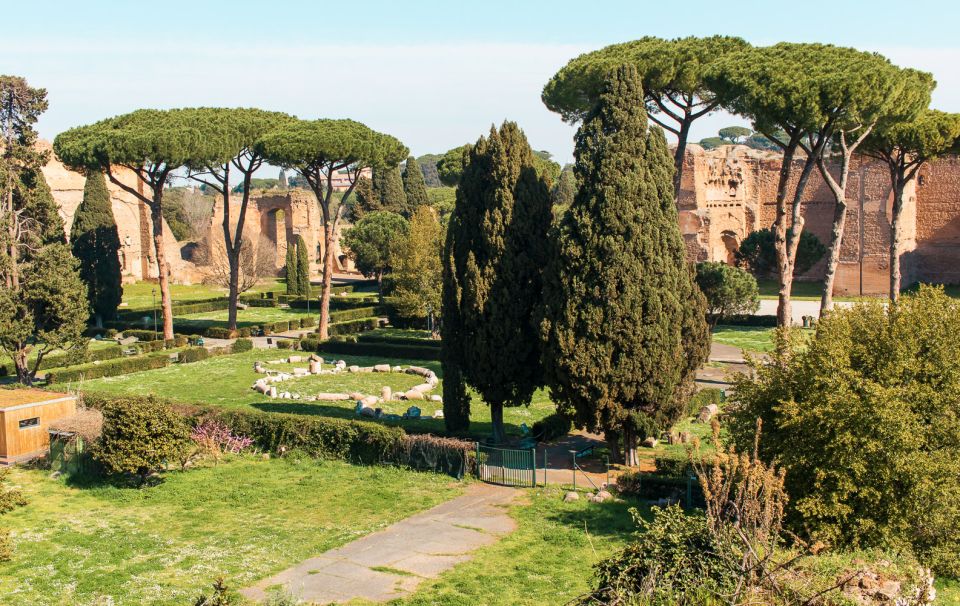
The tour is short, but it’s not a sit-down museum visit. You should expect a moderate amount of walking across uneven ruin surfaces. That doesn’t mean it’s extreme, but it does mean you should take the footwear seriously.
A few practical pointers:
- Wear comfortable shoes with good traction
- Keep an eye on your footing and watch for uneven ground
- Bring a light layer if it’s warm on arrival but cooler inside the shade of porticoes
If you’re traveling with people who dislike walking, you can still make this work, but you’ll want to plan for slower pace and fewer photo stops. Private tours can adapt, but the route still needs to cover the core areas.
Price and value: is $191.45 per person worth it?
At $191.45 per person, this isn’t the cheapest way to see Rome’s ruins. But the value math changes when you look at what’s included: a private art historian guide, tickets and entrance fees, and a private walking tour.
So you’re paying for three things that add up fast:
- Expert interpretation: you’re not just paying to enter, you’re paying to understand
- Time savings: skip-the-line entry helps you avoid dead time
- Private pacing: you get a dedicated guide and the ability to ask questions
If you’re the type who likes Roman architecture, engineering, and how public buildings worked day-to-day, the price starts to feel reasonable because the guide turns visible remains into a readable system. If you only want a quick photo-and-go, a self-guided visit may feel better. But if you want the complex to make sense in a short window, a private guide at Caracalla is one of those experiences where the cost is buying clarity.
Also note the minimum booking requirement: there’s a minimum of 2 people per booking. That matters for planning, especially if you’re solo. If you’re not traveling with someone, check whether you can join a pair or group format offered by the operator.
What to bring (and what to leave behind)
This tour is straightforward, but Rome rules apply at major sites. Bring:
- Your passport or ID card
- Comfortable shoes
Don’t bring:
- Luggage or large bags
- Walking frames
- Weapons or sharp objects
Dress-wise, smart casual is fine. Think comfortable enough to walk and stand for the duration.
Should you book this private Baths of Caracalla tour?
I’d book it if you want Caracalla to feel like a real Roman place, not just ruins you read about later. The private art historian element is the core reason to choose this experience, especially if mosaics, engineering, and architectural design are your thing.
Book it if:
- You’re short on time and want maximum meaning per hour
- You like guided explanations that connect stone to daily life
- You’re visiting other major Roman sites and want a bath complex perspective
Skip it if:
- You hate walking on uneven surfaces
- You prefer wandering without structure and don’t care much about how buildings worked
If you’re deciding between Caracalla as a quick stop versus a real guided experience, choose guided. The difference is how the site talks back to you once you know what to look for.