REVIEW · ROME
Rome: Leonardo da Vinci Exhibition Entrance Ticket
Book on GetYourGuide →Operated by Mostra di Leonardo da Vinci · Bookable on GetYourGuide
Leonardo’s machines come to life in Rome. At the Palazzo della Cancelleria, this multimedia exhibition turns da Vinci’s sketches into working, full-size inventions, plus 3D holograms and interactive stations that make engineering feel surprisingly human. You’ll walk through four themed areas and leave with a clearer picture of how his thinking connected art, science, and mechanics.
Two things I really like: first, the chance to see over 65 full-scale machines built from his designs, not just look at diagrams. Second, the way the exhibition uses 9 holograms to explain how inventions and paintings relate, with an effect that feels modern without turning da Vinci into a gimmick.
One drawback to plan for: the exhibit is hands-on, but it’s still a museum space—some spots can have trip hazards and you’ll want to watch your footing, especially if you’re visiting with kids.
In This Review
- Key takeaways before you go
- Leonardo’s inventions at Palazzo della Cancelleria: what this ticket really gives you
- Getting there near Campo de’ Fiori and Piazza Navona without stress
- The 4 sections you’ll walk through: Water, Air, Fire, Earth
- Over 65 full-scale machines: the hands-on element that makes it stick
- Holograms and interactive installations: modern effects with an old-school brain
- The underground tomb from 43 BC: why this building adds atmosphere
- How long to plan: a compact visit that can stretch to two hours
- Is it worth the $10? Value in Rome terms, plus the audio option
- Who should book: families, engineering fans, and the “I like hands-on stuff” crowd
- Small drawbacks to keep expectations realistic
- Should you book the Leonardo da Vinci Exhibition ticket in Rome?
- FAQ
- How much is the Leonardo da Vinci Exhibition ticket?
- Where is the exhibition located?
- How long does the visit take?
- What’s included with the ticket?
- Do I need to book a guide?
- What are the main things to see?
- Is the exhibition wheelchair accessible?
- Is the information available in English?
Key takeaways before you go
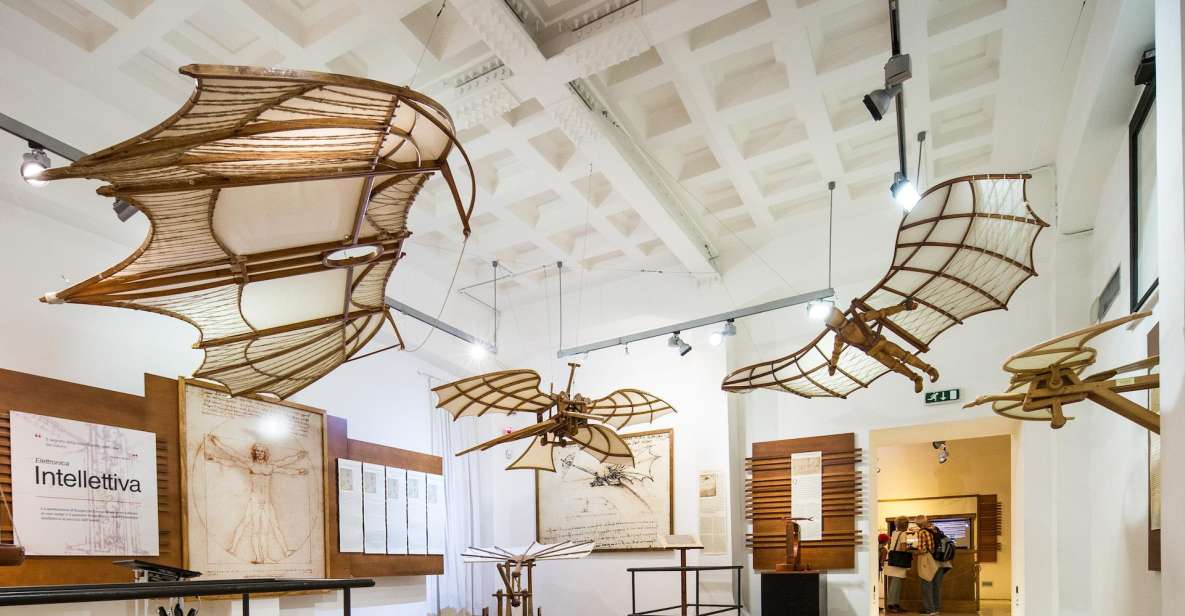
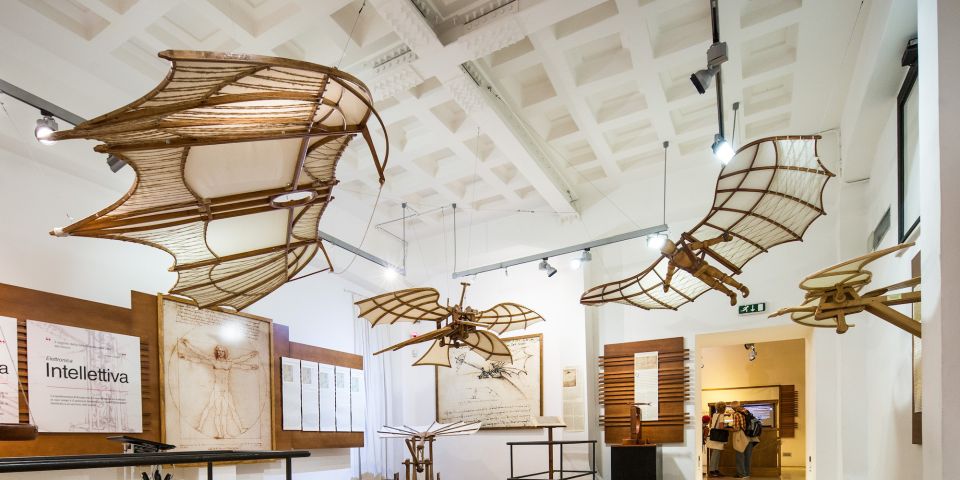
- Full-size machines: you’ll see more than 65 reproductions based on da Vinci’s concepts.
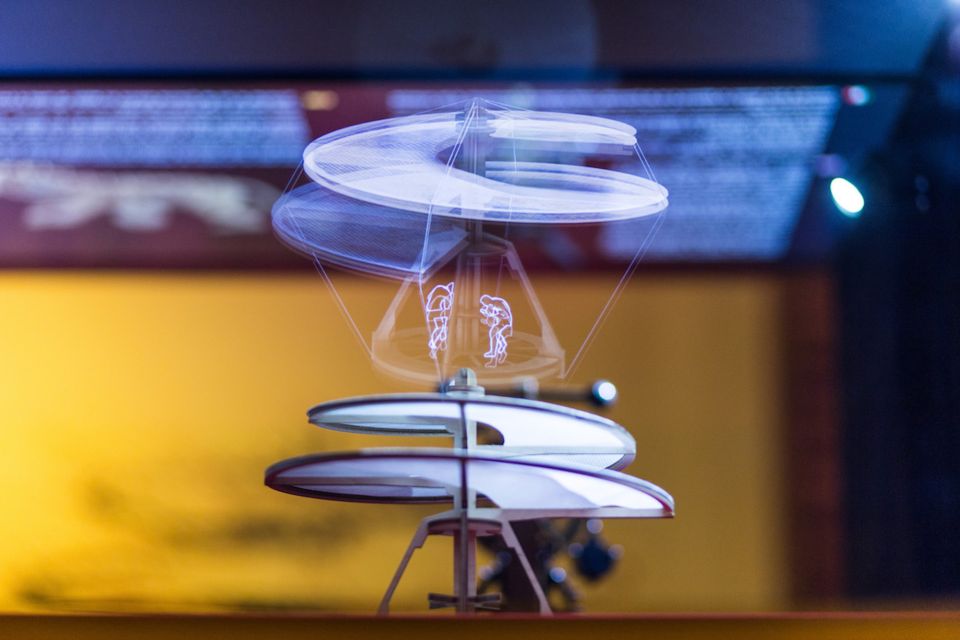
- Hologram moments: 9 holograms bring paintings and inventions into 3D.
- Hands-on learning: you can touch and play with almost all the machines on display.
- Make-your-own challenge: build a version of a da Vinci bridge concept.
- Engineering themes: you’ll work through four study areas tied to water, air, fire, and earth.
- Underground attraction: a tomb from 43 BC sits in an underground pond inside the Palazzo.
Leonardo’s inventions at Palazzo della Cancelleria: what this ticket really gives you
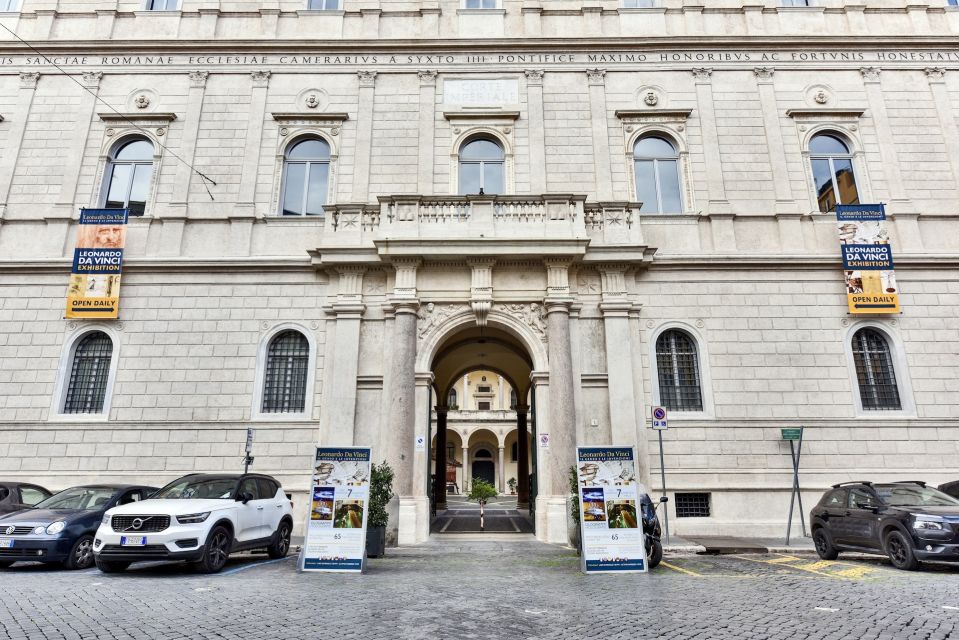
If you’ve ever wanted to understand da Vinci beyond paintings, this is a smart entry point. The exhibition is staged inside the Palazzo della Cancelleria, a real Roman landmark space linked to the Vatican. That setting matters because you’re not just visiting a stand-alone museum box—you’re experiencing a historic building while stepping into an engineering world.
The big idea here is simple: you don’t only read about mechanisms. You see them built. And you test them. That hands-on approach changes how you read da Vinci’s mind. Instead of thinking, Wow, cool sketch, you start thinking, How would this work, why would it be shaped that way, and what problem is it solving?
You also get the multimedia layer. The exhibition includes multiple 3D hologram presentations and other interactive installations, so the learning isn’t only text panels. Even if you’re not a hardcore engineering person, the display style helps you connect the dots.
And for Rome value-wise, the price is refreshingly approachable. Around $10 per person is a rare price point for something that feels intentionally designed for adults and kids alike.
You can also read our reviews of more tours and experiences in Rome



Getting there near Campo de’ Fiori and Piazza Navona without stress
The meeting point is Piazza della Cancelleria 1, close to Campo dei Fiori and Piazza Navona. That’s a good location for a couple reasons.
First, it’s walkable once you’re already in the central Rome core. Second, being near the late-morning/afternoon crowd zone means you can plan this as a pause from wandering—especially because parts of the visit are underground, which helps when Rome heat is doing its thing.
A practical tip: plan to arrive with time to get settled. The ticket allows entry until one hour before closing time. If you show up late, you could feel rushed, and this place works better when you can take your time moving through exhibits and touching models.
Also, the ticket includes skip-the-line entry, so you can spend more of your time inside learning instead of waiting outside watching other people shuffle past.
The 4 sections you’ll walk through: Water, Air, Fire, Earth
The route is designed around da Vinci’s studies of natural forces and materials. You’ll move through four sections, which gives you a clean mental framework instead of a random museum scatter.
Here’s how that plays out during your visit:
- Water: look for the inventions and studies tied to movement, flow, and mechanical ideas connected to liquids. The exhibition’s design pushes you to think about engineering as observation—da Vinci didn’t separate art from physics.
- Air: this is where aviation-style concepts and flight-thinking show up. Even if some machines are more “inspired by” than “modern-ready,” they explain how he approached lift, structure, and motion.
- Fire: the focus shifts to energy, combustion, and the way machines could be used with power and control in mind. Expect concepts that connect his science curiosity to real-world applications.
- Earth: this is the practical engineering side—materials, structural thinking, and how everything holds together.
This four-part structure is also helpful if you’re visiting with different interests in the group. You can stay with what grabs you most, but the shared theme gives everyone a common thread.
Over 65 full-scale machines: the hands-on element that makes it stick
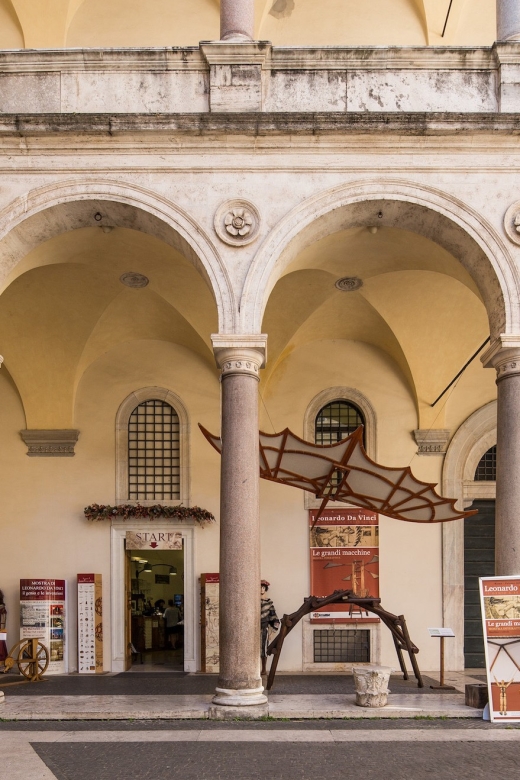
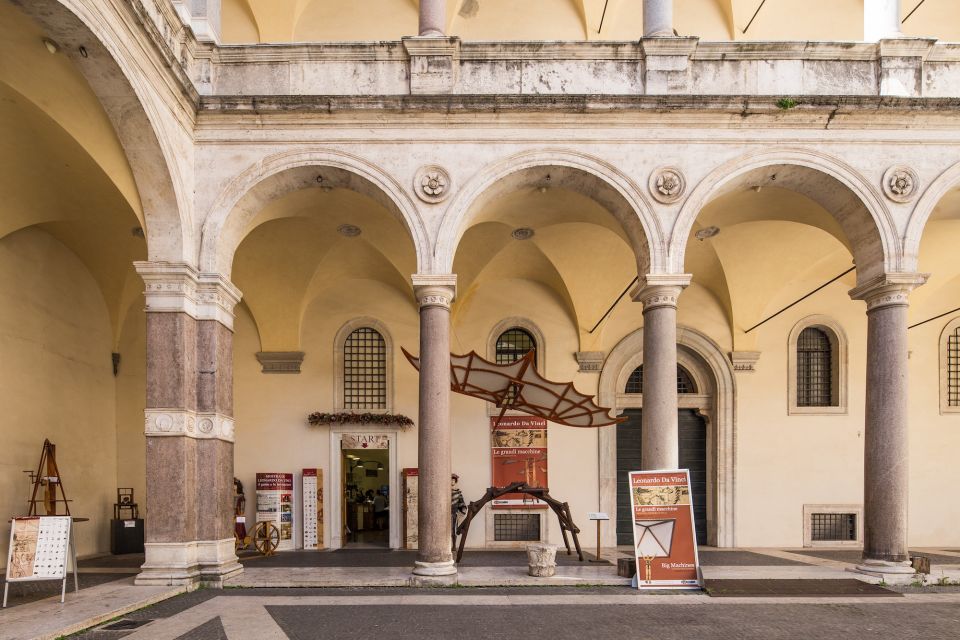
The headline feature is the sheer quantity of build-outs: more than 65 full-scale machines made according to da Vinci’s designs. That’s not small. It’s the kind of number that can change your expectations if you walked in thinking it would be mostly display cases.
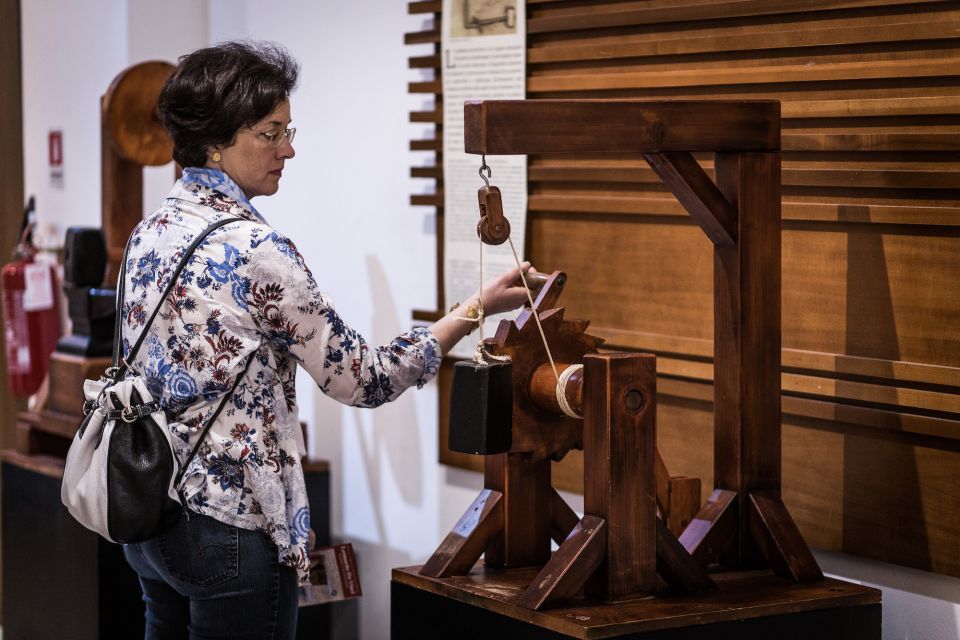
What makes these models more effective than a typical museum set-up is that the exhibition pushes interaction. You can touch and play with almost all the machines. That hands-on approach helps you understand mechanisms the way you would if you had the drawing in one hand and the physical parts in the other.
Some displays are also designed to show how motion works. The holograms help with this by giving you a clearer view of function that a static model can’t always explain on its own. When you combine touchable mechanisms with 3D visual guidance, da Vinci’s “how would it work” questions start to feel answerable.
One interactive moment I’d highlight: there’s a chance to build a version of a bridge da Vinci invented (or at least, a model based on his bridge idea). It’s the kind of activity that turns a technical concept into something your hands can understand.
Holograms and interactive installations: modern effects with an old-school brain
This exhibition leans hard on multimedia. You’ll see 9 holograms that show da Vinci’s paintings and inventions in 3D. Done well, holograms can feel like the future in a bad way. Here, the style is more about clarity than shock value.
The holograms serve two roles:
- They show relationships between his art and his invention thinking.
- They make the “operation” of certain ideas easier to grasp.
In addition, there are 7 interactive installations with da Vinci’s drawings, so you’re not only looking at finished machines—you’re also connecting them back to the sketches and study thinking that produced them.
If you enjoy learning that feels practical (push a button, turn a part, compare versions), you’ll probably find the pacing works well. If you only like passive sightseeing, you might move through faster—but the interactive elements are core to the design, not a side show.
You can also read our reviews of more museum experiences in Rome






The underground tomb from 43 BC: why this building adds atmosphere
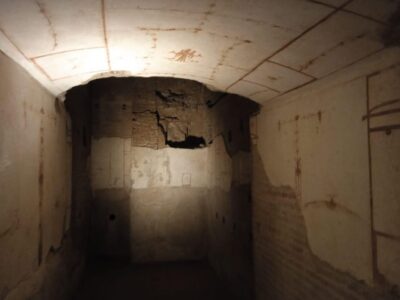
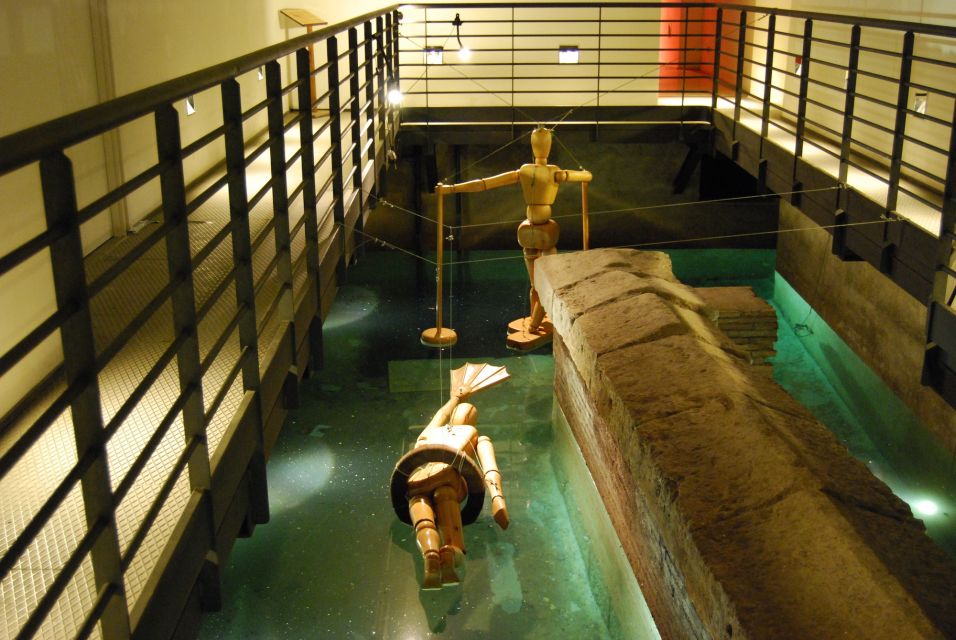
One of the most unique facts about the setting is the presence of a tomb from 43 BC, immersed in an underground natural pond. It’s inside the Palazzo environment, and it gives the visit an extra layer beyond engineering models.
This matters because you’re not just walking through “Leonardo the inventor” content. You’re walking through a real Roman space with centuries layered on top of each other. The contrast is strangely satisfying: you’ll see future-thinking machines and then glance at something ancient and quiet.
The Palazzo itself is also a point of interest because it is owned by the Vatican, and the upper floor hosts the Sacra Rota, connected to the church’s marriage dissolution process. Even if you don’t plan your whole day around that, it’s a reminder that this building isn’t just a backdrop—it’s part of Rome’s living institutional world.
The bottom line: the underground pond area gives the museum a memorable pause, especially if you’ve already seen the heavy-hitter Rome landmarks earlier in the day.
How long to plan: a compact visit that can stretch to two hours
This is not a full-day museum crawl. Most people seem to treat it as a focused stop.
A good planning range is about 45–60 minutes if you skim a bit and prioritize the machines. If you slow down, read the explanations, and spend time touching interactive models, you can easily stretch it toward around two hours.
A smart strategy is to start with what you’re most curious about, then circle through the rest. Since the museum is small enough to manage, you don’t lose much time by adjusting your route on the fly.
Also note: some people report the numbering or room flow can be slightly confusing at first. My advice is to look at the room cues early, then commit to the order that makes sense as you go, rather than forcing it to match a strict path.
Is it worth the $10? Value in Rome terms, plus the audio option
At $10 per person, the value is strong for what you get: full-scale engineering models, holograms, interactive stations, and a unique site element (the underground tomb).
Rome has plenty of attractions where the cost is high and the time can feel low. Here, you’re paying for a learning experience that invites participation. That interaction is part of why the price feels fair.
One upgrade to consider is an audio or headphone guide, if it’s offered during your visit. Many people find the audio option helpful because it adds extra context and explanations. One caution: audio guidance might not match the exhibit order exactly, so treat it like supplemental storytelling, not a strict GPS.
If you’re someone who enjoys details—how mechanics relate to drawings and how concepts connect to real modern transportation and architecture—you’ll likely get more out of the extra audio layer.
Who should book: families, engineering fans, and the “I like hands-on stuff” crowd
This exhibition is a good fit for:
- Adults who like science and engineering concepts tied to art
- Kids who enjoy pressing buttons and trying physical models
- Families who want a break from crowded outdoor sightseeing
- Anyone who prefers learning through action, not only reading
It’s also a solid choice for a hot day. The underground sections help you stay comfortable, and people often appreciate having a calmer indoor break in central Rome.
That said, if you’re visiting with very young children, you should be mindful. Some areas involve trip hazards and touch/do-not-touch designations. A little extra supervision goes a long way.
Small drawbacks to keep expectations realistic
No exhibition is perfect. Here are the practical “watch-outs” based on how this place is set up:
- Some machines may not be in perfect condition. A few displays can be less polished than you’d hope for something built to impress.
- Footing matters. Because it’s interactive, you need to pay attention to the floor and barriers.
- Audio can feel out of sync. If you use a headphone guide, you might notice the storytelling doesn’t always follow the exact visual order of the rooms.
- It’s not huge. If you’re expecting a massive museum day like the big Roman hitters, this may feel compact—but that’s also why it works as an easy add-on.
If you go in with the right expectation—that this is a compact, interactive engineering experience—you’ll probably feel like you got your money’s worth quickly.
Should you book the Leonardo da Vinci Exhibition ticket in Rome?
Yes, book it if you want a Rome stop that combines hands-on learning, modern-style holograms, and real full-scale inventions in a single, manageable visit. The $10 price point is a big part of the appeal, and the chance to touch and play with machines makes it more memorable than a standard museum walk.
Skip it only if you prefer quiet galleries with zero interaction, or if you’re expecting a full-day museum marathon. For everyone else—especially engineering fans and families—it’s a smart, low-risk ticket that fits neatly into a day of sightseeing near Campo de’ Fiori and Piazza Navona.
FAQ
How much is the Leonardo da Vinci Exhibition ticket?
The ticket price is listed as $10 per person.
Where is the exhibition located?
It’s at Piazza della Cancelleria 1, near Campo dei Fiori and Piazza Navona.
How long does the visit take?
It’s described as lasting 1 day, but you can plan the experience as a shorter indoor visit. Many visitors treat it as about 45–60 minutes, with some spending closer to two hours.
What’s included with the ticket?
The ticket includes the exhibition entrance fees and you’ll receive a gadget.
Do I need to book a guide?
A guide is not included. You’ll visit on your own.
What are the main things to see?
You can see over 65 full-scale machines, 9 holograms, interactive installations tied to drawings, and a tomb from 43 BC in an underground pond.
Is the exhibition wheelchair accessible?
Yes, it’s listed as wheelchair accessible.
Is the information available in English?
Exhibit explanations are described as available in English in the reviews.