REVIEW · ROME
From Rome: Ostia Antica Guided Half-Day Trip by Train
Book on GetYourGuide →Operated by City Wonders Ltd. · Bookable on GetYourGuide
Ostia Antica makes Roman daily life feel real. You get a guided walk through a former harbor city, plus specific stops like the Baths of Neptune, the amphitheater, and the public washrooms—then you can stay on your own afterward.
I especially like the way the tour connects buildings to behavior: you walk the main thoroughfare, learn what ordinary Romans did in shops and warehouses, and understand how a port city ran. I also like the logistics for the price: the round-trip train and entry ticket are included, and the group stays small (up to 12), so the guide can keep things moving without losing control of the crowd.
One possible drawback: this is a lot of walking over uneven archaeological ground in open air, and it’s not suitable for wheelchair users. If you’re sensitive to heat, bring what you need and plan for a steady pace.
In This Review
- Key highlights to know before you go
- Ostia Antica: Rome’s Port City That Tells a Different Story
- Price and Logistics: What You’re Really Paying For
- Where to Meet: Cafe Piramide by the Piramide Metro
- The Train Ride to Ostia: Getting Ready for the Ruins
- Walking the Decumanus Maximus: Streets That Still Feel Like Streets
- Baths of Neptune: A Mosaic You’ll Remember
- Amphitheater and Forica: Entertainment and Routine
- The amphitheater
- The communal Forica (public washrooms)
- Timing, Breaks, and What to Bring (So the Day Feels Easy)
- Staying After the Tour: Ostia Town and the Beach Plan
- Which Guides Make This Tour Feel Like a Story
- Who This Tour Fits Best (and Who Should Skip It)
- Should You Book This Ostia Antica Guided Half-Day by Train?
Key highlights to know before you go
- Small-group feel: limited to 12 participants, so questions are actually possible.
- A port city’s daily rhythm: taverns, thermal baths, warehouses, and theaters explained like a working system.
- Baths of Neptune mosaic: you’ll focus on the sea-god scene and what it signals about Roman tastes.
- Amphitheater scale: you’ll picture crowds of about 3,500 when it opened around 12 BC.
- Forica moment: the public washrooms turn etiquette and routine into a tangible, human stop.
Ostia Antica: Rome’s Port City That Tells a Different Story
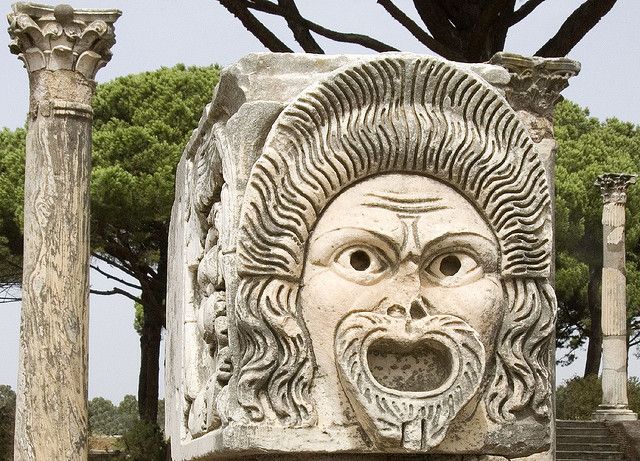
If your Rome trip is mostly temples and emperors, Ostia Antica is the correction. This place was tied to trade, shipping, supply, and the civic life of regular people. The ruins cover a former harbor town founded in the 4th century BC, and it grew into a city of more than 100,000 residents at its height.
The best part of going by guided route is that you don’t just see stones—you learn how the port worked. The guide explains why certain areas matter (commercial zones, communal spaces, entertainment spots) so your walk becomes a timeline of everyday Roman life in the Roman Republic.
It also helps that Ostia Antica often feels quieter than the big headline sites. That calm matters for a place this large. When there’s breathing room, mosaics read better, inscriptions feel less like noise, and you can actually imagine walking these streets with a job to do.
You can also read our reviews of more guided tours in Rome

Price and Logistics: What You’re Really Paying For
At about $58 per person for a half-day (4 hours), you’re not paying just for a lecture. You’re paying for a guided route through a big site plus the friction removed from travel.
Here’s what’s included:
- return train ticket from Rome to Ostia Antica
- entry ticket for Ostia Antica
- a live English-speaking guide
That combination is the value. If you go solo, you’ll likely spend time figuring out the best train approach, entry, and what to prioritize. A good guide helps you hit the right stops fast—especially because Ostia Antica is spread out.
Also, you’ll ride with your guide to get things started, then you have freedom at the end. If you want to add the beach or wander around the modern town, this format makes it easy.
The one “watch out” is the pacing. This is a compact half-day, so you’ll move between highlights. Comfortable shoes are not optional.
Where to Meet: Cafe Piramide by the Piramide Metro
Start in Rome at Piazzale Ostiense 9, meeting at Cafe Piramide. The practical trick is simple: if you’re facing the Piramide metro (Line B, the blue line), stop on the right-hand side. You should see the café in view of the tracks, and it’s easy to spot by the white umbrellas outside.
Guides show up with a City Wonders sign with the tour name. Arriving a little early is smart—especially around busy commute times, since the meeting point is connected to the metro flow.
Once you’re together, the group heads by train to Ostia Antica. The train portion is short—about 15 to 20 minutes depending on direction—so you don’t lose your day to transit.
And at the end, the tour service finishes in Rome at the Piramide Metro Station at about 1:00 PM. If you stay in Ostia, you’ll still get train tickets, but your return journey is unescorted. That’s normal for a half-day tour, but it’s worth keeping in mind when you plan your timing.
The Train Ride to Ostia: Getting Ready for the Ruins
The train ride isn’t just transportation—it’s your mental warm-up. Even without a lot of time, it helps you shift from modern Rome into the idea of a working port outside the city.
When you’re traveling with guides known for storytelling—names like Rob, Cat, Alberto, Laura, and Angellina come up again and again—the tone shifts from sightseeing to interpretation. One guide style focuses on humor and memorable anecdotes (Rob), another leans into architectural clarity (Cat), and another centers daily routine and civic life (Alberto and Laura). That matters because Ostia Antica is large. Without context, you can end up looking at random rooms. With context, you understand why you’re standing in a certain spot.
A small group also makes a difference. With fewer people, the guide can adjust pace if someone needs a quick question answered or a slower moment to take photos.
Walking the Decumanus Maximus: Streets That Still Feel Like Streets
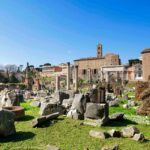
Your guided walk includes the main east-west street, the Decumanus Maximus. It’s the spine of the ancient town—so when the guide leads you down it, you quickly start seeing Ostia as a real city grid, not a scatter of ruins.
This is where the port-city story clicks. Along your route you’ll see remains connected to commerce and everyday services: taverns, thermal baths, warehouses, and theater spaces. The guide explains how people moved through the city for work, meals, social time, and civic entertainment.
The walk also includes Roman statues lining parts of the walkways, plus plenty of preserved surfaces that help you picture what buildings would have looked like when fully raised. Several guides reinforce the scale and daily rhythm—where crowds might gather, where goods would be stored or sold, and why certain public areas mattered.
If you like “how did people live” history rather than just “what did they build,” this segment is a strong match. It’s also one reason guided time is worth it here. In a large open site like Ostia Antica, a route stops you from missing the key stuff.
You can also read our reviews of more tours and experiences in Rome


Baths of Neptune: A Mosaic You’ll Remember
One stop you’ll focus on is the Baths of Neptune, crowned by an impressively intact mosaic. The sea god scene—drawn by a four-horse chariot—is the kind of detail that makes Roman luxury feel more human. It’s not just decoration; it tells you what visitors and patrons valued.
Baths weren’t only for hygiene. They were social infrastructure. You didn’t just scrub and leave. People met, talked, relaxed, and made routines part of public life. Seeing the mosaic in the context of the bath complex helps you understand that the “bathhouse experience” was a cultural event.
The guide’s job here is to help you interpret what you’re seeing without turning it into a museum lecture. When guides point out how these spaces were used, you start to notice other clues too—layout choices, preserved walls, and where people would likely have gathered.
A good practical tip: bring water and take shade when you can. Even in a half-day, the open-air walking adds up.
Amphitheater and Forica: Entertainment and Routine
Ostia Antica gives you both sides of Roman life: spectacle and routine.
The amphitheater
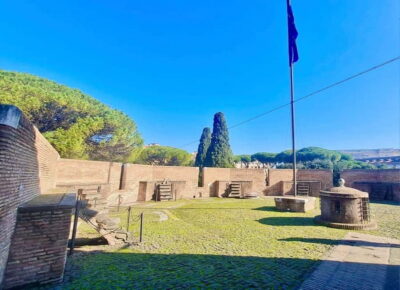
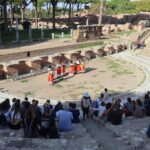
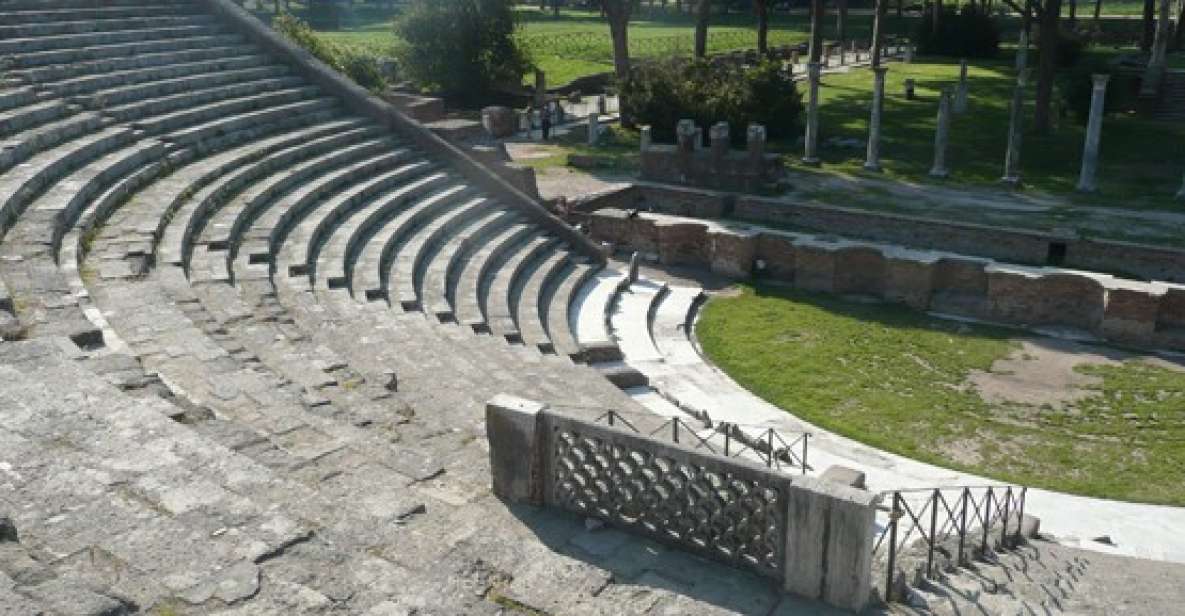
You’ll head to the amphitheater and imagine the crowds. It was built around 12 BC and held about 3,500 spectators. Standing in the space with that figure in mind changes the tone of the ruins. It’s no longer “a building remains.” It’s a place built for noise, rhythm, and community attention.
A guide typically helps you picture where people would sit, how entrances and viewpoints worked, and why entertainment was part of civic identity.
The communal Forica (public washrooms)
Then comes a stop that feels oddly modern in the best way: the Forica, public washrooms. You’ll see a marble bench lined with 20 well-spaced holes across four walls.
This is one of the tour’s most memorable moments because it’s not grand. It’s practical. It’s also intimate in a way history rarely is. When you sit where Romans likely sat for daily routine, you get a clearer sense of etiquette and public life—things you can’t learn from marble statues alone.
This stop can be a highlight for photographers too, because the geometry and layout are clear, even when you’re not looking for ornate decoration.
Timing, Breaks, and What to Bring (So the Day Feels Easy)
This tour is about 4 hours total. The structure is simple: train in, guided tour (about 3 hours) at Ostia Antica, then train back.
There’s a toilet break built in, and there’s time for a snack or drink at the snack bar. Still, don’t rely on it if you’re the type who needs water on the go. Bring a bottle.
Also bring:
- comfortable shoes (you’ll be on uneven ground)
- a towel and beachwear if you plan to extend the day
- sports shoes
- basics for sun (even on a short day)
Heat shows up fast at outdoor sites. One winter note you might like to know: the museum inside Ostia Antica can close early in winter—around 1:30 PM—so if you’re visiting in colder months, your timing for any museum stop matters.
Finally, there’s no stroller option here. Baby strollers aren’t allowed, and the tour isn’t suitable for wheelchair users. If mobility is a concern, I’d rethink the fit.
Staying After the Tour: Ostia Town and the Beach Plan
When the guided portion ends, you have a real choice: stay in Ostia Antica and explore more on your own, linger in the modern town, or head toward the beach.
This is a smart feature because Ostia Antica rewards slow looking. After the highlights, you can circle back to areas you liked or explore sections the guide didn’t have time to cover deeply.
Guides also often help set expectations for the extension plan. The walking you did with the guide can make solo exploring easier because you now know the layout and the “why” behind major areas.
And if you want sea time, there’s an easy add-on option to reach the nearby beach after the tour. That mix—Roman port ruins plus a relaxed finish—works well for a half-day trip.
Just remember: if you head back on the train independently, you’ll have the return ticket, but the return journey is unescorted. If you’re worried about navigating trains in Rome under time pressure, build buffer time into your afternoon.
Which Guides Make This Tour Feel Like a Story
This is one of those tours where the guide can change everything. A half-day at Ostia Antica is intense. You need someone to translate what you’re seeing into something you can hold in your head.
In the field, guides with strong delivery styles show up often: Rob is remembered for clear information and funny anecdotes, Cat for detailed knowledge with a smooth pace, Alberto for friendly, accurate explanations that bring daily life forward, and Laura for engaging teaching and attentive group handling. Names like Liv and Angellina also pop up, each tied to strong communication and history context.
What I like about this is that you’re not stuck with one teaching approach. Whether the guide leans more humorous or more architectural, the core stops stay focused on what you’ll actually care about once you’re standing there—Neptune’s mosaic, the amphitheater scale, and the Forica routine.
Who This Tour Fits Best (and Who Should Skip It)
This half-day trip fits you best if:
- you want an easier alternative to Pompeii without sacrificing depth
- you like “daily life” history and not only emperors and monuments
- you value a guided route that helps you understand a big site fast
- you want time afterward for free wandering or beach time
It’s not the right match if:
- you use a wheelchair (not suitable)
- you need stroller access (not allowed)
- you want a super unstructured day with lots of free time before seeing highlights
Also, if you’re the type who prefers completely silent self-paced museum-style visits, you might feel the schedule is fairly guided. But if you want the site’s meaning—and not just its visuals—this format is the point.
Should You Book This Ostia Antica Guided Half-Day by Train?
Yes, I’d book it if you’re visiting Rome and want one afternoon that feels like a real change of pace. Ostia Antica is often less packed than the famous giants, and the ruins are preserved in a way that makes everyday Roman life easy to picture. The tour’s biggest strength is the guide-driven context: you’ll understand what you’re seeing at the Decumanus Maximus, why the Baths of Neptune mattered, how big the amphitheater crowd was, and what daily routine looked like in the Forica.
Book it especially if:
- you want the train + entry + guide handled in one plan
- you like guided storytelling that stays practical
- you want an easy option to extend your day with the town or beach
Skip it if mobility access is needed. And if you hate walking, be honest with yourself: even a “half day” here is still a real walk.
If you match the format, this is the kind of Roman experience that lingers because it explains people—not just buildings.