REVIEW · ROME
Rome: Ancient Ostia, Archeology and History, Half Day Tour
Book on GetYourGuide →Operated by Welcome Italy by Spare Tour S.r.l. · Bookable on GetYourGuide
Ostia Antica feels frozen in time. I like that it’s often called the better-than-Pompei option thanks to the astonishing preservation of its buildings. I also love how the walk feels like a real Roman street—shops, baths, apartments, and even theatres are still there to picture daily life. One drawback to plan for: this is a walk-through ruin, so it’s not suitable for wheelchairs and may be tough if you have mobility limitations.
This half-day tour is built for people short on time in Rome: you get pickup near the Aurelian Walls, round-trip rides in an air-conditioned minivan, and a guided portion of about 3 hours. You also skip the ticket line, which is a real quality-of-life win when you’re trying to pack Rome days without rushing.
In This Review
- Quick hits before you go
- Why Ostia Antica beats a standard Roman day trip
- Getting to Ostia Antica from Rome without wasting your day
- Your guided walk: what the 3 hours are really for
- Decumanus Maximus: Rome’s main street, made walkable
- Streets, shops, and public life: seeing a town, not just a monument
- The Baths of Neptune: why the mosaic is a highlight
- Photo stop and pacing: how to make the timing work
- Price and value: what you’re paying for (and why it can be worth it)
- Who this Ostia Antica half-day tour is best for
- Final take: should you book this Ostia Antica tour?
- FAQ
- How long is the tour?
- Is entrance to Ostia Antica included?
- Do I need to buy tickets in advance?
- What’s included in the transportation?
- Where does pickup happen?
- What languages are available for the guide?
- Is this tour suitable for wheelchair users or people with mobility impairments?
- What should I bring?
- Is the group size always the same?
Quick hits before you go
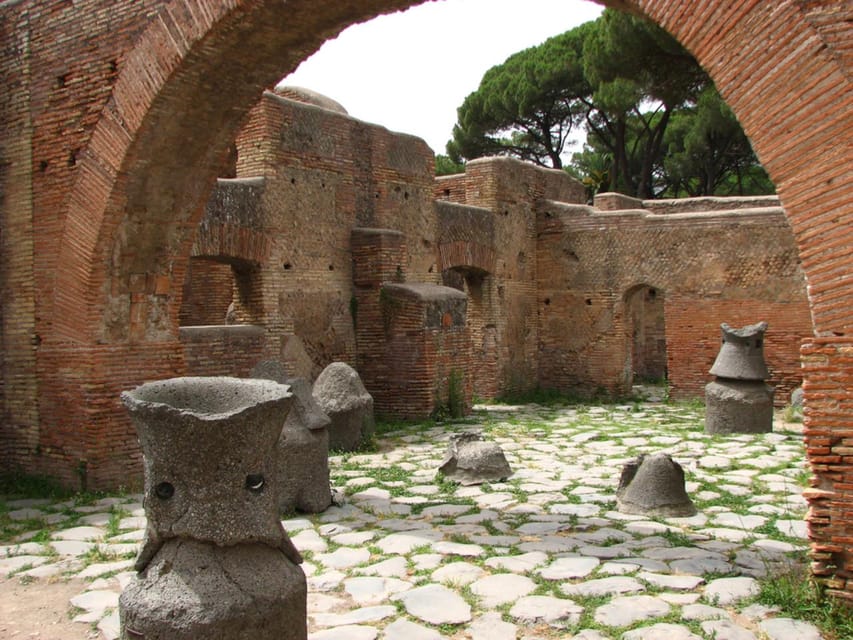
- Better-than-Pompei preservation in a working harbor town, not just isolated ruins
- 3 hours with a professional local guide in a small group or private option
- Decumanus Maximus (the main street) walk with Roman architecture stories
- Baths of Neptune and an impressively intact mosaic featuring the Sea God
- Hotel-area pickup inside the Aurelian Walls plus round-trip transport by minivan
Why Ostia Antica beats a standard Roman day trip
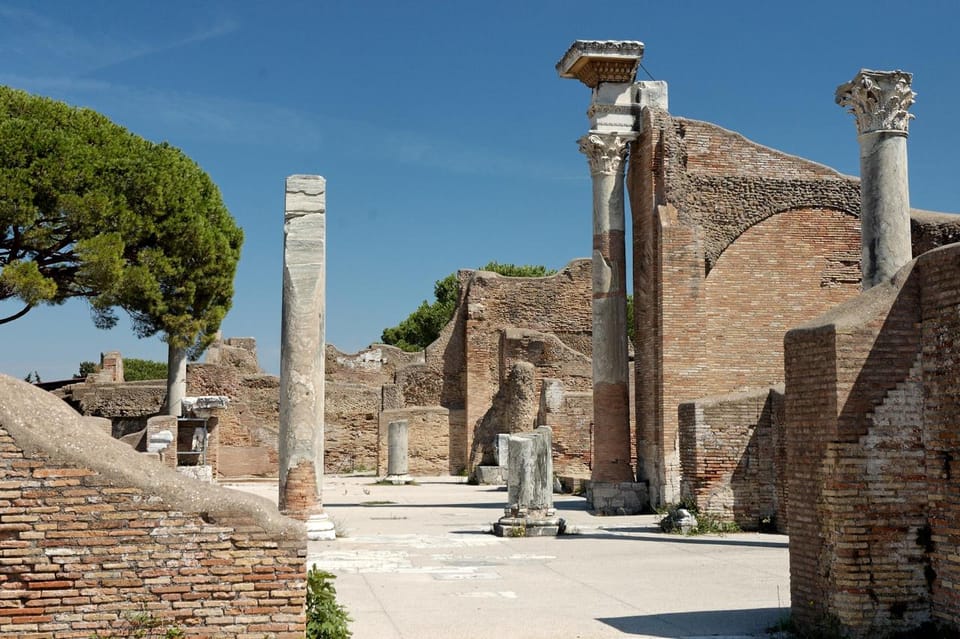
If you’ve done the big Roman sights and you still want that feeling of time travel, Ostia Antica delivers in a different way. This was a harbor town outside the center of power, founded in the 4th century BC, so the vibe is not only monuments and temples. It’s the daily machinery of Rome—where people shopped, ate, bathed, worked, and went out.
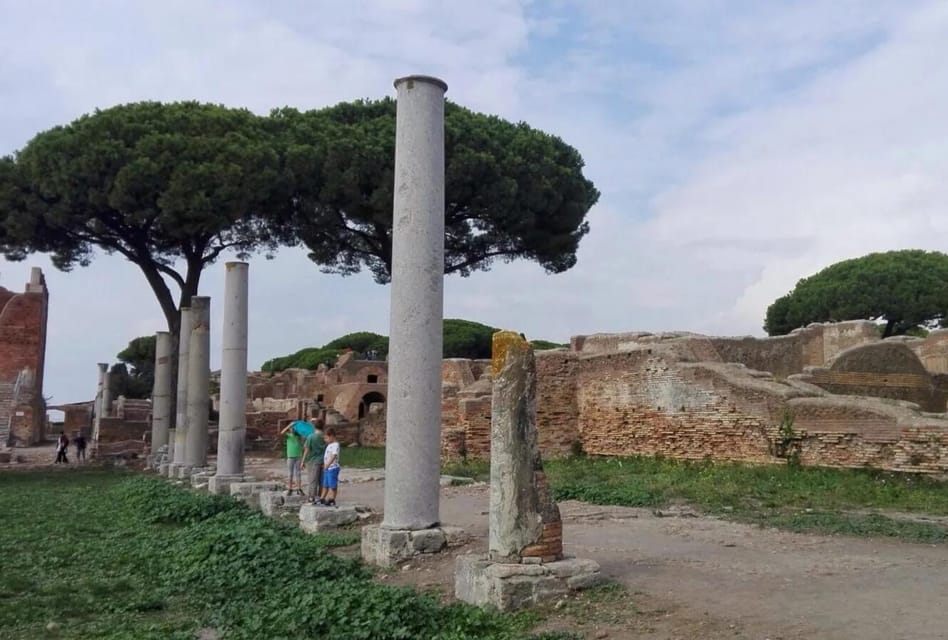
And here’s the reason people bring it up next to Pompeii: the site is famous for being shockingly well preserved. You’re not looking at a few scattered foundations. You’re seeing enough structure that your brain can make scenes again—doorways, street lines, and building forms that make the town feel occupied rather than abandoned. That’s why it can feel even more readable than some other famous Roman ruins.
The tour’s format matters too. In a half-day, you don’t just “see the rocks.” You get guided context for the major streets and building types, so the site clicks for you fast.
You can also read our reviews of more historical tours in Rome



Getting to Ostia Antica from Rome without wasting your day
Logistics can make or break a day trip, and this one is designed to protect your time. Pickup is included inside the Aurelian Walls, with instructions to wait in the hotel lobby or outside your accommodation about 10 minutes before the scheduled pickup.
From there, you ride in an air-conditioned minivan for round-trip transportation. That’s a simple comfort detail, but it matters in summer heat or shoulder seasons when Rome can feel like a furnace. You’re not spending your day hunting down buses or coordinating multiple lines of transit.
The pacing is also realistic. The full tour time is around 4 hours, with about 3 hours devoted to the guided visit in Ostia Antica and time left for the ride in and out. If you’re juggling other plans back in Rome—dinner reservations, museum time, or just the need to pace yourself—this is the kind of structure that helps.
Your guided walk: what the 3 hours are really for
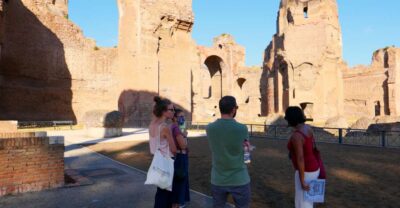
The heart of this experience is the guided component: 3 hours with a professional local guide, designed for a small group (and private options are available). The guide’s job here isn’t to recite dates. It’s to help you read the site.
As you walk, you’ll get interesting facts about Roman architecture and stories that put the buildings back into context. One of the big learning goals is understanding the town’s main thoroughfare, the Decumanus Maximus, and how major public and private spaces lined it up.
Another detail that you’ll notice is how many statues and sculptural elements are still in very good condition along the walkways. That’s part of what makes Ostia Antica such a strong contrast to ruins where everything feels fragmentary. When there’s enough intact detail, the guide can point out what matters—so you spend less time guessing and more time understanding.
Language options are also practical. The live guide is available in French, Spanish, or English, which helps if you want real explanations instead of standing in silence with an audio app.
Decumanus Maximus: Rome’s main street, made walkable
This is the part of the tour that feels most like wandering through a city rather than scanning a museum.
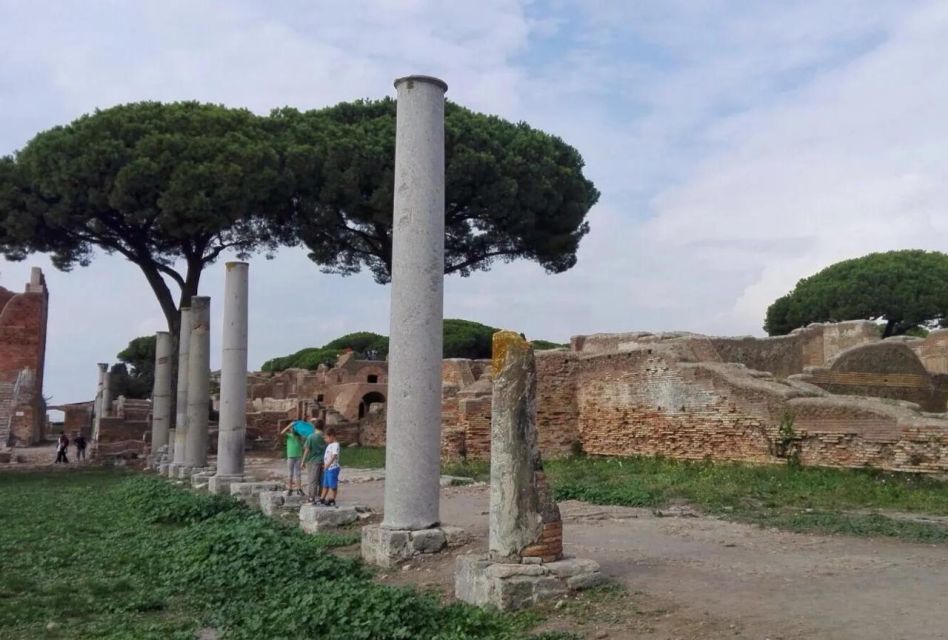
You’ll stroll along the Decumanus Maximus, the town’s main street, and your guide will fill in the “what you’re looking at” layer. That means it’s not just a pretty corridor of old stones. It’s the organizing line of daily life—where traffic moved, where businesses faced the street, and where social life clustered.
What I like about this kind of guided route is that you start connecting building types without needing a map decoder. Ostia Antica includes spaces such as ancient taverns, baths, apartments, groceries, and theatres. Even if you’re not an architecture nerd, the guide’s explanations help you see how those functions fit into Roman neighborhoods.
Practical tip: wear shoes with real grip. You’ll be walking for hours over uneven ground. Comfortable footwear isn’t a “nice to have” here—it’s what keeps the experience enjoyable rather than tiring.
Streets, shops, and public life: seeing a town, not just a monument
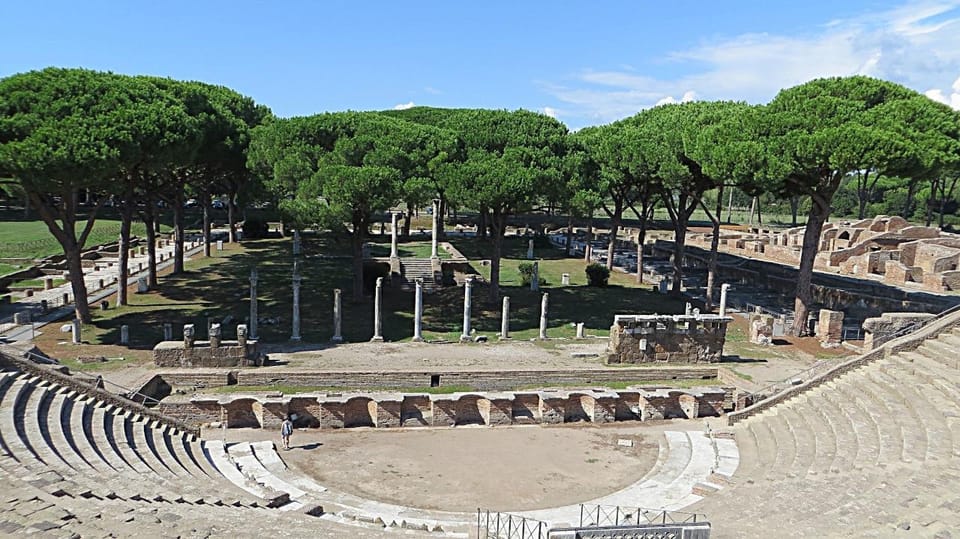
One of the most convincing claims about Ostia Antica is that its condition can feel more striking than the Roman Forum. You don’t need to compare yourself in real time to appreciate what that means. It means your eyes can register more of what the town actually looked like.
As you move through different areas, the tour leans into how Romans lived and spent time. That’s where places like taverns and groceries become more than labels. You start to understand the rhythm: people moved along the street, stopped by everyday services, and had spaces for leisure and socializing.
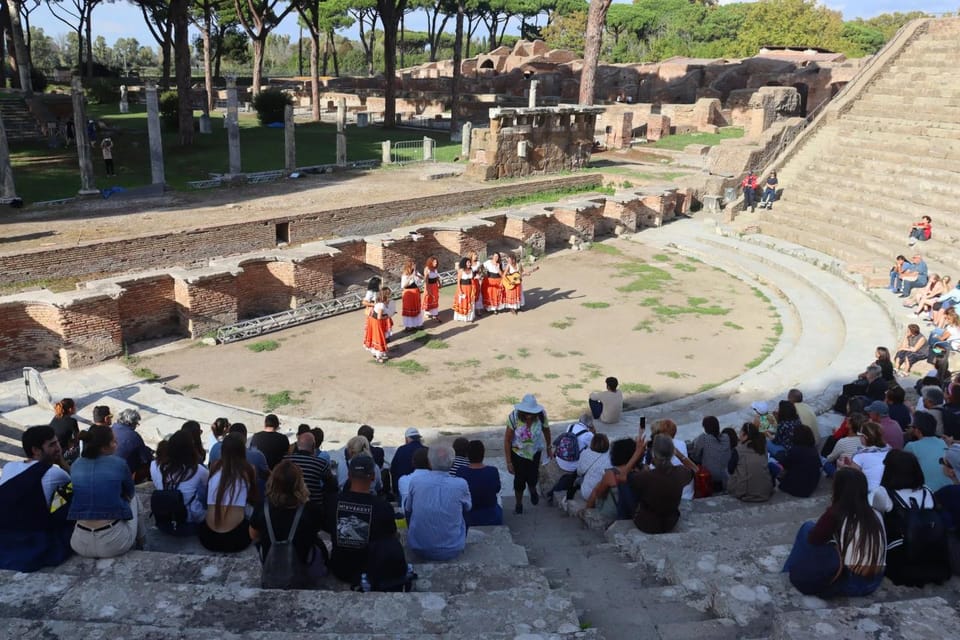
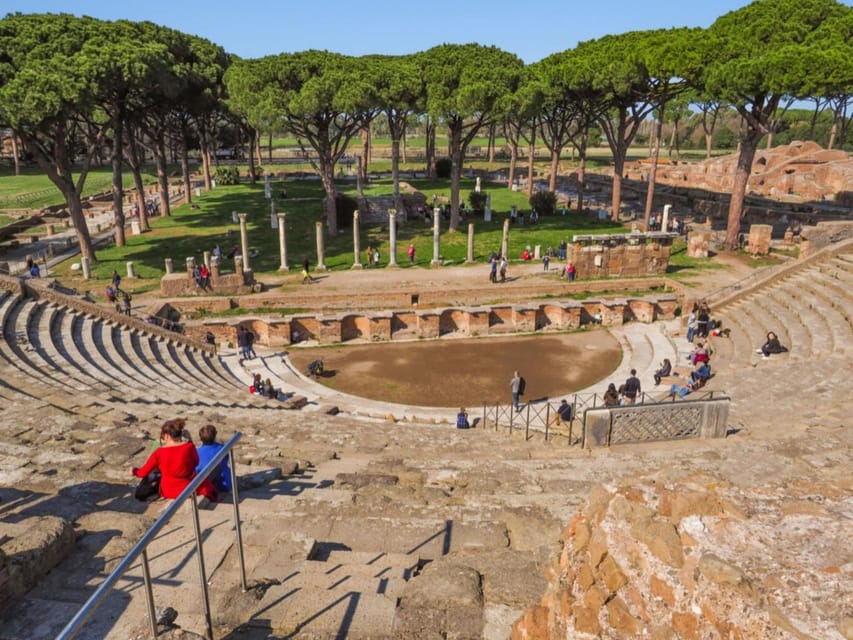
The theatres add another layer. Rome is famous for large-scale spectacle, but this shows you the local side of entertainment—how ordinary city life included public performances. When you’re standing where a theatre once functioned, it’s easier to imagine crowds and routines than when the only thing left is a viewpoint and a few blocks.
If you’re a visitor who likes authentic-feeling places over staged ones, Ostia Antica can feel surprisingly human. You’re walking inside the shell of a real town layout.





The Baths of Neptune: why the mosaic is a highlight
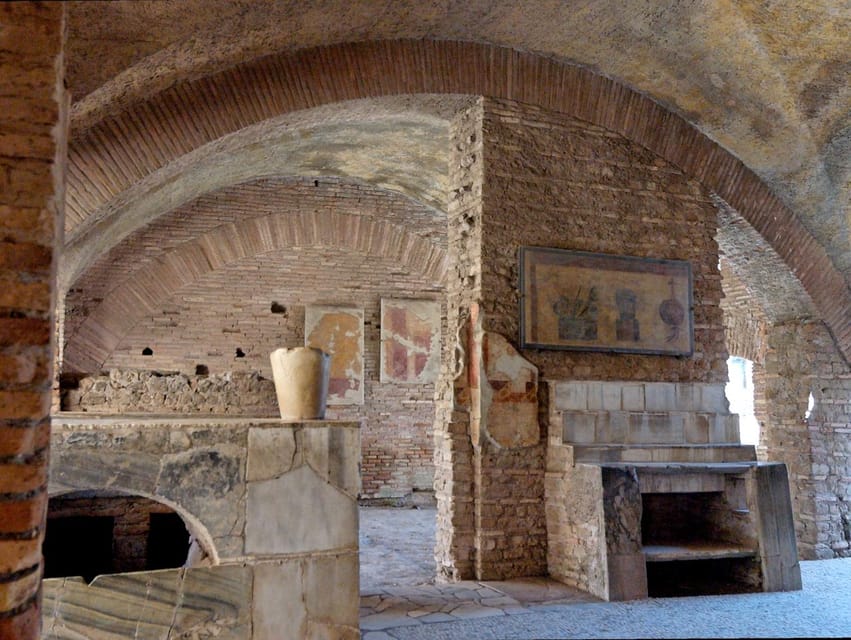
If you’re the type who remembers travel by the images you take home, put time aside for the Baths of Neptune stop.
This is where the tour leans into one of its most memorable details: an impressively intact mosaic showing the Sea God in a chariot drawn by sea horses. That’s the kind of artwork that makes ruins feel alive, because it isn’t just structural. It’s decorative, symbolic, and specific.
Why it matters for your experience: Roman baths weren’t just plumbing and sweat. They were part of social culture, architecture, and art. A well-preserved mosaic on the bath setting helps you see the whole concept, not only the building plan. You’re not staring at emptiness—you’re looking at a designed environment that once connected relaxation with status and taste.
You might also find the name Neptune makes you imagine water and drama. The tour frames this stop as one you won’t want to miss, and the mosaic is the main reason. Even if you’re not an art specialist, it’s visually rewarding and easy to remember later.
Photo stop and pacing: how to make the timing work
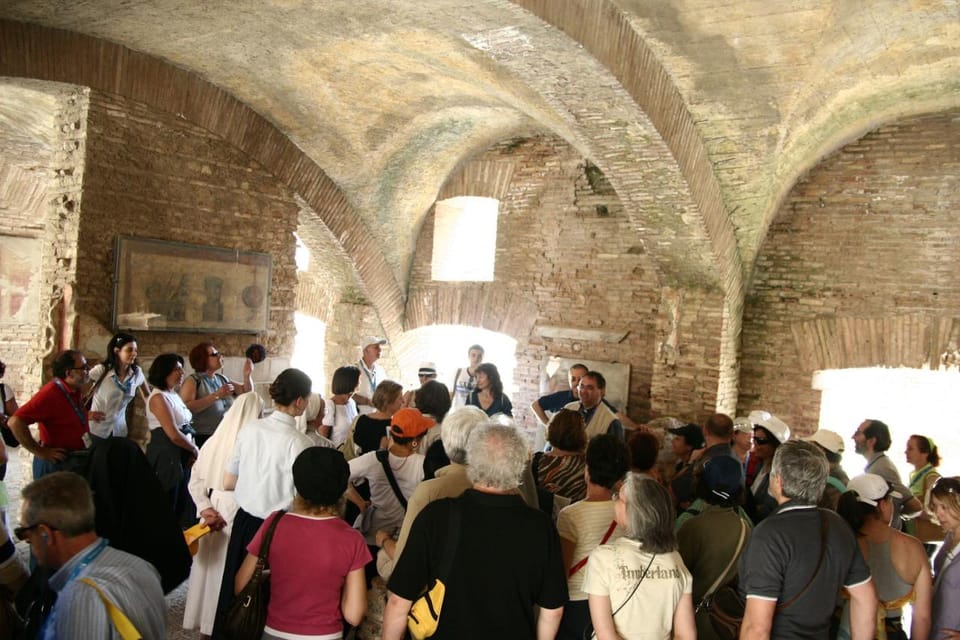
The itinerary includes a pickup in Rome, then a stop at Ostia Antica that includes both photo time and a guided walk. Since the total tour time is about 4 hours, you’ll want to be ready when the key sights come up.
Here’s what helps you get the best results:
- Bring your camera and be set up quickly when you reach major street views and the baths area.
- Don’t wait until you’re tired to try to photograph the best-preserved sections. Those are usually the spots where the light and intact details make the strongest difference.
Also, plan for real walking time. The guided tour part is 3 hours, so even with transportation built in, you still need to treat this as an active outing—not a sit-down half-day.
If you’re visiting during a hot stretch, I’d plan sunglasses too, since the tour guidance explicitly recommends them. Shade isn’t guaranteed along all parts of the ruins.
Price and value: what you’re paying for (and why it can be worth it)
At $258.29 per person, this isn’t a cheap impulse buy. But value isn’t only the ticket price—it’s what’s included and what time it saves.
What you get for that cost:
- 3 hours with a professional guide
- Ostia Antica entrance fee included
- Pickup and drop-off at your hotel inside the Aurelian Walls
- Round-trip air-conditioned minivan
- You skip the ticket line
If you tried to DIY this, you’d pay for transit time, entrance entry, and likely spend some portion of your limited Rome day figuring out the logistics. The real advantage here is that you trade some flexibility for less friction. You arrive, you start with context, and you leave with a clear story of what you saw.
That guide component is the biggest value driver. Ostia Antica rewards attention, and a good guide helps you notice what a self-guided visit might miss—especially when the site layout can otherwise feel like a puzzle.
So I’d treat this as a “buy the explanation” kind of tour. If you love wandering but also want your time respected, the math often makes sense.
Who this Ostia Antica half-day tour is best for
This tour fits a specific travel style.
You’ll likely love it if:
- You’ve enjoyed Pompeii and want another preserved Roman city experience
- You want a guided archaeology walk without committing to a full day
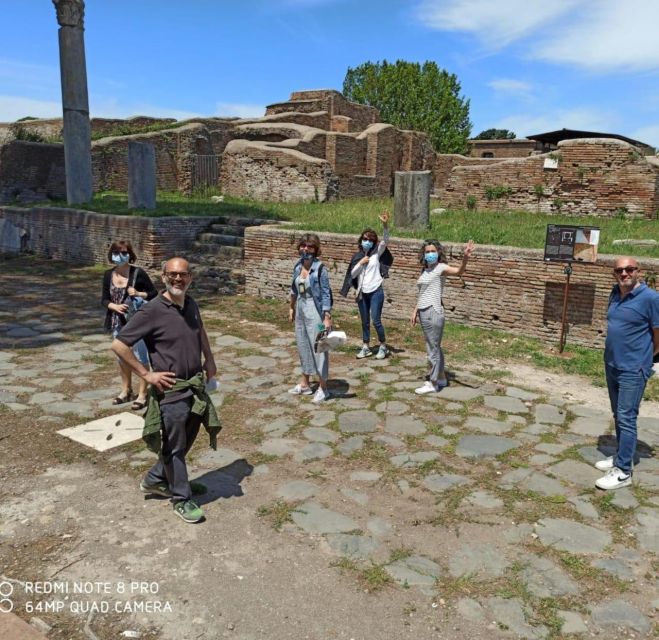
- You prefer a small-group atmosphere where the guide can keep the route cohesive
- You have limited time in Rome but still want a meaningful detour into ancient life
You might want to reconsider if:
- You have mobility impairments or use a wheelchair. This tour is specifically marked as not suitable for wheelchair users.
- You dislike walking on uneven ground or hate being on your feet for about 3 hours.
Language needs are straightforward since the guide operates in French, Spanish, or English, so you can choose what fits best.
Final take: should you book this Ostia Antica tour?
If you want a Roman site that feels readable—where preservation lets you picture the town instead of just “viewing ruins”—I think this is a strong choice. The combination of skip-the-line access, hotel-area pickup, and a 3-hour guided walk is exactly how you turn a short Rome stay into a real memory.
I’d book it especially if Pompeii left you hungry for more. Ostia Antica can scratch that same itch, with a harbor-town feel and a main-street walk that makes daily life feel closer.
The only reason to hesitate is physical comfort. If walking for hours on ancient surfaces isn’t your thing, you’ll lose enjoyment faster than you would at a lighter, more accessible attraction.
If you’re the kind of traveler who likes history you can see clearly, this one earns its reputation.
FAQ
How long is the tour?
The tour duration is about 4 hours, including transportation. The guided visit at Ostia Antica is about 3 hours.
Is entrance to Ostia Antica included?
Yes. The entrance fee to Ostia Antica is included.
Do I need to buy tickets in advance?
No. The tour includes skip-the-ticket-line access.
What’s included in the transportation?
You get round-trip transportation in an air-conditioned minivan.
Where does pickup happen?
Pickup is included at a hotel located inside the Aurelian Walls. You’ll need to wait in the lobby or outside your accommodation about 10 minutes before pickup.
What languages are available for the guide?
The live guide is available in French, Spanish, and English.
Is this tour suitable for wheelchair users or people with mobility impairments?
No. It’s marked as not suitable for wheelchair users and people with mobility impairments.
What should I bring?
Comfortable shoes, sunglasses, and a camera are recommended.
Is the group size always the same?
It’s offered as private or small groups, so group size can vary.