REVIEW · ROME
Rome: Capitoline Museums Percy Jackson Mythology Tour
Book on GetYourGuide →Operated by Kids Raphael Tours And Events · Bookable on GetYourGuide
Roman museums can be a tough sell for children. This one works because you’re not just staring at art—you’re hunting for Greek and Roman myth characters inside the Capitoline Museums, with a guide built for kids and plenty of multimedia-style support. I especially like how the tour ties big names and recognizable monsters to real objects, including the famous She Wolf bronze, and that it includes skip-the-ticket-line entry so you lose less time.
My other big win is the setting: you start by climbing up from Piazza Ara Coeli toward Piazza del Campidoglio, with the Capitoline Hill view and Michelangelo-designed square in the background. One consideration: it’s still a walking museum visit on comfortable-shoes territory, so little legs may need breaks.
In This Review
- What you’re really paying for
- Key things to know before you go
- Arriving at Capitoline Hill: the walk up that sets the mood
- Inside the Capitoline Museums: how the myth theme shapes your visit
- The museum stops that anchor the story
- The bronze She Wolf and the Rome-and-myth crossover
- Portraits and emperors: when history talks back to mythology
- Homer, Hercules, and Venus: big names in sculpture form
- The Boy with Thorn and other human details
- The Percy-style characters you’ll track through the galleries
- Beyond gods: how the tour explains ancient life
- The guide and group setup: private group pacing
- Practical value: what’s included, what’s not, and why that matters
- Logistics that can make or break the day
- Is this Percy Jackson mythology tour the right fit for your family?
- Should you book? My honest take
- FAQ
- How long is the Rome: Capitoline Museums Percy Jackson Mythology Tour?
- Where do we meet for the tour?
- Is skip-the-line entry included?
- What languages are the tour guide speaking?
- What’s included in the price?
- What should I bring?
- Is there anything I’m not allowed to bring?
What you’re really paying for
At about $243.56 per person for a 2.5-hour private group, you’re not buying a long history lecture. You’re buying focus, pace, and kid-friendly storytelling in one of Rome’s top collections of ancient art—plus the practical stuff like entrance fees and a professional guide. If you want quiet museum time with no myth angle, this may feel a bit more guided and animated than you’d expect.
Still, if your family likes Percy Jackson-style adventures and you want Rome to feel like a story, this is a smart way to do it without turning the afternoon into a slog.
Key things to know before you go

- Capitoline Hill + a Michelangelo-designed square set the scene before you even enter the museums
- Myth characters you already know show up as you move from object to object (Jupiter, Athena, Ares, Medusa, Polyphemus)
- Real museum highlights get your attention fast, including the bronze She Wolf, Homer’s bust, Hercules, and Venus
- A guide made for children means the explanations are built for young minds, not just adults
- Multimedia tools help keep interest as you go through galleries and displays
- Skip the ticket line keeps the start smoother, especially with families
You can also read our reviews of more museum experiences in Rome



Arriving at Capitoline Hill: the walk up that sets the mood

The tour meets on Piazza del Campidoglio, right where you’ll find the statue of Marcus Aurelius riding a horse in the middle of the square. Before that, you’ll climb the steps from Piazza Ara Coeli up to Piazza del Campidoglio. That short climb matters more than it sounds: you get oriented on the hill, and the Capitoline area makes sense as a stage where emperors, gods, and artists once aimed for attention.
This start is also useful if you’re traveling with kids. It’s active without being frantic, and it gives you something to look at while you gather everyone and settle in. Wear shoes you can walk in for a couple of hours. No surprise there, but museums teach the lesson the hard way.
Inside the Capitoline Museums: how the myth theme shapes your visit
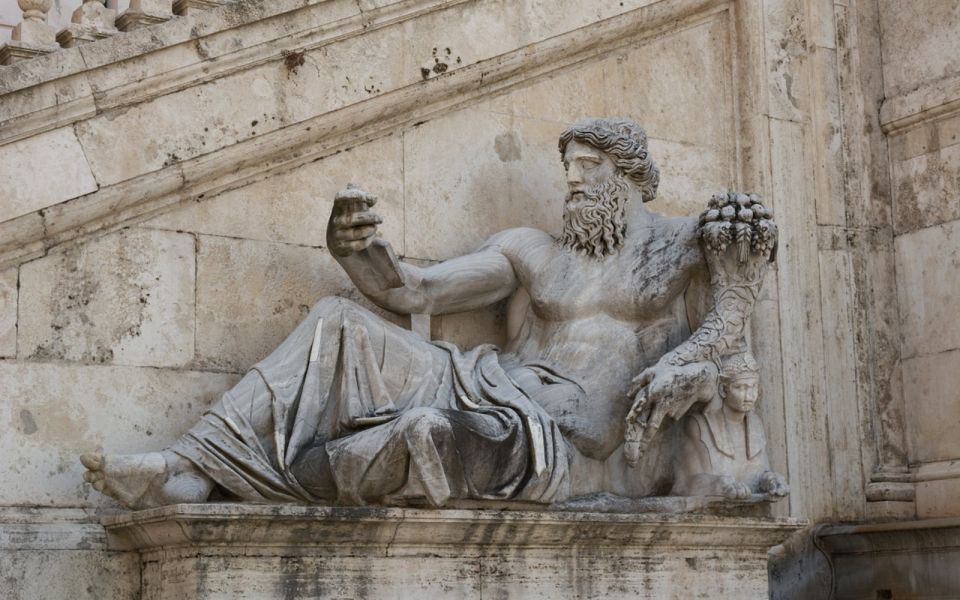
Once you’re in, the experience is built like a guided hunt. You’re moving through collections that are widely known for exceptional ancient art, but the tour frames what you see through mythology—so you’re not just learning names, you’re connecting them to characters and scenes.
You’ll spend about 2.5 hours total, which is a solid length for families. Long enough to cover multiple standout works, short enough that children usually stay interested. And it’s a private group, which typically helps the guide adjust the tempo when a child needs a minute.
The tone is especially kid-friendly: the guide is described as specialized for children, and the pacing is designed to keep the storyline moving. You’ll also use multimedia tools, which is a big deal in a museum where kids can lose steam quickly.
The museum stops that anchor the story
Here are the standout moments you can expect the tour to focus on, and why they matter.
The bronze She Wolf and the Rome-and-myth crossover
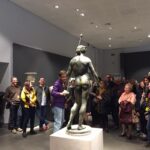
You’ll get comfortable with the bronze She Wolf, a famous object tied to the identity of Rome. Even if you’ve seen it in photos, seeing it in person helps you understand why these myths got attached to civic pride. It’s not just a monster story. It’s part of how the city explained itself.
For kids, this kind of anchor object is perfect. It’s visual, recognizable, and easy to remember later. It also helps you connect the myth world to the real world of ancient Rome.





Portraits and emperors: when history talks back to mythology
You’ll also encounter the portrait of Emperor Constantine. That’s a useful contrast point in a myth tour. Gods and monsters live in one world, but Rome’s rulers lived in another—yet both appear in the museum’s storytelling space.
Why this is valuable: it prevents mythology from feeling like a fantasy bubble. You get a sense that myths were part of cultural life, not just entertainment. If your family enjoys Percy Jackson, this kind of grounded bridge helps them understand how stories stick.
Homer, Hercules, and Venus: big names in sculpture form
You’ll see a bust of the Poet Homer, plus works connected to Hercules and Venus. These are the kinds of figures that show up again and again across Greek and Roman literature and art. In a museum setting, they’re more than names. They become shapes and expressions you can study for cues—attitude, pose, and symbolism.
For kids, this gives your imagination something concrete. You can point and say: this is what Hercules looks like in stone, this is the face associated with Homer, this is the kind of figure Venus represents.
The Boy with Thorn and other human details
The tour includes the Boy with Thorn as well. That kind of artwork is a good reminder that ancient art wasn’t only grand gods. Sometimes it’s a moment of pain, a small story, or an everyday emotion translated into sculpture. In a mythology tour, those human details are a nice balance.
It also helps parents because kids often connect better to something that feels physical and personal, not only supernatural.
The Percy-style characters you’ll track through the galleries
This tour is explicitly shaped around myth characters that show up in Percy Jackson adventures. You’ll encounter characters like:
- Polyphemus
- Medusa
- Jupiter
- Athena
- Ares
You’ll also meet the Olympian gods, and you’ll look for satyrs and other baffling animals. That focus is the tour’s secret weapon. It gives kids a clear mental list: look for these characters, spot their myth connections, and learn how the ancient world described them.
For adults, it’s a different kind of museum experience. Instead of reading everything like a textbook, you’re using the familiar storyline to guide your attention. It’s faster, more memorable, and easier to follow when you have a group that includes younger visitors.
Beyond gods: how the tour explains ancient life
This is not only about monsters and gods. You’ll also get moments that show daily life and ancient culture.
You’ll learn how the ancient Romans used to play, which is the kind of detail that makes the past feel less like a distant era. You’ll also see a genuine tomb of a combatant, and you’ll decode ancient timetables. Those parts matter because they broaden the myth theme: mythology didn’t live in isolation. It shared the same world as education, games, public life, and ritual.
Even if your family is mainly here for the Percy Jackson angle, these stops give you something you can talk about afterward that isn’t just names and creatures.
The guide and group setup: private group pacing
The experience is run as a private group with a professional guide. That matters because it changes how the tour feels. You’re not competing with a large crowd for attention or for the ability to pause when a child wants to ask one more question.
The guide speaks English and Italian, which is helpful if you have mixed-language needs in your group. The tour also includes a walking tour approach, so the schedule is built around moving through the museum space efficiently.
As for length, 2.5 hours is a practical sweet spot. It’s enough time to hit major highlights and still keep the emotional energy up for kids. If you have a very young child or a family that tires fast, build in buffer time before and after, since museums can be mentally demanding even when the walking is limited.
Practical value: what’s included, what’s not, and why that matters
This tour includes entrance fees, a professional guide, gratuities, and the walking tour itself. That’s good value because museum entry costs can add up quickly, and kids’ tours can be time-sensitive. You’re also spared one common headache: you get skip the ticket line, which helps you avoid the stressful scramble.
What’s not included is food and drinks, and there’s no built-in transportation from and to the sites. That means you’ll want to plan a snack and water break on your own. Think of the tour as a focused block of museum time, not a full-day babysitting package.
If you’re budgeting, this is one of those experiences where paying a bit more makes sense because the organization and guide focus are part of the product. You’re paying for less waiting, clearer storytelling, and a kid-oriented pace inside a top-tier museum.
Logistics that can make or break the day
A few practical notes that can save you frustration:
- You’ll be climbing steps at the start, so go in with comfortable shoes.
- You should bring a passport or ID card.
- Pets aren’t allowed, and you can’t bring luggage or large bags.
If you’re traveling light, you’ll have a smoother museum experience. If you’re carrying a lot, consider storing bags before you meet.
Also, the tour ends back at the same meeting point. That makes it easier to plan a lunch spot afterward or to link it with other nearby sights on foot.
Is this Percy Jackson mythology tour the right fit for your family?
I’d book this if your family likes mythology stories and you want a museum visit that feels like an adventure. It’s especially well suited for children who respond to characters and questions, not just long descriptions. The mix of recognizable myth figures and real museum masterpieces is a strong formula.
You might skip it if your main goal is quiet, self-paced museum study. The theme and guide-led pacing are central here, so you won’t get the freedom of roaming at your own speed.
It’s also a good choice if you want an “I can’t believe we saw that” moment built into the visit, because the tour aims you at recognizable highlights like the bronze She Wolf and big-name myth-linked sculptures.
Should you book? My honest take
If you’re looking for a family-friendly way to experience the Capitoline Museums without turning it into a battle of attention spans, I think this is a strong pick. The value comes from the combo: skip-the-line entry, a children-focused professional guide, and a mythology framework that keeps everyone oriented.
Book it when you want Rome to feel like a story you can actually walk through. Just plan for walking, bring ID, and have snacks ready for afterward. If your family is into myth characters from Percy Jackson, this tour makes that connection feel natural instead of forced.
FAQ
How long is the Rome: Capitoline Museums Percy Jackson Mythology Tour?
The tour lasts 2.5 hours.
Where do we meet for the tour?
You start by climbing steps from Piazza Ara Coeli to Piazza del Campidoglio, and you meet at the statue of Marcus Aurelius riding a horse in the middle of the square.
Is skip-the-line entry included?
Yes. The tour includes skip the ticket line.
What languages are the tour guide speaking?
The live tour guide speaks English and Italian.
What’s included in the price?
Inclusions are entrance fees, gratuities, a professional guide, and a walking tour.
What should I bring?
Bring passport or ID card and wear comfortable shoes.
Is there anything I’m not allowed to bring?
Pets aren’t allowed, and you can’t bring luggage or large bags.