REVIEW · ROME
Rome: Catacombs and Basilicas with Holy Stairs Tour
Book on GetYourGuide →Operated by Brastours · Bookable on GetYourGuide
Rome has a way of going underground.
This 4-hour Rome: Catacombs and Basilicas with Holy Stairs tour strings together two Papal Basilicas and the Scala Sancta Holy Stairs, then heads to Rome’s underground Christian cemeteries. I like how the order feels logical—major churches above ground first, then the catacombs—so the story of early Christianity stays easy to follow. I also like the small group setup (limited to 7) and the use of headsets, which helps you hear your licensed guide clearly.
One thing to consider: it’s not a relaxed stroll for everyone. The catacombs are underground, and the tour isn’t suitable for people with mobility impairments, wheelchair users, or claustrophobia.
Key highlights at a glance
- Skip-the-line entry to St. Mary Major, St. John Lateran, and the Catacombs
- Two Papal Basilicas: Santa Maria Maggiore and San Giovanni in Laterano
- Scala Sancta (Holy Stairs) with a short guided stop
- Underground catacombs explored with an official Vatican guide
- Minivan transportation plus headsets for a smoother, less chaotic experience
- Small group of up to 7 for a calmer pace and questions you can actually ask
In This Review
- Rome’s catacombs and basilicas: the 4-hour “story route”
- Starting at Mecenate Palace Hotel and getting into the right rhythm
- Santa Maria Maggiore: why this basilica is the “best preserved” kind
- San Giovanni in Laterano: Rome’s cathedral energy, with Papal weight
- Scala Sancta (Holy Stairs): a short stop with big devotional gravity
- Appian Way transfer: the in-between that makes the underground make sense
- Inside the Roman Catacombs: what the “official Vatican guide” changes
- Skip-the-line entry: the real time-saver (and where value shows)
- Minivan + small group: comfortable pacing in a city that loves chaos
- What to wear and bring so you don’t get slowed down
- Who should book this catacombs and basilicas tour
- Should you book the Rome Catacombs and Basilicas with Holy Stairs tour?
- FAQ
- How long is the tour?
- Where does the tour start?
- Which sites are included?
- Is skip-the-line entry included?
- What languages are available for the live guide?
- How big is the group?
- What should I wear or bring?
- Is this tour suitable for wheelchair users?
- Is it suitable for claustrophobia?
Rome’s catacombs and basilicas: the 4-hour “story route”
This tour works like a guided timeline you can actually feel in your legs. You start at Mecenate Palace Hotel and, within about four hours, you move from landmark churches to the Holy Stairs and then into the Roman Catacombs. The pacing is tight enough to be efficient, but not so rushed that you’re constantly sprinting between stops.
What makes it practical for visitors is the transport. You’ll ride by minivan, which saves you from navigating Rome traffic and makes it easier to stay on schedule. And because the group is limited to 7 participants, your guide can keep track of the flow—especially important when you’re hopping between interiors and underground spaces.
There’s also a real “payoff” structure here: the churches give you the visual and architectural anchors, the Scala Sancta adds a dramatic devotional landmark, and the catacombs bring the history into the ground itself. If you like tours that help you connect sites instead of treating them like separate boxes to check, this format is a good fit.
Starting at Mecenate Palace Hotel and getting into the right rhythm
Meeting at the Mecenate Palace Hotel entrance is one of those small details that can save you stress. It’s a clear, fixed point, and the guide meets you right there. You’ll then travel between stops and spend guided time on each main location.
The tour also includes headsets, which is a big deal in churches and enclosed spaces. It means you’re not craning your neck or turning your head every time your group shifts. You can focus on what you’re seeing, not hunting for the guide’s voice.
Expect about:
- 45 minutes at Santa Maria Maggiore
- 45 minutes at San Giovanni in Laterano
- 15 minutes at Scala Sancta
- 1 hour for the Catacombs of Rome
That timing isn’t random. It balances time for looking around with time to listen to key context. It’s also enough time to feel like you experienced each place, not just passed through.
You can also read our reviews of more tours and experiences in Rome.


Santa Maria Maggiore: why this basilica is the “best preserved” kind
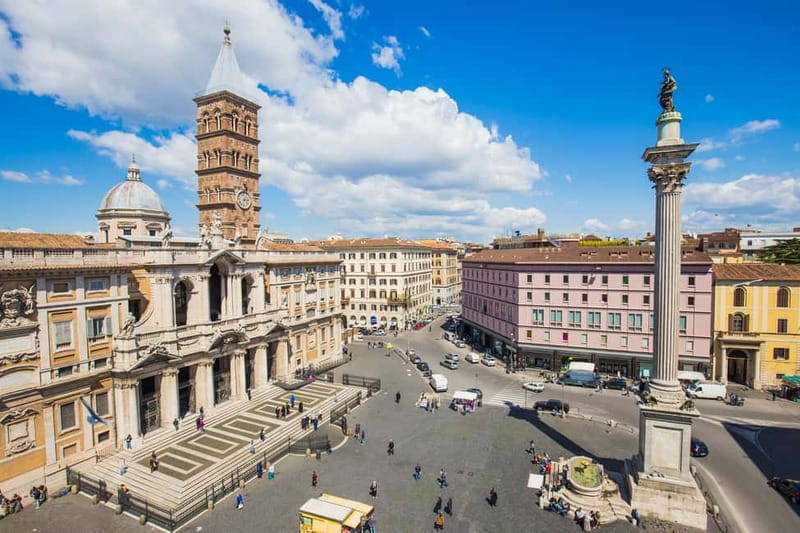
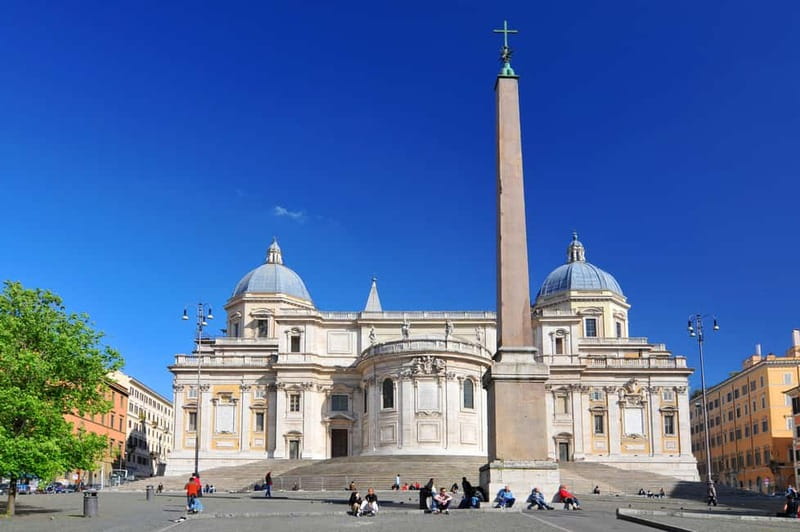
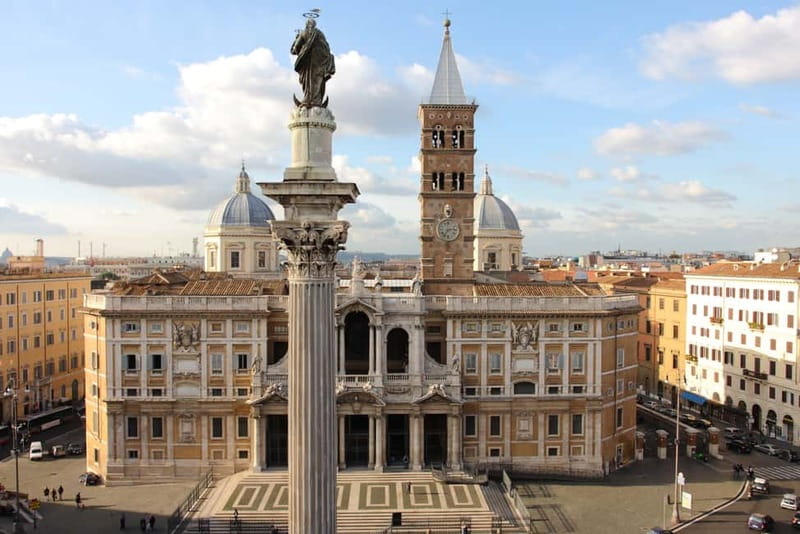
The first big stop is Basilica Papale di Santa Maria Maggiore, a place the tour frames as the best preserved Roman church and one of the most important. This matters because “best preserved” usually translates to fewer distractions from restoration scaffolding and more clarity in what you’re actually looking at.
You’ll get a guided visit for about 45 minutes. The basilica is dedicated to the Virgin Mary, and the tour information notes it houses the tomb of Pope Francis. Even if you know the basics, a guided walkthrough helps you connect the dedication to what you see inside, instead of treating it like a beautiful room you’re supposed to admire silently.
Practical tip: plan to dress appropriately from the start. The tour requires long sleeves and long pants, and it forbids shorts and uncovered shoulders. Arriving dressed right means you won’t waste time at the beginning of the tour trying to figure out what’s allowed.
Also, you get skip-the-line entry here. That saves you from waiting when you’d rather be looking—especially in Rome where lines can swallow whole chunks of your day.
San Giovanni in Laterano: Rome’s cathedral energy, with Papal weight
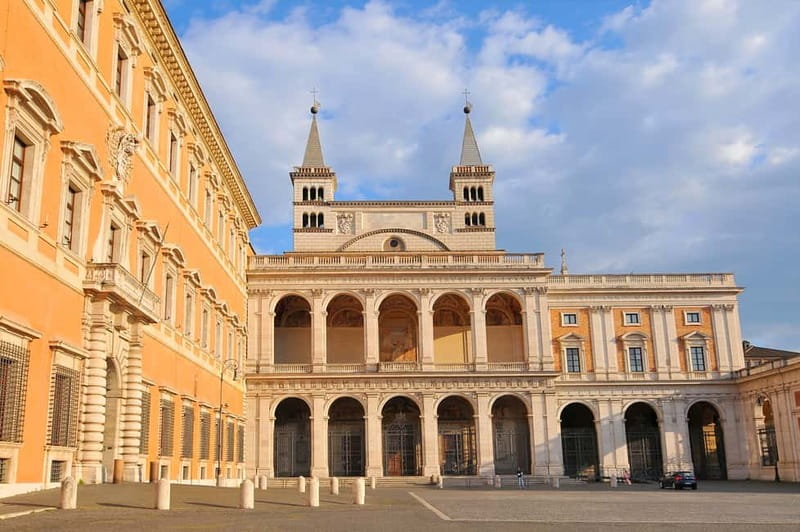
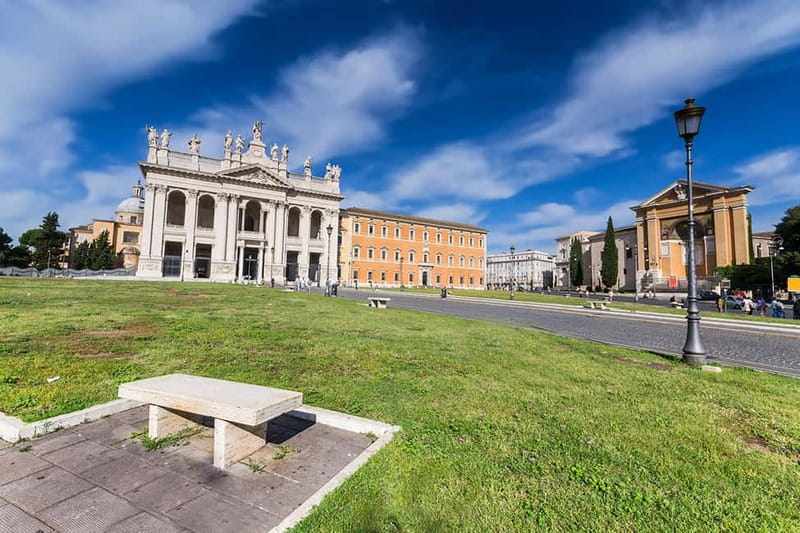
Next up is Basilica di San Giovanni in Laterano, described as the real Cathedral of Rome and historically the first Papal residence. It’s a different feeling than Santa Maria Maggiore. Instead of a focus on Mary devotion, this stop carries more “center of the city” power.
You’ll spend about 45 minutes on a guided visit and walk. In practice, this is a sweet length for a basilica: long enough to take in major features, short enough that you’re not standing in one spot waiting for the group to catch up.
Again, skip-the-line entry is included. That’s one of the clearest value points of this tour, because two major basilicas plus catacombs would otherwise mean heavy time loss in queues.
If you like religious sites but don’t want a “read-it-all-yourself” experience, the guide helps you understand what’s important and why it mattered. One guide named Serena earned specific praise for being very informative and nice—exactly the kind of delivery that makes a dense, sacred space feel understandable.
Scala Sancta (Holy Stairs): a short stop with big devotional gravity
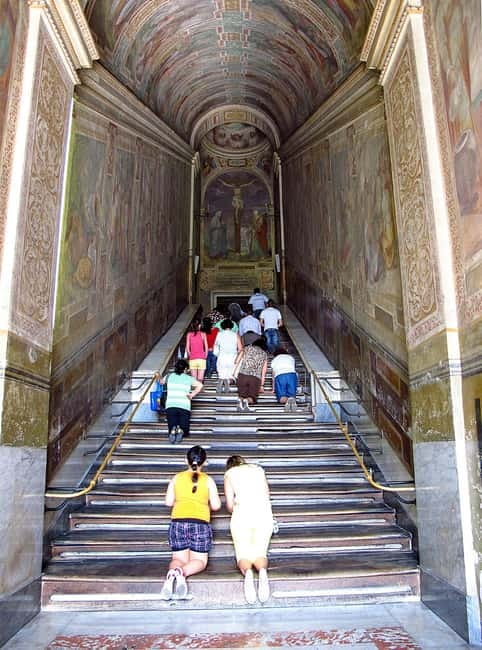
The Holy Stairs, or Scala Sancta, are a quick 15-minute guided stop, but they’re the kind of place that hits differently than a regular church interior. The tour’s framing is direct: these are the stairs that Jesus Christ climbed during his passion.
Because the visit is brief, you’ll get the essentials fast—what the place is, why it’s venerated, and how to read it as more than just old stone. If you’re the sort of person who likes stopping at a single “signature” site and then moving on with purpose, this time window works well.
Still, treat the place with respect. The dress rules apply here too: long-sleeved shirt, long pants, no uncovered shoulders, and no shorts or short skirts. If you’re arriving from warm weather, consider bringing a light layer that covers your arms and legs. It’s an easy way to stay comfortable without risking refusal at the entrance.
Appian Way transfer: the in-between that makes the underground make sense
Between the Holy Stairs and the catacombs, the tour includes a move along the ancient Appian Way, described as the most important road of the Roman Empire. You won’t be wandering it for hours, but the transport step is still useful.
Why? Because catacombs can feel like a mystery box if you only think of them as “underground cemeteries.” The Appian Way reference helps you place the catacombs in a larger Roman setting—routes, movement, and the wider geography of ancient Rome. Even a short transport segment can improve how the whole day clicks into place.
I like that the tour uses this transfer instead of treating it like dead time. You’re moving, but your guide can still connect the sites so you leave with more than just photos.



Inside the Roman Catacombs: what the “official Vatican guide” changes
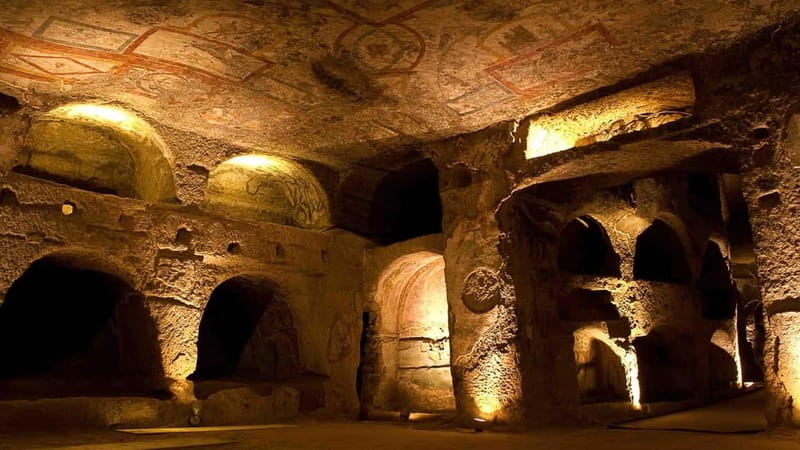
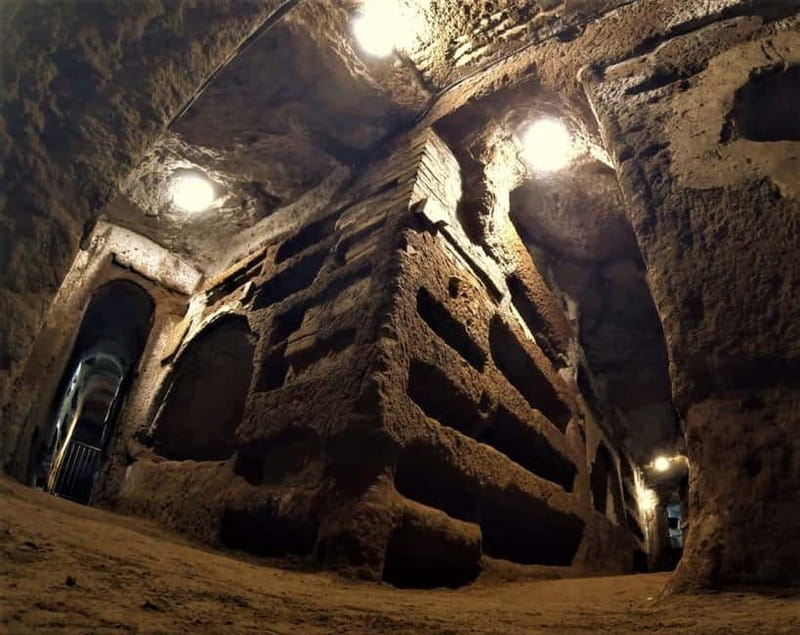
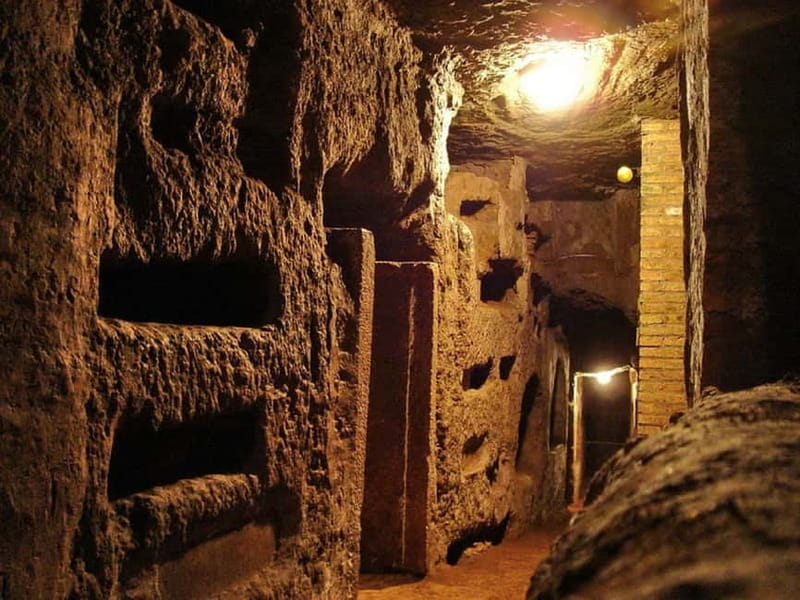
The catacombs portion lasts about 1 hour and is guided by an official Vatican guide. That’s a notable difference. An underground cemetery isn’t just a dark hallway full of old stones—it’s a structured space with meaning, and the right guide helps you understand what you’re seeing without turning it into a lecture.
Here’s what to expect in real life terms:
- you’ll move through an underground network that feels like a labyrinth
- you’ll learn how these Christian cemeteries developed and what the spaces were for
- you’ll get context that makes the carvings and layout less random
The tour also includes headsets throughout, which matters more underground. Noise and echo can make it hard to hear guidance clearly, so having the audio support keeps you from missing important points while you’re looking around.
Important note: this tour is not suitable for claustrophobia. If tight spaces make you feel panicky, take that seriously. The catacombs are underground and enclosed by nature, so this isn’t the time to test your limits.
Skip-the-line entry: the real time-saver (and where value shows)
This is where the tour’s price starts to make sense. At $147.27 per person, you’re paying for more than a guide—you’re paying for time saved at major sites.
With skip-the-line entry included for:
- St. Mary Major (Santa Maria Maggiore)
- St. John Lateran (San Giovanni in Laterano)
- Catacombs of Rome
…the tour is designed to prevent the most common Rome bottleneck: waiting.
You’re also getting transportation by minivan, headsets, and a professional licensed guide. On a day that includes multiple major entrances, those extras add up quickly. If you’re planning to see several key Christian landmarks in one half-day, this combination is often the kind of value that’s hard to replicate if you try to DIY everything.
Minivan + small group: comfortable pacing in a city that loves chaos
Rome is great, but it can be chaotic. The minivan helps you move between stops without constantly negotiating where to stand, how long lines will take, or whether you’re going the right way.
The group size—limited to 7—also changes the experience. You’re not stuck listening from the back while others block your view. It’s easier for the guide to keep you together and easier for you to ask questions when something doesn’t make sense.
This is especially helpful for the catacombs. Underground spaces require patience: you pause, you listen, you move slowly, and you keep your eyes open. A small group makes that smoother.
And because the tour offers live guide languages in English and Spanish, you don’t have to worry about losing meaning if you prefer one of those languages.
What to wear and bring so you don’t get slowed down
This tour has clear clothing rules, and following them is the simplest way to keep the day calm.
Bring:
- a long-sleeved shirt
- long pants
Not allowed:
- shorts
- short skirts
- sleeveless shirts / uncovered shoulders
- weapons or sharp objects
- luggage or large bags
- pets (assistance dogs allowed)
- mobility scooters
- metal objects and big bags
You’ll be safer if you pack light. Leave extra gear behind. If you’re carrying a bag that’s bigger than you’d expect for day sightseeing, plan to downsize—because rules around big bags can be enforced strictly.
Also keep in mind the guide will be managing a schedule. Late arrivals can cause you to miss part of the tour, and no refunds are issued for customers who are late and miss the tour.
Who should book this catacombs and basilicas tour
I think this tour fits best when you want three things at once:
- Major churches with context, not just quick photo stops
- A devotional landmark that’s easy to understand in a short visit (Scala Sancta)
- The catacombs experience with real guidance underground
You’ll especially enjoy it if you like small groups and hate wasting time in queues. The minivan and headsets are there for a reason: so you can focus on the sites, not the logistics.
You might skip it if:
- you have claustrophobia
- you need wheelchair access (this tour isn’t suitable for wheelchair users)
- you have mobility impairments and expect a fully accessible route
Should you book the Rome Catacombs and Basilicas with Holy Stairs tour?
Yes, if your goal is a high-impact Christian history day that feels structured and efficient. The big reason to book is the combo: two Papal basilicas, the Holy Stairs, and the catacombs, all with skip-the-line entry, headsets, and minivan transportation. At $147.27, the price is easier to justify because the tour removes the hardest time sinks.
I’d hesitate only if you know you’re uncomfortable underground or you can’t meet the basic dress expectations. Otherwise, this is a solid way to see several cornerstone sites in a single half-day without losing hours to Rome lines.
FAQ
How long is the tour?
The tour duration is about 4 hours (starting times vary, so check availability).
Where does the tour start?
You meet the guide in front of the Mecenate Palace Hotel entrance.
Which sites are included?
You’ll visit Santa Maria Maggiore, San Giovanni in Laterano, the Holy Stairs (Scala Sancta), and the Catacombs of Rome.
Is skip-the-line entry included?
Yes. Skip-the-line entry is included for St. Mary Major, St. John’s in Lateran, and the Catacombs.
What languages are available for the live guide?
The live tour guide is available in English and Spanish.
How big is the group?
The tour is a small group limited to 7 participants.
What should I wear or bring?
Bring a long-sleeved shirt and long pants. Shorts and short skirts aren’t allowed.
Is this tour suitable for wheelchair users?
No. It is listed as not suitable for wheelchair users.
Is it suitable for claustrophobia?
No. It is not suitable for people with claustrophobia due to the underground catacombs.