REVIEW · ROME
Palazzo Barberini: 2-Hour Private Tour
Book on GetYourGuide →Operated by Rome Guides · Bookable on GetYourGuide
Baroque Rome fits in two hours. At Palazzo Barberini, this private tour strings Italian art history from the Middle Ages to the Baroque, so La Fornarina and Caravaggio’s legend land with real meaning. I like that the guide links style changes to religious and political shifts, and I love ending in Piazza Navona, where the Baroque idea is right in front of you. One possible drawback: it’s a fast-paced sprint, so if you want long, quiet art time, plan a bit of extra free wandering afterward.
This is run by Rome Guides, with an expert guide and entry tickets included, so you spend less time sorting out logistics and more time looking closely. The tour is a private group, and you can hear it in English or Italian, which helps a lot if you’re pairing it with museums later. It also runs rain or shine, so you’ll want comfortable shoes.
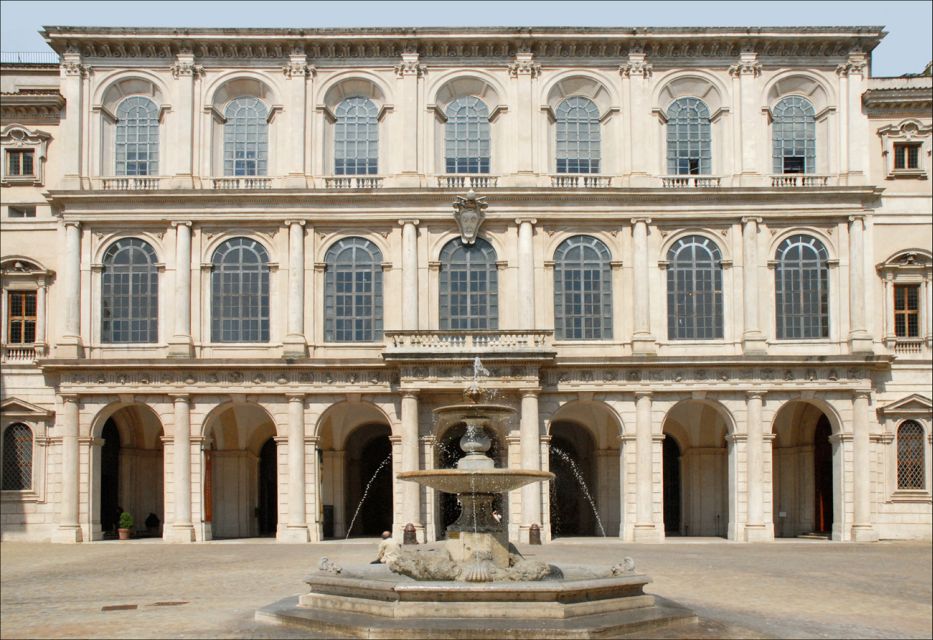
You meet by the museum entrance courtyard, with your guide holding a sign for the tour, and you’ll want to arrive 15 minutes early. And since luggage or large bags aren’t allowed, travel light unless you’re ready for a storage detour.
In This Review
- Key highlights you’ll actually feel
- Palazzo Barberini in 2 hours: the art-history storyline
- Raphael’s La Fornarina: why this painting hits differently
- Caravaggio and the so-called Cursed Painter label
- Titian and the art of big shifts
- Pietro da Cortona’s ceiling: Baroque space that feels alive
- Piazza Navona: the Baroque finish line
- Private tour value: what you’re paying for
- What the 2-hour pace looks like (and how to prepare)
- Meeting point and “don’t get stuck” tips
- Who should book this Palazzo Barberini tour?
- Should you book this private tour?
- FAQ
- How long is the Palazzo Barberini private tour?
- What’s included in the price?
- Where do I meet the guide?
- What languages are offered?
- Do I need to bring anything?
- Is luggage allowed?
- Does the tour run in bad weather?
Key highlights you’ll actually feel
- A clear art-history storyline from the Middle Ages through the Baroque style
- Raphael’s La Fornarina explained in a way that goes past the basics
- Caravaggio, the so-called Cursed Painter, with the why behind the drama
- Pietro da Cortona’s ceiling and what makes Baroque space look like motion
- Ending at Piazza Navona so you connect museum art to Rome’s street-level Baroque
- Entry tickets + guide included, which makes the 2 hours feel focused instead of rushed
Palazzo Barberini in 2 hours: the art-history storyline
Palazzo Barberini is one of those stops where you can easily spend a whole day, but you don’t have to. This private tour is built like a timeline: it starts with older foundations in Italian painting and then pushes forward until the Baroque style takes over the room. That structure matters. You’re not just seeing famous works—you’re seeing how styles changed as Italy’s power, faith, and public life changed too.
I like that the tour’s “why” comes early, not buried in the final 20 minutes. You’ll hear how religious and political changes helped shape what artists painted, how they painted it, and how people were meant to react. It turns the usual museum experience—where you read labels and shrug—into something you can remember on the walk to your next stop.
Because it’s only 2 hours, you’ll also need to accept a small trade-off: you can’t linger at every corner. The guide keeps things moving so you cover major artists like Raphael, Titian, Caravaggio, and others, without turning the day into a marathon. If that pacing matches your travel style, you’ll be happy.
You can also read our reviews of more private tours in Rome
Raphael’s La Fornarina: why this painting hits differently
Raphael’s La Fornarina is one of the works you’re there for, and the tour treats it like a centerpiece. Instead of treating it as a name on a wall, the guide helps you connect the painting to the world around it—what people valued, how imagery carried meaning, and why Raphael’s approach stood out.
What I like about this stop is how it supports your bigger takeaway. Raphael represents a move toward balance and clarity in art, but the tour doesn’t leave you with vague praise. You’re learning how the art responds to its setting—so when you see later styles get more theatrical, you understand what changed and why.
If you’re a first-timer at Italian painting, this is a smart anchor. You get a reference point for how High Renaissance mastery can look calm and controlled—then the Baroque pieces later in the tour start to feel like a deliberate shift toward emotion and spectacle.
Practical note: you’ll want to look with patience here, even if the tour schedule feels brisk. Spend a minute with the composition before you let the explanation carry you to the details.
Caravaggio and the so-called Cursed Painter label
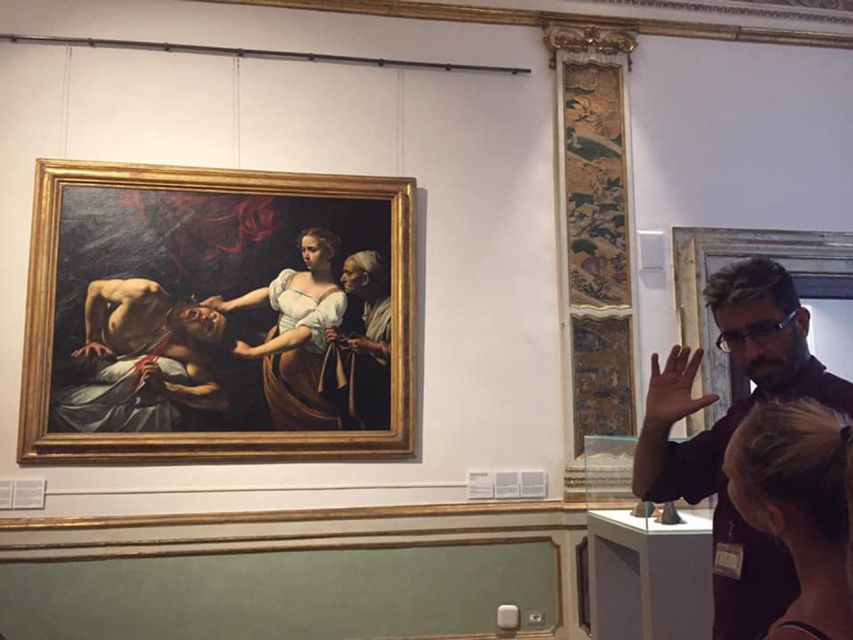
Caravaggio is famously complicated, and the tour leans into that. You’ll hear stories about him, including why he’s often called the Cursed Painter, and how his life and choices shaped the reputation around his work. That matters, because Caravaggio’s images can look dramatic even when you’re not sure what’s going on.
I find the best part of this segment is the bridge between art and context. The tour doesn’t treat Caravaggio as a standalone icon. Instead, you learn how shifting religious attitudes and political realities affected what was seen as acceptable—or powerful—in art. Once you get that, Caravaggio stops feeling like a rumor and starts feeling like a response.
You’ll also get exposure to other major figures mentioned in the tour focus, including El Greco and Guido Reni. Even without a long stop at each name, the point is to show you the range of styles Italy produced around the same era, and how Caravaggio fits into a larger story rather than acting like an isolated act.
Titian and the art of big shifts
Titian is included in the tour’s art-history arc, and that’s valuable for a simple reason: he helps you see how Italian painting could change without leaving its roots behind. The tour uses him as part of the bridge between periods, so you understand how different artistic approaches evolved as time moved forward.
Even though this is a short tour, the way Titian gets positioned matters. You’re not just collecting names—you’re tracking how painting techniques and visual priorities shifted. In other words, you’re learning what makes a style belong to its moment.
If you already know the major artists, you’ll still get value because the tour adds the connecting tissue: what was happening in society and why artists had reasons to change what they did.
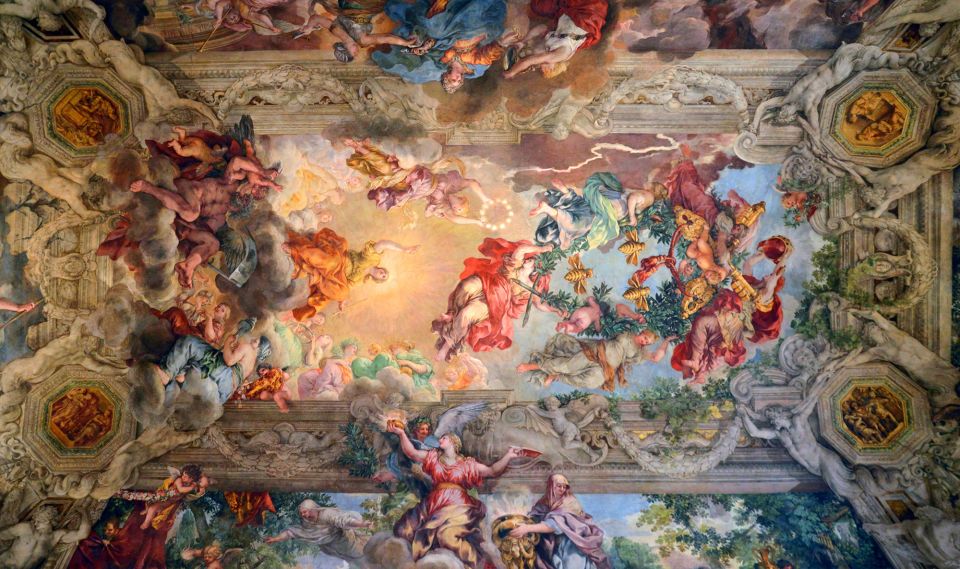
Pietro da Cortona’s ceiling: Baroque space that feels alive
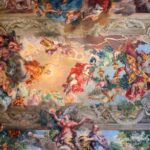
The Baroque period loves one thing above all: impact. And Pietro da Cortona’s ceiling is a prime example of that impact on full display. This is the kind of artwork that can’t really be understood from a quick glance. It works because Baroque art aims to pull you into the illusion—space, movement, and drama all doing their job.
In a two-hour tour, the ceiling portion is where the Baroque vibe clicks for most people. The guide helps you spot what Baroque is doing differently from earlier styles. You’ll hear how the art communicates with the viewer, not just the other way around.
This is also where the tour’s structure pays off. Since you started earlier in the timeline, you can feel the evolution. The ceiling doesn’t feel like a random highlight. It feels like the logical outcome of everything that came before.
Tip for your own viewing: when you’re looking up, take a second to let your eyes adjust. Baroque ceilings reward slow looking, even if your schedule is tight.
You can also read our reviews of more tours and experiences in Rome


Piazza Navona: the Baroque finish line
Ending in Piazza Navona is smart. Museums are great for close looking, but they can hide the bigger idea of how art and public space work together. Piazza Navona is a real-world payoff to the Baroque story you just heard.
You’re leaving the palace with your mental model turned on: you’ve seen how the Baroque style uses scale, drama, and emotion. Now you can walk into a square where those qualities show up in architecture and street-level life. It’s one of those moments where the tour feels like more than a checklist. You connect what you learned to what you see outside.
I also appreciate that it gives you a natural way to continue the day. After the tour, you’re already in a central, walkable area where you can keep exploring with less stress. The tour ends back at the meeting point, so you’re not stranded halfway across town.
Private tour value: what you’re paying for
At $135.94 per person for a 2-hour private tour, you’re paying for three things: entry tickets, an expert guide, and time saved on self-navigation. If you were to do it solo, you could absolutely visit Palazzo Barberini and read labels. The catch is that you’d be doing most of the connecting yourself.
This tour is designed to do the connecting for you—religious and political changes, why styles shift, and how major artists fit together. That’s where the money starts to feel like value rather than cost. A good guide turns famous names into a storyline you can follow without getting lost in art history terms.
Because it’s private, you can also benefit from a pacing that fits your attention span. If you’re the type who needs a moment to re-focus between works, a private setting makes it easier to keep up. The language options (English and Italian) also help, especially if you’re traveling with someone who prefers one language over the other.
What the 2-hour pace looks like (and how to prepare)
You should think of the tour as a curated walk through the palace with stops centered on major works and major moments. You’ll move through the story in order, starting with earlier influences and then stepping through the shift toward Baroque.
You’ll spend time on:
- Raphael’s La Fornarina
- Caravaggio’s story and why he earned the Cursed Painter label
- Works and influences around Titian, plus additional masters referenced in the tour focus like El Greco and Guido Reni
- Pietro da Cortona’s ceiling, which is the Baroque payoff
- A final stretch that lands at Piazza Navona to close the loop
To prepare, dress for standing and looking. You’ll be on your feet, and you’ll want to have your eyes ready for details—especially at the ceiling. Since luggage or large bags aren’t allowed, keep your day bag small. If you’re carrying a larger backpack, plan to store it before you arrive.
Also, the tour takes place rain or shine. That’s Rome, so I’d treat weather as a given, not an exception. Comfortable shoes are the real luxury here.
Meeting point and “don’t get stuck” tips
Your guide waits in front of the museum entrance in the courtyard, holding a sign with the name of the tour. Arrive 15 minutes early so you can match the sign and get tickets in hand without stress.
Entry tickets are distributed at the start of the activity, and the tour ends back at the meeting point. That loop is helpful: you don’t have to re-orient yourself at the end or worry about catching transport right after.
One more reality check: this tour isn’t suitable for people with mobility impairments or wheelchair users. Since accessibility details aren’t provided beyond that, I’d treat it as a heads-up for planning alternative options if you need step-free routing.
Who should book this Palazzo Barberini tour?
I’d book this if you want a focused, guided introduction to Italian painting without spending hours building the timeline yourself. It’s especially good for you if:
- You like art history when it has context, not just dates
- You’re curious about Raphael, Titian, and Caravaggio as a connected story
- You want a Baroque “feel” that continues outside the museum
- You prefer a private setting where the pace matches your attention
If you’re an art superfan who wants deep, slow looking at every canvas, you might find the time limit a bit tight. But you can solve that easily: do the tour first, then return on your own for extra time at the works that grabbed you.
Should you book this private tour?
If you want the smartest use of two hours—art context, major works, and a Baroque walk-out payoff—this is a strong choice. The guide-led storyline makes the experience feel like learning, not just sightseeing, and the included entry tickets cut down on friction. If you can handle a fast pace and travel light (no large bags), it’s great value for a private format.
Also, with a 4.9-star rating and a provider specializing in Rome guiding (Rome Guides), you’re not gambling on a vague experience. You’re buying clarity: how Italian art moved from the Middle Ages toward the Baroque drama, with big names doing the heavy lifting.
FAQ
How long is the Palazzo Barberini private tour?
The tour lasts 2 hours.
What’s included in the price?
Entry tickets and a live guide are included, and it’s a private tour.
Where do I meet the guide?
The guide waits in front of the museum entrance in the courtyard holding a sign with the name of the tour. Arrive 15 minutes early.
What languages are offered?
The live tour guide is available in English and Italian.
Do I need to bring anything?
You should bring a passport or ID card for children.
Is luggage allowed?
Luggage or large bags are not allowed on this tour.
Does the tour run in bad weather?
Yes, it takes place rain or shine.