REVIEW · ROME
Rome: Circus Maximus Virtual Reality Game
Book on GetYourGuide →Operated by Ancient and Recent · Bookable on GetYourGuide
If you like Rome with a controller in hand, this is for you. You’ll strap on a VR headset for a chariot-race experience at Circus Maximus, then get a guided walk-through of Rome’s early streets and monuments in detailed 3D. Two things I especially like are the way you get to actually participate as a racer, and how the staff blend Roman visuals with clear narration and fun momentum. One thing to consider: this is VR, not the real archaeological site entrance, so don’t expect to wander the monument ruins on your own time.
The setup is friendly and organized, and the human help matters. A guide like Sara is often described as super helpful and informed, and the VR assistant role (for example, Manuela) is clearly built around keeping the group engaged during the racing segments. You’ll want comfortable shoes and the ability to move around, since you’ll walk between VR moments inside the experience flow.
In This Review
- Key highlights to know before you go
- Circus Maximus VR: what you actually do and why it works
- Where to meet near Circus Maximus (and what that black flag means)
- The VR walk-through: Rome’s origin streets and the monuments you’ll recognize
- The short break, then the arena scale moment at Circus Maximus
- Inside the race: chariot gameplay, factions, and the Emperors favor
- Audio guide and languages: English/Italian support without the stress
- Price and value for a 90-minute Circus Maximus stop
- What’s included (and what you’ll need to plan yourself)
- Practical tips: what to bring, what to avoid, and how to keep it smooth
- Who this VR Circus Maximus experience fits best
- Should you book Circus Maximus: Rome VR chariot race?
- FAQ
- How long is the Circus Maximus virtual reality game?
- Where do we meet for the activity?
- What language support is included?
- Is entrance to the Circus Maximus Archaeological Site included?
- What should I bring?
- Are there any restrictions on bags or luggage?
- Is the experience wheelchair accessible?
- Are pets allowed?
- Can unaccompanied minors join?
- What’s the cancellation policy?
Key highlights to know before you go
- A hands-on VR quadriga race where you compete for Emperors favor
- 3D reconstructions of major landmarks from the Circus Maximus area
- A step-by-step route that includes a break and a second VR moment
- Arena scale explained clearly using the interior structure for up to 385,000 spectators
- English/Italian help plus audio guide for a smoother experience
- Small group size (up to 25), which keeps the pacing from feeling chaotic
Circus Maximus VR: what you actually do and why it works
Circus Maximus is the kind of Rome landmark that deserves more than a quick photo stop. In Roman times it was the main stage for big public performances, and over the centuries it went through changes that shaped how the area reads today. This experience takes that huge idea and turns it into something you can do.
Your core activity is a VR chariot-race game set at Circus Maximus. You don’t just watch from a distance. You select a faction, compete, and go for a payoff tied to getting the Emperors favor. That “I’m in the race” feeling is the biggest reason this works better than many standard museum-style audio tours.
The second reason I like it is the storytelling method. You move through transformed Rome spaces in VR—streets with soldiers and ancient Romans, plus landmark views around the Circus Maximus area. You’re learning the setting while you’re moving through it, not only listening in place.
And yes, it’s still VR. If you’re the type who gets impatient with headsets or you dislike games, you may find yourself wishing for more time at the actual site. But if you want Rome with participation baked in, this is an efficient way to spend 90 minutes.
You can also read our reviews of more tours and experiences in Rome.



Where to meet near Circus Maximus (and what that black flag means)
You’ll meet at the intersection of via San Gregorio with via dei Cerchi. When staff welcome you, they’ll hold a small black flag marked Ancient and Recent. It’s a simple way to spot the right group fast, which matters when you’re trying to coordinate around Rome foot traffic.
The activity ends back at the same meeting point. That’s good for planning. You’re not committing to a complicated “drop-off and pray” setup across town.
What’s useful here is the flow: you’re not expected to navigate a museum building or figure out multiple locations on your own. The whole thing is built around a single staging area, with staff walking you to the next point right when you need it.
The VR walk-through: Rome’s origin streets and the monuments you’ll recognize
After you’re welcomed, you’ll get your first VR headset segment. This is where you start seeing the area the way the tour frames it: as the setting for major competitions held at Circus Maximus, plus the wider evolution of the space across time.
In the VR portion, you’re not stuck in one view. You walk “live” through Rome streets surrounded by soldiers and ancient Romans. The goal is to give you orientation: where the Circus Maximus sits in the larger city story.
You’ll also get direct views of specific monuments, including:
- the Arch of Titus
- a majestic multi-story monumental fountain
- the Settizodio (as named in the experience description)
Even if you’ve seen some of these monuments before, VR changes the value. Instead of mentally stitching together “this is over there, that’s over here,” you get a sense of how they cluster around the arena world. It’s the difference between a scavenger hunt and a map.
One practical point: VR storytelling runs on pacing. If you’re the type who wants to linger and take in every detail for 20 minutes, plan to let the tour’s timing guide you. You’ll get the landmarks, but it’s designed to move.
The short break, then the arena scale moment at Circus Maximus
After the first VR walk-through, there’s a break. Then staff accompany you to the starting point of the chariot race.
This “break then regroup” structure is underrated. It gives you a moment to reset before the headset goes back on, and it keeps the experience from feeling like one long technical session. When you re-enter VR, the tone shifts from city streets to the arena itself.
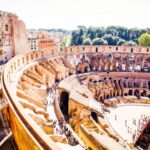
In the race segment, you’ll admire the impressive internal structure of Circus Maximus—specifically, the scale that could accommodate up to 385,000 spectators. That number lands differently when you’re seeing the arena from within the reconstruction. It’s not just trivia. It helps explain why the Romans treated these events like major civic moments.
And it also helps you understand why the game is so focused on faction choice and competition. The setting is built for crowd energy, public spectacle, and political favor. That’s the logic behind the game mechanics, even if you’re playing it as a modern visitor.
Inside the race: chariot gameplay, factions, and the Emperors favor
Once you’re at the chariot race starting point, you choose your favorite faction and compete to earn the Emperors favor. That’s the game’s “story engine,” and it’s tied to the historical idea of public events influencing status.
Here’s what you should expect from a VR racing format like this:
- You’ll be guided back into the race with staff help
- You’ll use the VR headset and integrated audio
- The experience is designed for groups (up to 25), so the pacing is managed rather than free-form
One reason this gets praised is that the staff keep the group lively during the racing. The VR assistant role is key here; people often mention assistants like Manuela as entertaining and capable at guiding you through the race without losing the fun.
If you’re worried about performance, don’t overthink it. The value isn’t in being a pro gamer. It’s in joining a shared, time-boxed Roman-themed event with a clear start, a clear mission, and a satisfying finish.
Also, because you’re in VR, the “arena environment” is doing a lot of the work. Even if you don’t know your Roman factions, you’ll still understand the game’s goal: compete, win, and climb toward that final favor.





Audio guide and languages: English/Italian support without the stress
Included in the experience is an integrated audio guide in Italian and English, plus a VR assistant available in both languages. That combination is what makes this work for mixed-language groups.
Practically, audio guidance helps when VR narration is happening while you’re moving. Instead of trying to read instructions or catch every spoken detail, you can rely on the audio track for the context—what you’re looking at, why it matters, and how each segment connects.
If you’re traveling with someone who prefers a specific language, this setup makes it easier. You’re not forced into only one way of understanding the story.
The other advantage is that the staff can support you if anything doesn’t make sense—especially around the game sequence and headset placement. That’s where a friendly, informed assistant earns real credit.
Price and value for a 90-minute Circus Maximus stop
The price is $34 per person for a duration of about 1.5 hours (check availability for starting times).
Is it expensive for Rome? It’s not cheap, but it’s also not priced like a full private guided day. The value comes from two bundled elements:
1) interactive VR gaming at a famous Roman site context
2) a structured, narrated history experience that covers more than just one view
You’re essentially buying a quick, high-engagement orientation to Circus Maximus and its surroundings. Traditional tours often take longer just to reach the “main” landmarks. Here, you get multiple Roman-world beats in a short time window.
One caution on value: the experience does not include entrance to the Circus Maximus Archaeological Site. So if your top goal is physical ruins, shaded wandering paths, and photos from ground level, you’ll need a separate plan for that.
But if your goal is understanding the arena and its setting quickly, while having fun in the process, the pricing makes more sense.
What’s included (and what you’ll need to plan yourself)
Here’s what’s included:
- VR headset
- VR assistant in English and Italian
- Integrated audio guide (Italian and English)
- RC insurance
Not included:
- entrance to the Circus Maximus Archaeological Site
- tour guide (note the experience itself includes staff support, but there’s no separate sightseeing guide included beyond the VR/audio format)
- drinks
- souvenirs
- transportation
That “not included” list is normal for a VR attraction, but it affects your planning. You’ll want to:
- bring your own water strategy (or buy nearby, depending on where you are before/after)
- decide whether you also want an extra on-foot site visit
- handle transit to the meeting point on your own
Also, no large bags are allowed inside the attractions. So keep your load light. Bring only what you need for a headset-based experience.
Practical tips: what to bring, what to avoid, and how to keep it smooth
You should bring:
- a passport or ID card
- comfortable shoes
Comfortable shoes matter more than you’d think. You’re walking between segments and moving through the meeting flow.
What’s not allowed:
- pets
- luggage or large bags
- unaccompanied minors
Children under 18 must be accompanied by an adult and carry valid ID. If you’re bringing teens, you’ll likely be fine, but plan for ID and supervision.
If you’re sensitive to VR gear, wear clothing that lets you get comfortable with a headset on. And if you hate tight spaces, know that VR stations can be physically close because groups are coordinated for timing.
Who this VR Circus Maximus experience fits best
This is a smart choice for you if:
- you like interactive activities more than passive sightseeing
- you want a quick history orientation to the Circus Maximus area
- you enjoy games, even casually
- you’re short on time and want a single activity that covers multiple Roman-world visual beats
It may be less ideal if:
- your priority is only physical access to the archaeological site
- you dislike VR headsets
- you want a long, slow walk with lots of independent photo time
The sweet spot is balance: this experience helps you connect the “big idea” of Circus Maximus with the landmarks around it, without needing a full guided day.
Should you book Circus Maximus: Rome VR chariot race?
I’d book this if you want Rome with motion and story in the same package. For the money, you’re getting a compact 1.5-hour format that mixes VR chariot racing, a guided sense of location, and memorable context like the arena’s spectator scale. The best sign to me is the staff emphasis on keeping people engaged—when assistants like Sara and Manuela are running the experience with that kind of energy, the whole session tends to feel smoother.
Skip it if you mainly want to tour the real Circus Maximus ruins on foot, because the archaeological site entrance is not included. In that case, pair another ground-level visit with this VR stop only if your schedule allows.
If you’re on the fence, ask yourself one simple question: do you want Rome you can participate in? If the answer is yes, this is a strong, fun use of time near Circus Maximus.
FAQ
How long is the Circus Maximus virtual reality game?
The experience lasts 1.5 hours. Starting times depend on availability.
Where do we meet for the activity?
You meet at the intersection of via San Gregorio and via dei Cerchi. The activity ends back at the same meeting point.
What language support is included?
You get a VR assistant in English and Italian, plus an integrated audio guide in English and Italian.
Is entrance to the Circus Maximus Archaeological Site included?
No. The experience does not include entrance to the archaeological site.
What should I bring?
Bring your passport or ID card and wear comfortable shoes.
Are there any restrictions on bags or luggage?
Yes. Luggage or large bags are not allowed inside the attractions.
Is the experience wheelchair accessible?
Yes, it is listed as wheelchair accessible.
Are pets allowed?
No, pets are not allowed.
Can unaccompanied minors join?
No. Unaccompanied minors are not allowed, and children under 18 must be accompanied by an adult with a valid ID.
What’s the cancellation policy?
Free cancellation is offered up to 24 hours in advance for a full refund.