REVIEW · ROME
Pompeii: Entry Ticket w/ Guide and Transfers or Audio Guide
Book on GetYourGuide →Operated by Show Me Italy · Bookable on GetYourGuide
Pompeii feels frozen in time. This Pompeii day trip brings you face-to-face with streets and villas preserved after the 79 AD eruption, with a live guide (or an English audio option) to point out what matters as you go. I love how the route strings together big sights like the forum with the amphitheater, and I love the emotional punch of the plaster casts. The one real drawback is the walking: it’s not a great fit if you use a wheelchair or have mobility limits, and the tour doesn’t wait for latecomers.
I also like that the day can be as structured or as self-paced as you want. If you book the Rome transfer option, you can spend less time figuring out trains and more time on the ground at Pompeii. And in the guides I’ve heard named, Giuseppe is one that comes up for friendly, humorous storytelling that helps the ruins click.
In This Review
- Key things you’ll notice before you go
- Pompeii’s ruins aren’t just old. They’re specific.
- Choosing between a live guide and the English audio option
- Rome transfers vs. going on your own: what’s the real difference?
- Entering the Pompeii Archaeological Park and getting oriented fast
- The forum and amphitheater: the public face of Roman life
- Villas and decorated rooms: why mosaics and frescoes matter
- Daily life details: baths, bakeries, and shops
- House-to-house stepping stones: how the route builds your understanding
- Plaster casts: the tragedy that makes Pompeii unforgettable
- How long is the day, really? Timing you can count on
- Price and value: what you’re truly paying for
- What’s included, what’s not, and small rules that matter
- Who this Pompeii visit suits best
- Should you book this Pompeii entry with guide or audio?
- FAQ
- Is the Pompeii entry ticket only, or does it include a guide too?
- Does the tour include transportation from Rome?
- How long does the Pompeii visit take?
- What languages are available for the host or guide?
- Are there restrictions on luggage and items?
- Is this activity wheelchair accessible?
Key things you’ll notice before you go
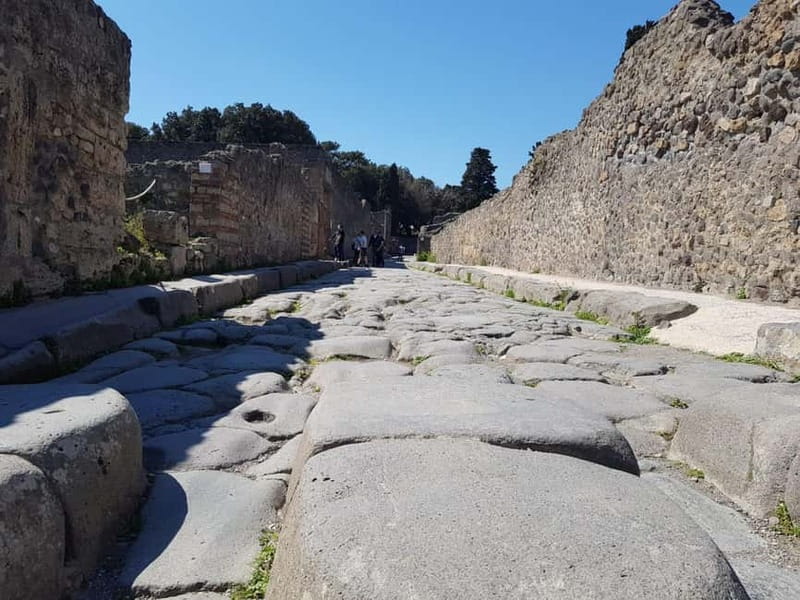
- Guide vs. audio changes everything: a guide explains context as you walk; audio lets you set your own pace in English.
- The forum-to-amphitheater walk feels logical: you see political and entertainment life as one connected story.
- Plaster casts aren’t just sad souvenirs: they make the tragedy of the eruption immediate and human.
- Villas and decorations show real social rank: frescoes and mosaics give you clues about wealth and daily taste.
- House of the Vettii and Villa of the Mysteries are anchor stops: plan for time, not just photos.
- Transfers are part of the value: when included, you skip logistics and reduce stress on a long day.
Pompeii’s ruins aren’t just old. They’re specific.
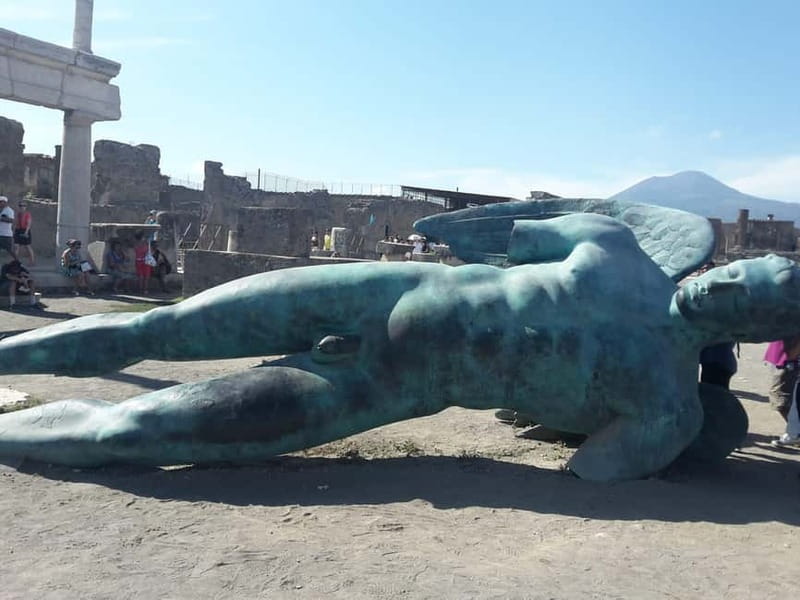
Pompeii is the kind of place where you don’t just see ruins—you see moments. You’re walking Roman streets that were buried when Mount Vesuvius erupted, and that timing is the reason the site feels so readable. With the right framing, the plaster casts, forum spaces, and homes stop being random artifacts and start feeling like a real town.
A big reason I like this format is that you can get orientation without rushing. A guide (when you choose that option) helps connect the buildings to the people who used them, including what life looked like right before the catastrophe.
You can also read our reviews of more tours and experiences in Rome



Choosing between a live guide and the English audio option
This experience comes in two modes: a guided tour of Pompeii or an optional audio guide (English). If you’re the type who likes a clear storyline—why a forum mattered, what an amphitheater says about public life—going with the guide is the easiest win.
A guide also matters for interpretation. At Pompeii, it’s easy to walk past details that look similar unless someone points them out. You’ll hear context about daily routines and the eruption sequence, so you understand what you’re looking at as you move from one landmark to the next.
Audio is a smart choice if you want flexibility. You can linger, backtrack, or move faster through parts you don’t care about as much. It’s also handy if you’re traveling with someone who prefers different pacing.
My practical tip: pick the option that matches your attention style. If you want explanations to steer you, choose a guide. If you want control over time and pace, go audio.
Rome transfers vs. going on your own: what’s the real difference?
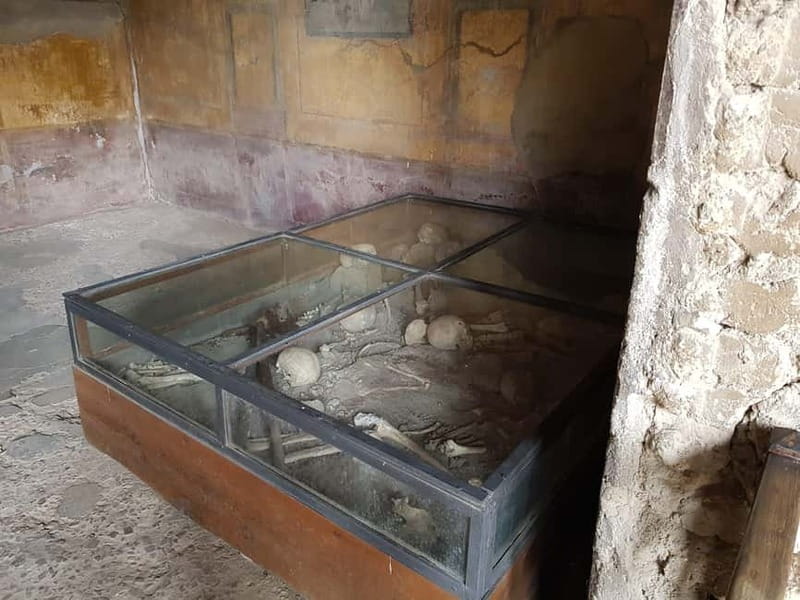
You’ve got two basic ways to do this day trip. Some options include round-trip transportation from Rome by bus or train, and others assume you’ll make your own way to Pompeii.
When transfers are included, the value is mostly about reducing friction. A long day can turn into a stressful day if you’re juggling schedules and station changes. With a transfer option, you get an organized departure and return rhythm, which helps you actually enjoy the ruins instead of counting minutes.
If you go on your own, you can save time on paper—but you’ll carry the logistics. That can be fine if you’re comfortable with public transit and you like planning your own schedule. Just keep in mind that Pompeii visits are weather-dependent in the sense that the tour runs rain or shine unless officials close parts of the site for safety.
Entering the Pompeii Archaeological Park and getting oriented fast
The ticket includes entry to the Pompeii Archaeological Park. That’s the foundation, but the real payoff is how you structure your first hour.
Once you’re on-site, think of your visit as two layers:
- Layer one: the big public spaces (forum and amphitheater)
- Layer two: private life (villas, decorated homes, and daily commerce)
Having a plan matters because Pompeii is spread out and details take time. If you walk in “camera mode” only, you can miss how all the pieces fit together.
If you’re on a guided tour, your guide’s job is basically to turn the site into a map you understand. If you’re on audio, use the first segments to set your bearings quickly so you’re not spending later hours trying to remember what you already saw.
The forum and amphitheater: the public face of Roman life
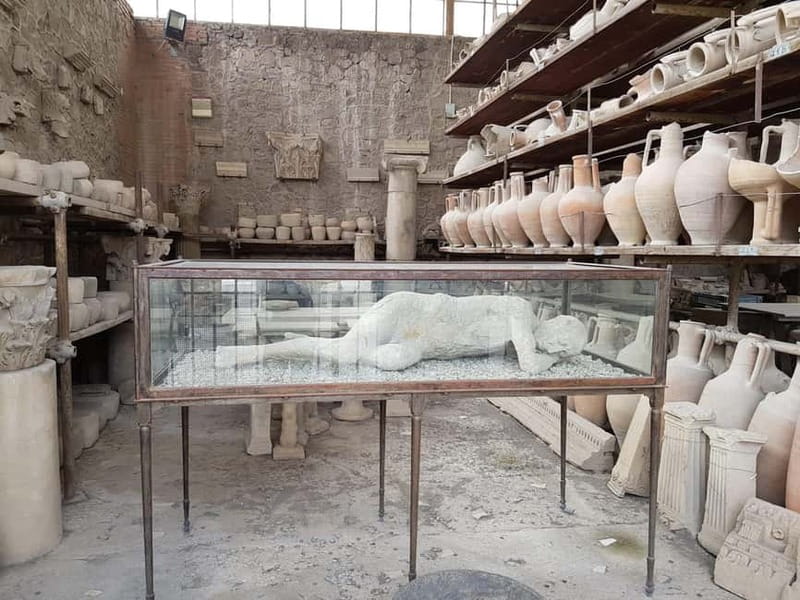
The forum is described as the heart of political and social life, and that’s exactly how it feels once you’re standing there. This is where civic identity shows up in stone. A guide helps translate the space into function: who would be here, what kind of decisions and public activity this area represents, and why Pompeians would care about it.
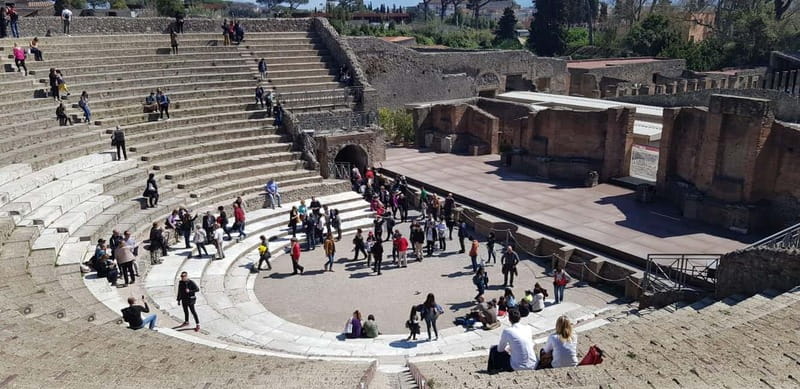
Then you move toward the amphitheater, a landmark that instantly communicates entertainment and spectacle. Even if you’ve seen amphitheaters elsewhere, Pompeii’s preserved setting gives you extra texture. It’s easier to picture how crowds moved, how public events shaped the day, and how social status showed itself in public spaces.
What I like about this part of the visit is pacing. The forum gives context, and the amphitheater gives drama. Together, they give you a sense of how Romans organized their public time.
You can also read our reviews of more guided tours in Rome






Villas and decorated rooms: why mosaics and frescoes matter
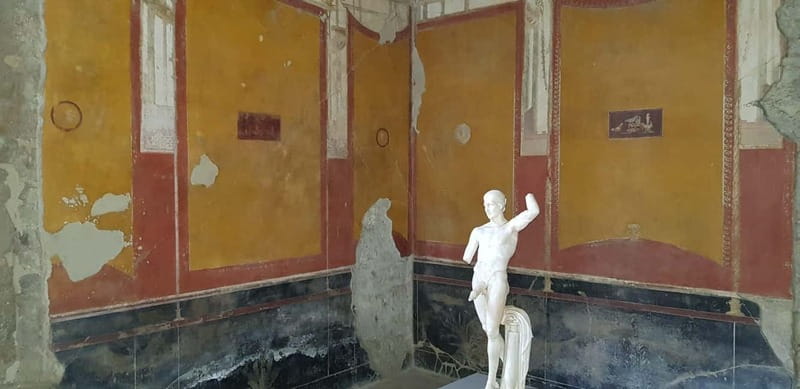
Pompeii isn’t only streets and monuments. It’s also interior life—wealth, taste, and the way people wanted their homes to feel.
You’ll have chances to see the intricate frescoes and mosaics in the homes of wealthier citizens. These decorations aren’t just pretty. They’re clues about education, connections, and the social signals people wanted to send every day.
Two stops often anchor this private-life story:
- House of the Vettii: a richly decorated home that helps you picture domestic wealth.
- Villa of the Mysteries: known for the kind of imagery that makes you slow down and look twice.
If you’re using a guide, this is where the explanations tend to pay off most. If you’re using audio, it helps to actively pick moments to stop—don’t just walk through rooms while multitasking with photos.
My practical advice: give yourself permission to stop. Interiors are where Pompeii becomes personal.
Daily life details: baths, bakeries, and shops
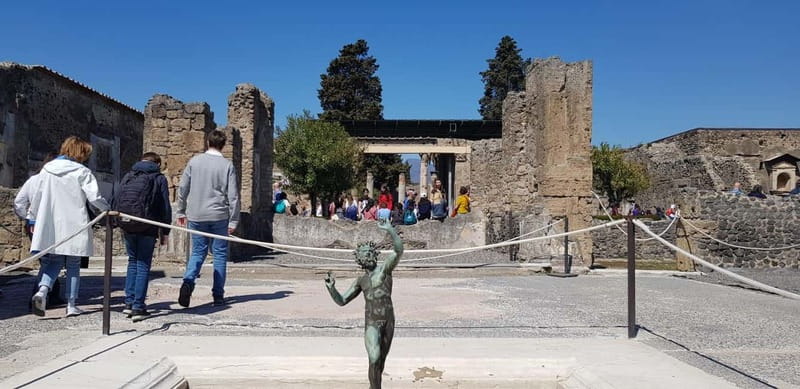
One thing this tour format emphasizes is the rhythm of everyday Roman life. That shows up in stops connected to places like ancient baths, bakeries, and shops.
These aren’t just “side attractions.” They make the town feel lived-in rather than frozen. You begin to understand how people ate, washed, worked, and interacted within a city that had routine on lock—until the eruption changed everything.
This is also one of the most kid-friendly parts of the experience because daily-life settings are easy to understand without a lot of background knowledge. If you’re traveling as a family, this section often works better than you’d expect.
House-to-house stepping stones: how the route builds your understanding
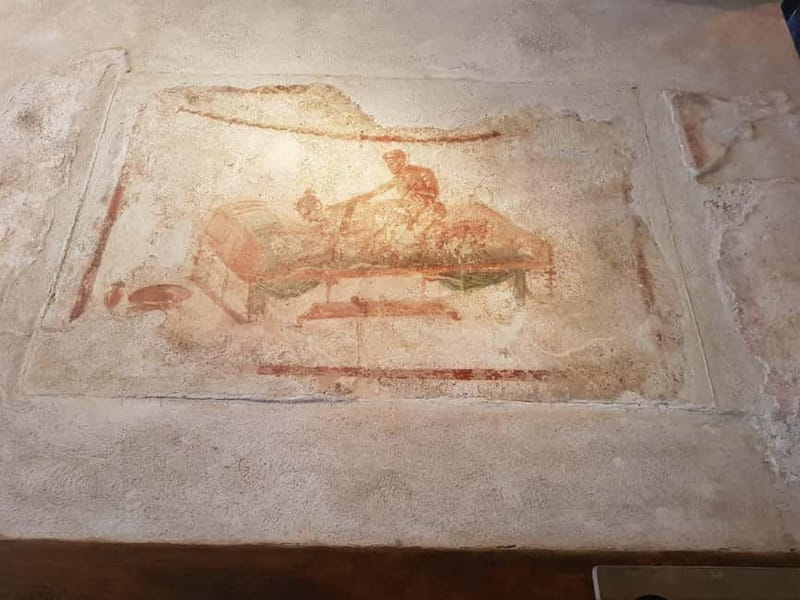
The experience is designed to be more than a checklist of famous spots. It typically moves you from public spaces into private homes, while sprinkling in daily-life context and emotional landmarks along the way.
That matters because Pompeii is the kind of place where repetition can blur details. A structured route keeps you from wandering aimlessly and helps you connect:
- civic life (forum)
- entertainment (amphitheater)
- status and decoration (villas and decorated homes)
- daily routine (baths, bakeries, shops)
- the human impact of catastrophe (plaster casts)
Whether you’re with a guide or audio, try to keep track of what each area is telling you. Even simple mental labels—public vs. private, routine vs. tragedy—make the day feel coherent.
Plaster casts: the tragedy that makes Pompeii unforgettable
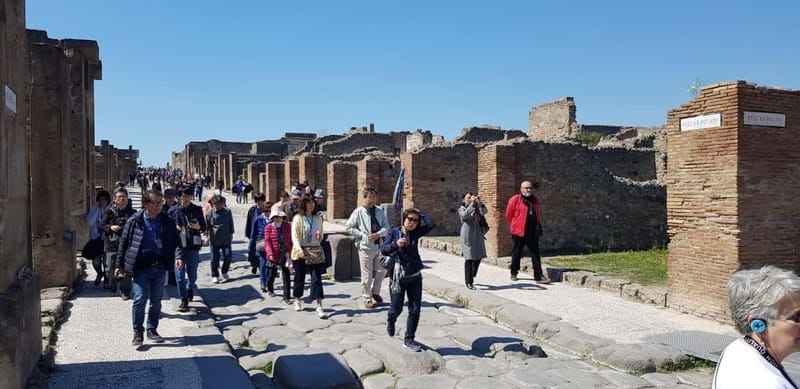
The plaster casts are included, and they’re often the part that sticks. They turn the eruption from a historical event into something you can’t reduce to a date.
You’ll see the poignant plaster casts of Pompeii’s former inhabitants. This is where the emotional weight of the site becomes unavoidable. It’s also where a guide’s framing can help: not to soften it, but to explain why the site is so significant and why people still visit with heavy hearts.
If you’re prone to getting overwhelmed in emotionally intense places, I’d plan for a breather after this stop. Step outside the densest areas, drink water if you’re carrying it outside the vehicle rules (the vehicle itself doesn’t allow food and drinks), and give yourself a moment before continuing.
How long is the day, really? Timing you can count on
The duration is listed as 2 to 12 hours depending on the starting time you select. That wide range is a hint that your day can feel very different based on the departure option and whether you’re doing transfers.
If you want a shorter visit, choose a schedule that starts early enough to avoid losing daylight to transfers. If you want more time on-site, look for options that let you slow down—especially if you’re going with audio and plan to explore more independently.
Also remember: the tour won’t wait for latecomers. Show up early enough to settle yourself, find the group, and start with calm. At Pompeii, the day can feel long once you’re walking, so starting relaxed helps more than you’d think.
Price and value: what you’re truly paying for
The price shown is $5.55 per person (check availability for starting times). That’s a surprisingly low headline figure, and the value comes from what’s included.
Entry to the Pompeii Archaeological Park is included, which is the base cost for access to the site. If you select the guided option, you’re also paying for an organized tour with a guide. And if you choose the Rome transfer option, you’re adding round-trip transportation.
So, the best way to judge value is by matching your needs:
- If you want interpretation and structure, the guided option is where the money becomes useful.
- If you’re comfortable exploring independently, audio can lower the cost while still giving you context.
- If you don’t want transit stress, choose the option with round-trip transfers from Rome.
One more practical thought: if you’re comparing prices across different Pompeii products, always compare what’s included—entry alone isn’t the same experience as entry plus guidance and transport.
What’s included, what’s not, and small rules that matter
Included in this experience:
- Pompeii Archaeological Park entry
- guided tour of Pompeii if you choose that option
- round-trip transportation from Rome if you choose that option
Not included:
- hotel pickup and drop-off
You’ll also run into on-site rules that affect comfort:
- oversize luggage and large bags aren’t allowed
- alcohol and drugs aren’t allowed
- food and drinks in the vehicle aren’t allowed
My simple planning advice: travel light. If you’ve got a bulky daypack, you’ll likely be happier without it. Keep essentials accessible so you’re not digging around in crowded areas.
Who this Pompeii visit suits best
This is a great match for people who want a classic Pompeii day trip from Rome but don’t want to figure everything out alone.
It works well for:
- Couples: a shared storyline plus room for private time
- Solo travelers: group support and safe, organized transport
- Families: engaging stops like the forum, amphitheater, and daily-life sites
It’s not a good fit for:
- wheelchair users
- people with mobility impairments
If you’re on the border with mobility, check your own limits realistically. Pompeii involves a lot of walking, and the tour won’t wait if you fall behind.
Should you book this Pompeii entry with guide or audio?
Yes, if you want a smooth Pompeii day trip with your access handled and your time on-site used well. I’d especially recommend booking this format if you care about understanding what you’re seeing—not just photographing stone walls.
Choose a guided tour if you want the clearest explanations and a built-in route that connects forum, amphitheater, decorated homes, daily-life stops, and the plaster casts. Choose English audio if you like control and you’re confident you’ll slow down where it matters.
Skip the idea if mobility is a concern or if you know you’ll want the group to wait for you. Pompeii rewards preparation and a steady pace.
If you can do those two things, this is one of the most satisfying ways to experience Pompeii without turning the day into a logistics puzzle.
FAQ
Is the Pompeii entry ticket only, or does it include a guide too?
You can choose either a guided tour of Pompeii (if you select that option) or an optional English audio guide. Pompeii Archaeological Park entry is included.
Does the tour include transportation from Rome?
Round-trip transportation from Rome is included only if you book the option that offers transfers. Hotel pickup and drop-off are not included.
How long does the Pompeii visit take?
The duration is listed as 2 to 12 hours, depending on the starting time you select. Check availability to see specific departure times and lengths.
What languages are available for the host or guide?
The host or greeter is listed in English, French, Spanish, and German.
Are there restrictions on luggage and items?
Yes. Oversize luggage and large bags are not allowed. Alcohol and drugs aren’t allowed, and food and drinks in the vehicle aren’t allowed.
Is this activity wheelchair accessible?
No. It is not suitable for people with mobility impairments and it is not suitable for wheelchair users.