REVIEW · ROME
Rome: Ancient Mosaic Making Workshop
Book on GetYourGuide →Operated by Studio Cassio · Bookable on GetYourGuide
Your hands learn Roman art fast.
This Roman mosaic workshop is a true make-it-yourself break from sightseeing: a master mosaicist teaches you texture, composition, and how to cut marble tiles, and you walk out with a finished piece you can actually use as a souvenir. I love the hands-on pace and the fact that the studio uses proper tools and real local materials. I also like the workshop’s friendly, family-run feel, with instructors such as Alex (and hosts like Julia, Hope, and Ellie) making it feel personal. One drawback to plan for: it’s not for kids under 12, and transportation to the studio is on you.
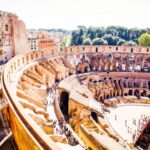
Set in Rome’s Monti neighborhood, the class starts near the Colosseum area (a quick walk from Cavour Metro Line B) and lasts 2.5 hours with a small group capped at 9. You’ll begin with mosaic technique and history, then spend the bulk of the time actually building your mosaic, using local marble and getting help as you go. By the end, you get a 7” x 5” mosaic, about 14 oz, plus a frame and a sturdy box for safe travel.
In This Review
- Key things you’ll do (and why they matter)
- Why a Mosaic Workshop Beats Yet-Another Sight
- Finding the Studio Cassio Workshop Near Colosseum
- Your 2.5 Hours: History Brief, Then Real Making
- Texture, Composition, and Marble Cutting (The Real Skill)
- What You Take Home: A Framed 7” x 5” Mosaic
- Price and Value: Why $106 Is More Than a Souvenir
- The Studio Vibe: Family-Run, Small Group, Helpful Instructors
- Who This Workshop Is Perfect For (and Who Should Skip It)
- Practical Tips Before You Go
- Should You Book This Roman Mosaic Workshop?
- FAQ
- How long is the Rome Ancient Mosaic Making Workshop?
- What is the price per person?
- How big is the group?
- Where is the workshop located?
- What language is the instruction offered in?
- What will I make and take home?
- What is included with the class?
- What is not included?
- Is it suitable for children?
- Can I cancel or change my plans?
Key things you’ll do (and why they matter)
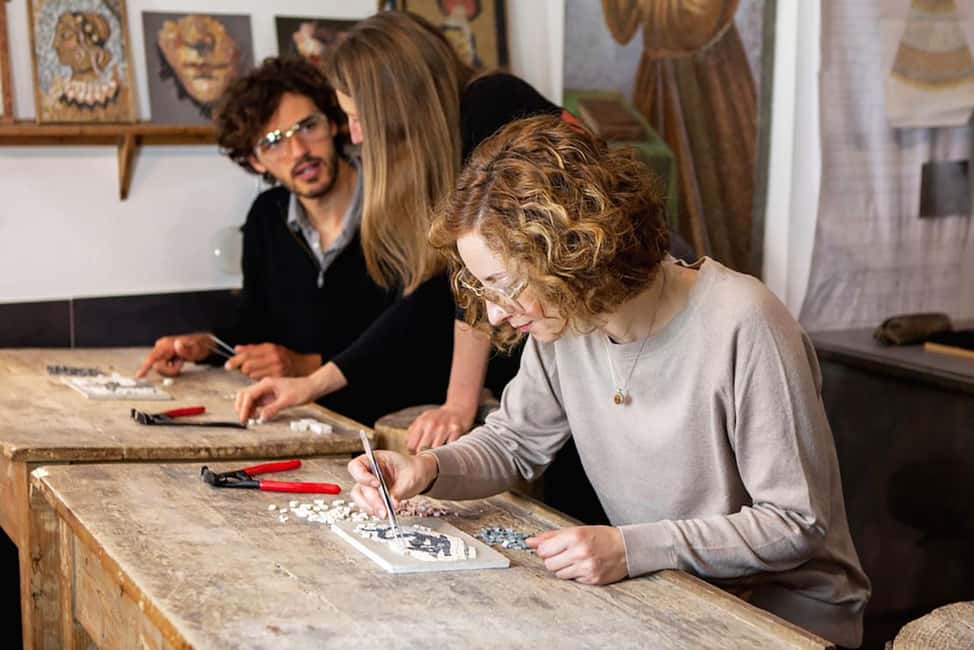
- Learn Roman mosaic technique in a working studio where real pieces are made
- Practice composition and texture so your design looks intentional, not random
- Cut and place marble tiles using the same kinds of tools a mosaicist uses
- Create a take-home mosaic in a frame, packed in a sturdy protective box
- Get a guided history intro that connects what you’re making to Rome’s legacy
Why a Mosaic Workshop Beats Yet-Another Sight
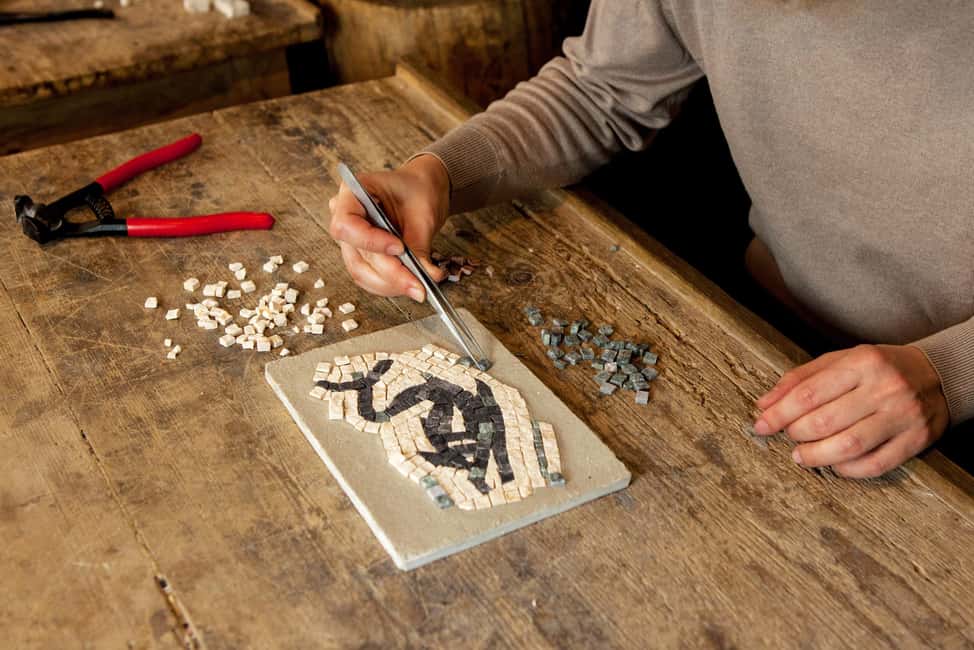
Rome is full of mosaics. You see them in churches, palaces, and museum floors—often as “look but don’t touch” art. This workshop flips that. You’re not just admiring Roman craft. You’re repeating the same core ideas: how light hits stone, how textures read up close, and how patterns hold together.
What I like most is that you’re learning technique, not just following steps. The teaching focuses on texture, composition, and marble tile cutting—the exact stuff that turns a bunch of pieces into a convincing Roman mosaic style. And because the group is small, you’re not lost in the shuffle.
There’s also a practical upside: after a day around the Colosseum, a session like this gives your legs a break and keeps your brain busy in a satisfying way. It’s hands-on, and it ends with something physical you made.
You can also read our reviews of more tours and experiences in Rome



Finding the Studio Cassio Workshop Near Colosseum
The meeting point is near the Colosseum, and it’s only about a 2-minute walk from the Cavour stop on Metro Line B. That’s a big deal because Rome’s traffic and parking can be a headache. Metro access makes it easy to fit into your day.
Transportation to and from the workshop is not included, so you’ll want to plan your route ahead. The class itself is in the Monti area, which is also handy because you can pair it with pre- or post-class time spent wandering nearby streets.
Timing tip that keeps this experience enjoyable: consider using the workshop as your “cool-down” after a heavy sightseeing block. Multiple participants describe it as a great way to escape the heat, and the studio environment is exactly where you want to be when Rome is at its warmest.
Your 2.5 Hours: History Brief, Then Real Making
The workshop runs about 2.5 hours, and the structure is simple: learn the basics, then work until your mosaic is done.
1) Intro to Roman mosaics
You start with an introduction to mosaic technique and history. The goal isn’t a lecture marathon—it’s an “okay, now I get what I’m doing” foundation so your choices make sense while you work.
2) Design and composition practice
Next, you shift from ideas to layout. You’ll work with principles of composition—how your pattern sits in the frame and how different tile sizes and placements create balance.
3) Texture and cutting practice
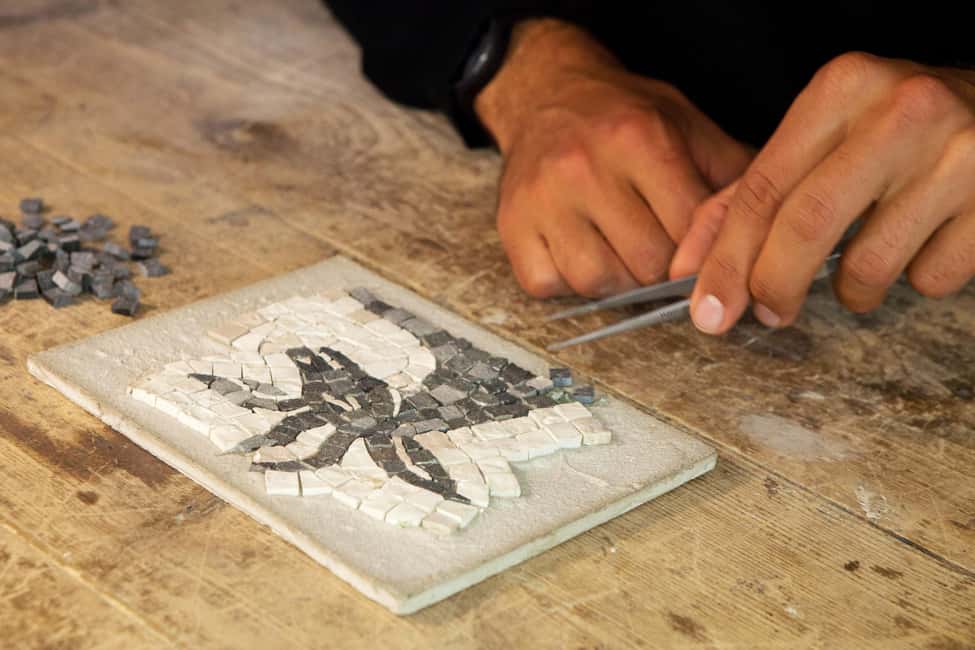
Then it’s onto the part most people actually remember: marble tile cutting. You’re taught the principles of texture, and you get hands-on time making your mosaic using natural local marble.
4) Assemble your final mosaic
From there, you build out your piece in the same way a mosaicist thinks about it: placing pieces deliberately, refining edges, and keeping your design readable.
By the end, you don’t just have a “craft project.” You have an artwork-sized mosaic that meets the workshop’s standards for what an ancient-style piece should look like.
Texture, Composition, and Marble Cutting (The Real Skill)
This class is built around the core technical decisions behind Roman mosaics.
Texture matters because mosaics aren’t flat. Stone has small surface differences that catch light in a way paint never does. In the workshop, you learn how to build that effect so your design has depth when you look at it from different angles.
Composition is about getting your eye to move where you want it to move. You’re working in a frame, so you’re not making a “square of random bits.” You’re designing inside boundaries—then your final piece looks intentional and finished.
And then there’s marble tile cutting. This is where you see why mosaic work was skilled labor. Small cuts affect how pieces fit, how lines look, and whether the final image reads clearly. You’ll handle specific tools in the studio, guided by the instructor so you can work safely and accurately.
A practical note: the workshop is recommended for ages 12 and up for safety reasons. If you’re traveling with younger kids, you’ll want to plan something else for them.
What You Take Home: A Framed 7” x 5” Mosaic
Your finished artwork is about 7” x 5”, weighing around 14 oz. You also get:
- a frame to create your artwork in
- a sturdy box to store and protect it
That packaging matters. A mosaic isn’t like a postcard you can fold. You want something that survives being carried through the airport and stacked in your luggage without stress. The studio prepares your piece for travel with that in mind, so you’re not improvising last-minute wrapping.
Also, because your mosaic is made by you, it’s genuinely personal. The class isn’t about producing an identical souvenir for everyone. You make your own unique arrangement using the studio’s marble and tools.





Price and Value: Why $106 Is More Than a Souvenir
At $106 per person for about 2.5 hours, this workshop can look pricey if you compare it to basic “paint and sip” type activities. But that’s not the right comparison.
Here’s what you’re paying for, in real terms:
- a master mosaicist guiding you through proper technique
- access to high-quality natural local marble
- all necessary tools, plus hands-on instruction using them
- a completed mosaic in a frame
- a sturdy protective box
- coffee and/or tea and bottled water
When you add up materials, instruction time, and the fact that you’re producing a finished framed artwork, the price starts to make sense. And since the group is limited to small groups (up to 9 participants), you generally get more attention than you would in a large class.
The only extra cost you should expect is simple: transportation to reach the studio.
The Studio Vibe: Family-Run, Small Group, Helpful Instructors
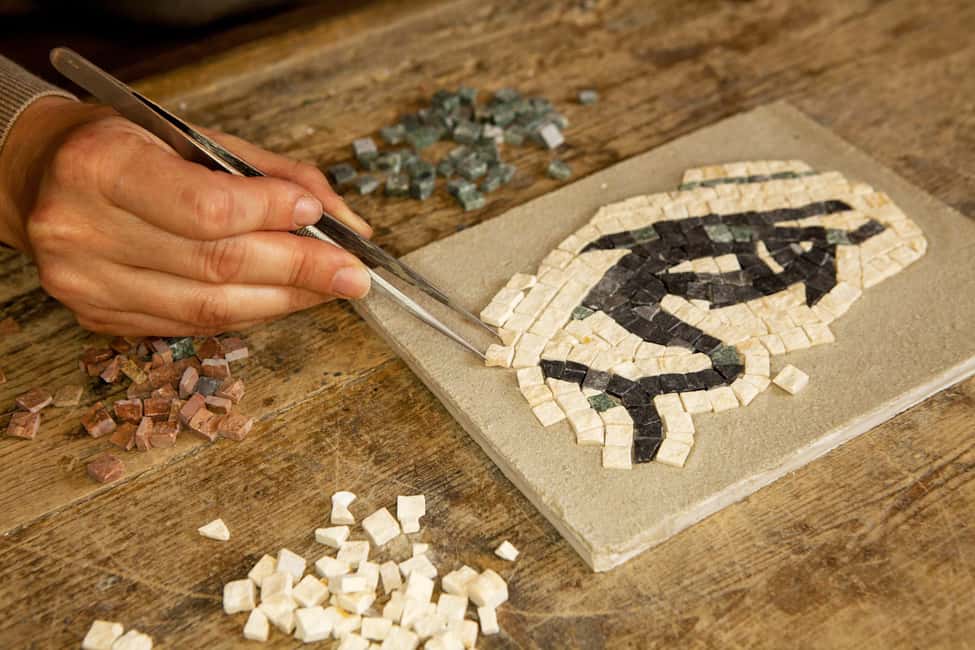
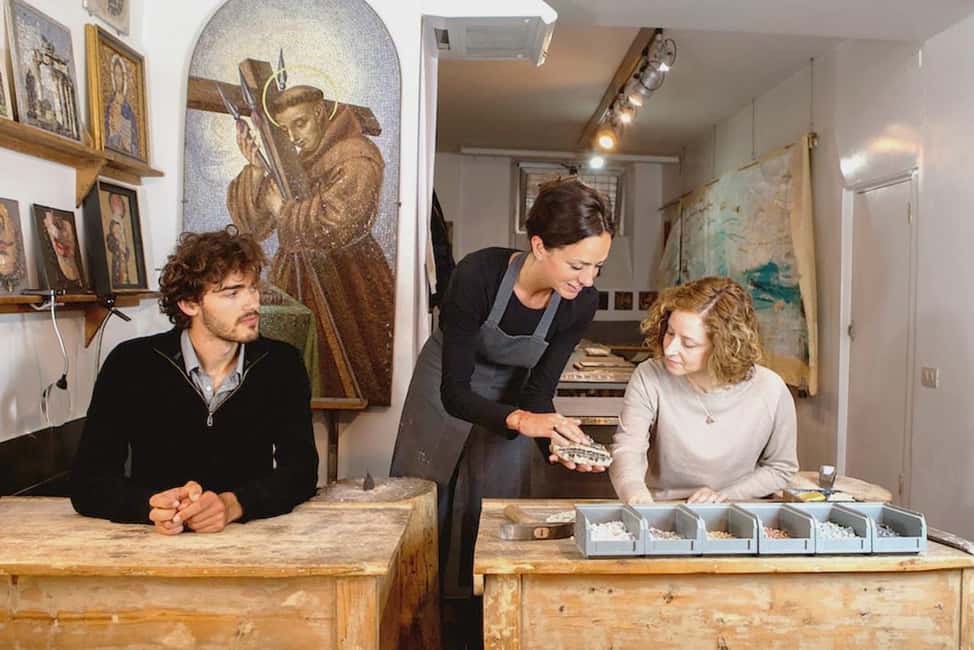
The workshop happens in a professional mosaic studio in Monti, described as a historical family-owned place. That matters because you’re not only learning technique—you’re watching how people actually work.
Instructors and hosts have names you may recognize from participants’ experiences, including Alex (often leading the instruction) plus Julia, Hope, and Ellie in the studio team. That kind of multi-person setup tends to help you get unstuck when you’re working with a hands-on craft.
The overall mood seems calm and supportive rather than rushed. People mention it as a relaxing break after sightseeing, and the teaching style includes humor and encouragement—exactly what you want when you’re learning a precise craft.
If you’re the type who worries about messing up, take comfort: the work is designed to be guided step-by-step, and your final piece is made through real practice rather than a one-shot performance.
Who This Workshop Is Perfect For (and Who Should Skip It)
This mosaic workshop is a strong match if you:
- want a hands-on Rome experience you can take home
- like learning how things are made, not just what they look like
- want an activity that breaks up museum fatigue
- enjoy small-group settings where you can ask questions
It’s also a great option for couples and for parents with teens, since the class is structured for ages 12+ and includes hands-on design time.
You might not love it if:
- you hate crafts that require careful placement and patience
- you’re short on time and can’t fit 2.5 hours
- you’re traveling with someone who isn’t comfortable with using tools (since it’s safety-focused for older kids and adults)
Practical Tips Before You Go
A few things will help you enjoy the experience more:
- Plan to arrive with enough time to settle in. The workshop is 2.5 hours, so you don’t want to cut it close.
- Wear comfortable clothes. You’ll be working at a station with tools and stone materials, and you might get a little dust from the process.
- Bring your curiosity. The most rewarding part is asking questions about how texture and composition change what you see.
And keep your expectations realistic: you’re not becoming a Roman mosaic master by the end. But you will learn how mosaic artists think—and you’ll leave with a real framed artwork.
Should You Book This Roman Mosaic Workshop?
I’d book it if you want something authentically Roman that isn’t another photo. The big value is the mix of master instruction, real local marble, and a clear end product: a 7” x 5” framed mosaic you can protect in the included box.
It’s also ideal if you’re already planning time around the Colosseum and want to balance the heavy sightseeing with a calm, creative activity. If you enjoy making things with your hands, this is one of those experiences that stays with you longer than a monument.
So yes—book it, especially for a first trip to Rome, when you’re still forming your sense of what the city was built for: art, craft, and everyday beauty.
FAQ
How long is the Rome Ancient Mosaic Making Workshop?
It lasts 2.5 hours.
What is the price per person?
The price is $106 per person.
How big is the group?
It’s a small group limited to 9 participants.
Where is the workshop located?
It’s in Rome’s Monti neighborhood, near the Colosseum, and about a 2-minute walk from the Cavour stop on Metro Line B.
What language is the instruction offered in?
The instructor teaches in English and Italian.
What will I make and take home?
You’ll create your own mosaic artwork, approximately 7” x 5” (about 14 oz), and take it home in a frame.
What is included with the class?
You get an introduction to Roman mosaic technique and history, access to high-quality natural local marble and all necessary tools, a frame, a sturdy box for storage and protection, bottled water, and coffee and/or tea.
What is not included?
Transportation to and from the workshop is not included.
Is it suitable for children?
It’s recommended for ages 12 and up, and it is not suitable for children under 12 for safety reasons.
Can I cancel or change my plans?
There is free cancellation up to 24 hours in advance for a full refund, and you can reserve now and pay later.