REVIEW · ROME
Colosseum and Ancient Rome Family Tour for Kids
Book on GetYourGuide →Operated by Kids Raphael Tours And Events · Bookable on GetYourGuide
Kids + Rome magic happens fast. This family-focused small-group tour turns the Colosseum and Roman Forum into a game-based story, with skip-the-line entry and guided stops that kids can actually follow. I especially like the small group of just 3 families, which keeps the pace lively without losing the adults in a sea of backpacks.
Here’s the trade-off: it’s not designed for everyone. It’s not wheelchair accessible, it’s not suitable for kids under 6, and the walking can feel like a lot if your crew needs constant breaks.
In This Review
- Key things that make this tour a standout for families
- Why a Colosseum-and-Forum tour works best with kids
- Meeting at the Colosseum Metro: the easiest way to start on time
- Entering the Colosseum: skip the line, then follow the story
- Roman Forum highlights kids can name: Caesar, Constantine, Titus
- Games, treasure hunts, and 3D reconstructions (aka: why kids don’t zone out)
- Pace and group size: what 3 families total changes
- Price and value: is $328.53 per person a smart spend?
- What to bring (and what to leave at home) for a smooth 2.5 hours
- Practical limits: who this tour is best for (and who might struggle)
- Should you book this Colosseum and Roman Forum family tour?
- FAQ
- How long is the Colosseum and Ancient Rome family tour?
- What time does the tour run?
- Where do we meet the guide?
- What’s included in the price?
- What should we bring?
- Is the tour suitable for wheelchair users?
- What are the main restrictions for kids and bags?
Key things that make this tour a standout for families
- Skip-the-line tickets to save your energy for actual ruins, not queues
- 3 families total for more questions, more attention, and fewer lost kids
- Treasure hunts and interactive games that make gladiators and emperors feel real
- 3D reconstructions to help kids picture what’s gone
- Big Roman Forum landmarks on one 2.5-hour route, including the Arch of Constantine and Arch of Titus
Why a Colosseum-and-Forum tour works best with kids
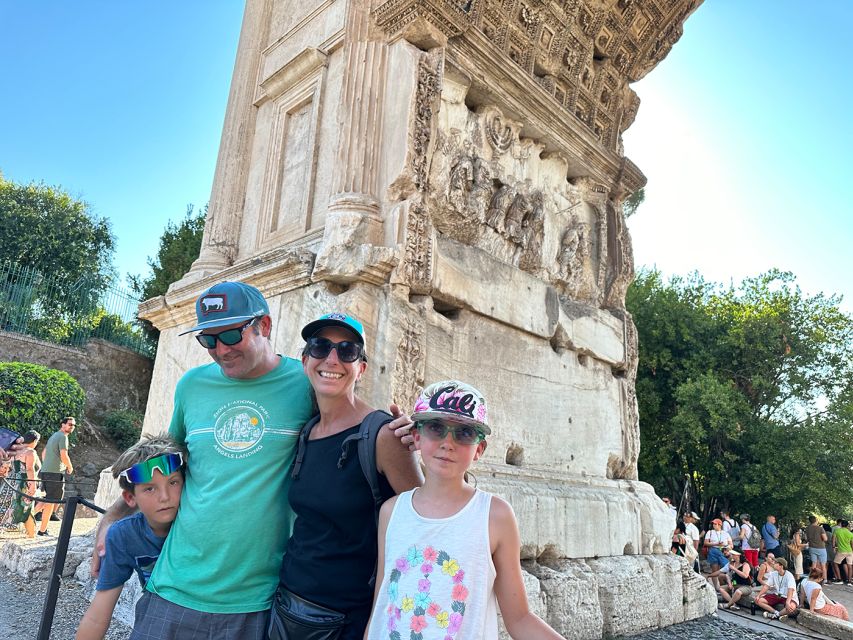
The Colosseum is loud in your imagination even when you’re standing still. A normal museum visit can turn into a blur of dates and stone, but this format is built to keep kids moving and thinking. You’re not just looking; you’re playing along as the guide explains how Rome ran, who had power, and what entertainment looked like.
I love the way the tour mixes headline sights with story. You’ll connect the Colosseum entertainments with what you see later in the Forum area, so the trip feels like one continuous “how Rome worked” lesson instead of disconnected photo stops. And because the group is only 3 families, the guide can steer attention toward the most kid-friendly moments without everyone waiting.
One more thing I like: the guide isn’t stuck on lectures. People rave about guides who stay patient, friendly, and animated—names you’ll hear again and again include Martina, Donato, Giulia, and Claudia—because kids learn best when they feel like they’re participating, not just being marched.
You can also read our reviews of more tours and experiences in Rome.



Meeting at the Colosseum Metro: the easiest way to start on time
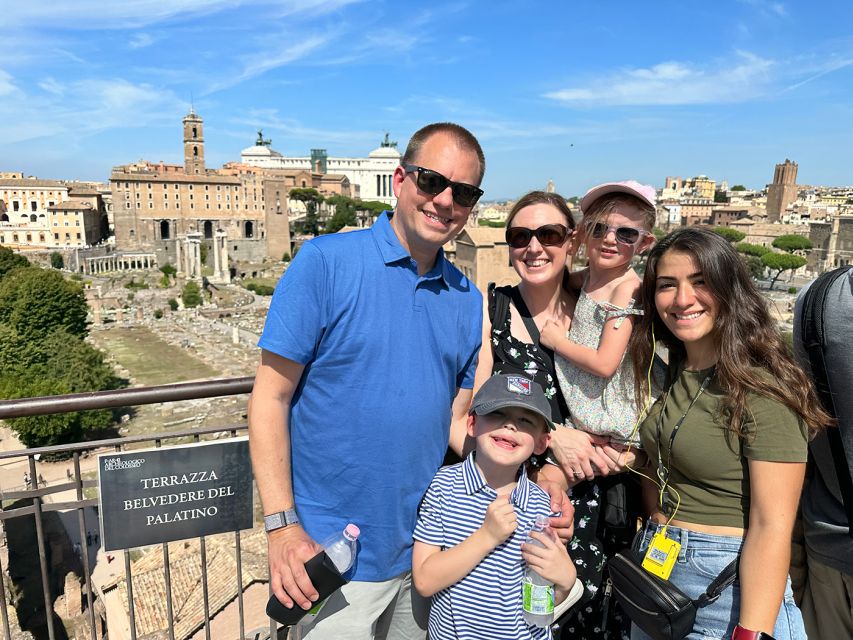
You meet your guide in front of the ground-level exit of the Colosseum metro station, and your guide holds a sign with your name. That’s actually a big deal for families. No guesswork, no frantic text-message scavenger hunt while your kids do the dramatic “we’re late” thing.
If you’re arriving by taxi or rideshare and you get dropped at the Colosseum plaza, here’s the practical heads-up: you still need to go down the metro stairs to reach the lower-level meeting area. A few families call this out specifically because it’s easy to assume the obvious spot is the right one—Rome loves making “obvious” wrong.
Plan to show up a bit early with everyone settled. This tour is 2.5 hours, and you want your energy to be high right from the first minute.
Entering the Colosseum: skip the line, then follow the story

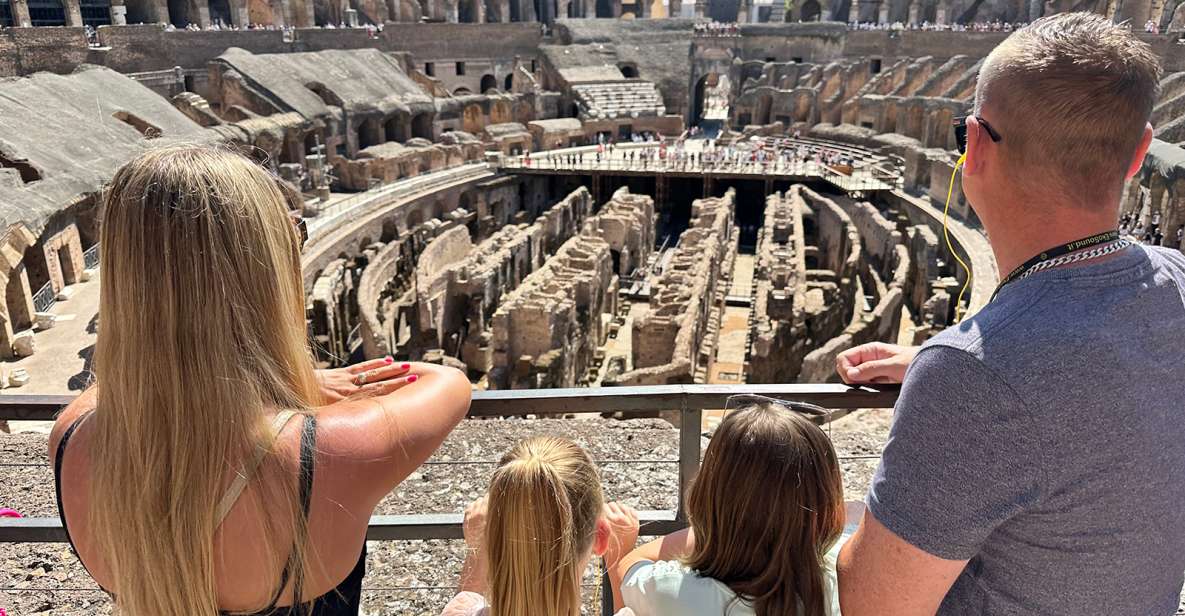
The main win here is skip-the-line entrance tickets. At the Colosseum, waiting can drain your group faster than the heat. Cutting the queue buys back time for what matters: seeing the monument and getting the explanations that make it click for kids.
Once inside, the guide guides you through the Colosseum experience with the big themes kids care about—gladiators, competition, and spectacle. The tour description frames it around the fearless gladiators and the animals, and the guide keeps the focus on what entertainment meant to Roman society. For younger kids, this approach beats reciting facts from a sign.
You’ll also hear stories about what happened there to delight emperors and crowds. Even if your child isn’t a history nerd yet, stories like these help the Colosseum feel like a place with real people and real rules—not just a backdrop for selfies.
A small but useful detail: the tour is designed for short attention spans. Guides like Donato and Ronaldo are specifically praised for keeping kids engaged the whole time, including catching when someone is drifting. That matters because the Colosseum can feel overwhelming if the tour turns into a slow wander.
Roman Forum highlights kids can name: Caesar, Constantine, Titus
After the Colosseum, the pace shifts to ruins you can actually interpret. The Roman Forum can look like scattered rock at first, but this tour helps you read it. You walk along roads Roman citizens used, then you reach the major landmarks that anchor the story.
This is where the tour earns its “for kids” label. You don’t just get told that this was important—you see remains of temples and ancient civic spaces like courthouses. Then you connect those places to how Romans organized daily life and power.
Some of the named stops you can look forward to include:
- The Imperial Palace area
- The altar of Julius Caesar
- The Arch of Constantine
- The Arch of Titus
Those arches are fantastic for kids because they’re visual and bold. They also give your guide a natural way to explain the meaning behind the stone—who won, what was celebrated, and why Rome turned politics into public spectacle.
If you’re wondering whether your child will care about the Forum: kids often latch onto the arches and the “what used to be here” idea. The tour brings that to life using 3D reconstructions so kids can picture whole buildings where you’re only seeing fragments today.
Games, treasure hunts, and 3D reconstructions (aka: why kids don’t zone out)
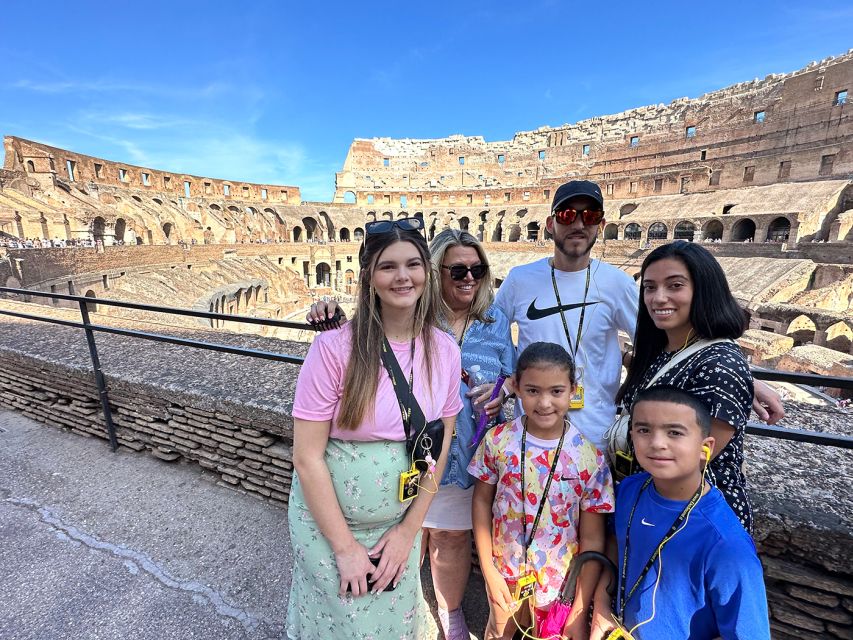
This tour leans hard into play. You’ll take part in treasure hunts and other interactive activities designed for kids and workable for adults too. That’s not just a gimmick. Games create a reason to listen because the next clue or answer matters.
Guides also use questions and mini-missions to keep attention. Multiple guides are praised for doing the same thing: watching the room, adjusting when kids get restless, and pulling them back in without making it a struggle. Names that come up often include Martina, Alexandra, Manuela, Alessandra, and Francesco—all described as friendly, patient, and good at turning the tour into something kids want to finish.
Then there are the 3D reconstructions. This is one of those “why this works” tools. A kid can understand a picture of a building more easily than a pile of stones, and adults appreciate not needing to guess what you’re looking at. You get the feeling of the past coming back into focus, rather than staying stuck in “ruins are ruins.”
Also, heat happens. One reason families liked certain guides (for example, Donato and others praised for accommodating breaks) is that the tour doesn’t ignore comfort. Still, you should plan for a couple of “we need water” moments, because 2.5 hours in Rome takes effort.




Pace and group size: what 3 families total changes
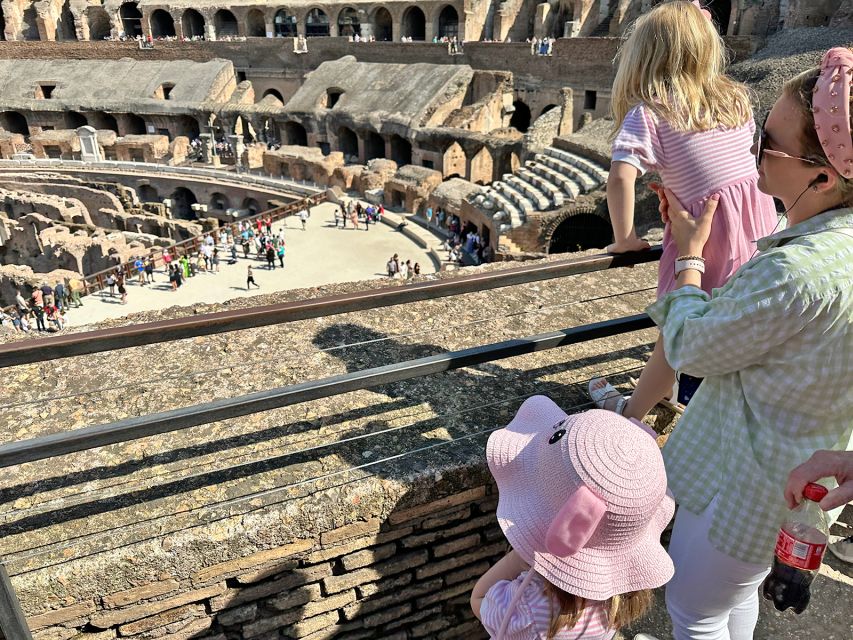
This is a small-group tour—only 3 families in total. In practice, that means your kids aren’t competing for attention with a crowd. It also means your guide can steer the experience toward your group’s needs instead of sticking to a rigid script.
That size helps in two ways:
- Kids get more chances to answer and participate. When a guide can see everyone, kids who are shy at first still have ways to join in.
- Adults get clearer explanations. You’re not just listening for yourself; you can listen as a parent, then bring it back to the child with less confusion.
It also reduces the chaos factor. At big attractions, one kid wandering off can create stress for the whole group. Here, the structure is tight enough that the guide can keep eyes on the group without turning into a drill sergeant.
If you have a family with mixed interests—say one child loves history and the other is more into action or just wants fun—small groups help the guide balance both. Several guides are praised specifically for engaging kids across a range of ages, from about 4 upward in some stories, even though the tour itself is not suitable for kids under 6.
Price and value: is $328.53 per person a smart spend?
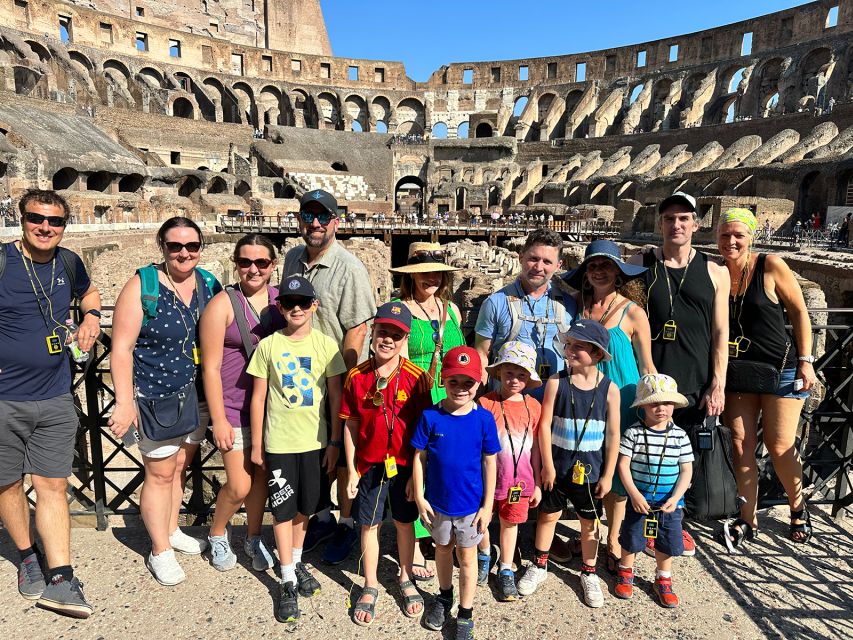
At $328.53 per person for a 2.5-hour experience, this isn’t a cheap add-on. The value question is simple: are you buying time saved, attention handled, and a better experience than a self-guided visit?
Here’s what you’re paying for, based on what’s included:
- Skip-the-line entrance tickets
- A child-friendly local guide
- Small group size (3 families total)
Skip-the-line alone can be worth real money in Rome because time is the limited resource. But what really pushes the value upward is the guide’s job: converting big monuments into kid-friendly meaning with games, questions, and 3D reconstructions. If you’ve ever tried to explain the Colosseum to a 7-year-old while fighting a long queue, you already know why guided structure matters.
Still, if your kids are the type who can wander happily with signs and photos, a self-guided approach might cost less. But if you want your child to actually understand the Colosseum and Forum—and not just tolerate it for your vacation photos—this tour is built for that goal.
My rule of thumb: book it if you want less logistics stress and more active learning. If you’re optimizing only for the lowest cost, you can find cheaper routes, but they won’t replace the game-and-story approach.
What to bring (and what to leave at home) for a smooth 2.5 hours
Rome is comfortable until you’re unprepared. For this tour, bring:
- Passport or ID card (including for children)
- Comfortable shoes
- Sun hat
You may also bring copies accepted for IDs, and the same goes for children as listed.
Don’t bring:
- Luggage or large bags
- Unaccompanied minors
- Scooter
A couple of practical tips show up in family experiences: skip the stroller if you can, and if you’re traveling with very young kids, a chest carrier is often easier than pushing something bulky around. Also, keep hydration in mind—some families recommend planning to grab water before and during the tour, and they note bathrooms are easier to find than you might expect.
Weather matters too. Starting times change by season—this tour runs at 9:30 AM and 1:30 PM in winter, and at 3:00 PM in summer. In summer, you’ll want that sun hat and a calm expectation that breaks might be needed.
Practical limits: who this tour is best for (and who might struggle)
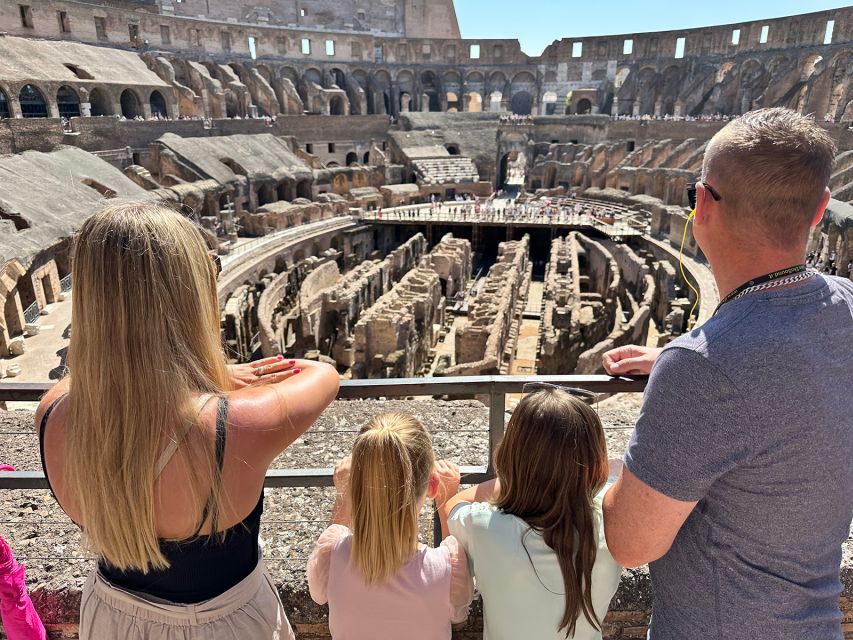
This is a family tour, but it has clear constraints:
- Not suitable for children under 6
- Not wheelchair accessible
- Children must be accompanied by an adult
- English-language live guide
So it’s best for families with kids who can walk for 2.5 hours and handle “story time” without constantly asking to sprint to the next landmark. It also suits mixed-age families because the small group size helps keep attention from dropping.
If your child needs very slow pacing, or if your group relies on wheelchair access, you’ll want to look for alternatives. The good news: Rome has many tour styles. This one just isn’t built for every mobility need.
Should you book this Colosseum and Roman Forum family tour?
If you want your kids to leave knowing what the Colosseum did and what the Roman Forum signified, this is a strong choice. The combination of skip-the-line tickets, a child-focused guide, and games plus 3D reconstructions is what makes it worth considering at this price.
I’d book it if:
- Your kids are around ages 6+ and you want them engaged the whole time
- You prefer a structured experience over reading signs on your own
- You want more than photos—something that turns ruins into a story
I’d think twice if:
- Your family needs wheelchair accessibility
- Your kids are under 6
- Your main goal is lowest cost rather than learning + time savings
FAQ
How long is the Colosseum and Ancient Rome family tour?
The tour lasts 2.5 hours.
What time does the tour run?
It runs at 9:30 AM and 1:30 PM in winter, and at 3:00 PM in summer. You’ll want to check availability for exact starting times.
Where do we meet the guide?
Meet your guide in front of the ground-level exit of the Colosseum metro station. Your guide will hold a sign with your name on it. The tour ends back at the meeting point.
What’s included in the price?
Included are skip-the-line entrance tickets, a child-friendly local guide in English, and a small group tour of 3 families in total.
What should we bring?
Bring passport or ID card (including for children), comfortable shoes, and a sun hat. ID copies are accepted as noted.
Is the tour suitable for wheelchair users?
No. The tour is not wheelchair accessible.
What are the main restrictions for kids and bags?
It’s not suitable for children under 6. Kids must be accompanied by an adult. Luggage or large bags are not allowed, and scooters are not allowed. Also, unaccompanied minors aren’t permitted.