REVIEW · ROME
From Rome: Pompeii and Herculaneum by High-Speed Train
Book on GetYourGuide →Operated by Askos Tours · Bookable on GetYourGuide
Pompeii and Herculaneum feel like two different time machines. This day trip strings together a fast train from Rome to Naples, then guided walking through both sites so you can compare how a city looked before Vesuvius and what was preserved after. I like the fast-train start because it saves your Rome day for ruins, not buses.
My other big love is the archaeologist-led tours, with real context for the streets, houses, and the people caught in the eruption. The main drawback to plan around is that this is still a long, active day with uneven walking and it’s not a good match if you have mobility limits.
In This Review
- Key things that make this tour worth your time
- Why Pompeii and Herculaneum feel different on the same day
- The smart logistics: Roma Termini to Naples without drama
- Pompeii highlights: where the guide turns ruins into real life
- Newly-opened houses and what they teach
- Plaster casts: the moment Pompeii stops being abstract
- The brothel stop: everyday business, not just big monuments
- The forum-fast feeling you’ll want to manage
- Free time in Pompeii: make it work for you
- Herculaneum: a quieter site that hits hard
- House of Neptune and Amphitrite
- The preserved beach zone and the meaning of loss
- The guides: archaeologists who actually explain
- What to expect on the ground: walking, surfaces, and comfort
- Price and value: is $222.77 a good deal?
- Who should book this tour, and who should think twice
- Should you book Pompeii and Herculaneum by High-Speed Train?
- FAQ
- How long is the tour?
- How do I travel from Rome to Naples?
- Where do I meet the guide in Naples?
- How much walking is involved?
- What is included in the tour price?
- What should I bring and wear?
- Does the tour run in bad weather?
Key things that make this tour worth your time
- High-speed Rome to Naples: about 70 minutes, which keeps the day from feeling stolen by transit.
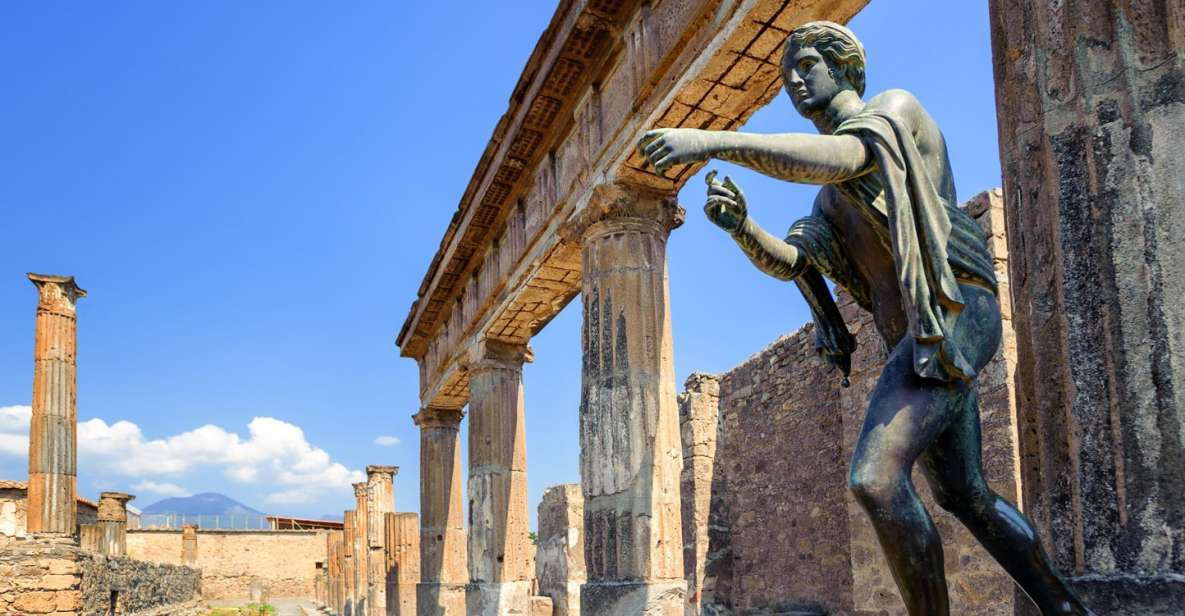
- Pompeii focus: newly-opened houses, plaster casts of victims, and the brothel area.
- Herculaneum contrasts: House of Neptune and Amphitrite plus the beach zone where skeletons were preserved.
- Headsets included: so you can hear your archaeologist guide without craning your neck.
- Meet-up in Naples is specific: in front of STARHOTEL TERMINUS, with an Askos Tours sign to spot.
Why Pompeii and Herculaneum feel different on the same day
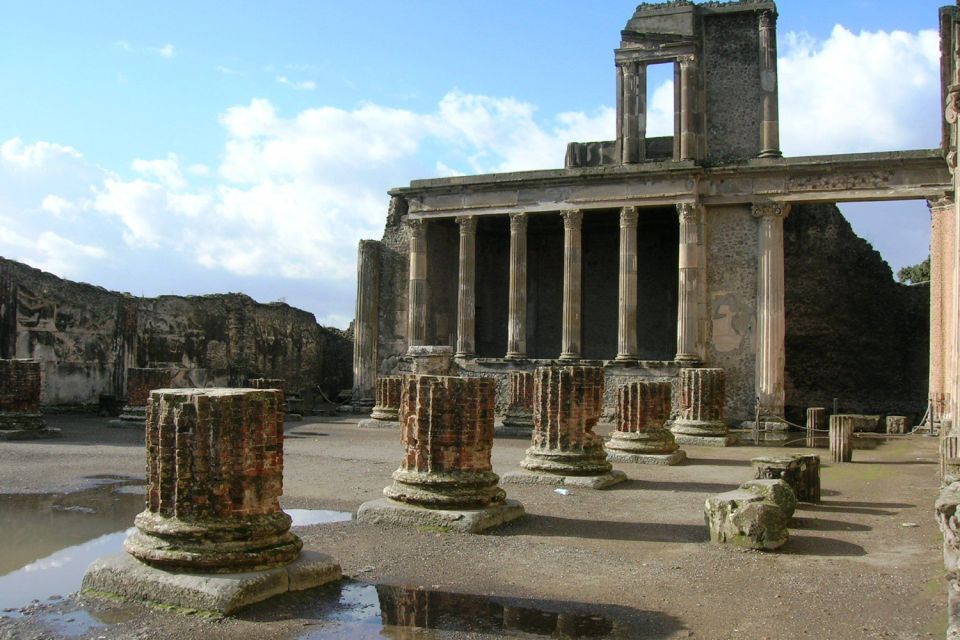
If you’ve only ever visited Pompeii, you might think you already get it. This tour challenges that idea in a good way because you visit both places in one itinerary, with guided interpretation at each stop. You start in Pompeii, then shift to Herculaneum—two towns shaped by different terrain, wealth, and architecture, even though they were both affected by the same disaster.
Pompeii tends to hit you with scale: big streets, major public spaces, and that unmistakable urban layout that makes it feel like a whole city got paused. Herculaneum is smaller and more intimate, and the preservation makes daily life feel closer—especially inside the houses and along the seafront.
This is exactly why the “two sites in one day” format works. You’re not just checking off ruins; you’re learning how the eruption played out across a wider area, and how archaeologists read what ash and time left behind.
You can also read our reviews of more tours and experiences in Rome.


The smart logistics: Roma Termini to Naples without drama
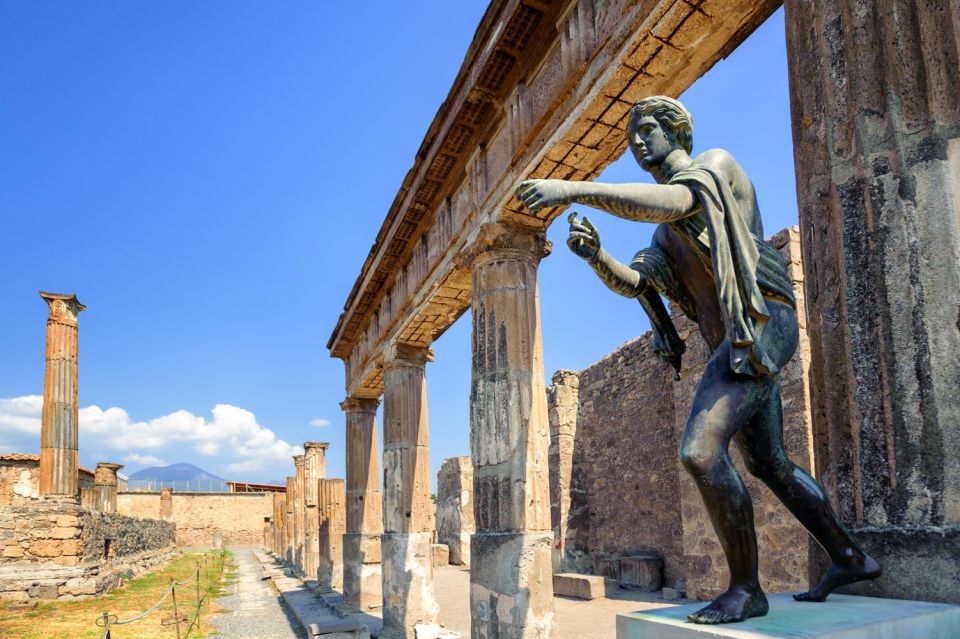
The core travel win is the high-speed train from Roma Termini to Naples, about 70 minutes. You pre-book your train tickets, ride independently to Naples Central Station, then meet your guide at a clear location: opposite the station, in front of STARHOTEL TERMINUS. Look for the Askos Tours sign held by your guide.
Then the day continues with minibus/van transfers from Naples to Pompeii and between sites. This matters because Pompeii and Herculaneum aren’t right next to the train station, and traffic in and around Naples can be slow. In practice, you want a driver who knows how to move a group efficiently, and this tour includes that service.
One practical note: the meeting point in Naples is your anchor. If you arrive late or wander away from the station frontage, it can get annoying fast, so I’d treat the meet-up location like a waypoint on a hiking trail.
Pompeii highlights: where the guide turns ruins into real life
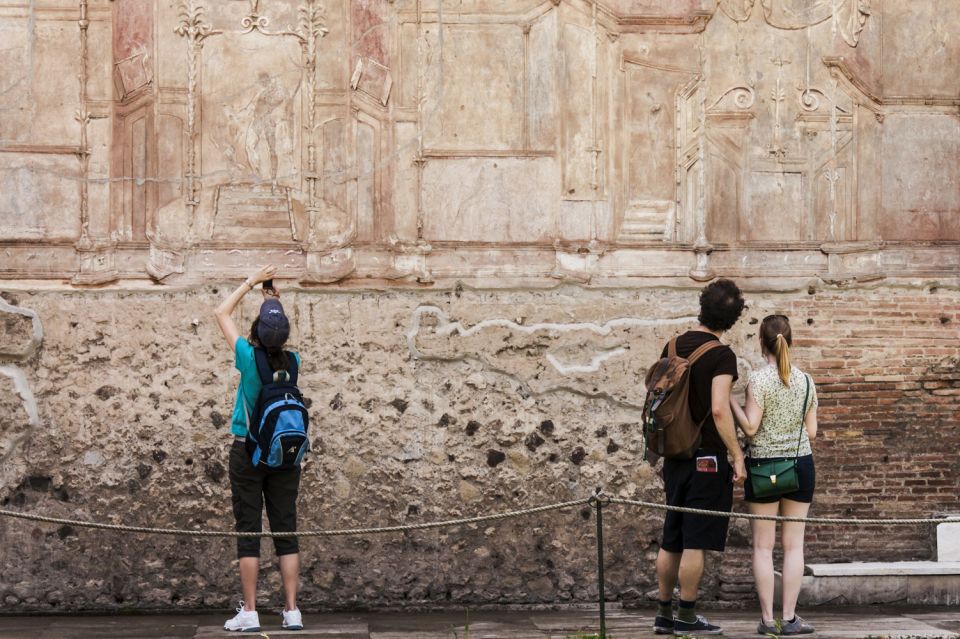
Pompeii is the headline act, and the tour aims to show you more than just a quick walk past famous walls. Expect a guided visit of about two hours, plus extra time to breathe and regroup. The route includes major highlights such as newly-opened houses, the plaster casts of victims, and the brothel area.
Newly-opened houses and what they teach
Walking through houses in Pompeii is like reading a book with the dust jackets removed. Even when you’re not a scholar, you can feel what the guide helps you notice: how rooms were arranged, how everyday life moved from entrance spaces to courtyards, and how the city’s residents used domestic space.
Newer areas on tours can mean less time staring at “same-old” highlights. That’s a big deal because Pompeii is so large that any extra variety helps you leave with a sharper impression of the city, not just a checklist of monuments.
Plaster casts: the moment Pompeii stops being abstract
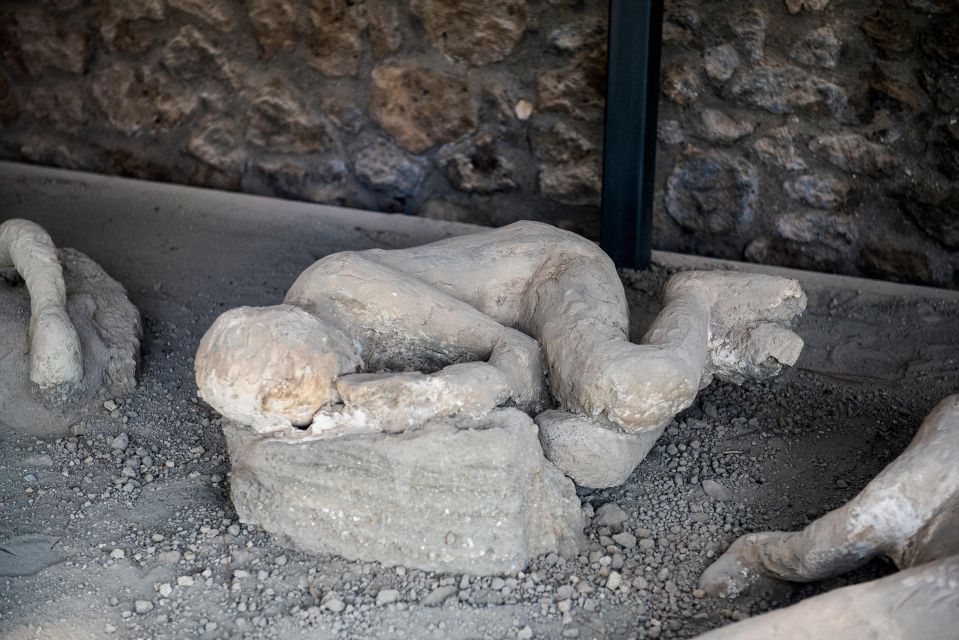
The tour includes time at the plaster casts of victims. This is the part where the eruption becomes personal, not just dramatic. You see the shapes left behind and the way archaeologists used casts to preserve information about positions and moments in time.
If you’ve read about Vesuvius and still felt like the disaster was “in the background,” this is what pulls it forward. It’s heavy, but it’s also one of the most meaningful ways to understand what happened in those final moments.




The brothel stop: everyday business, not just big monuments
One tour highlight is the brothel area. It’s easy to assume Pompeii is only temples and forums, but the brothel reminds you the city had commerce and services as part of daily life. The guide’s job here is to keep it factual and contextual, so you’re not just rubbernecking at a famous label.
If you care about social history—how people actually lived—this inclusion is a good sign. It usually means you’ll get more than “look at this ancient wall.”
The forum-fast feeling you’ll want to manage
There’s also free time at Pompeii, about 30 minutes. That doesn’t sound tiny until you’re inside Pompeii’s large footprint with crowds and uneven walking. The takeaway: treat this as a short window for water, photos you still want, and a quick meal plan—don’t assume you’ll also have time to wander wherever your curiosity drags you.
A couple of people felt the Pompeii portion could feel rushed at times. I get that concern. Pompeii’s scale is no joke, and when a tour tries to hit two major cities, something has to give. If you want deep museum time or long, slow wandering, you may need to pick which site gets your heavier attention.
Free time in Pompeii: make it work for you
That 30-minute free window is real time with real value, but it’s short. I’d use it strategically: pick where you want to end up, eat or buy something simple, and avoid drifting into side paths that don’t come back to your group’s flow.
Also, lunch is not included, so you’ll need to plan food on your own. The entrance area has limited eating options, and getting seated can take time. If you’re the type who gets hangry quickly, I’d arrive at lunch mode with a plan: water first, then food, then back to meeting rhythm.
If you tend to collect photos like trophies, set a mini priority list before you split up. For Pompeii, I’d focus on images that show streets and building layouts, not just close-ups.
Herculaneum: a quieter site that hits hard
After Pompeii, you transfer again by minibus to Herculaneum for about two hours of guided time. The shift is part of the charm: Herculaneum can feel more human-scale, and the preservation gives you a more “lived-in” read of the town.
Your tour includes stops like the House of Neptune and Amphitrite and the beach area where skeletons were preserved. That combination is powerful: one stop shows you wealth and domestic design, while the other shows you the human outcome.
House of Neptune and Amphitrite
This kind of stop helps you understand Herculaneum as a town of architecture and daily routine. Houses here can feel more complete than what you might expect from typical ruins because so much survived.
A good guide will point out what makes this house special—layout, materials, and what the design says about residents’ lives. Even if you only catch pieces, the difference between Pompeii and Herculaneum tends to snap into focus.
The preserved beach zone and the meaning of loss
Herculaneum’s beach with preserved skeletons is a stop that stays with you. It brings the eruption into a sharper, more physical reality. And because it’s outdoors, the emotional impact can be even stronger—you’re standing where the story happened, not reading it on a page.
This is the moment to slow down, breathe, and let the guide’s framing do its work. Don’t rush your own reaction just because the itinerary keeps moving.
The guides: archaeologists who actually explain
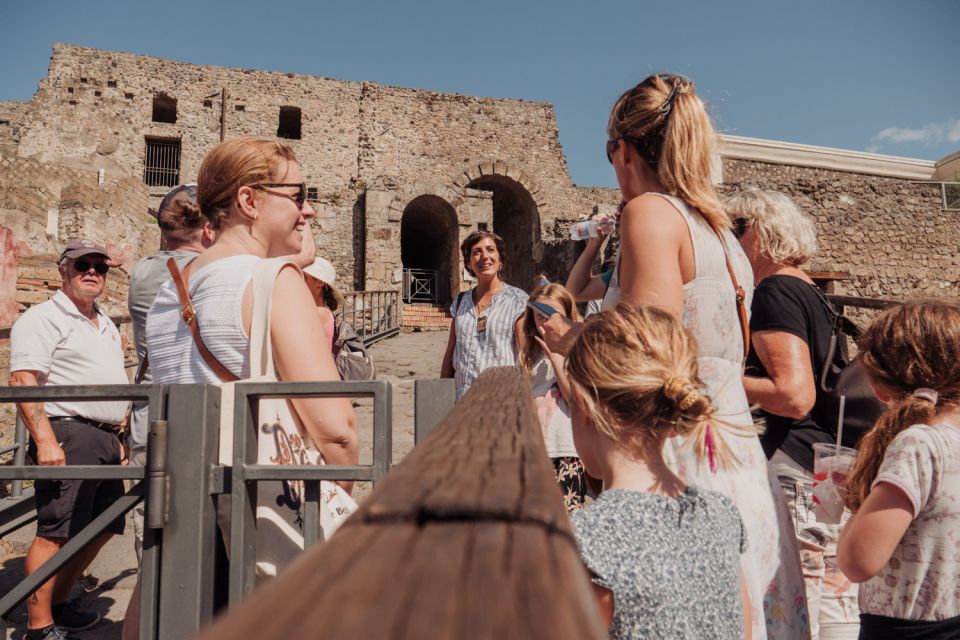
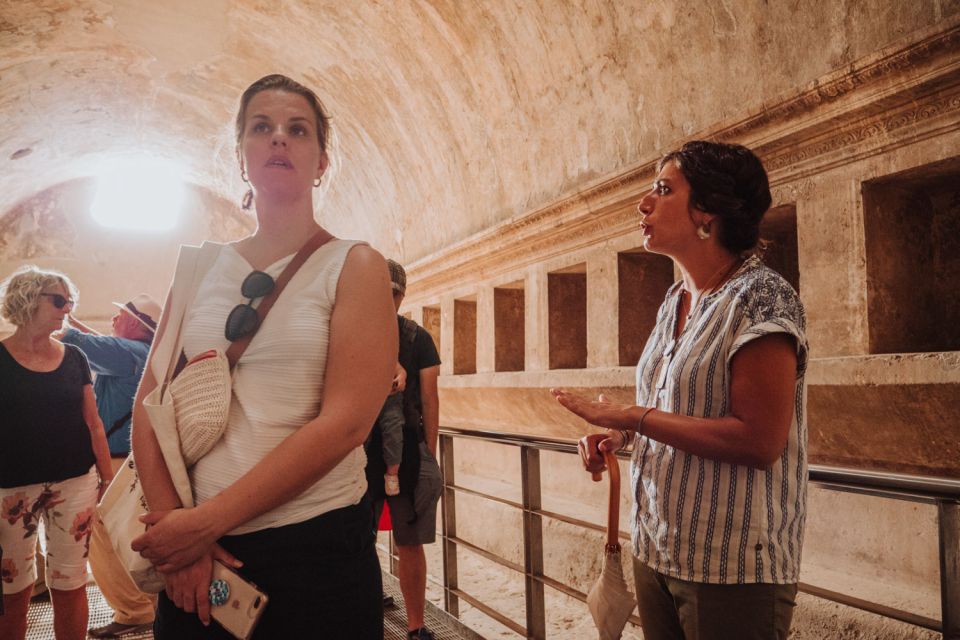
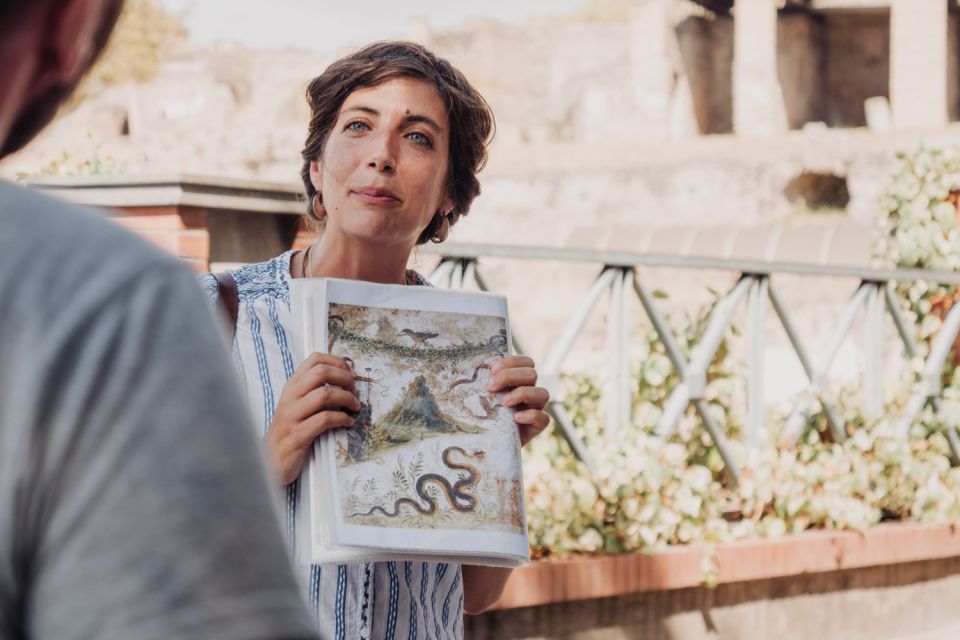
This tour is built around archaeologist-led interpretation, and the difference shows up fast. The guides named in recent tour experiences include Michele (often pronounced Michael), Sergio, Raphael, Jasmine, and Diego, among others. Each brings a different style, but the common thread is that you’re not just hearing dates—you’re learning how archaeologists think.
You’ll likely notice how the guide connects what you’re seeing to earlier explanations. That linking matters because Pompeii and Herculaneum can otherwise feel like two separate museums of ruins. A strong guide makes them one story with changing locations and outcomes.
If you’re the kind of person who hates silent wandering with a phone audio app, this is a major plus. Your headset experience also helps here because you can keep your eyes on the ground and the walls instead of constantly reading signs.
What to expect on the ground: walking, surfaces, and comfort
This is a walking day. Plan on about one mile of walking in Pompeii and about half a mile in Herculaneum. That’s not extreme distance, but the ground can be uneven, with stone paving that doesn’t always feel friendly if your shoes are wrong.
Comfort tip: wear sturdy, closed-toe shoes. The tour explicitly doesn’t allow sandals or flip flops, and high-heeled shoes are out too. Also, leave luggage or large bags at home if you can. This keeps you from getting stuck in the bottlenecks that show up around major entrances.
The tour runs rain or shine. If clouds roll in, don’t fight it—bring a raincoat you’ll actually wear. You don’t want to be the person soaked through and grumpy at the plaster casts.
Price and value: is $222.77 a good deal?
At $222.77 per person, this day trip isn’t cheap at first glance. But the price stacks up value because you’re not just paying for a walking tour. You’re getting round-trip high-speed train tickets from Rome to Naples, van/minibus transportation between sites, entry tickets for both archaeological sites (with Pompeii Express tickets included and Herculaneum tickets included at 16 euros each), and guided tours with an archaeologist at both locations.
Headsets are included too, which sounds like a small detail until you’re in crowds and you’re still able to hear the guide. With two guided visits, plus transportation, you’re paying for structure. Structure is exactly what you want on a long day with two major destinations.
If you were to try building this yourself—train, timed tickets, guides, and transfers—the hassle can be higher than the sticker price suggests. For a lot of visitors, paying for “everything lined up” is what turns the trip into a smooth, memorable day.
Who should book this tour, and who should think twice
This tour fits best if you:
- Want Pompeii and Herculaneum in one day without juggling schedules
- Prefer a guide who explains context, not just points and photos
- Like learning from an archaeologist’s viewpoint, including how remains are interpreted
It’s also a good choice for first-timers who want the big highlights handled for them. You’re likely to get a stronger overall understanding than if you visit one site alone.
Think twice if you:
- Have limited mobility or use a wheelchair (this tour isn’t suitable for wheelchair users and isn’t recommended for limited mobility)
- Need long periods of independent wandering (the day is packed, and free time is limited)
- Want a slow pace with lots of museum-style time (Pompeii and Herculaneum each deserve more time than a single day grants)
Should you book Pompeii and Herculaneum by High-Speed Train?
I’d book it if you want a well-organized day that connects two sites into one coherent story. The high-speed train saves you from a long slog, and the archaeologist-led format keeps you from feeling like you’re just looking at stone.
I’d only skip it if your priority is a relaxed visit with lots of free wandering, or if your walking needs are more demanding than about a mile on uneven ground in Pompeii plus about half a mile in Herculaneum. Otherwise, this is one of the smarter ways to do Campania’s most famous eruption-era sites without turning your Rome trip into a logistics project.
If you do book, bring the right shoes, plan your lunch window with realistic expectations, and arrive at Roma Termini ready to move. The payoff is a day where Pompeii and Herculaneum feel like part of the same unfolding human story.
FAQ
How long is the tour?
The total duration is about 8.5 hours.
How do I travel from Rome to Naples?
You use pre-booked high-speed train tickets from Roma Termini to Naples Central Station, and the train ride takes about 70 minutes.
Where do I meet the guide in Naples?
Meet your guide in front of the STARHOTEL TERMINUS entrance, located opposite Naples Central Station. Look for the guide holding an ASKOS TOURS sign.
How much walking is involved?
Expect about one mile of walking in Pompeii and about half a mile in Herculaneum.
What is included in the tour price?
It includes round-trip fast-train tickets, entry tickets for Pompeii and Herculaneum, guided tours with an archaeologist at both sites, transportation from Naples to Pompeii and Herculaneum and back, plus headsets.
What should I bring and wear?
Bring a passport or ID card. Wear closed-toe shoes and avoid sandals/flip-flops and high-heeled shoes.
Does the tour run in bad weather?
Yes, it runs rain or shine. Bring a raincoat if needed.