REVIEW · ROME
Rome: Fountains and Squares Small-Group Walking Tour
Book on GetYourGuide →Operated by romanholiday.travel & tours · Bookable on GetYourGuide
Rome is all angles and water.
This small-group fountains and squares walk strings together Baroque drama with Roman-era structure, so the city feels like one long story instead of a list of sights. You start down at the Spanish Steps, move through some of central Rome’s grandest piazzas, and end at the Trevi Fountain with the classic coin moment.
Two things I really like: you get time at the Pantheon interior, not just a stop for a quick photo, and you also see Bernini’s fountain magic, including the half-sunken ship at Piazza di Spagna and the Four Rivers at Piazza Navona. Guides matter here too—names like Stefano and Bruno show up in past groups for their humor and pacing, and it changes how the streets feel.
One drawback to plan for: it’s a walking-heavy tour that’s mostly outdoors, and churches require dress that covers shoulders and knees. If you’re sensitive to crowds around the biggest landmarks (especially Trevi), you’ll want comfortable shoes and patience.
In This Review
- Key highlights to look forward to
- The route from Spanish Steps to Trevi in about 2.5 hours
- Where you meet, and why that starting spot matters
- Trinità dei Monti and the Spanish Steps: classic Rome as a warm-up
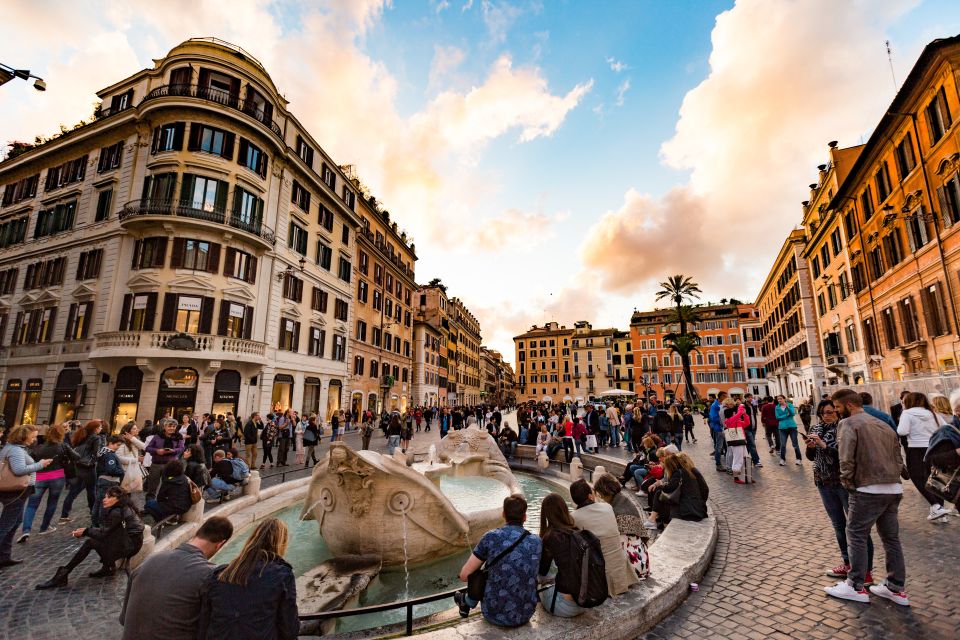
- Piazza di Spagna and Bernini’s half-sunken ship
- Piazza Navona: the Stadium of Domitian becomes Baroque Rome
- The Pantheon: stepping inside a Roman-era masterpiece
- Marcus Aurelius Column and the Gladiator connection
- Sant’Ignazio’s trompe l’oeil dome, plus the Raphael stop
- Trevi Fountain finale: throw the coin, then enjoy the afterglow
- Guides, humor, and what you actually learn on the street
- Practical stuff that affects your comfort (and your photos)
- Value check: is $45.55 for Rome fountains a smart spend?
- Should you book this Rome Fountains and Squares tour?
- FAQ
- How long is the Rome fountains and squares walking tour?
- Where do I meet the guide?
- What’s the tour’s ending point?
- How large is the group?
- Is the guide English-speaking?
- What major sights are included?
- Are food and drinks allowed during the tour?
- What should I wear?
- Can children or strollers join?
- Can I cancel and get a refund?
Key highlights to look forward to
- Spanish Steps warm-up with Trinità dei Monti setting the tone for Baroque Rome
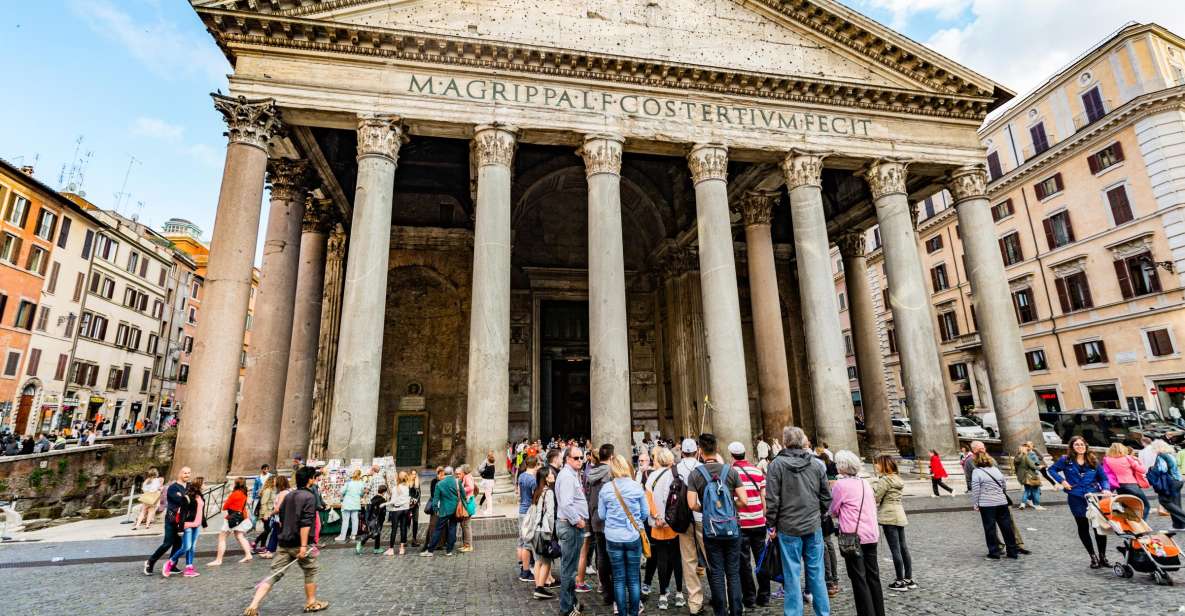
- Pantheon interior access so you can see Roman engineering up close
- Piazza Navona’s Baroque set pieces, including Bernini’s Fountain of the Four Rivers
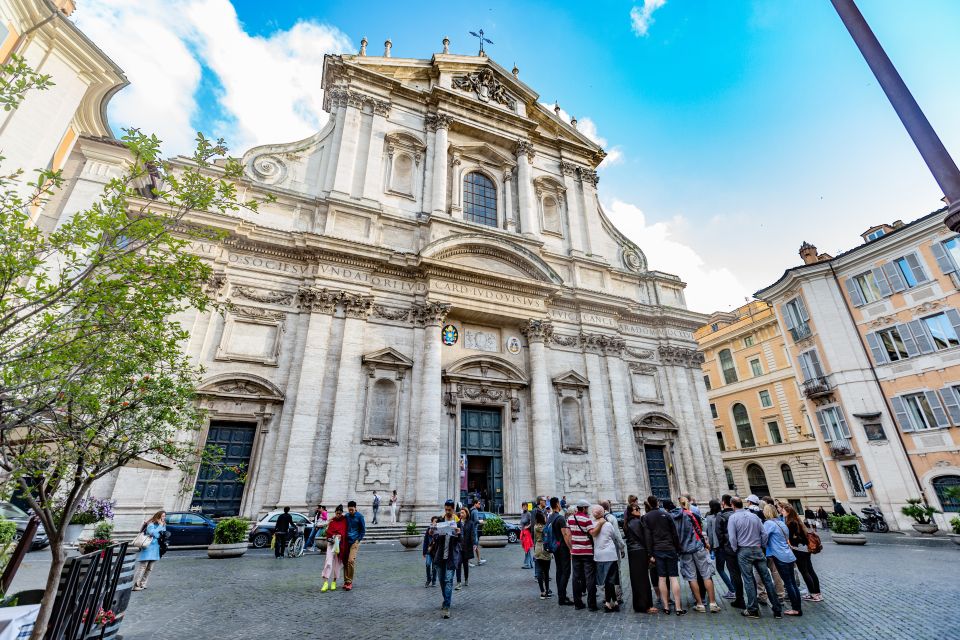
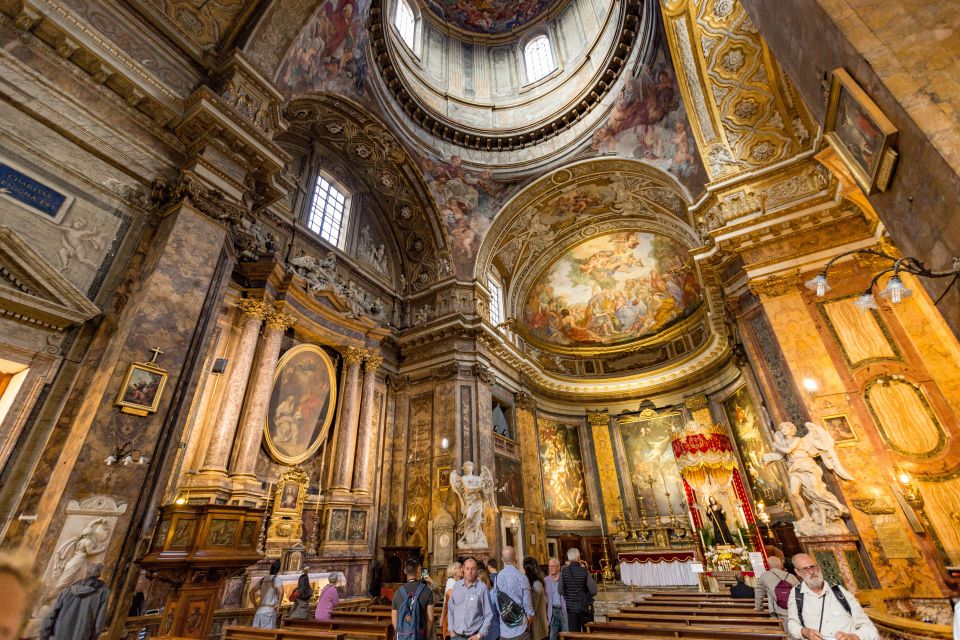
- Sant’Ignazio trompe l’oeil for a dome illusion that turns architecture into a trick
- Column of Marcus Aurelius with scenes that nod to the movie Gladiator
- Trevi Fountain finale where you’ll throw a coin and wish for a return
The route from Spanish Steps to Trevi in about 2.5 hours
This tour is timed for people who want results fast. Expect roughly 2.5 hours of walking, with a steady rhythm between major squares and key monuments. The route runs from the bottom of the Spanish Steps area, then across the historic center, and it finishes back at the meeting point per the activity details.
What you get in this kind of route is coherence. One stop explains the next: Baroque ideas show up right after Renaissance/ancient context, so you start seeing why Rome keeps reinventing its own look. With a maximum of 20 people, you’re not fighting a sea of elbows, and the guide can keep the group together.
You’ll also benefit from the guide’s “street sense.” The tour format includes where to find the best gelato, plus small pointers that help you move through crowded zones with less frustration. If you’re using this as a first day plan, it’s a great way to get your bearings fast—you learn what’s where without feeling like you’re studying a map.
You can also read our reviews of more walking tours in Rome

Where you meet, and why that starting spot matters
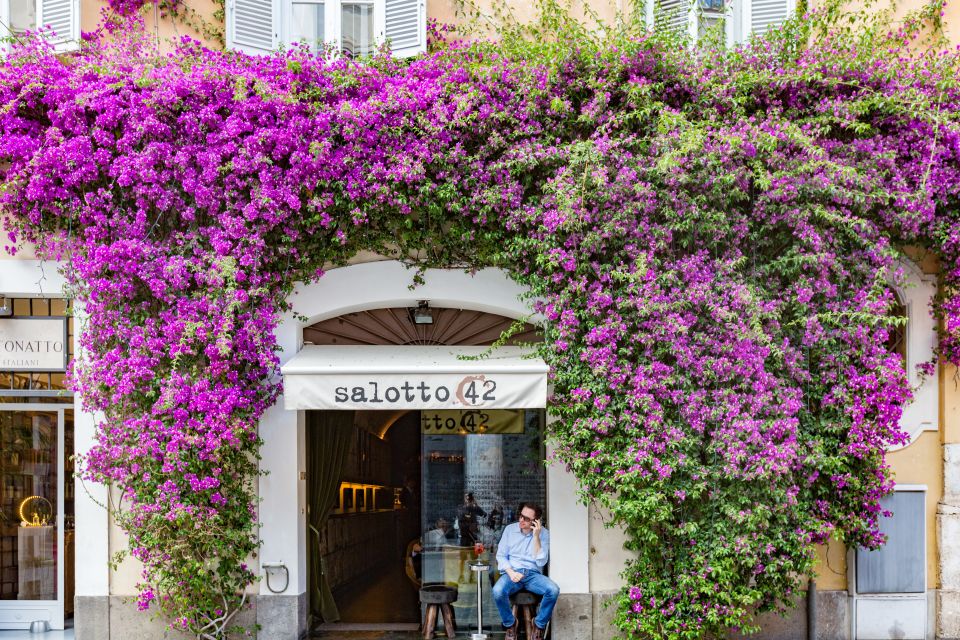
You meet by the Keats and Shelley Museum at the bottom of the Spanish Steps, near the scalinata della Trinità dei Monti, in front of the Acqua di Parma store. Guides wear a GETYOURGUIDE badge or hold a matching sign, and you should arrive about 10 minutes early so you don’t get left behind.
That meeting point isn’t random. Starting here places you immediately in the mix of Rome’s most famous “before you even begin” view—wide stairs, grand facades, and the vibe of high-society Rome. You also begin by walking up to Trinità dei Monti, which helps shift you from street-level chaos into the ceremonial mood Rome does so well.
Practical note: you’ll be walking uphill and through uneven stone sidewalks. Comfortable shoes aren’t optional—they’re the difference between enjoying the views and counting minutes until you sit down.
Trinità dei Monti and the Spanish Steps: classic Rome as a warm-up
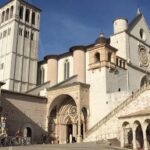
The first real moment is the Spanish Steps flow, following the staircase up to Trinità dei Monti, a late Renaissance church that works as a visual bridge into Baroque Rome. The tour’s early pace is usually the easiest part of the walk, and it sets expectations: you’re not just seeing monuments, you’re learning how the city stages perspective.
Inside a church stop, you’ll want to be ready for Rome’s dress rules. The tour notes say to plan something to cover shoulders and knees, and that shorts or sleeveless tops aren’t allowed for these areas. This is one of those small details that can make or break your comfort, especially if you’re traveling in summer heat.
What makes this opening stop valuable is the way the guide frames the neighborhood. Once you know what you’re looking at—who built what, and why that placement matters—you stop treating the Spanish Steps like a postcard and start treating it like a piece of stage design.
Piazza di Spagna and Bernini’s half-sunken ship
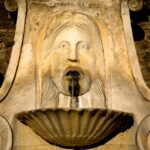
At Piazza di Spagna, you’ll spot Bernini’s fountain of a half-sunken ship—a playful Baroque twist that feels both theatrical and slightly surreal. This isn’t fountain art that tries to look “serious.” It’s Rome being clever with water, scale, and symbolism, all in one scene.
From a travel standpoint, this stop is also useful for timing. It’s close enough to other central sights that you keep your momentum, but it offers a visual pause before the tour turns toward the grander squares. That balance matters because you’re going to do more walking right after.
If you like architecture you can read—shapes, curves, and how crowds frame a view—this is a good moment to slow down. Stand where the guide points out the best angles, then take your time. This is one of those fountains where you get more by looking than by snapping.
Piazza Navona: the Stadium of Domitian becomes Baroque Rome
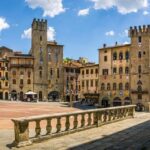
Piazza Navona is one of Rome’s star squares, and this tour treats it like the center of the universe for a reason. You’ll reach it via the Stadium of Domitian, built in 85 A.D. for athletic games, and then watch how later Rome transformed that space into a Baroque showpiece.
The key highlight here is Bernini’s Fountain of the Four Rivers, one of the square’s most famous centerpiece sculptures. Along with it, you’ll notice the way Baroque Rome “packs” meaning into public space—architecture and sculpture work together so the square feels engineered for drama.
This is also where a good guide earns their pay. The guide helps you spot what to notice, not just where to stand. In past tours, guides named in feedback like Stefano and Andrea have been praised for humor and keeping a lively pace, and Piazza Navona is the sort of location where that energy helps the information land.
One consideration: Piazza Navona is lively. Even with a small group, you’ll feel the crowd. If you’re traveling with someone who hates crowds, agree in advance that this is one of the moments you’ll just take slowly.


The Pantheon: stepping inside a Roman-era masterpiece
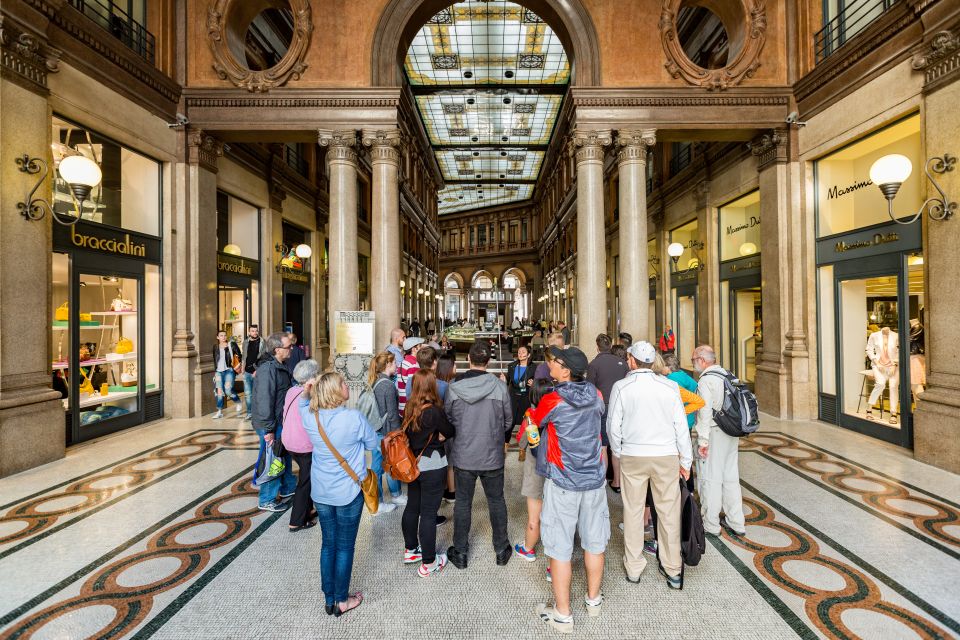
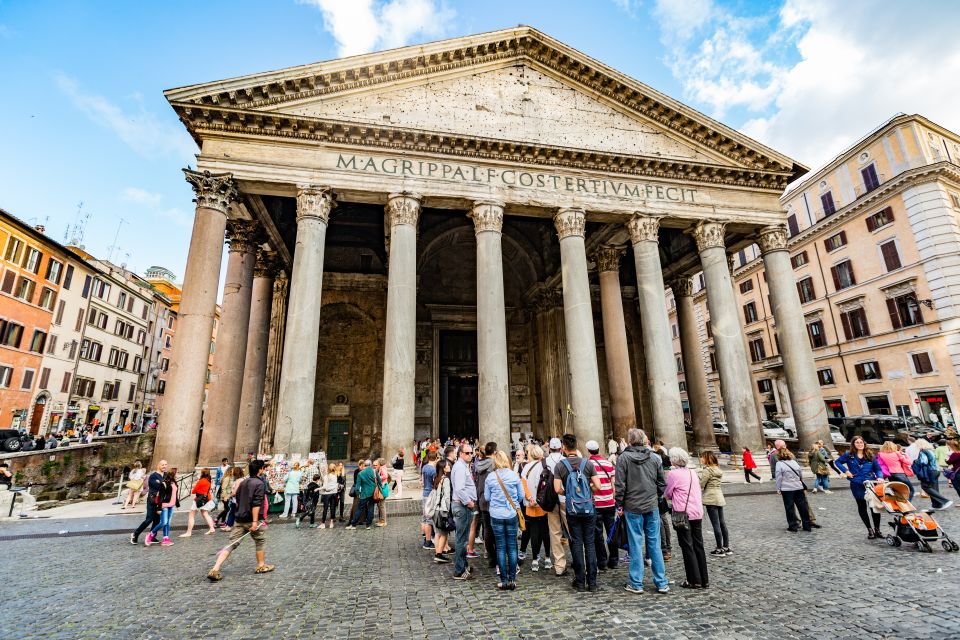
Next you head to the Pantheon to go inside a remarkably intact temple that connects you to the ancient Roman world. This is one of the big-ticket moments on the itinerary because the Pantheon is one of those places where your brain instantly understands scale and design.
What makes the Pantheon stop so worth it on a walking tour is pacing. You’re already in the center of Rome, so instead of treating it as a separate day trip, you fold it into a route that’s also showing you Baroque fountains and piazzas. By the time you stand inside, the contrast between eras stops feeling random.
From there, the tour continues onward with more “you’re seeing layers of Rome” moments, rather than switching into unrelated stops. That’s how you get the feeling of progression, from Roman engineering to Renaissance and Baroque spectacle.
Marcus Aurelius Column and the Gladiator connection
After the Pantheon, the tour goes to a carved Column of Marcus Aurelius, where original scenes are still visible. The tour information specifically calls out the scenes from the movie Gladiator, which is a clever way to help you read what you’re seeing.
This stop is brief but memorable if you’re the type who likes a narrative anchor. Seeing ancient carved storytelling and then recognizing how modern film references it helps make the stone feel less distant. It’s also a good “mental reset” between the huge visual moments like the Pantheon and the next church stop.
If you’re not into comparing art to movies, the column still works as a lesson in how Rome used public monuments to communicate power and identity.
Sant’Ignazio’s trompe l’oeil dome, plus the Raphael stop
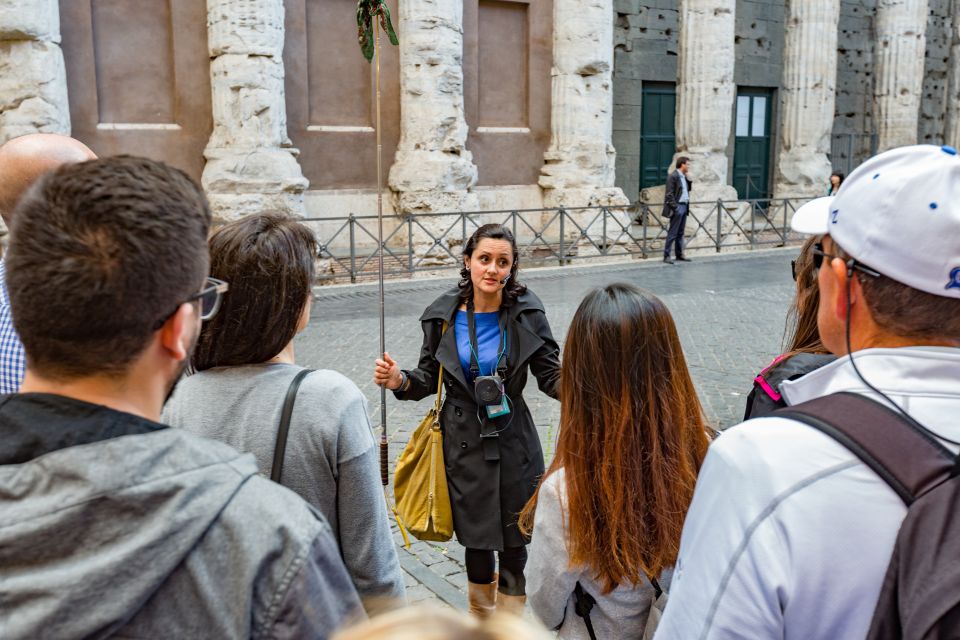
Sant’Ignazio Church is where the tour gets fun in a different way. You’ll admire one of Rome’s finest examples of trompe l’oeil—a technique that tricks the eye using painted effects, especially in the dome area. It’s a moment where you can look, stare a bit longer than planned, and then suddenly realize you’ve been fooled by architecture.
The itinerary also promises a stop connected to the tomb of Raphael, adding an art history beat to the fountain and church theme. Even if you only catch a portion of that experience in one stop, it helps broaden the tour beyond water and city planning.
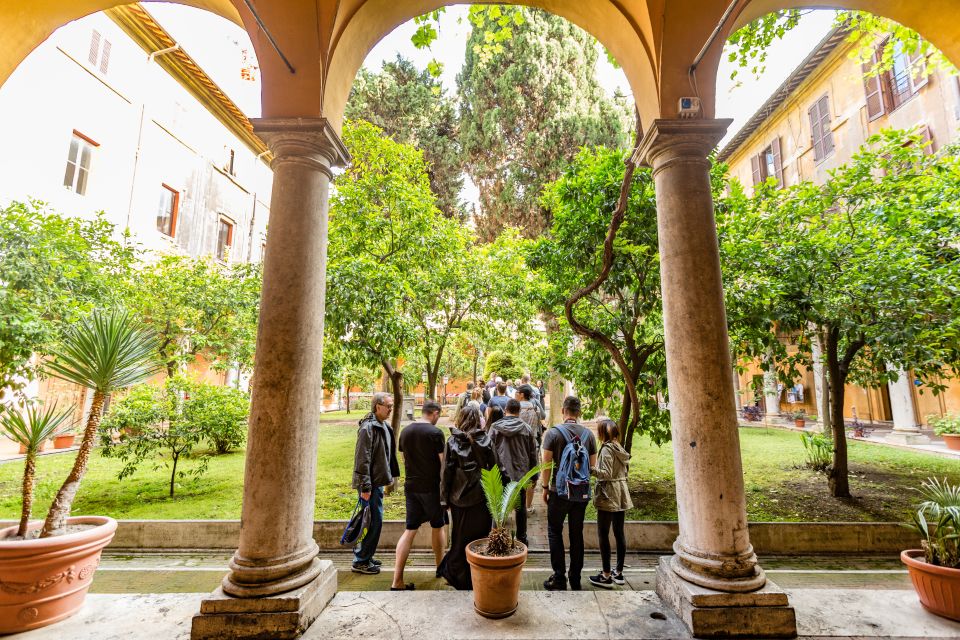
Church stops also mean dress rules apply again. Bring layers or carry something that covers your shoulders and knees. If you’ve got travel clothes that handle these rules, you’ll enjoy the art more and worry less.
Trevi Fountain finale: throw the coin, then enjoy the afterglow
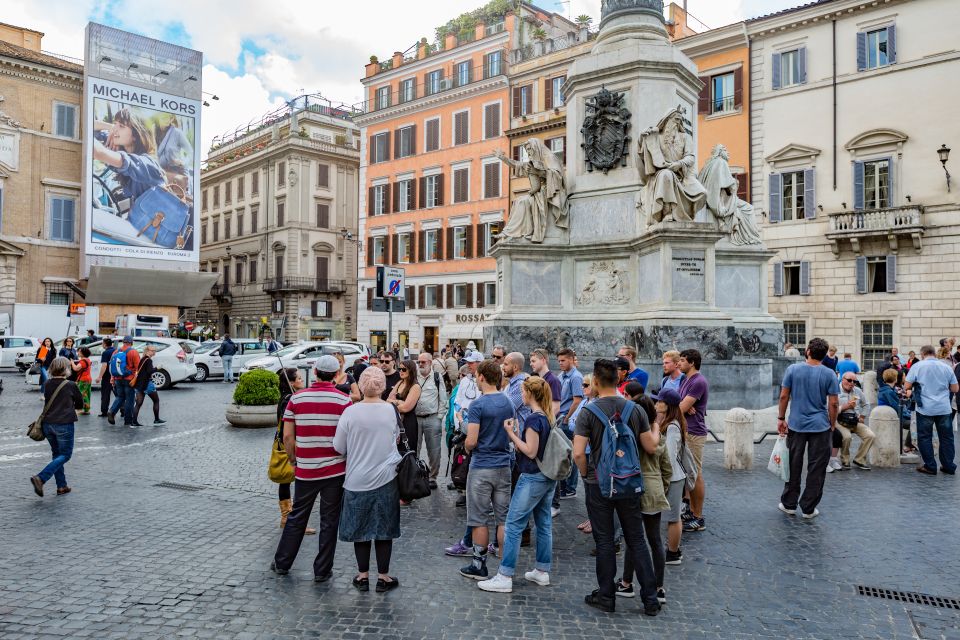
You finish at the Trevi Fountain, with time for the classic ritual: throw a coin and make a wish to one day return to Rome. The guide keeps the pacing so you’re not rushing past the moment just to reach the next landmark.
Trevi is also where your expectations matter. The fountain is famous for a reason, but it’s also busy. A small-group tour helps because your guide can guide your timing and your position a bit, so you see the fountain before the crowd pressure builds too much.
If you love the look of Rome in low-stress mode, hang around for a few extra seconds after the guide’s cue. The fountain’s scale is best understood with a slow look, not a sprint.
Guides, humor, and what you actually learn on the street
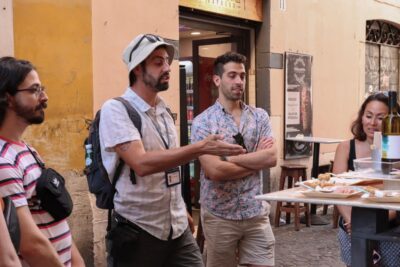
This tour is built around one thing: a licensed English-speaking guide who can stitch history to what you see outside. That’s why small group size matters. With up to 20 people, the guide can control the pace and keep the group within earshot.
You’ll also benefit from how guides handle the “life of Rome” details. The tour notes say the guide will show you where to get the best gelato, and the feedback includes memorable moments like recommendations and even small food surprises from guides (like tiramisu, ice cream, or a beer in some cases). Those treats aren’t guaranteed, but the bigger point is that the guide isn’t stuck in a lecture mode.
Another helpful rule: no translating is allowed during the tour for group comfort. That means the experience stays smooth, and the information stays consistent in English.
If you’re the kind of traveler who wants facts plus a friendly vibe, this format fits. Many guide names appear repeatedly in positive feedback—Stefano, Bruno, Matteo, Andrea, Paolo—so the “human factor” seems to matter a lot here.
Practical stuff that affects your comfort (and your photos)
This is comfortable-but-not-easy Rome. You’ll want comfortable shoes and comfortable clothes, and you should be ready for some uneven walking. There’s no strollers or wheelchairs possible due to the itinerary.
Food and drinks are not allowed during the tour, and pets aren’t allowed either. Also no smoking, and no oversized luggage, luggage, or large bags. Keep what you carry light, especially since you’ll be moving through tight streets and crowded public spaces.
Dress matters most for churches. The tour explicitly says to avoid shorts, short skirts, sleeveless shirts, and to cover shoulders and knees when needed. If you forget and you’re uncomfortable, you’ll spend mental energy dealing with it instead of enjoying the art.
Weather is a wildcard because much of the tour is outdoors. Some past experiences happened in cold, rainy conditions, and the guides still worked to keep the tour moving, with possible minor adjustments. Pack a small umbrella or light rain layer if you’re traveling in shoulder season.
Value check: is $45.55 for Rome fountains a smart spend?
At $45.55 per person, this tour isn’t the cheapest way to see Rome, but it’s also not priced like a private driver. The value comes from three things you usually can’t buy with a self-guided walk: a licensed guide for context, a tight route that hits major monuments efficiently, and time at high-payoff stops like the Pantheon interior and Sant’Ignazio.
If you’re in Rome for only a few days, that “time saved” factor matters. Walking this route on your own is possible, but you’d need to know what each stop is, why it was placed where it is, and what details to look for. The guide fills in those gaps as you go.
I also like that the tour includes the fountain payoff at Trevi plus the “read the city” beats in between. You don’t just see famous water—you learn how Rome uses squares, churches, and ancient structures to keep rewriting its identity.
Should you book this Rome Fountains and Squares tour?
Book it if you want a focused Rome sampler that actually connects the dots: Spanish Steps → Navona → Pantheon → Sant’Ignazio → Trevi. It’s a strong choice for your first days because it gives you order and perspective, not just snapshots.
Skip it if you need step-free routes, stroller access, or you’re not up for church dress rules. Also consider it carefully if long outdoor walking in crowds sounds like a bad time.
If you’re ready to wear good shoes and look up often, this is one of those tours where the city feels more coherent by the end. You’ll leave with better “Rome sense,” and you’ll likely want to come back to a few of the stops on your own the next day.
FAQ
How long is the Rome fountains and squares walking tour?
It runs for about 2.5 hours.
Where do I meet the guide?
Meet at the entrance area by the Keats and Shelley Museum at the bottom of the Spanish Steps, in front of the Acqua di Parma store.
What’s the tour’s ending point?
The activity ends back at the meeting point, even though the walking route finishes at the Trevi Fountain area.
How large is the group?
It’s a small-group tour with a maximum of 20 participants.
Is the guide English-speaking?
Yes. The tour includes a licensed English-speaking guide.
What major sights are included?
You can expect stops at the Pantheon, Trevi Fountain, Piazza Navona, Sant’Ignazio Church, and views connected to Bernini’s fountains, including the half-sunken ship at Piazza di Spagna, plus stops such as the tomb of Raphael and the Column of Marcus Aurelius.
Are food and drinks allowed during the tour?
No. Food and drinks are not allowed during the tour.
What should I wear?
Bring comfortable shoes, and wear clothes that allow you to cover shoulders and knees for churches and other monuments.
Can children or strollers join?
It’s not suitable for children under 10, and it’s not possible to join with strollers or wheelchairs due to the itinerary.
Can I cancel and get a refund?
Yes. There’s free cancellation up to 24 hours in advance for a full refund.