REVIEW · ROME
Guided tour of Roman Forum & Palatine Hill
Book on GetYourGuide →Operated by Hili srl · Bookable on GetYourGuide
Roman ruins hit different when you see them with a plan. This 2-hour Roman Forum and Palatine Hill tour brings the ancient heart of Rome to life, led by licensed local guide Ruggero, starting at Trajan’s Column. I especially love the views from Palatine Hill, because they put the ruins in a real-world setting—Rome didn’t grow small, and you’ll feel that fast.
I also like the pacing and the human size of the group: it’s limited to up to 14 people, which makes the guide’s explanations easier to follow without shouting. One thing to consider: Roman Forum tickets are not included, so you’ll want to buy them in advance to avoid added waiting.
In This Review
- Quick hits before you go
- Roman Forum + Palatine Hill in 2 hours: what you actually get
- Trajan’s Column start: setting the scene of imperial Rome
- Imperial Fora (about 15 minutes): where big power happened
- Roman Forum (about 30 minutes): speeches, elections, and the Temple of Romulus
- Arch of Titus (about 15 minutes): a monument built for messaging
- Temple of Venus and Roma (about 15 minutes): religion and politics in the same block
- Palatine Hill (about 30 minutes + photo stop): the views you came for
- Domus Augustana (about 15 minutes): the emperor’s home angle
- Where you’ll end: Arch of Constantine (and back near the start)
- Price and value: is $78.17 a fair deal?
- Should you book this Roman Forum & Palatine Hill tour?
- FAQ
- How long is the guided tour of the Roman Forum and Palatine Hill?
- Is the tour in English?
- Are Roman Forum tickets included in the price?
- Where do I meet the guide?
- Where does the tour end?
- How many people are in the group?
- Is this tour wheelchair accessible?
Quick hits before you go
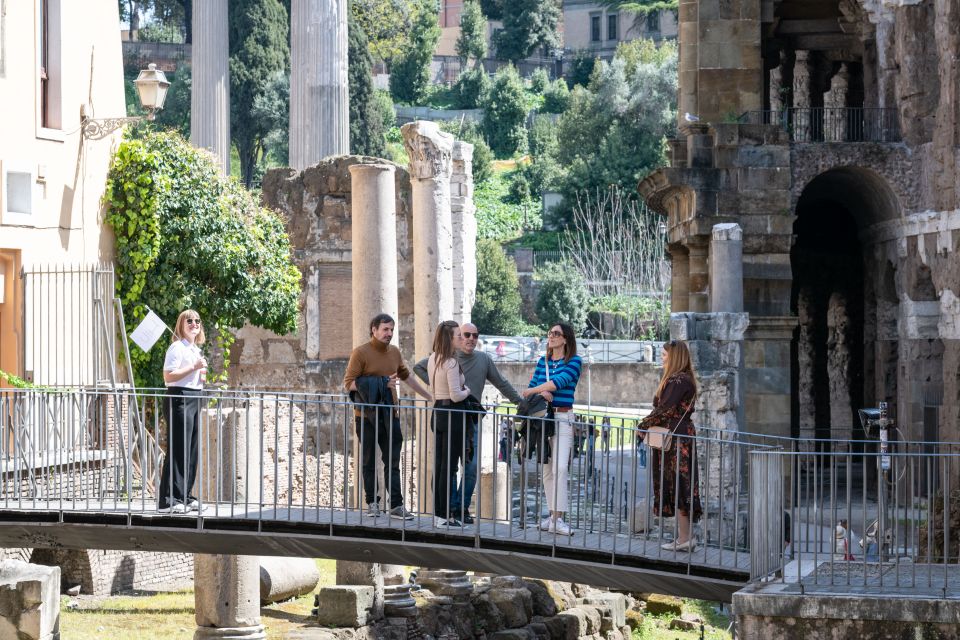
- Semi-private group (up to 14): more personal attention than big-bus style tours.
- Licensed local guide Ruggero: clear context for what you’re seeing at each stop.
- Palatine Hill viewpoints + photo moments: views are built into the route.
- Ancient power center stops: Imperial Fora, Roman Forum, and major arches.
- Temple of Romulus + Temple of Venus and Roma: key religious/political sites in one walk.
- Domus Augustana angle: you’ll see what the emperors’ world looked like from the ground.
Roman Forum + Palatine Hill in 2 hours: what you actually get
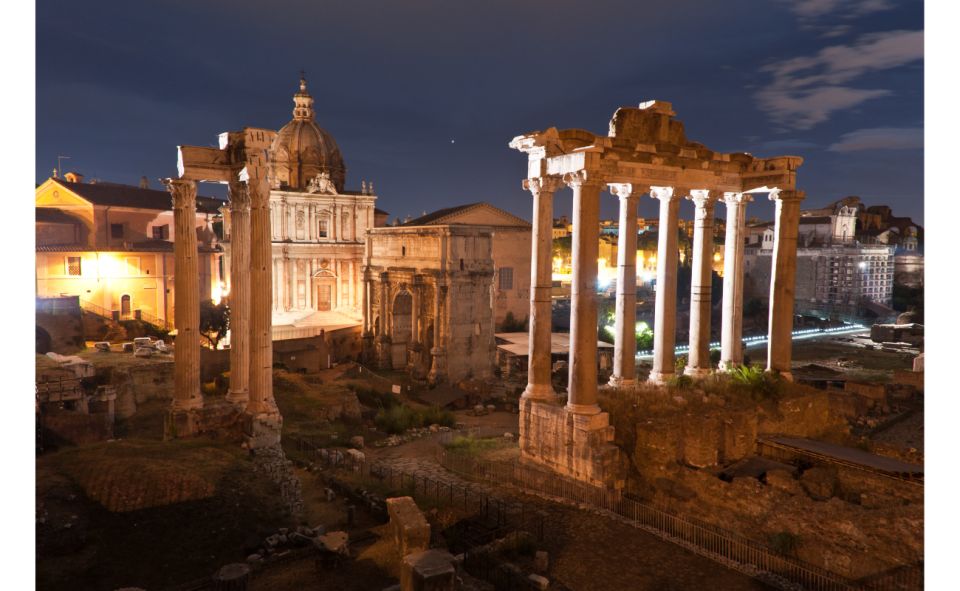
If you only have a short window in Rome, this is one of the most efficient ways to orient yourself. You’re not just looking at stones. You’re walking through the spaces tied to Rome’s political speeches, elections, and grand processions, then climbing to the hill that overlooks it all.
The tour is built around a guided route with specific time blocks, so you’re not left wandering. Expect a steady rhythm: quick orientation, guided stops, then a photo-focused window on Palatine Hill. It’s ideal if you want the “why” behind each landmark, not just the “what.”
One practical note up front: the walking is part of the experience. It’s not suitable for wheelchair users, so plan for uneven ground and time spent moving between highlights.
You can also read our reviews of more guided tours in Rome
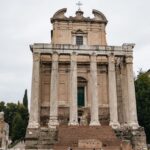
Trajan’s Column start: setting the scene of imperial Rome
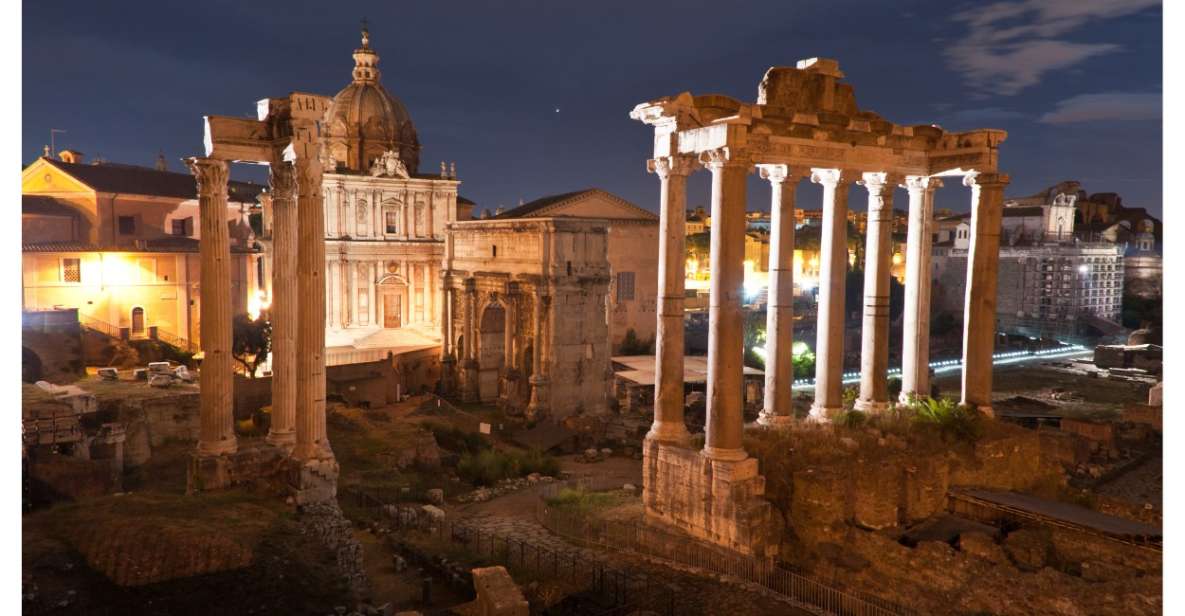
You meet your guide, Ruggero, in front of Trajan’s Column, near the gate. That’s a strong way to start because it frames the big idea of the day: Rome’s monuments weren’t random. They were messaging, power, and legitimacy, all in stone.
From there, you move into the Imperial Fora area. Even without deep technical study, the scale here helps you understand what “imperial Rome” looked like in daily space planning—public buildings packed into a ceremonial flow. Your guide’s job is to translate that jumble of ruins into something you can picture as a working urban center.
This opening part matters more than you might think. Once you get your bearings, later stops—arches, forums, temples—make more sense. It’s the difference between “cool ruins” and “I get the story.”
Imperial Fora (about 15 minutes): where big power happened
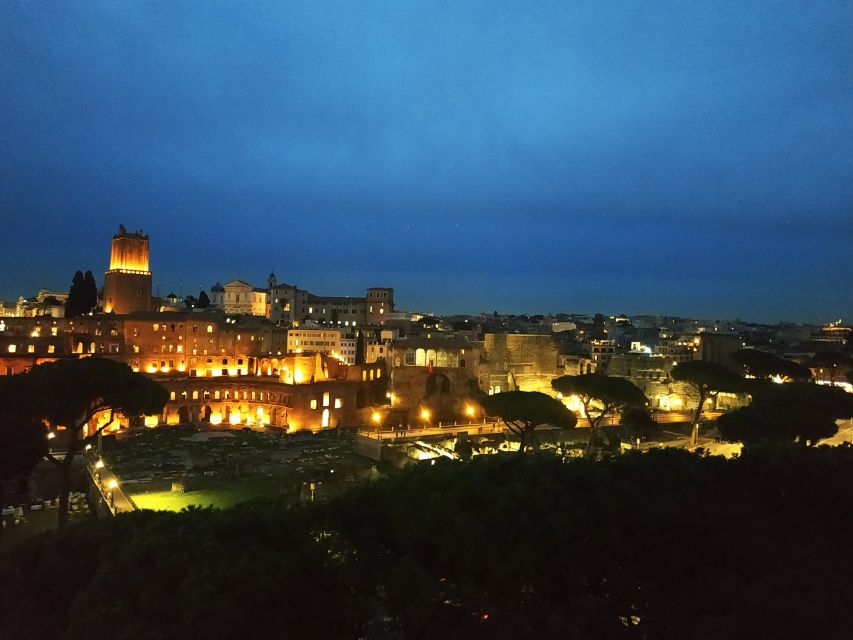
At Imperial Fora, you’ll have a guided visit for around 15 minutes. This is a good length because it’s enough time to grasp what the forums were for, without dragging you through every corner.
Why it’s worth including: the Imperial Fora are tied to how emperors presented themselves. Even though what’s left is fragmentary, the structure of the space helps you picture the movement of crowds—people arriving for ceremonies, public activity, and the kind of spectacle Rome loved.
The main “consideration” at this point is energy. After a fresh start near Trajan’s Column, you’ll be learning quickly. If you’re the type who needs slow pacing, mentally note that this tour is designed to keep momentum. You’ll get detail, but you’ll also keep moving.
Roman Forum (about 30 minutes): speeches, elections, and the Temple of Romulus
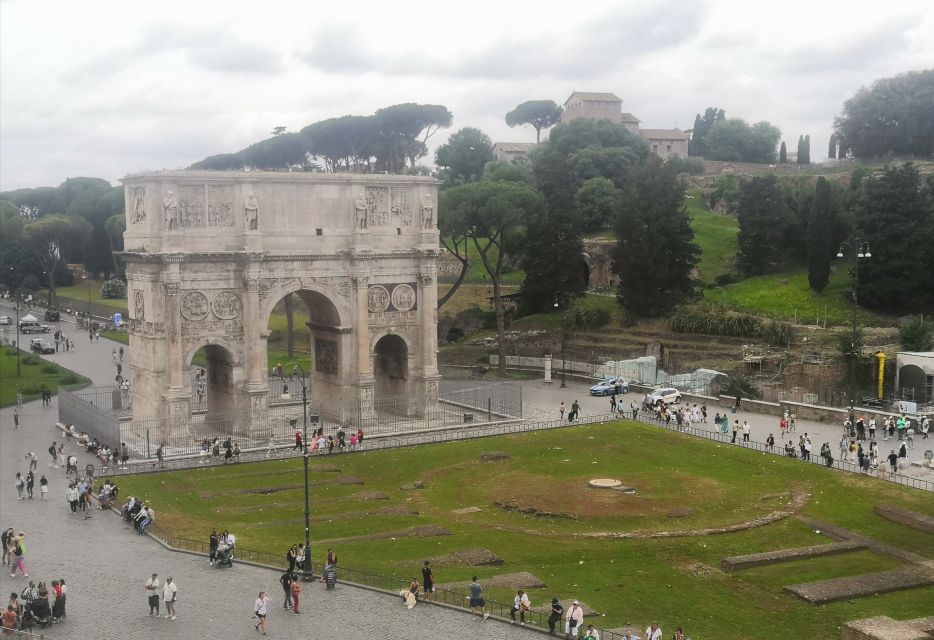
This is the core of the day. The Roman Forum stop is guided for about 30 minutes, and it’s where the tour earns its reputation.
The Forum was used for major public life: triumphal processions and elections, plus public speeches. Your guide helps connect those functions to the landmarks you see now. That matters because the Forum looks confusing if you’re just scanning from one spot. A guided walk gives you the “this leads to that” logic.
A standout included stop here is the Temple of Romulus, described as an architectural wonder located within the Roman Forum. I like having this specifically called out, because it gives you a reference point beyond the obvious open-space feel. Instead of treating everything as the same ruin texture, you learn to look for what makes a place special.
Two very practical tips:
- Give your eyes time at each point. Roman ruins can look similar until you focus on shape, layout, and placement.
- Try to listen for the reason behind the structure. The guide’s explanations are the value-add here.
Arch of Titus (about 15 minutes): a monument built for messaging
Next up is the Arch of Titus, with a guided visit of about 15 minutes. Arches are short stops on purpose. They’re meant to be read like a statement—compact, direct, and designed to be seen.
Why I like this stop in a guided context: it’s easy to treat an arch as a photo-op only. With a guide, you start thinking about why it was placed where it was and what it communicated to the people moving through the area.
This segment is also a good breathing break from the wider spaces. You get a structured point of interest, then you’re back on the move toward the temples and the climb.


Temple of Venus and Roma (about 15 minutes): religion and politics in the same block
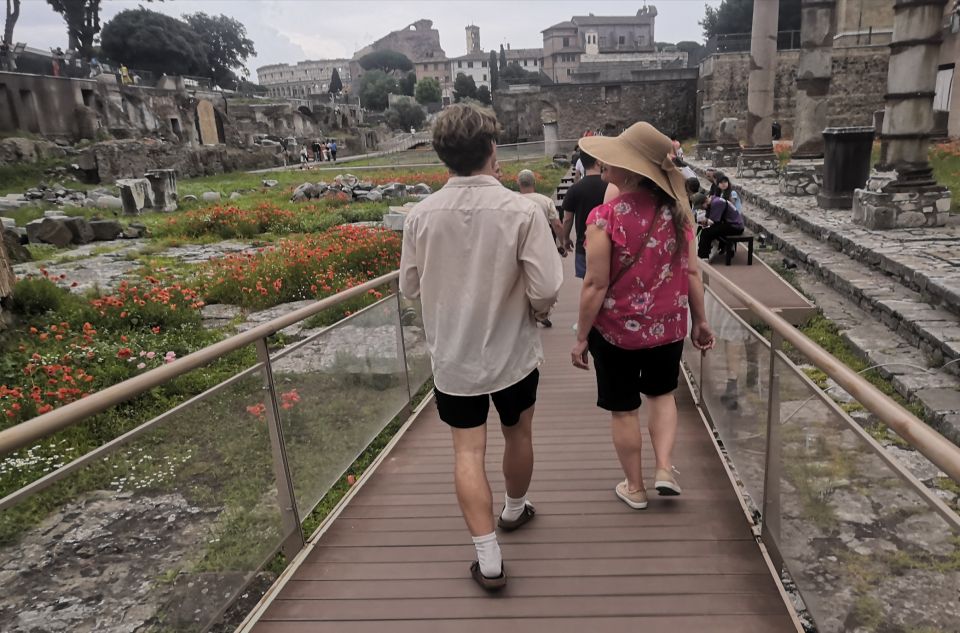
You’ll visit the Temple of Venus and Roma for about 15 minutes. This is a smart stop because it bridges the tour theme: Roman public life was not split into neat categories. Religion, politics, and civic identity often overlapped in the same monumental spaces.
Even in ruin, the idea of the temple as a major statement location is clear. I like having a dedicated stop here because it anchors your understanding of the Forum area as sacred and political at the same time, not just “government buildings.”
If you’re short on time in Rome, this temple stop helps you feel like you’re getting the big picture without needing a longer multi-day plan.
Palatine Hill (about 30 minutes + photo stop): the views you came for
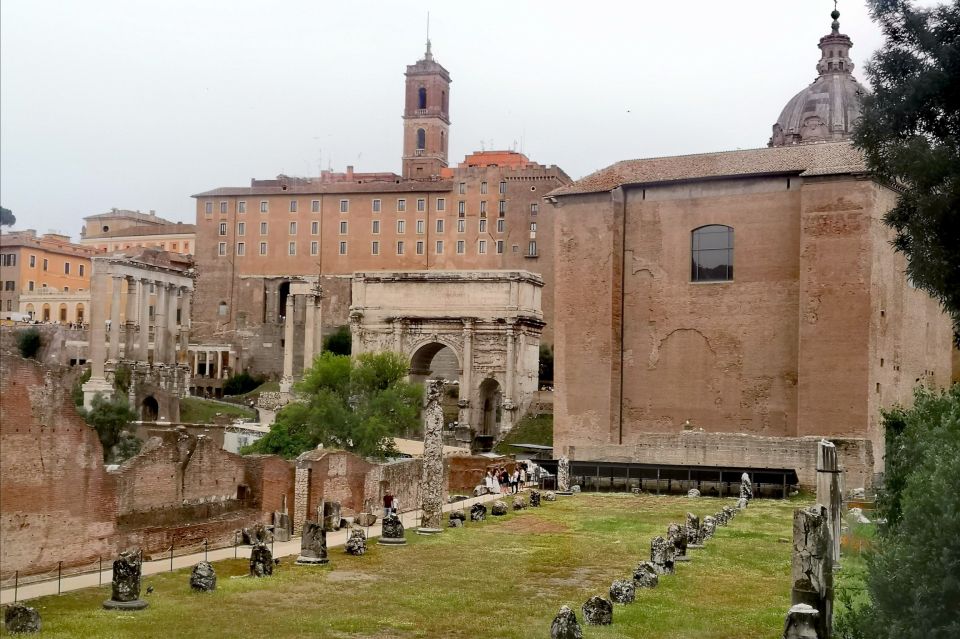
Then you climb. Palatine Hill is built into the itinerary with about 30 minutes total, including a photo stop and a guided visit.
This is where the tour becomes more emotional. The views from the top of Palatine Hill aren’t just pretty—they help you understand why emperors and elites liked being above the public spaces. When you look down and see the ruins spread out, you can start imagining how the Forum and surrounding areas felt from the hill.
The tour also points out a visual highlight you can’t easily recreate on your own: views of the ruins of the homes of the emperors, plus the Farnese gardens area. That combination is useful because it shows the hill as more than a dry ruin zone. It’s tied to how Rome’s power and later landscapes shaped what you see today.
One consideration: Palatine Hill is weather-sensitive. If the sun is brutal, plan to pace your photos. The tour gives you structured time, but you’ll still want to manage your stamina.
Domus Augustana (about 15 minutes): the emperor’s home angle
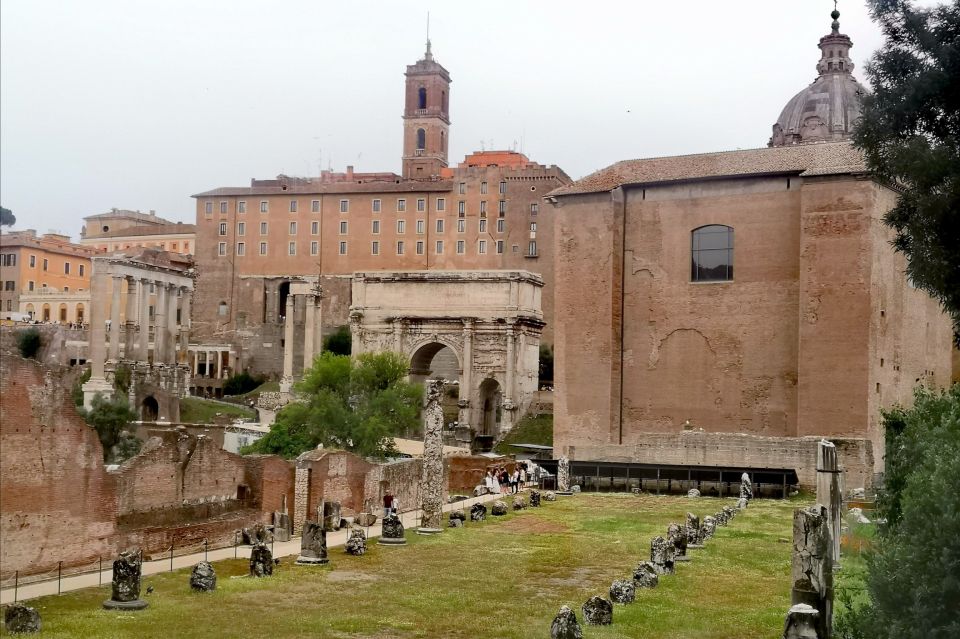
Your final major stop is Domus Augustana, guided for about 15 minutes. This is the “imperial living” component that rounds out the day.
Why it’s valuable: Roman Forum sites often focus on public life—speeches, elections, ceremonies. Domus Augustana shifts your attention to the home side of power, showing how rulers existed next to the public world they controlled.
Even with limited time, the guided visit helps you see the logic of the space rather than treating it like random walls. I like tours that end with a change in perspective, and this one does that well.
Where you’ll end: Arch of Constantine (and back near the start)
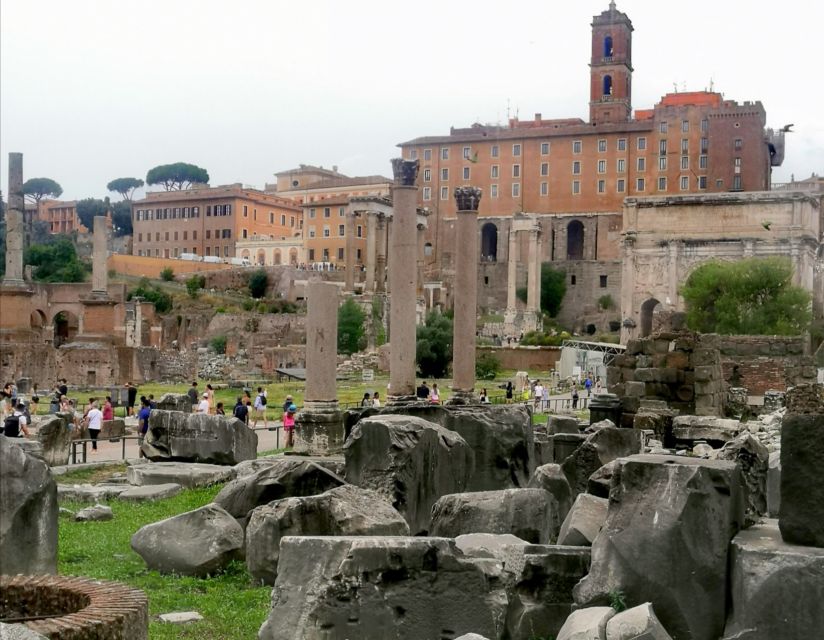
The itinerary lists a finish at Arch of Constantine. The tour description also says the activity ends back at the meeting point. In practice, many Rome tours finish near a landmark and then walk back to the starting area.
So, keep this in mind day-of. If you’re planning a tight schedule afterward, it’s smart to double-check with the guide where you’ll be released at the end.
Either way, the end is close to major sights, so it’s easy to keep exploring without needing a complicated transit plan.
Price and value: is $78.17 a fair deal?
At $78.17 per person for a 2-hour guided tour in English, the big value isn’t just the duration. It’s the combination of:
- a licensed local guide
- a semi-private group up to 14
- a route that hits key Roman Forum and Palatine Hill landmarks in a controlled timeframe
The tradeoff is clear: Roman Forum tickets are not included. That means your final cost depends on what you pay for entry. If you haven’t bought tickets yet, factor in that extra step. The good news is the tour explicitly recommends buying online to avoid line time or purchasing at the ticket desk before the tour.
Also note the guide-led time blocks. You’re not just “wandering while a guide speaks.” Stops are timed—Imperial Fora, Roman Forum, arches and temples, then Palatine Hill and Domus Augustana. That helps you get more signal for your time and money.
Who this tour fits best:
- First-time visitors who want orientation fast
- People who like explanations while walking
- Travelers who want a smaller group and a clearer route plan
Who might find it less ideal:
- Anyone needing step-free access (it’s not suitable for wheelchair users)
- People who want a very slow pace with long independent exploration
Should you book this Roman Forum & Palatine Hill tour?
I’d book it if you want a smart, guided way to connect the dots between the Roman Forum’s public life and Palatine Hill’s elevated viewpoint. The route makes sense for a short stay, and the semi-private size helps keep the experience from feeling rushed or impersonal.
I would think twice if you’re the type who already has tickets, maps, and a self-guided plan and wants to linger for hours on your own. This tour is built for a focused 2-hour overview, not for deep independent roaming.
My practical bottom line: if you buy your Roman Forum entry tickets in advance and you’re comfortable with walking, this is a strong value way to see Rome’s ancient center with real context from Ruggero.
FAQ
How long is the guided tour of the Roman Forum and Palatine Hill?
The tour lasts 2 hours.
Is the tour in English?
Yes. The guided tour is in English.
Are Roman Forum tickets included in the price?
No. Tickets for the Roman Forum are not included, and you need to purchase them in advance.
Where do I meet the guide?
You meet Ruggero in the front of Trajan’s Column, near the gate.
Where does the tour end?
The activity ends back at the meeting point. The itinerary also lists Arch of Constantine as the finish location, so confirm the exact release point with your guide on the day.
How many people are in the group?
The tour is limited to up to 14 people.
Is this tour wheelchair accessible?
No. It is not suitable for wheelchair users.