REVIEW · ROME
Roma Museo Vaticano y Capilla Sixtina Tour guiado
Book on GetYourGuide →Operated by Discoverers · Bookable on GetYourGuide
A guided path through the Vatican saves your sanity. This 3-hour Vatican Museums and Sistine Chapel tour bundles the big art stops with an official guide and headsets so you can actually follow the story, not just shuffle through crowds. I like the way the route connects rooms to meaning, from Renaissance masters to what the Papal Conclave is about. One watch-out: meeting instructions can feel unclear at first, so plan an extra few minutes to find the right person.
I also liked the practical flow: you start with Vatican Museums, move through the Gallery of Maps, then finish inside the Sistine Chapel and wrap with a short stop at St. Peter’s Basilica. You’ll do plenty of walking, you’ll pass security like at an airport, and you’ll climb some steps to reach the Sistine Chapel. The time at St. Peter’s Basilica is brief, so if you’re dreaming of a long, lingering visit, you’ll likely want more time after the tour.
In This Review
- Key Highlights You’ll Feel on the Day
- Entering Vatican Museums Without Losing the Plot
- Vatican City Guided Time: How the Tour Gets You Positioned
- Gallery of Maps: When the World Was Drawn Differently
- Raphael Rooms and Renaissance Mastery You Can Follow
- Sistine Chapel: Listening to the Meaning Behind the Paintings
- St. Peter’s Basilica Stop: Worth It, Just Not the Dome
- Skip-the-Line and Headsets: Small Extras, Big Impact
- Price and Value: Is $106 Reasonable for 3 Hours?
- What to Bring (and What Will Slow You Down)
- Meeting Your Guide: Avoid the Most Common Stress Point
- Who This Tour Suits Best
- Should You Book This Vatican and Sistine Chapel Tour?
- FAQ
- How long is the tour?
- Where does the tour start?
- Does the tour include skip-the-line tickets?
- Is St. Peter’s Basilica included?
- Are tickets to the Sistine Chapel included?
- What languages are available for the guide?
- Are headsets provided?
- What should I bring to enter?
- What items are not allowed?
- Is this tour suitable for people with mobility impairments?
Key Highlights You’ll Feel on the Day

- Skip-the-line tickets that help you jump past the worst of the entry bottleneck
- Headsets so the guide stays clear, even when the room is packed
- Gallery of Maps explanations that show how people imagined the world in the past
- Raphael rooms and major Renaissance works placed in context, not just name-dropped
- Sistine Chapel learning time that includes Papal Conclave background
Entering Vatican Museums Without Losing the Plot

The Vatican Museums can feel like an art history test you didn’t study for. This tour helps you get oriented fast. You begin right at the Vatican Museums with an official guide and then move through the first museum segment with a clear structure, not random wandering.
What I liked here is how the guide doesn’t treat each hall like a separate event. Instead, you get the “why” behind what you’re seeing. That matters because Vatican art is loaded with symbolism, patronage, and political meaning. If you’re going in cold, it can blur into beautiful walls. With a guide, the places start to click.
Timing is tight by nature. You’re on a 3-hour schedule, so you should expect a pace that’s brisk. That’s also why skip-the-line matters: you want your energy spent on the art, not stuck waiting.
You can also read our reviews of more tours and experiences in Rome.


Vatican City Guided Time: How the Tour Gets You Positioned
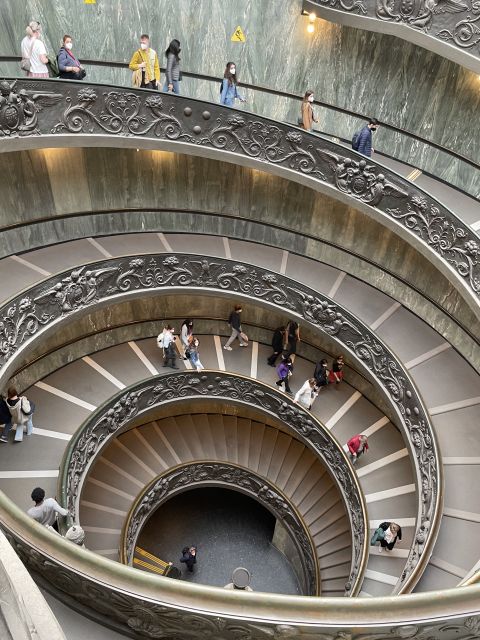
After the opening museum time, the experience includes a guided stretch that moves you through Vatican City space. In practice, this is where you settle into the rhythm: listening, looking, and following the guide’s cues.
This part works best if you keep your attention on the guide’s explanations rather than constantly scanning for the “next big thing.” The Vatican has a habit of rewarding people who slow down just enough to understand what they’re looking at. The guide’s job is to make that easier—so you don’t miss the story that turns the building into more than a museum.
Also, language matters. The tour runs with live guides in Spanish and English, so you can choose what fits you best. If you’re an English speaker, listen for the guide’s short explanations before you move on. It’s usually those quick bits that make the bigger artwork feel understandable.
Gallery of Maps: When the World Was Drawn Differently

Then comes the Gallery of Maps, one of the most interesting stops if you care about how people saw the world before modern geography. The “map” concept sounds simple until the guide ties it to the period’s perspective—what mattered, what was believed, and how power and knowledge shaped the images.
Why I think this is a smart inclusion: it gives you a break from pure religious art and shows how culture and worldview were built. It also changes your brain from “spot the famous painting” mode to “figure out what these choices mean” mode. You’re still in the Vatican Museums, but you’re not just staring. You’re learning how a whole era tried to make sense of distance, continents, and borders.
If you’re the kind of person who loves maps, history trivia, or understanding the thinking behind what looks decorative, this segment can be a highlight. If you only want the biggest names, you may find it less flashy than the Sistine Chapel—but it can still make the rest of the day feel more connected.
Raphael Rooms and Renaissance Mastery You Can Follow
One of the most praised parts of this tour is that it doesn’t treat the major artists like random celebrity stickers. You get time in areas tied to Raphael, plus the larger Renaissance wave that also includes Michelangelo and Gian Lorenzo Bernini in the guide’s storytelling.
Even if you’ve seen photos of Renaissance art, the real thing hits differently. Scale, brushwork, and composition become obvious when you’re standing close enough to see what the artists actually did—not just what thumbnails show. The guide’s job is to help you look like a person who understands art basics, without pretending you’re an art critic.
Here’s the practical value: when the guide points out details and places them in context, you’ll remember what you saw after the tour ends. Without that, the Vatican can turn into a blur of “wow” and “where was that again?”
Sistine Chapel: Listening to the Meaning Behind the Paintings
The Sistine Chapel is the emotional center of the whole day. It’s also the place where you need to manage expectations. You’re going in on a 3-hour tour, so your time there is about 1 hour, and the experience is shaped by how the chapel visit runs.
Before you enter, plan for the real-world stuff. The tour includes a stop to reach the Sistine Chapel where you’ll climb some steps. Also, you must follow the rules: no flash photography and keep your behavior in line with what the Vatican enforces. If you show up underdressed, you can get stuck dealing with clothing rules mid-day, which can throw off your flow.
Once you’re inside, the tour focuses on learning while you look. You’ll get context and explanations tied to major works by Michelangelo, plus background connected to the Papal Conclave—which is a great way to understand why this chapel matters beyond art appreciation. The Sistine Chapel isn’t only famous because it’s beautiful. It’s famous because of what it represents in the Church’s decision-making and symbolism.
A quick tip from the real-world rhythm: bring your attention level up before you enter. Take a moment to slow down as you go in. If you rush, you’ll miss the exact details the guide has been building toward.



St. Peter’s Basilica Stop: Worth It, Just Not the Dome

After the chapel, you move to St. Peter’s Basilica for a shorter visit, around 30 minutes. This is a good finish because it shifts from chapel concentration to an open, monumental church space.
What’s important is what this tour does not include. You’re not getting an organized dome experience, and there’s no preferential special access mentioned for the basilica itself. So if your dream is to climb the dome with guided time, you’ll need a separate plan.
Still, 30 minutes can be enough to appreciate the scale and key sights if you move with purpose. Use this stop to confirm what you imagined from postcards—then let it sink in. The basilica feels different from the museums. It’s less about curated rooms and more about architecture and atmosphere.
Skip-the-Line and Headsets: Small Extras, Big Impact
This tour includes skip-the-line tickets and headsets. That combo is what makes the experience feel “guided” instead of “guided in theory.”
In busy sites like these, audio problems are the silent killer. A guide can be great, but if you can’t hear them, you get nothing from the explanation. With headsets, you can stand where you want, look at what you’re seeing, and still follow the story.
The skip-the-line part matters for another reason: the Vatican’s main bottlenecks can eat your morning. If you arrive on time and use the included entry, you’re more likely to hit each stop without stress. Stress is what causes people to rush photos and miss context. With less waiting, you get more art time.
Price and Value: Is $106 Reasonable for 3 Hours?
At $106 per person, you’re paying for three things: an official Vatican tour guide, skip-the-line admission, and headsets. You’re also paying for the fact that the guide shapes the experience, moving you through the right highlights in the right order.
For me, that price feels reasonable because the alternative is usually a mix of separately booked tickets plus you trying to piece together an art narrative on the spot. If you’re spending a limited amount of time in the Vatican, a guided format saves both money and mental energy. You spend your time looking, not Googling your way from room to room.
The best value is for people who want the “what you’re seeing and why it matters” part. If you’re the type who already has a detailed plan, you might feel the guide is less necessary. But most first-time visitors benefit from having the story assembled for them.
What to Bring (and What Will Slow You Down)
You don’t need much gear, but you do need to show up ready for Vatican rules.
Bring:
- Your passport or ID card
Also be ready for:
- Airport-style security on entry
- Some steps on the way to the Sistine Chapel
- Dress that works inside sacred spaces (the tour notes no sleeveless shirts)
Don’t bring:
- Flash photography
- Pets
- Oversize luggage
One last practical note: there’s no refund for latecomers. That’s not a “fine print” issue. It’s a time discipline issue. Plan to arrive a few minutes early, even if the meeting instructions feel a little vague at first.
Meeting Your Guide: Avoid the Most Common Stress Point
One booking experience included a frustrating start: the meeting instructions for finding the right person were unclear, and it took time to get tickets sorted. The fix came through quick communication (WhatsApp worked).
So here’s my advice: screenshot the meeting point details and have a way to contact the operator if you’re stuck. If you’re the type who hates uncertainty, build in a buffer. You’ll be happier once you’re inside the museum flow, and you won’t waste your best concentration minutes.
Who This Tour Suits Best
This tour is a strong fit for:
- First-timers who want a curated Vatican day without getting lost
- People who want Sistine Chapel context, not only photos
- Visitors who like Renaissance art when it’s explained in plain language
- Anyone who values hearing the guide clearly (headsets help a lot)
It’s a weaker fit if:
- You need a long, unhurried St. Peter’s Basilica experience
- You want dome access as part of the same package
- You have mobility concerns, since the tour requires steps and is listed as not suitable for people with mobility impairments
If you fall in that last group, you might want a different plan that can match your pace and needs.
Should You Book This Vatican and Sistine Chapel Tour?
Book it if you want a smart, time-managed way to hit the Vatican Museums, the Gallery of Maps, the Sistine Chapel, and a taste of St. Peter’s Basilica with an official guide and headsets. At $106 for a 3-hour guided experience, the value makes sense, especially if you don’t want to spend hours designing your own route.
Skip it (or pair it with extras) if dome access is a top priority or if you need more than 30 minutes in St. Peter’s Basilica. Also, if you tend to get flustered by meeting points, set yourself up with a plan to confirm where to go and how to reach the operator.
If your goal is to leave with stories you can repeat—Raphael context, Michelangelo moments, and Papal Conclave background—this tour is a solid match.
FAQ
How long is the tour?
The tour duration is 3 hours.
Where does the tour start?
The tour starts at the Vatican Museums.
Does the tour include skip-the-line tickets?
Yes. Skip the Line Tickets Entrance is included.
Is St. Peter’s Basilica included?
Yes. The tour includes a visit to St. Peter’s Basilica for about 30 minutes, but it does not include dome access.
Are tickets to the Sistine Chapel included?
The tour includes admission as part of the Vatican Museums experience, and it includes a Sistine Chapel visit.
What languages are available for the guide?
The live tour guide is available in Spanish and English.
Are headsets provided?
Yes. Headsets are included so you can hear the guide clearly.
What should I bring to enter?
You should bring a passport or ID card.
What items are not allowed?
Flash photography is not allowed, pets are not allowed, and you should not wear sleeveless shirts or bring oversize luggage.
Is this tour suitable for people with mobility impairments?
No. It is not suitable for people with mobility impairments, and there are steps to reach the Sistine Chapel.