REVIEW · ROME
Rome: Catacombs of Saints Marcellino and Pietro Guided Tour
Book on GetYourGuide →Operated by OPERA ROMANA PELLEGRINAGGI · Bookable on GetYourGuide
Small thoughts, big history.
This catacomb tour runs on quiet awe. In a small group (max 10), a live guide leads you through the underground world of Saints Marcellino and Pietro, where frescoes still tell early Christian stories from the 3rd and 4th centuries.
I love how direct the storytelling is for such a short visit—about 30 minutes that feels focused, not rushed. I also like the visual quality: the catacomb walls hold paintings and frescoes that have been partly restored using laser technology, so you can actually make out what you’re seeing instead of staring at smudges.
One consideration: photography isn’t allowed inside, so plan to take notes or just enjoy it with your own eyes. Also, this is not a full on-site complex walk—the Constantine-related parts you might hear about are not included in the entry.
In This Review
- Key highlights at a glance
- Where the Catacombs of Marcellino and Pietro Begin (and why location matters)
- Saints Marcellino and Pietro: the story your guide will anchor for you
- Frescoes and paintings you can actually see (including scenes like Noah and Jonah)
- The 30-minute guided walk: what the timing feels like
- The Constantin ian era you’ll hear about (even though you don’t enter it)
- Getting there from Termini: your best simple options
- Practical value: does a $16 guided ticket make sense?
- Who this tour is best for (and who should pick something else)
- Should you book the Catacombs of Saints Marcellino and Pietro?
- FAQ
- FAQ
- How long is the Rome Catacombs of Saints Marcellino and Pietro guided tour?
- Where do I need to go to start the tour?
- Is the tour offered in English and Italian?
- What is included in the ticket price?
- Is audio guide included?
- Can I take photos inside the catacombs?
- Is Constantine’s Mausoleum included?
- Is the tour suitable for people with mobility impairments?
- What is the cancellation policy?
Key highlights at a glance

- Laser-restored frescoes that help you read the art
- Third-century Christian context tied to Diocletian’s persecution
- Saints Marcellino and Pietro at the center of the catacomb’s story
- Ancient place details around Via Labicana / Via Casilina, including ad duas lauros
- Small-group pacing with a guide speaking Italian or English
Where the Catacombs of Marcellino and Pietro Begin (and why location matters)

The catacombs sit along the third mile of the ancient Via Labicana—today that area is known as Via Casilina. That location detail matters because Rome’s “layers” are part of the experience. You’re not just walking into a tunnel; you’re stepping into a cemetery and neighborhood that shifted meanings over time.
Before the Christian catacomb took shape, this area connects to a much earlier imperial-world setting. In ancient times, a toponym called ad duas lauros referred to a broad property area tied to the emperor, with laurel shrubs marking the entrance to imperial land. The same zone also connects to the necropolis of the Equites Singulares Augusti—imperial guards on horseback—who had been established there since the 2nd century.
That’s the kind of background your guide is there to translate into something you can understand in real time, in the space where it actually happened.
You can also read our reviews of more guided tours in Rome

Saints Marcellino and Pietro: the story your guide will anchor for you
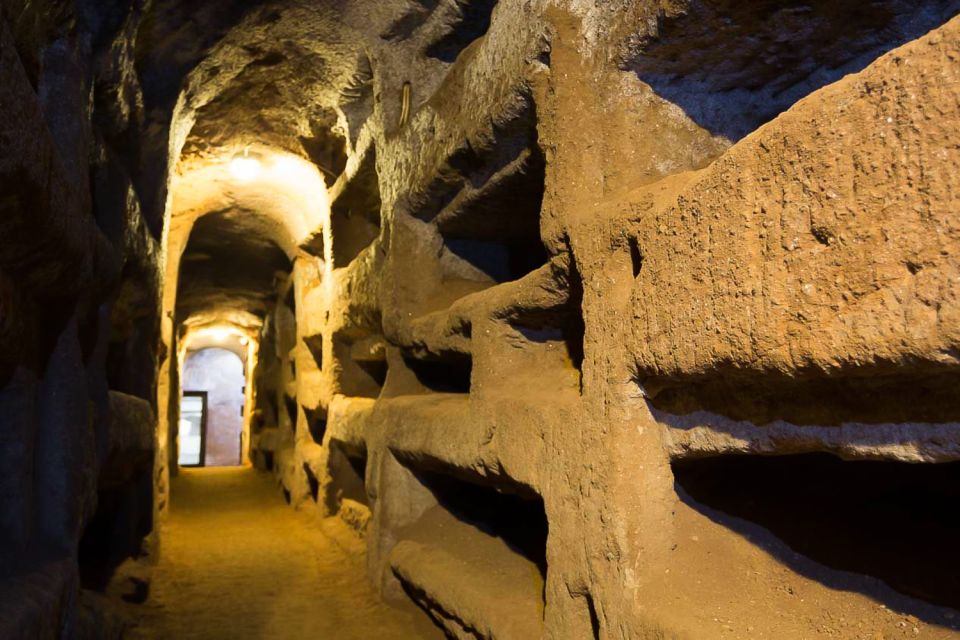
The catacomb you’re touring was installed in the second half of the 3rd century. It’s named for Saints Marcellino and Pietro, and their names aren’t window dressing. They’re tied to the bodies of martyrs connected with Diocletian’s persecution.
So when the guide moves from “what this place was” to “why these walls matter,” you’ll understand why the catacomb is more than an archaeological site. It’s a map of how early Christians held on to faith and memory in a dangerous period.
This is also where you’ll get a clearer sense of what early Christian worship and commemoration looked like in practice. Instead of imagining everything from afar, you’re guided through an environment where burial, art, and belief overlap.
Frescoes and paintings you can actually see (including scenes like Noah and Jonah)

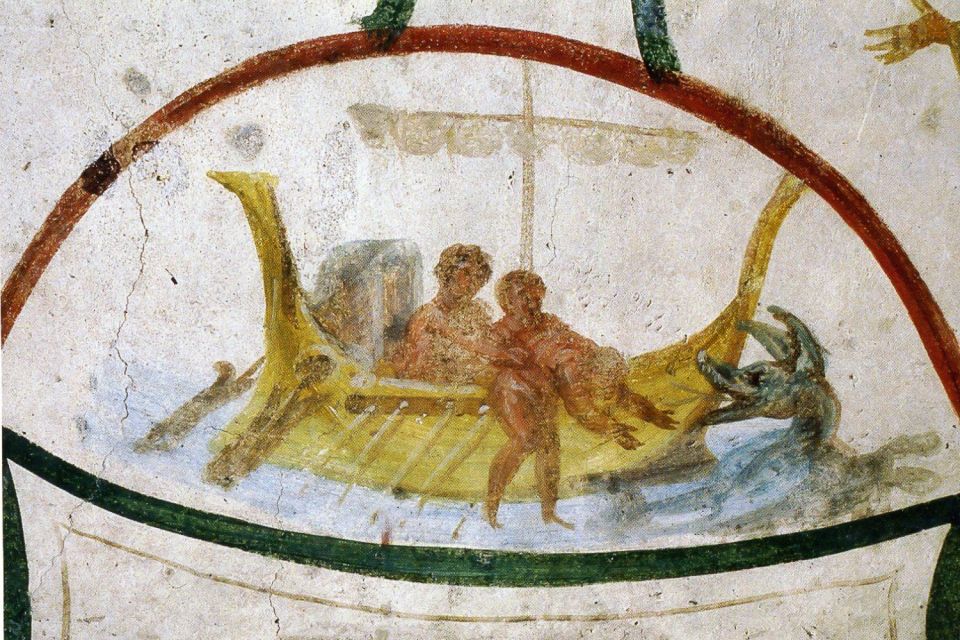
Here’s one of the biggest reasons I think this tour feels worth it: the art is a major part of the visit. The catacomb preserves a large artistic patrimony of paintings you can date to the 3rd and 4th centuries, and part of that collection has been recently restored using laser technology.
What does that mean for you, on the ground? It means the images are easier to read. You’re more likely to notice subjects and details rather than just thinking, “Yes, there are decorations.”
In particular, the tour experience is known for its strong selection of scenes from the Bible—things like Noah’s ark, the prophet Jonah, Lazarus, and other story references. Those subjects are the bridge between art and faith. You’re not just looking at old pigments; you’re seeing a visual language used by communities trying to pass meaning along.
Also, the catacomb can feel bright compared to some more famous sites. The less crowded setup helps too: fewer people means more guide attention per person, and that makes the whole walk more satisfying.
The 30-minute guided walk: what the timing feels like
This is a short visit by design—about 30 minutes of guided time. The upside is that you won’t feel stuck in a long museum loop. The guide keeps things moving so you can absorb the key stories and major visuals without getting mentally tired.
You’ll start by going directly to the ticket office for the catacombs and showing your voucher at least 10 minutes before your scheduled tour. That buffer is useful in Rome, where “on time” can still mean a bit of wandering before you locate the right desk.
From there, expect a guided route through the catacombs themselves, with the focus on historical context and the paintings/frescoes you’re seeing. With a group limited to 10, your questions are more likely to get a real answer instead of being waved off due to crowd management.
What you should not expect: a long, self-paced archaeology tour. This is more like an informed guided walk that gives you the meaning in the moment. If you love thinking through what you see and why it’s arranged the way it is, the format works well.
The Constantin ian era you’ll hear about (even though you don’t enter it)

While the tour entry is for the catacombs area, the story reaches upward to what happened later. In the Constantinian era, a monumental complex was erected above the catacomb. It included a large basilica in a circus-like shape—called circiforme—and it connected to a mausoleum.
Your guide may describe that mausoleum as probably built by Constantine for himself, later repurposed to house the burial of his mother, Augusta Elena. One extra detail that often comes up is that St. Helen’s remains were kept in a large red porphyry sarcophagus, which is today exposed in the Vatican Museums.
Important practical note: entry to Constantine’s Mausoleum is not included with this ticket, so you’re not getting that add-on experience here. Still, hearing how the site evolved helps the underground space feel connected to broader Rome, rather than frozen in time.



Getting there from Termini: your best simple options
You’ll likely want a straightforward transit plan before you go hunting for Via Casilina. A practical tip that helps: from Termini, you can use bus no. 105, or you can reach the area by tram.
Trams in Rome have their own personality—slow, scenic, and sometimes slightly chaotic—but they can be an easy way to get moving without overthinking connections. Either way, plan for a little extra walking once you’re near the catacombs area, since the ticket office is where you need to be 10 minutes early.
If you’re trying to fit this into a day of Roman ruins, think of it as a calmer contrast to the big crowd magnets. The site isn’t famous in the same way some catacombs are, which often means you spend more time looking at the art and listening to the guide.
Practical value: does a $16 guided ticket make sense?

At $16 per person, you’re paying for three things: entry to the catacombs, a live guide, and a small-group experience capped at 10. The price makes sense if you value guided context—especially because this catacomb doesn’t rely on big crowds to explain itself.
If you’re the kind of traveler who looks at a wall and wants the story behind it, the guide is the main value driver. And the visual focus on paintings and frescoes—some partly restored with laser technology—means you’re not paying to stand in the dark and guess.
If you’re hoping to bring your own soundtrack, note that an audio guide isn’t included. You’re getting the live narration instead, so come ready to listen during the whole 30 minutes.
Also, photography is not allowed inside. That doesn’t affect the value directly, but it does change how you’ll experience it. If you need photos for proof, you might feel limited. If you prefer to remember scenes, subjects, and names, the restriction can actually help you slow down.
Who this tour is best for (and who should pick something else)

I’d book this if you:
- Like early Christian history explained in real places
- Want fresco and painting details, not just “we’re in a tomb”
- Prefer smaller groups so the guide can tailor explanations
- Enjoy short, well-paced tours (30 minutes works well with a packed Rome schedule)
You might choose differently if:
- You need mobility-friendly access. This tour is not suitable for people with mobility impairments.
- You want a photo-heavy visit. Photography is not allowed inside.
- You’re specifically hoping to enter Constantine’s Mausoleum here. That’s not included.
Should you book the Catacombs of Saints Marcellino and Pietro?

Yes—if you want a guided, small-group catacomb visit that centers on art and early Christian context, this is a strong value. At $16, you’re getting exactly what matters: a live guide, a focused 30-minute experience, and access to frescoes and paintings that have been partly restored with laser technology.
If your day in Rome includes the big-name sites, I’d treat this tour as the quieter counterpart. It’s less about checking a box and more about understanding why these spaces were meaningful—and seeing the images that carried those meanings forward.
FAQ
FAQ
How long is the Rome Catacombs of Saints Marcellino and Pietro guided tour?
The guided tour lasts about 30 minutes.
Where do I need to go to start the tour?
Go directly to the ticket office of the catacomb and show your voucher at least 10 minutes before the scheduled tour.
Is the tour offered in English and Italian?
Yes, the live tour guide is available in Italian and English.
What is included in the ticket price?
The ticket includes an entrance ticket and a guide.
Is audio guide included?
No, an audio guide is not included.
Can I take photos inside the catacombs?
No. Photography inside is not allowed.
Is Constantine’s Mausoleum included?
No. Entry to Constantine’s Mausoleum is not included.
Is the tour suitable for people with mobility impairments?
No, it is not suitable for people with mobility impairments.
What is the cancellation policy?
Free cancellation is available up to 24 hours in advance for a full refund.