REVIEW · ROME
Vatican City: Vatican Museum and Sistine Chapel Guided Tours
Book on GetYourGuide →Operated by Vatican Priority tours · Bookable on GetYourGuide
Two hours, one iconic ceiling. This guided Vatican Museums and Sistine Chapel experience is built for speed without feeling rushed, with key rooms and galleries plus a calm, focused approach to Michelangelo. I like that you get a radio headset so your guide stays audible even when crowds swell.
I also like the smart route through signature highlights, including the spiral staircase area and a balcony-style moment for a distant view of St. Peter’s dome. One consideration: guide quality can matter a lot. I saw a negative account describing a guide who gave little accurate info and wasted time, so if you care about interpretation, be ready to ask quick questions and keep yourself oriented.
In This Review
- Key Highlights at a Glance
- Where Vatican Museums Start: Spiral Staircase and the Garden Balcony View
- The Art Circuit: Statues, Courtyards, and the Gregorian Egyptian Museum
- Tapestries and Maps: Why the Gallery of Maps Feels Like a Classroom
- Raphael Room Energy: Setting Up What You’ll See in the Sistine Chapel
- Sistine Chapel Time: Quiet Viewing of Michelangelo’s Last Judgment
- Radio Headset, Languages, and How the Guide Fits In
- Price and Value: Is $84.96 Worth It for 2 Hours?
- Who This Tour Works For (and Who Should Skip It)
- Guide Quality: How to Protect Your Time in a Museum Maze
- Should You Book This Vatican Museum and Sistine Chapel Tour?
- FAQ
- How long is the Vatican Museum and Sistine Chapel guided tour?
- How much does the tour cost per person?
- What’s included in the tour price?
- What languages are the live guides available in?
- What do I need to bring?
- What is the dress code?
- What items are not allowed during the tour?
- Is there free cancellation?
Key Highlights at a Glance

- Radio headset included, so you hear your guide clearly through busy halls
- Spiral staircase and early “orientation” moments before the main galleries
- Vatican Garden balcony view that frames St. Peter’s dome from inside the complex
- Gallery of Maps, tapestries, and major art rooms grouped into a tight circuit
- Gregorian Egyptian Museum stops that add variety beyond Renaissance art
- Quiet approach to the Sistine Chapel focused on Michelangelo’s Last Judgment
Where Vatican Museums Start: Spiral Staircase and the Garden Balcony View
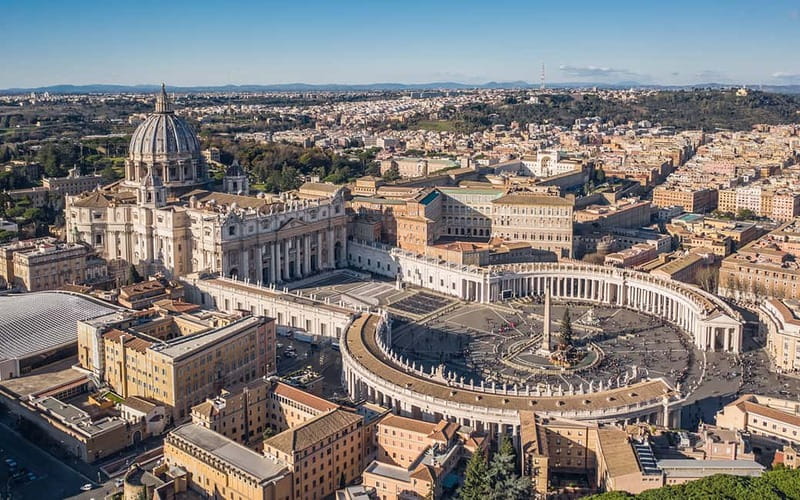
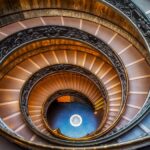
Vatican Museums can feel like an art-filled rabbit warren. This tour helps you get your bearings fast by starting with the kinds of moments that act like checkpoints for your brain. You begin with the spiral staircase area, which is one of those places where the building itself tells you you’re in a special world—stone, curves, and an immediate sense of scale.
Then you move into the early “big-picture” views. One of the neat perks here is the balcony look connected to the Vatican Garden, where you can catch a glimpse of St. Peter’s Basilica’s dome. That sight does two jobs. It gives you context for where you’ll end up later in the broader Vatican complex, and it breaks up the all-indoor rhythm so the galleries don’t blur into one long line of walls.
Practical tip: wear shoes that can handle museum walking without complaint. Your time on this tour is set for about 2 hours, so any stumbles or slow starts cost you something.
You can also read our reviews of more guided tours in Rome

The Art Circuit: Statues, Courtyards, and the Gregorian Egyptian Museum

After the initial orientation, the itinerary leans into variety rather than only one style of art. You’ll see famous collections built up by the popes over the years—things that range from ancient pieces to more modern sculpture elements. The route includes ancient statues and a modern sculpture courtyard, which is a good palate cleanser if your brain starts to glaze over from marble and frescoes.
What makes this segment useful for you is the way it broadens your understanding of what the Vatican collects. Even if your heart is set on Michelangelo, you’ll feel more satisfied if you also notice how the Vatican’s interests evolved across centuries. That is exactly what this sort of mixed route helps with.
A standout stop is the Gregorian Egyptian Museum. It’s not what most people picture when they think “Vatican,” so it helps you avoid the one-note experience. You get a different flavor of antiquity, and it gives your eyes something new to track while you’re building toward the Sistine Chapel.
If you like looking with purpose, pick one detail per room—one statue feature, one artifact display style, one composition element. With only 2 hours, that kind of simple strategy keeps the tour from turning into passive sightseeing.
Tapestries and Maps: Why the Gallery of Maps Feels Like a Classroom

Some museum rooms are impressive because of size or famous names. Others impress because they help you read the collection. The Gallery of Maps and the tapestry-focused stops fall into this second category.
You’ll pass through areas described as including tapestries and gallery of maps, plus Renaissance hanging art. These are the kinds of rooms where you can actually “learn while seeing.” Maps especially give you a sense of geography and power—how people back then understood the world, and how the Vatican presented knowledge as something you could walk through.
My advice: don’t rush past these. When your group moves quickly, maps are where you can pause mentally and connect details. They don’t just decorate the walls. They show how art and information were treated as linked subjects.
This is also a good place to use your headset to catch one or two key points from your guide. You’re paying for a live explanation, not just entry, so let the guide give you a framework you can keep while you look.
Raphael Room Energy: Setting Up What You’ll See in the Sistine Chapel

As you continue, the tour includes major Renaissance-focused areas, including the Raphael room(s) (often called the Raphael Rooms). This is where the experience starts to feel like a build-up rather than a checklist.
Why it matters: Raphael-era rooms train your eye for composition and storytelling inside art. If you’ve never paid close attention to how figures are arranged, mirrored, and grouped, these stops help you understand why the Sistine Chapel ceiling hits so hard. You’re not only seeing masterpieces—you’re learning how artists solved the same problems across different eras.
You’ll also see additional gallery elements described as part of the museum circuit, including Egyptian and classical collections earlier, then these Renaissance rooms closer to the end. That flow makes the final destination feel like a climax instead of just another room.
If you’re the type who wants context, this is your moment to ask one quick question through the headset: what should you notice first in the ceiling scene later? Even without a long conversation, a single prompt changes how you look.
Sistine Chapel Time: Quiet Viewing of Michelangelo’s Last Judgment
This is the reason most people pick the tour. You end with the Michelangelo’s Sistine Chapel, with a silent way to reach and guidance that points you toward deep information about the Last Judgment painting.
That “silent” approach is important. The Sistine Chapel works best when you let the room do its job. No chatter can compete with the scale, and no loud commentary can replace the careful way you need to look up. With a guided route, you get help focusing on what matters in the ceiling work.
Here’s how to make it count in the time you have:
- Look for the overall structure first (the big grouping and flow).
- Then pick one zone and study it longer than you think you should.
- Use your guide’s info as a lens, not as a script.
Even if you’ve seen photos before, this is where your brain resets. Your eyes catch details because your viewing angle is the real one, in real light, with the ceiling overhead. For a 2-hour tour, this ending is exactly what you want: a clear finish that justifies the whole route.
You can also read our reviews of more city tours in Rome





Radio Headset, Languages, and How the Guide Fits In

The tour includes radio headset use, and that changes the experience more than people expect. In Vatican Museums, sound doesn’t carry well. With a headset, you don’t have to crane your neck toward a guide’s mouth. You can keep your eyes on art instead of on the back of someone’s head.
Language coverage is English and Spanish. So if you fall into either group, you should be able to follow explanations without switching your brain mid-sentence.
A small reality check: the quality of a guide can swing your satisfaction. One negative account highlighted a guide who explained almost nothing and even gave incorrect information, with wasted time. That doesn’t mean it’s the typical outcome, but it is a strong reminder: show up ready to engage, and if the guide isn’t landing the explanation you came for, keep your own attention on the highlight sequence and ask at least one direct question early.
Price and Value: Is $84.96 Worth It for 2 Hours?
At $84.96 per person for a tour that runs about 2 hours, you’re paying for three main things:
- Entry tickets to the Vatican Museum
- Reservation fees
- A live guide with radio headset
Value comes from compression. Without a guide, you’d still be able to walk and see things, but you’d likely waste time figuring out what to prioritize. With this tour, you get a curated route through recognizable, high-impact spaces: spiral staircase area, Vatican Garden balcony view, statues, modern sculpture courtyard, Gregorian Egyptian Museum, tapestries, gallery of maps, Renaissance hanging art, Raphael Rooms, and the Sistine Chapel with Last Judgment focus.
If you’re short on time in Rome, this price looks more reasonable. The Vatican is not a place you casually “wing” if you only have a couple hours. For people who want a guided plan and clear audio, $84.96 can be fair.
If, on the other hand, you want a slow, independent museum experience with lots of lingering and flexible pacing, paying for a timed circuit might feel limiting. In that case, consider whether you’d rather spend more time or choose a less structured format. The tour is designed for focus and speed.
Who This Tour Works For (and Who Should Skip It)

This guided Vatican Museum and Sistine Chapel format is best for you if you:
- Want to hit core highlights without planning the entire route yourself
- Appreciate a live guide and clearer audio with a headset
- Prefer a structured path ending with the Sistine Chapel
It is not suitable for several groups. It’s listed as not suitable for mobility impairments and not suitable for wheelchair users, plus not suitable for people with hearing-impaired needs. It’s also not suitable for altitude sickness, babies under 1 year, and people over 95 years.
You also need to follow basic on-site rules. Dress code requires that shoulders and knees are covered. Bring comfortable shoes, and bring a passport or ID card for children. Not allowed: baby strollers, weapons or sharp objects, and pets.
Bottom line: if your day plan includes careful mobility and you need accessible routes, double-check fit before booking. For everyone else, the biggest “risk” isn’t the tour itself—it’s whether you’re comfortable moving at museum pace for about 2 hours.
Guide Quality: How to Protect Your Time in a Museum Maze
One of the only actual review details provided is a very unhappy experience describing a guide who:
- explained almost nothing,
- included incorrect info,
- wasted time on things not related to the tour,
- and didn’t seem to know key schedules or important details.
That’s not the kind of thing you can ignore if you’re paying for a guided experience. Here’s how I’d protect your time and expectations.
First, arrive ready to ask. If you join the tour and your guide is going off track, you should be able to re-center quickly: ask what the next highlight is and what you should notice. Second, keep your own mental checklist of the stops you care about most—spiral staircase area, gallery of maps, Raphael Rooms, and Sistine Chapel’s Last Judgment focus. If the guide’s explanations wobble, your priorities won’t.
Finally, remember what the tour is designed to do: it’s a guided circuit that covers big rooms and ends with the Sistine Chapel viewing. If you go in expecting a slow seminar, you might be disappointed. If you go in expecting a focused guided walk with headset support, you’re more likely to leave satisfied.
Should You Book This Vatican Museum and Sistine Chapel Tour?
Book it if you want a guided, time-efficient route that lands on the Sistine Chapel and focuses attention on Michelangelo’s Last Judgment, with radio headsets and the ticket included. At $84.96 for about 2 hours, the value is strongest for people who don’t want to spend their limited Rome time sorting out priorities inside Vatican Museums.
Skip it or reconsider if accessibility is a concern (mobility and wheelchair restrictions are listed), if you need accommodations not supported by the info provided, or if you know you’ll feel frustrated by a timed structure.
If you’re the kind of person who enjoys learning while walking, this is a solid choice. Just keep your expectations grounded: the difference between a great day and a so-so day here is often the guide’s clarity. Bring curiosity, but also stay alert so your time stays focused on the highlights that matter.
FAQ
How long is the Vatican Museum and Sistine Chapel guided tour?
The duration is listed as 2 hours. Starting times depend on availability.
How much does the tour cost per person?
The price is $84.96 per person.
What’s included in the tour price?
It includes entry tickets to the Vatican Museum, price and reservation fees, and a radio headset to hear your guide.
What languages are the live guides available in?
The live tour guide is available in English and Spanish.
What do I need to bring?
You should bring comfortable shoes, and you’ll need a passport or ID card for children. It also says to wear weather-appropriate clothing.
What is the dress code?
Shoulders and knees must be covered.
What items are not allowed during the tour?
Baby strollers are not allowed, along with weapons or sharp objects, and pets.
Is there free cancellation?
Yes. Free cancellation is available up to 24 hours in advance for a full refund.