REVIEW · ROME
Rome: Ghosts & Bone Crypts Tours: 2 Tours, 1 Discount Ticket
Book on GetYourGuide →Operated by Dark Side City Tours · Bookable on GetYourGuide
Rome gets spooky at street level. This combo ticket stacks Capuchin Crypts bone-chapel chills with an after-dark ghost-and-legend walking route through central landmarks. I like that you get both the macabre (over 3,500 monks arranged in bone symbolism) and the city-street storytelling (from a Trevi Fountain haunting to tales tied to popes and poisoners). One heads-up: the content is dark, it runs rain or shine, and you’ll need covered shoulders and knees for the crypt.
What makes this work well is the setup for real Rome-on-foot time. You start in Piazza Barberini at a marked meeting point, you move with a live guide, and the group stays small enough that you actually hear the story details, not just the loudest voices. Guides such as Ben, Arielle, and Ivana are repeatedly praised for mixing facts, rare details, and humor.
If you’re short on time, the scheduling can be a little intense—two tours total, and both parts can be done on the same evening or split across separate nights. I’d personally split them if you want less rushing and a calmer pace after the crypt.
In This Review
- Key things to notice before you go
- The value play: a two-tour ticket that actually makes sense
- Meeting at Piazza Barberini: your starting point for the night route
- Capuchin Crypts: 3,500 skeletons, symbolism, and the real outfit rules
- The ghost-and-legend half: famous sights with darker stories attached
- Stop-by-stop: what you’ll see and why each one fits the mood
- Piazza Barberini to the Capuchin Crypts
- Trevi Fountain (quick guided moment)
- Pantheon and Piazza Navona (two fast stops, one theme)
- A café break in the middle (your reset button)
- Campo de’ Fiori and Piazza Farnese
- Ponte Sisto and Via Giulia (bridges and narrow street energy)
- A hidden gem stop
- Castel Sant’Angelo and the finish near St. Angelo Bridge
- Pace, rain or shine, and how to pack like you actually mean it
- Who this is best for (and who should consider another option)
- Should you book the Ghosts and Bone Crypts combo?
- FAQ
- How long is the experience?
- Where do I meet the guide?
- What is included in the ticket?
- Can I take the tours on different days?
- How do I redeem the combo ticket?
- What should I wear for the Capuchin Crypts?
- Is the tour canceled if it rains?
- Is this tour in English?
- Is the tour wheelchair friendly?
- What is the main walking route like during the city portion?
Key things to notice before you go
- Capuchin Crypts entry is included, so you’re not hunting for tickets while your group waits.
- Dress code for the crypt is real: shoulders and knees must be covered (you can buy a cover-up on site for €1).
- Express security check helps you waste less time before the walking portion.
- Small-group setup keeps the stories clear and interactive rather than a crowd shuffle.
- You can split the two tours across different nights, which is handy if you want more breathing room.
- You’ll end near St. Angelo Bridge, which shapes where you’ll grab your next meal or late-night gelato.
The value play: a two-tour ticket that actually makes sense
This isn’t one random “dark Rome” walk. It’s a smart pairing: one part is built around the Capuchin Crypts, and the other is built around ghost stories and darker city legends. Together, they give you two ways to understand Rome’s obsession with death—one as religious art made from bones, the other as folklore built from history, fear, and rumor.
The price is $62.63 per person, and the package also offers a €10 savings when you book both tours together. That savings matters because the cost isn’t just for walking. You’re paying for live guidance, time-efficient entry, and a guided route through several famous stops. If you were to do these as separate outings, you’d likely lose some of that time advantage and the built-in flow.
Also, the format gives you control. You can do both tours on the same evening with a short break, or take them on separate nights. That flexibility is more than convenience—it changes how you experience Rome at night. One night feels like a sprint. Two nights feels like you can digest the stories and still enjoy the streets afterward.
You can also read our reviews of more tours and experiences in Rome


Meeting at Piazza Barberini: your starting point for the night route
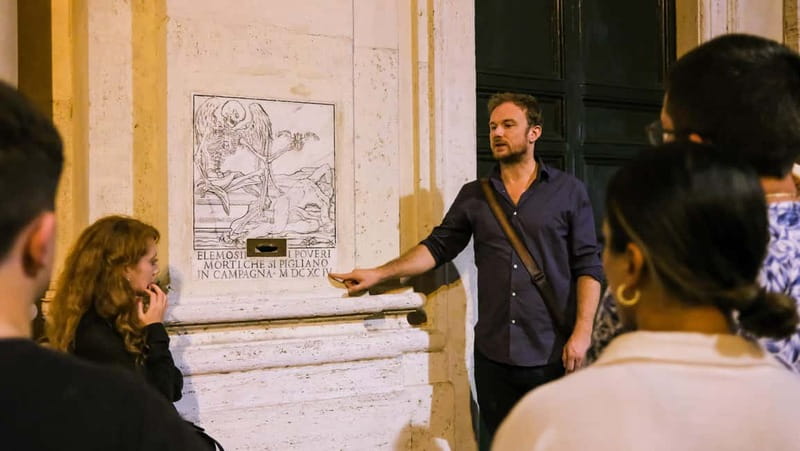
You meet at the fountain in the middle of Piazza Barberini, with the guide holding a sign that includes Rome’s Bone Crypts & Dark Centre. That’s a helpful detail because Rome’s sights are close, but meeting points can still be confusing when you’re arriving with dinner plans and limited time.
The tour is in English and led by a live guide. The route also includes an express security check, which is a big deal on busy evenings. In practice, it can mean you spend less time waiting and more time hearing the stories in the places they belong.
One thing to watch: the material you’re given says the activity ends back at the meeting point, but the itinerary lists St. Angelo Bridge as the finish. Expect that your finishing point could be near the Castel Sant’Angelo area. I’d treat that as normal for a walking route and plan your next transport accordingly. If you want to be extra safe, follow the exact guidance email you receive after booking.
Capuchin Crypts: 3,500 skeletons, symbolism, and the real outfit rules
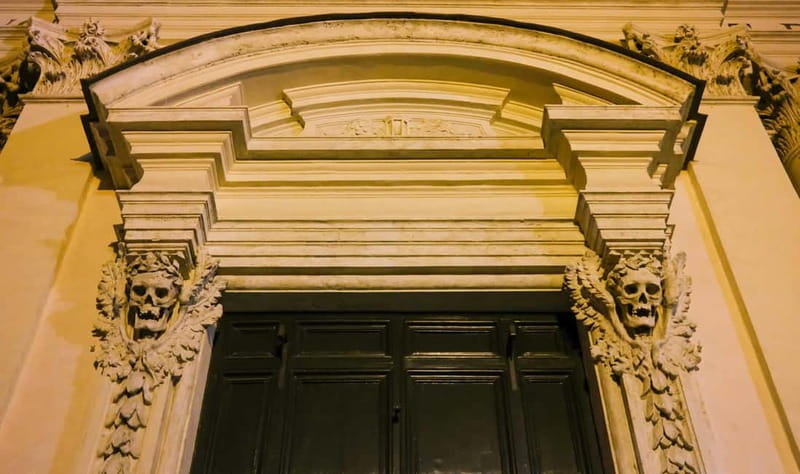
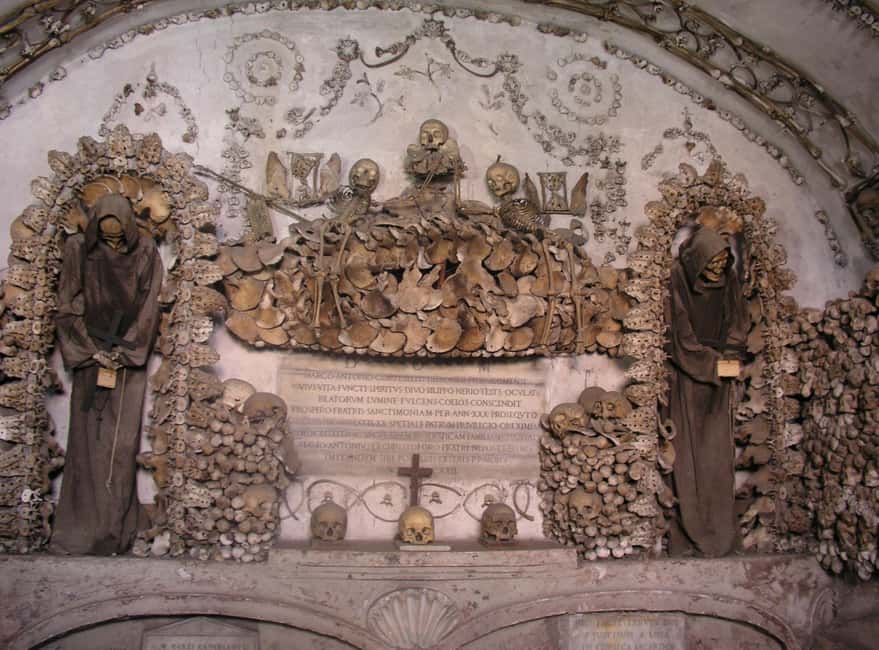
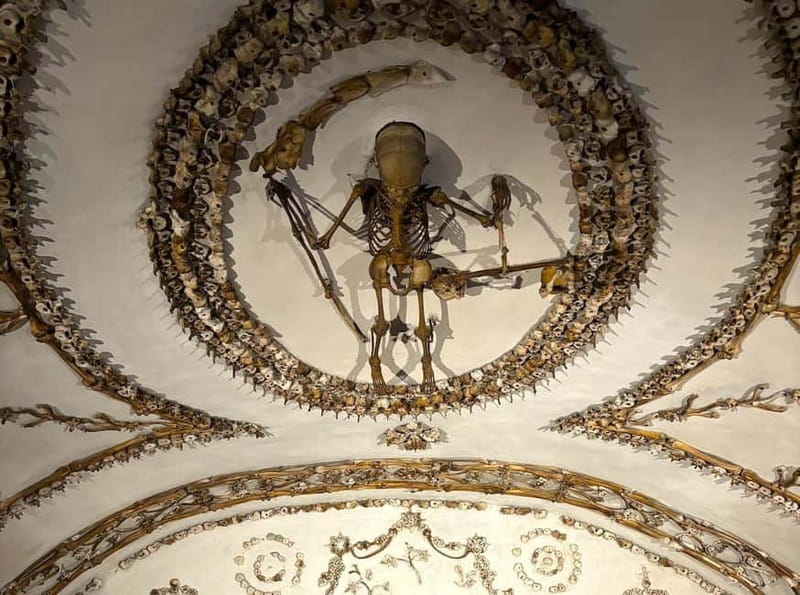
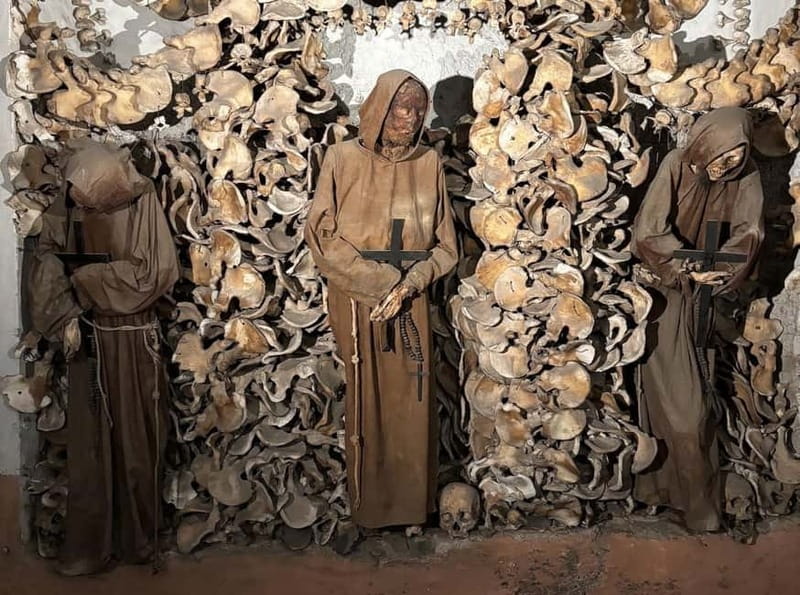
The first major stop is the Capuchin Crypts, located beneath a church. Expect a guided visit of about 30 minutes. The centerpiece is the bone chapel filled with remains of over 3,500 monks—some displayed as decorative arrangements and others still shown in robes. It’s not “scary movie” spooky. It’s more strange, emotional, and symbolic than that.
Why I think this works so well on a tour: the crypt is visually overwhelming on your own, and it’s easy to miss what you’re actually looking at. A guide helps connect the bones to the ideas behind the display—faith, mortality, and how people can turn death into art. If you’ve ever wanted to see Rome’s darkness as more than gothic vibes, this is the place.
Here’s the practical side that can trip people up. In the crypt, shoulders and knees must be covered. If you show up in shorts and a tank top, you can purchase a covering for €1 on site. Still, plan ahead so you’re not dealing with last-minute shopping while your group moves.
Comfort note: the crypt visit is indoor and guided, but the broader experience still requires comfortable shoes. The “after crypt” walking portion is what really tests your footwear.
The ghost-and-legend half: famous sights with darker stories attached
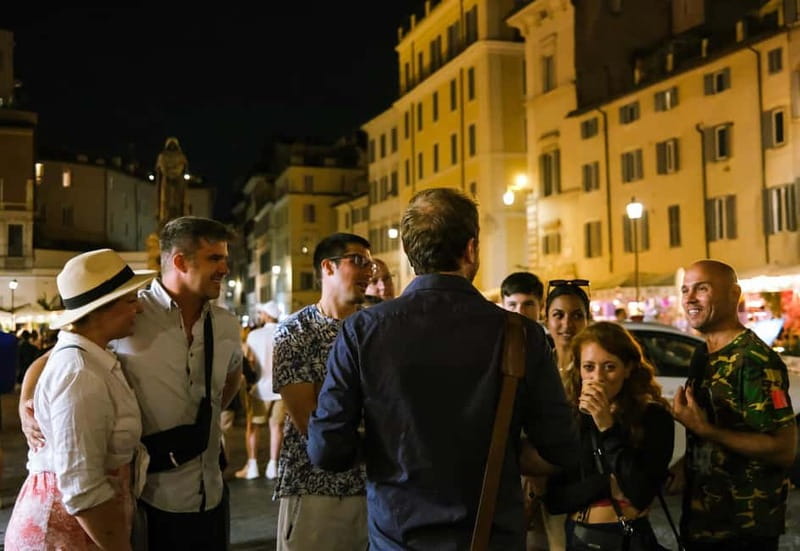
After the crypt, you move into the city center—where the tour turns history into a set of night stories you carry as you walk.
This is where the experience becomes more than sightseeing. You’re hearing tales tied to place names and old events, including references to WWII massacres and ghostly legends of noblewomen. You also get stories that feel almost too strange to be true, but are framed as local lore—like a haunting connected to Trevi Fountain, and a dark butcher story that’s said to have inspired the Sweeney Todd connection.
You’ll also hear about power and punishment: stories involving popes, poisoners, and philosophers whose lives (and deaths) didn’t just end quietly. There’s even mention of a so-called female pope, plus the story of a 16th-century girl who may still walk the bridge she crossed in tragedy. That “may” language matters. It’s folklore, not courtroom evidence, and that makes the tone feel more like rumor passed down than a scripted scare tactic.
And the best part is that you’re not only listening. You’re walking through the actual Rome where these ideas are linked—so the myths have gravity, because your feet are on the same stones people have used for centuries.
Stop-by-stop: what you’ll see and why each one fits the mood
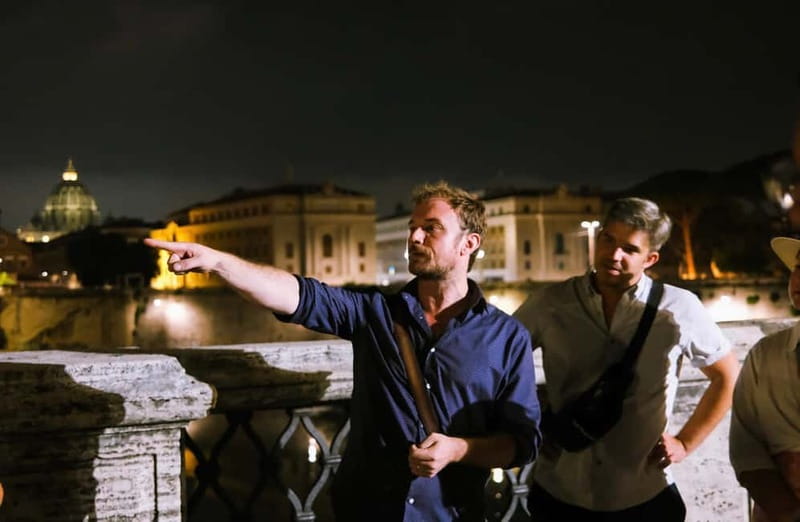
Here’s how the main walking portion plays out, and what to pay attention to at each stop.

Piazza Barberini to the Capuchin Crypts
You start at Piazza Barberini and then head toward the crypt. The guide sets the tone fast: expect the first part of the night to focus on bones, faith, and symbolism so you’re ready for the folklore that follows.
Trevi Fountain (quick guided moment)
Trevi is famous in daylight, but at night it shifts. You’ll spend about 10 minutes here with the guide. The practical point: don’t expect tons of time for photos. The goal is the story, not the postcard.
The tour’s ghost angle connects specifically to a woman’s ghost tied to Trevi Fountain. That’s exactly the kind of legend that changes how you look at the crowd once you’ve been told what the tale is supposed to mean.
Pantheon and Piazza Navona (two fast stops, one theme)
You’ll get a brief guided look at Pantheon and Piazza Navona, about 10 minutes each. These stops keep the route moving, so you stay in “night-walk mode” rather than “museum-schedule mode.”
Think of this as Rome doing two jobs at once: architectural perfection plus a sense that something darker is always hiding under the marble.
A café break in the middle (your reset button)
There’s a local café break of about 1 hour. This is the best kind of pause in a night tour: long enough to get water, snacks, or coffee, and short enough that you stay with the group’s schedule.
If you’re doing both tours in one night, this break also helps you mentally reset for round two. If you’re splitting across nights, use the break to plan the rest of your evening calmly.
Campo de’ Fiori and Piazza Farnese
Next comes Campo de’ Fiori (about 15 minutes) and Piazza Farnese (about 10 minutes). These are solid “walk-and-listen” stops: you can look up, orient yourself, and keep the story thread going without feeling like you’re stuck in one spot.
This is also where the tour’s theme—betrayal, death, and legends that stick—tends to feel more real. The streets don’t look haunted, but the stories make you notice how layered the city is.
Ponte Sisto and Via Giulia (bridges and narrow street energy)
You’ll spend about 15 minutes at Ponte Sisto and about 15 minutes at Via Giulia. Bridges are perfect for ghost stories, and the route’s mention of a 16th-century girl who may still walk a bridge fits the mood here. Via Giulia is a reminder that Rome isn’t only monuments. It’s streets that carry memory.
A hidden gem stop
There’s a hidden gem stop (about 10 minutes) included. You won’t have time for deep exploring, but it adds variety so the night doesn’t feel like a greatest-hits list.
Castel Sant’Angelo and the finish near St. Angelo Bridge
Finally, you reach the Castel Sant’Angelo area and finish near St. Angelo Bridge. It’s a strong ending point because the views and the river-area atmosphere help close the loop on a night tour. You also get a practical payoff: it’s a known area for getting dinner afterward.
Pace, rain or shine, and how to pack like you actually mean it
This tour runs rain or shine, so treat it like a night walk in Rome, not a casual stroll. Bring a light rain layer if you have it. Even a light drizzle can make cobblestones feel slick.
You’ll want comfortable shoes because the route includes multiple short stops and lots of walking between them. If your feet aren’t happy, the stories will be the least of your worries.
For the crypt specifically, plan your outfit with the shoulders and knees coverage rule in mind. If you forget, it’s fixable with a €1 cover-up, but the smoother choice is to dress appropriately from the start.
And because this is described as not suitable for wheelchair users, don’t plan it as an option for mobility constraints. The pace and the walking portion are part of the experience.
Who this is best for (and who should consider another option)
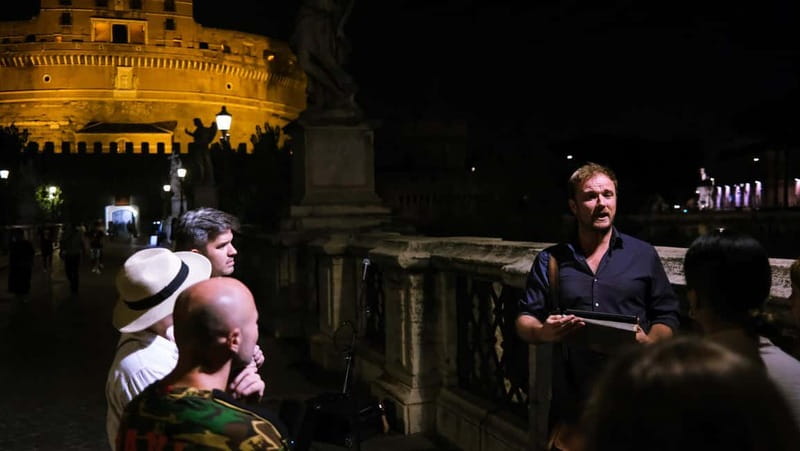
This combo fits best if you like Rome stories that go a little off-script. You’ll probably enjoy it if you’re the type who likes:
- ghost lore tied to real locations
- history that includes the ugly parts, not just the pretty ones
- walking tours with a guide who tells the story well, not just the facts on a headset
It’s also ideal if you want a more adult tone to your trip. There are no costumes and no gimmicks—just an after-dark format with spooky stories and eerie settings.
If you strongly dislike death-related themes, the Capuchin Crypt is not a gentle stop. Also, if you prefer long free-time sightseeing, the pacing and the guided “hit each spot” approach may feel a bit structured.
Should you book the Ghosts and Bone Crypts combo?
Book it if you want two kinds of dark Rome in one package: bone chapel symbolism plus street-level legends. The value is strongest when you treat it as a plan, not a backup. Go into it with covered clothing for the crypt, good walking shoes, and an open mind about folklore and history blending together at night.
Skip it or rethink it if you want upbeat sightseeing only, or if crypt-style displays of remains will make you uncomfortable. Also consider splitting the two tours across separate nights if you’re sensitive to long, emotional experiences.
If you’re curious about Rome as a place where art, religion, and rumor all share the same streets, this combo is the kind of night you’ll remember for a long time.
FAQ
How long is the experience?
The total experience duration is listed as 4 hours. It also notes that both tours last 2 hours each.
Where do I meet the guide?
Meet your guide by the fountain in the middle of Piazza Barberini. The guide will be holding a sign that says Rome’s Bone Crypts & Dark Centre.
What is included in the ticket?
It includes Rome’s Dark Side Tour and Rome’s Bone Crypts and Dark Centre tour, plus Capuchin Crypts entry.
Can I take the tours on different days?
Yes. You can schedule each tour on separate days at your convenience.
How do I redeem the combo ticket?
After booking, you’ll receive an email from the team with instructions.
What should I wear for the Capuchin Crypts?
You need shoulders and knees covered. If you don’t have covering, you can purchase one on site for €1.
Is the tour canceled if it rains?
No. The tours take place rain or shine.
Is this tour in English?
Yes, the live tour guide provides the tour in English.
Is the tour wheelchair friendly?
No, it’s not suitable for wheelchair users.
What is the main walking route like during the city portion?
You’ll have guided stops at places including Trevi Fountain, Pantheon, Piazza Navona, Campo de’ Fiori, Piazza Farnese, Ponte Sisto, Via Giulia, a hidden gem, and Castel Sant’Angelo.