REVIEW · ROME
Rome: Colosseum & Roman Forum Guided Tour
Book on GetYourGuide →Operated by Emotion club · Bookable on GetYourGuide
Ancient Rome, made doable. This Colosseum and Roman Forum guided tour uses an express lane to get you inside faster, then walks you through the most important ruins with clear storytelling. I really like the way the Colosseum visit starts on the 1st and 2nd levels before you climb up toward the top tiers. Guides such as Maddalena, Elena, and Francesco are especially praised for humor and for explaining the action behind the stone.
I also like the Roman Forum portion because it’s not just random wandering. You follow a route that connects the day-to-day bustle of ancient Rome with major political and economic areas, including the Imperial Forums. It’s a strong mix of big monuments and human details, like doctors, sailors, priests, and other real roles you can actually picture.
One thing to consider: the route is heavy walking and it isn’t suitable for people with mobility impairments or wheelchair users. Wear comfortable shoes, and go in knowing you’ll be on your feet for the full 3 hours.
In This Review
- Key highlights that matter
- Before you go: best fit for your Rome plans
- Meeting point at Largo Agnesi: get there calm, not confused
- The 3-hour route: what you do and why it’s paced this way
- Entering the Colosseum through the express lane
- Inside the Colosseum: gladiators, crowd votes, and backstage machinery
- Roman Forum and Imperial Forums: the city behind the spectacle
- Palatine Hill: where power started, and where you can see it
- Pace, heat, and practical tips that save your day
- Price and value: why $89.50 can feel fair
- Should you book this Rome Colosseum and Roman Forum tour?
- FAQ
- How long is the Rome Colosseum and Roman Forum guided tour?
- Where does the tour start?
- Which metro stop should I use?
- What’s included in the ticket price?
- Is the tour wheelchair accessible?
- What should I bring?
- Are large bags allowed?
- What languages are the tours offered in?
Key highlights that matter
- Express-lane entry into the Colosseum via a separate entrance, so you spend less time stuck in line
- Colosseum in layers: you start at the 1st and 2nd levels, then climb up toward the top tiers
- Gladiator detail beyond the basics: crowd voting, training, pay, and how the show’s backstage systems worked
- Roman Forum with a storyline: including the Sacred Road and the Imperial Forums
- Palatine Hill legends plus serious views: Romulus and Remus stories and skyline views toward Circus Maximus
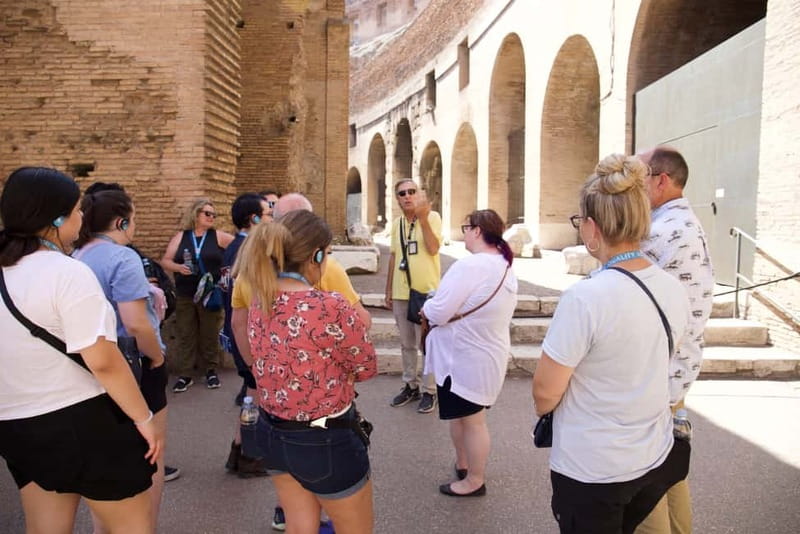
- Headsets included, so you can actually hear the guide even when it’s crowded
Before you go: best fit for your Rome plans
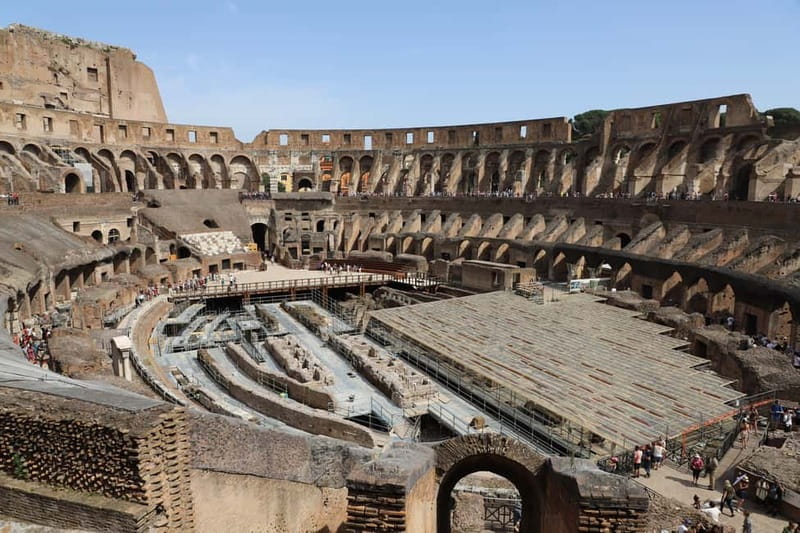
This tour is built for people who want the headline sites of ancient Rome, without spending half a day figuring out where to go or what to look at. The structure matters: you cover three big areas in about 3 hours—Colosseum, Roman Forum, and Palatine Hill—while a guide ties the places together.
If you’re the type who hates standing in line and you’d rather use your limited sightseeing time well, this is a good match. The price ($89.50 per person) makes more sense when you remember what’s included: a live guide, headsets, timed access to the Colosseum, and entry to both the Roman Forum and Palatine Hill.
If you’re moving slowly, need lots of breaks, or use a wheelchair, you should look for a different option. This one is clearly not designed for mobility limitations.
You can also read our reviews of more guided tours in Rome
Meeting point at Largo Agnesi: get there calm, not confused
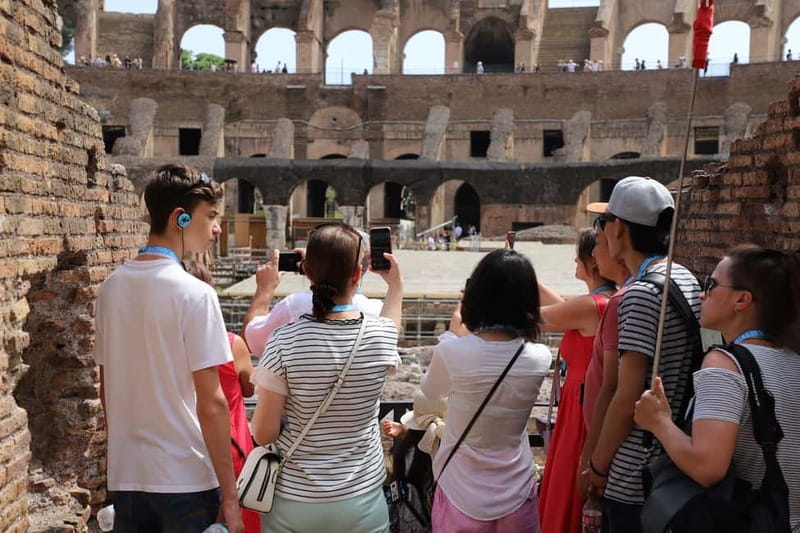
The meeting point is at the corner of the Caffè Roma at Largo Agnesi 1, and your guide carries a rounded Emotion.club logo sign. If you’re coming by metro, the stop is Colosseo (Line B). There are two exits—use the upper one. From that exit, the meeting point is on the right.
Why this matters: ancient Rome is easy to overthink. If you arrive 10 minutes early and locate the sign, you start the tour already relaxed, and you avoid the frantic “Where are you?” moment.
The 3-hour route: what you do and why it’s paced this way
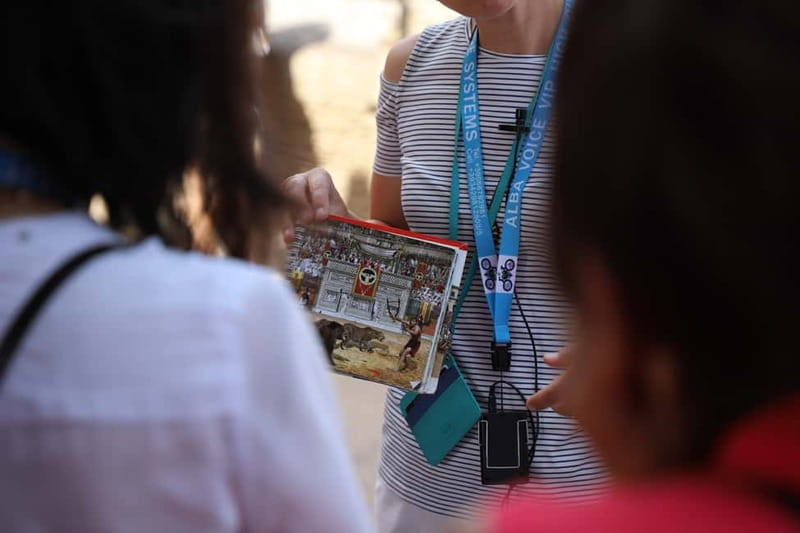
The tour runs about 3 hours total. The guided time is roughly:
- Colosseum guided portion: about 1 hour
- Roman Forum guided portion: about 1.5 hours
- Palatine Hill guided portion: about 30 minutes
That order is smart. You start with the Colosseum while the site is fresh in your mind, then you shift to the Forum where politics, religion, and public life connect everything. Finally, Palatine Hill gives you the origin stories and the best sense of how power shaped daily life.
You’ll also be using headsets the whole time. That’s not a luxury in a crowded site—it’s what lets you keep up when your group is moving.
Entering the Colosseum through the express lane
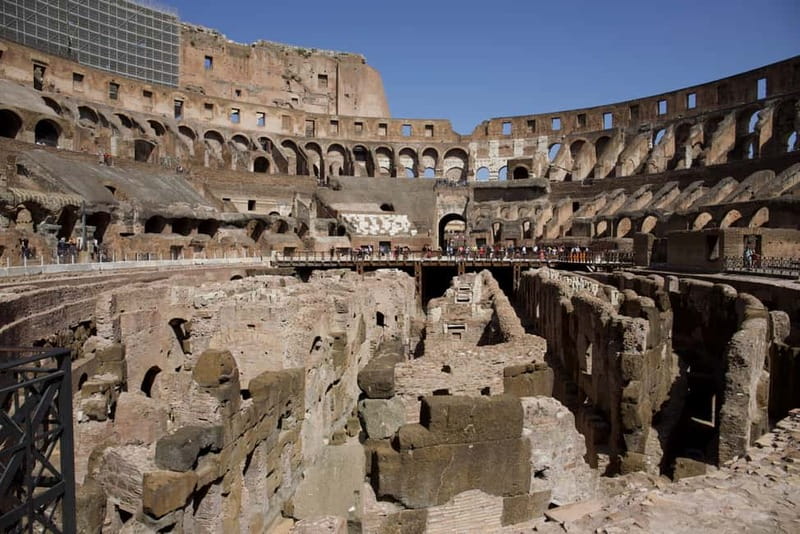
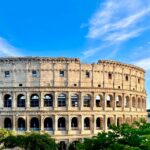
One of the biggest practical wins here is skip-the-line access using a dedicated express lane and a separate entrance. In the Colosseum area, that time savings is real. You avoid the long bottleneck and spend your limited hours where it counts: inside the monument.
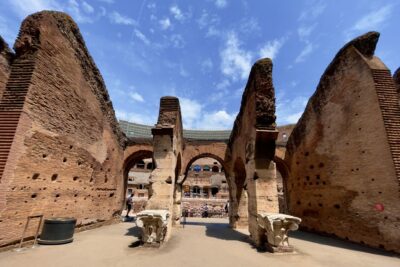
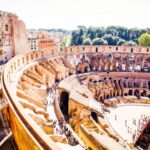
Once you’re in, the plan is not just a quick loop. The visit starts with the 1st and 2nd levels so you get a feel for how the seating and spectacle were layered. Then you climb toward the top tiers, which is where you start to absorb the building’s scale.
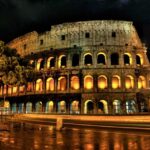
This matters because the Colosseum can look flat from the outside. From higher up, the structure clicks into place: you see how the space was meant to control crowds and views.
Inside the Colosseum: gladiators, crowd votes, and backstage machinery
The Colosseum section is built around explanation, not just photographs. Your guide walks you through why brutal fights were staged and how the show operated. You’ll hear about things like:
- how the crowd voted
- how gladiators lived and trained
- how much gladiators were paid
- how the building was constructed at this scale
- how complex backstage mechanisms and underground tunnels worked
Even if you already know the basics about gladiators, I think the useful part is the cause-and-effect. The Colosseum wasn’t random violence. It was a political and social performance, engineered to make people feel like they were part of Rome’s power.
Also, you’re not stuck listening. Several guides connected to this tour are praised for being funny and witty while staying organized. Names that show up often in feedback include Sara, Francesco, Anna, and Ferdinando (an archaeologist). That combination tends to create the right vibe: serious history, but explained in a way your brain can hold onto.


Roman Forum and Imperial Forums: the city behind the spectacle
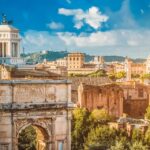
After the Colosseum, you head to the Roman Forum, the largest archaeological area in the world and a UNESCO World Heritage site. The Forum is where Rome stops being a monument and becomes a living system.
You’ll spend about 1.5 hours here, and the goal is to make day-to-day life feel real. You’ll hear about how the busy center worked and how people from different backgrounds moved through it—doctors, sailors, priests, and prostitutes, plus Romans of many nationalities.
What I like about this stop is the focus on context. You don’t just look at ruins. You learn what the spaces were for, so when you see temples, market areas, and triumphal arches, you have a reason to care.
Your guide also covers the Sacred Road, walking along the path in the footsteps of ancient Roman citizens, past key stops like:
- temples
- market-places
- villas
- triumphal arches
And because the highlights specifically call out the Imperial Forums, you also get the political and economic heartbeat of Ancient Rome—not just the ceremonial side.
Palatine Hill: where power started, and where you can see it
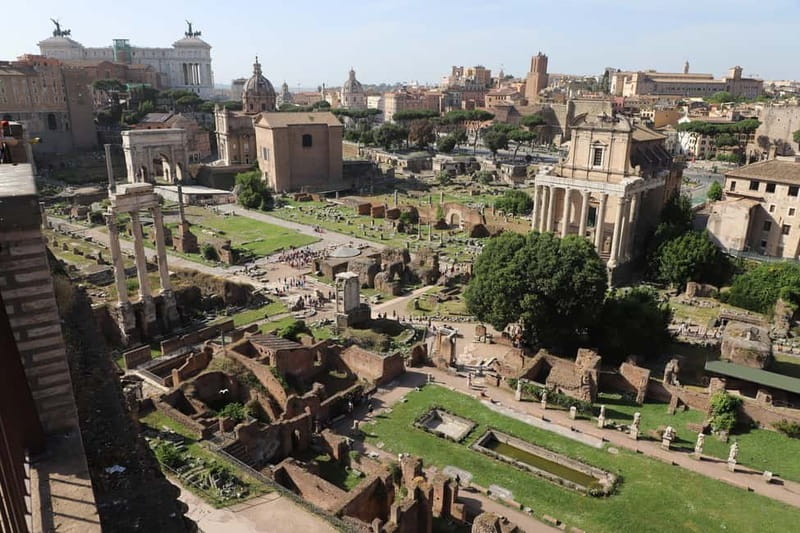
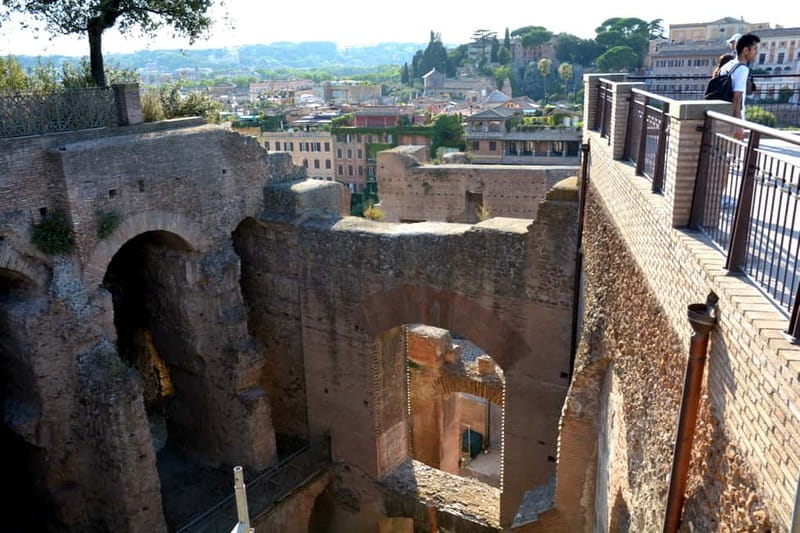
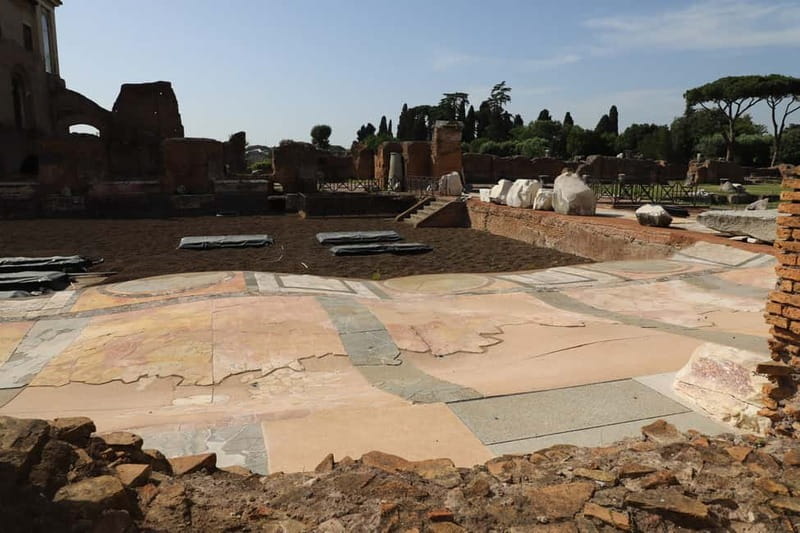
Palatine Hill is where the stories of Rome start to feel less like legends and more like the foundation for an empire. You get about 30 minutes guided time, and it’s one of those stops where the views help the explanation land.
Legend has it that Romulus and Remus were raised here by the she-wolf, and the tour ties that origin story to how the early city grew. You also learn about how the domination of the Roman Empire came to an end—part of the emotional arc of this area.
Expect to learn why the rich and influential lived here, then look at the remains of emperors’ villas. One of the most memorable parts is the perspective toward Circus Maximus, the chariot-racing arena. From Palatine, you can almost imagine the scale of crowd life and how leaders positioned themselves near the action.
Guides with an archaeology background, like Helena and Ferdinando, are praised for connecting the ground under your feet to what’s known from digs. Even when you don’t go deep on technical detail, this usually makes the ruins feel more legible.
Pace, heat, and practical tips that save your day
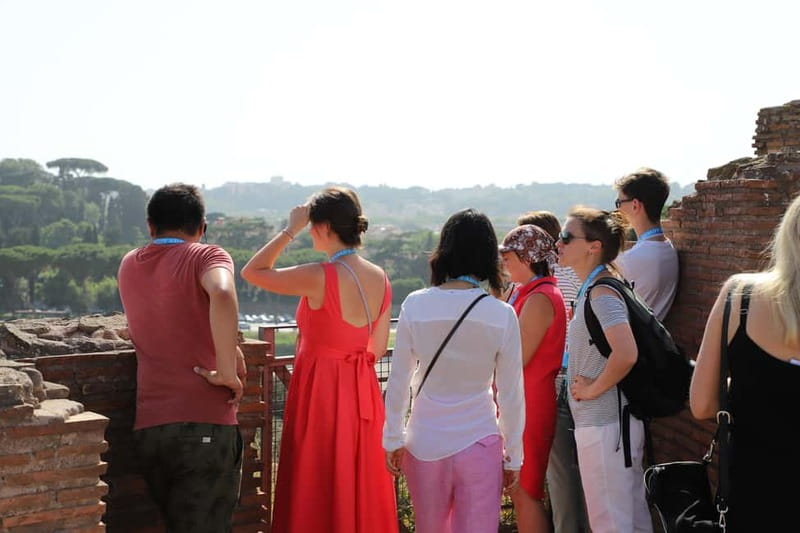
This tour is not a sit-down museum experience. It’s a walk across major sites, with enough time in each place to understand what you’re looking at.
Bring:
- Passport or ID card (you’ll need it)
- comfortable shoes (you’ll be on uneven ground and moving between levels)
What I suggest you also bring, even though it isn’t listed:
- water, especially in summer
- a hat or sunscreen
- a light layer if you get cold in buses afterward
In feedback from guides associated with this tour, Francesco is noted for adjusting for heat and finding shade where possible, along with regular water breaks. Don’t assume every day will be the same, but it’s a good sign of the kind of care you can expect from attentive guides.
Finally, know the accessibility limit: it’s not suitable for wheelchair users or people with mobility impairments. If that’s you, don’t force it. You’ll spend the tour fighting the ground instead of seeing Rome.
Price and value: why $89.50 can feel fair
At $89.50 per person for a 3-hour guided experience, the value comes from three things bundled together:
First, you get express-lane entry into the Colosseum. That’s the part that usually eats time on your itinerary.
Second, you get guided interpretation across multiple sites. Many self-guided visits turn into “I saw the place” but not “I understood the place.” Here, the guide connects Colosseum spectacle to Forum civic life, then to Palatine power.
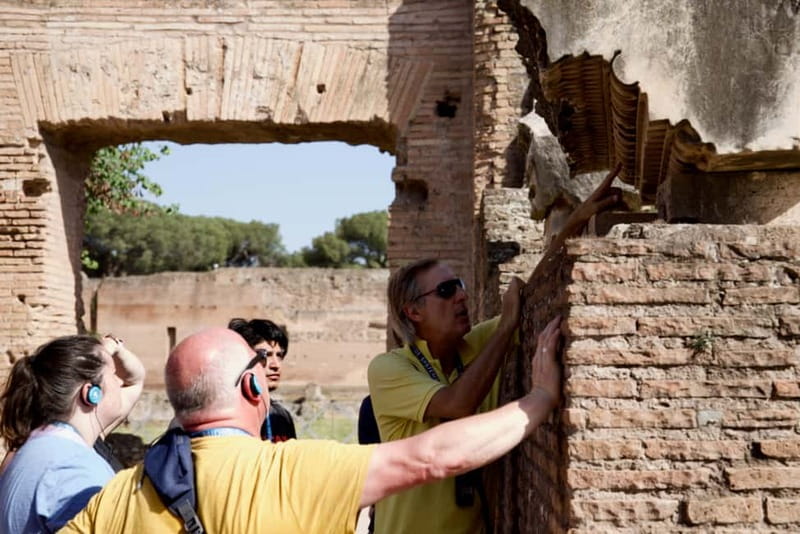
Third, headsets are included. For a crowded archaeological site, that means you can actually hear the story without constantly turning to shout over the noise.
If you’re traveling with limited time and want the major stops done in one efficient arc, this price is easier to justify.
Should you book this Rome Colosseum and Roman Forum tour?
Book it if:
- you want Colosseum + Roman Forum + Palatine Hill in one go
- you hate waiting in lines and want the express lane
- you like guided storytelling, especially explanations of how these places worked
- you’re comfortable with about 3 hours of walking
Skip it if:
- you need wheelchair access or mobility-friendly routing (this one isn’t suitable)
- you want a slow, no-pressure wander where you control every minute
- you prefer to read quietly and go without a live guide
If your goal is to walk away understanding what you saw—gladiator life and spectacle in the Colosseum, civic and political life in the Forum, and the origin-to-empire story on Palatine—then this tour is a strong bet.
FAQ
How long is the Rome Colosseum and Roman Forum guided tour?
The tour lasts about 3 hours.
Where does the tour start?
You meet your guide at the corner of the Caffè Roma at Largo Agnesi 1. Your guide holds a rounded Emotion.club logo sign.
Which metro stop should I use?
Use the Colosseo metro stop on Line B. Take the upper exit, then look to the right for the meeting point.
What’s included in the ticket price?
Included are the guided tour, headsets, Colosseum access, Roman Forum access, and Palatine access.
Is the tour wheelchair accessible?
No. It is not suitable for wheelchair users or people with mobility impairments.
What should I bring?
Bring a passport or ID card and wear comfortable shoes.
Are large bags allowed?
No. Luggage or large bags are not allowed.
What languages are the tours offered in?
The live guide languages are English and Russian.