REVIEW · ROME
Rome: Trajan Markets Experience with Multimedia Video
Book on GetYourGuide →Operated by TOURISTATION · Bookable on GetYourGuide
Rome sold goods here thousands of years ago. In Trajan Markets, you start with a 25-minute multimedia video and then walk through an Imperial shopping and forum network that explains how Rome’s economy worked. The best part is how quickly the ruins turn into a practical story: commerce, meeting places, and the changing city over centuries.
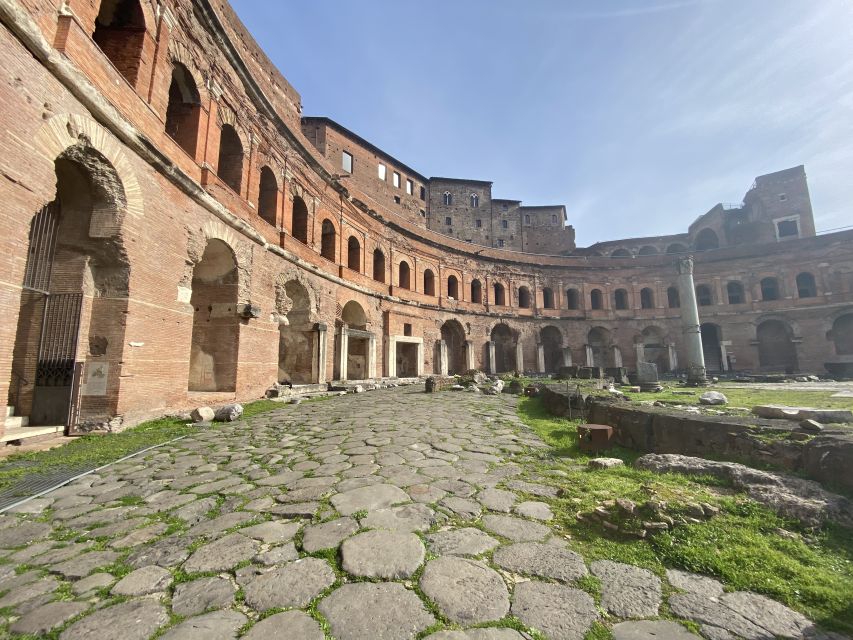
I love the semi-circle shape of the Trajan complex. It gives you a sense of design, not just scattered stones. And I like the Fori Imperiali Museum collection, especially the ancient artifacts and amphorae that connect trade with everyday life.
One possible drawback: ticket pickup can be a slow step. In some cases, the ticket-printing process at the Touristation desk takes extra time, so plan a little buffer so you do not feel rushed.
In This Review
- Key highlights you will actually notice
- Trajan Markets: a Roman shopping mall built on purpose
- The 25-minute multimedia video and the phone app that keeps you oriented
- Trajan Markets: where trade met daily movement
- Seeing the forums as meeting places, not just monuments
- The 17th-century cistern ruin: why Rome’s layers matter
- Fori Imperiali Museum: amphorae and artifacts that make trade tangible
- Price and value: is $37 worth your day?
- Practical logistics: meeting point, what to bring, and what can slow you down
- Who this experience suits best
- Should you book this Trajan Markets and Fori Imperiali Museum experience?
- FAQ
- How long is the Trajan Markets experience?
- What happens at the start of the experience?
- Is the Fori Imperiali Museum included?
- Do I need a guided tour to make sense of what I’m seeing?
- What do I need to bring?
- Are food and drinks included?
- Is it accessible for wheelchair users?
- Is there free cancellation?
Key highlights you will actually notice
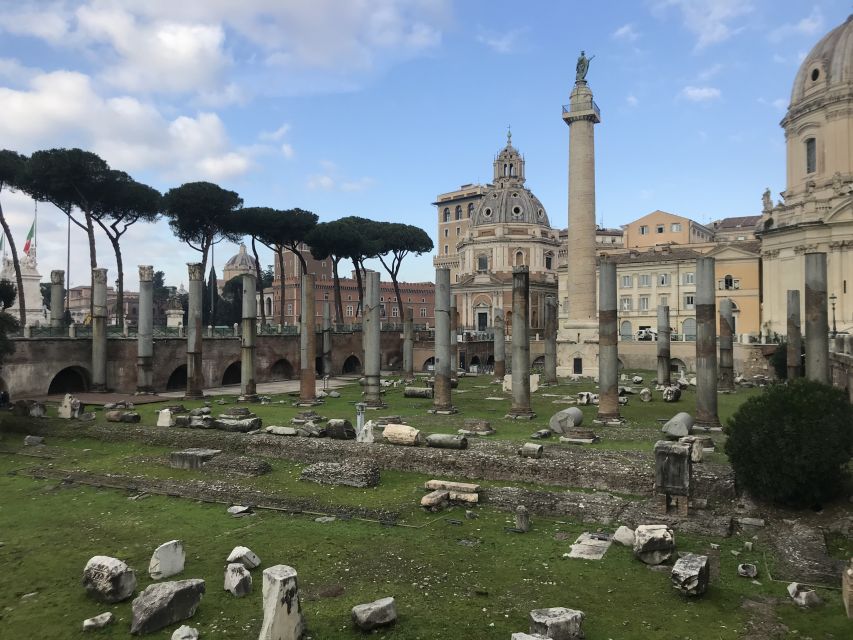
- 25-minute multimedia intro that reconstructs major monuments before you walk the ruins
- Trajan Markets as an Imperial shopping mall built for trade and foot traffic
- Forum names you can track as you move through the area: Caesar’s Forum, Augustus’ Forum, Nerva’s Forum, and Templum Pacis
- A 17th-century cistern ruin that shows how the site kept being used long after Rome’s peak
- Fori Imperiali Museum artifacts and amphorae that make commerce feel physical, not abstract
Trajan Markets: a Roman shopping mall built on purpose
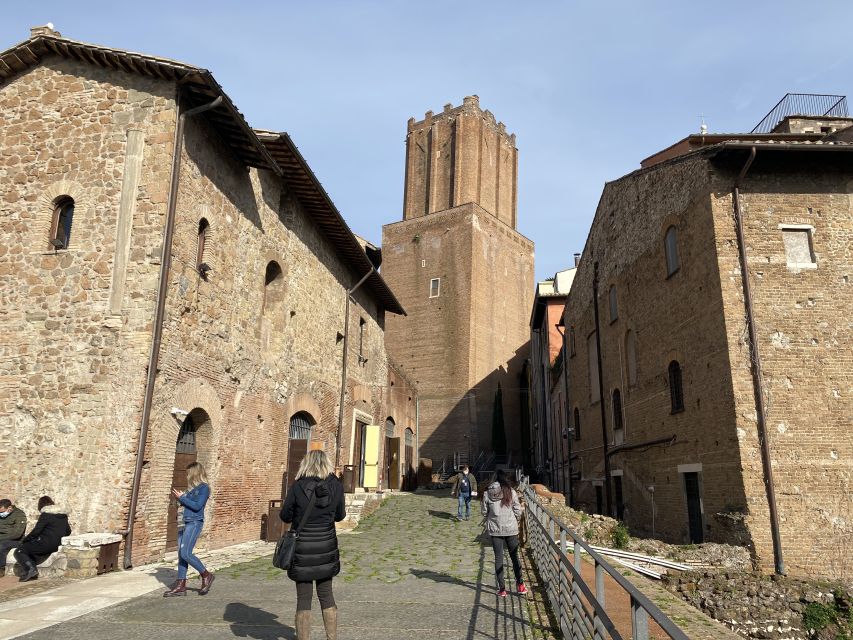
Trajan Markets were not just “old buildings.” They were a designed commercial zone for the Roman Empire. Think of it as Rome doing what it always did well: mixing public life, business, and architecture into one system. Here, that system was tied to trade—places where people could browse, buy, and keep moving through the city’s center.
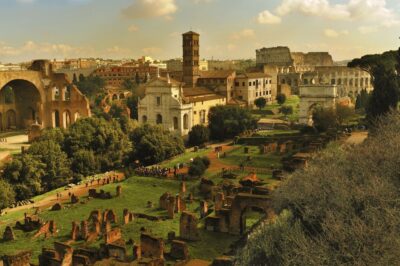
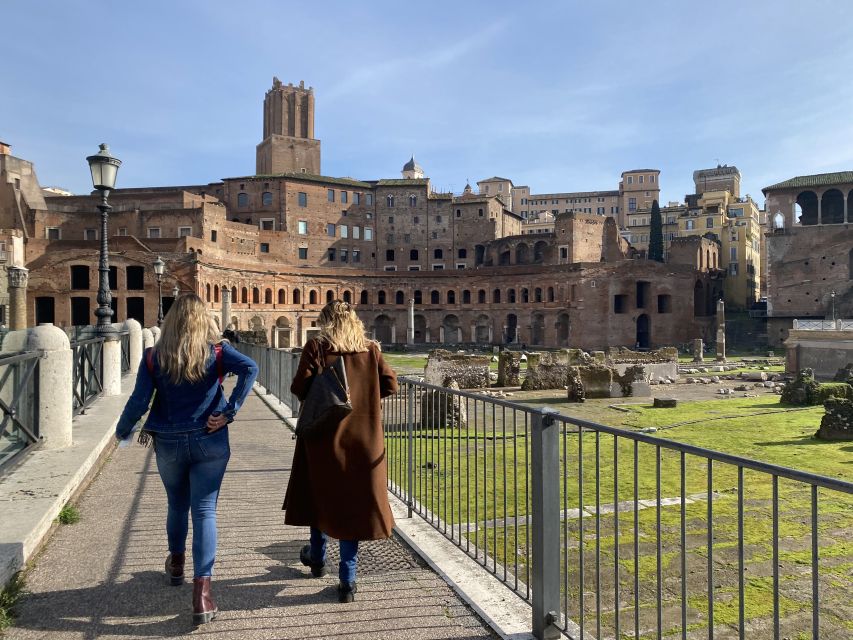
What makes this area feel real is the layout. The complex has a strong semi-circle impression, so you get more than a few walls and columns. You get a sense of flow: how people would pass by shops, where open views and sheltered spaces might have mattered, and how the buildings faced the surrounding urban spaces.
You also get a clear reminder that Rome was not only temples and emperors. It was commerce. The experience is built to help you see the city’s center as a network—markets tied to forums, and forums tied to meetings, politics, and daily routines. That framing makes a big difference. If you have ever visited ruins and felt like you were reading random fragments, this format helps you stitch the pieces into a working map of Roman life.
You can also read our reviews of more tours and experiences in Rome.



The 25-minute multimedia video and the phone app that keeps you oriented
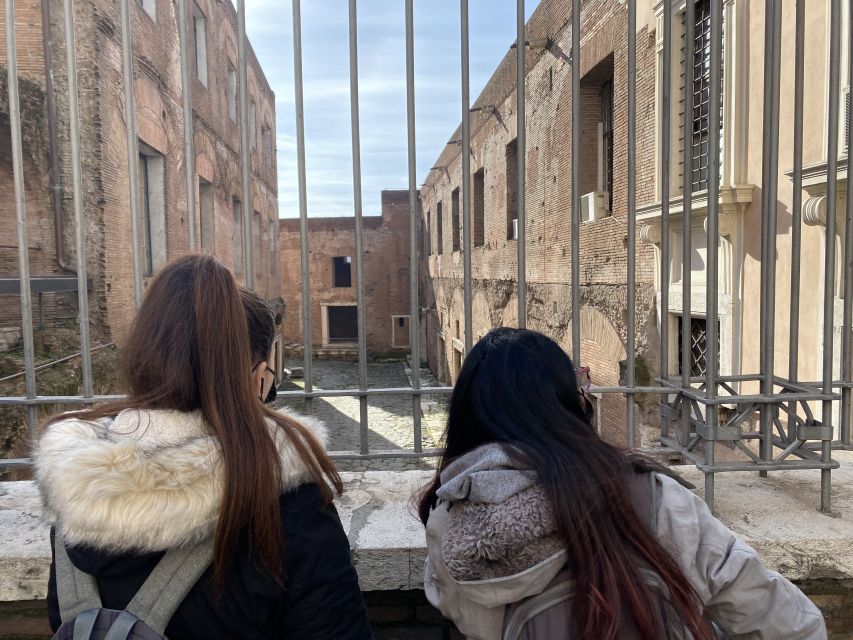
You begin with a 25-minute multimedia video on Ancient Rome. It is not just background noise. The point is to get your eyes trained before you step into the archaeological complex. You see reconstructions of key monuments so you can later connect what the video shows to what you are standing in.
Then you use a downloadable city app audioguide on your smartphone. The app includes more than 170 points of interest for listening and exploring. Even if you only use it for the stops you hit during your visit, that number matters: it signals that the audio is meant to turn one site visit into a broader city understanding.
Practical tip: bring headphones and make sure your phone is fully charged. Without headphones, you lose a major part of the experience. And with a low battery, you will hate every second of scanning for an outlet you do not have.
Also, do not worry if you like to move at your own pace. This experience is set up for self-guided walking. The app helps you keep momentum, and it reduces the need to constantly guess what you are looking at.
Trajan Markets: where trade met daily movement
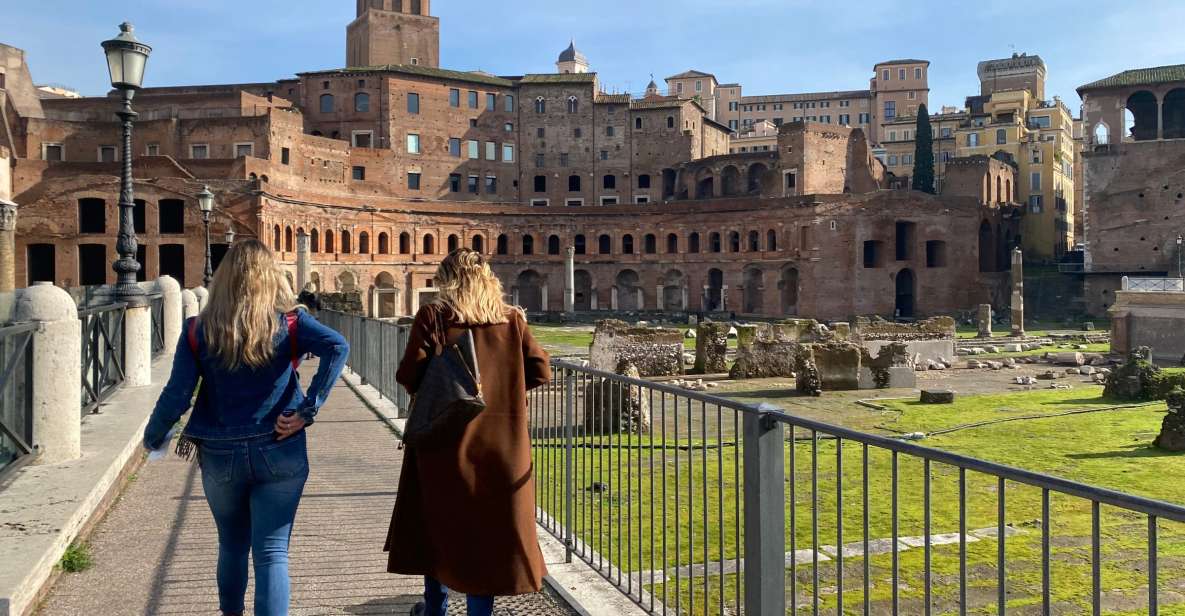
As you explore, the key is to treat the market buildings like a commercial machine. You are looking at a site that functioned during the Roman Imperial Age, when the city’s center was designed for constant activity.
You will also get help understanding the “bigger system” around the markets. The area includes multiple forums that served as trading and meeting points. Rather than leaving those forum names as trivia, the experience ties them to the space you can walk through.
Here are the forum names you can focus on as you move: Caesar’s Forum, Augustus’ Forum, Nerva’s Forum, and the Templum Pacis. That list is useful because it gives you handles. As the ruins change from one block to the next, you can anchor your mental map with these names instead of just thinking, “More Roman stuff.”
What I like about this approach is that it respects how ruins really are. Many sites do not explain themselves. This experience helps you understand the logic first, then you walk the logic in stone.
Seeing the forums as meeting places, not just monuments
The forums were not only about big buildings and speeches. They were social infrastructure. People met, negotiated, watched what was happening, and handled business in the same shared public space.
When you explore this area with the commercial story in mind, it changes what you notice. You may start paying attention to the way sightlines work, how open spaces relate to surrounding structures, and how movement would have been choreographed by architecture.
That is why the experience’s structure matters. The multimedia video gives you reconstructions. Then your walk connects those reconstructions to actual remnants. When you later see forum names like Augustus or Nerva, you are not just collecting emperors. You are connecting political power to public space and daily commerce.
If you enjoy Rome that feels human—people buying, speaking, walking—this format fits you well. If you prefer only the most famous monuments, you might find yourself wanting to pair this with a separate big-ticket stop nearby. But as a standalone one-day Roman “commerce and city center” experience, it does the job.
The 17th-century cistern ruin: why Rome’s layers matter
One of the most interesting stops here is not Roman in the strictest sense. You will see ruins of a 17th-century cistern. That detail is valuable because it breaks the usual pattern of “ancient, then forever gone.”
Instead, you get a sense of continuity. The area kept being useful long after the Roman Empire. A cistern is practical infrastructure, so its presence reminds you that the land did not become a museum overnight. It stayed part of real life.
This is also where the value of walking matters. If you only look at a single artifact or read one panel, you miss how the site changes function across time. The cistern helps you understand that the ground you walk on has had multiple careers: Roman commercial zone, then later practical urban use.




Fori Imperiali Museum: amphorae and artifacts that make trade tangible
After the ruins, you move to the Fori Imperiali Museum, which focuses on artifacts from ancient cultures. This is where the experience gives you a grounding “hands-on” feel.
The collection includes amphorae. That might sound like a niche detail until you connect it to commerce. Amphorae were containers for goods—often food, oil, wine, and other traded supplies. Seeing them in a museum setting shifts the story from architecture to materials. Suddenly the markets are not only places where people walked. They are connected to what people carried and consumed.
The museum also features a variety of ancient artifacts. That variety matters because it supports the idea that Rome’s commerce was connected to many cultures. Even without a guide breaking it down at every turn, the museum objects do the explaining. You can look at what you are given, and the context helps you connect trade routes and daily use.
If you prefer museum time where you can take your own path through displays, this stop fits. You are not forced to follow a strict script. You can spend longer on the objects that catch your eye, like the amphorae, and skim the rest.
Price and value: is $37 worth your day?
At $37 per person for a full day, this experience feels priced for people who want structure without paying for a guided tour. You get three big value components: the Trajan Markets entrance, the Fori Imperiali Museum entrance, and the 25-minute multimedia video plus the smartphone app audioguide.
Here is how I’d judge the value in practical terms:
- If you like self-guided walking with good context, the included video and app reduce guesswork. That is worth money because it saves time and confusion.
- If you care about commerce and how the city center worked, the forum names and market setting give you a coherent theme. That makes the day feel fuller than a random ruin hop.
- If you only want the biggest “Instagram ruins” moments and nothing else, you might feel like a different add-on would serve you better.
You also get a clear time commitment: 1 day. So you are not tying up a whole weekend. That matters if you are balancing Rome’s long list of must-sees.
Practical logistics: meeting point, what to bring, and what can slow you down
Meet at the Touristation Aracoeli Office, Piazza d’Aracoeli 16, near Piazza Venezia. Look for the orange Touristation flags, and there is a fountain in front of the office entrance. If you are doing this earlier in the day, you generally can manage the flow better.
What to bring:
- Passport or ID card
- Comfortable shoes
- Headphones
- A charged smartphone
A quick reality check: there is no mention of a guided tour in what is included. So your main “guide” is the video plus the app audio. If you show up without headphones or with a dead phone, you will feel the difference fast.
Ticket pickup is another factor. Some days, exchanging or getting your ticket is quick. Other days, ticket printing can take around 15 minutes and the process can feel complicated. Do yourself a favor: arrive a little early at the meeting point so you are not dealing with delays while your energy drains.
Not allowed items include pets, weapons or sharp objects, luggage or large bags, drones, alcohol and drugs, sprays or aerosols, and glass objects. Also note that it is not suitable for wheelchair users.
Who this experience suits best
This is a strong match if you:
- Like Roman sites that explain daily life, not only imperial propaganda
- Want a guided-feeling experience without booking a full guided tour
- Enjoy mixing ruins with a museum stop (and amphorae are exciting to you, which is a perfectly normal trait)
- Prefer to move at your own pace with a phone app acting as your guide
It may feel less ideal if you:
- Need full accessibility support for a wheelchair
- Want a live guide constantly answering questions
- Have a tight schedule where every minute counts, given that ticket pickup can vary
Should you book this Trajan Markets and Fori Imperiali Museum experience?
I think you should book if you want a thematic Roman day: commerce, forums, and how the city center worked. The combination of a short multimedia start, a phone app with lots of points of interest, and a museum stop with amphorae gives you enough structure to feel oriented and enough flexibility to enjoy at your own speed.
I would hesitate only if you are very time-pressed and cannot absorb a slow ticket-printing moment. If you can arrive with a little buffer, this becomes a smart-value way to see Rome’s Imperial heart through the lens of trade and public life.
FAQ
How long is the Trajan Markets experience?
It lasts 1 day.
What happens at the start of the experience?
You begin with a 25-minute multimedia video presentation on Ancient Rome.
Is the Fori Imperiali Museum included?
Yes. Fori Imperiali Museum entrance is included.
Do I need a guided tour to make sense of what I’m seeing?
No. The experience includes an app audioguide on your smartphone, plus the video intro, so you can explore without a guided tour.
What do I need to bring?
Bring a passport or ID card, comfortable shoes, headphones, and a charged smartphone.
Are food and drinks included?
No. Food and drinks are not included.
Is it accessible for wheelchair users?
No. It is not suitable for wheelchair users.
Is there free cancellation?
Yes. You can cancel up to 24 hours in advance for a full refund.