REVIEW · ROME
Rome: Appian Way Aqueducts Bike Tour (UPG Catacombs & Lunch)
Book on GetYourGuide →Operated by Roma STARBIKE · Bookable on GetYourGuide
Rome quiets down fast on this ride. This e-bike tour takes you off the main streets and into Parco degli Acquedotti, where aqueducts and Roman roads meet open air and big views. I love seeing the Appian Way as a real path through countryside, not just a photo stop, and I love how the day stacks both major ruins and calmer parks in one loop. One drawback to weigh: you’ll ride over uneven old surfaces, and you may hit a few busier road moments where confidence on a bike helps.
The “4–5 hours” time frame is practical, and it’s long enough to feel like a proper outing without turning into a full-day slog. Guides like Alex and Paolo (and others, depending on your group) tend to keep things upbeat, safety-focused, and story-driven, so you’re not just moving between monuments.
In This Review
- Key points before you book
- Why the Appian Way by e-bike feels different
- Getting started at Roma STARBIKE (near Colosseo) and what sets the tone
- E-bike riding style: smooth assist, plus real road texture
- Porta San Sebastiano: your first look at the route’s Roman edge
- The 5-hour option: Catacombs of St. Callixtus without rushing
- Caffarella Park: where the Appia Way turns into green calm
- Ninfeo di Egeria: a quick stop with a story behind it
- Parco degli Acquedotti: the aqueduct corridor where the engineering becomes real
- Villa dei Quintili and the tomb-and-temple rhythm of the Appia route
- Lunch or aperitif on the 5-hour version: what you get and how it fits
- Price and value: is $81 a smart buy?
- Who this tour suits best (and who should reconsider)
- Practical tips that make the day easier
- Should you book this Rome Appian Way and Aqueducts e-bike tour?
- FAQ
- What’s the duration of the Rome Appian Way and aqueducts e-bike tour?
- Is the Catacombs of St. Callixtus included?
- Is lunch included?
- Where do I meet the guide?
- What language is the tour guide?
- Is this tour suitable for everyone?
Key points before you book
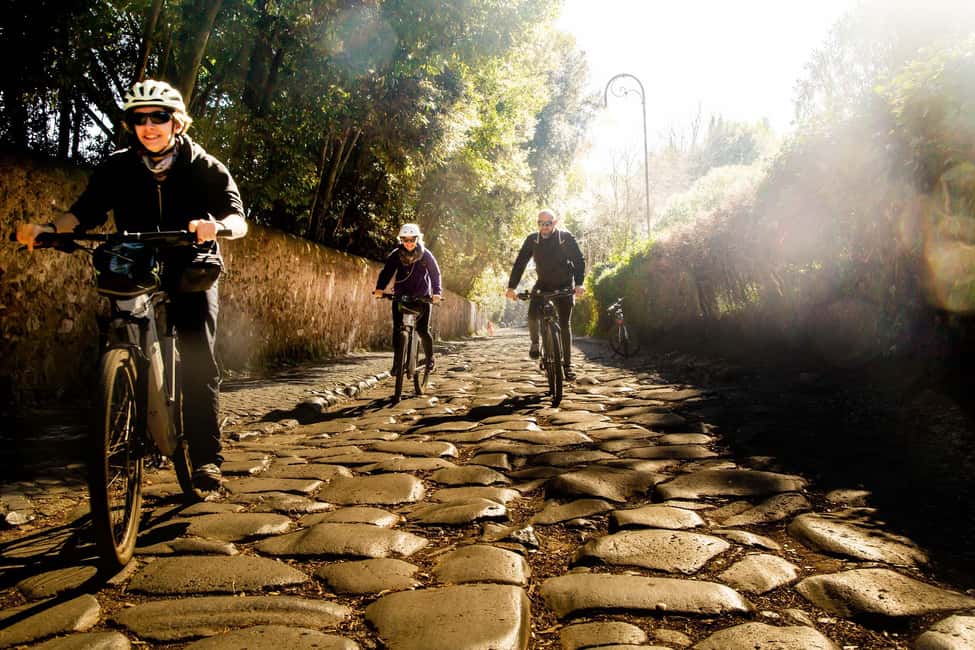
- A real escape from central Rome: The route spends serious time outside the city noise, in parks and along ancient routes.
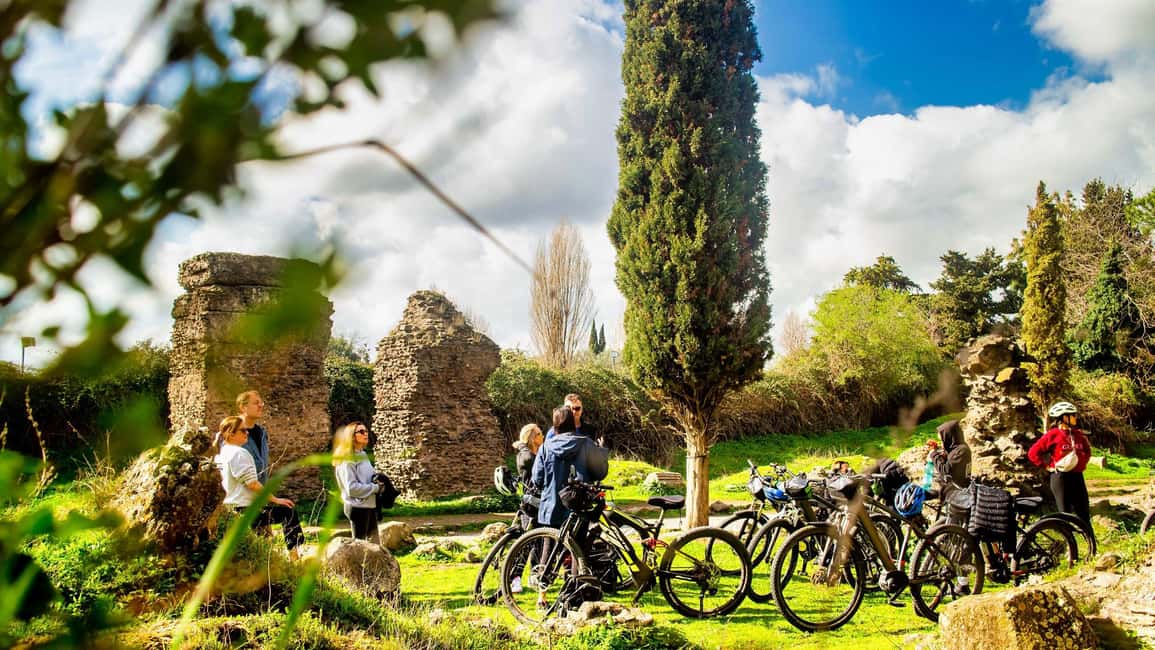
- Aqueducts meet engineering stories: Parco degli Acquedotti is a key corridor where multiple aqueducts converge, so the history is tangible.
- Optional Catacombs of St. Callixtus: In the 5-hour version, you add a guided underground visit that many people remember most.
- Comfort-focused e-bikes: Expect high-quality electric bikes with gear like helmets and a phone holder, plus guides who help you get settled fast.
- Food option depends on your length: The 5-hour version includes a restaurant meal (brunch/lunch) or an afternoon aperitif, depending on timing.
Why the Appian Way by e-bike feels different
The Appian Way is one of those Rome places that can feel either dramatic or distant, depending on how you see it. On a bike, it becomes a living route—long stretches where your pace matches the setting, so you can actually notice the details in the walls, paths, and greenery.
I also like that this tour blends big names with smaller moments. You’re not only chasing the most famous ruins; you’re also pedaling through parks like Caffarella and stopping at sites that help explain how this whole area worked.
You can also read our reviews of more cycling tours in Rome


Getting started at Roma STARBIKE (near Colosseo) and what sets the tone
Your day starts at Roma STARBIKE, very close to the Colosseo Metro station (Line B), next to a Carrefour supermarket. That matters more than you’d think: when the meeting point is easy to find, the day starts relaxed instead of rushed.
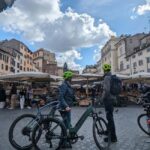
You’ll get set up with a high-quality e-bike, a helmet, and a phone holder. Guides will brief you and help you feel comfortable before you roll, which is a big deal if it’s your first time on an e-bike.
E-bike riding style: smooth assist, plus real road texture
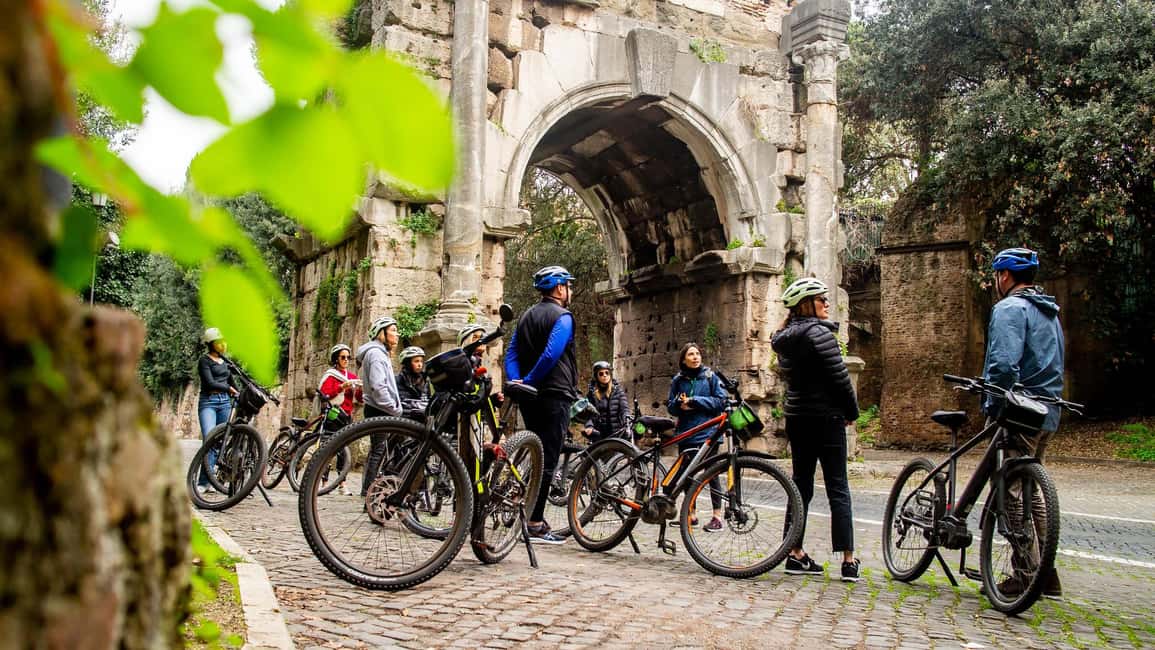
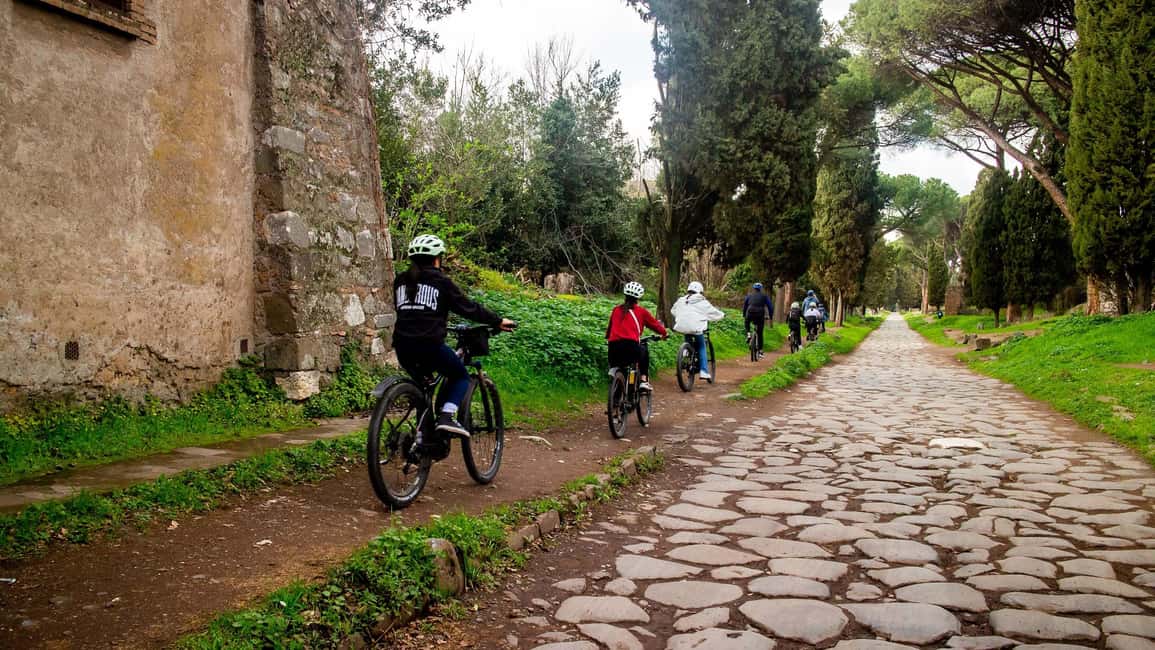
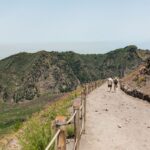
The electric assist does the heavy lifting, especially on small climbs and stretches that would be much harder on a regular bike. You’ll still feel the ground—reviews point out that parts of the route can include bumps and rougher trail sections, sometimes because you’re riding over older surfaces.
Some sections may bring you closer to cars than you expect, even though much of the route is in parks and on older paths. If you’re a comfortable cyclist (or you practice confidence on day-one), you’ll likely find the busy bits brief and manageable. If you’re anxious on bikes, tell your guide early and go slow at the beginning—guides are used to pacing for different abilities.
Porta San Sebastiano: your first look at the route’s Roman edge
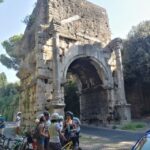
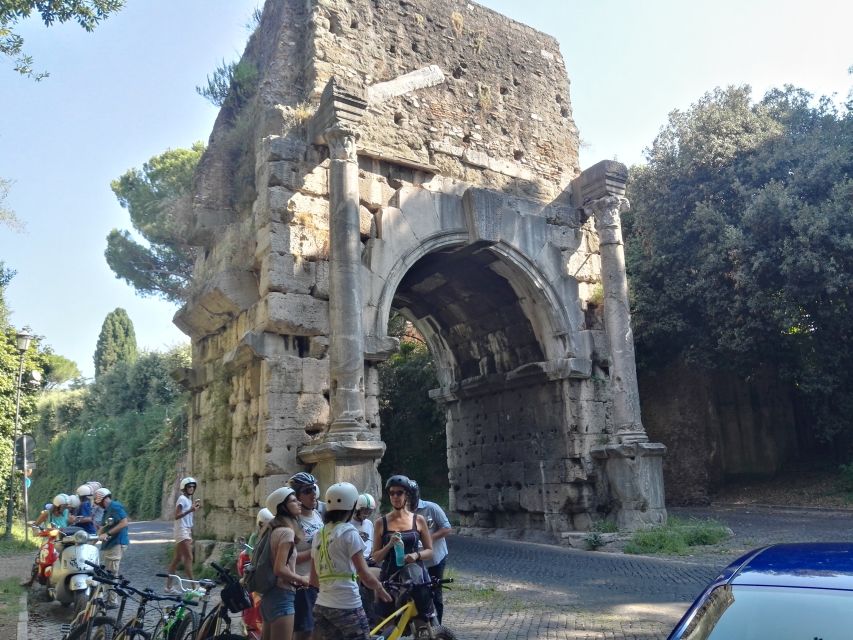
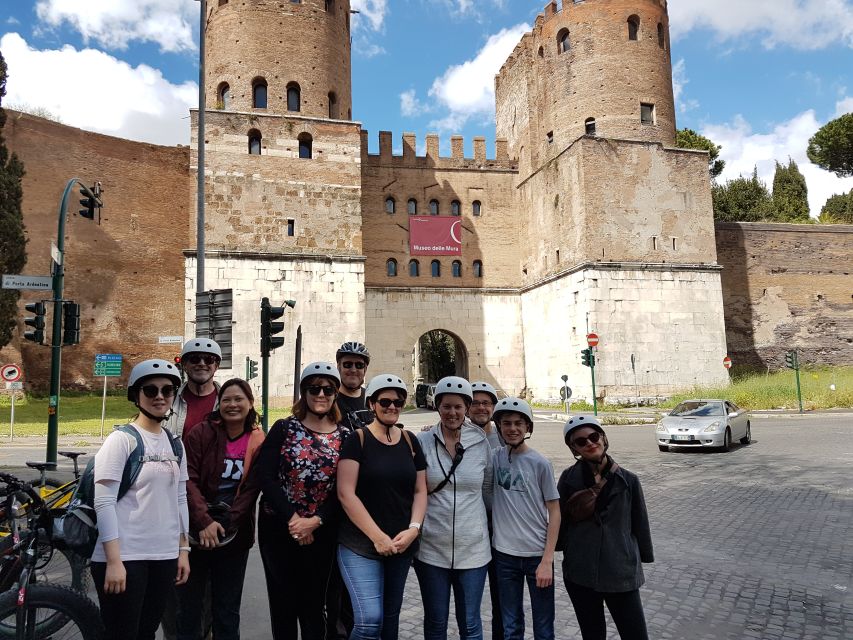
The first major stop is Porta San Sebastiano, with time for photos and a guided intro. This is where the day’s tone clicks into place: you’re in Rome, then you gradually feel the city walls and nearby roads give way to a calmer setting.
It’s a smart first anchor. It helps you understand what you’re about to ride, and it gives you a moment to orient your body and your bike before the route lengthens.
The 5-hour option: Catacombs of St. Callixtus without rushing
If you choose the 5-hour tour, you’ll add the guided Catacombs of St. Callixtus for about an hour. This visit is part of the Callistian complex in the area between Via Appia Antica, Via Ardeatina, and Via delle Sette Chiese, where multiple funerary spaces and catacombs were used over time.
Underground spaces are a special kind of experience: the guide’s narration matters because it gives the setting meaning instead of turning it into a quick peek. This is also a tour moment that helps break up the ride, so you’re not just cycling for hours straight.
One practical point: catacombs are not a “wander on your own” stop. The pace is guided, and you’ll want to follow instructions so your group moves smoothly.
You can also read our reviews of more tours and experiences in Rome

Caffarella Park: where the Appia Way turns into green calm
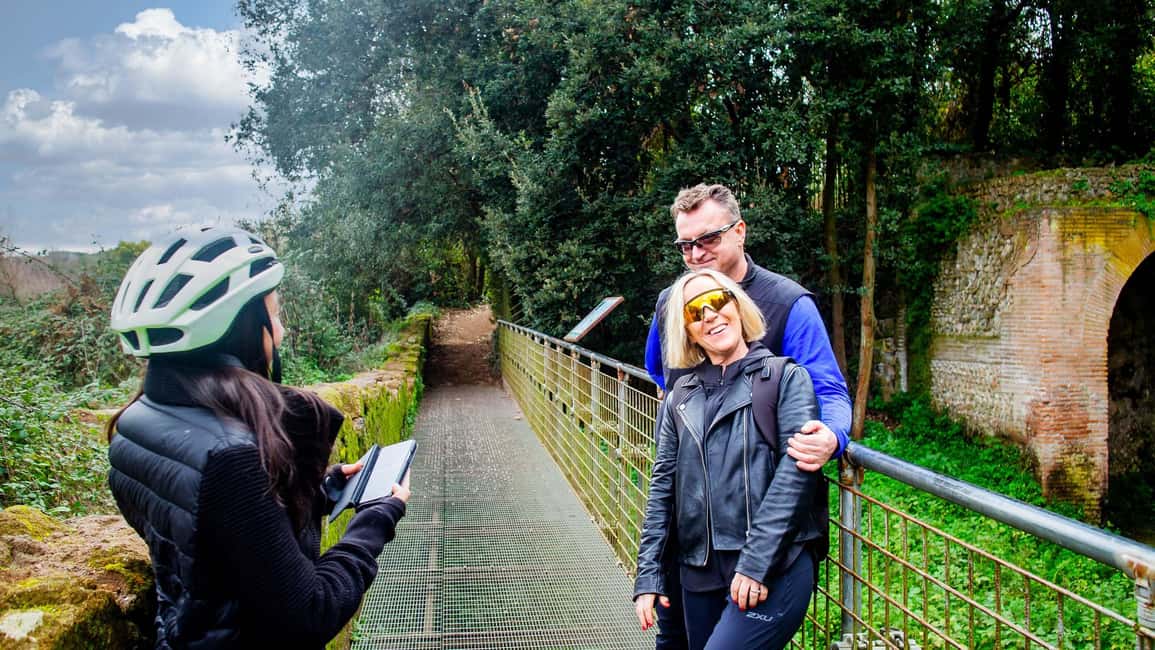
After the catacombs (or as the ride continues on the shorter version), you head into Caffarella Park. This stop is a mix of guided sightseeing and time for photos, plus a solid stretch of riding through a calmer environment.
What I like about this part is the contrast. You go from the intensity of major Roman layers—ruins, tombs, sacred underground spaces—into open-air park paths where you can breathe. It also helps you keep the ride feeling like an experience, not a checklist.
Ninfeo di Egeria: a quick stop with a story behind it
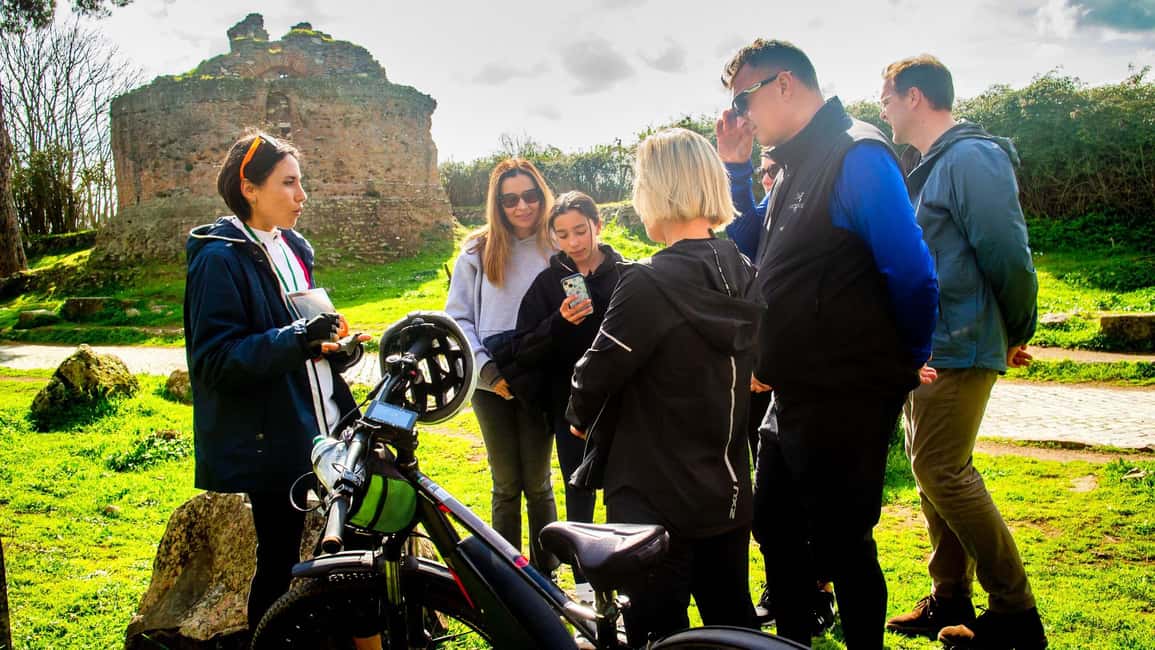
The tour includes a photo stop and guided look at Ninfeo di Egeria. Even if you don’t know the story upfront, a guide’s explanation helps you see why a small site matters in a bigger Roman landscape of water, ritual, and legend.
This is one of those stops that works well because it’s short. You get a payoff in understanding, then you’re back on the move.
Parco degli Acquedotti: the aqueduct corridor where the engineering becomes real
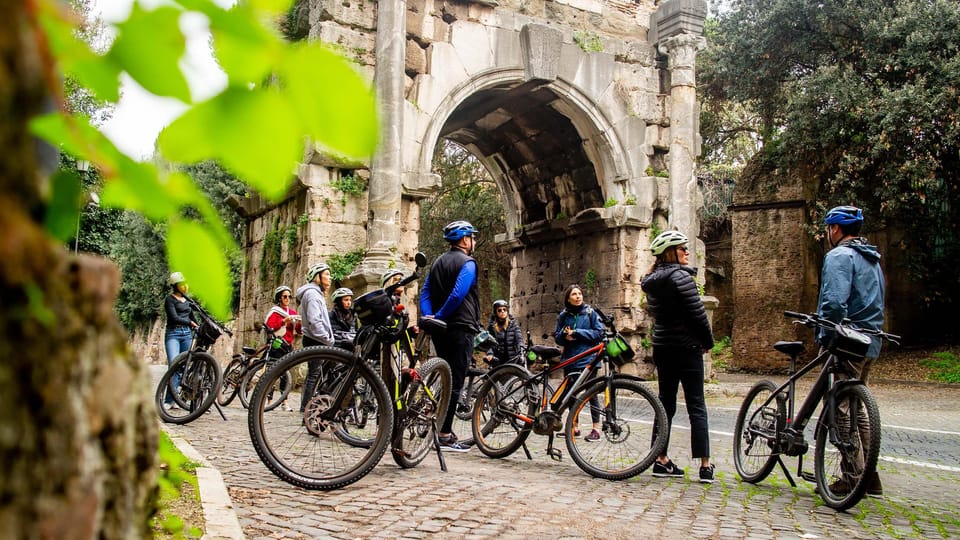
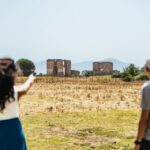
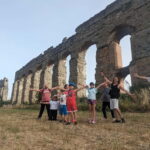
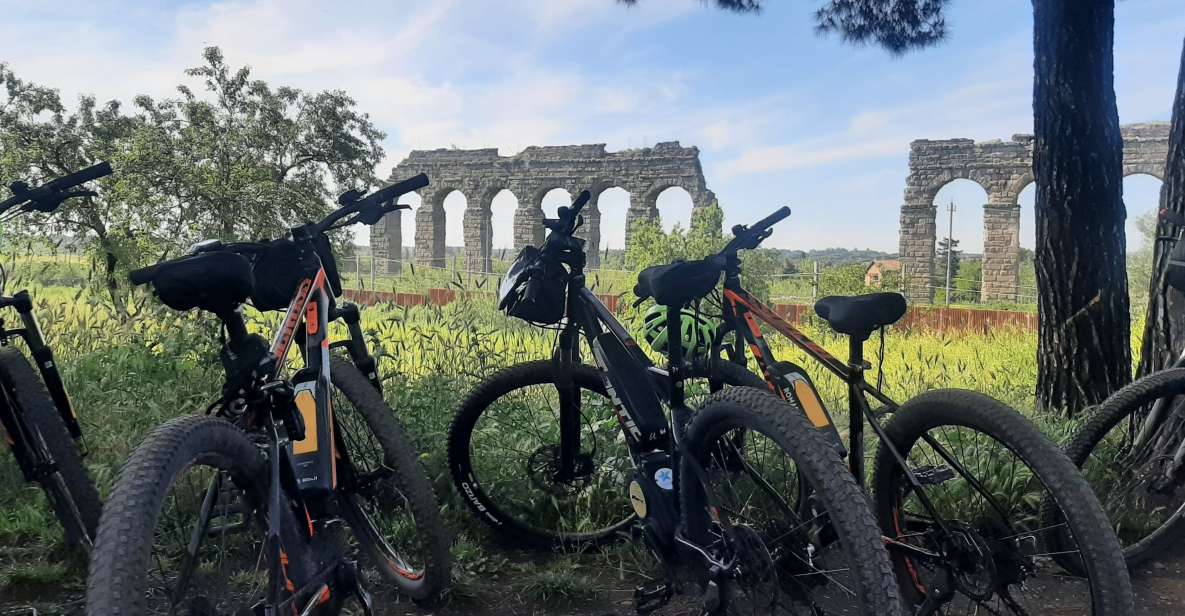
This is the area that many people treat as the heart of the ride: Parco degli Acquedotti. It’s where the story of water in Rome becomes visible through the converging aqueducts and the engineering works tied to them.
The tour includes both guided sightseeing and extended riding time here. That combination is key. If you only stop briefly, you miss how the aqueducts shape your surroundings. If you only ride without explanation, it turns into pretty scenery. Together, it becomes a clear lesson in why Romans built so much and how water powered a city.
In practice, expect photo moments where the aqueduct structures line up nicely and you can see the scale. And expect time to pause long enough to take in the engineering details, not just snap a quick picture.
Villa dei Quintili and the tomb-and-temple rhythm of the Appia route
From there, the route continues with a sequence of iconic stops that feel like a guided walk through layers of Roman power. You’ll have photo opportunities and short guided segments at:
- Villa dei Quintili
- Tomb of Cecilia Metella
- Circus of Maxentius
- Baths of Caracalla
These aren’t random hits. They create a rhythm: monumental architecture, then a ride segment, then another anchor site. It’s a good way to understand how the Appia area was used—how elite life, burial culture, entertainment spaces, and monumental public works all sat within the same broader region.
The e-bike format helps here because the gaps between sites are part of the story. You’re not stuck doing long transfers on foot.
Lunch or aperitif on the 5-hour version: what you get and how it fits
If you book the longer option, you’ll stop for food in the Parco degli Acquedotti area. The tour includes traditional Roman cuisine at a restaurant in the park, or an aperitif for afternoon departures.
Based on how people describe the meal, you can expect it to be a real break, not a token snack. Some meals are described as among the best pasta of a trip, while others call the lunch fine but not the top dining moment in Italy—so consider it fuel that matches the day’s setting.
Either way, it’s valuable to eat here rather than returning into the busy center. You keep momentum, you stay in the scenery, and the meal feels tied to the outing.
Price and value: is $81 a smart buy?
At $81 per person for a 4–5 hour ride, this sits in the “pay for convenience and guiding” category. You’re covering a lot of ground that would be harder to assemble alone: bike + helmet + guided interpretation + a serious slice of aqueduct territory.
Value comes from the pairing of transport and explanation. The route isn’t just scenic; it’s structured so you learn what you’re seeing—especially around aqueducts and the Appian sites where water, empire, and daily life connect.
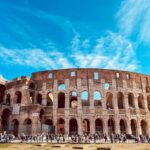
You’re also not paying for a long day. If you want a Rome experience beyond the Colosseum and the Forum, this is a focused way to do it without exhausting your legs like a nonstop walking tour can.
Who this tour suits best (and who should reconsider)
This tour is a great match if you want:
- A change of pace from Rome’s main tourist corridors
- A guided route that turns ancient sites into a coherent story
- An active outing that still feels manageable thanks to electric assist
It’s also a good option if you have mixed comfort levels, because guides tend to check in and pace the group. People mention guides like Alex, Paolo, Lorenzo, and Riccardo for being attentive and careful about safety and comfort, which helps when a group has different biking experience.
Who should reconsider:
- Pregnant travelers (not suitable)
- Anyone over 120 kg / 265 lbs
- Anyone who hates the idea of uneven old surfaces or the occasional road moment
Practical tips that make the day easier
Comfort beats style here. Wear comfortable clothes and plan for weather changes—one advantage of e-bike tours is they still work in less-than-perfect conditions, but rain can add friction to braking and traction.
Bring something that helps you stay hands-ready and relaxed:
- A small layer for wind (especially if you’re in the open parts of the park)
- Water (the tour includes a phone holder and setup, but you’ll still want to stay hydrated)
- A mindset that slow starts are normal
Also, manage expectations on sitting. Even with quality bikes, seats can feel less comfortable after a while. If you’re prone to back fatigue, plan for a little soreness and don’t treat it like a stationary bike.
Should you book this Rome Appian Way and Aqueducts e-bike tour?
I’d book it if you want a Rome day that feels like you left the city—without giving up guidance and structure. The Appia Way plus Parco degli Acquedotti is a strong combo, and the optional Catacombs of St. Callixtus turns the outing into something with real variety.
Skip it or choose carefully if you’re not comfortable riding a bike on uneven paths or you’re worried about any road-adjacent segments. And if you’re choosing between durations, think about what you want most: the aqueduct corridor alone is already a standout, while the catacombs add a meaningful underground chapter.
If your goal is value, context, and a break from crowded Rome streets, this is one of the better ways to get it.
FAQ
What’s the duration of the Rome Appian Way and aqueducts e-bike tour?
The tour runs about 4 to 5 hours, depending on which option you choose.
Is the Catacombs of St. Callixtus included?
The catacombs are included only in the 5-hour version, with a guided visit of about 1 hour.
Is lunch included?
Lunch is included only in the 5-hour version. Depending on the departure time, it’s described as a brunch/lunch or an aperitif in the afternoon.
Where do I meet the guide?
You meet at Roma STARBIKE, about 0.03 miles from Colosseo Metro station (Line B), next to the Carrefour supermarket.
What language is the tour guide?
The live guide offers English and Italian.
Is this tour suitable for everyone?
It’s not suitable for pregnant women, and there’s a maximum weight limit of 120 kg (265 lbs).