REVIEW · ROME
Bone Crypts & S. Clemente ENGLISH tour – tickets included
Book on GetYourGuide →Operated by Rome With Mike · Bookable on GetYourGuide
Bones under Rome, plus sacred art and layers. This small-group tour strings together two unforgettable underground stops: the Capuchin Crypts and the multi-level Basilica of S. Clemente, with outside sights tied to the Colosseum and Nero’s palace. One thing to consider: expect moderate walking and the visit is not suitable for wheelchair users or people with mobility impairments.
You’ll also save time with skip-the-line access where it matters, and the tone stays respectful. The English mother-tongue guide keeps the storytelling clear and fun, not just spooky. If you’re squeamish about human remains, this is not the right day trip—but if you like strange art, history, and big-city layers, it’s a strong choice for a 2.5-hour hit in Rome.
In This Review
- Key highlights before you go
- Why this Rome underground combo is worth your time
- Meeting at Piazza Barberini: how to start without stress
- Capuchin Crypts: the art of mourning made from bones
- A practical tip for the crypt rooms
- Caravaggio and what the Capuchins have to do with art
- The quick cab to the Colosseum zone: keeping momentum
- Colosseum outside views: gladiator training and spectacle routes
- Basilica of S. Clemente: 12th-century church over older worlds
- What makes this stop feel different from a typical church visit
- How the tour feels: small group pace, audio support, and limits
- Rules that affect your experience
- Price and value: what $61 buys you in Rome
- What might cost extra
- Who should book this tour (and who should skip it)
- Should you book Bone Crypts & S. Clemente?
- FAQ
- What’s included in the Bone Crypts & S. Clemente tour?
- How long is the tour?
- Where do we meet the guide?
- Is skip-the-line entry included?
- Is this tour wheelchair accessible?
- Are photos allowed?
- Is hotel pickup and drop-off included?
- Is there an extra cost for transportation?
Key highlights before you go
- Capuchin Crypts with bones of nearly 4,000 monks across six chapels and set pieces like the Crypt of Skulls
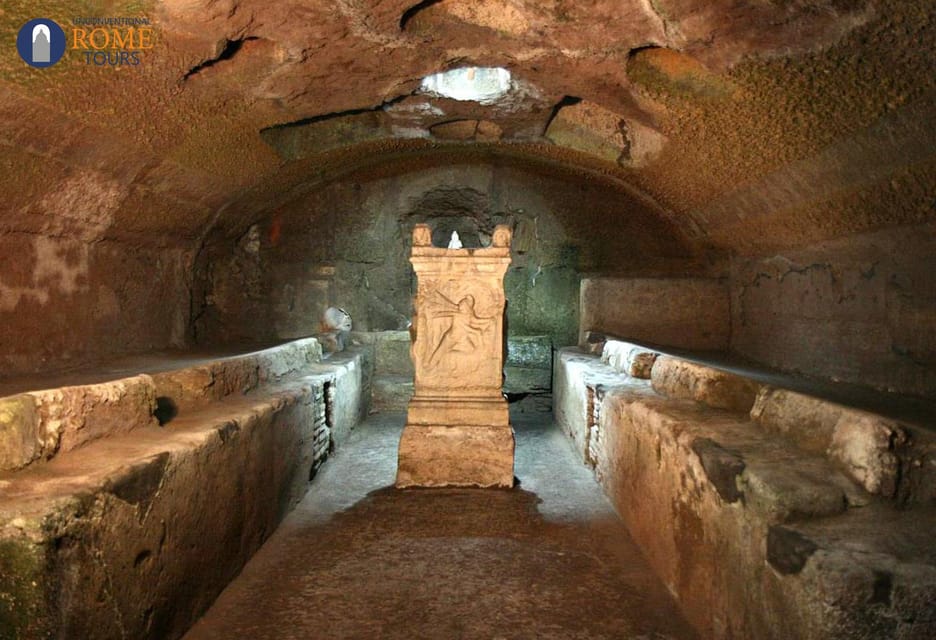
- Four underground levels at Basilica di San Clemente al Laterano, including a 2nd-century Mithraic temple
- Outside views linked to gladiators, including Ludas Magnus and the Colosseum area
- Nero’s Domus Aurea ruins from the outside, letting you picture Rome’s power era
- Small group (max 8) with an English guide for a more personal pace
- No flash photography, and photos may be restricted in certain sections
Why this Rome underground combo is worth your time
This is not a “stand in a square and point” kind of tour. You get to experience Rome in two distinct ways: the eerie, human side of burial art at the Capuchin Crypts, and the religious-and-empire side at Basilica of S. Clemente, stacked on top of each other over centuries.
I like how the schedule stays tight. In about 2.5 hours, you cover three major zones that many visitors try to cram across different days. And because it’s semi-private with a max of 8 people, the guide can keep the explanations paced for a small group instead of herding everyone through doors like a conveyor belt.
The tone is also well balanced. Yes, the Capuchin Crypts are startling. But the whole visit is set up as a burial ground with respectful narration and audio support in sections, so it doesn’t feel like a theme-park scare.
You can also read our reviews of more tours and experiences in Rome


Meeting at Piazza Barberini: how to start without stress
Your guide meets you on the face side of the Triton Fountain in Piazza Barberini. That detail matters because the fountain has multiple sightlines, and you don’t want to arrive wondering which side is right.
Try to show up at least 10 minutes early. If you arrive sooner, there’s Bar Gusto across the street with bathrooms and places to grab drinks or snacks. It’s a small thing, but it prevents that Rome-morning scramble.
Comfort beats style here. Wear shoes you can walk in for a moderate amount of time, because you’ll be moving through streets and down into sites with changing levels.
Capuchin Crypts: the art of mourning made from bones
The tour starts with the Capuchin section in a way that builds context first. You walk to the Capuchin Museum, where the guide explains the Franciscan and Capuchin Orders and why this site exists. That framing helps a lot, because the crypt is not random macabre decoration. It’s tied to burial beliefs and the rules that shaped how the remains were handled.
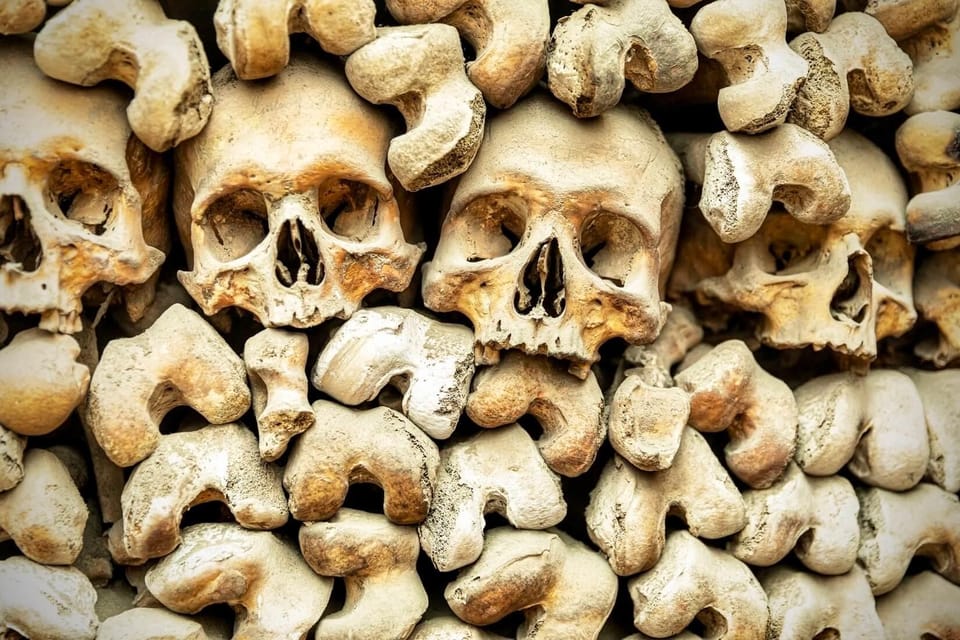
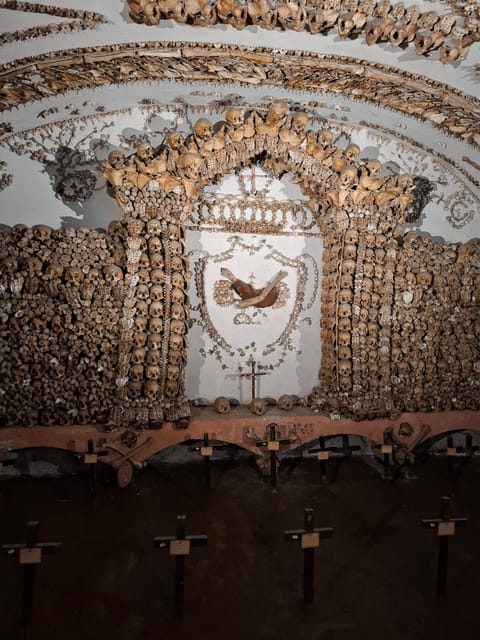
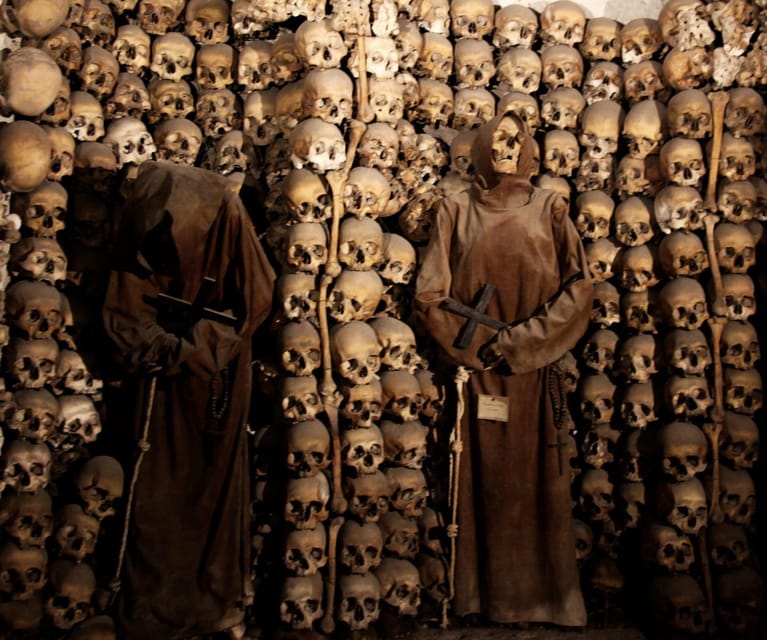
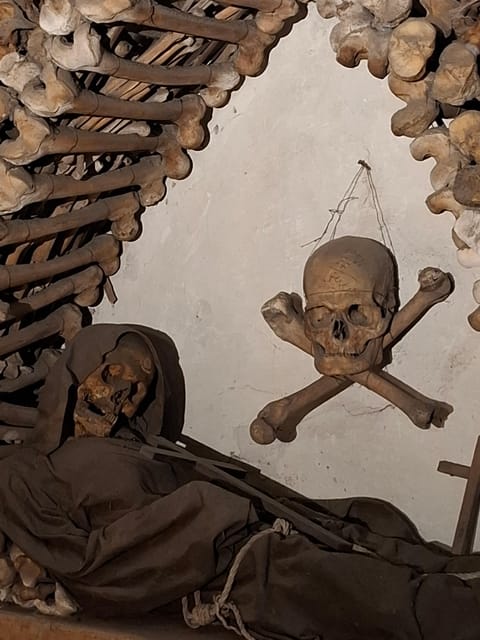
Then you enter the Capuchin Crypt. The headline fact is hard to forget: the chapels are decorated with the human bones of almost 4,000 monks. You’ll see this arranged room by room, with different visual ideas meant to trigger reflection rather than shock for shock’s sake.
Here are some of the most memorable stops you’ll encounter:
- The Crypt of the Three Skeletons
- The Crypt of Leg Bones and Thigh Bones
- The Crypt of Pelvises, where friars appear arranged in peaceful arches
- The Crypt of Skulls, topped with a symbolic hourglass
One detail I really like because it’s grounded and specific: crosses embedded in the floor mark the final resting places of seven monks. It turns the whole place from a visual spectacle into something personal and quiet.
You’ll also hear explanations using an audio guide in sections. That’s useful because the crypt visit is enhanced this way, and the sound helps keep you oriented while you’re surrounded by so much to look at.
A practical tip for the crypt rooms
Photography rules matter here. Flash photography is not allowed, and photography may be restricted in certain areas—so follow your guide’s instruction fast. If you bring a camera, plan on shooting only where it’s clearly permitted.
Caravaggio and what the Capuchins have to do with art
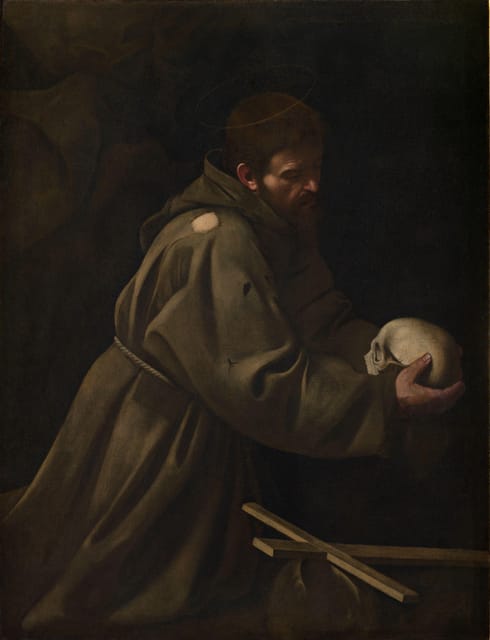
The tour includes time for a Caravaggio masterpiece viewing. Even if you already know Caravaggio’s reputation for drama and realism, this stop gives you a different angle: you connect the emotions of Baroque art with the spiritual mood of the Capuchin world.
What I find valuable is the way the guide links it to ideas of faith, rebellion, and meaning. Caravaggio is brought up as part of how the orders and their message show up in art culture, not just as a famous name to check off.
If you’re the type who loves walking out of a church and thinking, That scene must have been painted for a reason, this part lands well. It also balances the bones section so you don’t leave only with the “shock” memory.

The quick cab to the Colosseum zone: keeping momentum
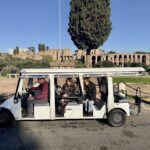
After the crypt, the tour makes a short transfer by black cab for about 10 minutes. That jump is practical because you’re switching from a subterranean, museum-like stop to Rome’s big public-story landscape.
This matters because the tour is only 2.5 hours total. Without the cab, the schedule would likely drift and you’d lose time where it counts: getting inside for the underground Basilica of S. Clemente.
While the cab ride is short, I appreciate it as a pacing tool. You don’t spend the whole day in traffic, and you don’t burn your energy sprinting between stops.
Colosseum outside views: gladiator training and spectacle routes
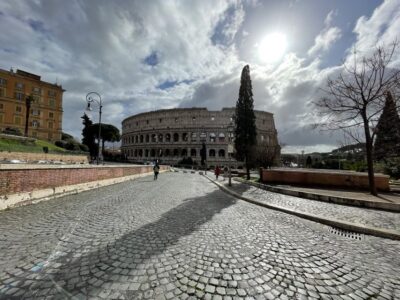
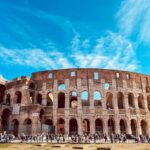
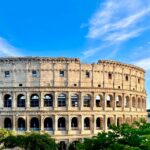
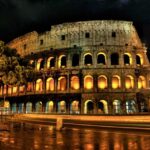
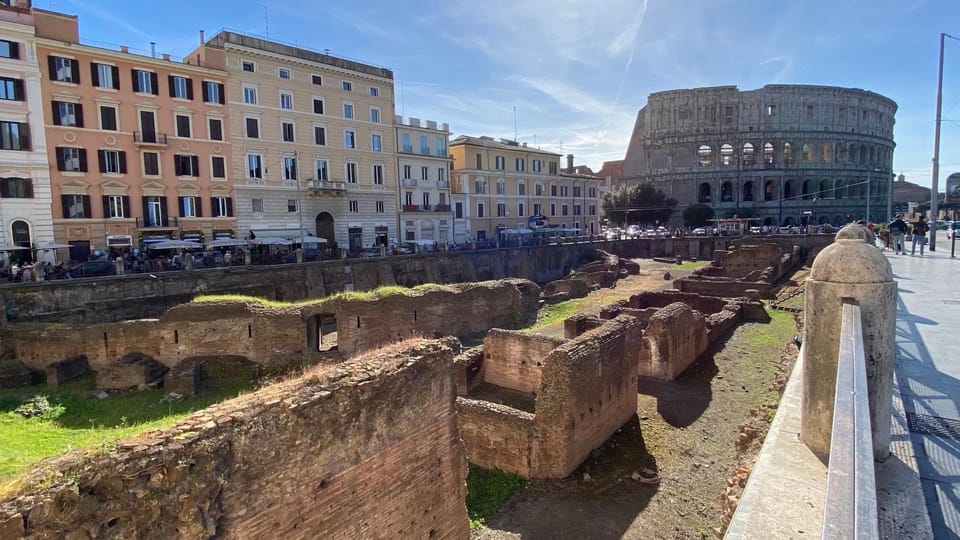
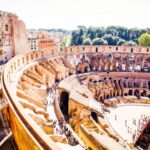
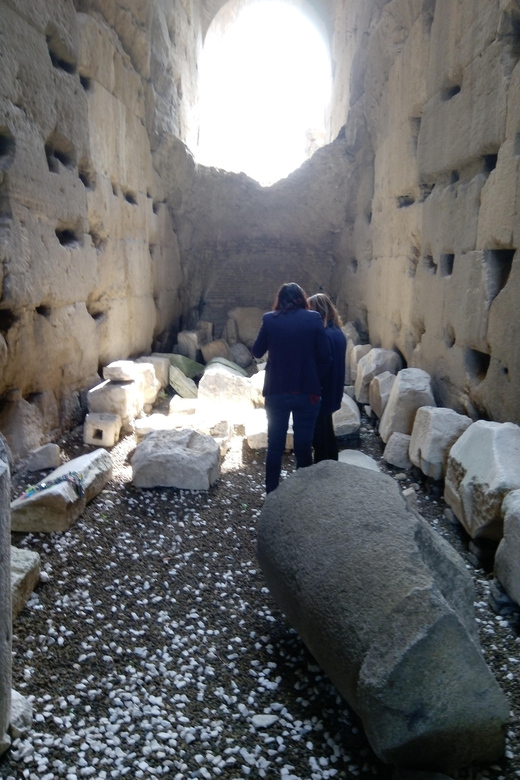
You’ll then head to the Colosseum area for a guided 20-minute look from the outside. Even though you’re not going inside the arena on this particular tour, it still gives you a meaningful picture of how gladiator life connected to the city.
One of the highlights is passing the Colosseum area tied to gladiators—including training grounds associated with Ludas Magnus. The guide’s job here is to explain the relationship between the people you imagine fighting and the places they trained, so it’s not just a view of an old amphitheater.
This outside approach works well if you’re trying to cover more than one major ticketed attraction in a short window. You still get the big Roman landmark moment, without committing to a long internal route.
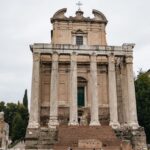
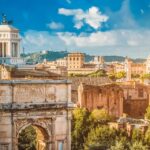
You also get a side of imperial power thrown in for contrast. The tour includes viewing the ruins of Emperor Nero’s Golden Palace (Domus Aurea) from the outside. Standing near Colosseum-linked streets while thinking about Nero’s extravagance is a useful mental switch: from entertainment to authority, from public spectacle to private luxury.
Basilica of S. Clemente: 12th-century church over older worlds
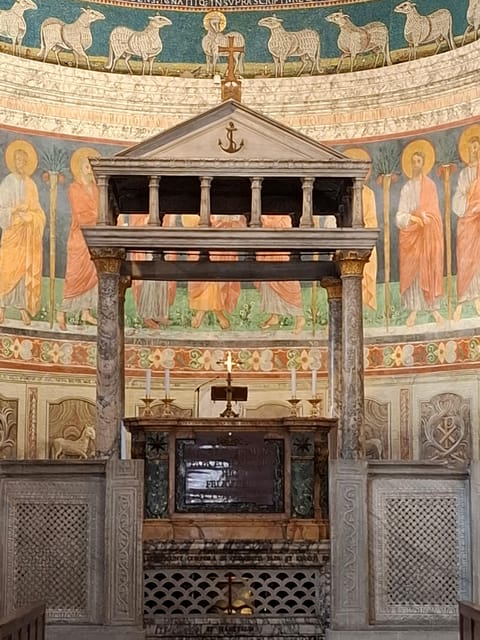
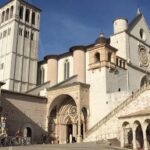
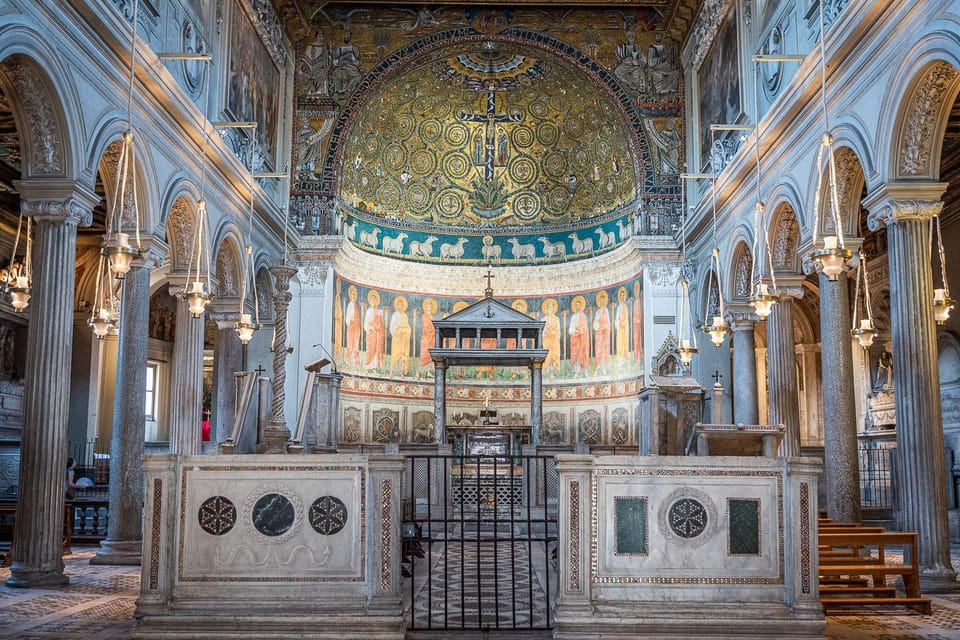
This is the main art-and-history payoff for many people. You’ll visit Basilica di San Clemente al Laterano with a guided stop of about 50 minutes, and the tour is built around what makes this church special: it’s layered.
You’ll descend from a 12th-century basilica down to:
- a 4th-century church
- a 2nd-century Mithraic temple
That layering is the point. Rome didn’t just rebuild over time—it literally stacked eras under your feet. When you’re standing in a space that sits above older sacred rooms, you can’t help but picture the city’s long memory.
You’ll also see Byzantine mosaics and early Christian frescoes, plus a 2,000-year-old fountain still flowing today. The fountain detail is great because it stops the whole experience from becoming purely academic. It’s a living element in an ancient building.
Also note the visit goes “four levels underground” in the Basilica experience. That’s enough to feel like you’re actually moving through time, not just stepping into one basement room.
What makes this stop feel different from a typical church visit
Lots of churches in Rome are beautiful. San Clemente is different because it shows you how religious life changed without wiping out the past completely. It’s a place where you see continuity and rupture at the same time.
And with a guide, you’re not left to guess what you’re looking at. The guide’s job is to point out what each level represents and why it matters.
How the tour feels: small group pace, audio support, and limits
This tour caps at 8 participants, which changes the vibe. You’re not competing with 40 people for the guide’s attention, and questions don’t get swallowed by noise.
The guide is in English (and is described as an English mother-tongue guide), and the tone comes across as both informative and fun. In a place like the crypts, humor can’t overpower the mood, but you still need clarity. That’s what you want: explanations that land while you’re standing in a room where every surface is telling you something.
One small heads-up from past experience on this route: the audio/headset experience might be more focused on the bone-church portion rather than every segment of the walk. In other words, expect some parts to rely more on the guide and visuals than on constant audio devices.
Rules that affect your experience
- No flash photography
- Photography might be restricted in certain areas; follow your guide
- You may run into security checks at certain sites
And one big practical limitation: this tour is not suitable for wheelchair users or people with mobility impairments, since it involves walking and underground access.
Price and value: what $61 buys you in Rome
The price is listed at $61 per person, and the key word here is value-through-inclusions. You’re not just paying for the guide’s time. The tour includes:
- Admission to the Capuchin Crypts
- Admission to the Basilica San Clemente Underground
- Skip-the-line entry (where applicable)
- Guided viewing of major Roman connections: Colosseum outside, Domus Aurea ruins outside, and Ludas Magnus
- Viewing of a Caravaggio masterpiece
- An English guide
For a short 2.5-hour schedule, that bundled access matters. Rome can be slow when you’re paying ticket lines and figuring out logistics yourself. Here, you’re mostly buying a smooth path through two ticketed underground experiences plus the Rome landmark context around them.
What might cost extra
Hotel pickup and drop-off are not included. Also, there’s a note about a short taxi ride with an average cost of €10. Even though the itinerary includes a cab transfer, you should plan for that as a small add-on rather than assuming everything is fully covered.
So the real question is: do you want both underground stops in one go? If yes, $61 starts to look like a fair deal for what you actually do and see.
Who should book this tour (and who should skip it)
This tour is a good match if you:
- love unusual places with strong storytelling
- want to see Rome’s underground layers in a single morning/afternoon window
- like your history explained by an English guide, not read from a pamphlet
- want outside context for major landmarks like the Colosseum area and Domus Aurea, without committing to longer arena or palace interiors
I’d think twice if you:
- have mobility limitations, since the itinerary includes underground access and walking
- are uncomfortable with human remains in an arranged burial-art setting
If your trip is short and you want maximum “Rome under Rome” per hour, this tour makes a lot of sense.
Should you book Bone Crypts & S. Clemente?
I’d book it if you want a high-impact Rome day that mixes shock, art, and layered sacred architecture in one tight route. The combination of Capuchin Crypts plus San Clemente underground is the kind of pairing that’s hard to recreate on your own without losing time and clarity.
Skip it if accessibility is an issue for you, or if the bone-filled crypt experience would derail your enjoyment. Otherwise, this is one of those Rome tours that feels like it gives you the city’s hidden logic: burial, power, faith, and art, all stacked right under the streets.
FAQ
What’s included in the Bone Crypts & S. Clemente tour?
The tour includes a guided visit to ancient Roman sites, admission to the Capuchin Crypts, viewing of a Caravaggio masterpiece, Colosseum from the outside, ruins of Nero’s Golden Palace (Domus Aurea) from the outside, gladiator training grounds (Ludas Magnus), and admission to the Basilica San Clemente Underground, all with an English guide.
How long is the tour?
The duration is about 2.5 hours.
Where do we meet the guide?
Meet your guide on the face side of the Triton Fountain in Piazza Barberini.
Is skip-the-line entry included?
Yes, skip-the-line is included.
Is this tour wheelchair accessible?
No. It’s not suitable for people with mobility impairments or wheelchair users.
Are photos allowed?
You can bring a camera, but flash photography is not allowed. Photography may also be restricted in certain areas, so follow your guide’s instructions.
Is hotel pickup and drop-off included?
No. Hotel pickup and drop-off are not included.
Is there an extra cost for transportation?
A short taxi ride is not included, with an average cost of €10.