REVIEW · ROME
Borghese Gallery Small group tour and skip.the-line entrance
Book on GetYourGuide →Operated by ROME WITH SILVIA · Bookable on GetYourGuide
Rome’s art collection changes your pace. Borghese Gallery is one of those places where 15 people max feels like a smart size, and I like that you get stories from an art historian guide right in the rooms where the masterpieces live. The possible downside: the meeting point near Piazzale del Museo Borghese can be confusing if you arrive late, and English clarity can vary a bit by guide.
What makes this experience interesting is the setting. This isn’t a white-box museum. It’s a villa built for collecting, with rooms and artwork designed to be viewed slowly. You’ll move through famous sculpture and painting highlights like Bernini, Caravaggio, and Raphael while using headsets and radios to catch the guide’s voice clearly.
The 2-hour timing is also a big deal. You get a focused highlights tour without wandering for hours. Just go in with the right expectations: you’ll see major works, but you won’t have time to stare at every brushstroke like you’re trying to solve a mystery.
In This Review
- Key things to know before you go
- Why Borghese Gallery feels like a private house museum
- Small-group format plus skip-the-line: the smart way to do 2 hours
- Getting oriented fast at Piazzale del Museo Borghese
- Bernini room-to-room: where sculpture feels like theater
- Caravaggio’s largest single-collection moment
- Raphael and the power portraits you can actually see
- Canova’s Paolina Borghese: the room to slow down
- Guide quality matters: Sylvia, Lia, and Vincenza in the mix
- Price and value: is $88 fair for Borghese?
- Who should book this tour (and who might want a different plan)
- Should you book the Borghese Gallery small-group tour with skip-the-line?
- FAQ
- How long is the Borghese Gallery small-group tour?
- What’s the group size?
- Where do we meet for the tour?
- Is there skip-the-line entry included?
- What language is the guide?
- What should I bring to enter?
Key things to know before you go
- Small group size (max 15) keeps the pace human and the questions realistic
- Skip-the-line entry via a separate entrance saves time at a popular ticket window
- Art historian local guide helps you understand what you’re looking at, not just name it
- Radios/headsets included for clear listening inside quieter rooms
- Caravaggio in one collection is a standout if you’re a fan of dark drama and realism
- Villa Borghese context explains why this gallery feels like a house built around art
Why Borghese Gallery feels like a private house museum
Borghese Gallery works because it’s not trying to be neutral. The building and rooms are part of the show. The collection was assembled by Scipione Borghese, Pope Paul V’s nephew, in the early 17th century, and the villa was built specifically to host his treasures. That detail matters because it explains the vibe you’ll feel inside: these aren’t artworks stuck into storage until “museum time.” They were meant to impress visitors, with the drama turned on.
That’s why you’ll feel the transition between sculpture and painting in a way that’s more like walking through someone’s grand home than touring a warehouse of art. The gallery is often described as Rome’s first museum, even before museums were really a thing, and the atmosphere supports that claim.
And yes, the gardens and villa setting are part of the appeal. Even when you’re inside most of the time on this 2-hour tour, the whole place signals a collector’s mindset: admiration, performance, and status. You’ll see the masterpieces, but you’ll also get the “why” behind the layout.
You can also read our reviews of more museum experiences in Rome

Small-group format plus skip-the-line: the smart way to do 2 hours
This tour is priced at $88 per person and runs about 2 hours, which is exactly how long you want for Borghese if you’re doing it as a highlights experience. You’re not paying to learn everything about every room. You’re paying to get oriented, see the big-name works, and come out knowing what you just saw.
Here’s why that value works:
- The group is limited to 15 people max, so you can hear the guide, ask questions, and keep moving without getting separated from the main story.
- You get priority access with reserved entry and skip-the-line through a separate entrance. At Borghese, “time saved” is a real savings, not a marketing phrase.
One more practical win: headsets and radios are included. Inside, sound can be tricky, and without them, you end up doing the awkward thing where you lean in and hope you catch the next sentence. With the radios, the guide’s commentary stays audible as you move from room to room.
The only caution I’d give: because it’s a small group with a set start, don’t treat the meeting like a casual meetup. Arrive early enough that you can find your guide and settle in before the group assembles.
Getting oriented fast at Piazzale del Museo Borghese
The starting point is in front of the museum’s entrance at Piazzale del Museo Borghese. This is one of those locations where it’s easy to think you’re in the right place and be off by a few meters.
A few tips that keep things smooth:
- Show up early and look for the group’s movement rather than relying only on a distant landmark.
- Bring a digital screenshot of where you’re meeting. The entrance area is busy and the streetscape can look similar from different angles.
- If you’re unsure, ask staff where the guided group should assemble rather than guessing.
There’s also the human factor. In past experiences, some visitors found it harder to identify the guide right at the meeting spot. So if you’re traveling solo, it pays to be organized: set your meeting point in your phone map and use it like a compass, not a suggestion.
Once you’re inside, the tour format helps you get bearings quickly. The guide doesn’t just list titles. You’ll be guided through the collection in a way that makes the artwork feel connected.
Bernini room-to-room: where sculpture feels like theater
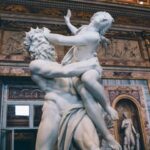
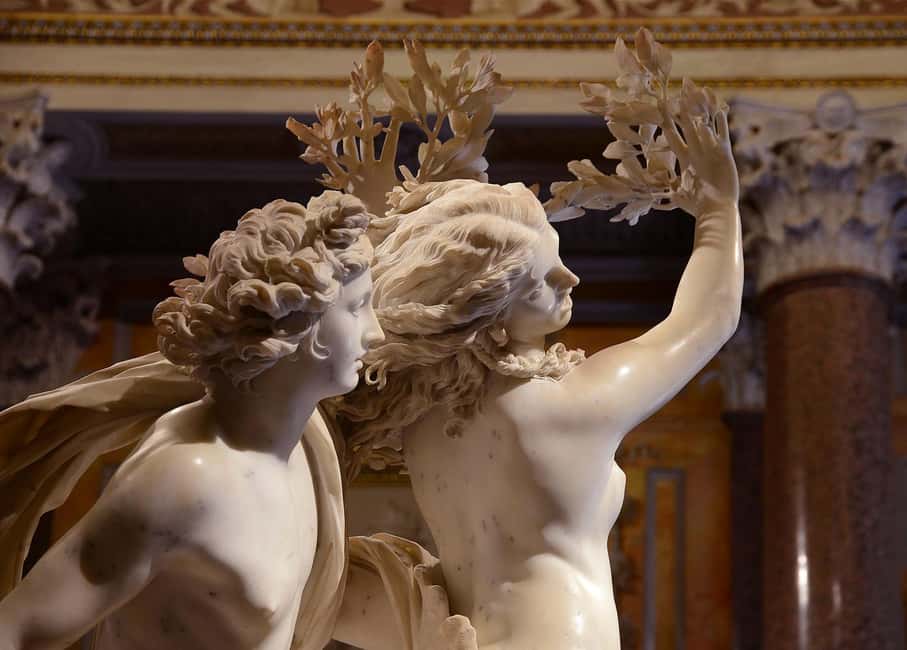
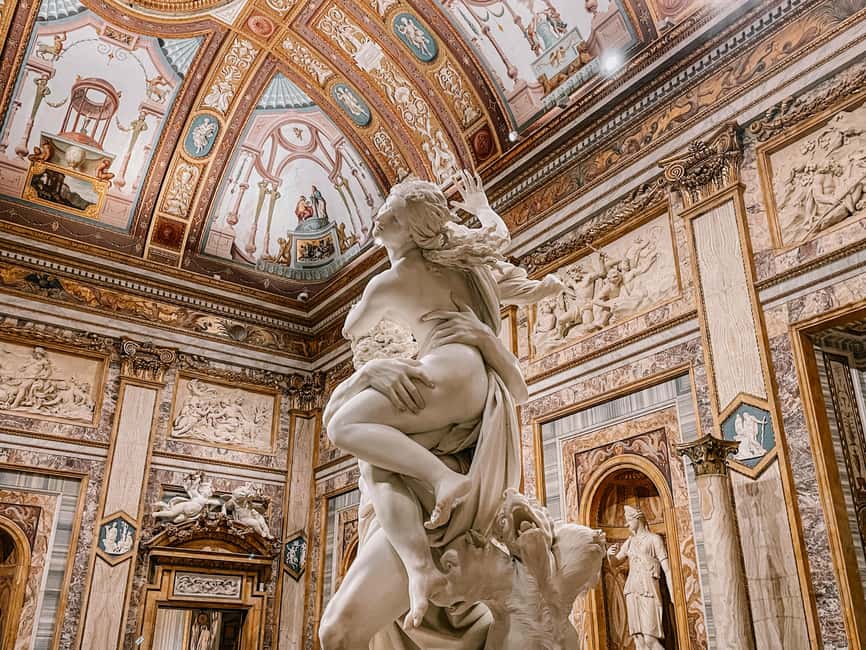
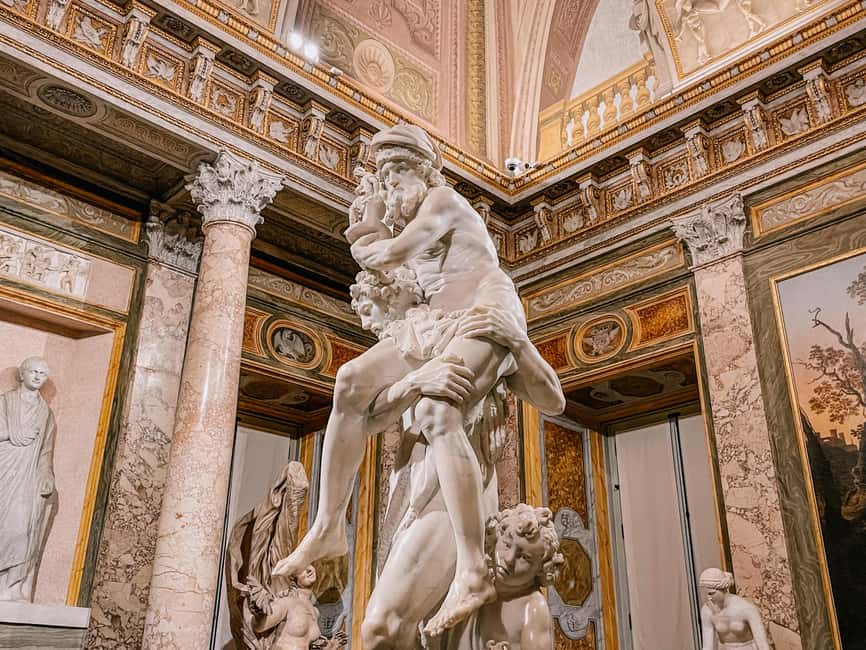
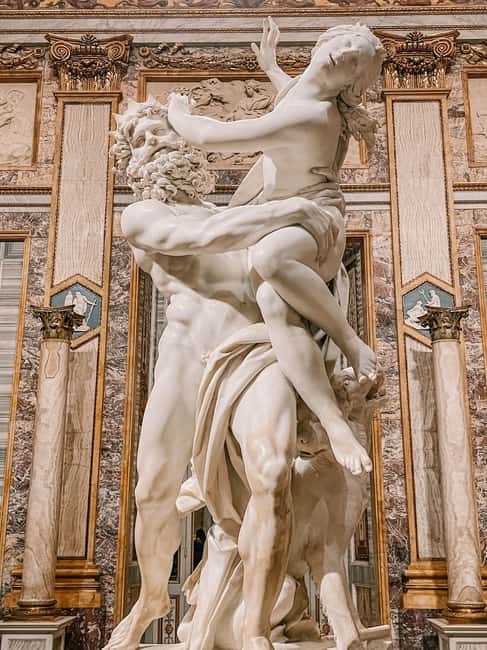
Bernini is the big name people chase at Borghese, and this collection doesn’t hold back. You’ll spend real time with sculpture highlights tied to Gianlorenzo Bernini, including works like The Truth and Scipione Borghese’s Bust, plus multiple references to Bernini’s self-portrait work.
What I like about the Bernini focus in a guided format is that it turns the “wow” into understanding. Bernini sculpture can feel like it’s frozen movement, but the emotion and symbolism only land if you get a guide to explain what you’re seeing. That’s where the art historian local guide adds real value.
Even better, you’re not just looking at one famous statue in isolation. You’re moving through a sequence of rooms where the guide helps you connect themes: power, myth, facial expression, and the collector’s taste. That makes the sculpture feel less like a checkmark and more like a coherent story told in marble.
If you’re even mildly interested in Baroque art, this is the section where the tour usually feels most satisfying, because Bernini’s style is visual and immediate. You don’t need a degree to feel the energy.
Caravaggio’s largest single-collection moment
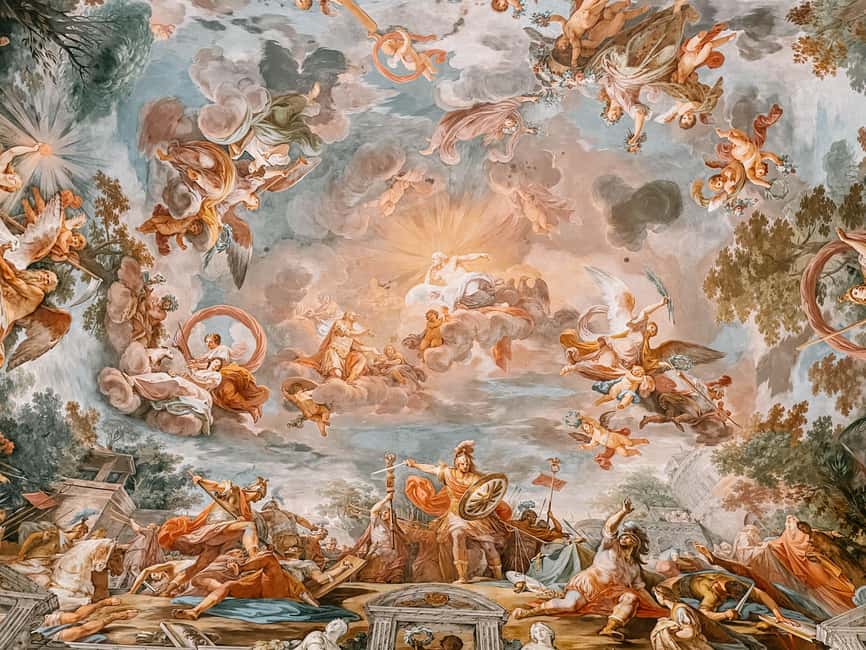
Caravaggio fans have a very specific reason to care about Borghese: it’s described as the largest gathering of Caravaggio works in a single collection. On this tour, you’ll encounter several major paintings, including David with the Head of Goliath, Boy with a Basket of Fruit, St Jerome, and Self-Portrait as Bacchus.
Caravaggio can feel like real life with the lights turned down. The drama is in the realism: expressions, posture, and the way the figures seem to push against the surface. A guide helps you slow down enough to notice how Caravaggio builds that tension.
Here’s a practical way to enjoy this section: don’t rush from one canvas to the next trying to memorize everything. Pick a couple you really want to study. If you know you care about Caravaggio’s moods, spend more time on the works that match your taste, and let the guide’s framing guide what you look for next.
Also, keep your listening mode switched on. The radios/headsets matter most when the guide is pointing out details and explaining the symbolism. Caravaggio rewards attention.


Raphael and the power portraits you can actually see
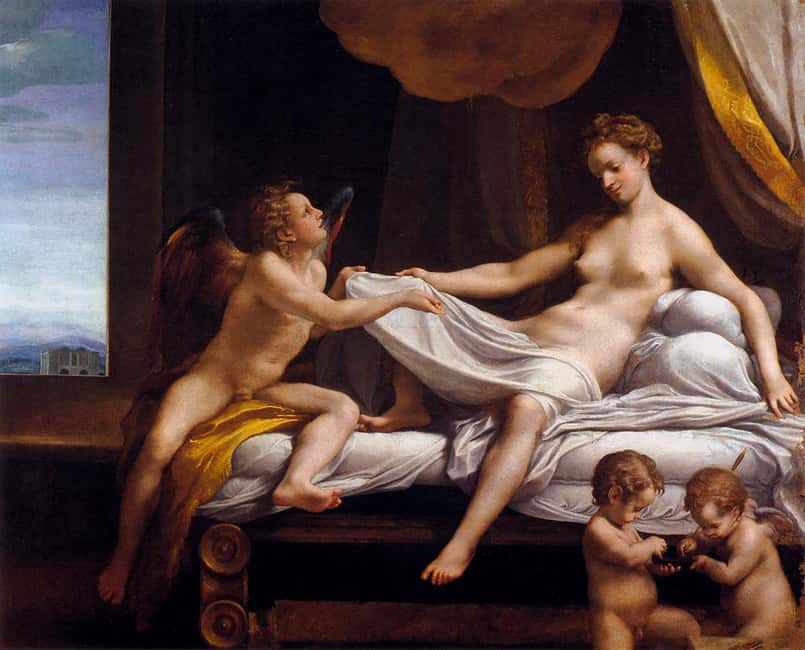
Raphael is the other major artist you’ll be looking at, with works such as Lady with Unicorn and Portrait of Pope Julius II showing up in the highlights. Raphael works differently than Caravaggio. You get grace and control rather than raw shock.
In a short tour like this, the Raphael moments are useful because they show the range of what Borghese collected. You’re not only seeing one style of genius. You’re seeing different approaches to beauty, authority, and storytelling.
The Pope Julius portrait is especially worth your time if you like art tied to politics and influence. Even without extra research, you can feel why a high-status collector would want that kind of image in his villa.
If you’re the type who thinks you’re more into sculpture than painting, Raphael is often the surprise that changes minds. It’s smoother, clearer, and the details tend to hold your gaze without you needing to decode a million symbols.
Canova’s Paolina Borghese: the room to slow down
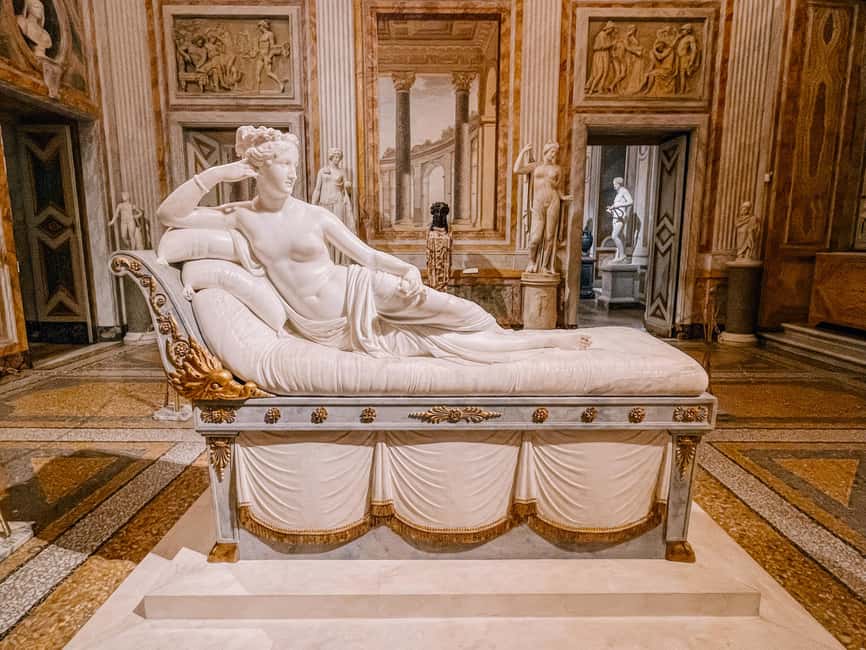
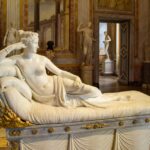
One of the best-known stops is the Paolina Room, where you can see the statue of Paolina Borghese in the guise of Venus. The sculpture is Camillo Borghese’s wife, and it made waves when first exhibited because it portrays her almost naked on a dormeuse.
This is the part where I suggest you deliberately slow down, even if your group is moving. In a 2-hour tour, you’ll want a couple of moments where the story and the visual hit at the same time. The guide can help you understand what the pose meant, why it caused attention, and how the collector’s world prized that kind of display.
A good guide will also help you look beyond the immediate shock factor. You’ll start noticing the craftsmanship, how the figure is posed, and how the villa’s setting turns a single statue into a full “scene.”
If you like art that blurs the line between mythology and portraiture, this is the stop you’ll remember later.
Guide quality matters: Sylvia, Lia, and Vincenza in the mix
This tour runs with a live English guide and includes radios/headsets to keep you in sync. Guide quality is still a real factor for a short, highlights-only experience, and names that have shown up in feedback include Sylvia, Lia, and Vincenza.
The pattern is clear: when the guide is strongly organized and easy to follow, the whole tour feels like it clicks. One visitor even highlighted Sylvia’s knowledge, and another praised Lia as amazing.
On the flip side, there have been mentions of English being harder to understand with at least one guide, even though the guide was attentive to the group. That’s why the headsets matter so much here. If you’re sensitive to audio clarity, sit where you can hear best, and don’t be shy about asking the guide to repeat or reframe a point if you missed it.
Price and value: is $88 fair for Borghese?
$88 for a 2-hour small-group tour is not a bargain, but it can be good value if you’d otherwise spend time fighting lines, wandering without context, or rushing because you’re afraid of missing your ticket window.
Here’s what you get for your money, in practical terms:
- Skip-the-line entry through a separate entrance, which is a time-saver at a top-tier attraction
- A local art historian guide who explains what you’re seeing as you see it
- Headsets/radios so you can actually hear the commentary inside
- A route designed around major works like Bernini, Caravaggio, Raphael, and Canova
If you love museums but hate the “silent march,” the guided format is a strong fit. If you prefer independent wandering with your own reading time and you already know the artwork well, you might decide to do it on your own. But if you want the gallery to feel like a story rather than a list of names, this price makes more sense.
Who should book this tour (and who might want a different plan)
This tour suits you if:
- You want a high-impact highlights visit in about two hours
- You prefer small groups (up to 15) over crowded museum chaos
- You like learning what symbols and poses are doing, especially for Baroque sculpture and dramatic painting
- You want help focusing your attention on works like Caravaggio’s David and Raphael’s Pope portrait
You might want a different approach if:
- You’re hoping for a slow, room-by-room study session where you can linger for a long time
- You’re extremely schedule-sensitive about meeting logistics and don’t like arriving early
- You’d rather read about artworks at your own pace without a guide steering you
Should you book the Borghese Gallery small-group tour with skip-the-line?
I’d book it if your goal is to see the big masterpieces with context, without wasting half your morning in lines or fumbling for information. The small group size, radios, and skip-the-line entry combine into a tour that’s designed for people who want results, not just time spent inside.
Before you decide, do two quick checks for yourself:
- Are you comfortable arriving at Piazzale del Museo Borghese a bit early so you can find the meeting point smoothly?
- Do you want an art historian guide to explain what you’re seeing in rooms with Bernini, Caravaggio, Raphael, and Paolina Borghese?
If both are yes, this is a very solid way to experience Borghese Gallery at its best: focused, well-paced, and built around the masterpieces you came for.
FAQ
How long is the Borghese Gallery small-group tour?
The tour lasts 2 hours.
What’s the group size?
It’s a small group, with a maximum of 15 people.
Where do we meet for the tour?
Meet in front of the museum’s entrance at Piazzale del Museo Borghese.
Is there skip-the-line entry included?
Yes. You get priority access and skip the line through a separate entrance.
What language is the guide?
The tour includes a live guide in English.
What should I bring to enter?
Bring a passport or ID card.