REVIEW · ROME
Rome: Catacombs of St. Sebastian Entry Ticket & Guided Tour
Book on GetYourGuide →Operated by OPERA ROMANA PELLEGRINAGGI · Bookable on GetYourGuide
Rome’s underground story moves fast. You’ll walk into the Catacombs of St. Sebastian, a third-century burial world later shaped by centuries of reuse, and your guide ties it all together with clear walking commentary. I like how the time stays focused and keeps you moving, even through narrow passages. I also like the big-picture mix of burials tied to saints, popes, and emperors, so it feels more than just old stone.
The main catch is that it’s short. In 30 minutes, you get the story and the key sights, but you do not get long time to linger or wander off the route. Expect a cool, underground feel, and plan for the rule that no photography is allowed inside the catacombs.
In This Review
- Key highlights to look for
- St. Sebastian Catacombs: Why This Underground Cemetery Still Feels Personal
- The 30-Minute Walk: What You Actually Experience Underground
- The Story Layered into the Walls: From Quarry to Catacombs
- Saints, Popes, Emperors, and the Martyrs Named for Sebastian
- The Circiforme Basilica and That Ceiling Detail
- Comfort and Practicalities: Shoes, Layers, and Who Should Skip It
- Price and Value: Is $16 a Good Deal?
- What Makes the Guides’ Style Work Here
- Who This Tour Suits Best (and Who It Might Not)
- Should You Book This St. Sebastian Catacombs Guided Tour?
- FAQ
- How long is the Catacombs of St. Sebastian guided tour?
- What’s included in the price?
- Do I need to bring anything?
- Are photos allowed inside the catacombs?
- What languages are available for the live guide?
- When should I arrive for check-in?
- Is the tour refundable if plans change?
Key highlights to look for
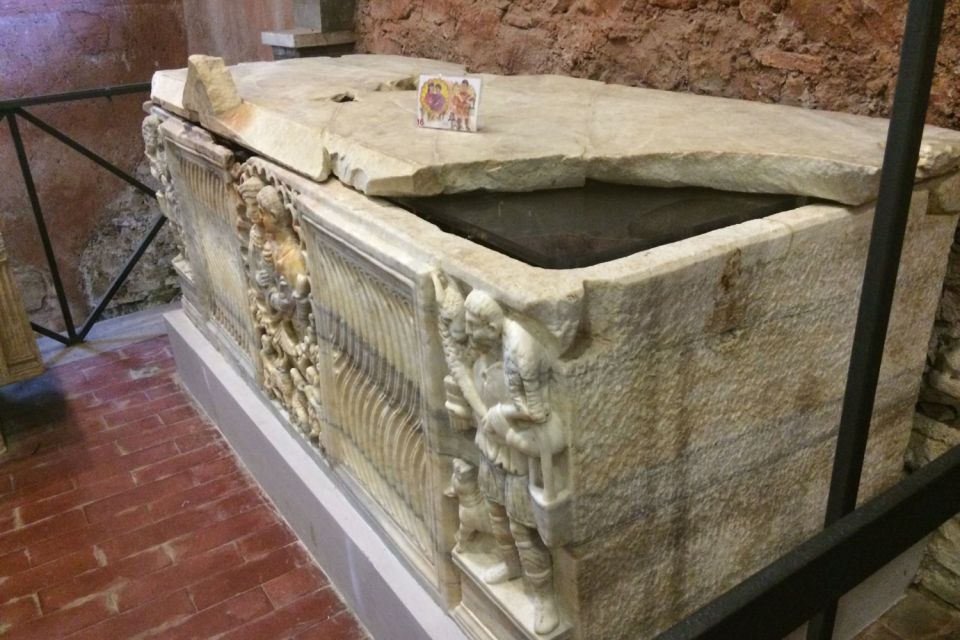
- A cemetery that kept changing over centuries, starting as quarry space and turning into burial galleries
- Real names tied to the underground, including martyrs like Sebastian and Eutichio
- Marks of devotion on walls, such as graffiti invocations to SS Peter and Paul from around 250
- A guided pacing that works in tight spaces, often noted as organized and not cramped
- The circiforme basilica experience, including the area with stunning carved wood ceilings
- Layered comfort advice matters, because it’s colder further down
St. Sebastian Catacombs: Why This Underground Cemetery Still Feels Personal
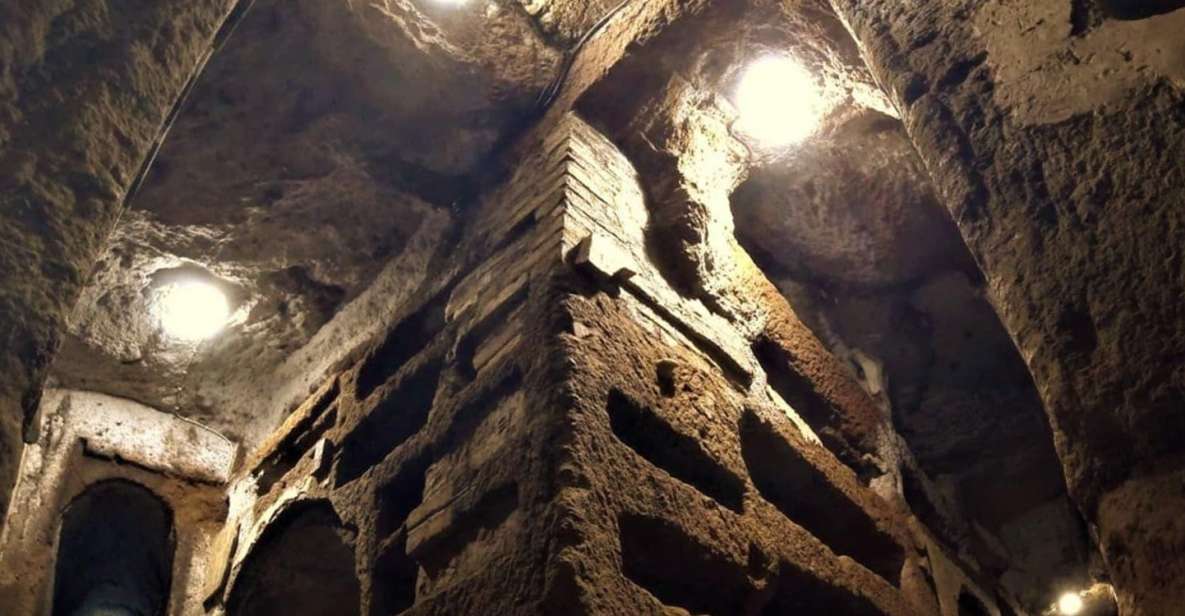
Rome has plenty of big-name ruins, but the Catacombs of St. Sebastian hit a different nerve. This is underground space created for burial, faith, and memory. What makes it especially interesting is that it’s not one single “moment” in time. The site went through phases: quarrying, reuse for niches, later building above, and then the emergence of underground areas tied to specific martyrs.
I love that your guide gives you a way to read what you’re seeing. You’re not just looking at walls. You’re hearing how galleries were reused for new burials and how later visitors left messages—like invocations to SS Peter and Paul—on the setting itself. That turns the catacombs from a tourist stop into a place with human voices and routines.
Also, the guides seem to keep things practical. In English, Italian, Spanish, or French, they explain the layout and the point of each section as you move. One guest highlighted how Micah made the history feel understandable, and another mentioned Niko for clear explanations and strong answers beyond the immediate catacombs story. That’s the kind of guiding you want underground, where it’s easy to lose the thread.
You can also read our reviews of more tours and experiences in Rome


The 30-Minute Walk: What You Actually Experience Underground
This tour is built around one thing: walking through the underground cemetery sections with a guide who keeps the pace. The duration is about 30 minutes, and that matters because catacombs are not a place to wander at your own rhythm. You’re funneled through areas in sequence, which is exactly why a guided format helps.
You’ll start by getting checked in at the ticket office of the catacomb and showing your reservation at least 10 minutes before your scheduled tour. Then you’ll move with the group into the catacombs. Expect a steady rhythm: the guide stops when it’s helpful for orientation and then gets you back moving when space narrows again.
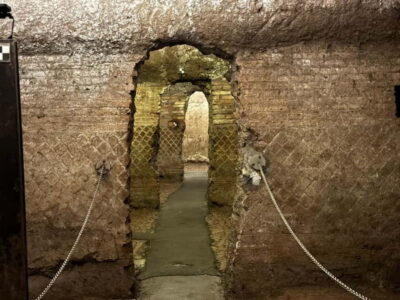
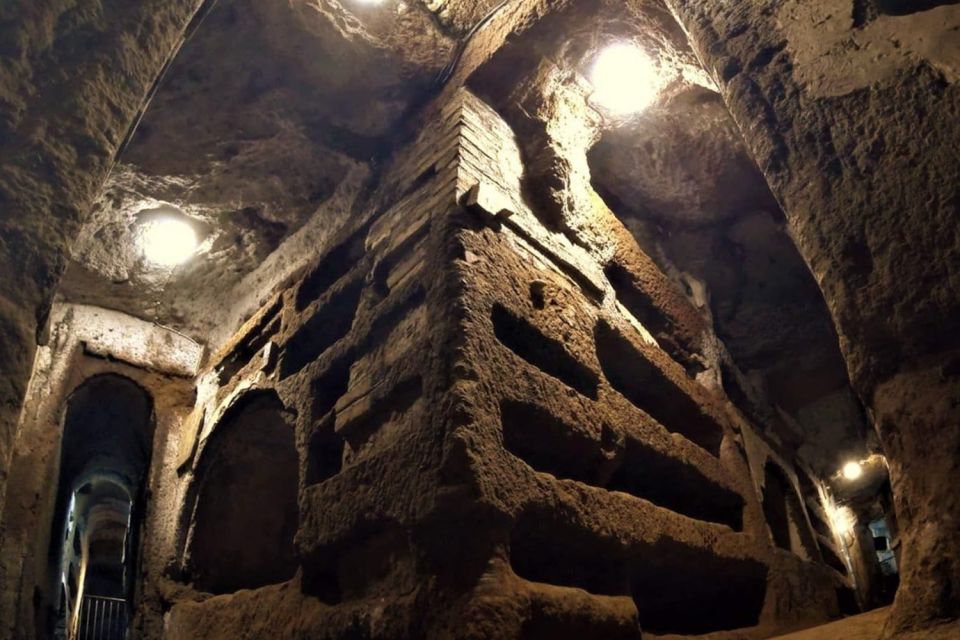
Inside, the main “wow” is how the burial system works. The catacombs developed over time, turning older underground areas into family and community burial niches. As you walk, you’ll hear how the galleries were reused for burial purposes, not built all at once like a modern complex.
One review point that lines up with how this place works: people often say the tour is “short and sweet,” but also “to the point.” That’s good news if your goal is one unforgettable underground experience without losing your whole day.
The Story Layered into the Walls: From Quarry to Catacombs
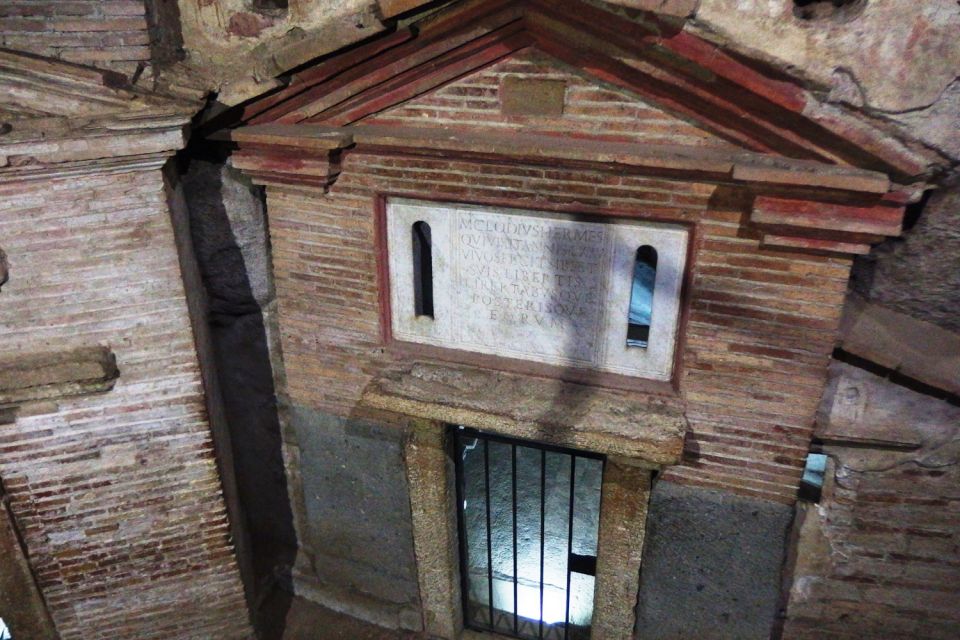
A key reason the St. Sebastian site feels so textured is that it started as something else. Before it was an underground cemetery, the location was a deep depression and used as a pozzolana quarry. Even the name idea reflects that: the phrase ad catacumbas—near the cavities—later became the way people referred to an underground cemetery.
Then the cemetery grew. Since the first century, underground galleries were intensely exploited and repurposed for burial niches. That’s a big deal for what you see today. When you stand in one corridor, you’re not only seeing one burial style. You’re seeing a system that kept adapting as the community’s needs changed.
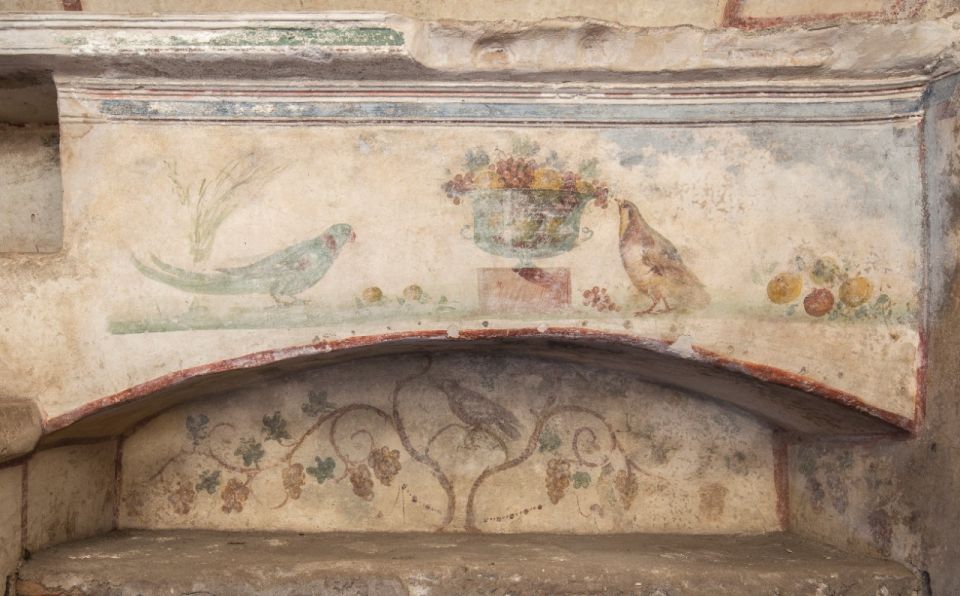
The site also includes evidence of life above ground. Columbaria and residential systems were built on the surface, including two villa-style areas described as a small villa and a large villa with decorated wall paintings. You may not take your time studying every above-ground detail during a fast tour, but your guide can help you connect why it’s here at all: burial didn’t live in isolation. It was part of a larger landscape of buildings, wealth, and ritual.
A particularly striking historical thread you’ll hear about involves a mid–second-century shift: the bottom of the valley was buried to create a pitch. On one side, mausoleums were built in succession, and later further burial made room for structures like the triclia, a portico bordered by a wall covered with graffiti invocations to SS Peter and Paul around 250. That kind of detail changes how you interpret the site. It’s not just “Christian catacombs.” It’s a place where different devotions and communities overlapped across time.
Saints, Popes, Emperors, and the Martyrs Named for Sebastian
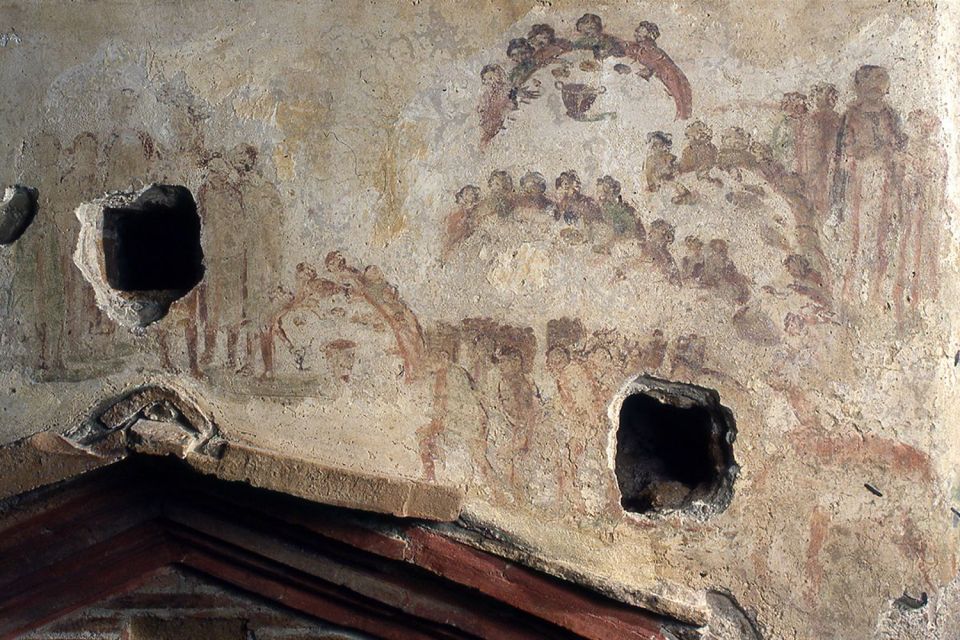
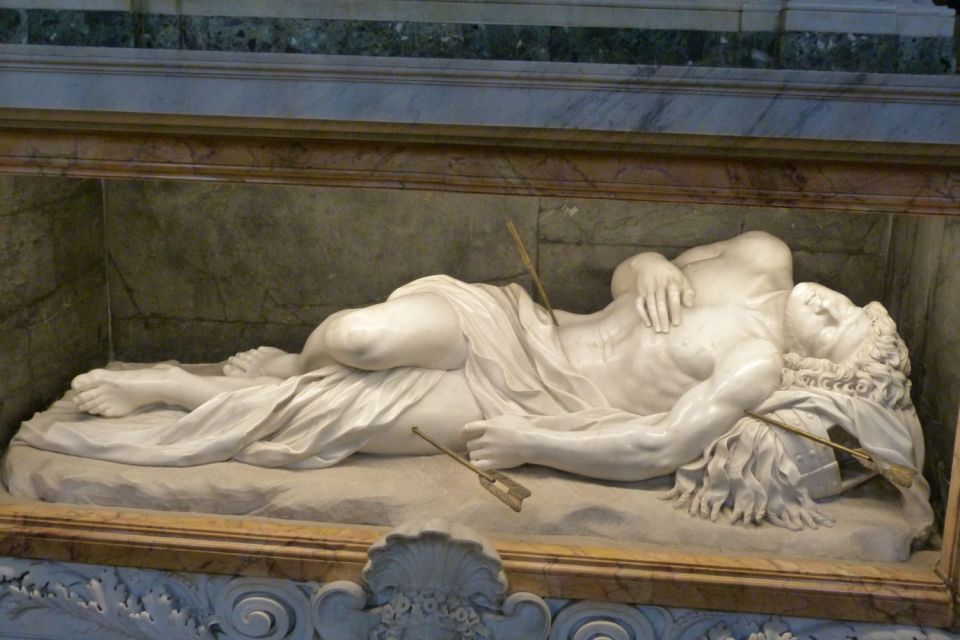
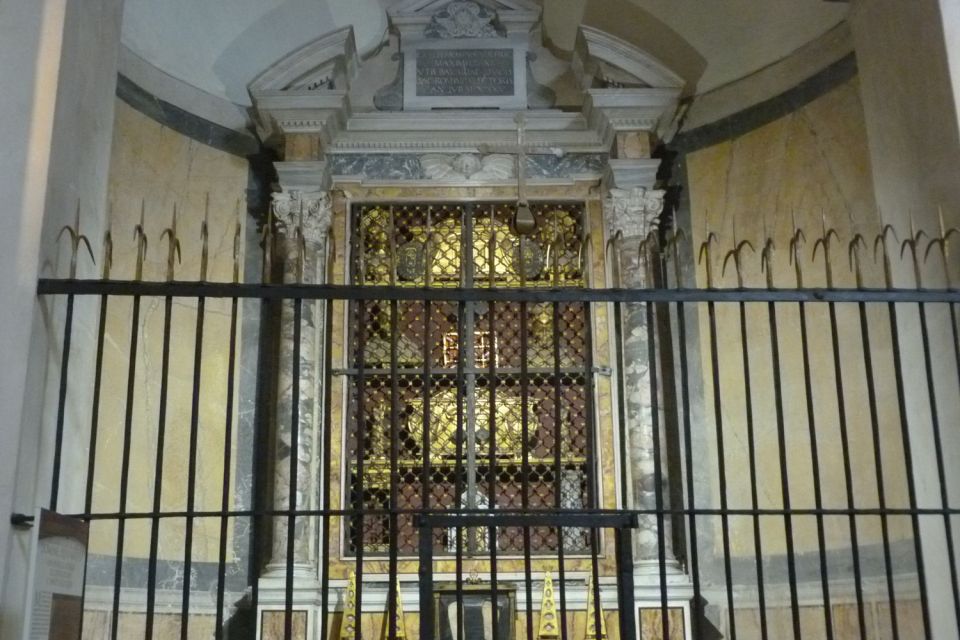
This is one of the best parts of the tour: your guide connects the physical space to the names that people cared about. The catacombs you visit are associated with the burial locations of figures like saints, popes, and emperors. And the site also ties closely to the martyrs Sebastian and Eutichio, with underground areas that began developing in the third century around their tomb.
Why does that matter to you as a visitor? Because the catacombs are confusing if you go in cold. The corridors look similar unless someone gives you anchors: what the place was for, who it honored, and why the community kept returning. With that context, the underground route becomes a guided sequence of meaning rather than a maze.
You’ll also hear how important later events shaped the area. The account includes that Emperor Constantine had a basilica built on site in the shape of a Roman circus, described as circiforme. When your tour reaches the basilica area, you’re shifting from “underground burial corridors” to “public space shaped by memory.” It’s a smart contrast: the catacombs are intimate. The basilica is communal.
One more practical point: catacombs are arranged for flow, often single-file in narrow areas. That’s why many guests comment on small-group guiding. A smaller group helps you avoid awkward crowding when the route tightens. One review specifically mentioned that a small group felt good and not cramped, which is exactly what you want under the surface.
The Circiforme Basilica and That Ceiling Detail
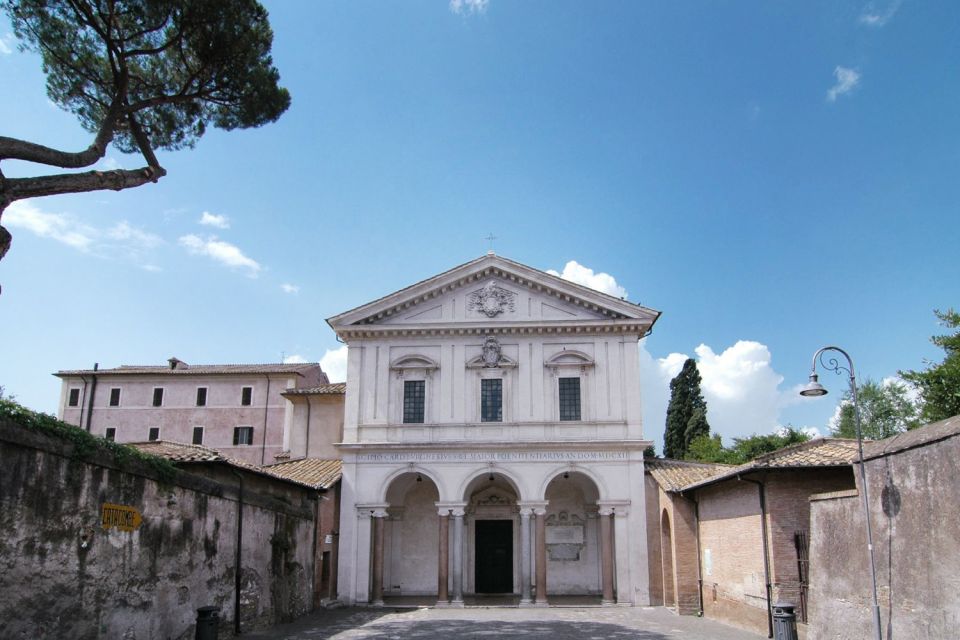
Many people think the experience is only underground, but the basilica area is part of what makes this tour feel complete. Reviews mention the basilica having hand-carved wood ceilings, which sounds like the kind of thing you would normally associate with a church stop, not an underground burial tour. That’s what makes St. Sebastian different: you don’t end at darkness and dampness alone.
The basilica also helps you step back and process what you just learned. After hearing about quarrying, reuse of galleries, mausoleums, porticos, and graffiti, it helps to see how later Roman Christianity made the space visible. Constantine’s circiforme basilica concept connects the underground world to a public setting, where memory was honored in a more formal architectural way.
And if you’re thinking about cameras: the clear rule is that photography is not allowed inside the catacombs. One guest noted that restrictions applied to the catacomb areas, with cameras and video being restricted there but not necessarily in the basilica area. The safest approach is to respect the staff instructions on the day, and just assume no photos underground.
You can also read our reviews of more guided tours in Rome



Comfort and Practicalities: Shoes, Layers, and Who Should Skip It
If you do one thing before you go, make it this: wear comfortable shoes and plan for warm clothing. It can feel colder further down, and one review specifically advised bringing layers. This is not the time for fashion footwear unless you also enjoy foot cramps.
Also, this tour is not set up for every body. It is noted as not suitable for people with mobility impairments and for people with claustrophobia. Catacombs are close by nature. Even with a guided route and stops for group gathering, you are going underground where the air and space feel different.
A couple more rules to plan around:
- Baby carriages are not allowed.
- Photography inside the catacombs is not allowed.
One helpful travel mindset: treat this as a walking tour through a historic underground system. You’re not just sightseeing on a flat sidewalk.
On getting there, you’ll want to make your own way since there’s no hotel pickup or drop-off. One review mentioned bus 118 as an easy option. That’s a nice starting point if you like public transit, but check schedules and routes on the day.
Price and Value: Is $16 a Good Deal?
At about $16 per person, this is priced as a ticket plus a guided experience for roughly 30 minutes. Is it “cheap”? No. But the value comes from what’s included: you get the entrance and a live guide in your language.
A few guests said it felt a little more expensive than buying a ticket on site, and that’s fair to consider. If your only goal is to access the catacombs, you might find lower pricing by buying onsite. Still, paying for the guide often saves you time and confusion. Underground sites are tricky without context, and this tour is clearly set up to make the space understandable quickly.
So for most visitors, $16 is a reasonable price for getting the story, not just the bones. It’s especially good if:
- You want one focused underground experience without losing your day.
- You prefer a small-group feel that doesn’t clog tight corridors.
- You’re traveling with questions and want answers in real time.
What Makes the Guides’ Style Work Here
The catacombs aren’t the kind of place where you want long lectures. You need someone to give you meaning fast and keep you oriented as the route changes. That’s why the most praised part of the experience isn’t only the sights—it’s the guiding style.
Across the notes, guests highlight guides who are friendly, answer questions, and explain the history in a simple, clear way. One review credited a guide for being funny and informative, which is a good match for a tour that can otherwise feel grim if it becomes too stiff. Another pointed out pacing that didn’t feel rushed in a bad way, and yet still stayed within the “short and sweet” 30-minute format.
If you’ve ever been stuck on a slow tour in a tight space, you’ll appreciate how important group management is here. One guest also mentioned the guide stopping to gather everyone before continuing, which helps prevent that classic underground problem: getting separated when you can’t see far ahead.
Who This Tour Suits Best (and Who It Might Not)
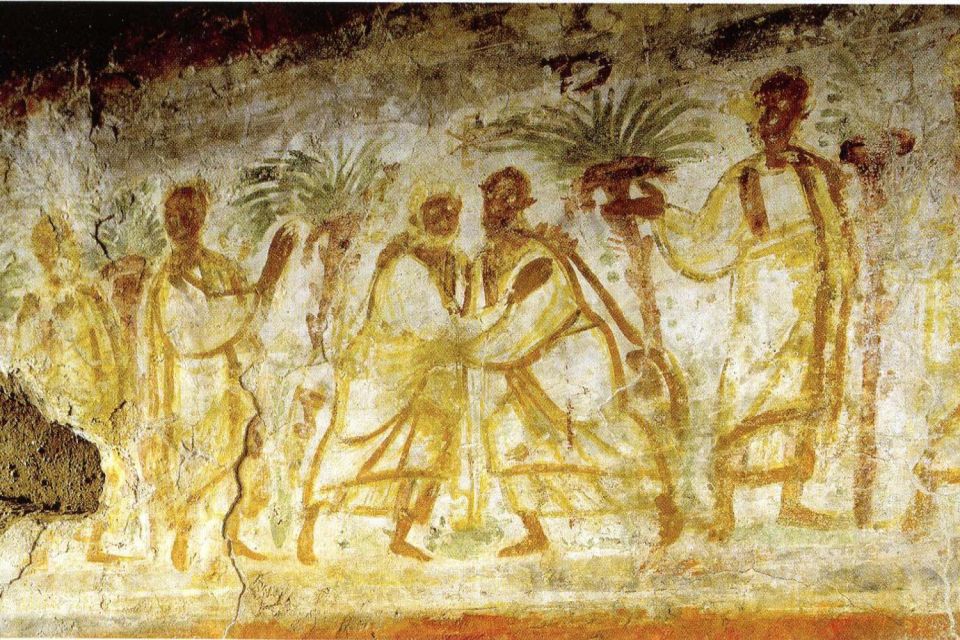
This guided tour is a good fit if you want an emotional, story-driven look at early burial practices without overcommitting your time. It’s also great on a hot day because you’re going underground and stepping out of Rome’s sun.
You’ll especially like it if:
- You enjoy guided history that explains what you’re seeing, not just where it is.
- You want a tight tour with minimal waiting and a clear route.
- You’d rather spend your time absorbing meaning than hunting for it alone.
You might want to skip it if:
- You have mobility challenges that make uneven or constrained spaces difficult.
- You struggle with claustrophobia.
- You want lots of free time to wander at your own pace or take photos inside the underground corridors.
Should You Book This St. Sebastian Catacombs Guided Tour?
Book it if you want a structured, meaningful underground experience in a manageable time window. At $16, you’re paying for both entry and a guide who helps you interpret quarry-to-catacomb evolution, the named martyrs, and the way the site connects to later public worship in the basilica area.
Don’t book it if you need long free exploration, you’re uncomfortable underground, or you’re hoping to photograph inside the catacombs. In this case, you’ll feel constrained by the short route and the photo rule.
If you’re the type who likes your Rome stops with a clear story and a practical pace, this one is a strong choice.
FAQ
How long is the Catacombs of St. Sebastian guided tour?
The guided tour is about 30 minutes.
What’s included in the price?
Your ticket includes the entrance and a guided tour in your chosen language.
Do I need to bring anything?
Bring comfortable shoes and warm clothing, plus a jacket, since it can be colder underground.
Are photos allowed inside the catacombs?
No. Photography is not allowed inside the catacombs.
What languages are available for the live guide?
English, Italian, Spanish, and French.
When should I arrive for check-in?
Go directly to the ticket office and show your reservation at least 10 minutes before your scheduled tour.
Is the tour refundable if plans change?
Yes. Free cancellation is available up to 24 hours in advance for a full refund.