REVIEW · ROME
From Rome: Pompeii Day Trip by Fast Train and Car
Book on GetYourGuide →Operated by Through Eternity Tours · Bookable on GetYourGuide
Pompeii feels close, not distant. This day trip from Rome uses a fast train plus a private car so you spend your energy on the ruins, not logistics. You also get skip-the-line entry and a live archaeologist-led guide, which makes Pompeii easier to understand and a lot more enjoyable.
I love the way the plan is built for time: an early departure (starting at 9:30 AM) and a smooth return so you don’t lose hours figuring things out. One thing to consider, though: Pompeii is a walking archaeological park with steps and uneven walkways, and you can’t bring luggage or large bags—comfortable shoes matter.
In This Review
- Key points at a glance
- Rome to Pompeii without the usual headache
- Inside Pompeii with an archaeologist guide (and fewer distractions)
- The streets, the shock, and the quiet that comes from history
- Forum Baths: where routine shows up in stone
- Amphitheater of Pompeii: the city for crowds
- House of the Faun: domestic life in a preserved maze
- House of the Vettii: a second look at how people lived
- Comfortable walking, smart packing, and the small rules that matter
- Value for your time: why train + private car works
- Who should book this Pompeii day trip from Rome?
- Should you book this Pompeii day trip by fast train and car?
- FAQ
- What time does the tour start?
- How long is the Pompeii guided portion?
- How do you get from Rome to Naples?
- How do you get from Naples to Pompeii?
- Do you skip the line at Pompeii?
- Which sights are included during the visit?
- What language is the guide in?
- Is the tour wheelchair accessible?
- What should I bring and wear?
- Are large bags or luggage allowed?
- What’s the cancellation and payment flexibility?
Key points at a glance
- Fast train from Roma Termini to Napoli Centrale for a quicker start
- Private car transfer between Naples and Pompeii with direct pickup
- Skip-the-line entrance via a separate entrance
- A live archaeologist guide on a private group tour through the key sights
- 2.5-hour guided Pompeii visit focused on the highlights you actually came for
- Walking site rules: uneven ground, steps, and no large bags
Rome to Pompeii without the usual headache
Pompeii is popular for a reason. But that popularity comes with crowds, long lines, and the kind of confusion that makes you waste a morning just getting oriented. This trip is designed to cut that friction down fast.
You start with a train ride of about 1 hour 10 minutes from Rome’s Termini to Napoli Centrale. From there, your private driver meets you at the Napoli Centrale platform area and takes you and your guide onward to Pompeii. That hands-on “handoff” is the backbone of the day. It means you’re not stuck hauling your own directions across a busy station.
When you arrive at Pompeii, the tour includes skip-the-line entry through a separate entrance. In practice, that often makes the biggest difference between a great Pompeii day and a frustrating one. You’re not “waiting for your turn.” You’re walking in, getting your bearings early, and then letting the guide do the explaining while you’re still fresh.
The tour runs with a start time of 9:30 AM and a guided Pompeii window of about 2.5 hours. Afterward, your driver brings you back to Napoli Centrale in time to catch the train back to Rome. The whole schedule is built to be realistic, not wishful.
You can also read our reviews of more tours and experiences in Rome



Inside Pompeii with an archaeologist guide (and fewer distractions)
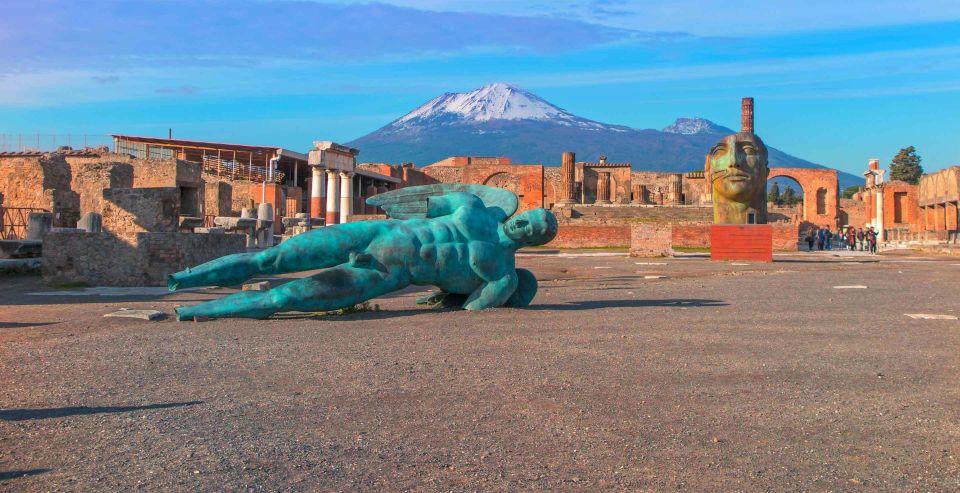
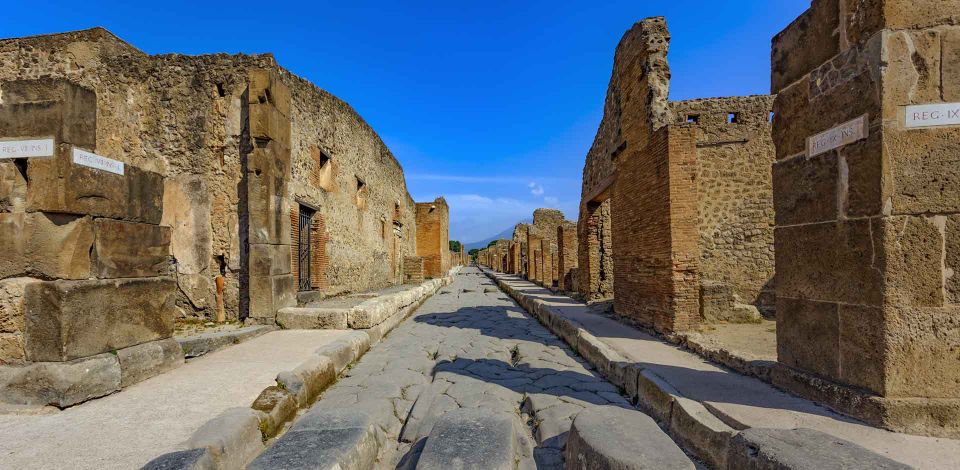
Pompeii’s power hits you immediately: streets paved with ancient flagstones, lanes that feel strangely silent, and the eerie sense that people went about their lives right up to a single catastrophic day. The guide frames what you’re seeing around the city being buried in lava and choking ash during the eruption in 79 A.D.
What you’ll likely feel most is how much easier Pompeii becomes with a guide. Without one, it’s still impressive, but it can be harder to connect buildings, streets, and neighborhoods into a story. With an archaeologist leading the way, you’re not just looking at ruins—you’re learning what they suggest about daily life, the way people gathered, shopped, ate, bathed, relaxed, and lived.
The tour also focuses on an intimate format. It’s a private group, which means you’re not stuck behind a wall of bodies waiting for the loudest person to finish their photos. You move through the site with a bit more breathing room, and your questions are more likely to get answered in context.
There’s also a practical side to the guidance. Pompeii is spread out and the ground can be uneven. A good guide helps you prioritize—so you leave having seen the headline areas instead of wandering into low-impact alleys and calling it a day.
And yes, you’ll be walking. The ruins have steps and uneven walkways, so bring comfortable shoes and plan to move at a steady pace. If you have any mobility concerns, the provider can best accommodate you when you tell them ahead of time.
The streets, the shock, and the quiet that comes from history
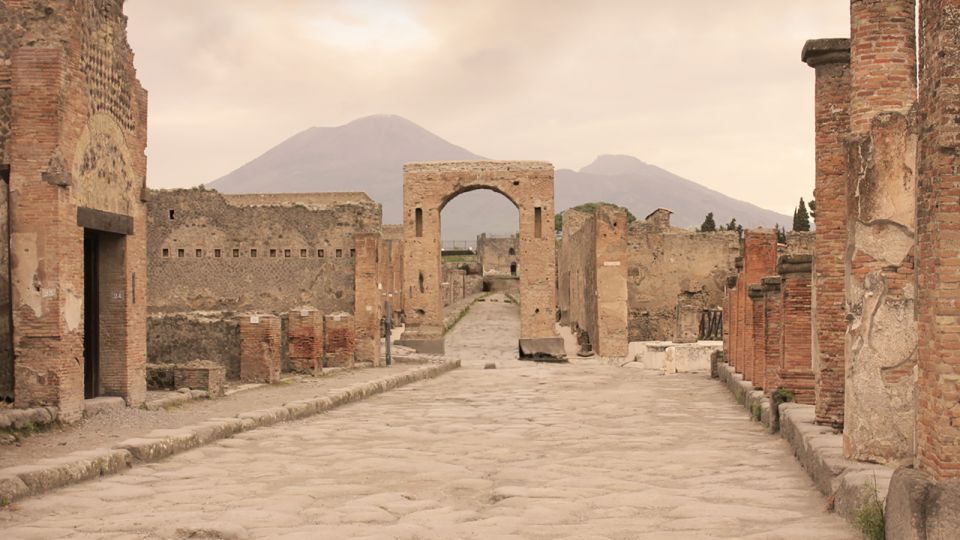
Before you even reach the named highlights, the guided walk through Pompeii’s ancient street grid sets the mood. You’ll move through streets still shaped by Roman design, including areas with the worn feel of long-ago movement—so you can understand that this wasn’t an empty “museum set.” It was a working city.
As you walk, your guide’s job is to connect the physical pieces to the human side. You’ll hear how the eruption froze the city in time, and why so many spaces are still recognizable. That explanation matters because Pompeii can otherwise feel like a jumble of stone walls.
I also like that the experience isn’t trying to cram in everything. The guided focus is tight enough that you keep momentum. You’re not mentally exhausted by noon, which is a real risk on day trips.
One more practical benefit: the skip-the-line entrance helps you avoid losing the first hour to crowd control. Pompeii is not a “slow start” destination. The earlier you get inside, the better the day feels.
Forum Baths: where routine shows up in stone
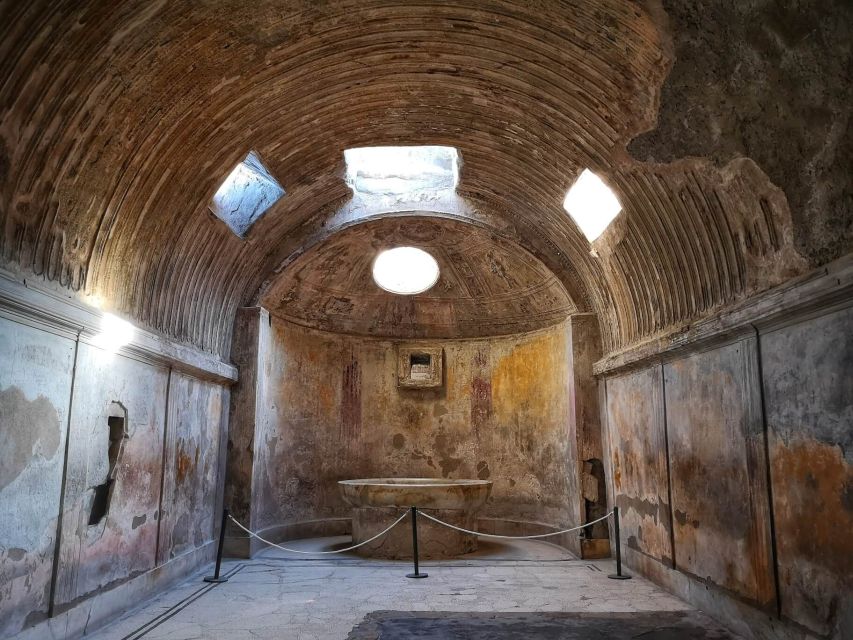
One of the stops is the Forum Baths. Even if you don’t know Roman bathing culture in detail, the name tells you what to look for: a bathing complex built for a daily rhythm, not a once-in-a-lifetime spectacle.
This kind of site is valuable because it points you toward everyday life. In Pompeii, that’s often what makes the ruins more than pretty pictures. Baths were practical spaces where people spent time, discussed life, and kept themselves clean. Seeing the Forum Baths in the middle of Pompeii’s urban setting gives you a sense of how “public” daily routine could be.
The drawback is simple: bath complexes can be visually less dramatic than arenas or villas. If you’re only chasing big wow moments, you might wish the day leaned harder into the flashier spots. But if you want to understand Pompeii as a living city, the baths help balance your perspective.
The guide’s explanations are what convert “I saw some rooms” into “I understand what these rooms meant.” That’s why this format works so well.
Amphitheater of Pompeii: the city for crowds
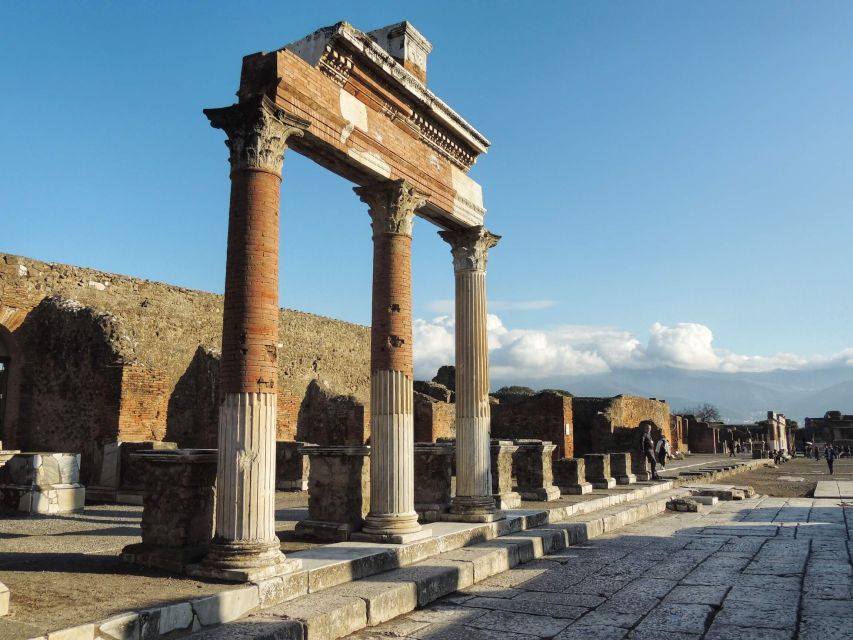
Next up is the Amphitheater of Pompeii. This is your shift from daily routine to mass entertainment. Amphitheaters were built for spectacle—crowds, noise, and organized viewing—so the space naturally communicates how Romans staged public life.
What’s useful about including the amphitheater in a guided day is that it anchors the broader city story. Pompeii isn’t just homes and streets. It had venues where people gathered and experiences were shared. Even in ruin form, the geometry of an amphitheater helps you picture movement and scale.
If you’re the type who likes history through people’s actions—where they stood, how they watched—this stop delivers. It’s also a great contrast to the quieter, more intimate spaces you’ll see later.
The only consideration: amphitheaters are typically best viewed while you can keep your balance and track the space around you. Pompeii’s walkways can be uneven, so pace yourself and take your time where you need footing.






House of the Faun: domestic life in a preserved maze
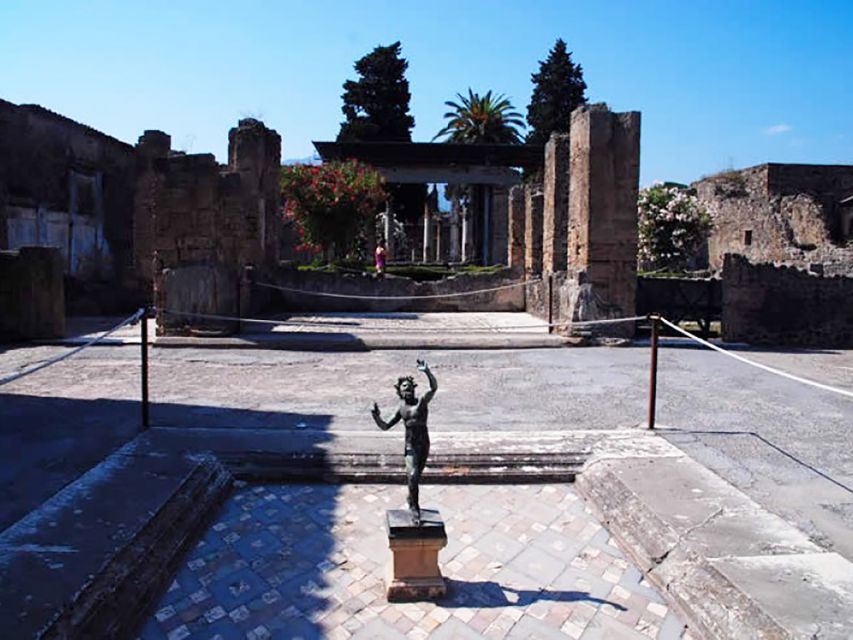
You’ll also visit the House of the Faun, one of Pompeii’s larger residential properties on this route. Houses like this are where the city’s social and everyday side becomes tangible.
Even with only the basics, you can learn a lot here. A house gives you a sense of privacy, family organization, and how space was planned for comfort and status. The guide helps connect the home layout to how people likely moved through daily life.
Why this stop matters is that it shifts you from “city functions” back to personal life. Pompeii isn’t just the Forum and the public areas. It’s also the homes where people ate, hosted friends, ran errands, and lived.
The possible downside is time focus. With about 2.5 hours total of guided Pompeii touring, you’re seeing highlights rather than touring every room available. That’s a trade-off: you get sharp, guided coverage, but you won’t have the time to linger for hours in one single house.
If you like domestic spaces, you’ll probably feel satisfied because the guide keeps you moving through the key areas that explain the most. If you’re the opposite type—someone who likes wandering alone—this stop will feel “structured,” not free-form.
House of the Vettii: a second look at how people lived
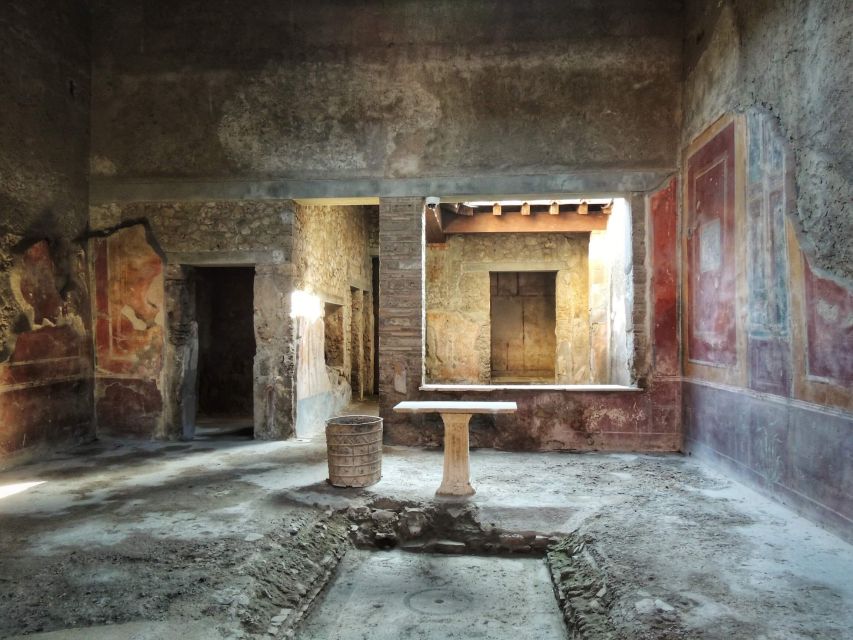
The House of the Vettii is your second residential stop. Visiting two houses back-to-back is smart because it gives you contrast. You’re not just looking at one snapshot of home life. You’re comparing how different residences communicate different levels of wealth, taste, and household needs.
The guide’s role is especially important here. Homes in Pompeii can look like a cluster of rooms if you don’t have context. With a guide, you start noticing how circulation works, where a resident might have spent time, and how domestic spaces relate back to the city around them.
This stop also helps round out the day’s pacing. After public-facing areas like the amphitheater, and everyday infrastructure like the baths, the houses bring you back to the human scale. It makes Pompeii feel less like a single dramatic event and more like a real place full of different lives.
Again, the downside is that you’re moving on. That’s the nature of a day trip. The best way to use the time is to ask questions and pay attention to what your guide is emphasizing rather than trying to photograph every corner.
Comfortable walking, smart packing, and the small rules that matter
This tour is wheelchair accessible, which is a big plus. Still, Pompeii is a park with steps and uneven walkways, so you should plan with mobility in mind. If you have concerns, tell the provider ahead of time so they can best accommodate you.
For packing, the rules are straightforward. Bring comfortable shoes. Bring water if you can—there’s a clear recommendation for a bottle of water. And leave the luggage at home. Luggage or large bags aren’t allowed, so plan to travel light.
A small practical tip: if you’re the type who likes to bring a backpack for water, snacks, and a layer, keep it small enough to avoid issues. The “no large bags” rule can be stricter than people expect.
If you’re traveling with camera gear, remember you’ll be walking on uneven stone. Stabilize your grip, watch your footing, and don’t let gear slow you down. Pompeii rewards calm pace more than sprinting for the next photo.
Value for your time: why train + private car works
This route is built for cost-and-time efficiency, and you can feel that in the structure. One train leg (Rome to Naples), then car transfer (Naples to Pompeii), then a return train in time for Rome.
That matters because Pompeii day trips can get derailed by bottlenecks. Long waits at entrances. Unclear local transit. Luggage trouble. The wrong bus timing. This plan reduces those stress points by handling the key transitions for you.
Skip-the-line entry also improves the value of the day. When you remove waiting time, your 2.5 hours inside Pompeii becomes more meaningful. You spend more time learning and less time standing around watching other groups arrive.
The private guide format adds another layer of value. A live archaeologist guide gives you context you can’t get from stone alone. And since it’s a private group, you’re less likely to get stuck in a crowd bubble that slows everything down.
One more detail I appreciate from the experience reports: the private driver has, in some cases, helped with an extra Naples stop after the tour—pizza and coffee recommendations included. That’s not the core of Pompeii, but it’s a nice way to turn the rest of your Naples time into something practical and delicious.
Who should book this Pompeii day trip from Rome?
This is a great fit if you want:
- A guided Pompeii visit that explains what you’re seeing
- Skip-the-line entry so you start exploring quickly
- A private group setting that avoids big-group pacing
- Efficient train + car logistics
It may not be the best fit if:
- You want lots of solo wandering time without a schedule
- You’re not comfortable with walking on uneven ground and steps
- You need to travel with larger luggage (the tour doesn’t allow it)
Language-wise, you can choose English or Italian, and that matters for getting more out of the guide’s explanations.
Should you book this Pompeii day trip by fast train and car?
Book it if you’re visiting Rome and you want Pompeii to feel structured, understandable, and efficient. The mix of train timing, private car pickup, and skip-the-line entry is exactly what turns a “maybe” day into a smooth one.
Skip it only if your top priority is slow, unplanned wandering or if mobility constraints make Pompeii’s walking surfaces a serious problem for you. For most people—especially first-time Pompeii visitors—this approach gives you the highlights with context and without the chaos.
FAQ
What time does the tour start?
The private tour starts at 9:30 AM.
How long is the Pompeii guided portion?
The guided tour inside Pompeii is 2.5 hours.
How do you get from Rome to Naples?
You take a short train trip of about 1 hour 10 minutes from Rome’s Termini to Napoli Centrale.
How do you get from Naples to Pompeii?
Your private driver picks you up at Napoli Centrale and takes you and your guide to Pompeii.
Do you skip the line at Pompeii?
Yes. You enter through a separate entrance to skip the line.
Which sights are included during the visit?
The guided route includes Pompeii Archaeological Site, Forum Baths, Amphitheater of Pompeii, House of the Faun, and House of the Vettii.
What language is the guide in?
The live guide is available in English and Italian.
Is the tour wheelchair accessible?
Yes, the tour is listed as wheelchair accessible.
What should I bring and wear?
Bring comfortable shoes. A bottle of water is strongly recommended because the site has steps and uneven walkways.
Are large bags or luggage allowed?
No. Luggage or large bags are not allowed.
What’s the cancellation and payment flexibility?
You can cancel up to 24 hours in advance for a full refund. You can also reserve now & pay later.