REVIEW · ROME
Rome: Galleria Borghese Museum Entry Ticket and Guided Tour
Book on GetYourGuide →Operated by TLight · Bookable on GetYourGuide
Small room, giant masterpieces. The Galleria Borghese tour pairs an entry ticket with a live guide, so you don’t just look—you understand, especially with Caravaggio’s St John the Baptist and Bernini’s Apollo and Daphne. I also love how the tour keeps the pace tight enough to hit the real standouts. One thing to consider: at just 2 hours, you’ll be moving through major rooms and you won’t have time to park and stare for long.
I like that you get headsets to hear your guide clearly, even when the museum gets busy, and it runs rain or shine. If you’re the type who wants the highlights explained in plain language, this format is a good fit—just bring an ID and keep luggage out of the way.
In This Review
- Key takeaways before you go
- Why Galleria Borghese hits hard for art lovers
- Finding your meeting point at Piazzale Scipione Borghese
- How the 2-hour guided route flows inside the museum
- Caravaggio highlights: St John the Baptist and more dramatic works
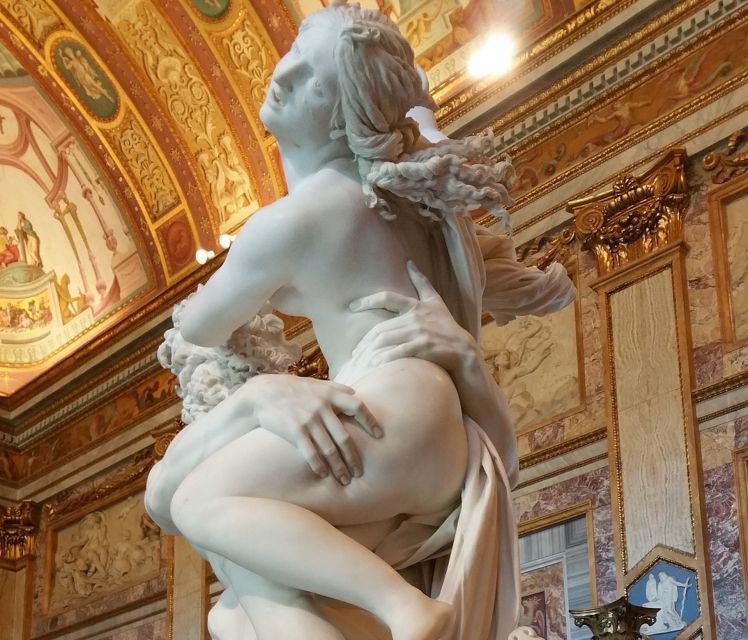
- Bernini’s motion in stone: Apollo and Daphne plus Rape of Proserpine
- Ceiling frescoes you’ll actually notice: Salone and beyond
- Ground-floor sculpture spaces and Borghese portraits
- Price, value, and who should book this
- Should you book the Galleria Borghese guided tour?
- FAQ
- FAQ
- How long is the Galleria Borghese entry ticket and guided tour?
- Where do I meet the guide?
- What’s included in the price?
- Are audio guides included, and what languages are offered?
- Which languages does the live guide speak?
- What important things should I bring for entry?
- Is there anything I cannot bring inside?
- Is the tour wheelchair accessible?
- Is it possible to cancel for a refund?
Key takeaways before you go
- Caravaggio in full light: you’ll get time with major works, including St John the Baptist plus other famous paintings in the collection.
- Bernini’s action sculptures: expect close attention to Apollo and Daphne and Rape of Proserpine, plus context for his earlier pieces.
- Frescoes that play tricks on your eye: the Salone ceiling fresco uses foreshortening that can feel almost three-dimensional.
- A smarter route than wandering alone: the guide helps connect myths, sculpture, and ceiling scenes as you move room to room.
- Short tour means focused seeing: you’ll get value from a timed, highlights-first visit rather than a slow museum day.
Why Galleria Borghese hits hard for art lovers
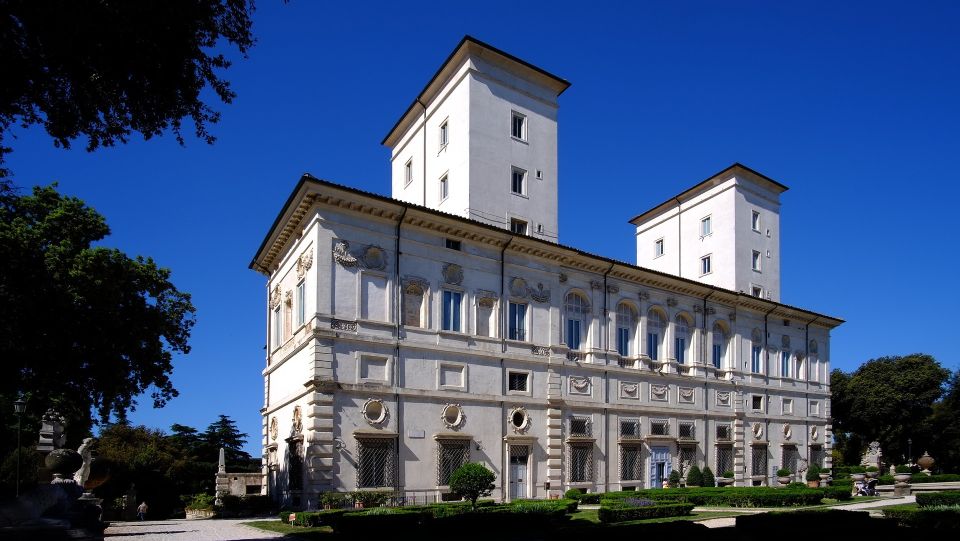
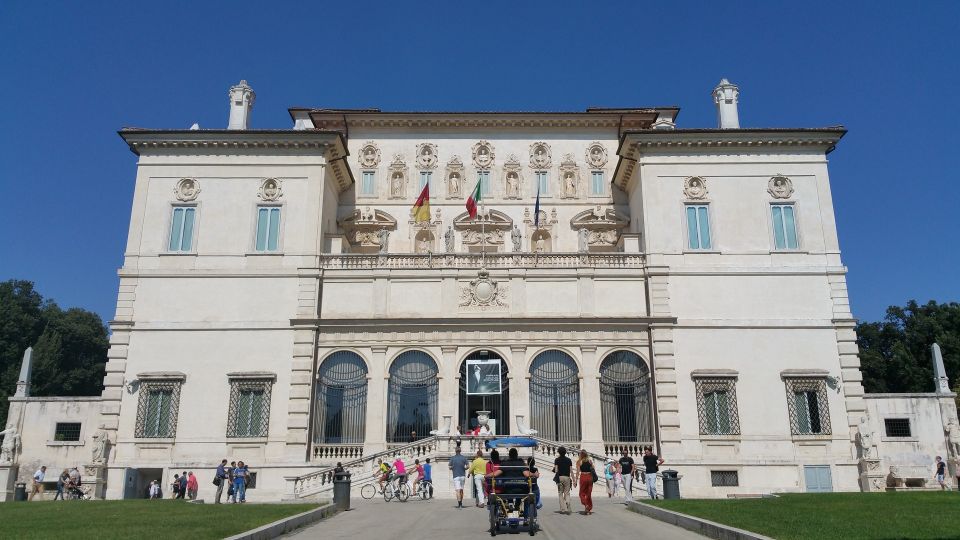
Galleria Borghese is one of Rome’s art-world gravitational pulls. It’s not just a random collection in a big building—it’s a real display of taste and power, started by Cardinal Scipione Borghese, nephew of Pope Paul V. He was a serious collector, and the museum reflects that ambition: paintings, sculpture, and antiquities in a setting that feels designed to impress.
What makes this tour especially good is that it focuses on the artists who dominate the collection. Caravaggio’s dramatic style and Bernini’s theatrical sculpture sit at the center of the experience, and the guided format helps you notice why those works matter, not just what they show.
And then there’s the building itself. You’ll spend time looking up and around, not only at famous artworks. The frescoed rooms add another layer—myth, history, and illusion—so the museum becomes more like a total environment than a list of masterpieces.
You can also read our reviews of more tours and experiences in Rome


Finding your meeting point at Piazzale Scipione Borghese
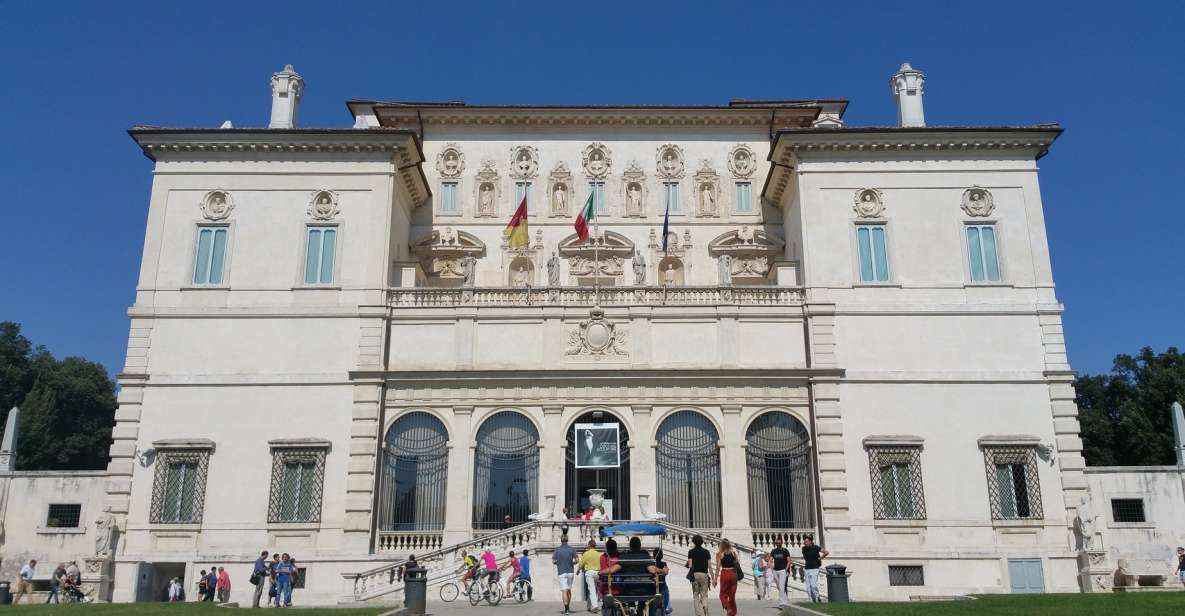
You’ll meet at Piazzale Scipione Borghese, 5. Your guide carries a red flag with the Saints Tour logo, so you can spot them quickly and get moving without awkward guesswork.
This matters more than it sounds. The Borghese entry experience is time-sensitive, and showing up with clear expectations keeps your tour from turning into a stress sprint. Plan to arrive with enough buffer to check in and get inside without rushing.
Also, keep it simple: you’ll need a passport or ID card, and luggage or large bags aren’t allowed. If you’re traveling light anyway, you’re already set up for success.
How the 2-hour guided route flows inside the museum
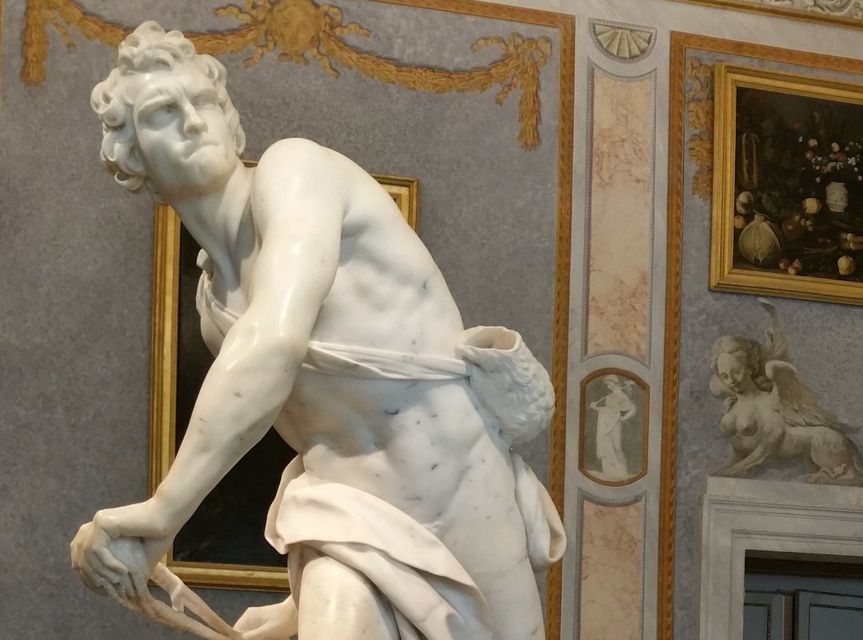
Once you’re in, the tour is built around highlights from the Borghese collection, plus key rooms with ceiling art. You’ll cover the main Borghese Gallery areas and ground-floor sculpture spaces in a way that aims to compress the best of the museum into one focused, guided pass.
The practical benefit is that you get a route that makes sense. On your own, it’s easy to bounce between rooms and miss the connections—like how ceiling scenes relate to mythological figures, or why Bernini’s sculptures are placed where they are.
The slight trade-off: this is not a slow art-study marathon. You’ll see a lot, but in a “first impressions done right” kind of way. If your goal is to sit and absorb every detail for hours, you might want a self-paced visit instead. For most people, the short, guided approach is the sweet spot.
Caravaggio highlights: St John the Baptist and more dramatic works
Caravaggio is one of the main reasons people say Galleria Borghese feels different from other museums. His paintings come with heavy emotion and sharp contrasts, and the guide’s job is to help you read the mood quickly.
You’ll specifically spend time on St John the Baptist. You’ll also get a view of other major Caravaggio works in the collection such as Boy with Basket of Fruit, Saint Jerome Writing, and Sick Bacchus. Even if you already know the names, it’s the way the paintings are staged among the rest of the collection that makes them land.
Here’s what I’d pay attention to as you look: Caravaggio’s figures feel like they’re pulled forward, not painted from a distance. The tour helps you link that intensity to the collector behind the scenes—Scipione Borghese didn’t just buy art; he built a statement around artists who could shock and move viewers.
Bernini’s motion in stone: Apollo and Daphne plus Rape of Proserpine
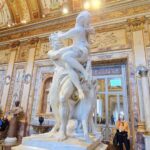
Bernini is the other half of the magic, and this museum is basically a showcase for him. You’ll see Apollo and Daphne and Rape of Proserpine, two works that capture his Baroque talent for turning sculpture into action.
What you’ll like, if you’re paying attention (and you should be), is the way these pieces use movement. It’s not just that characters look dynamic—they’re arranged so the story seems to unfold around you. The guide will help you understand why these sculptures are considered defining works of Baroque sculpture, and how they connect to Bernini’s broader career.
You’ll also hear about his wider range in the gallery: early works such as Goat Amalthea with Child Jupiter and scenes like Faun and Aeneas, Anchises and Ascanius. Then it moves to later, more famous, high-drama pieces like David. In other words, you’re not only looking at two great statues. You’re seeing the arc of an artist’s style.
And if you’re wondering whether Bernini sculptures are overrated—don’t make that call until you’ve stood in front of Apollo and Daphne. This is one of those moments where the hype turns into a real experience.
You can also read our reviews of more guided tours in Rome

Ceiling frescoes you’ll actually notice: Salone and beyond
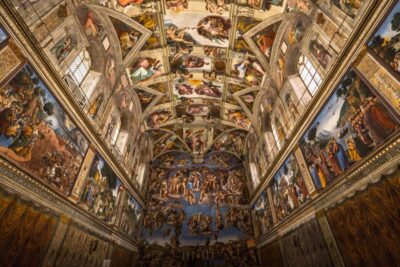
One of the most memorable parts of the Borghese experience is what’s above you. The Salone features a large ceiling fresco by the Sicilian artist Mariano Rossi. The tour emphasizes a detail that you might otherwise miss: Rossi uses foreshortening so well that the scene feels almost three-dimensional.
The subject is Marcus Furius Camillus relieving the siege of the Capitol by the Gauls. It’s a heroic action scene, but what makes it special here is the illusion. You’re watching a ceiling paint behave like stage scenery, and the guided explanation helps you “read” what you’re seeing.
You’ll also encounter the Chamber of Ceres, which includes a marble vase depicting Oedipus and the Sphinx. Then there’s another ceiling fresco by Francesco Caccianiga showing the Fall of Phaeton. The guide’s approach matters because it keeps these scenes from feeling like random myth tiles. You’ll start to see themes: power, punishment, and transformation.
If you want a museum moment that feels different from “look at painting, walk on,” this is it. Look up. Don’t rush this part.
Ground-floor sculpture spaces and Borghese portraits
The ground-floor sculpture areas bring you closer to how the collection was meant to be lived with—less like a storage vault, more like a designed display.
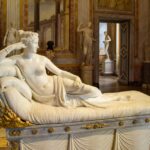
You’ll spend time on key sculptural highlights, and the tour also points out portrait busts connected to the Borghese family and their circle. Expect to hear about busts including one of Pope Paul V and two portraits of Cardinal Scipione Borghese.
This is a helpful layer for understanding the whole place. These aren’t just anonymous masterpieces; they’re tied to people who had influence, taste, and political reach. When you understand that, the museum feels more personal and less like a distant temple of art.
Also, keep an eye on how the guide connects sculpture to the stories in frescoes. The Borghese collection leans hard into mythology and classical themes, so the museum starts to feel like one big narrative machine.
Price, value, and who should book this
The price is $94 per person for a 2-hour experience that includes the entry ticket, a live guide, and headsets so you can hear clearly. On paper, that might sound steep. In practice, it often makes sense if you value focused time and don’t want to spend your day figuring out what matters most.
Here’s the value math I see:
- You’re paying for a timed, guided route that hits the top Caravaggio and Bernini works.
- You get headsets, which is a real quality-of-life upgrade in a museum setting.
- You also get an audio guide available in French, Italian, and English, which gives you a fallback if a moment gets crowded.
What’s not included: hotel pickup and drop-off, and food and drinks. So plan to eat before or after, and keep this as a museum-only block in your schedule.
This tour is especially smart for:
- Couples and friends who want the highlights explained without spending half a day
- Families with teens who get impatient fast (one guide named Silvia is praised for being patient with teenagers and keeping the family moving through the museum’s best-known works)
- Anyone who’s seen Bernini or Caravaggio names in books and wants a clear path to the real deal
If you’re the type who wants to linger for hours in front of a single painting, you might find the pace a bit quick. But if your goal is “make my time in Rome count,” this is a solid buy.
Should you book the Galleria Borghese guided tour?
I think you should book it if you want the museum’s greatest hits with explanations that make them easier to appreciate fast. The combination of entry ticket + live guide + headsets is what turns a famous museum into a genuinely usable experience.
Skip it only if your travel style is slow-and-detailed to the point where you don’t mind missing some rooms. Also, reserve early when possible. The museum is known for limited availability, and last-minute options can get pricey.
If you’re visiting Rome for a short time and you want one “wow” art stop that feels specific and not generic, this is one of the best ways to do it.
FAQ
FAQ
How long is the Galleria Borghese entry ticket and guided tour?
The duration is 2 hours.
Where do I meet the guide?
Meet at Piazzale Scipione Borghese, 5. Your guide carries a red flag with the Saints Tour logo.
What’s included in the price?
The experience includes the guide, the entry ticket, and headsets so you can hear the tour guide clearly.
Are audio guides included, and what languages are offered?
Yes. Audio guide is included in French, Italian, and English.
Which languages does the live guide speak?
The live guide offers French, Italian, and English.
What important things should I bring for entry?
Bring your passport or ID card.
Is there anything I cannot bring inside?
Luggage or large bags are not allowed.
Is the tour wheelchair accessible?
Yes, the tour is wheelchair accessible.
Is it possible to cancel for a refund?
Yes. You can cancel up to 24 hours in advance for a full refund.