REVIEW · ROME
Rome: Appian Way & Roman Aqueducts Guided E-Bike Tour
Book on GetYourGuide →Operated by TopBike Rental & Tours · Bookable on GetYourGuide
Ancient Rome by e-bike feels unreal. This half-day route takes you from city walls and catacombs out to the Ancient Appian Way and the surviving Roman aqueducts, with a guide keeping the story moving the whole time. Guides such as Nima and Pablo are a big reason this tour works, because they manage the group and translate what you’re seeing into something you can picture.
I also like the practical side: you’re on a Cannondale e-bike with anti-puncture tires, a comfortable saddle, and a helmet you must wear. The main consideration is the terrain—about 60% of the ride is off-road on gravel and ancient stones—so even with pedal assist, you should be okay with uneven footing and occasional city-traffic segments.
In This Review
- Key things I’d plan around before you go
- Why this Appian Way and Aqueducts ride is worth your time
- Via Labicana meeting point: easy to find, not hard to start
- City warmup stops: walls, tomb culture, and the start of the story
- Circus of Maxentius to the Tomb of Cecilia Metella: getting the scale right
- When the Ancient Appian Way begins: 2,300 years of cobblestones
- Parco degli Acquedotti: aqueducts you can actually measure
- Caffarella Valley Park: calm riding in a quieter Roman setting
- How long you’ll really be on the bike (and what the stops do to your pace)
- Bikes and safety: what’s included, and why the guide names matter
- Traffic reality check: Rome portions can feel intense
- Price and value: $85 for 4 hours of real Roman scenery
- Who this tour is best for (and who should think twice)
- Final call: should you book this Rome e-bike tour?
- FAQ
- Where is the meeting point for the tour?
- How long is the Rome Appian Way and aqueducts e-bike tour?
- What distance will I ride?
- Is the route mostly on pavement?
- Do I need to bring a helmet?
- What bike equipment is included?
- What languages are the live guides available in?
- How big is the group?
- Are there child seats or child bike options?
- What is the cancellation policy?
Key things I’d plan around before you go
- A 4-hour, 27 km ride with a lot of time on paths, not just paved streets
- 2300-year-old cobbles on the Appian Way, where the texture matters more than the speed
- Aqueducts up close in Parco degli Acquedotti, where the scale hits in person
- Caffarella Valley Park gives you a quieter, greener feel with no traffic once you’re in the parks
- Small groups (up to 10) make safety and stopping for explanations feel controlled
- Guides who run the road—people mention different names like Cas, Fabio, and Aaliyah for a reason
Why this Appian Way and Aqueducts ride is worth your time
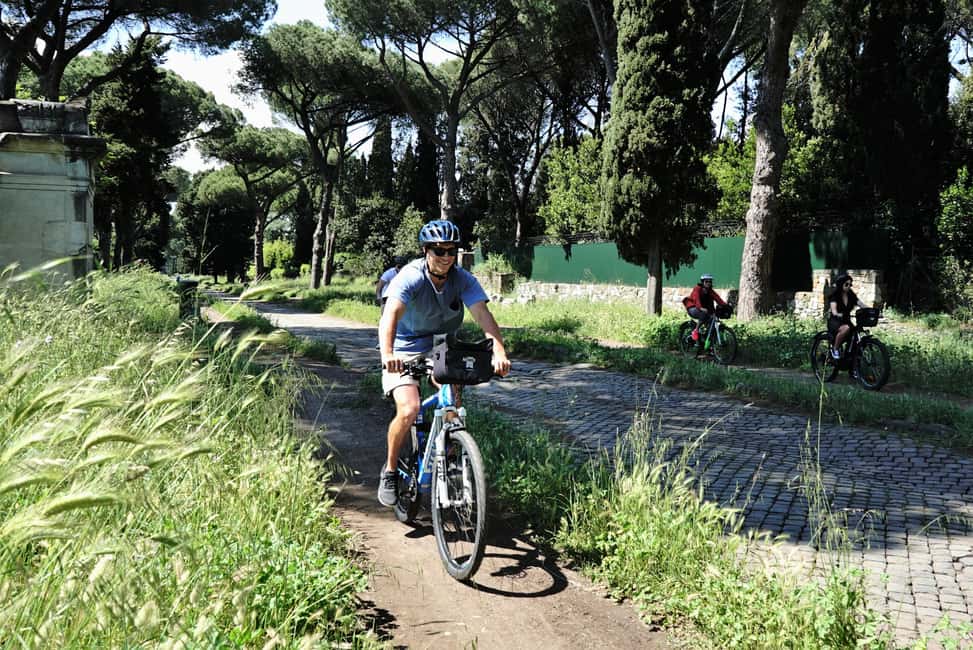
If your Rome days are mostly about crowded monuments, this tour is a fast way to switch gears. You still see major Roman sights, but the route is built around moving through the countryside that made this area so important in Roman times.
The best part for me is how quickly the tour changes scenery. You start in central Rome for a warmup and early stops, then you hit the Appian Way and keep rolling alongside tombs, ruins, and long aqueduct lines. It’s one of the rare ways to experience Rome where the setting does as much work as the artifacts.
One more reason it’s good value: the tour includes the bike, helmet, and guide, and you get a full guided loop instead of just a “look-but-don’t-touch” sightseeing day. For $85 for four hours, that adds up—especially if you’d otherwise spend time figuring out transport and matching up tickets for multiple areas.
You can also read our reviews of more cycling tours in Rome


Via Labicana meeting point: easy to find, not hard to start
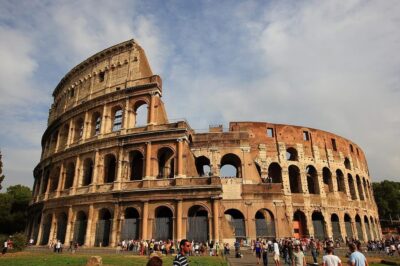
You meet at the shop on Via Labicana 49, about a five-minute walk from the Colosseum area. That location matters. It means you can fit this into a normal day without needing a complicated plan to get across the city.
There’s no hotel pickup, so you’ll want to build in a little time to walk to the shop calmly. Helmet use is mandatory, so arriving a few minutes early also helps you get sorted without stress.
City warmup stops: walls, tomb culture, and the start of the story
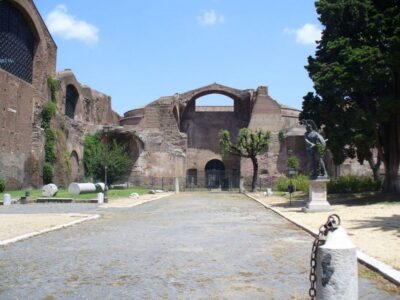
The ride begins with an urban stretch where you’ll see the Aurelian Walls from the cycling route. Even if you don’t stop for long, this early look sets the theme: Rome wasn’t just famous monuments—this was a defended city with planned routes.
Next come stops around Rome’s catacombs area and the Circus of Maxentius. These aren’t just “more ruins.” They help you understand how people lived, buried, and gathered on the edge of the city. A stop at the catacombs zone also shifts the mood from public life (circuses, gatherings) to the quieter, long-term reality of Roman burial traditions.
From there, the route builds toward the Appian Way by layering in structures you can actually connect on foot and bike. You’ll hear the history as you go, so it doesn’t feel like memorizing facts.
Circus of Maxentius to the Tomb of Cecilia Metella: getting the scale right
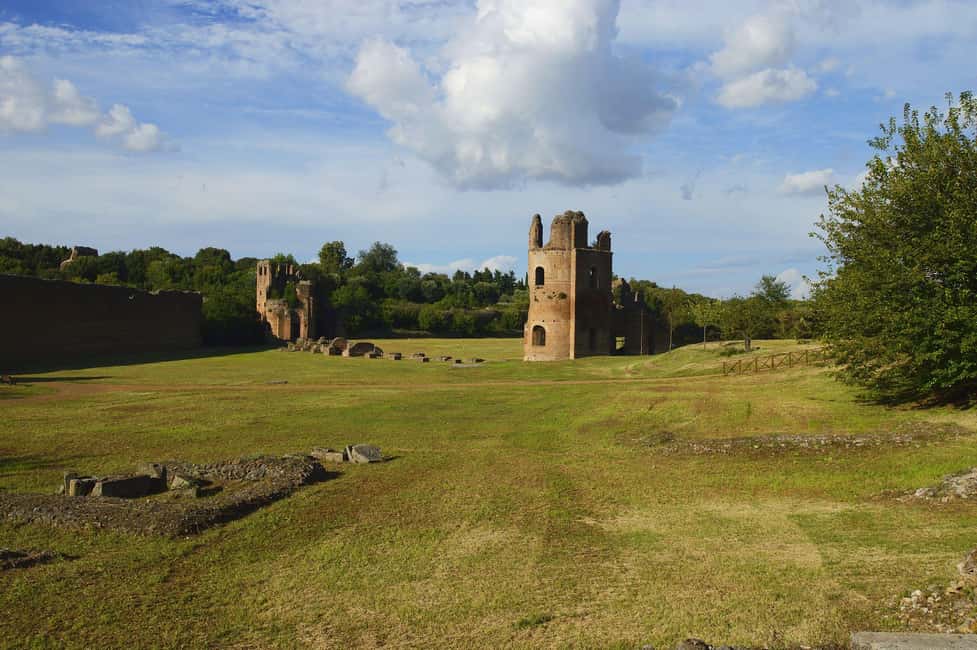
As the tour continues, you’ll reach the Circus of Maxentius and then the Tomb of Cecilia Metella. This combo is smart because it gives you two different kinds of “big Roman.” One is the monumental entertainment space; the other is a tomb that still looks like a power statement.
I like these stops because they’re visual. Even without climbing into anything, you can grasp scale—how Romans built for crowds, and how elites built for permanence. The tomb also acts like a signpost. It’s the kind of landmark that makes the Appian Way feel inevitable, like you’ve finally reached the road you came for.
When the Ancient Appian Way begins: 2,300 years of cobblestones
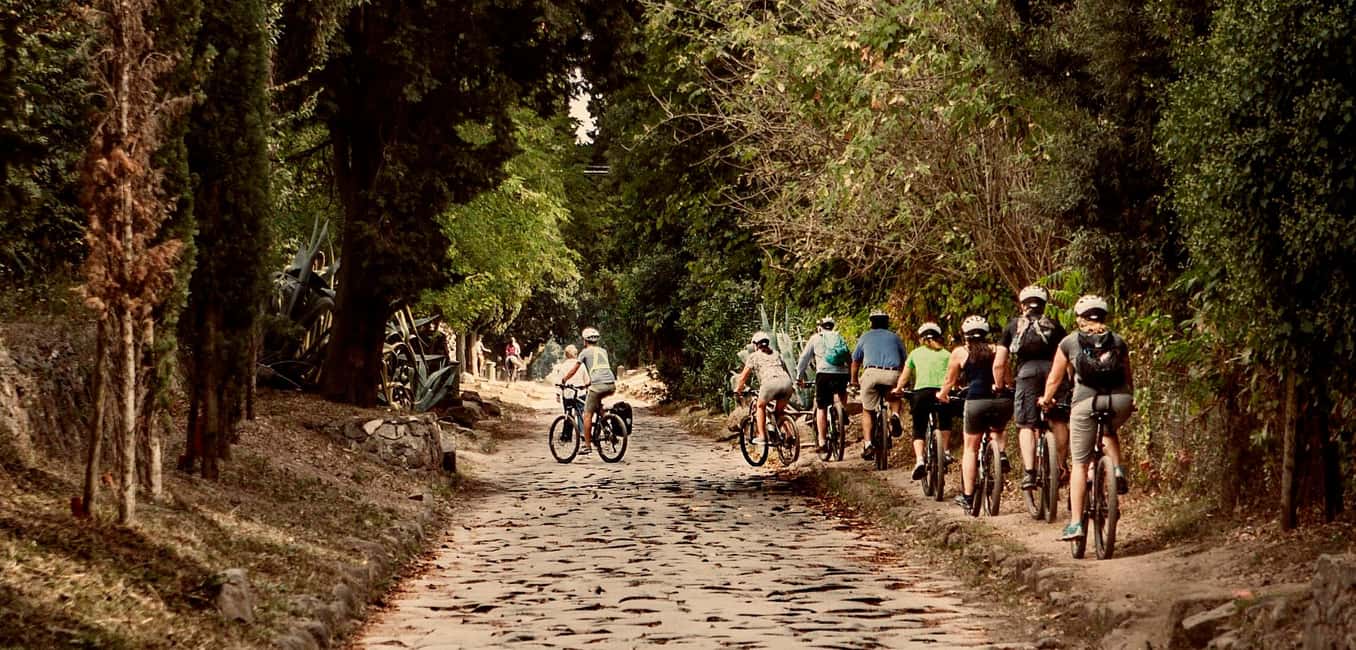
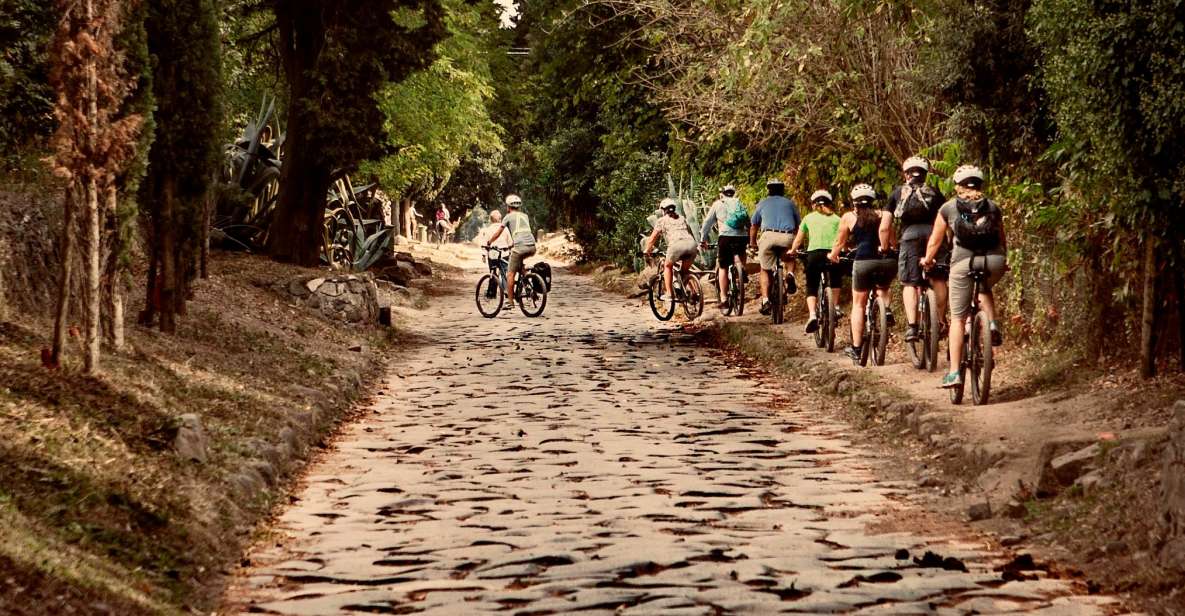
At some point, the tour leaves the smoother city connections and gets you onto the Ancient Appian Way. This is the moment most people are really waiting for, because the road surface is part of the experience. Those 2,300-year-old cobblestones aren’t just pretty in photos—they change how you ride.
Here’s the practical reality: the cobbles and ancient stones mean more vibration and less forgiving traction than modern streets. The e-bike help matters, but you still feel the texture. One rider even called out how rocky roads and gravel can be harrowing for an older cyclist—proof that you should enter with realistic expectations.
The upside is the payoff. Riding that surface on a bike gives you motion, not museum pacing. You move past ancient tombs and ruins in a way that feels connected to daily movement, not like a staged walk-through.
You can also read our reviews of more guided tours in Rome





Parco degli Acquedotti: aqueducts you can actually measure
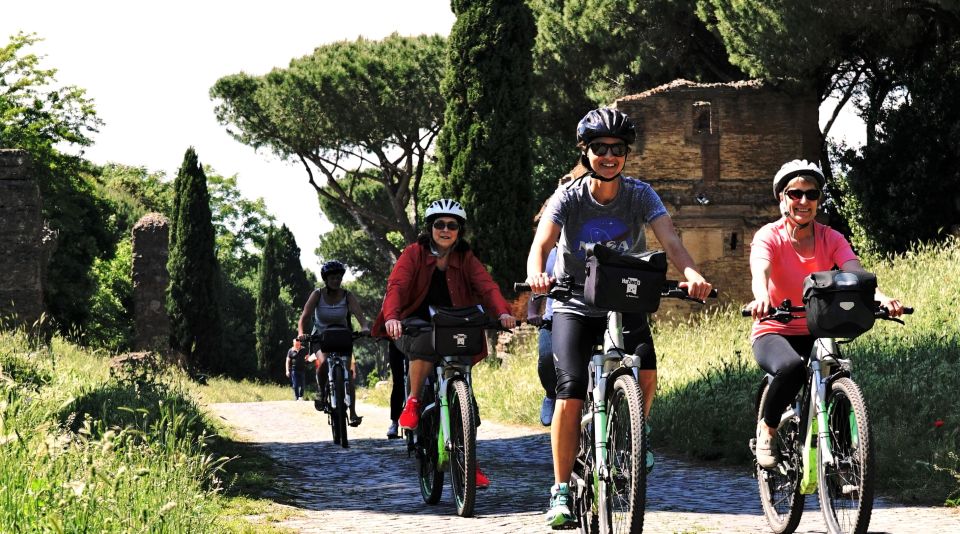
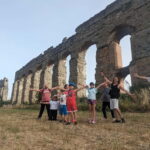
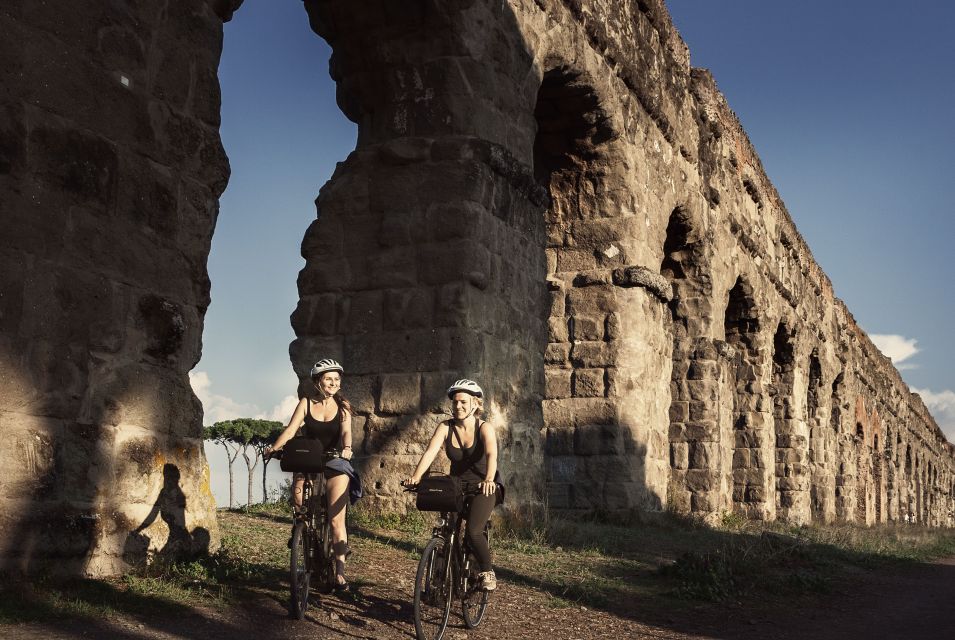
Once you leave the Appian Way, the tour follows the aqueducts through the countryside via Parco degli Acquedotti. This is where the Roman engineering stops being abstract.
You’ll ride alongside structures that still stand, and the scale hits differently when you’re moving under the same sky. You get long sight lines and the feeling of being in the wild side of Rome—without leaving the core of the city’s story behind.
If the weather is hot, you might appreciate a moment of cooling that some guides have offered on the route, including a chance to dunk your head in Aqua Felix water (when it’s available). I’d treat that as an optional bonus, not a requirement for enjoying the tour.
Caffarella Valley Park: calm riding in a quieter Roman setting
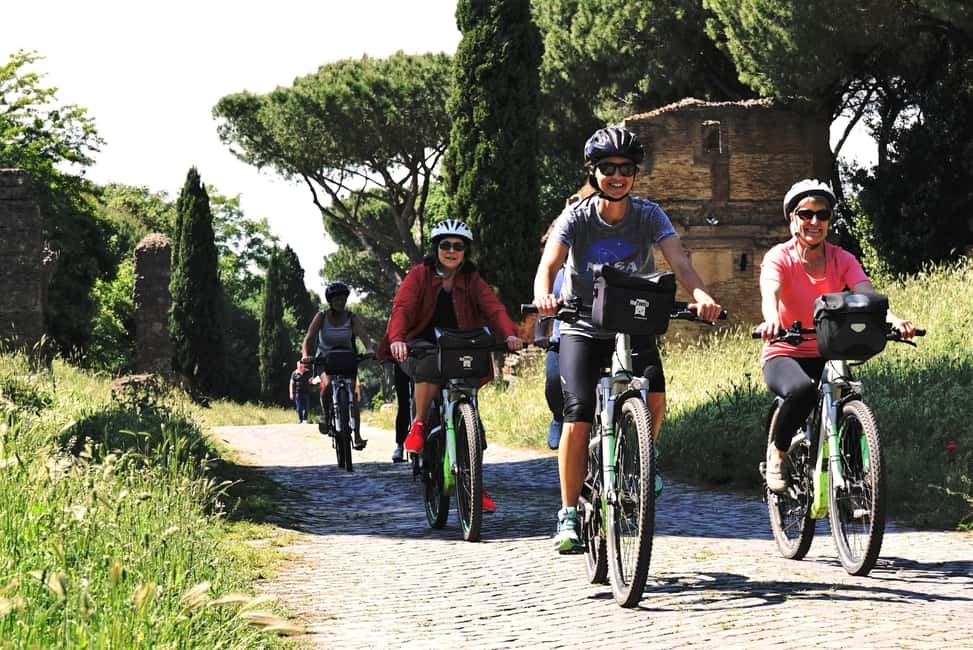
After the aqueduct portion, the ride continues through Caffarella Park. This part is repeatedly praised because it feels intact and relaxed compared with central Rome.
What you gain here is atmosphere. Once you’re riding inside the parks, there’s no traffic, so the focus shifts from road awareness to views and pacing. It’s a strong contrast with the earlier city segments, and it’s a big reason this tour doesn’t feel like “just cycling between ruins.”
How long you’ll really be on the bike (and what the stops do to your pace)
You’ll cycle about 27 km total, with roughly 60% off-road. About 40% of the route is in the city, on carefully selected streets where some traffic is unavoidable to connect the Appian Way and the park areas.
A few people felt the ride time didn’t match their expectations, pointing out that there are plenty of stops for explanations. That’s not a dealbreaker; it’s part of how the tour works. The guide isn’t just moving you from point A to B. They’re turning those stops—walls, catacombs zones, circus remains, tombs, aqueduct lines—into a connected narrative.
For you, that means you should plan to be mentally engaged. If you show up hoping for a purely athletic biking experience, you may find the pace slower than expected. If you want history plus movement plus a real change of scenery, it works well.
Bikes and safety: what’s included, and why the guide names matter
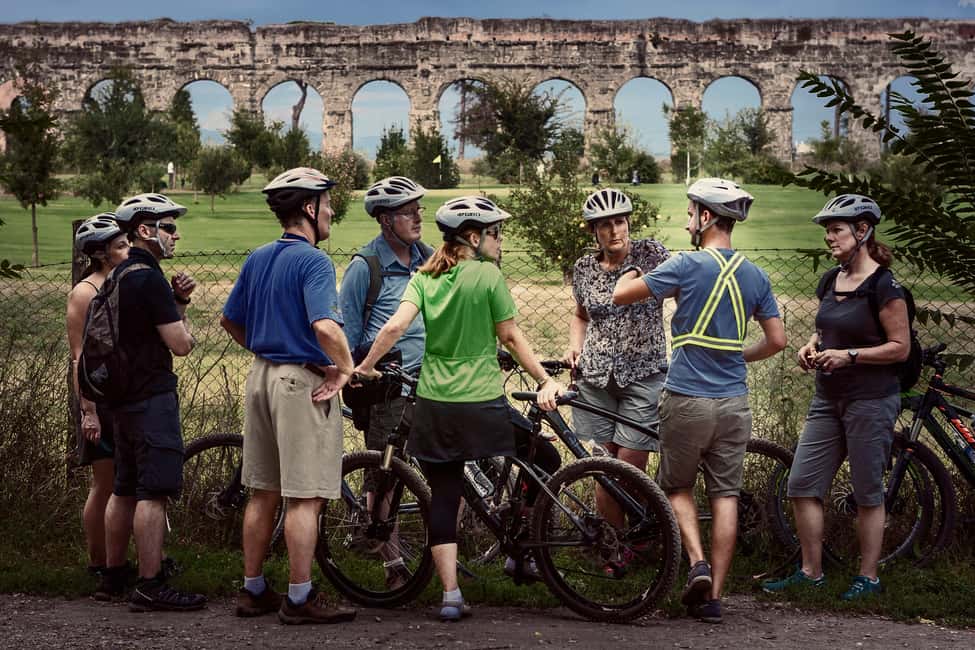
The tour provides a Cannondale e-bike with anti-puncture tires and a comfortable saddle, plus a helmet (mandatory) and a handlebar bag. You also get a biodegradable bottle of water. That base setup is a big deal in Rome because rough surfaces and busy intersections can punish poorly maintained bikes.
Safety is also a core part of the experience. Multiple riders praised guides for handling city traffic and keeping people together, with names like Cas, Fabio, and Aaliyah showing up in the feedback. The pattern is consistent: you get a safety-first briefing before you leave the city segments, and you’re guided carefully when crossing intersections.
One more practical detail: this tour is described as intermediate, and it can be challenging with an added child seat/extension. Even if you’re new to e-bikes, pedal assist usually makes hills manageable, but you still need comfort with uneven surfaces and gravel.
Traffic reality check: Rome portions can feel intense
Even with careful routing, you’ll spend some time in the city. That means you might feel it at intersections or during busy stretches, especially at the start and end when you’re moving between the center and park areas.
This isn’t something to fear, but it is something to respect. If you’re easily stressed by car traffic, it helps to know the route includes those connection segments. The good news: guides work the group through those moments, and the off-road park portions are much calmer.
If you’re traveling with older family members, the uneven gravel and ancient stones are the bigger variable than the e-bike assist. One rider specifically mentioned that it was still doable for a 65-year-old, but it wasn’t effortless.
Price and value: $85 for 4 hours of real Roman scenery
At $85 per person for four hours, the value depends on what you’d otherwise do. If you’d spend your time trying to piece together transportation to Appia Antica and the aqueduct parks, this offers a simpler equation: guide + bike + helmet + water + a loop that covers multiple stops.
You’re paying for three things at once:
- Access to areas that are better experienced by moving through them
- A guide who explains what you’re seeing as you ride
- The e-bike setup that makes the countryside portion practical in limited time
Also, the group size is capped at 10 participants, which usually makes safety briefings and stop timing more controlled than on huge tours. For a half-day, that’s a useful trade.
Who this tour is best for (and who should think twice)
This is a great fit if you want a change from crowded walking Rome. The combination of Appian Way cobbles, aqueducts, and park riding is hard to recreate on your own without serious planning.
It also works for mixed skill levels because it’s on e-bikes and not a pure strength test. You can still have fun even if you’ve never ridden an e-bike before, since the assist helps you keep moving without destroying your energy.
But think twice if you want smooth pavement only. The off-road portion is a real part of the experience, and you’ll feel it in the hands and legs.
For families, the tour supports children by bike equipment sizing and child transport rules. Infants under 1 can’t join, but children aged 1–4 ride on a child seat (max 49 lbs / 22 kg) and come free of charge. Ages 5–8 get a child extension, and ages 9 and above ride an appropriately sized e-bike.
There’s also a bike equipment weight limitation of 300 lbs (136 kg), so plan within that cap.
Final call: should you book this Rome e-bike tour?
I’d book it if you want a half-day that feels like a Roman road trip, not another line at another monument. The Appian Way cobbles plus the aqueduct scenery in Parco degli Acquedotti is the kind of pairing that stays with you, especially because you ride through it instead of just looking.
Skip it (or choose a different style tour) if you’re hoping for mostly smooth cycling or if uneven gravel and ancient stones will stress you out. The traffic connections are also real, though guides manage them well.
If you’re the type who likes seeing Rome in motion, this is a strong pick—small group, e-bike comfort, and a route that takes you beyond the postcard center of town.
FAQ
Where is the meeting point for the tour?
The meeting point is at the shop on Via Labicana 49, about a five-minute walk from the Colosseum.
How long is the Rome Appian Way and aqueducts e-bike tour?
The tour runs for 4 hours.
What distance will I ride?
The total ride length is 27 kilometers.
Is the route mostly on pavement?
No. About 60% of the ride is off-road, with about 40% in the city.
Do I need to bring a helmet?
No, the helmet is included, and wearing it on the tour is mandatory.
What bike equipment is included?
You get a Cannondale e-bike with anti-puncture tires and a comfortable saddle, plus a handlebar bag and a biodegradable bottle of water.
What languages are the live guides available in?
The live guide languages include Dutch, French, Spanish, English, German, and Italian.
How big is the group?
The group is limited to 10 participants.
Are there child seats or child bike options?
Yes. Infants under 1 cannot participate. Ages 1–4 use a child seat (max 49 lbs / 22 kg) and come free of charge. Ages 5–8 use a child extension, and ages 9+ ride an appropriately sized e-bike.
What is the cancellation policy?
You can cancel up to 24 hours in advance for a full refund.