REVIEW · ROME
Rome: Basilica of St John Lateran & Holy Steps 1-Hour Tour
Book on GetYourGuide →Operated by Crucis Tours · Bookable on GetYourGuide
Holy Stairs, explained in an hour. This tight Rome tour pairs the Scala Sancta with a devout guide who makes the story readable, and it runs as a small group limited to 5.
You get the big-ticket Rome cathedral stop too: inside St John Lateran, you’ll learn what makes this arch-basilica the top-ranking church in Catholic tradition, and you’ll have time to venerate the relics tied to the Saints Peter and Paul.
One caution: the knee-prayer tradition on the Holy Steps is famous for a reason, but it is not part of the guided hour. The guided visit moves faster, so if your goal is full kneeling devotion, plan to do that on your own afterward.
In This Review
- Key points to know before you go
- Holy Stairs and St John Lateran in one focused hour
- Where you meet: the Scala Santa entrance, bottom-left spot
- The Scala Sancta: what you actually see and why it matters
- The Sanctorium Sancta: the tiny chapel and what you can glimpse
- St John Lateran: the highest-ranking church and its symbolism
- Relics of Peter and Paul: a veneration moment that feels different
- Holy Doors and Jubilee Year 2025: what you should know
- Price and value: is $65 worth it?
- How the 1-hour format works (and where it can feel tight)
- Practical notes: dress code, walking, and being comfortable
- Who this tour suits best
- Should you book this Rome Holy Steps and St John Lateran tour?
- FAQ
- How long is the Rome Basilica of St John Lateran & Holy Steps 1-Hour Tour?
- What does the tour cost?
- Where is the meeting point?
- Where does the tour finish?
- What languages are the live guides?
- Is the tour wheelchair accessible?
- Are there dress code rules?
- Is the kneeling climb of the Holy Steps included in the tour?
- Are radio headsets included?
- Does the tour mention the Holy Doors and Jubilee Year 2025?
Key points to know before you go
- Start at the Pontifical Sanctuary of the Holy Stairs (Scala Santa) and meet your guide at the bottom of the stairs, left of the entrance.
- Small group format keeps it personal (up to 5), with live English or Chinese guidance.
- You’ll see the Scala Sancta complex and climb the ordinary stairs linked to the devotion.
- St John Lateran includes relic veneration tied to Saints Peter and Paul, described as the Pillars of the Church.
- Jubilee context matters: the tour notes St John Lateran as the site of one Holy Door due to open in 2025.
- Radio headsets only kick in for larger groups (7+), but your group is capped at 5.
Holy Stairs and St John Lateran in one focused hour
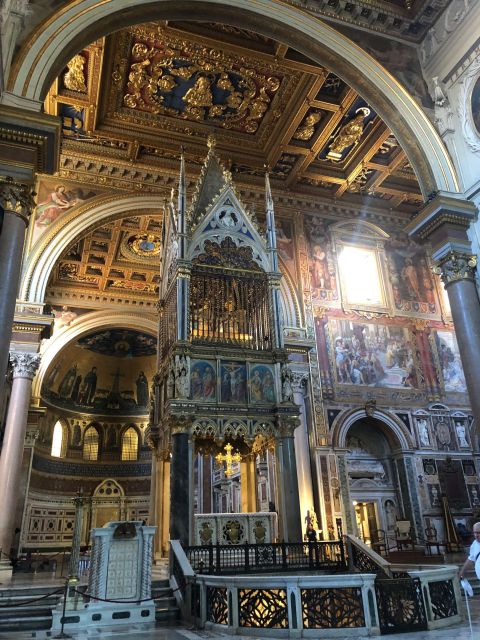
If you want something sacred in Rome that feels more than just sightseeing, this tour hits the sweet spot. It combines the Scala Sancta (Holy Stairs) with St John Lateran, giving you both the devotion-focused site and the Catholic “headquarters” feeling of a major papal basilica.
The pacing is part of the value. In 60 minutes, you’re not trying to do everything in Rome. You’re doing the two places that pilgrims most often put on their list for reasons of faith and history.
The guides are a standout. Recent tours have been led by names like Wen and Tom, and they’re praised for turning symbolism in art and church details into plain, understandable meaning. That matters here because the place is packed with references you can miss if you’re just looking around.
You can also read our reviews of more tours and experiences in Rome

Where you meet: the Scala Santa entrance, bottom-left spot
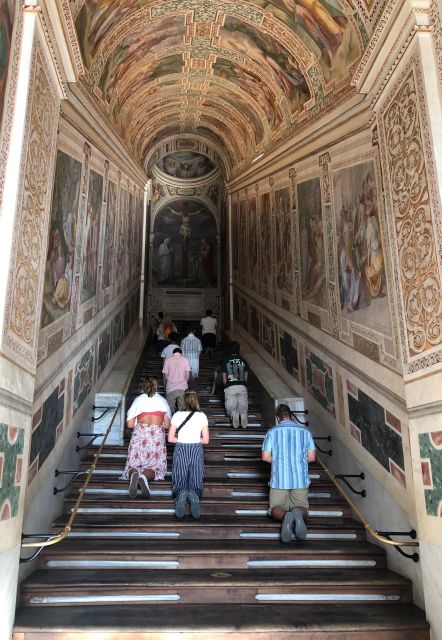
Your day starts at the Pontifical Sanctuary of the Holy Stairs (Scala Santa). Meet at the bottom of the stairs, on the left side of the entrance, and have the Google Map link ready on your phone.
You’ll also get a practical contact layer: download WhatsApp so the team can message you in real time if anything goes sideways. That’s useful in this part of Rome, where crowds and street-level changes can make the first few minutes feel more stressful than they should.
Also, expect a short walk once you’re with the group. This is a guided experience built for moving efficiently while keeping the context clear.
The Scala Sancta: what you actually see and why it matters
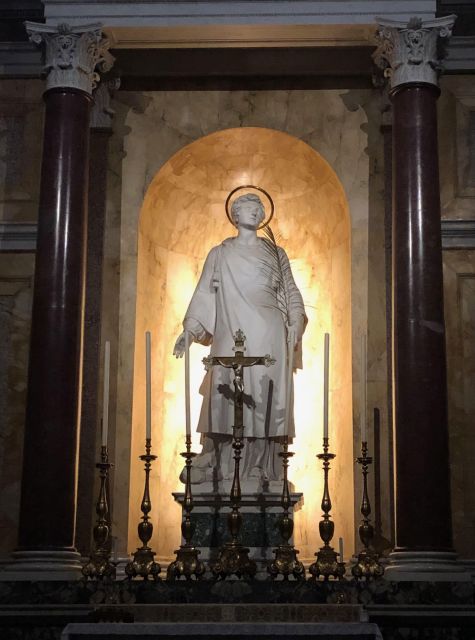
At the Scala Sancta, you’re not just looking at steps. You’re being guided through the meaning of why people treat this place as sacred ground.
In Catholic tradition, the original steps associated with Christ’s condemnation were brought to Rome by St Helena in the 4th century, along with other relics linked to Christ’s Passion. That story turns a physical site into a pilgrimage destination—and your guide helps you understand why the devotion took root.
Here’s the key practical point: the most famous practice is the kneeling climb of the Holy Steps for an indulgence. But the guided hour does not include the kneeling climb because it typically takes around 45 minutes.
So what does the tour include? You still get to visit the Holy Steps and experience the Scala Sancta setting, with the guide framing what you’re seeing so it lands emotionally and spiritually, not just visually.
The Sanctorium Sancta: the tiny chapel and what you can glimpse
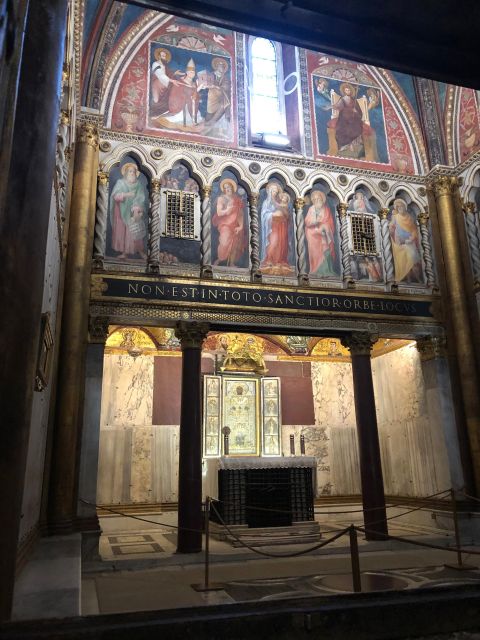
Within the Scala Sancta complex, you’ll connect the devotion to the space itself. The tour points you to the Sanctorium Sancta—often described as the Holy of Holies—a tiny chapel tied to the Pope’s exclusive access in earlier times.
During this hour, you’ll climb the ordinary stairs (not the full kneeling devotion) and you’ll get to peek into the chapel. The tour also includes details about a tradition of a miraculous image—an acheiropoieta—attributed to St Luke the Evangelist and said to have been completed with angelic help.
You’ll also hear that this chapel houses wood associated with the table of the Last Supper. Even if you’re not spending long stretches in prayer, the guide’s framing helps you understand why pilgrims care so much about what seems small.
If you’re someone who likes to know what a place is trying to teach, this stop is where the tour earns its keep.
St John Lateran: the highest-ranking church and its symbolism
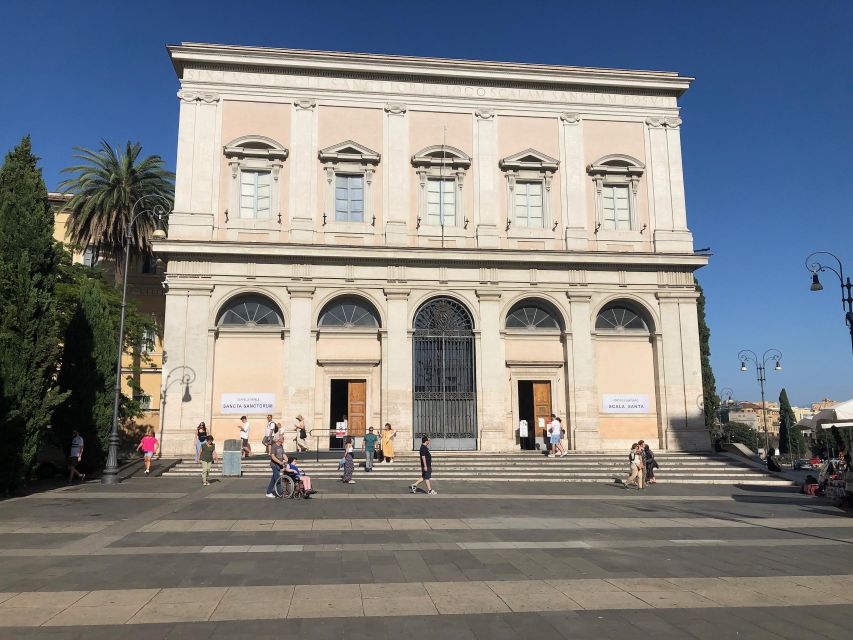
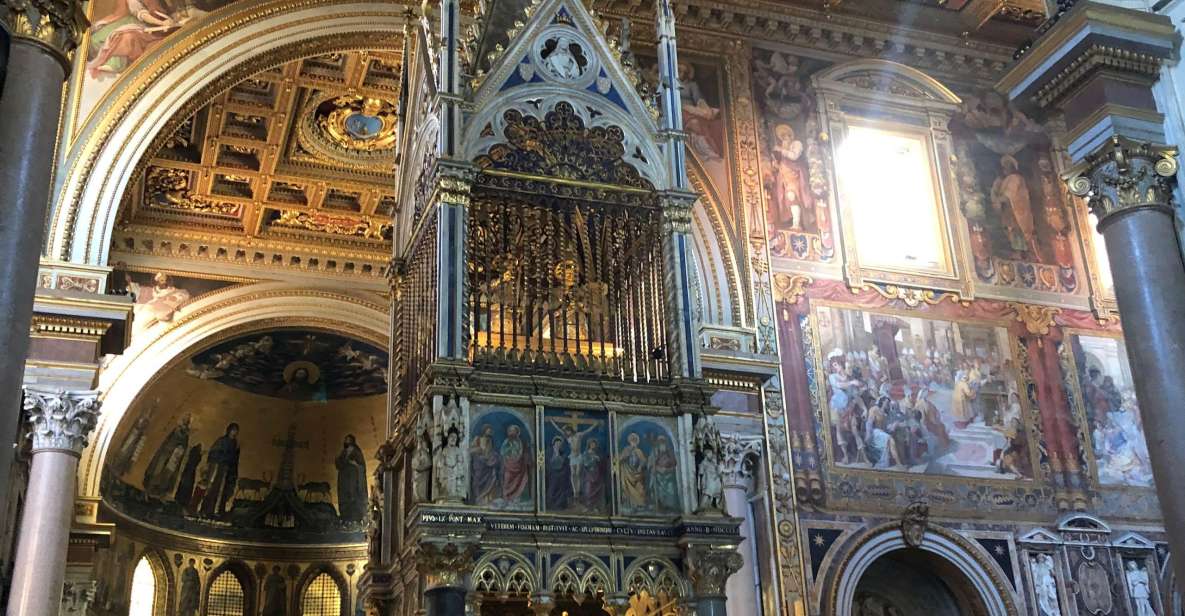
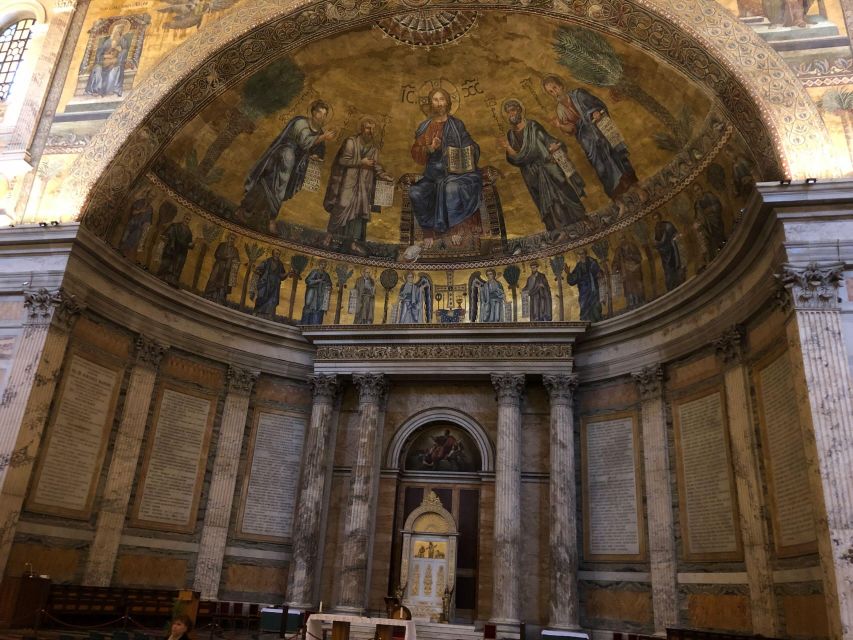
After Scala Sancta, the tour crosses the road to the Arch-Basilica of St John Lateran, also called San Giovanni in Laterano.
This isn’t a random church stop. The whole tour is built around the idea that this is the Mother Church of the World in Catholic tradition—so it functions like a spiritual anchor after the Passion-linked devotion of the Holy Steps.
Inside, your guide helps you read the building. You’ll get context about how the basilica’s story grew alongside Christianity’s legalization within the Roman Empire, plus the site’s many ups and downs over time. That history isn’t just trivia—it helps you understand why the art, layout, and relic culture feel so intentional.


Relics of Peter and Paul: a veneration moment that feels different
One of the most meaningful elements is the chance to venerate relics tied to Saints Peter and Paul, described as the Pillars of the Church.
That may sound like a ritual-only stop, but the guide’s job is to help you understand what veneration is doing here. You’re not just seeing objects. You’re stepping into a long tradition of how Catholics connect major figures of the faith to a physical place.
This part also connects with the larger reason to visit St John Lateran in the first place. Peter and Paul are not just saints in history books. They’re treated as core pillars of Church identity, and their relic presence in this basilica is one of the reasons the site matters so much to pilgrims.
Holy Doors and Jubilee Year 2025: what you should know
Even if the Holy Door is not open every day, the tour still gives you the Jubilee context that makes it worth caring about now rather than later.
St John Lateran is described as the site of one of the four Holy Doors that open during Jubilee Years for pilgrims. The tour specifically notes a due opening in 2025.
So if you’re planning a future pilgrimage, this is a smart heads-up. It helps you map which “special doors” matter in which years, instead of learning that fact after you’ve already missed the chance.
Even if you’re here outside a Jubilee opening, the guidance helps you understand how the Holy Door tradition fits into the wider pilgrimage rhythm of Rome.
Price and value: is $65 worth it?
At $65 per person for a 1-hour guided tour, the price is fair if you care about meaning over checklist tourism. Rome is packed with churches; the difference is whether someone helps you read them.
What you’re paying for here is not time alone. You’re paying for:
- A guide who connects the Scala Sancta devotion to Church history and symbolism
- A tight route that includes both Scala Sancta and St John Lateran
- A small group size (up to 5), which keeps the pace from feeling like cattle handling
One more value detail: radio headsets are included only for groups of 7 or more. Since the tour caps at 5, you likely won’t need them, but it’s good to know the setup is designed for group audio if numbers rise.
If your goal is a quick overview with minimal explanation, you could do these sites on your own. If your goal is to leave understanding why the place matters, you’ll likely feel the money was well spent.
How the 1-hour format works (and where it can feel tight)
A one-hour tour is never going to be a slow pilgrimage. That’s not a flaw. It’s the point.
Here’s what works well:
- You get the main devotion site plus the major papal basilica
- Your guide keeps moving so you’re not wasting time figuring out what to notice
- The explanations are tailored to the short time window, so you don’t lose the thread
Here’s what might not work for everyone:
- If you want to spend a long stretch on your knees, this hour isn’t built for that
- You’ll need to follow the rhythm of the group rather than lingering
The tour even suggests a solution: do the kneeling practice on your own at the end, since it takes longer and is offered free of charge according to the tradition described.
So think of this as the “guided meaning” portion. Add your personal devotion time separately if that’s your style.
Practical notes: dress code, walking, and being comfortable
This tour has a straightforward clothing rule: no shorts and no short skirts. That’s especially relevant in summer, when Rome heat makes “acceptable” outfits feel like a challenge. Wear something modest and you’ll sail through the entrance checks without drama.
You’ll also be walking and climbing ordinary stairs at the Scala Sancta. The tour is listed as wheelchair accessible, which is a big plus. Still, because stairs are part of the experience, I’d treat that as something to confirm with the operator if you use a chair or need extra mobility support.
Who this tour suits best
This one fits best if you fall into one of these buckets:
- You want a Catholic-focused Rome experience that explains symbols, not just dates
- You’re short on time but still want the two major devotion-and-cathedral stops
- You appreciate a guide-led approach and prefer small groups
- You’re planning ahead for a Jubilee pilgrimage, especially with 2025 Holy Door awareness
If you’re the type who likes silent, long prayer and slow wandering, you might find the hour feels brisk. In that case, you can still use this tour as a primer, then return later for your own pacing.
Should you book this Rome Holy Steps and St John Lateran tour?
Book it if you want your visit to feel guided, coherent, and faith-centered. The structure makes sense: Scala Sancta gives the Passion-rooted devotion, then St John Lateran gives the Church’s high-status context with Peter and Paul relic veneration and Jubilee Holy Door relevance for 2025.
Skip it (or pair it with extra time) if your main goal is the full kneeling climb as a long devotion. This guided hour is not designed to include that 45-minute-style practice, so you’ll want to plan your own additional time afterward.
If you do book, do this: set expectations for an hour of meaning, not a marathon of prayer—and bring clothes that meet the modest dress rule. Then you can do the personal devotion your way once the guided framework is in place.
FAQ
How long is the Rome Basilica of St John Lateran & Holy Steps 1-Hour Tour?
The tour lasts 1 hour.
What does the tour cost?
It is listed at $65 per person.
Where is the meeting point?
Meet your Catholic guide at the bottom of the stairs to the left of the entrance of the Pontifical Sanctuary of the Holy Stairs (Scala Santa).
Where does the tour finish?
It concludes at the Basilica of San Giovanni in Laterano.
What languages are the live guides?
The tour offers live guiding in English and Chinese.
Is the tour wheelchair accessible?
Yes, the tour is listed as wheelchair accessible.
Are there dress code rules?
Yes. Shorts and short skirts are not allowed.
Is the kneeling climb of the Holy Steps included in the tour?
No. The practice of climbing the Holy Steps on your knees takes about 45 minutes and is not part of the tour. You can arrange to take part in the tradition in your own time free of charge at the end.
Are radio headsets included?
Radio headsets are included for groups of 7 or more.
Does the tour mention the Holy Doors and Jubilee Year 2025?
Yes. The site is noted as one of the four Holy Doors that open during Jubilee Years, with an opening due in 2025.